Aquarium Equipment
Reef Octopus Protein Skimmers: A Complete Guide to HOB, INT, SSS, and EXT Models
Understanding the four main types of Reef Octopus protein skimmers, their design trade-offs, and which model suits your saltwater aquarium setup.
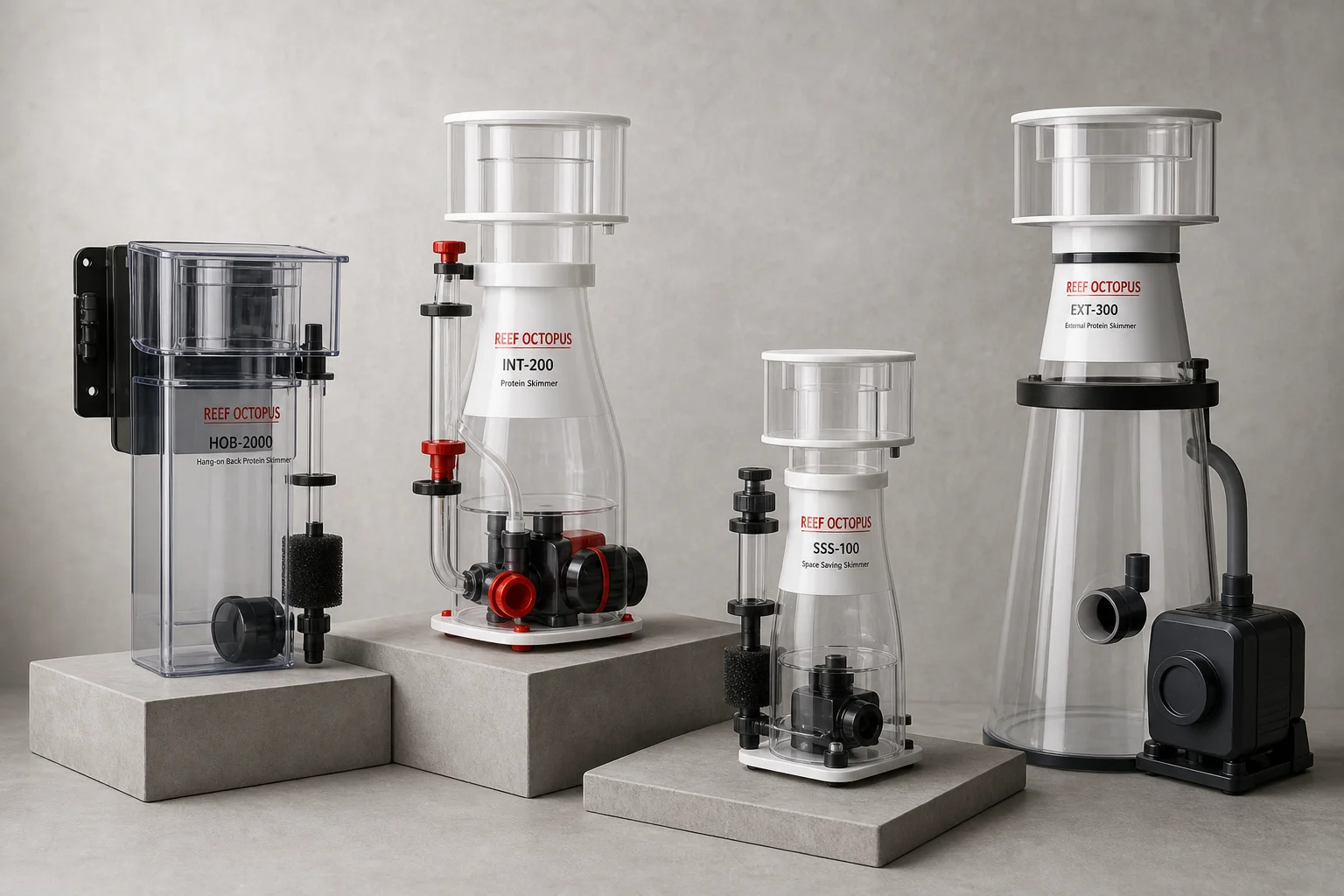
Understanding Skimmer Types for Your Setup
Reef Octopus manufactures more protein skimmer variants than nearly any other brand, making the choice between models a practical decision based on your aquarium’s plumbing and space constraints. The four main design categories each solve different installation challenges and come with distinct performance and maintenance trade-offs.
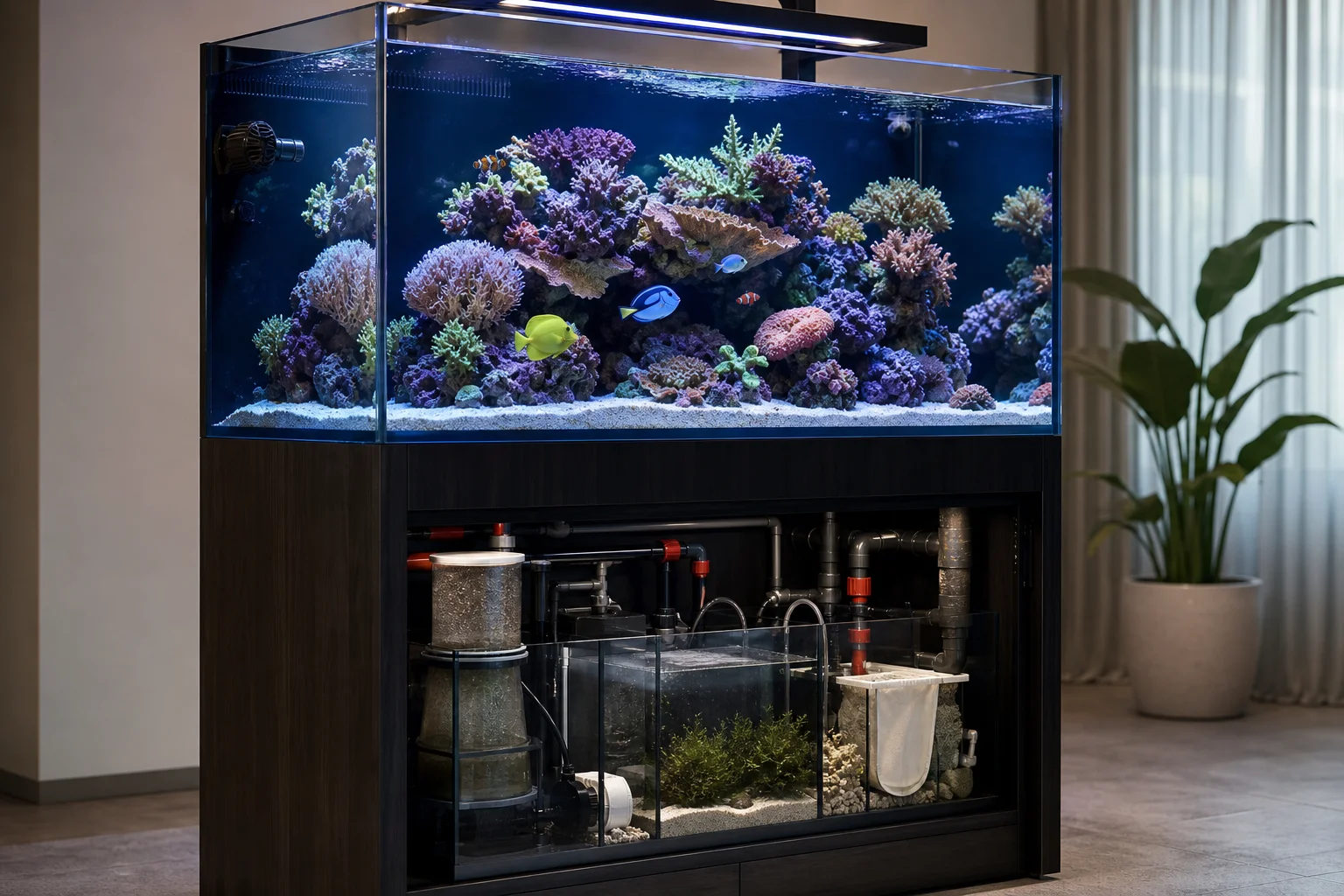
Before selecting a skimmer, you need to know whether your aquarium has a sump. A sump is a separate tank or container positioned below your main aquarium that houses filtration equipment, reactors, and other gear. If you have a sump, you have more options. If you do not, your choices narrow significantly.
HOB Skimmers: For Sumpless Systems
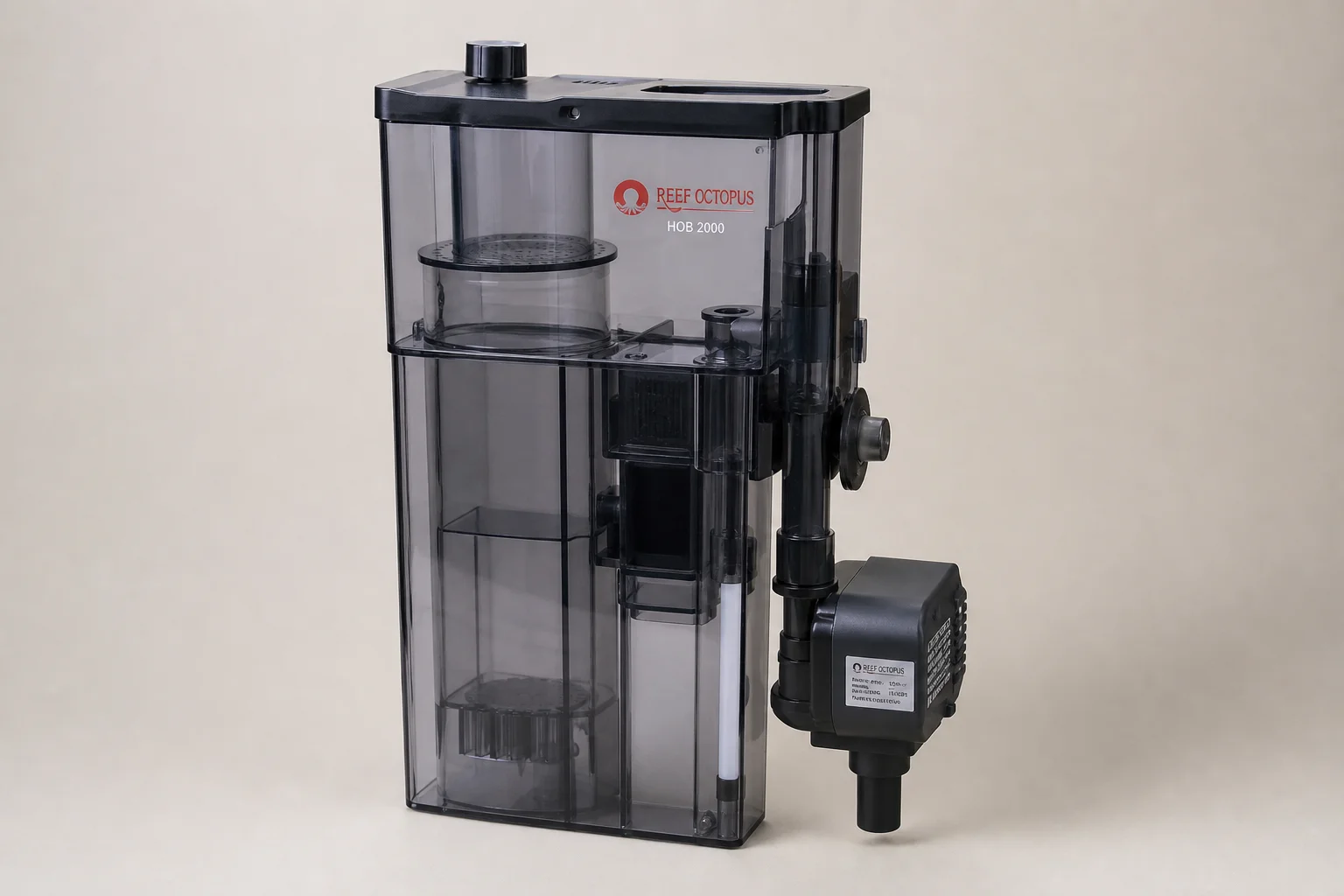
The HOB 2000 is a Hang-On-Back skimmer designed for aquariums without a sump. If you lack the plumbing infrastructure for a sump (either a drilled tank or an overflow box), this is your only viable option.
HOB skimmers have improved dramatically over the past decade. They now perform well and remove waste effectively. However, they come with two notable drawbacks. First, they are visually prominent, hanging as a large box on the back of your tank where you will see them constantly. Second, they are leak-prone. The external pump connections are often not sealed properly, and if the collection cup overflows, water spills onto your floor rather than draining safely back into the tank.
Despite these limitations, if you have a sumpless system, a quality HOB skimmer is your practical choice. Do not attempt to use an external EXT skimmer below your tank without a sump; this will flood your home.
INT Skimmers: The Classic Design
INT skimmers, where INT stands for internal, represent the classic protein skimmer design and are the personal preference for many experienced aquarists. These units sit inside your sump and feature an external pump mounted outside the skimmer body.
The external pump design offers several advantages. Maintenance is straightforward: you simply undo one union and disconnect a hose to access and service the pump. The pump is the heart of any skimmer and the primary factor determining performance and price. Keeping it clean directly improves skimming efficiency. With the pump external, you can service it without removing the entire skimmer from your sump.
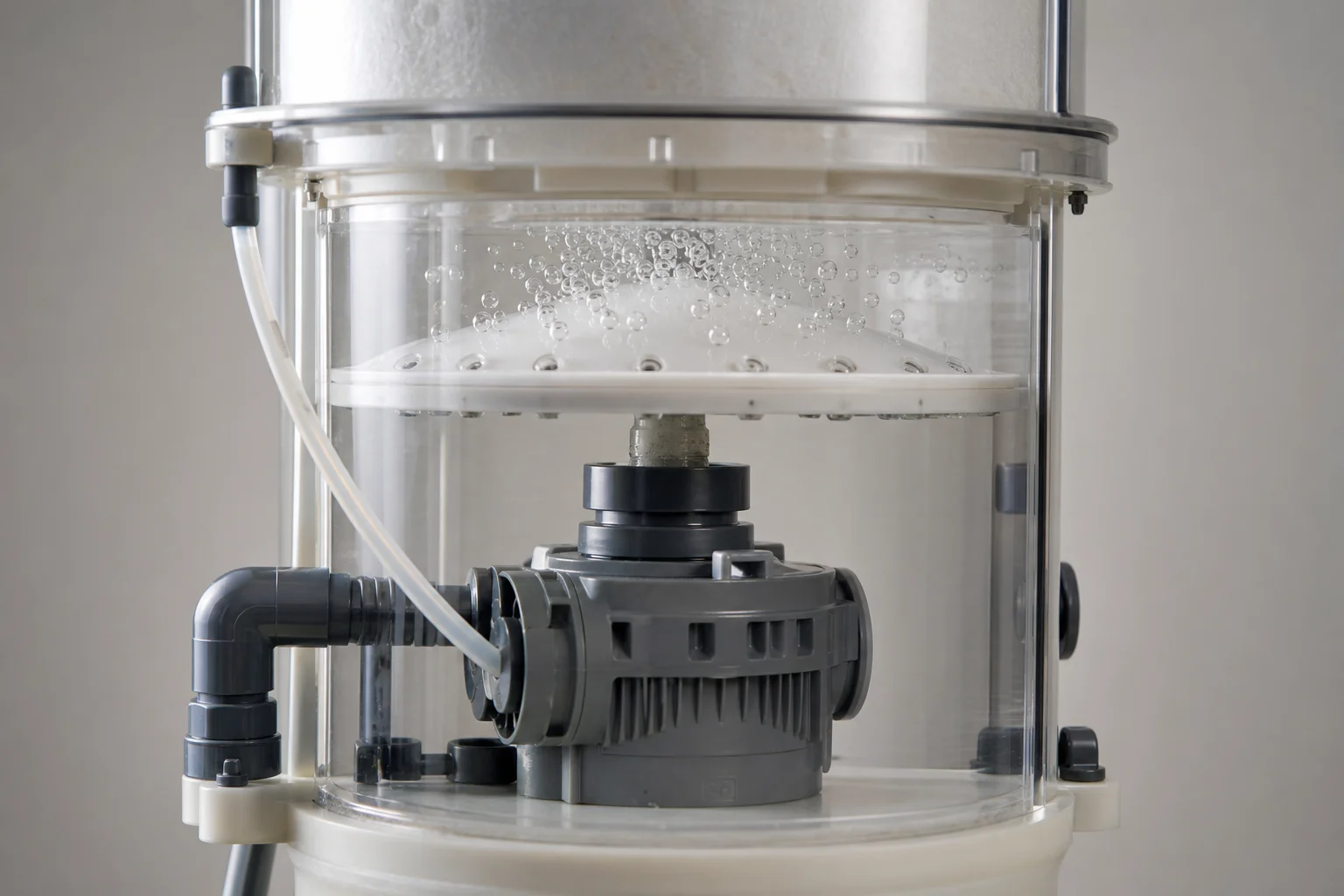
Reef Octopus offers INT skimmers in two pump styles. The classic series uses an AC pump, which plugs directly into the wall. The Regal series uses a DC pump with a power brick, similar to a laptop charger. DC pumps are significantly more energy efficient and quieter than AC pumps.
For large aquariums over 150 gallons, the Regal DC pump models are worth the investment. The noise reduction and energy savings compound over years of operation, and the price difference between AC and DC models is minimal at larger sizes. For small aquariums under 100 gallons, the classic AC pump models are perfectly adequate. The AC pump will be nearly inaudible in a nano setup, and the price premium for DC efficiency becomes less justified.
Space-Saving SSS Skimmers: Compact but Compromised
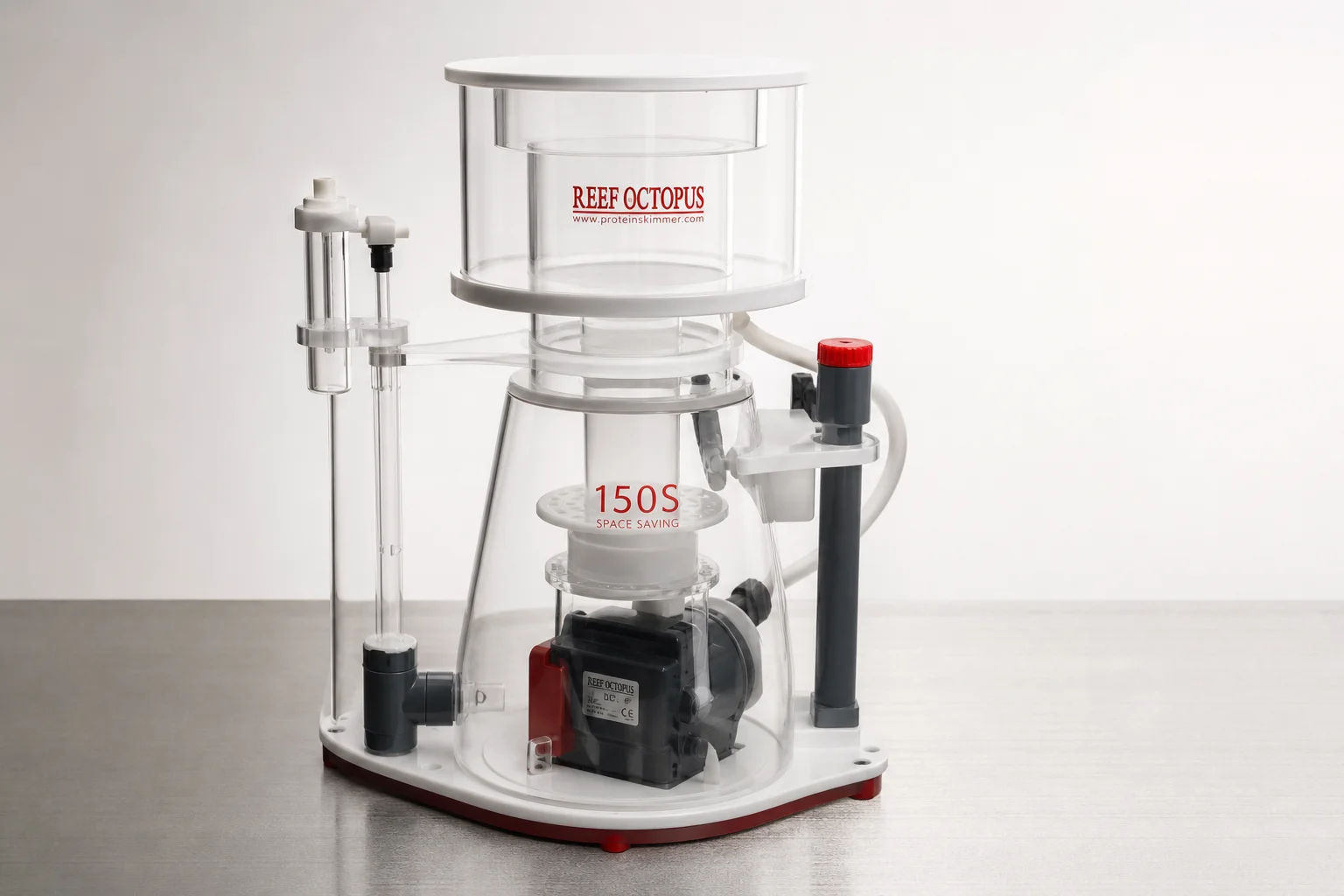
The Reef Octopus 150S represents the space-saving SSS design, where the pump sits inside the skimmer body rather than outside. This makes the skimmer more compact, which appeals to aquarists with limited sump space.
However, this design introduces significant maintenance and performance penalties. Accessing the pump requires removing the collection cup, unscrewing multiple fasteners, removing the bubble plate, and often extracting the pump from an additional internal plate. This complexity discourages regular maintenance, and a less-maintained pump performs worse. Additionally, moving the bubble plate upward to accommodate the internal pump reduces the volume of skimmer body available for bubble contact time, directly lowering performance compared to an INT skimmer with the same pump.
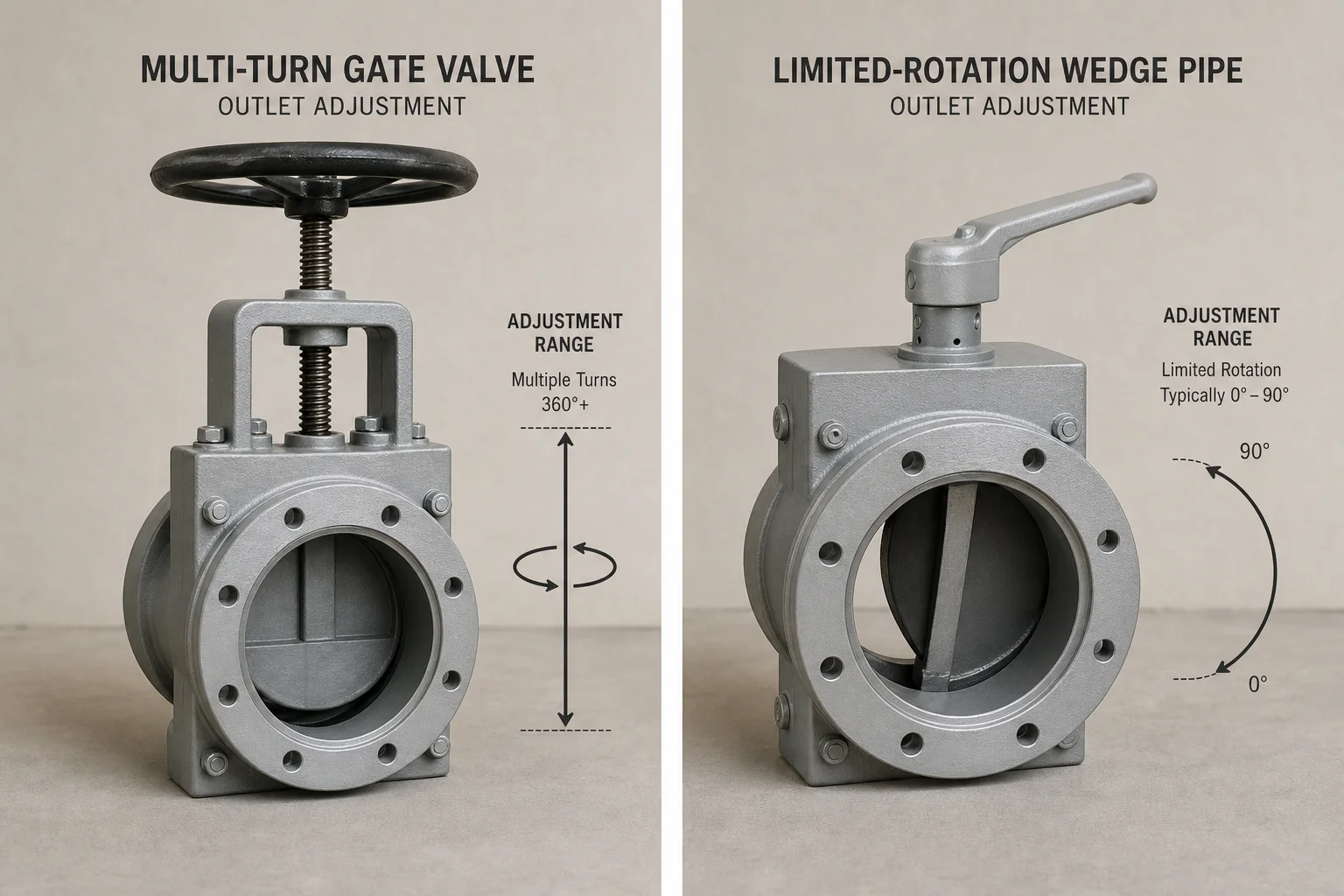
The 150S also uses a wedge pipe outlet adjustment instead of a gate valve. The wedge pipe design offers only 180 degrees of rotation between fully open and fully closed, giving you minimal fine-tuning control. A gate valve, found on more expensive models, provides three to four full turns between open and closed, offering at least six times more adjustment precision. This makes dialing in water level and bubble level far easier with a gate valve.
Unless you cannot physically fit a properly-sized INT skimmer in your sump, the external pump design is the better choice. The SSS models work adequately, but they require more effort to maintain and deliver lower performance for the same pump investment.
EXT Skimmers: External Recirculating Design
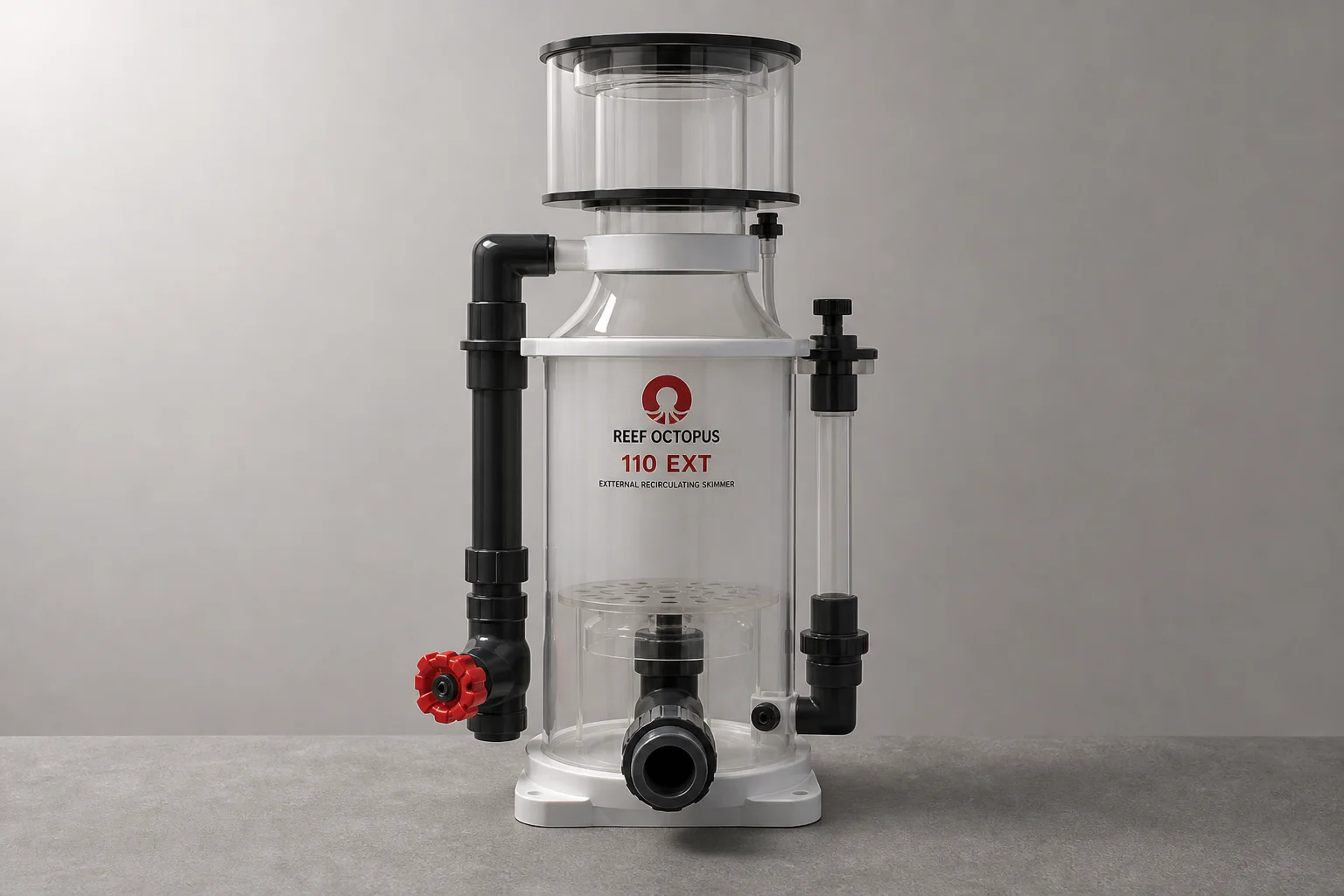
The Reef Octopus 110 EXT is an external skimmer that sits next to your sump rather than inside it. These recirculating skimmers require a sump but do not sit within it, making them useful for very large installations where the skimmer is too tall to fit inside the sump.
EXT skimmers use a recirculating pump that draws water from inside the skimmer body and returns it to the same body, rather than drawing from the sump. This design generates more air volume for the same pump size, improving performance compared to an in-sump model with identical pump specifications. However, this advantage comes at a cost: you must run a second pump to supply fresh water to the skimmer, and that water must drain back into the sump through additional plumbing connections.
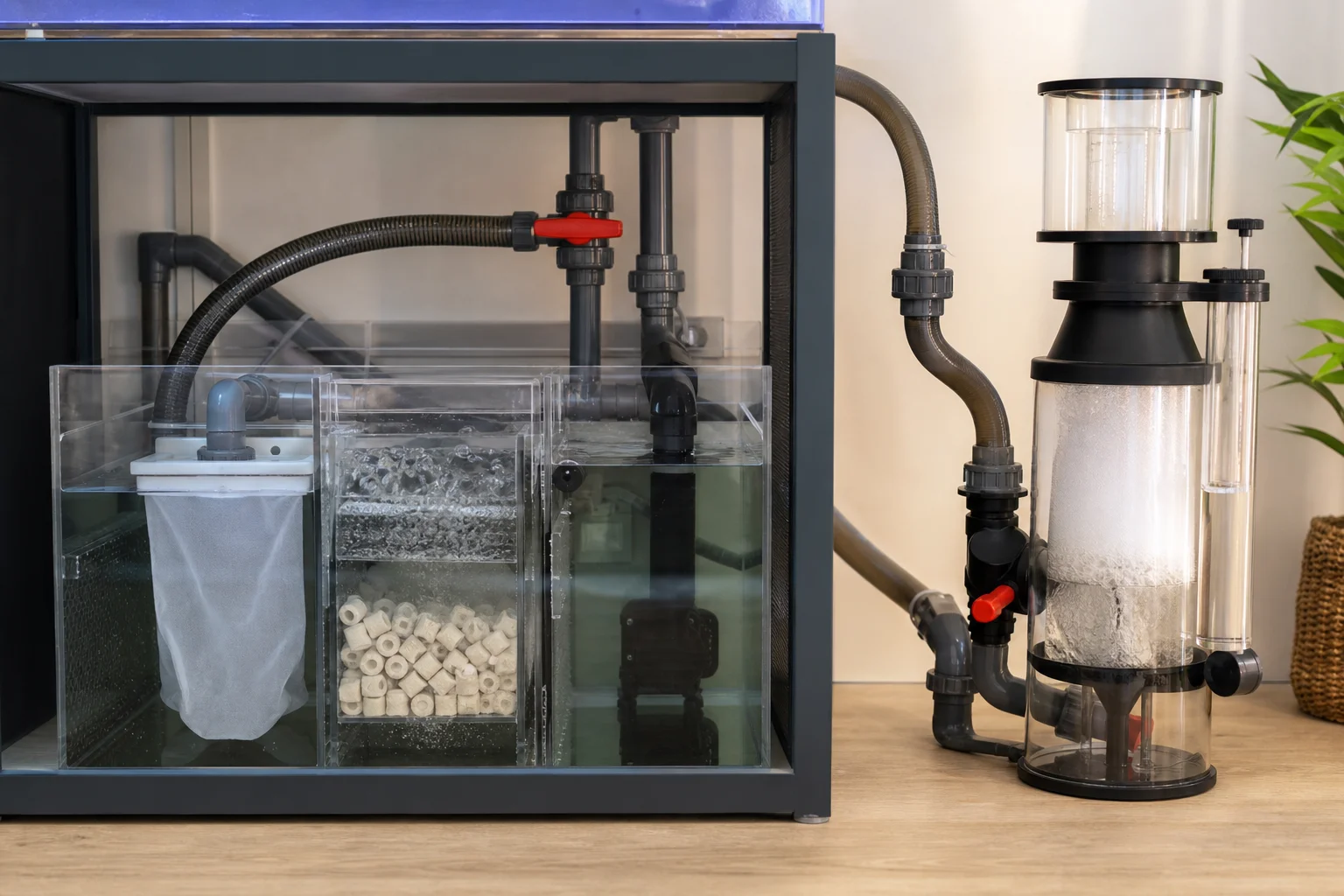
The complexity introduces multiple failure points. Two unions supply water, one drains water, and any improperly sealed connection will leak. If the skimmer overflows, water spills onto your floor rather than back into the sump. The EXT design is also considerably more expensive than equivalent in-sump models and requires more maintenance due to the additional pump and plumbing.
Reserve EXT skimmers for situations where you have no other option, such as industrial-scale setups where a 4-foot-tall skimmer cannot fit in any sump. For most aquariums, the simpler, more reliable INT design delivers better value and easier maintenance.
Choosing the Right Skimmer for Your Aquarium
Your first decision is whether you have a sump. If you do not, purchase a HOB skimmer and accept the visual and leak trade-offs as the cost of a sumpless system. If you do have a sump, choose an INT skimmer unless space constraints force you to consider SSS or EXT designs. For INT models, invest in a DC pump Regal series if your tank exceeds 150 gallons; for smaller tanks, the classic AC pump models are sufficient.
Pay attention to outlet adjustment mechanisms. Gate valves provide superior fine-tuning control compared to wedge pipes, making the dialing-in process faster and more precise. This feature typically appears on higher-end models and justifies the price premium if you plan to optimize your skimmer’s performance.
Conclusion
Reef Octopus skimmers span four distinct design categories, each addressing different installation scenarios and performance priorities. Understanding the trade-offs between HOB, INT, SSS, and EXT designs, along with pump type and outlet adjustment mechanisms, allows you to select the model that best matches your aquarium’s plumbing, space, and maintenance preferences.
Further reading
Related Reviews
Aquarium Equipment
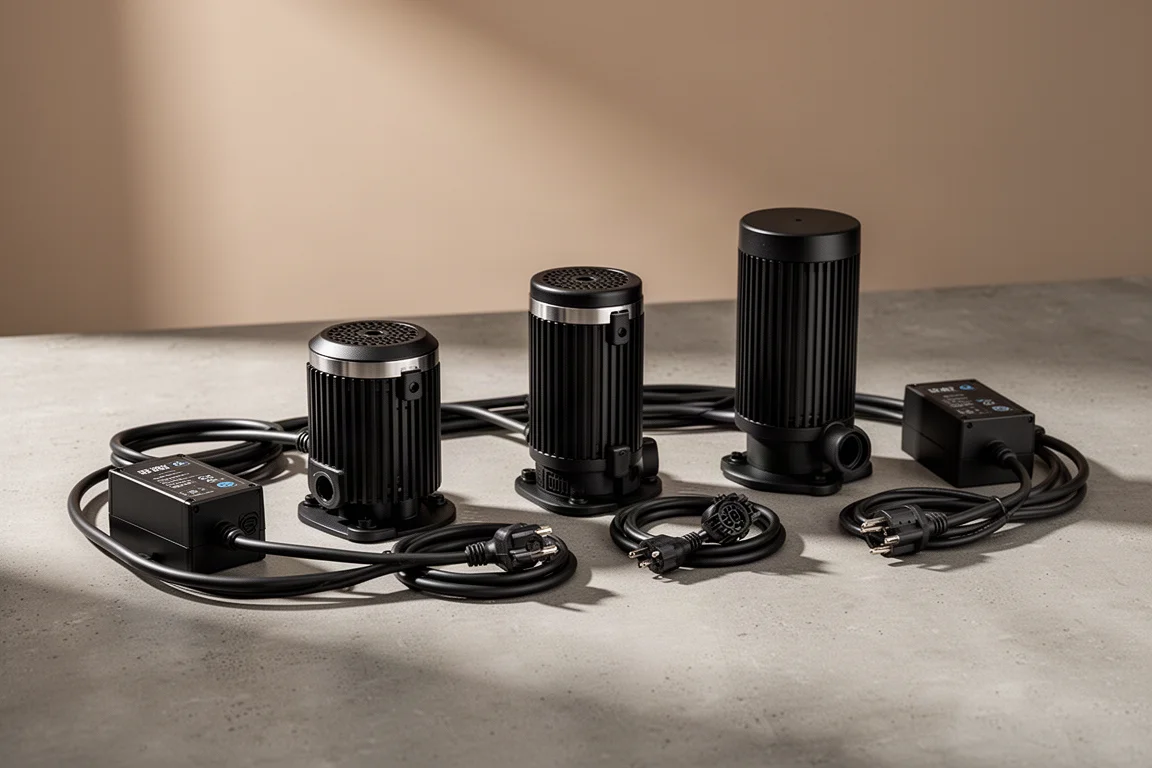
Abyzz Professional DC Pumps: A100, A200, and A400 Reviewed
A closer look at three German-made DC return pumps built for large reef systems, with titanium internals, fine flow control, and a 10-year warranty.
Aquarium Equipment
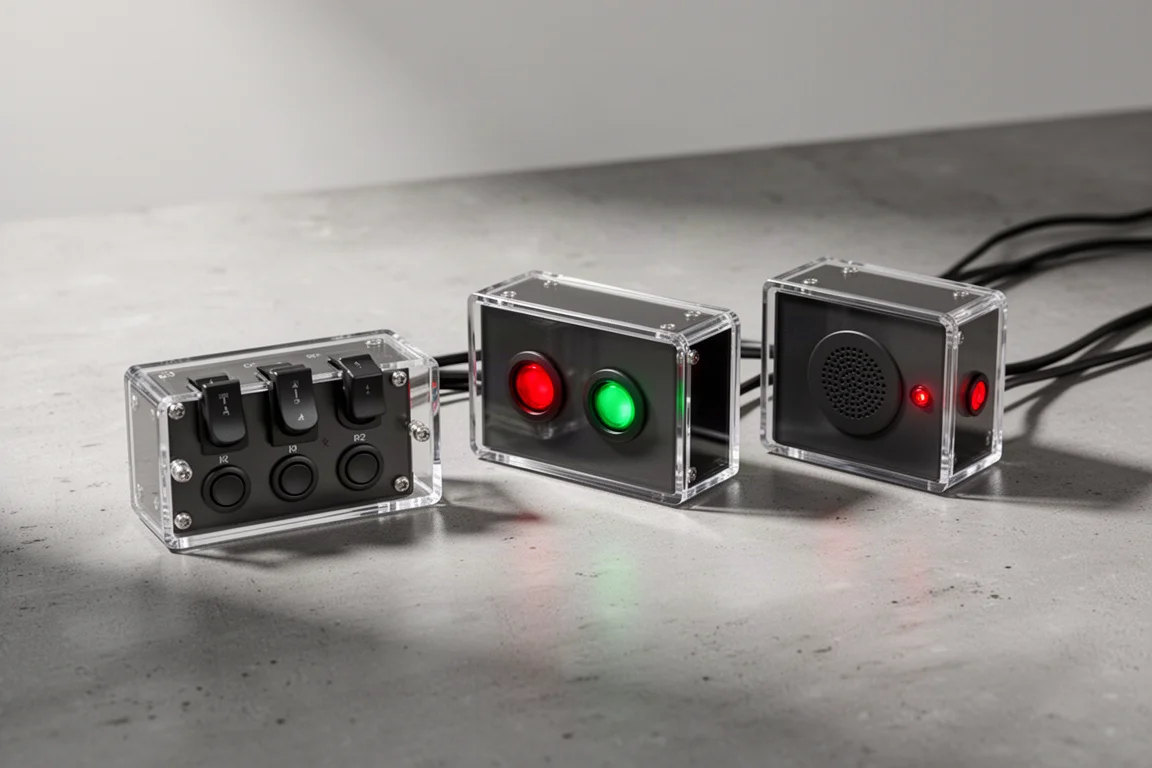
AdaptiveReef Controller Accessories: Three Tactile Upgrades for Your Reef Controller
A practical look at three AdaptiveReef add-ons that put physical switches, at-a-glance status lights, and a loud alarm within arm's reach of your reef tank.
Aquarium Equipment
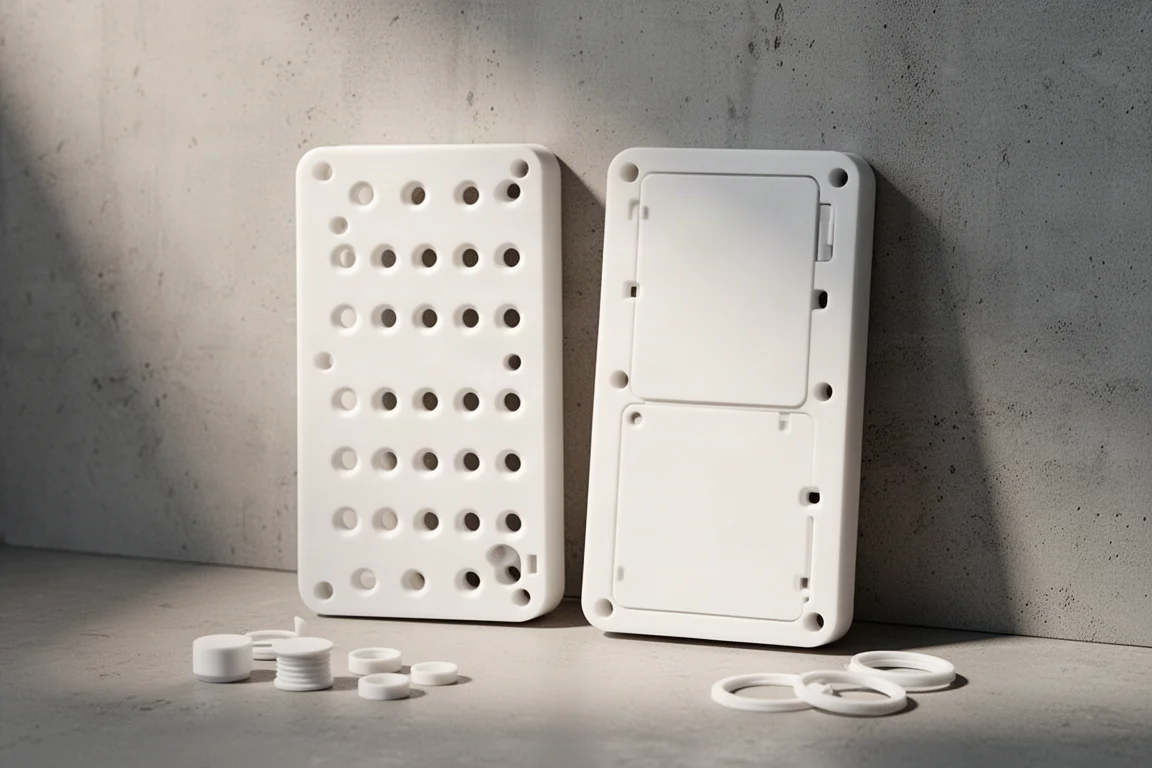
Adaptive Reef Controller Boards: Basic vs Deluxe for Cleaner Aquarium Gear
A practical look at the Adaptive Reef Basic and Deluxe controller boards, what each one includes, and how to choose the right size for your tank gear.