Aquarium Equipment
Best Aquarium CO2 Systems: Five Options From Budget DIY to Multi-Tank Setups
A practical guide to five aquarium CO2 systems, from homemade fermentation kits to pressurized cylinders with multi-tank regulators. Find the right setup for your tank size and budget.
Introduction
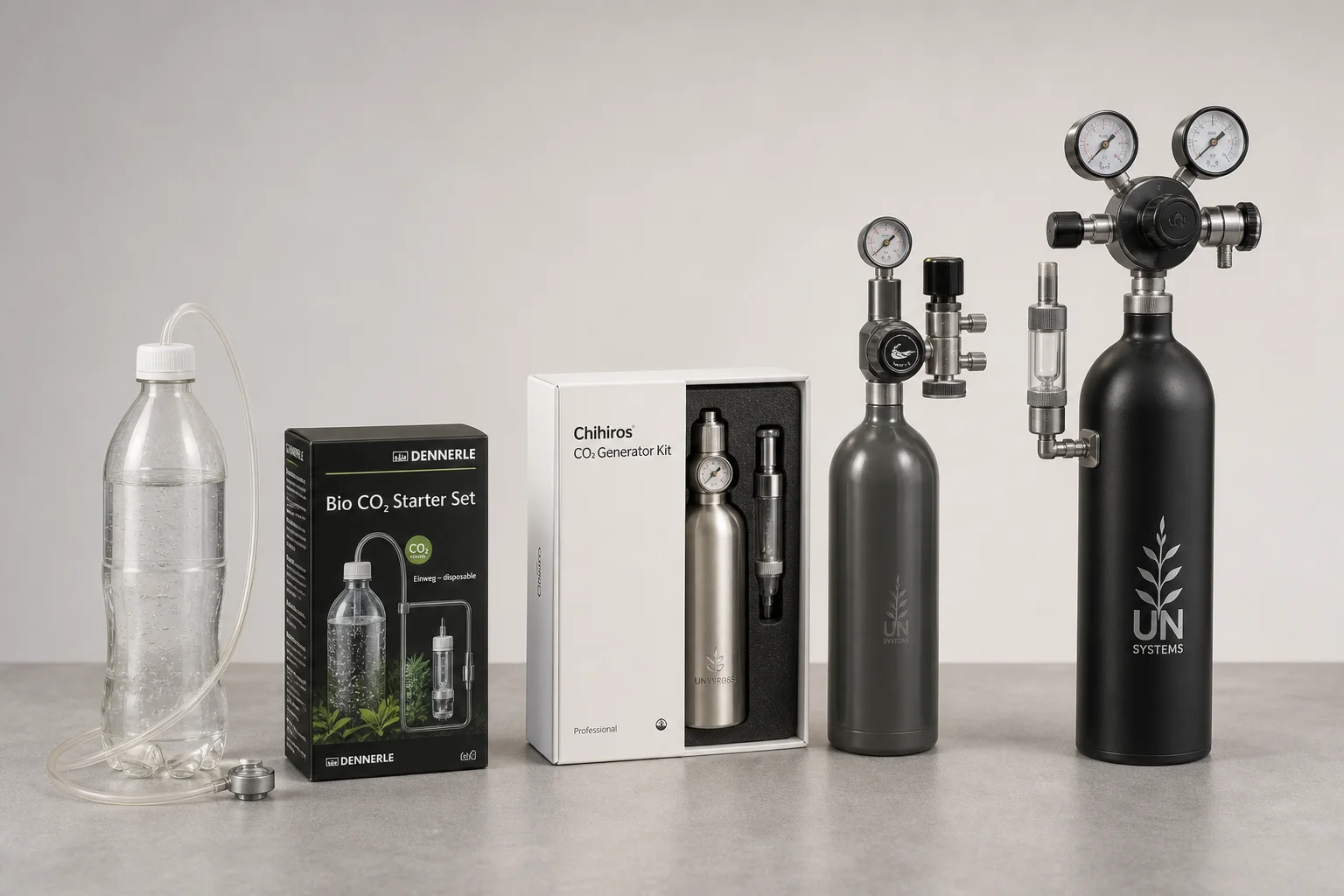
Aquarium plants thrive with supplemental CO2, but the path to adding it ranges from simple homemade fermentation to professional pressurized systems. This guide covers five distinct approaches, each with real trade-offs in cost, convenience, and scalability. Whether you have one small tank or multiple planted aquariums, there is a practical option here.
DIY Fermentation CO2 System
The cheapest way to add CO2 is to make it yourself using fermentation. You likely have most of what you need at home: an empty soda bottle, sugar, yeast, tubing, a CO2 diffuser, and a small amount of super glue.
Start by drilling a small hole in the bottle cap, slightly smaller than the tubing diameter. Push the tubing through and seal it with super glue to ensure an airtight fit. Add roughly 250 grams of sugar to the bottle, then mix yeast with lukewarm water and pour the mixture into the bottle. Close the lid, attach the diffuser to the other end of the tubing, and within a few hours you will see CO2 bubbles.
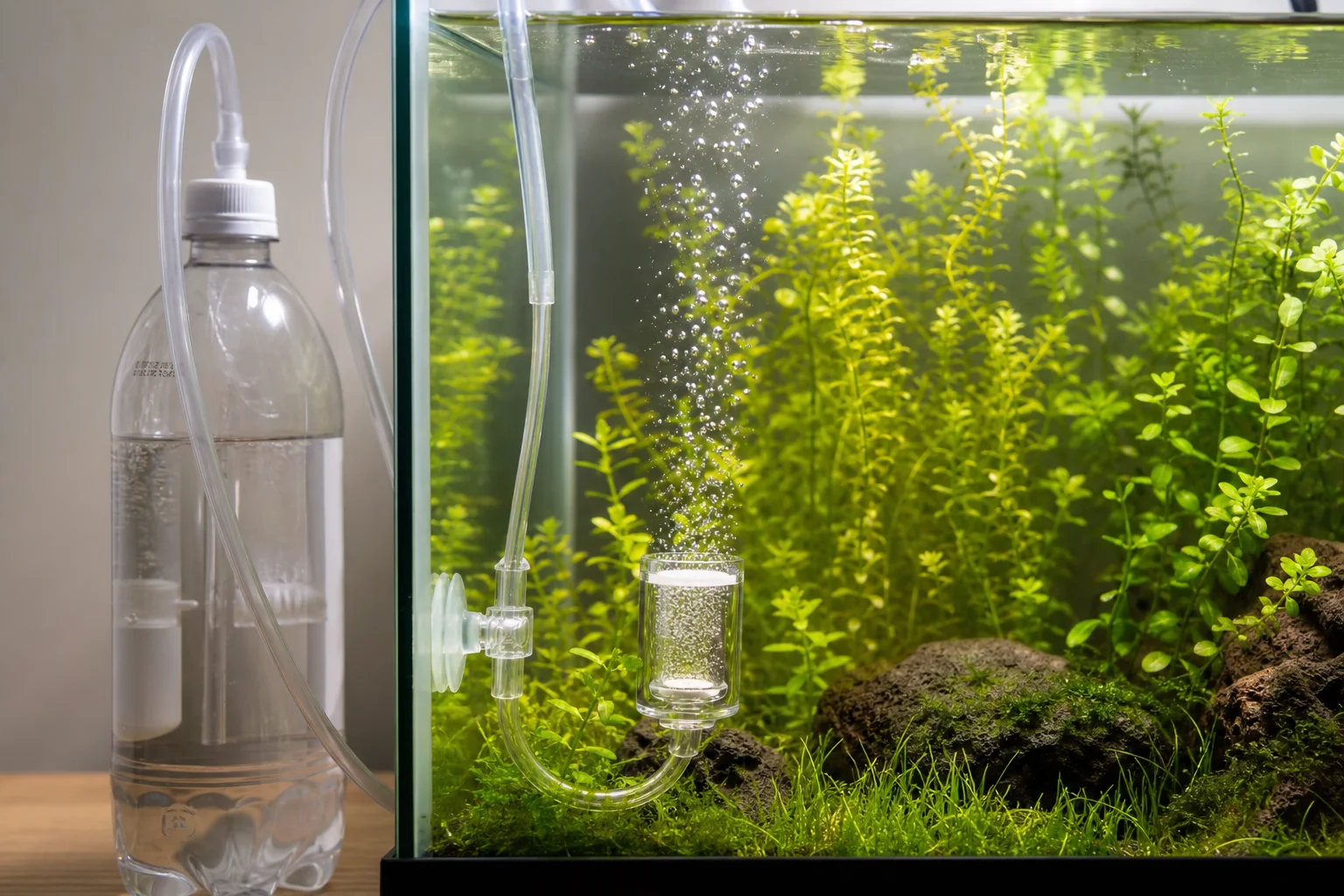
This system is genuinely simple and costs almost nothing, but it has clear limitations. It typically lasts only about a month, CO2 output fluctuates unpredictably, and you cannot turn it off at night, so it runs continuously. Fluctuating CO2 can trigger algae problems. However, if you want to become familiar with CO2 supplementation without spending money, this is a practical starting point.
Dennerle Bio CO2 Starter Kit
The Dennerle Bio CO2 Starter Kit is a more refined version of DIY fermentation, priced around €25. It includes a plastic bottle, a pre-measured sugar mix, a yeast activator pouch, tubing, a diffuser, and clear instructions.
The setup is straightforward: add 300 millilitres of hot water to the bottle and let it sit for 24 hours until the ingredients solidify. Then mix the activator with 200 millilitres of lukewarm water, add it to the bottle, close it with the special air cap, and connect the tubing and diffuser. CO2 bubbles appear within a few hours.
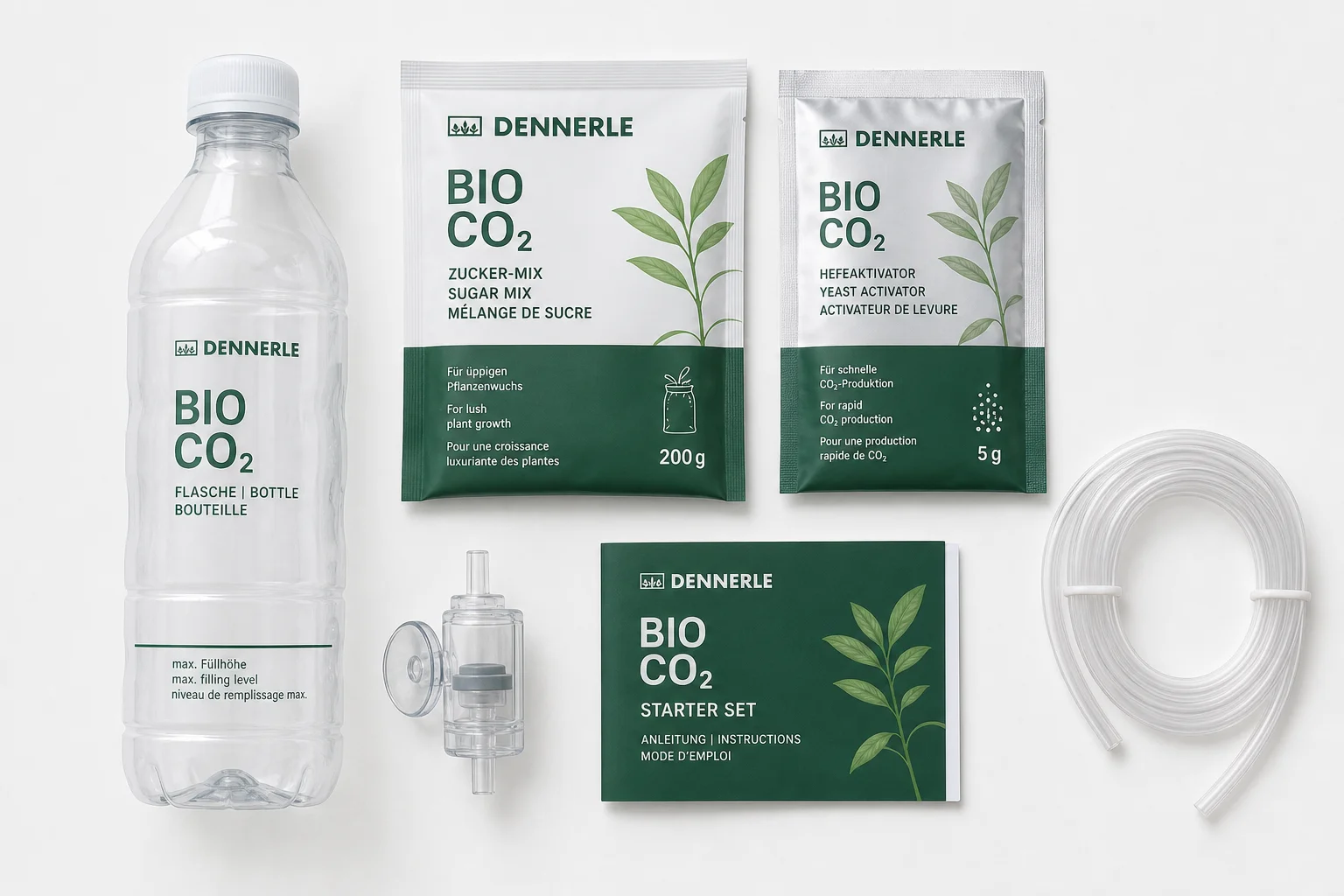
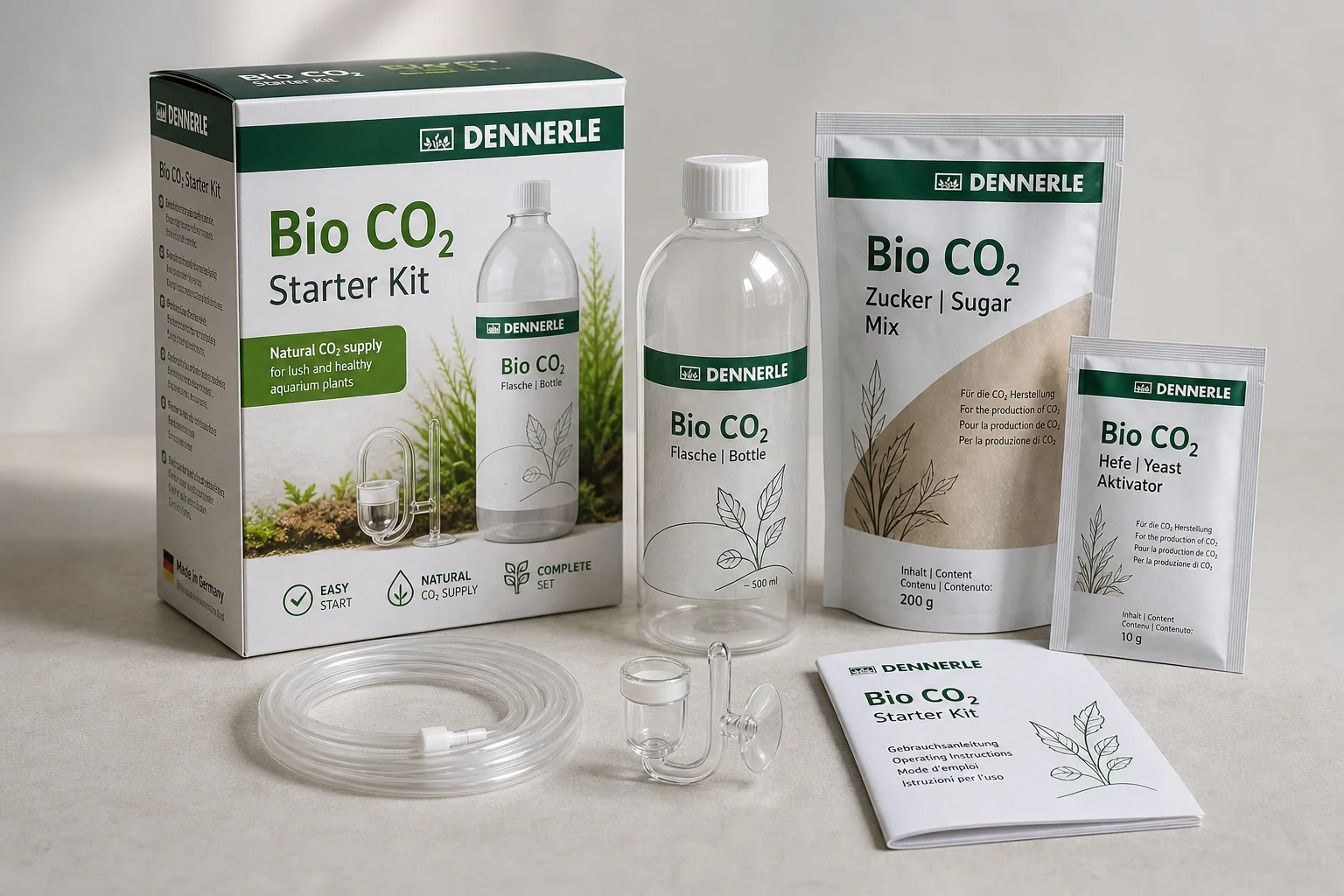
The key improvement over pure DIY is stability. The sugar mass sits at the bottom and the yeast solution on top, creating a more consistent CO2 output. The kit claims 60+ days of operation, a significant jump from the one-month lifespan of a homemade system. However, like DIY fermentation, it runs continuously and cannot be turned off at night.
Chihiros CO2 Generator Kit
The Chihiros CO2 Generator Kit marks a step up in control and convenience. Prices typically range from $115 to $120, and it includes a stainless steel reaction bottle, a regulator with bubble counter, a solenoid valve for shutoff control, a controller device for scheduling, tubing, acrylic bands, a moisture filter, and a measurement cup.
This system uses citric acid and baking soda as reactants. You add 300 grams of each ingredient to the bottle, then quickly pour in 300 millilitres of water. The chemical reaction begins immediately, producing pressure that you can see building in the bottle. Once the regulator is attached and the solenoid valve is connected, you can use the Chihiros app to schedule when CO2 turns on and off, typically starting at least an hour before your lights come on.
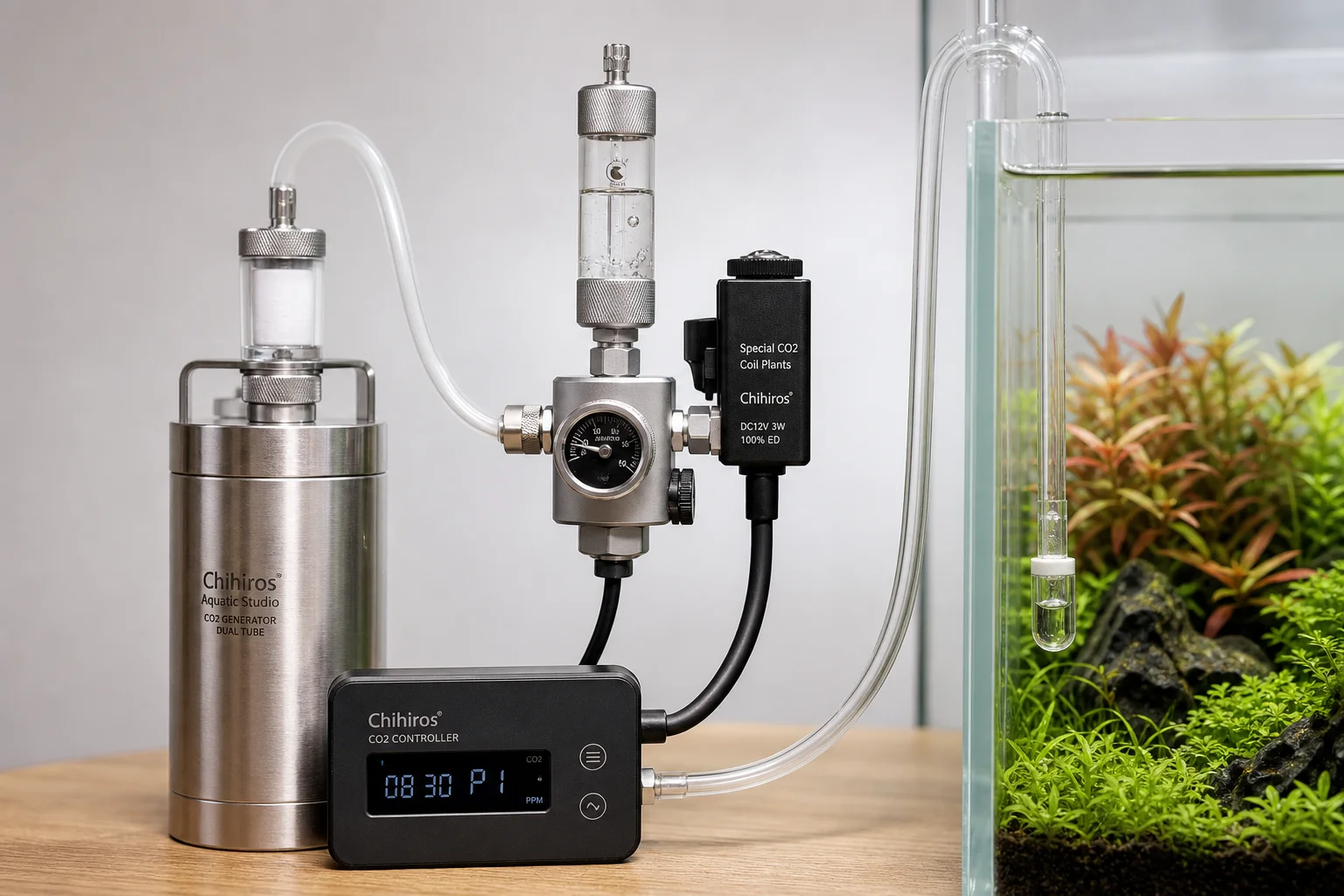
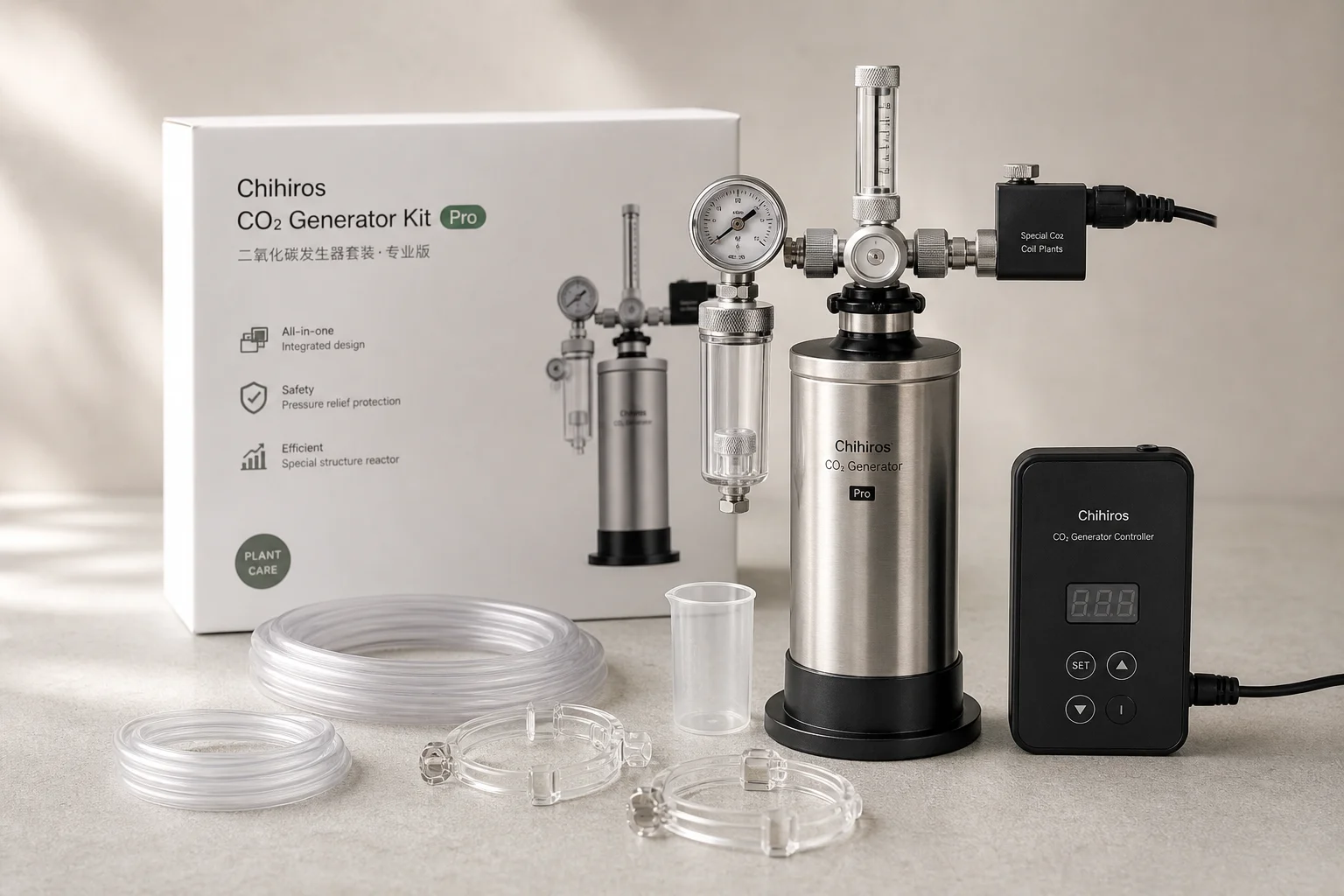
The major advantage is the shutoff valve, which eliminates 24/7 operation and saves CO2. The ingredients are inexpensive and easy to buy in bulk online. The system should run for several months depending on tank size. The downside is that 300 grams each of citric acid and baking soda produces only about 100 grams of CO2, which may be insufficient for very large tanks. Over time, ingredient costs can exceed the price of refilling a pressurized cylinder, though convenience may offset that.
Chihiros CO2 Regulator Mate with Pressurized Cylinder
For single-tank setups, pairing a pressurized CO2 cylinder with the Chihiros CO2 Regulator Mate offers simplicity and reliability. A 2-kilogram cylinder typically lasts 6 months to a year depending on usage, and refills are the most affordable long-term option.
The Chihiros CO2 Regulator Mate is one of the most affordable quality regulators available. It features a compact design, a bubble counter with an integrated solenoid valve, and a convenient water-fill feature that does not require unscrewing the cap. Setup is straightforward: attach the bubble counter to the regulator, connect the regulator to the cylinder, fill the bubble counter with water, and connect the tubing to your diffuser.
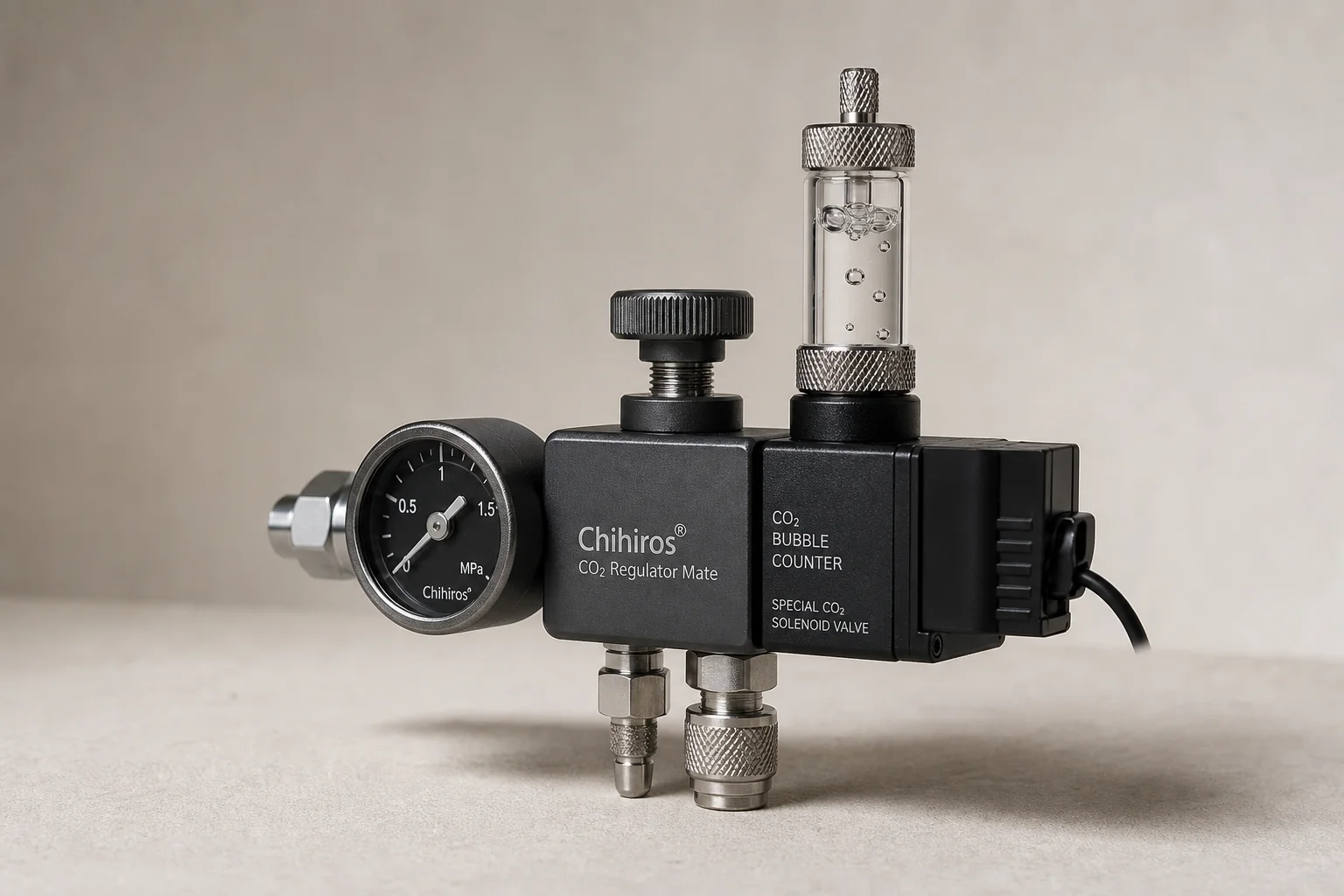
This combination is ideal if you have one or two aquariums and want a reliable, low-maintenance system. The compact regulator is easy to set up and made from quality materials. If you have multiple tanks, however, you would need separate cylinders and regulators, which becomes expensive and space-consuming.
Chihiros CO2 Regulator Pro for Multi-Tank Systems
If you maintain multiple planted aquariums, the Chihiros CO2 Regulator Pro paired with a single pressurized cylinder is the most efficient approach. This is the most expensive option upfront, but it eliminates the need for multiple cylinders and regulators.
The Chihiros CO2 Regulator Pro is significantly larger than the Mate and includes two gauges: one showing cylinder pressure and one showing working pressure. It accepts manifold attachments that allow you to run CO2 to multiple tanks from a single cylinder. For example, with five manifold connections, you could supply CO2 to five separate aquariums. The regulator comes with spare O-rings and a secure connection fitting between the cylinder and regulator.
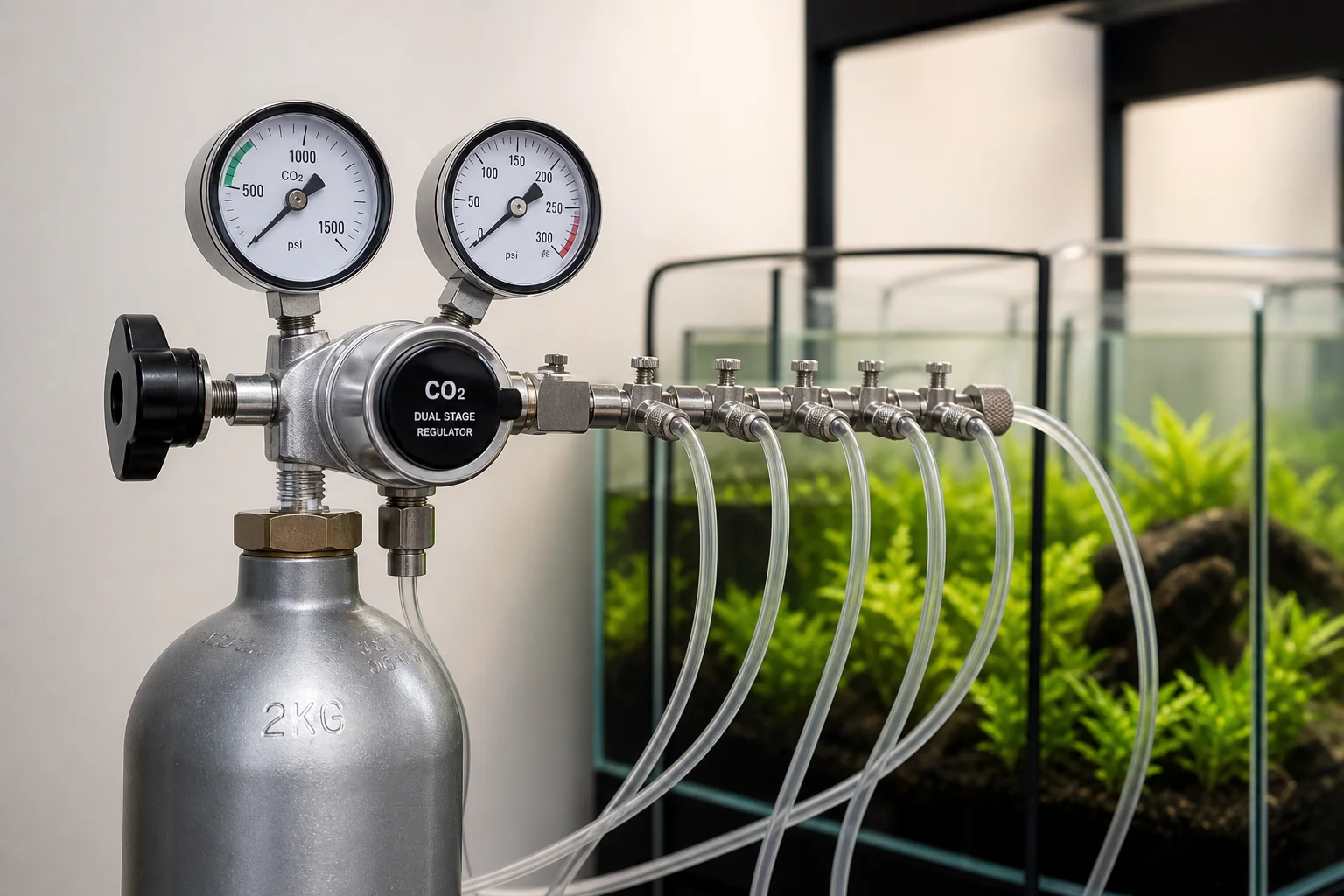
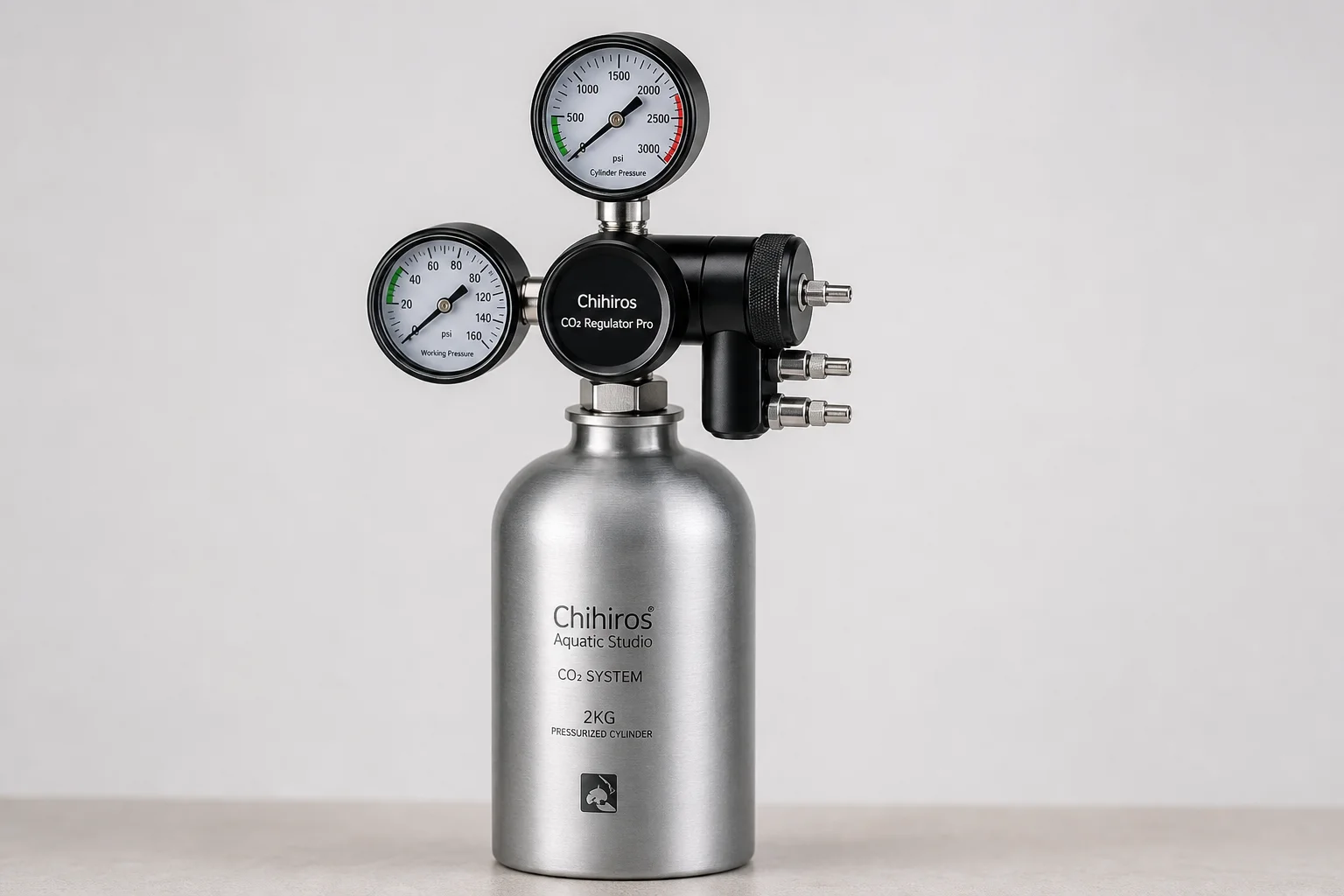
Setup requires a wrench to ensure tight connections without over-tightening. You can also pair this regulator with a controller device for automated scheduling across all connected tanks. This system is best suited for aquarists with three or more planted tanks who want a single, centralized CO2 source.
Conclusion
Your choice depends on tank count, budget, and convenience priorities. Start with DIY fermentation if you want to experiment with minimal cost. Choose the Dennerle kit for a more stable, pre-packaged fermentation system. Pick the Chihiros generator kit if you value shutoff control and prefer not to refill cylinders. Use the Regulator Mate with a pressurized cylinder for a single reliable tank. Finally, invest in the Regulator Pro if you have multiple tanks and want one efficient system. Each option works; the best one matches your specific setup and needs.
Further reading
Related Reviews
Aquarium Equipment
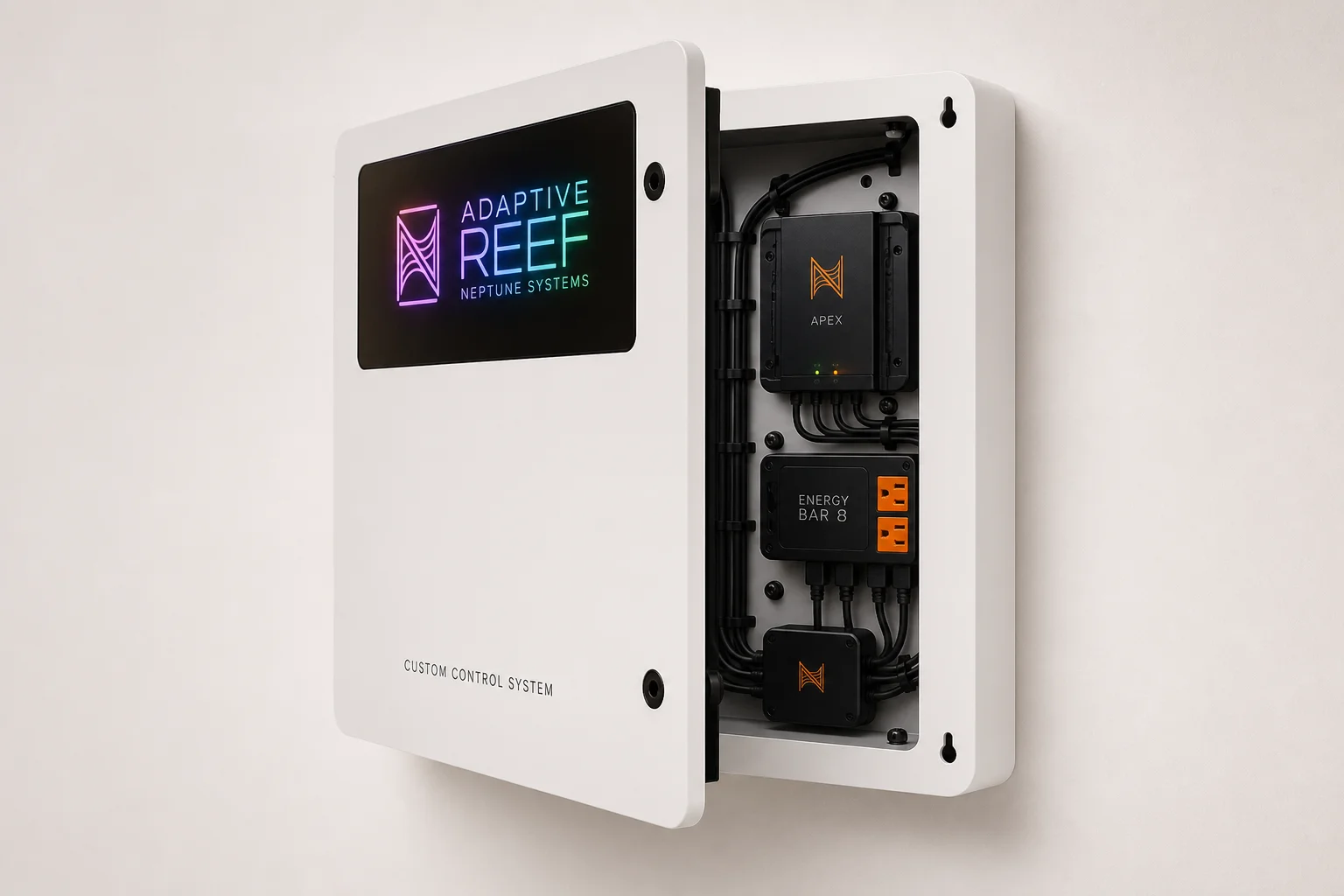
Adaptive Reef Neptune Systems Custom Control Board Review: Purpose-Built Organization for Apex Systems
A pre-configured controller board designed specifically for Neptune Systems Apex setups, offering integrated cable management, tablet mounting, and RGB lighting in a ready-to-use package.
Aquarium Equipment
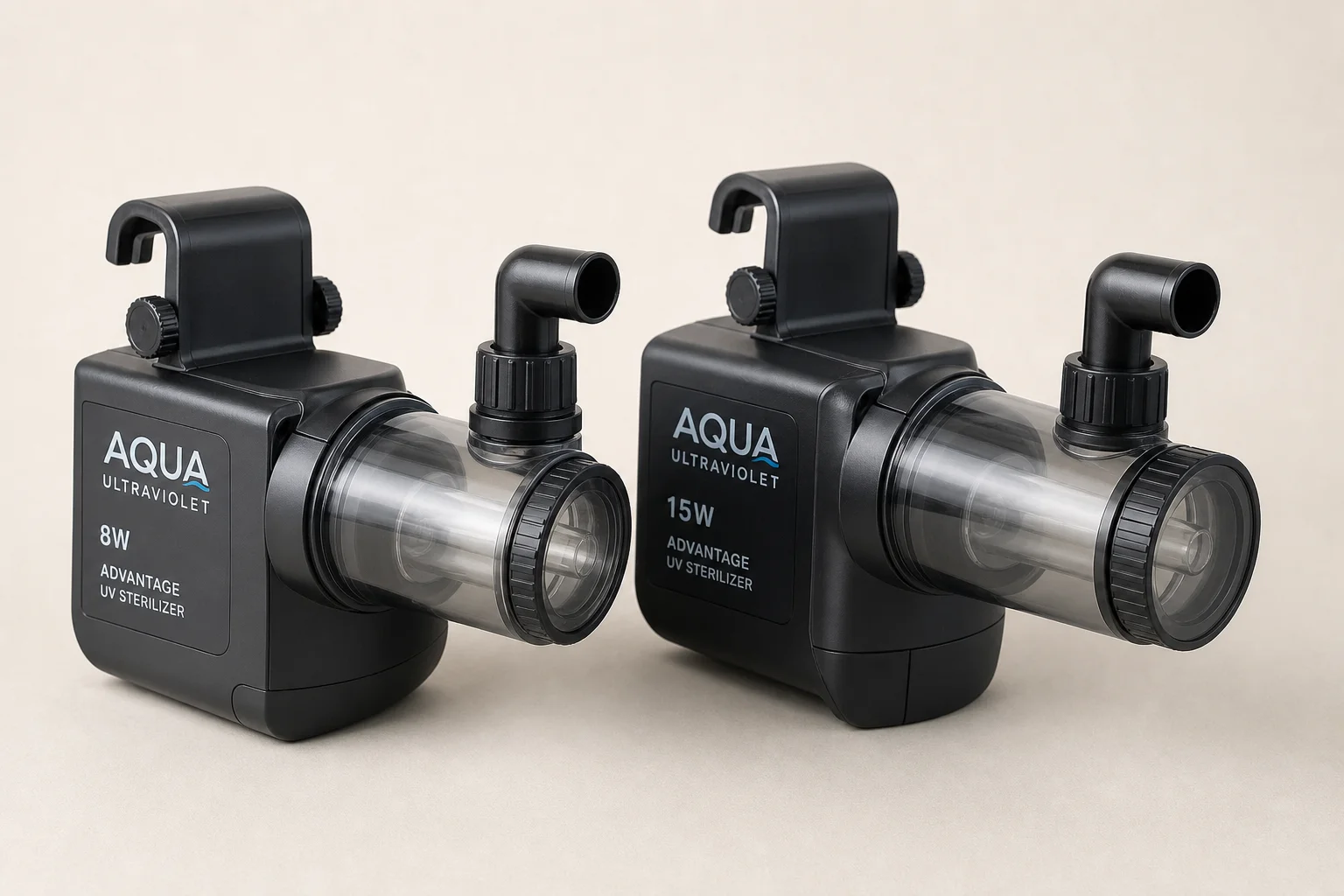
Aqua Ultraviolet Advantage Hang-On UV Sterilizer: 8-Watt vs 15-Watt Guide
Two compact UV sterilizers designed for aquarium owners seeking parasite and algae control without complex plumbing or large footprints.
Aquarium Equipment
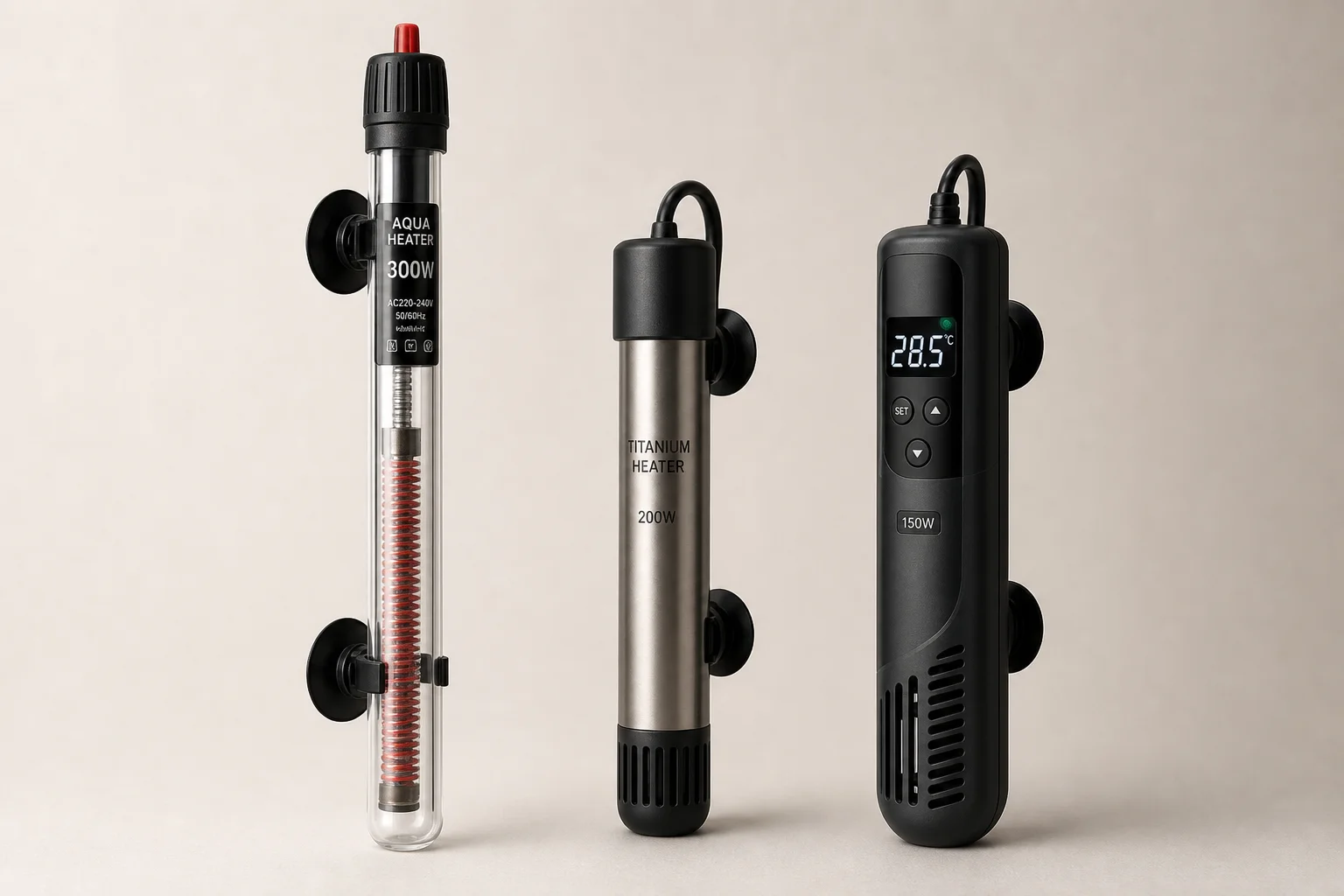
Best Aquarium Heaters for Saltwater Tanks: Glass, Titanium, and Plastic Options Compared
A practical guide to choosing, installing, and maintaining aquarium heaters with redundancy strategies to protect your tank from temperature failure.