Aquarium Lighting
Reef Brite LED Strips: XHO and Lumi Lite Pro for Reef Tanks
A practical look at two Reef Brite LED strip options, the mounting brackets that unlock their potential, and the spectrum mix that works best over a reef tank.
Introduction
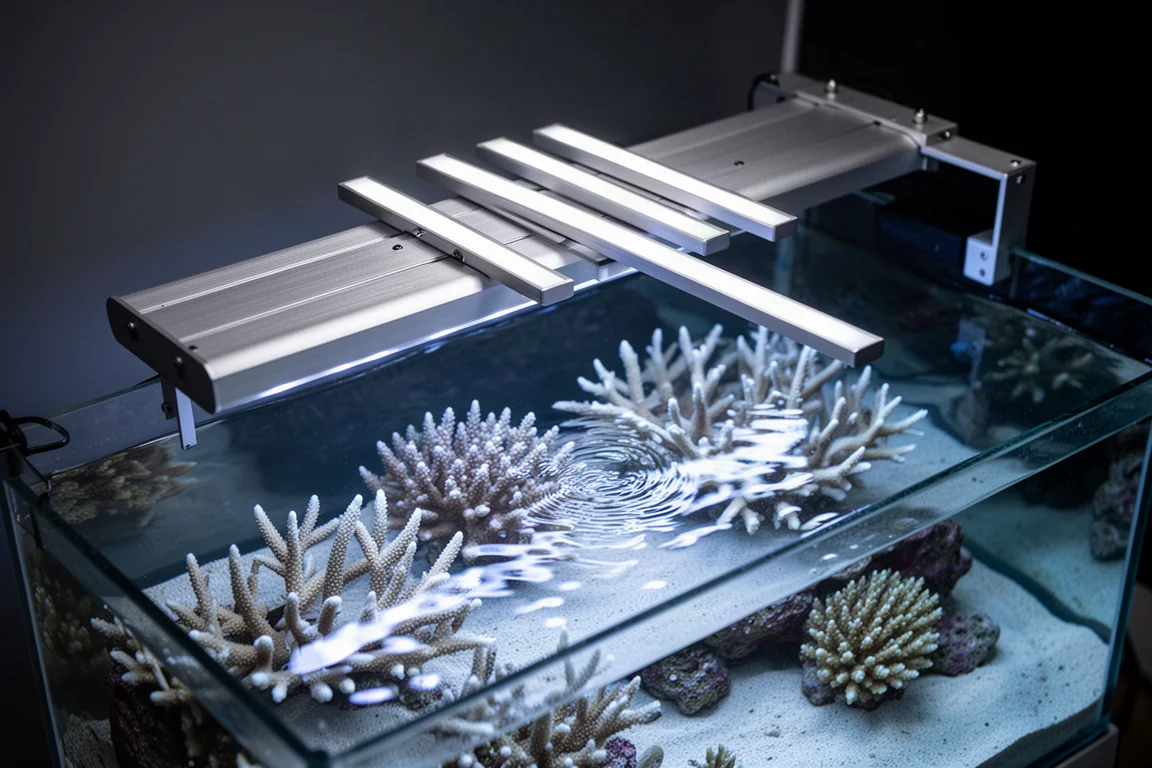
Reef Brite’s LED strips have a narrow, unglamorous form factor, but they address a specific problem in reef aquariums: replacing the broad, even fill light that T5 fluorescent tubes have traditionally supplied, without the periodic bulb swaps and hazardous-waste handling that come with tubes.
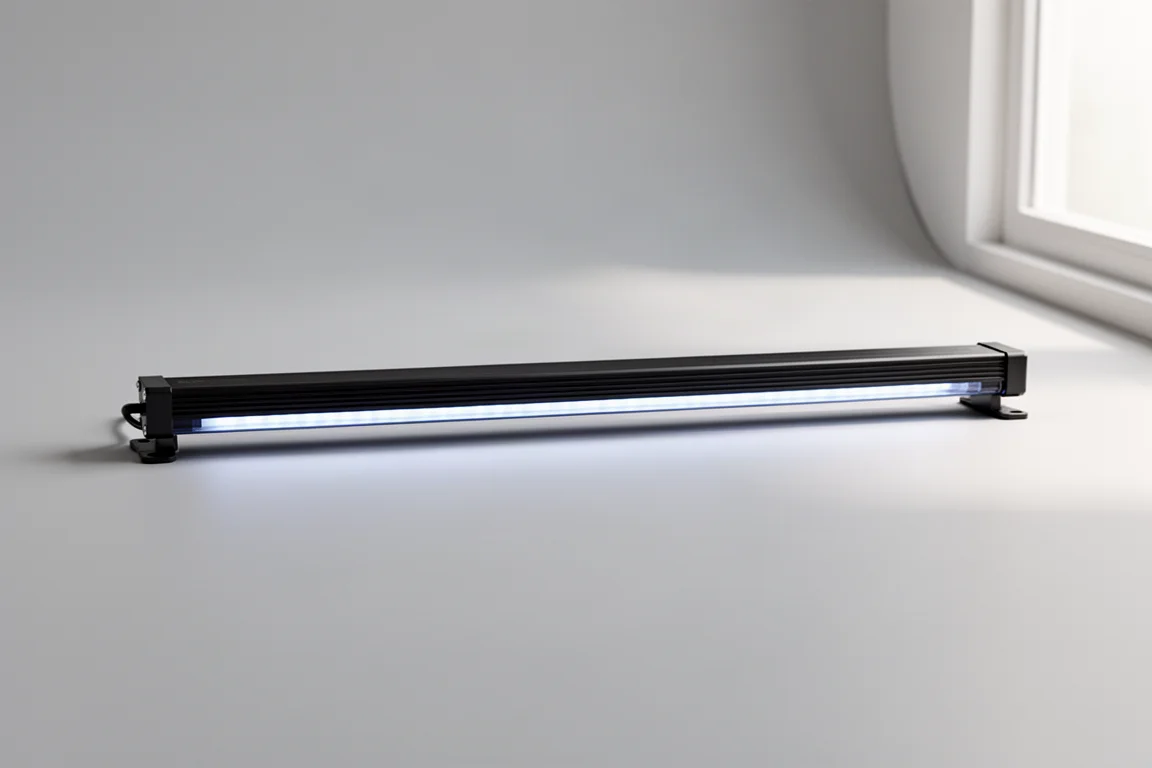
Two options in that range are worth understanding. The XHO LED strip is the higher-output choice, built for multi-strip arrays that need to stand in for full T5 grids. The Lumi Lite Pro is the value pick, and it measured near the front of the field on cost per PAR. Both share the same mounting system, the same colour options, and the same behaviour over a tank.
This guide covers where these strips work best, how the mounting brackets change what they can do, which colour mix to choose, and which mistakes are worth avoiding before you spend anything.
What These LED Strips Are Designed For
These strips are often assumed to have one use case: clipping onto the front of a T5 fixture such as a Sunpower, where the brackets line up conveniently. That is a genuine application, but it is far from the only one.
The bigger role is fill light. T5 tubes have long been valued less for peak intensity and more for the broad blanket of light they spread across a tank, reaching areas a compact LED puck never covers evenly. Strips built from many lower-powered LEDs reproduce that effect in a much slimmer package.
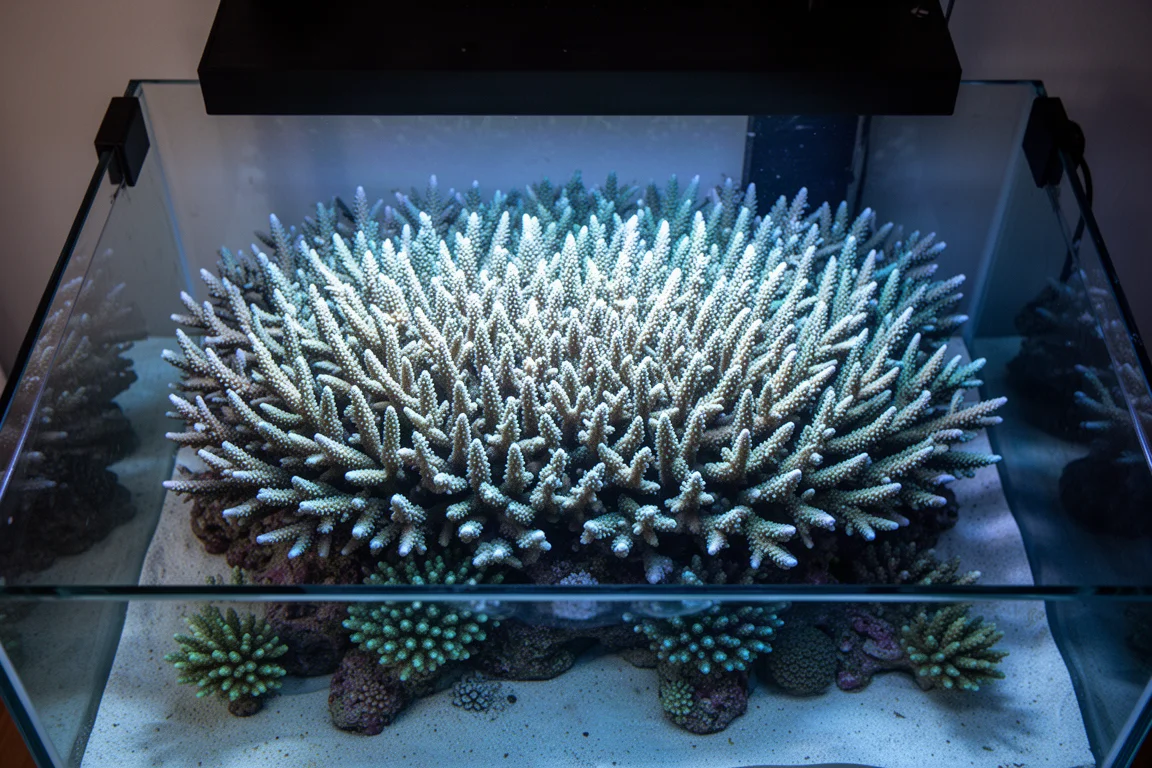
The second major role is scale. As a reef tank matures, corals shade their neighbours and shade themselves, and dense SPS colonies are hit hardest. Arranged in multiples on a wide bracket, the light array grows to roughly the footprint of the area being illuminated. That is what allows a multi-strip setup to fill in shadowed pockets instead of leaving dark gaps between colonies.
Reef Brite XHO LED Strip
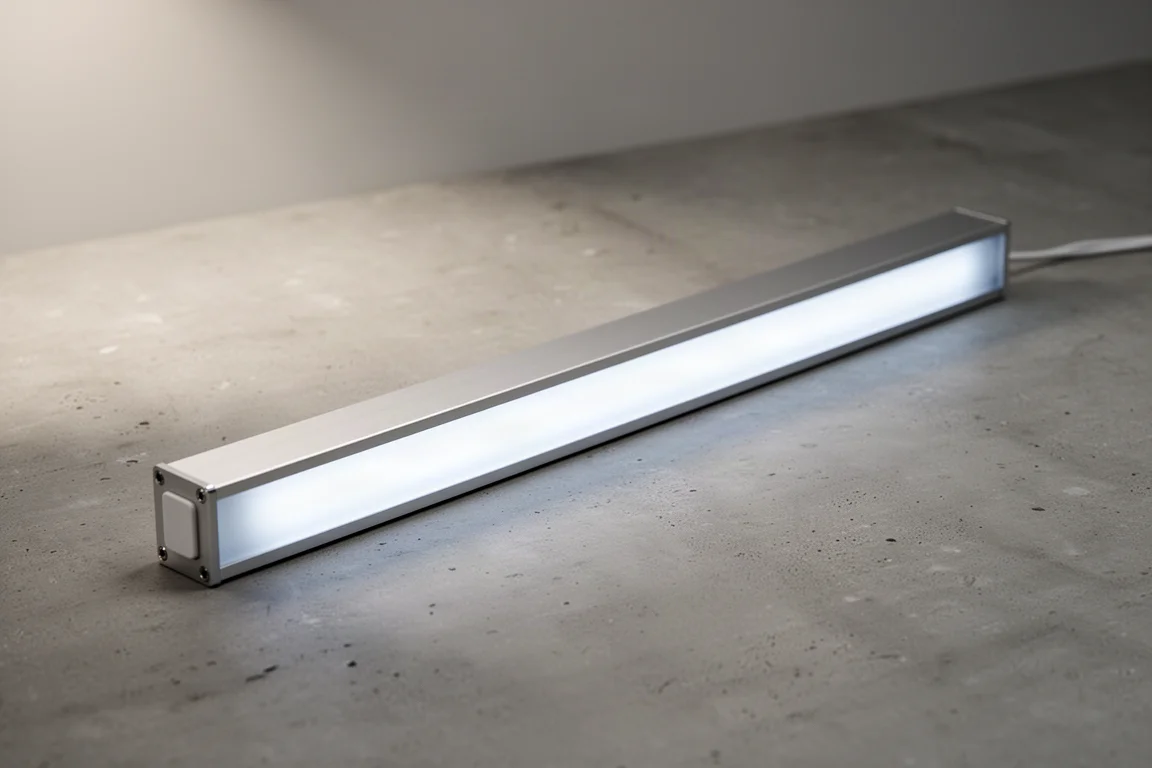
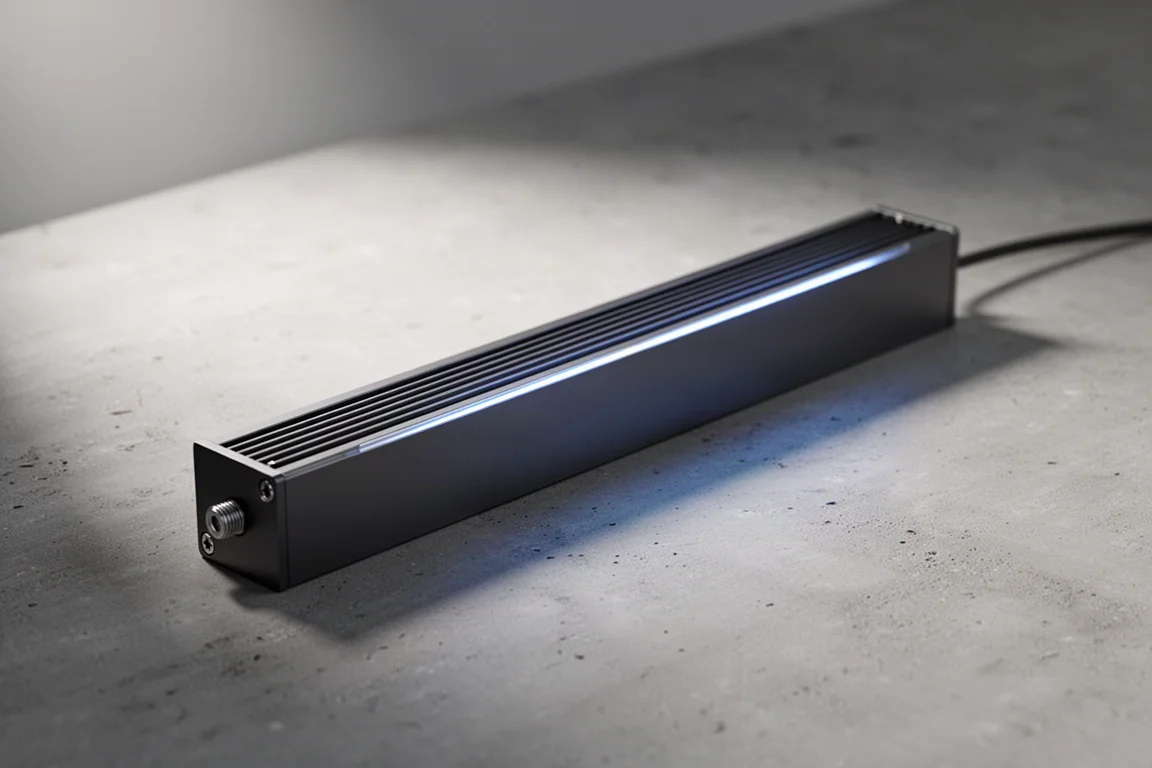
The XHO is the higher-output option of the two, and the one that makes most sense when strips are used in numbers rather than singly.
In comparative testing, a single XHO strip produced more PAR and better spread than a single T5 bulb from the tubes tested. That is the central argument for using these LEDs as a direct replacement for supplemental T5 lighting rather than an addition to it. Stacked on a five-strip mounting bracket, the array went further still, outperforming full grids of T5 tubes. Coverage and output rise together as strips are added, which is why wide arrays of five or more strips are a realistic alternative to a tube setup.
One characteristic is worth understanding before purchase: these strips do not add much shimmer. Because the light comes from many lower-powered LEDs with overlapping points of output, the result is a soft, even wash rather than sparkling point-source highlights. Hobbyists who want shimmer alongside that blanket coverage typically pair the strips with a light designed to produce it.
The XHO also ships without an inline dimmer. Adding one costs under $20, while the alternative control methods sit closer to $130 to $150. The dimmer is an inexpensive way to make the fixture adjustable instead of running it at full output on a timer.
Mounting Brackets and Aiming the Light
The three-strip and five-strip mounting brackets are the accessory that changes how much these lights can do. They lock multiple strips into a single fixture, turning individual units into one wide light source sized to cover a coral colony rather than a single point of light.
Aiming is the other advantage that is easy to overlook. On a three or five bracket, each strip is held at a single mounting point, which leaves it free to pivot. Strips can be angled toward the front glass, toward the back of the tank, or toward any region receiving too little light, instead of being locked into a straight-down orientation.
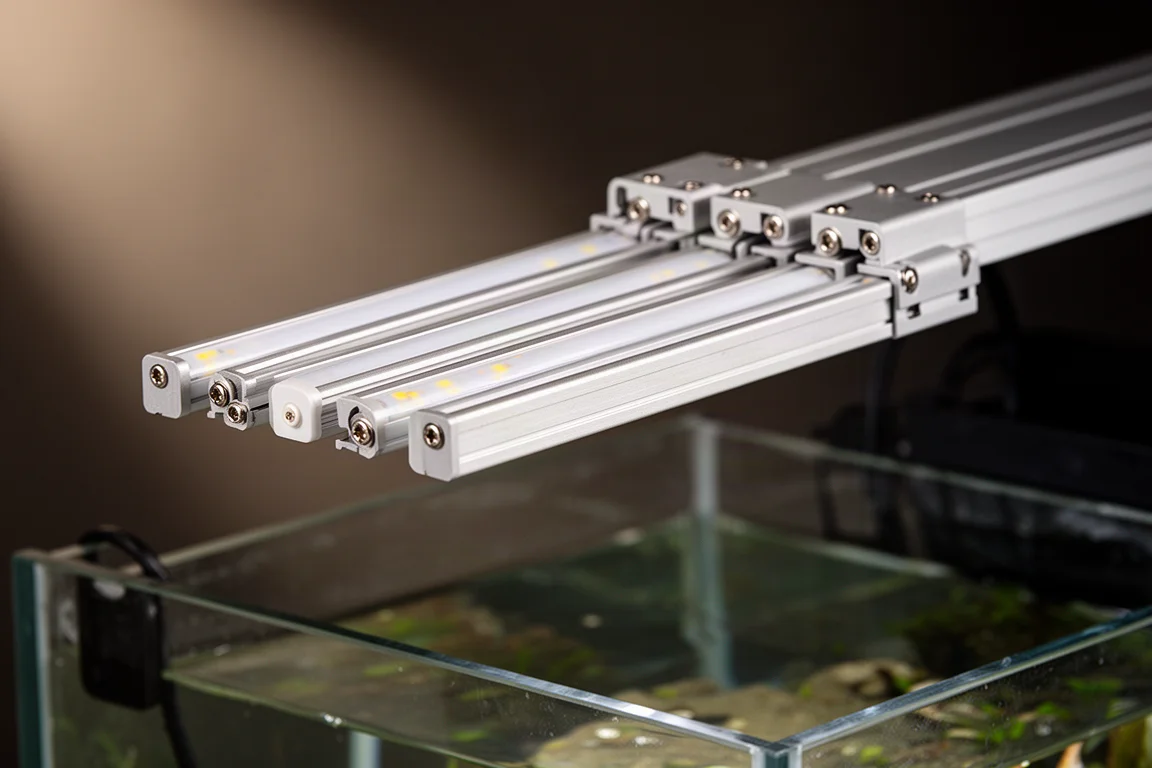
For an aged SPS tank, that combination of width and adjustability is the practical answer to shadowing, and it is the reason the brackets deserve a place in the budget alongside the strips themselves. Start with the three-strip bracket if you are testing the approach, and step up to the five-strip version when you need the array to match the footprint of a dense colony.
Reef Brite Lumi Lite Pro
The Lumi Lite Pro is the value proposition in the range. When popular reef lights were compared on cost per PAR, calculated as average measured PAR divided by cost, the Lumi Lite Pro ranked second lowest of the group.
That metric matters more than a headline price because it compares performance against what you actually spend, rather than simply which fixture is cheaper. A low-cost light that produces little usable output can end up costing more per unit of PAR than a slightly pricier fixture. On that measure, the Lumi Lite Pro sits near the front of the field, which makes it a sensible entry point for hobbyists building a fill-light array on a budget without giving up output.
It shares the same mounting and aiming behaviour as the XHO, so it runs on the same brackets and pivots the same way. That makes mixing the two practical: a build can lean on XHO strips where peak output matters and use Lumi Lite Pro strips where coverage per dollar matters most.
Spectrum Mixing: Actinic, 50/50, and White
These strips are sold in three colour options: white, actinic blue, and a 50/50 mix of blue and white. Getting the ratio right matters as much as choosing the fixture.
Spectrum testing pointed to a blend of roughly one third 50/50 strips and two thirds actinic blue strips as the combination that lands on the target spectrum peaks. On a five-strip bracket, that translates to two 50/50 strips and three actinic blues. The same blend was assessed by eye as well, and the tank looked good under it, so the ratio holds up on both measurement and appearance.
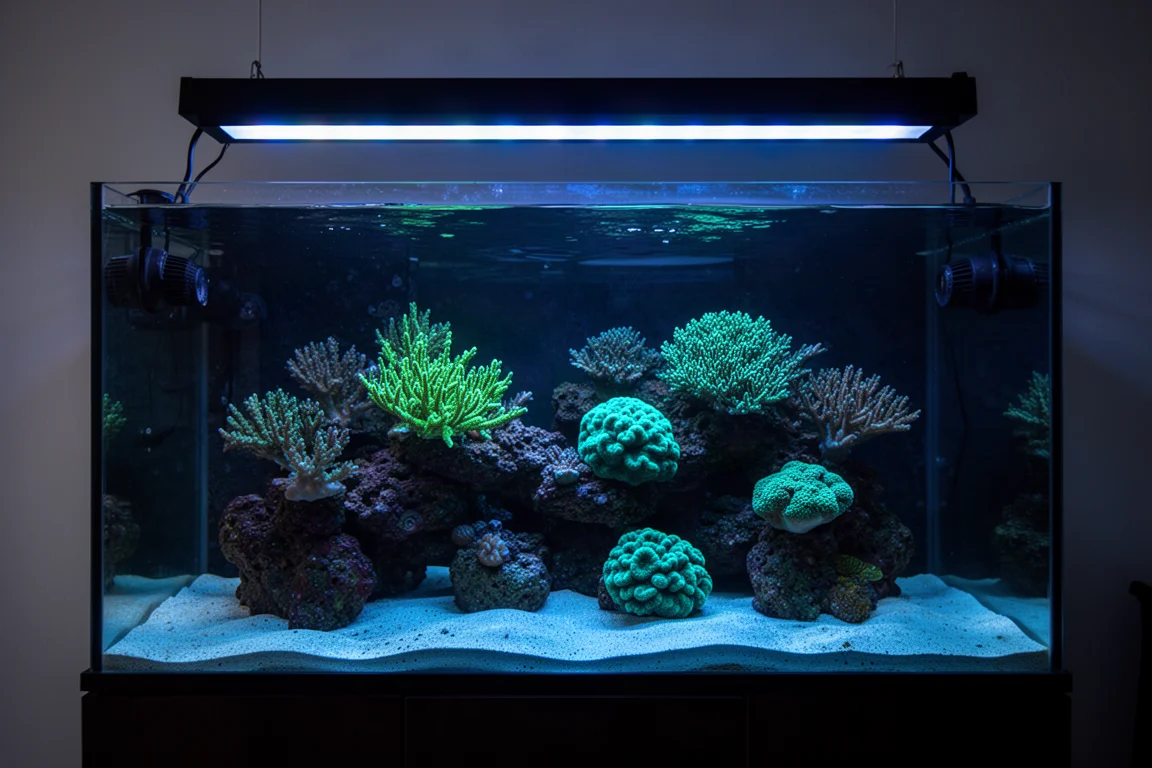
All-white strips are the combination to skip. Across the configurations that were mixed and compared, white-only setups did not make the tank look good, and that visual result was the deciding factor rather than any single spectrum reading. A hobbyist set on using white can try a ratio of four actinic blues to one white strip, which produced a fairly desirable look, but the 50/50 and actinic blend remains the safer default for most tanks.
Measuring Output Before You Commit
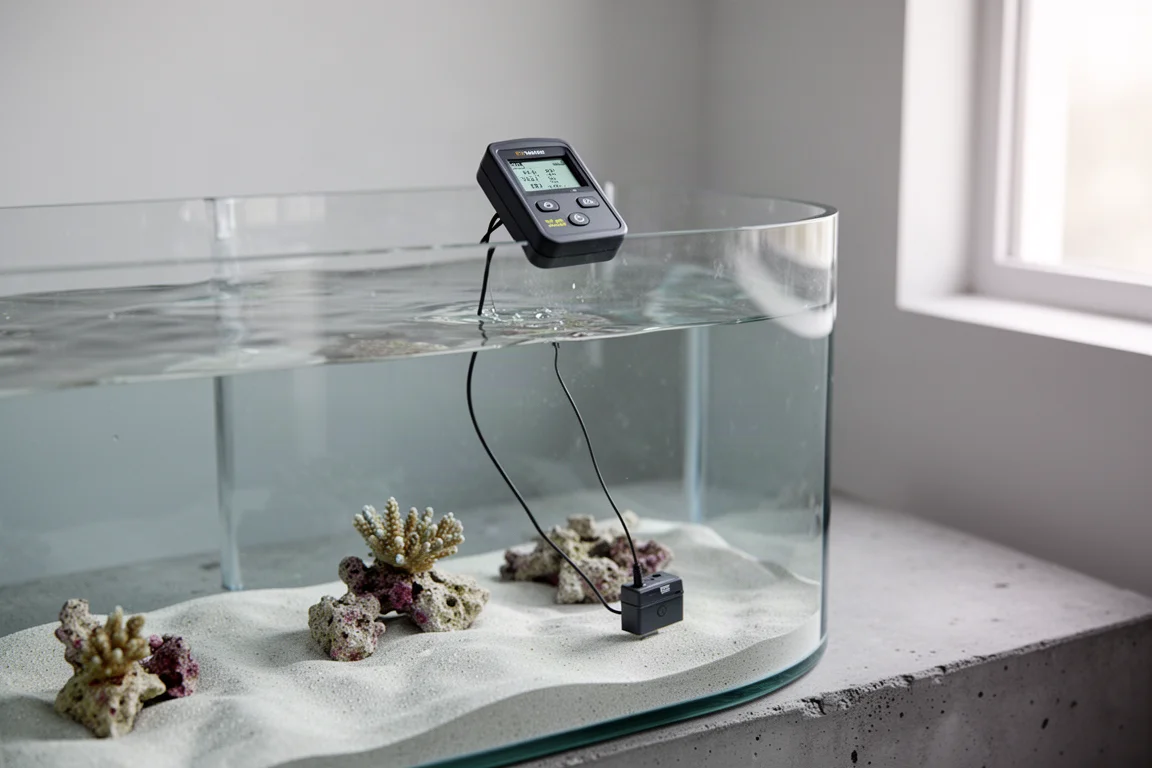
A PAR meter is not the most exciting purchase in the hobby, but it is the one that most directly changes outcomes. At roughly $70, it is the highest-return item that can go into a reef tank, because it replaces guesswork about intensity with a number you can act on.
Many tanks sit well outside ideal PAR ranges, and while a small number of setups land in a good range by chance, that is not the common case. Strips make this easier to manage rather than harder, since output scales with the number of strips and, on the XHO, can be dialled in with an inexpensive inline dimmer. Adding strips one at a time and verifying the result with a meter is a far more controlled process than adding a full array at once and hoping the intensity is right.
If you are building an array gradually, take a reading after each addition. It costs nothing beyond the meter itself and keeps the tank inside a range you have chosen deliberately.
Buying Advice
Choose the XHO if output is the priority and you intend to run strips in multiples, particularly if you are replacing supplemental T5 lighting or trying to cover a mature SPS colony where shadowing has become a problem. Budget for an inline dimmer at the same time, since it costs under $20 and gives you control that the strip does not include out of the box.
Choose the Lumi Lite Pro if cost per PAR is the deciding factor. It ranked second lowest on that measure among the popular lights compared, and it uses the same brackets and aiming behaviour, so it can anchor a budget-conscious array or sit alongside XHO strips in a mixed build.
Whichever you pick, add a three or five strip bracket if shadowing is the problem you are solving, since a single strip cannot fill a wide footprint on its own. Go with a spectrum mix of roughly two thirds actinic blue and one third 50/50 rather than all-white strips, and consider a PAR meter alongside the hardware. It is the cheapest part of the purchase and the one that tells you whether the rest of it is working.
Conclusion
Reef Brite’s LED strips are less about raw novelty and more about solving two persistent aquarium problems: replacing the even fill light of T5 tubes, and covering mature coral colonies that shade themselves. The XHO handles the output side of that job, especially in five-strip arrays, while the Lumi Lite Pro delivers strong performance per dollar for hobbyists watching the budget.
The supporting details decide how well either one works. Mounting brackets turn individual strips into one wide, aimable light source, an inexpensive dimmer makes the XHO adjustable, and a mix of actinic and 50/50 strips produces the spectrum and the look most reef keepers are after. Get those pieces right and these slim strips quietly do the job that a rack of fluorescent tubes used to.
Further reading
Related Reviews
Aquarium Lighting
AI Blade LED Lights Review: A Versatile Strip Light for Reef Tanks
A practical look at the AI Blade LED line, including the value-focused Grow spectrum, mounting options, app control and PAR performance.
Aquarium Lighting
AI Hydra 32 and Hydra 64 Setup Guide: Mounting Heights, Spacing, and Add-On Lighting
A practical reef lighting guide covering optimal mounting heights for the AI Hydra 32 and Hydra 64, spacing for even coverage, and when add-on lighting is worth it.
Aquarium Lighting
AI Prime Review: A Compact Reef Light That Grows With Your Tank
A small, modular reef aquarium LED that reaches LPS and soft coral PAR levels over a 60-gallon cube, plus the spacing, mounting height, and control habits that make it work.