Aquarium Coral Nutrition
Red Sea Reef Energy AB Plus Review: One Bottle for Coral Nutrition
A practical look at Red Sea Reef Energy AB Plus, a single-bottle coral food that covers the share of nutrition photosynthesis does not.

Introduction
Photosynthetic corals can draw as much as 80 percent of their nutritional energy from the symbiotic algae living inside their tissue, which leaves at least 20 percent that has to come from somewhere else. Red Sea Reef Energy AB Plus is built for that remaining share. It is a balanced, proprietary blend of amino acids, fatty acids, vitamins and carbohydrates, supplied as a single liquid that corals can absorb directly rather than having to capture and break down.
The formula was previously sold as a two-part system. Red Sea found a way to combine the components into one bottle, so the product keeps the same role while becoming simpler to live with.
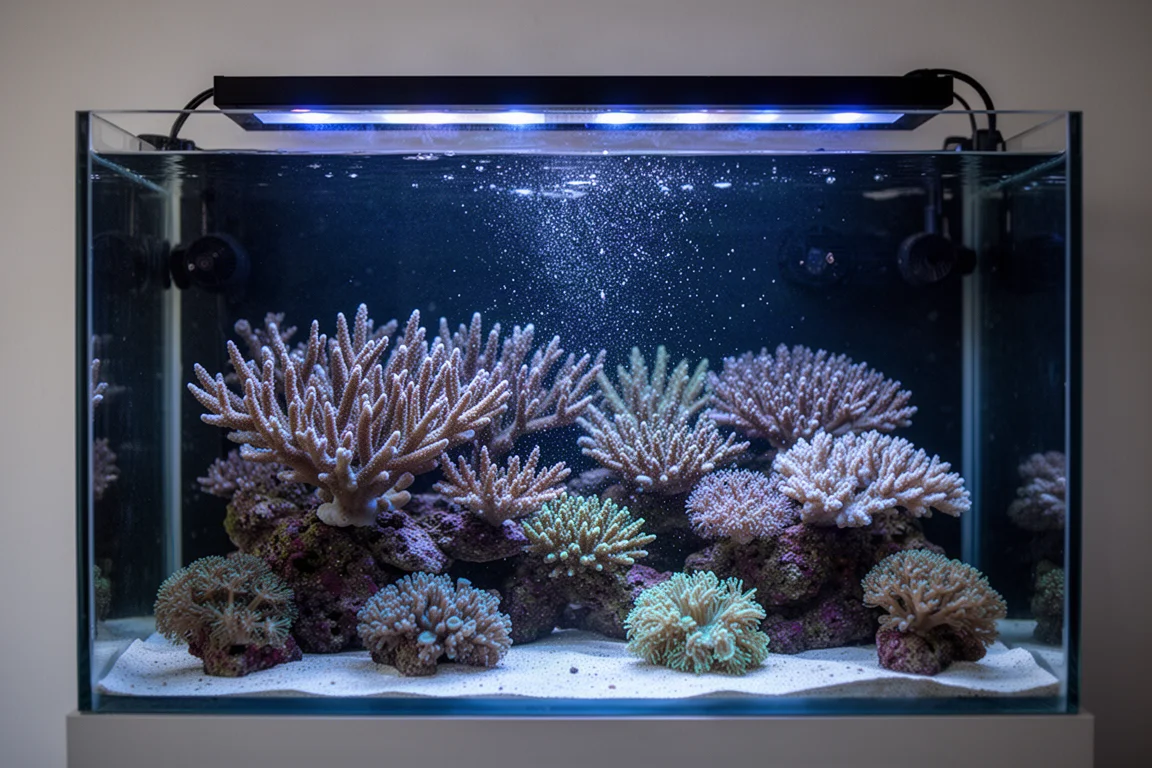
Corals that receive a fuller spread of nutrients are better positioned to do more than simply survive in a tank. The nutrients in a product like this support resilience against imbalances and swings, help corals cope with physical damage, and give them the material they need to regenerate tissue when their symbiotic algae cannot cover the demand.
Who Red Sea Reef Energy AB Plus Is For
This is aimed at reef keepers who already have the fundamentals in place, such as stable water chemistry, suitable lighting and thoughtful flow, and now want to close the gap in coral nutrition. If you are running a mixed reef or a stony coral dominated system and want a routine that adds vitamins, amino acids, fatty acids and carbohydrates on a predictable schedule, this fits that approach.
It is also relevant for keepers running ultra low nutrient systems, where corals hold less symbiotic algae in their tissue than normal and therefore lean more heavily on what the keeper adds to the water.
Because the blend is in liquid form and can be absorbed directly, it also suits tanks where broadcast feeding of heavier solid foods is awkward, or where a keeper wants something that can be dosed by hand or through a pump with the same bottle.
Main Strengths of Red Sea Reef Energy AB Plus
The headline convenience is the move from two bottles to one. The blend stays the same in intent, a combination of amino acids, fatty acids, vitamins and carbohydrates, but the daily routine is reduced to a single measured dose.
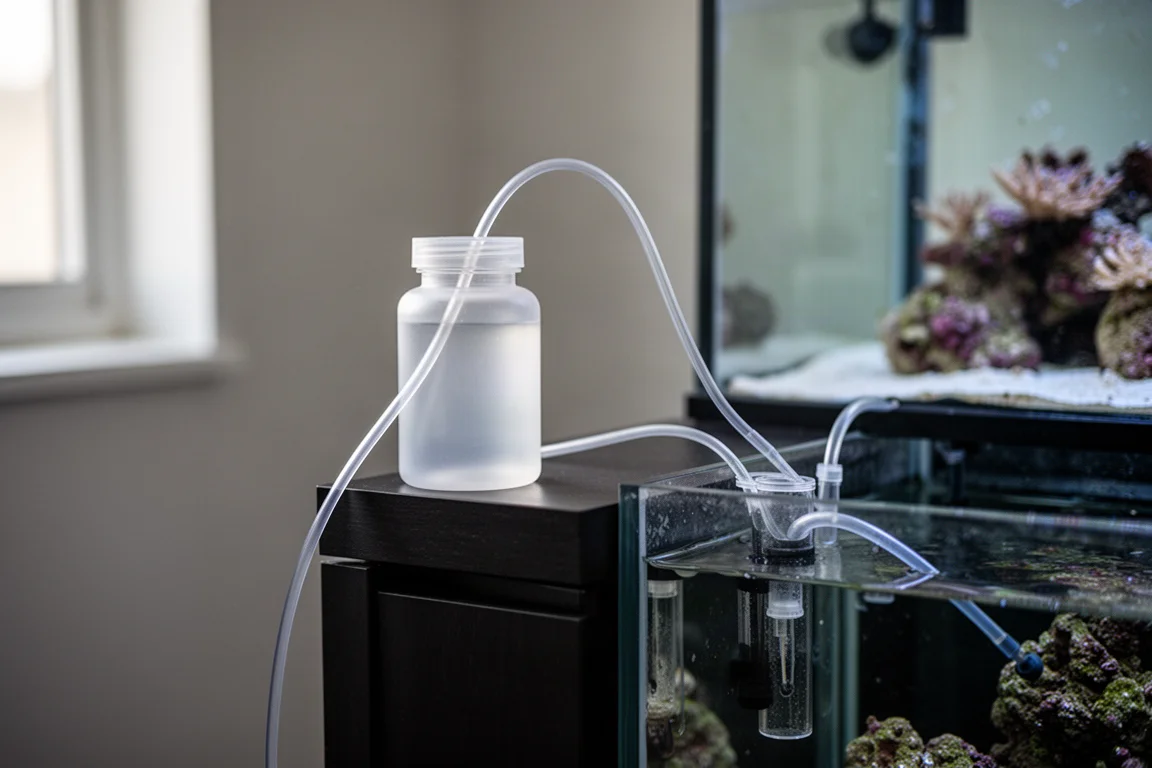
The bottle hardware is unusually well thought out for a liquid coral food. The lid is designed to accept tubing so the bottle can be set up on a dosing pump without modification, and Red Sea includes a quick start guide that walks through the setup. A 50 millilitre by 4 millilitre measuring cup is included for accurate hand dosing. Together these details mean you do not have to buy a separate dosing container or cut and reseal the bottle yourself.
Dosage guidance is printed clearly on the bottle and broken down by tank type, so the recommended amount is easy to find at the moment you need it rather than buried in a leaflet.
Dosing and Daily Use
Red Sea breaks the daily dose down by system. For SPS and mixed reefs the recommendation is 4 millilitres daily per 25 gallons. For SPS-dominated reefs it rises to 8 millilitres daily per 25 gallons. For ultra low nutrient systems, where corals carry less symbiotic algae than usual, the figure is 12 millilitres daily per 25 gallons.
For best results, the advice is to switch off the return pump or engage feed mode for at least 30 minutes while dosing. Keeping the food suspended in the aquarium rather than letting it pass through filtration matters, because a skimmer or carbon can pull it straight out of the water and waste the dose.
Spot feeding is an option as well. Mix one part Reef Energy AB Plus with two parts aquarium water, turn the flow down first so the mixture stays near the corals, then leave it for 15 to 30 minutes before bringing the pumps back up.
The Glow Under Blue Lighting
Under blue LED lighting the liquid glows a greenish-yellow colour. It looks good, but it is also a working tool, because you can watch how the liquid travels once it enters the tank.
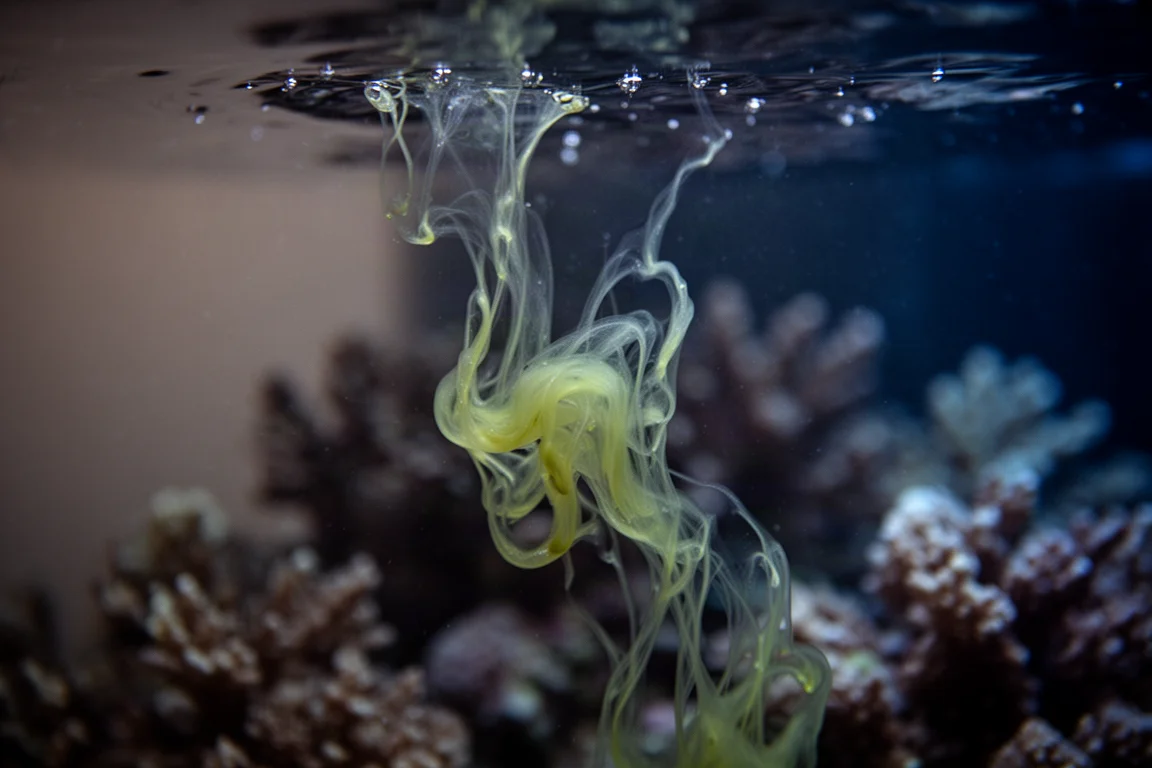
As the food moves through the aquarium, it shows where flow is strongest and where it is weaker or lacking. That gives you a reason to make small adjustments to your flow pumps while you are feeding the corals anyway, which is a useful bonus in a product that was bought for nutrition rather than diagnostics.
Things to Consider Before Buying
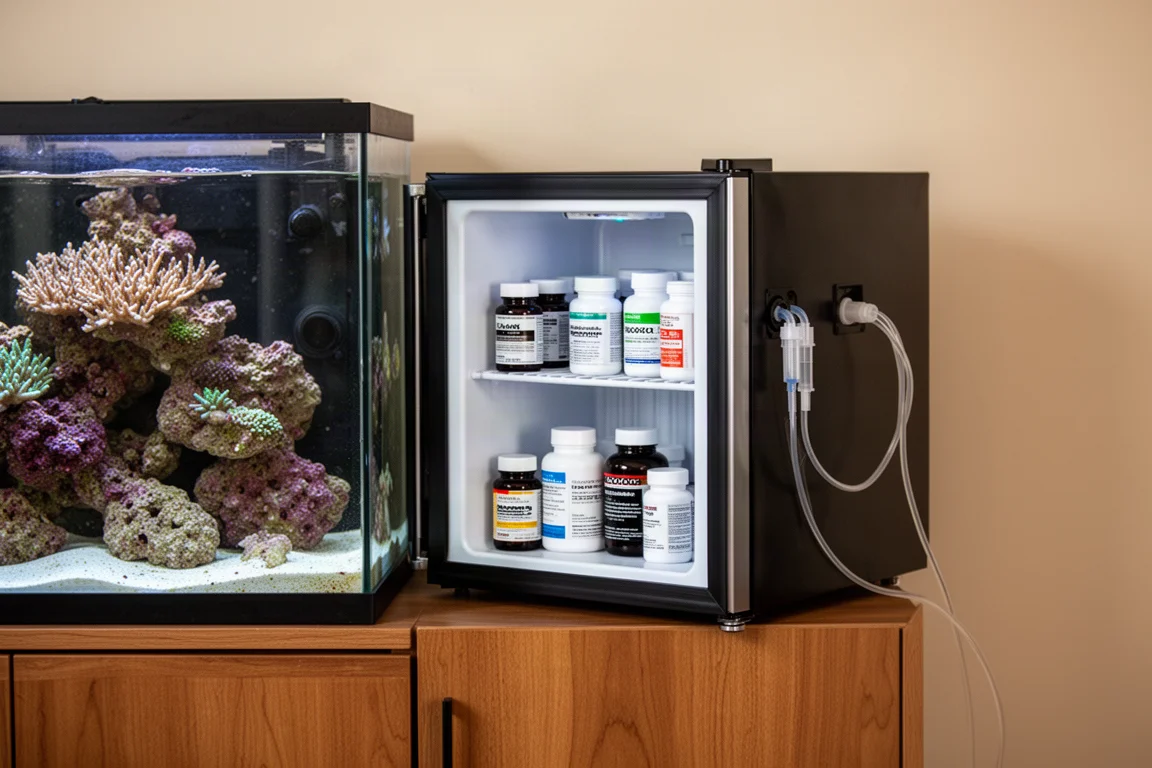
Refrigeration is the main practical requirement. The bottle needs to stay cold to remain fresh, and Red Sea recommends keeping no more than one week’s worth of product in a dosing pump at a time. A common workaround is a small mini-fridge near the tank with a port for the tubing to run in and out. Alternatively, keep one of the larger bottles in the fridge and refill a small 250 millilitre bottle each week with the amount your tank needs.
The other consideration is filtration. If the return pump stays on and the skimmer or carbon keeps running through the dose, a meaningful share of the food can be removed before the corals have a chance to take it up. Building the feed mode pause into your routine is what makes the daily dose count.
Buying Advice
Reef Energy AB Plus comes in 250 millilitre, 500 millilitre and one litre bottles, plus a five litre jug. The smaller bottles suit keepers who want to keep a working supply in the fridge and refill weekly, while the bulk jug is the economical route for larger systems.
Running costs are modest for a daily coral food. For an average 100 gallon mixed reef dosed every day, the monthly cost works out to roughly $13 when buying the bulk five litre jugs, which makes a consistent daily routine easier to justify than a sporadic one.
If you dose by hand, the included measuring cup covers you straight away. If you prefer a dosing pump, the bottle and its lid are already set up for tubing, so the only thing left to decide is where the bottle will be kept cold. Either way, the choice really comes down to matching bottle size to tank volume and to how you plan to deliver the daily dose.
Conclusion
Red Sea Reef Energy AB Plus addresses the portion of coral nutrition that photosynthesis does not cover, and it does so in one bottle instead of two. The combination of amino acids, fatty acids, vitamins and carbohydrates, the direct absorption by corals, the dosing-ready lid and the clear guidance on the bottle make the daily routine straightforward.
The trade-offs are worth knowing in advance: the product needs refrigeration, a dosing pump should hold no more than a week’s supply, and the return pump or feed mode pause is part of getting value from each dose. For reef keepers running mixed or stony coral dominated tanks who want to round out nutrition, that is a workable set of compromises for a routine that is easy to keep up with.
Product link
View more details for Red Sea Reef Energy AB Plus
This product is mentioned in the review. Check the specifications, options, and compatibility before buying.
View more details for Red Sea Reef Energy AB PlusFurther reading
Related Reviews

Backpacking Gear
Building a 10 lb Base Weight: An Ultralight Backpacking Gear List
A practical walkthrough of the ultralight pieces behind a 10 lb base weight, from a 765 g pack and a roomy one-person tent to a full camp chair and a dependable water filter.

Road Bikes
10 New Road Bikes Worth Watching: Aero, Titanium, Steel and Endurance Standouts
A practical roundup of 10 new road bikes, from aero flagships chasing single-watt gains to titanium, steel and endurance platforms built for real roads.
Saltwater Aquarium Setup
10 Questions About Cycling a Saltwater Aquarium: What You Need to Know
Essential questions and answers for cycling a reef tank or saltwater aquarium, from biome building to light management and bacterial supplements.