Floorstanding Speakers
RBH Sound 85i Impression Tower Review: Compact Floorstanders With Genuine 30 Hz Bass
A three-way floorstander with a side-firing 8-inch woofer, a 30 Hz port tuning, and largely US assembly at $1,300 per pair.
Introduction
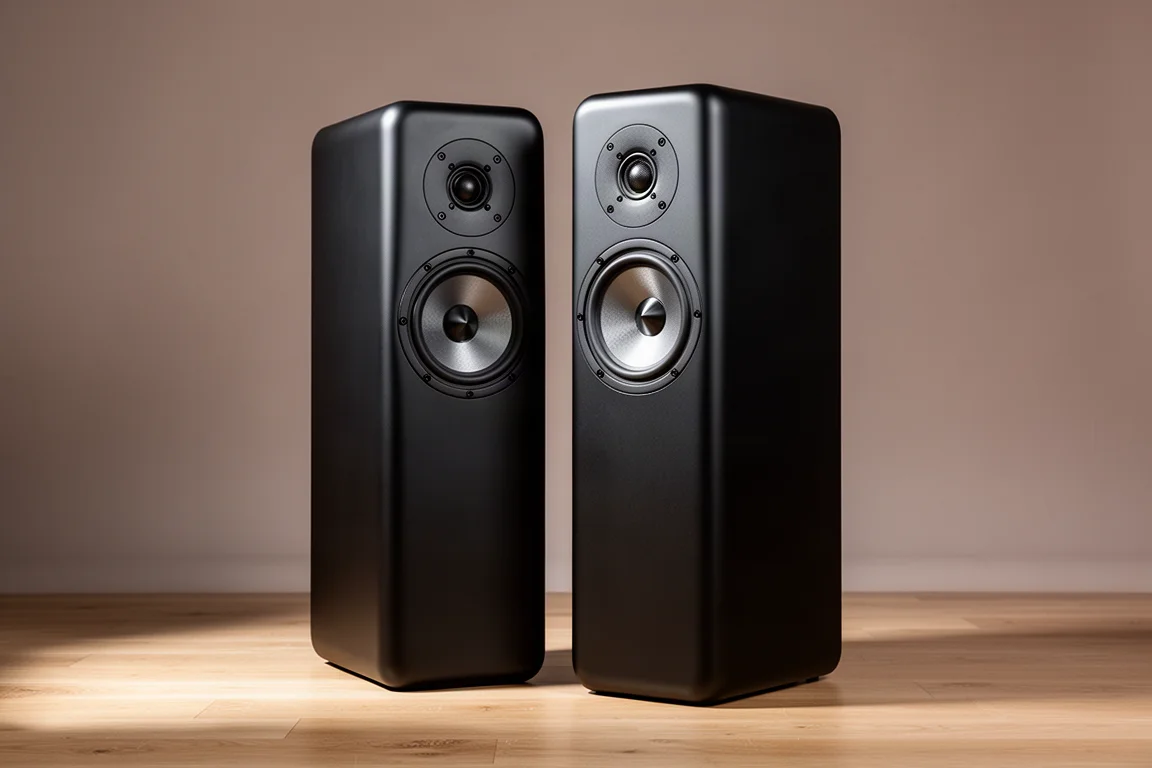
The RBH Sound 85i Impression Tower is a three-way floorstanding speaker that takes an unusual route for its price. Instead of chasing maximum cabinet volume, it pairs a compact midrange and tweeter section with a side-firing 8-inch woofer mounted low in the cabinet, then crosses the two sections over at just 100 Hz. In practice the design behaves like a small bookshelf speaker sitting on top of a purpose-built bass enclosure, delivered as a single slim tower.
At $1,300 per pair, the 85i is positioned as the more approachable alternative to RBH Sound’s larger modular towers. It is also assembled in the United States, with the cabinets built domestically, which is rare in this part of the floorstanding market.
The promise is straightforward: genuine low-frequency output from a port tuned to 30 Hz, a footprint that disappears into a room, and an impedance load that ordinary amplifiers can drive without strain. This review covers what the design delivers, where it asks for care during setup, and who should have it on their shortlist.
Who This Speaker Is For
This is a speaker for listeners who want a two-channel system without powered subwoofers. The 85i is built to run full range, and adding a subwoofer works against its purpose rather than complementing it. Anyone planning to high-pass their main speakers should look elsewhere, because the 85i already crosses its own drivers at 100 Hz and gains nothing from being filtered a second time. If a subwoofer is used at all, the 85i should still be configured to run full range.
It also suits smaller listening rooms. The bass alignment leans on room gain to fill in the lowest octaves, so a small or medium room will extract far more from it than a large open living space. Buyers with a big room and high output demands are better served by a larger speaker.
Finally, it appeals to listeners who care about where a product is built. Outside of the driver manufacturing, the 85i is largely produced and assembled in the United States, which is unusual for a tower in this price class.
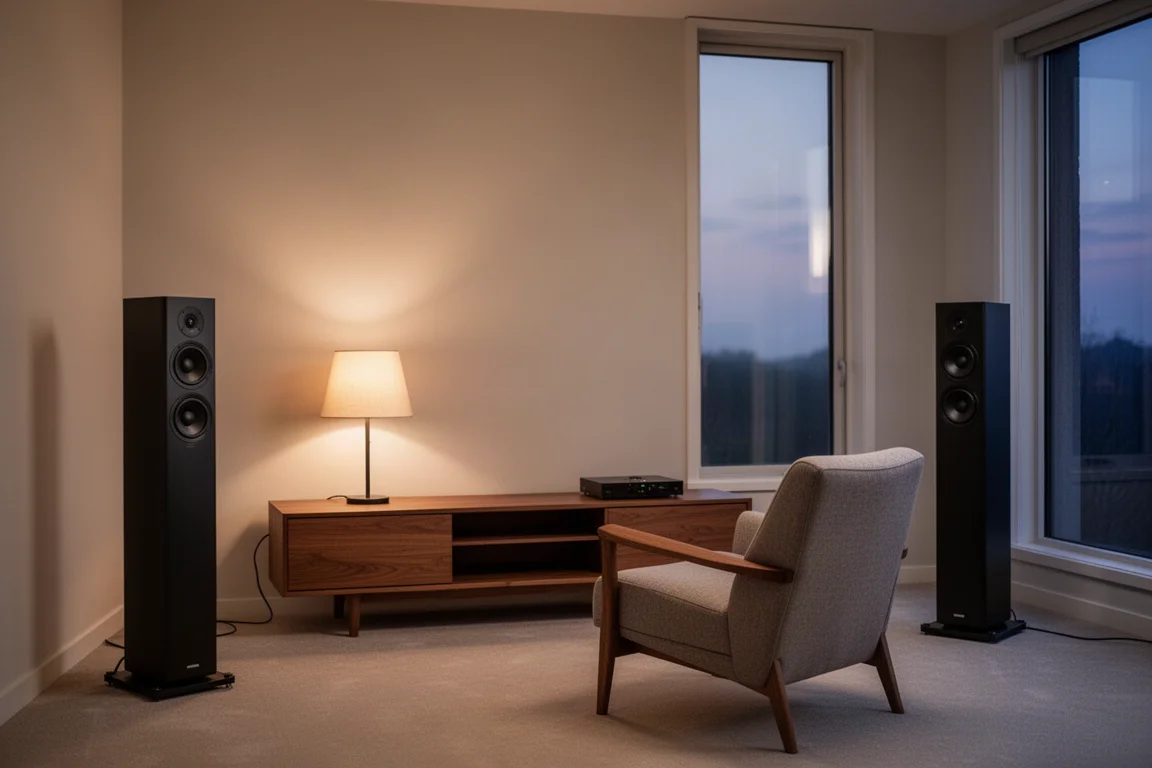
The slim cabinet and satin black finish make the speaker easy to live with over time. It is designed to recede into a room rather than dominate it, which matters for anyone who wants full-range sound without a large visual footprint.
Design and Build Quality
The driver complement is a 1-inch silk dome tweeter, a 5.25-inch cast aluminium midrange driver, and an 8-inch woofer. The midrange uses a genuine phase plug attached to the pole piece rather than a shaped dust cap pretending to be one, a detail that is uncommon at this price. Both the midrange and the woofer use aluminium cones, consistent with the approach RBH Sound takes across its range.
The woofer is side-firing and mounted near the bottom of the cabinet, which allows it to load into the floor much like a subwoofer placed on the ground. That placement helps avoid the bass cancellation that can occur with other driver arrangements. A slot port sits on the rear panel.
The cabinet itself is made from HDF rather than MDF. High density fibre board is denser than the medium density alternative, and the result is a cabinet that feels inert despite the speaker not being especially heavy. The finish is a real satin black, not a textured vinyl wrap, and it is applied domestically.
Grilles attach magnetically with no peg holes in the baffle. The neodymium magnets are strong enough that the grilles stay put in normal use, which means they actually protect the drivers. Internal wiring is thick twisted pair rather than thin single conductors, a step taken to reduce interference between runs inside the cabinet. The speakers arrive double boxed, with the inner carton separated from the outer one by foam blocks. Outriggers are included as well, which is generous at this price, though they are a fairly basic set.
Sound and Measured Performance
The measured response is very flat through the midrange and the upper frequencies. There is a gentle lift around 15 kHz, high enough in frequency that it adds a little air rather than anything objectionable, and there is a small dip in the region where the midrange hands off to the tweeter.
The more useful finding concerns listening angle. Measured off-axis, roughly 20 to 30 degrees away from the driver axis, the response is the flattest and smoothest of the set. On axis, the treble runs a touch hot. That gives listeners direct control over tonality through placement rather than EQ.
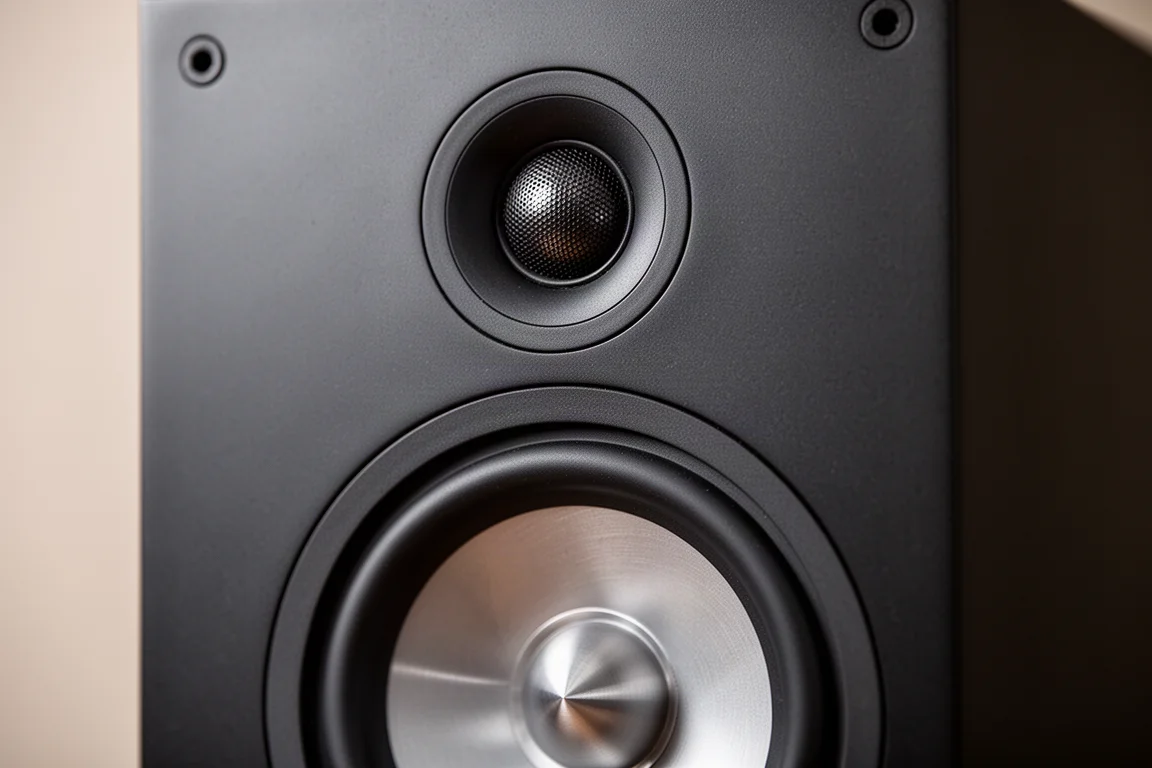
In listening, the 85i was preferred firing straight forward with little or no toe-in, which lands the listener in that neutral off-axis window. Angling the speakers more directly at the listening position sharpens the treble and tightens centre imaging, so toe-in becomes a matter of taste.
Dispersion is wide, which follows naturally from a design like this. The practical benefit is that listeners seated away from the sweet spot still hear a full-range, coherent presentation rather than a narrowed window.
Bass Extension and Room Interaction
Measured on the ground plane, the low-frequency response stays flat down to roughly 70 Hz before rolling off gradually. Below about 60 Hz the slope looks second order, which is the signature of an under-damped port, and the port itself is tuned to 30 Hz. That combination gives the speaker a roll-off closer to a sealed design, which is exactly what makes it work well with room gain.
In a small or medium room, that gain shores up the bottom end and produces strong output down to around 30 to 40 Hz. Because the cabinet is ported, the woofer does not need to work as hard at low frequencies as it would in a sealed enclosure, so driver excursion stays modest and distortion stays low. The design captures much of the benefit of both alignments.
The trade-off is room size. This is not a speaker for a large space, and it is not intended to be. Used within its intended room size, it delivers bass extension well beyond what its dimensions would suggest.
Amplifier Friendliness and Setup
Impedance is specified at 6 ohms, and the measured curve supports that honestly. Most of the range sits above 8 ohms, making this a genuinely benign load rather than a nominal 8-ohm rating hiding a 4-ohm reality. Any competent amplifier can drive it.
That matters for the likely buyer. Someone spending $1,300 on a pair of towers is often pairing them with an entry-level receiver, an integrated amplifier, or one of the compact streaming amplifiers now on the market. The 85i will work with all of them.
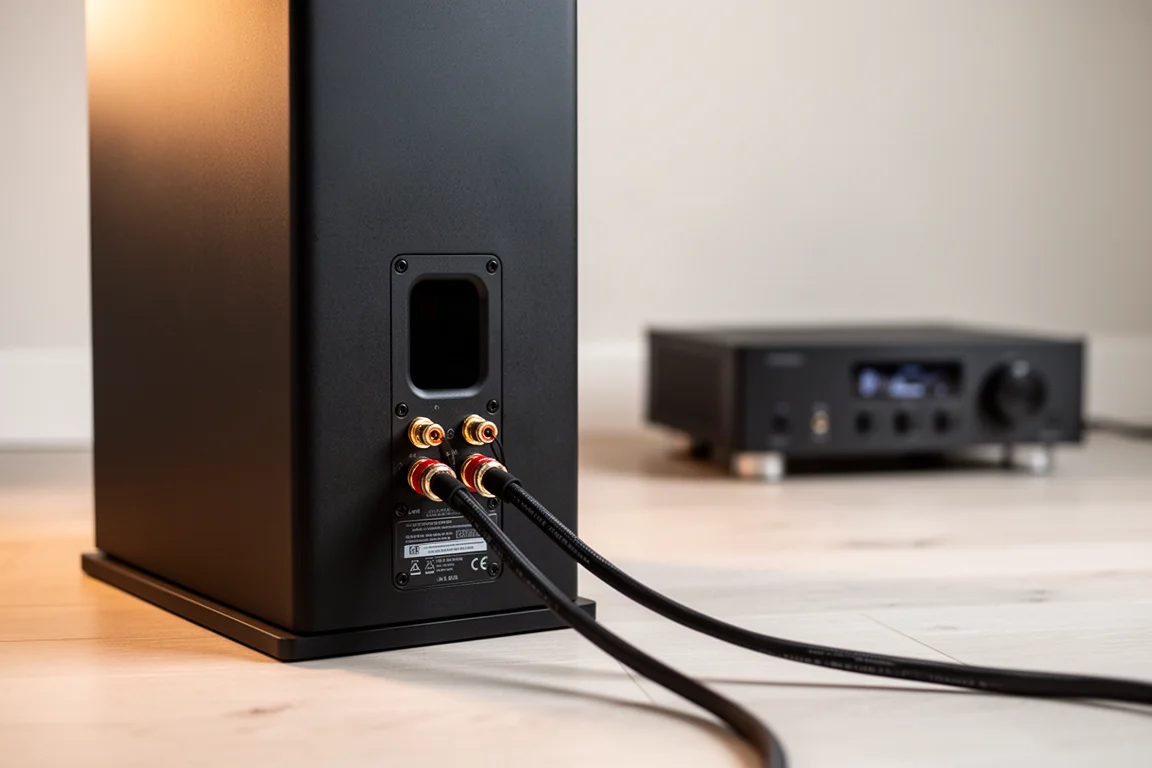
Setup is simple. Start with the speakers firing straight ahead and parallel to each other, then adjust toe-in gradually until the treble balance suits the room and the listener’s taste. Because the neutral response sits off axis, most listeners will find their preferred balance somewhere between straight ahead and a modest inward angle.
If a subwoofer is part of the system, the 85i should still be run full range. High-passing it defeats the reason to buy it and makes integration harder, since the speaker already handles its own crossover at 100 Hz.
Things to Consider Before Buying
The most significant consideration is treble behaviour on axis. Listeners who habitually aim speakers directly at the listening seat may find the top end bright, and they will need to adjust placement rather than rely on the speaker’s default balance. Those who enjoy a livelier treble will see this as a feature rather than a flaw.
Room size is the second factor. The 85i is designed for small to medium spaces where room gain supports the low end. In a large room, the gradual roll-off below 70 Hz will leave the bottom end sounding lighter than the specification suggests.
It is also worth noting that the 85i is not a bass-managed speaker in the conventional sense. Buyers who want a subwoofer-led system with high-passed mains are working against the design. The included outriggers are functional but basic, and owners who want a more substantial set may choose to upgrade them.
Buying Advice
At $1,300 per pair, the 85i occupies a spot where compact towers rarely reach a 30 Hz port tuning. That combination of a deep tuning, a side-firing 8-inch woofer, and a cabinet built and assembled largely in the United States is unusual in this price class, and it is the clearest reason to consider the speaker.
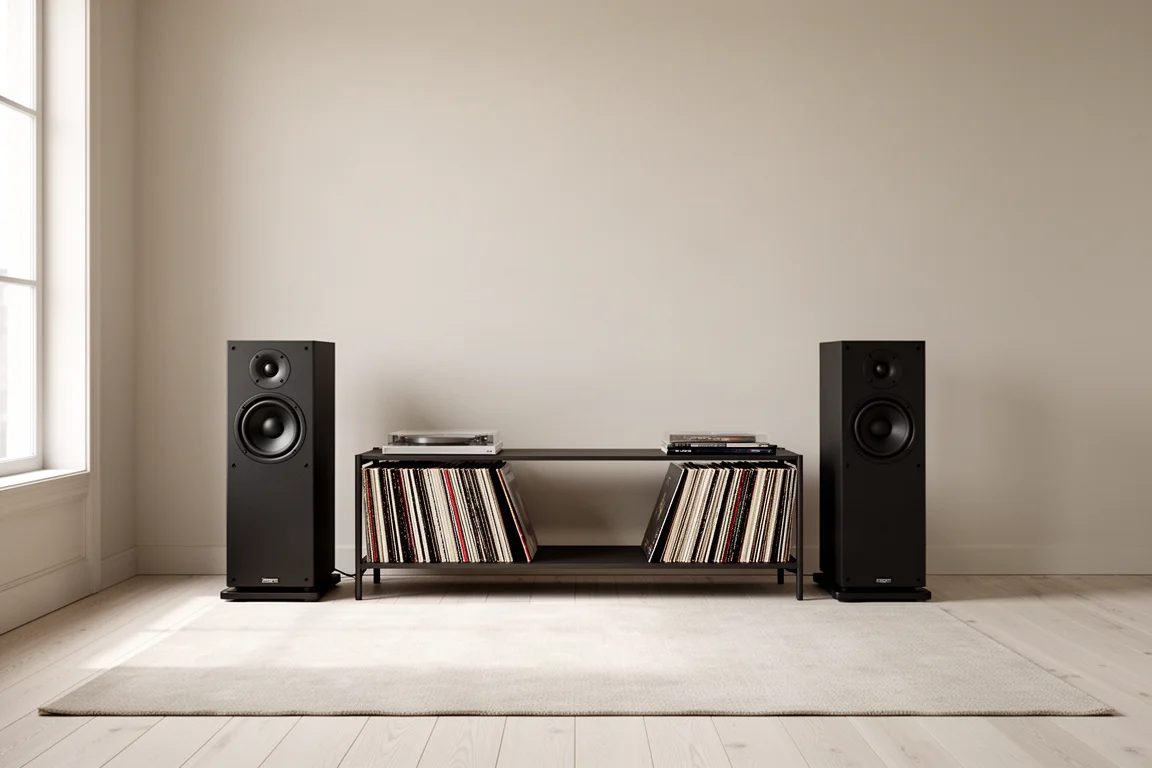
The strongest case for buying is a two-channel system in a small or medium room, with no subwoofer and no intention of adding one. In that setup the 85i delivers a full-range experience from a speaker that takes up very little space and is easy to drive with modest amplification.
Buyers who want maximum output in a large room, or who plan to build a bass-managed surround system around high-passed mains, should look at other options. For everyone else, the 85i deserves serious consideration on the strength of its bass capability, its build, and its domestic assembly.
Conclusion
The RBH Sound 85i Impression Tower is a well-executed compact floorstander that delivers performance well beyond its price and size expectations. Its bass extension, honest 6-ohm impedance, and restrained cabinet make it a natural fit for a simple two-channel system in a small or medium room.
The main caveat is the brighter treble on axis, which is easily managed through placement. Positioned with a little care, the 85i produces a smooth, neutral, full-range sound that few speakers at this price can match, and it does so without asking for a subwoofer or an expensive amplifier.
Product link
View more details for RBH Sound 85i Impression Tower
This product is mentioned in the review. Check the specifications, options, and compatibility before buying.
View more details for RBH Sound 85i Impression TowerFurther reading
Related Reviews
Floorstanding Speakers
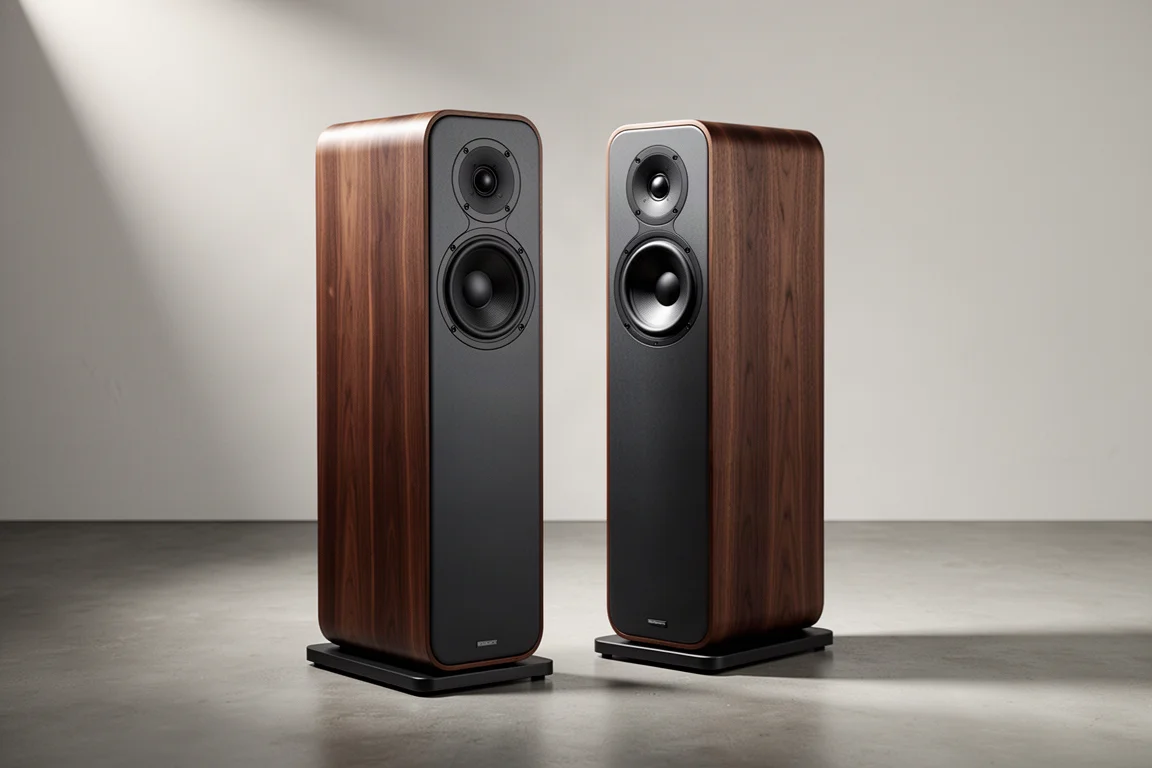
Acoustic Energy AE109 Mark II Review: A Refined Floorstander at £699
The Acoustic Energy AE109 Mark II is a slim, warm sounding floorstander that delivers clarity, midrange body and strong imaging in small to medium rooms.
Floorstanding Speakers
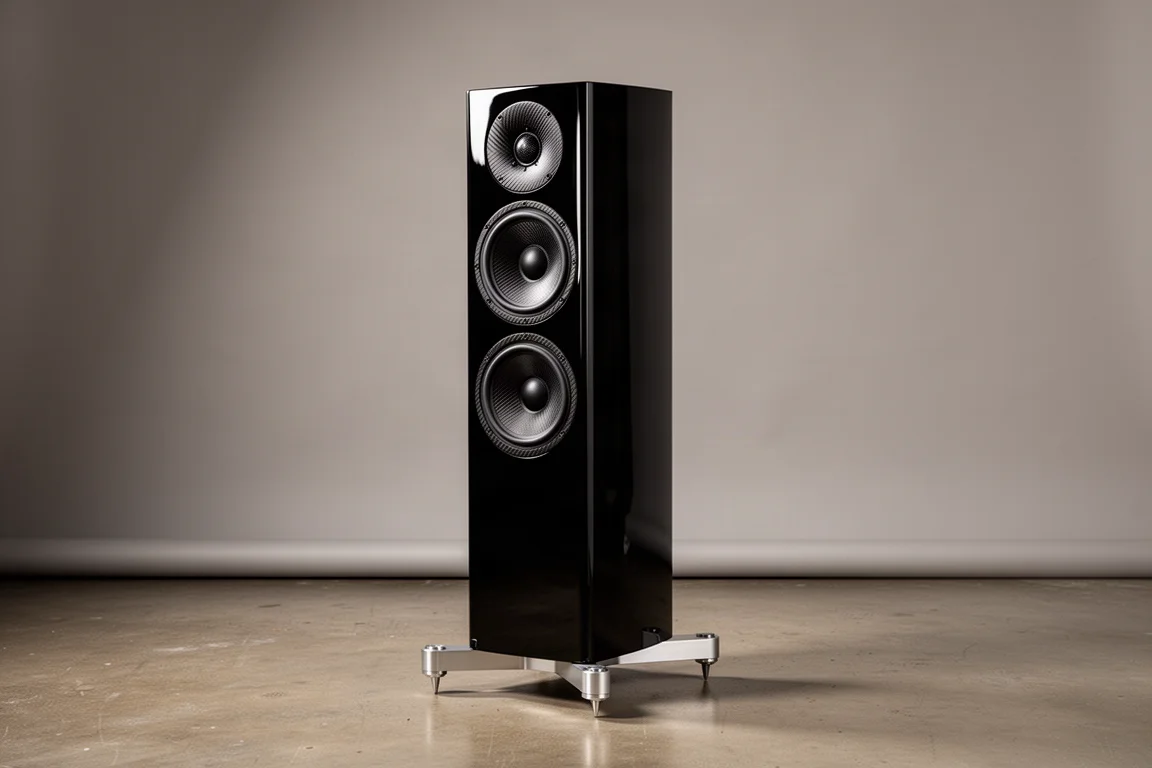
Acoustic Energy AE509 Review: A Slim Floorstander With Deep, Defined Bass
A practical look at the Acoustic Energy AE509, a slim floorstanding speaker with carbon fibre drivers, deep and well-defined bass, and an easy-going character that rewards careful system matching.
Floorstanding Speakers
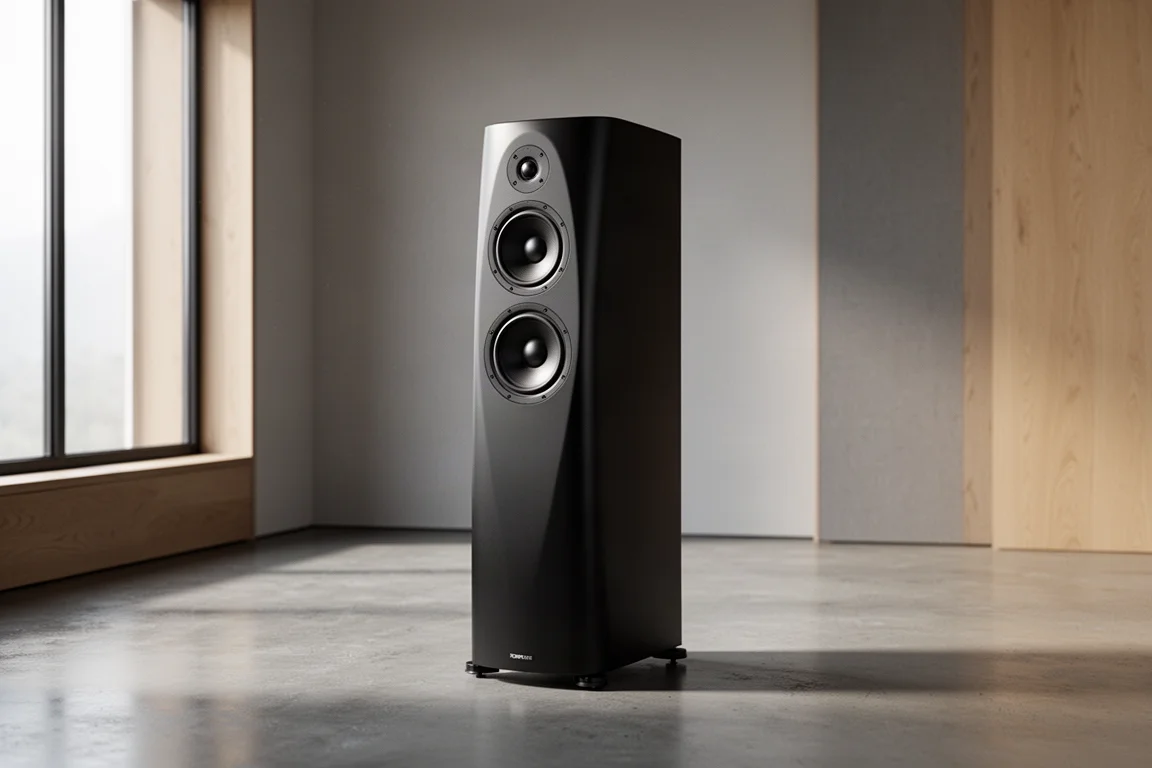
Arendal 1528 Tower 8 Review: Reference Neutrality With Real Demands
A close look at the Arendal 1528 Tower 8, a nearly five-foot, 200-pound floorstander that rewards generous space, serious power, and high listening levels with reference-grade neutrality.