Tower Speakers
RBH Sound 61-SFMR Review: A Modular Tower That Puts a Bookshelf on a Subwoofer
The RBH Sound 61-SFMR pairs a reference bookshelf speaker with a force-cancelling bass module, delivering neutral full-range sound in a compact tower footprint.
Introduction
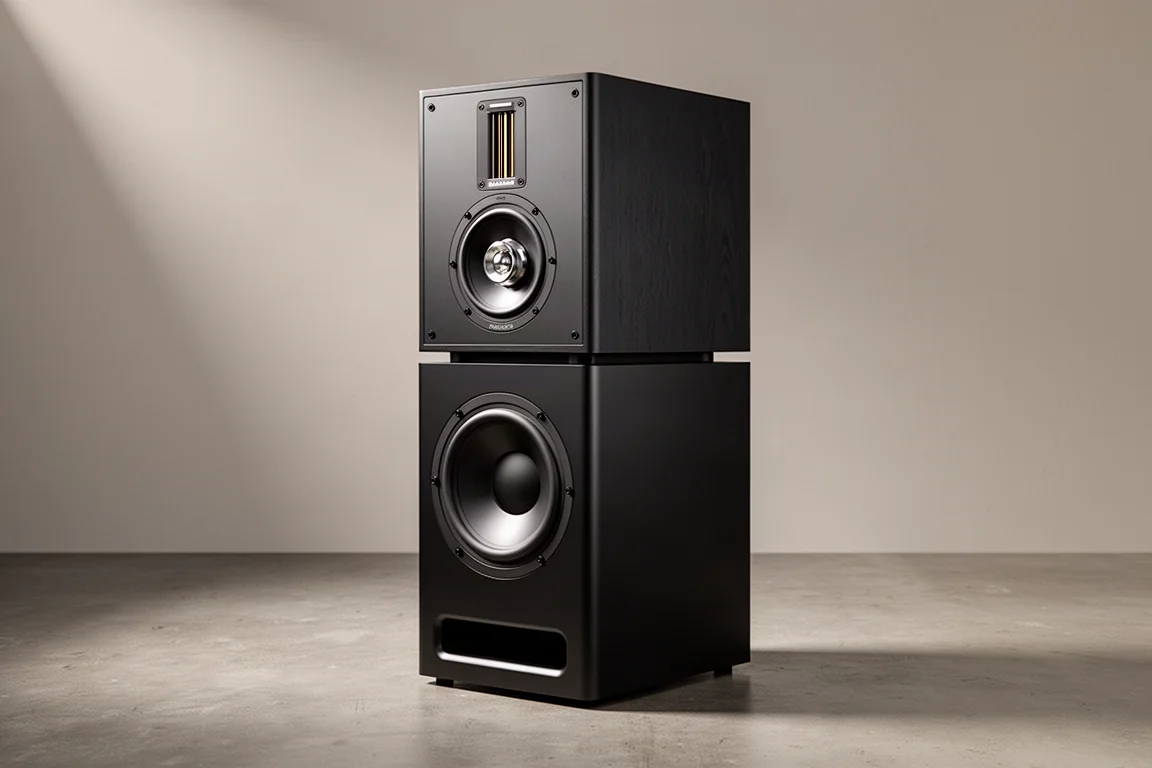
The RBH Sound 61-SFMR is a floorstanding loudspeaker that is really two products stacked into one cabinet. The upper half is a bookshelf speaker, and the lower half is a dedicated bass module. Bought together, they form a full-range tower that stands roughly 51 inches tall, which places it in the middle of the floorstanding category rather than at the extremes of size or weight.
The “R” in the model name denotes Reference, so the upper cabinet carries the company’s reference drivers: an aluminum mid-range driver with a phase plug and an AMT tweeter. The bass module, also sold separately as the 88MS, contributes two 8-inch aluminum woofers and a large slotted port.
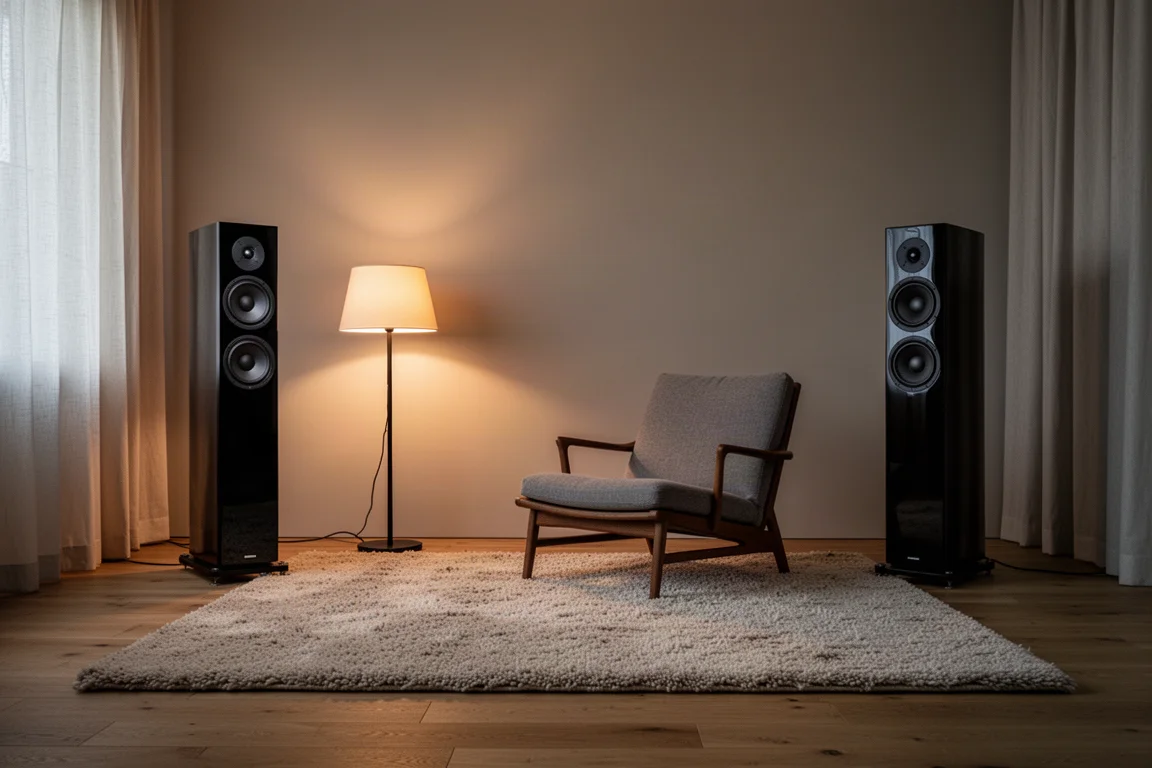
The concept is unusual, but the intent is straightforward. Instead of asking listeners to place a separate subwoofer somewhere else in the room, RBH builds the low-frequency section into the tower itself, so a two-channel system can cover the full range with two boxes on the floor and nothing else.
Who This Speaker Is For
This speaker makes the most sense for listeners building a two-channel system who want full-range output with the smallest possible footprint and no separate subwoofer cabinets. If you have room for a subwoofer and want maximum low-frequency output and headroom, a dedicated subwoofer paired with a smaller speaker is usually the more flexible path.
Home theater owners are a less obvious fit. In a multichannel system, the more common route is a satellite speaker plus separate subwoofers, which gives more freedom in placement and calibration. The 61-SFMR is at its best as a stereo pair that plays full range on its own.
Design and Build
Physically, the speaker is purposeful rather than decorative. The cabinet comes in a satin black finish that looks slick in person, and satin white is also available. RBH offers some customization as well, including anodized black drivers and optional side panels for buyers who want a different look.
The bass module is the more interesting half. It uses two 8-inch aluminum woofers mounted on opposite sides, which cancels the mechanical motion that would otherwise rock the cabinet. That matters because the module doubles as a stand for the bookshelf section, and the force-cancelling layout keeps it inert. Both sides can be covered with grilles.
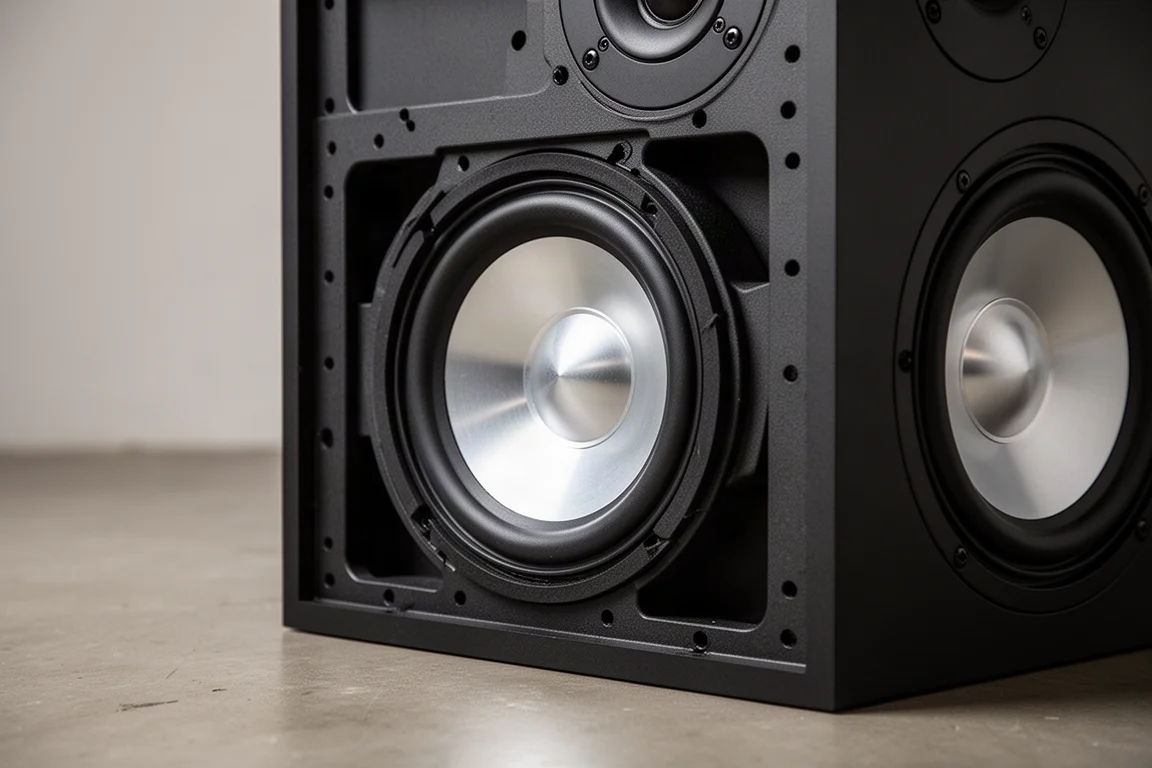
Build quality inside is strong. The cabinets are densely packed with damping material, wiring is twisted pair to reduce crosstalk, and the crossover uses substantial resistors and inductors along with Mylar capacitors. The speaker is made in the United States, which is uncommon among its direct competitors. The upper cabinet is also available on its own as the 61-SF, and the Reference version as the 61-SFR, so the tower can be assembled in stages.
Connecting the two halves is where the design asks for patience. Speaker cable runs to the lower binding posts on the bass module, and a supplied jumper then feeds the bookshelf section. A few different hookup options are available, and they change bass output by only around 2 dB. The arrangement is not intuitive, so following the manufacturer’s guide is worthwhile. The supplied jumper is a heavy-duty twisted pair cable, which is good, though there is no channel or tab on the cabinet to route it neatly, so it can hang visibly behind the speaker.
Measured Performance
Measured response is remarkably well controlled. On-axis and off-axis behavior track closely, which means the speaker should sound consistent across a wide listening area rather than only in one precise seat. That correlation also tends to help automatic room correction systems do a better job.
Horizontal dispersion is wide, with listeners within roughly a 50-degree window hearing a similar balance. The AMT tweeter does narrow slightly at the very top of the range, as ribbon designs typically do, but output remains strong well past 20 kHz and out to roughly 20 degrees off axis. A mild waistbanding effect appears below about 2,500 Hz, but it is subtle.
Vertical behavior is more specific. Listening within about 10 degrees above or below the tweeter axis keeps the response even. Outside that window, a crossover null between the tweeter and mid-range driver causes a dip just above the crossover point. In normal seated listening this is a non-issue, though unusually low seating or steeply raked theater rows could put a listener outside the ideal window.
The low-frequency measurement is harder to capture because of the opposing woofers and the rear-firing slot port, and the result is not textbook. Above roughly 70 Hz the response stays reasonably level, within about 2.5 dB. Below that it rolls off gradually thanks to an under-damped port tuning, and room gain should fill much of that back in. In practice the speaker reached solid output below 30 Hz.
Listening Impressions and Strengths
Tonally, the 61-SFMR is neutral and balanced, which matches what the measurements suggest. Imaging is precise and the soundstage is wide, a predictable benefit of the broad dispersion. The mid-range driver has real authority, and the AMT tweeter adds punch and detail without sounding forward.
Low-frequency extension below 30 Hz gives the speaker genuine full-range character, and dynamic range is strong enough that the design never feels like a compromise tower. The 100 Hz crossover between the bass module and the mid-range driver is unusually low, which keeps the bass drivers handling the deepest material while the mid-range stays clean.
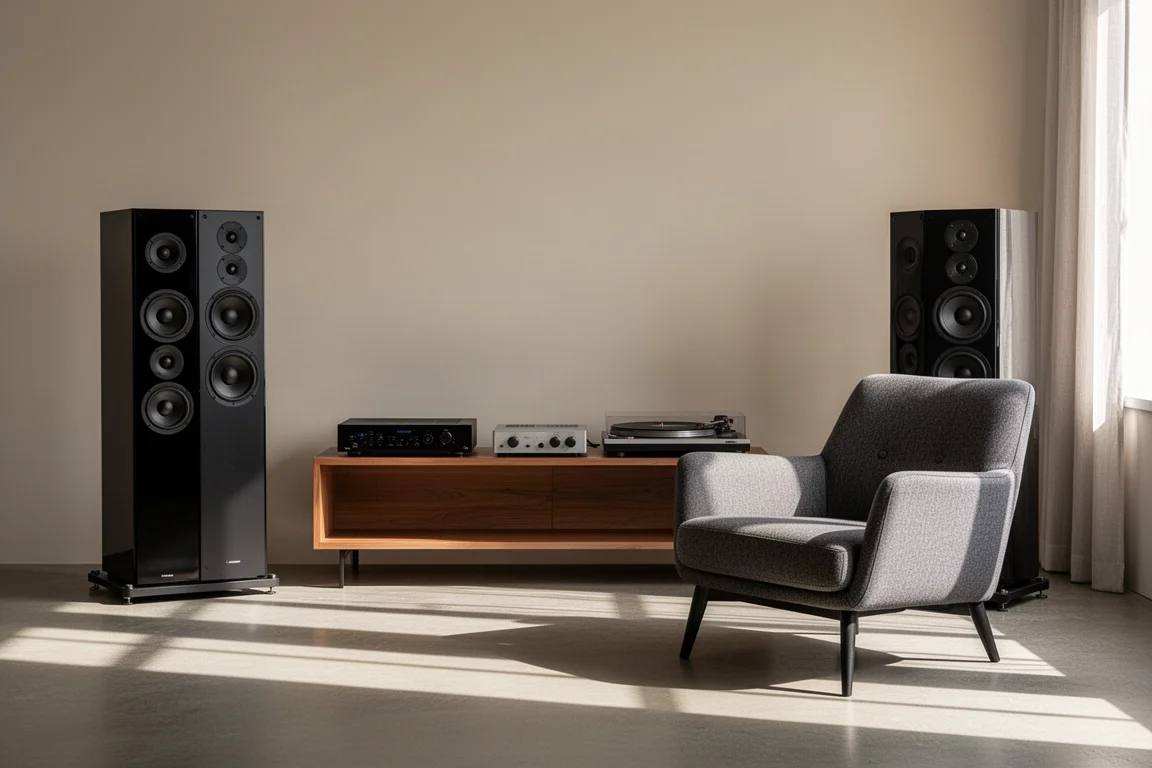
Taken together, the strengths line up with what the modular concept promises: neutral tonality, wide and even coverage, deep extension, and the convenience of a full-range system without an extra subwoofer cabinet.
Things to Consider Before Buying
The hookup process is the main friction point. It is unusual and unintuitive enough that reading the manual first is genuinely recommended, and the jumper cable lacks a tidy routing path on the cabinet.
Integration with a separate subwoofer also needs care. Because the tower already contains a bass module, high-passing it to a subwoofer would effectively filter one subwoofer into another and produce messy results. If you add a subwoofer, run the tower full range and calibrate it as a full-range speaker.
Buyers should also weigh the competition honestly. There are many strong tower speakers near this price, and several of them offer more bass output and greater dynamic range. Most of those are considerably larger and heavier, and generally less neutral in tonality. The RBH Sound 61-SFMR trades some raw output for balance and a smaller footprint.
Buying Advice
This is a niche speaker, and it is worth being clear about the niche. If you want a two-channel system that plays full range with nothing but two towers on the floor, the 61-SFMR is a compelling answer. If you are willing to accept the footprint of a subwoofer, a smaller speaker plus a dedicated subwoofer will usually deliver more low-frequency performance for similar money.
Biamping is worth considering here, since separating the bass module from the upper cabinet gives you independent gain control and more freedom to tune bass output to the room. That flexibility is unusual in a floorstanding tower and makes the modular design more useful than it might first appear.
At around $5,000 per pair, the speaker is expensive, but the build quality, the United States manufacturing, and the measured performance make it a fair value in its segment. Anyone shopping in that range should put it on the shortlist, especially if neutral tonality and a compact footprint matter more than maximum bass output.
Conclusion
The RBH Sound 61-SFMR is a well-executed take on an unusual idea. A reference bookshelf speaker sits on a force-cancelling bass module, and the result is a genuinely full-range tower with neutral tonality, wide dispersion, and deep extension below 30 Hz. The trade-offs are a hookup scheme that takes some study and a design that makes conventional subwoofer integration awkward. For a two-channel listener who wants full-range sound without adding a subwoofer, those are reasonable compromises to accept.
Product link
View more details for RBH Sound 61-SFMR
This product is mentioned in the review. Check the specifications, options, and compatibility before buying.
View more details for RBH Sound 61-SFMRFurther reading
Related Reviews
Tower Speakers
Arendal 1610 Tower 8 vs MoFi SourcePoint 888 vs MoFi V10: Three Tower Speakers Compared
A close look at three large tower speakers in a similar price bracket, from the punchy, heavy-built Arendal 1610 Tower 8 to the coaxial MoFi SourcePoint 888 and the high-output MoFi V10.
Tower Speakers
Definitive Technology BP9020 Review: A Powered Tower With Real Bass and a Few Quirks
A slim tower speaker that hides a powered 8-inch subwoofer inside the cabinet, delivering deep bass and a wide stage alongside some clearly defined trade-offs.
Tower Speakers
Emotiva XT1 Tower Speakers Review: Serious Clarity Under $1,000
The Emotiva XT1 brings three woofers, a dedicated midrange and an AMT tweeter to the sub-$1,000 tower market. Here is where it delivers and what to weigh first.