Speakers
Radiant Acoustics Clarity 66 vs Arendal 1610 Tower 8 vs MoFi V10: How to Choose
A data-led comparison of the Radiant Acoustics Clarity 66, the Arendal 1610 Tower 8, and the MoFi V10, covering linearity, dispersion, bass behaviour, and amplifier needs.
Introduction
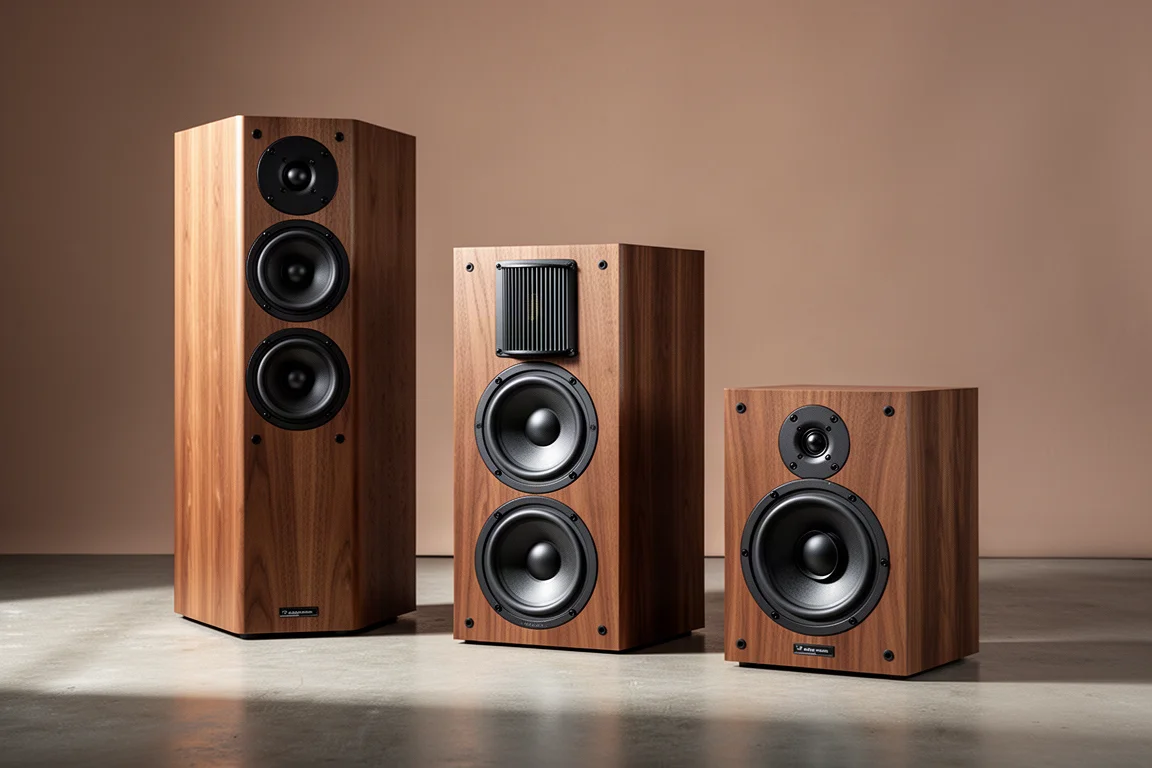
Three loudspeakers that measure well, and three different sets of compromises. The Radiant Acoustics Clarity 66, the Arendal 1610 Tower 8, and the MoFi V10 all deliver solid performance, but each one trades something away in distortion, linearity, or dispersion. That is what makes the choice interesting: none of these designs is a poor speaker, so the decision comes down to which trade-offs suit your room, your seating, and your listening habits.
This comparison looks at what each speaker does well, where it gives something up, and how those differences show up in real listening rather than on a chart alone.
What the Measurements Reveal
Before comparing the three, it helps to know what to look at. Four areas separate them most clearly.
The first is linearity: how smoothly the on-axis response runs from the bass through the midrange and into the treble, and whether the bass behaves as a consistent trend or as a bump followed by an early roll-off.
The second is dispersion. Horizontal coverage determines how wide the soundstage feels and how much of the room is involved, while vertical coverage determines how much freedom you have in seating height. A speaker with a narrow vertical window can sound superb at the correct ear height and noticeably different when you stand up.
The third is compression behaviour under dynamic demand, and the fourth is multi-tone distortion across the midrange and treble.
On those last two points, the three speakers are closer than the rest of the data suggests. Compression is excellent on all three. Multi-tone distortion is where they diverge: the Clarity 66 stays low overall with a slight rise in the upper midrange around 1 to 2 kHz, the Arendal runs a little higher through the midrange but a little lower in the treble, and the MoFi runs higher in the treble.
The practical use of all this data is to rule speakers out, not to crown a winner. It tells you which designs behave well; it cannot tell you which one you will enjoy.
Radiant Acoustics Clarity 66: Wide but Focused
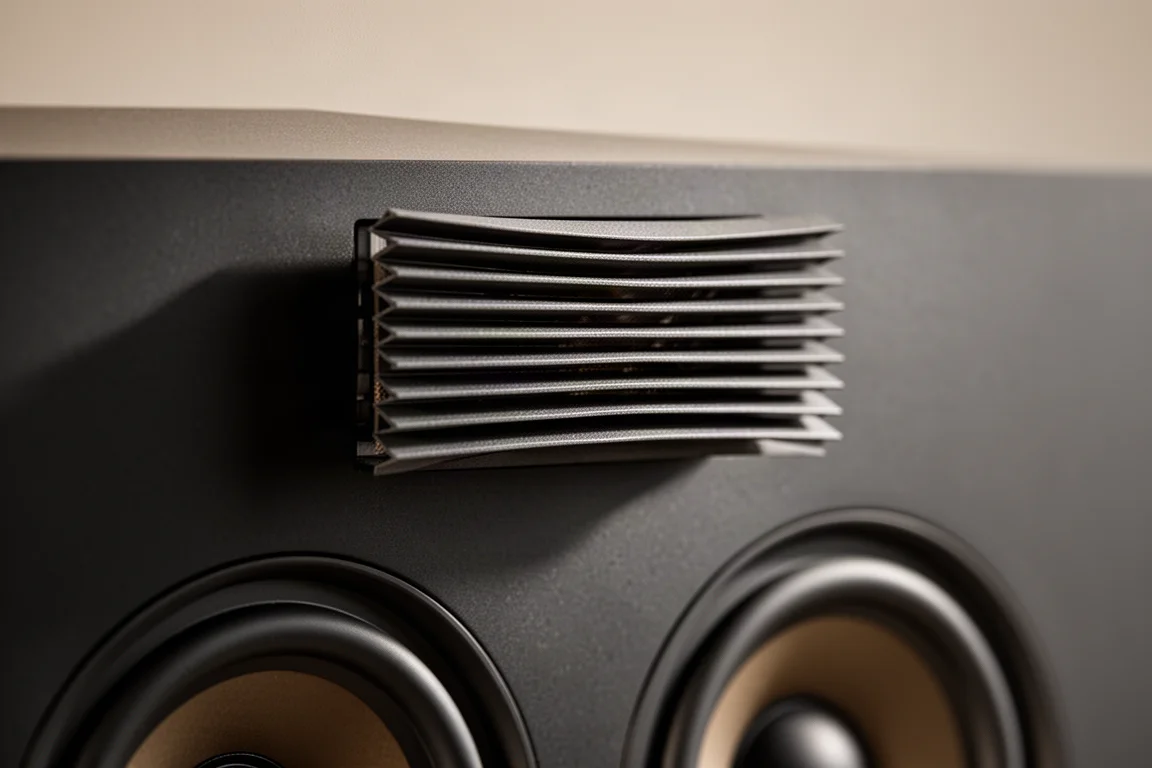
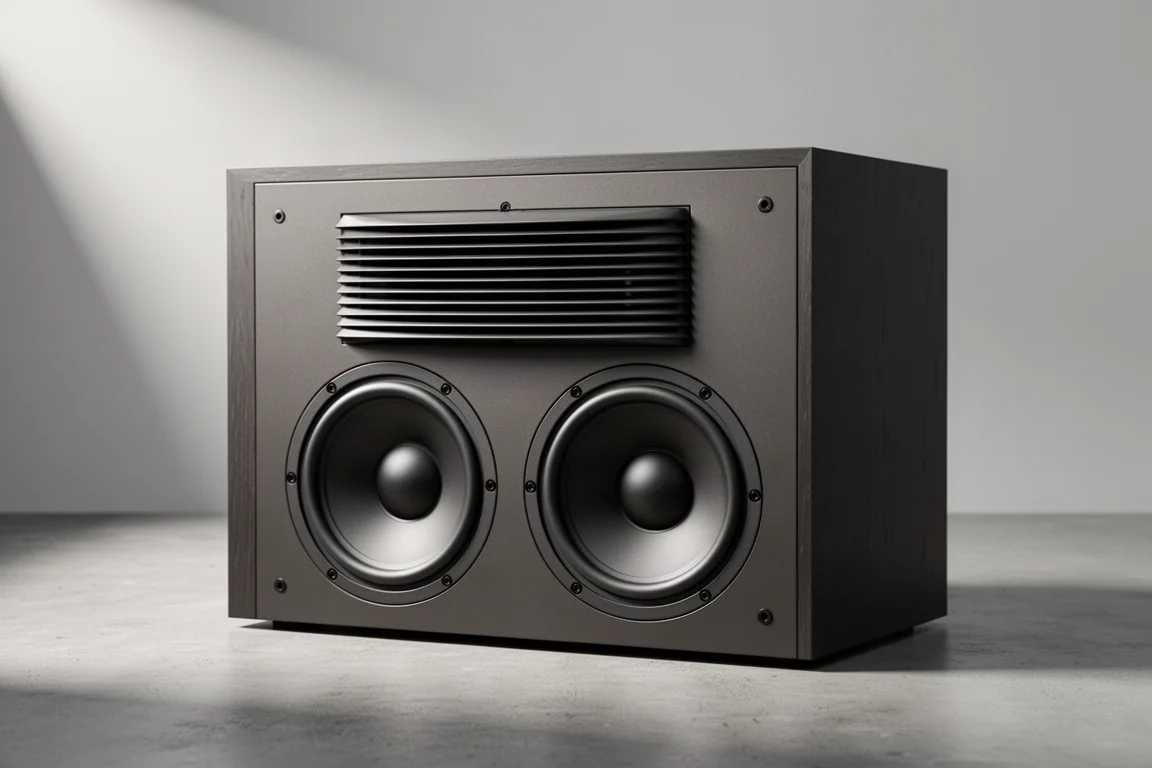
The Clarity 66 is a two-way design despite carrying two 6.5-inch woofers, and it pairs a custom AMT tweeter with Purifi woofers. The ported cabinet is tuned to roughly 30 Hz with the crossover at 2400 Hz. The enclosure uses 21 mm MDF with steel rods running into the woofer motor, plus a 15 mm aluminum front baffle, and the speaker weighs around 88 lb.
Tonally it is even from bottom to top and not fatiguing over long sessions, even though the on-axis response rises by about one to two dB through the lower and upper treble. That lift is easy to manage: because the off-axis behaviour is well controlled, progressively toeing the speaker out changes the balance at the listening position until it suits the room and your taste.
Dispersion is the more distinctive trait. Horizontal coverage sits at about plus or minus 60 degrees and narrows near 4 to 5 kHz, which keeps high-frequency energy from scattering widely around the room. The result is a presentation that sounds wide but still focused. Vertical coverage is the opposite story: the window is tight, in the region of plus or minus 10 degrees, so the tonal balance changes noticeably if you sit higher, lower, or walk around the room. That is fine for a fixed listening chair and less convenient for home theater seating or a room with a kitchen behind the sofa.
Sensitivity averages about 85.3 dB at 2.83 volts at 1 meter, which is lower than the other two speakers here by roughly 2 to 3 dB, so amplifier headroom matters. High-power monoblocks had no trouble driving it to demanding levels, while a lower-power tube amplifier could not reach the desired output. The impedance curve also suggests a dedicated amplifier is a better match than a standard AVR.
Bass extension is genuine, with F3 at 34 Hz and F10 at 26 Hz and in-room response reaching around 30 Hz, but the character of that low end deserves a caveat. Placed about three feet from the wall, output in the 30 to 40 Hz region is thinner than the specifications might suggest, and it is not the same as what a dedicated subwoofer delivers. Moving the speakers to roughly two feet from the wall adds weight, and adding a subwoofer both restores impact and lowers distortion further. The speaker itself is resonance-free, and the estimated in-room response is smooth, with an upper midrange dip that costs a little clarity if your ears are not aligned with the tweeter.
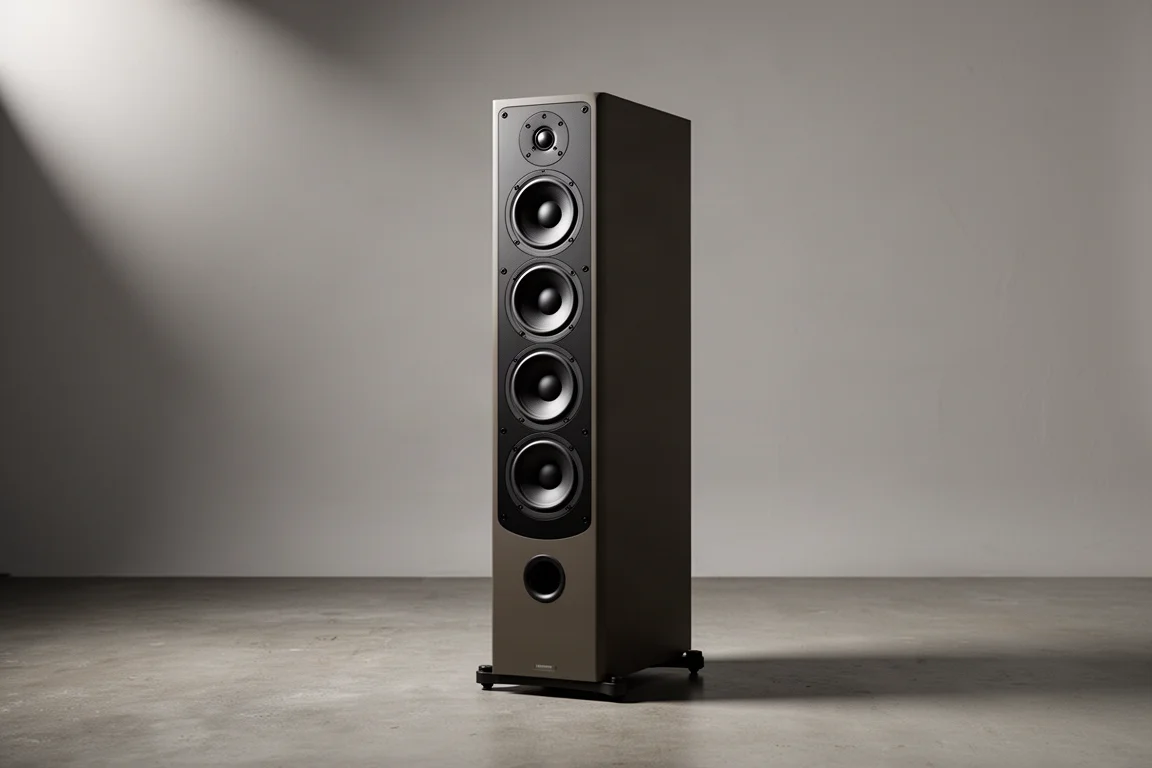
Arendal 1610 Tower 8: Punch, Scale, and Room Interaction
The Arendal is the larger, higher-sensitivity option here, running about 2 to 3 dB more efficient than the Clarity 66, which makes amplifier matching easier. Its bass profile explains its character quickly: a lift centred near 70 Hz adds punch and weight, but the response rolls off faster below roughly 50 to 60 Hz. In practice that means a fuller, more forceful low end in the region where most music lives, with less ultimate depth than the Radiant.
Horizontal dispersion is wider, which fills more of the room and makes the speaker more sensitive to sidewall reflections. Sidewall absorption is worth planning for. The vertical window is wider than the Clarity 66, but the data shows some discontinuity through the midrange where the multiple woofers hand over to the midrange driver, and again where the midrange meets the tweeter.
The estimated in-room response shows the bass lift along with a little resonance, which can read as a slightly cupped or plasticky colouration, plus a mild lift in the upper treble that may come across as brightness. It is a modest lift rather than an aggressive one. Compression is excellent, and multi-tone distortion is a touch higher through the midrange than the Radiant, with a slightly lower figure in the treble.
MoFi V10: Coaxial Consistency
The MoFi V10 uses a coaxial driver layout, and that shapes both its strengths and its quirks. From the upper midrange into the treble it stays linear within reason. Measured directly on axis it shows more diffraction effects than it would slightly off axis, so a little toe-in is the friendlier setup.
Dispersion is the V10’s strongest card in this comparison. Horizontal coverage is wider and more consistent than the other two, and vertical coverage is the most even of the three, which means the sound holds together as you move around the room rather than locking you into one head position.
Its bass profile is the least linear of the group, with a dip through the low region rather than a smooth trend, and it carries higher sensitivity than the Radiant. The estimated in-room response shows a resonance around 300 Hz and a dip through the upper midrange. That dip trims some attack, edge, and sibilance rather than cutting into the 2 to 4 kHz range where harshness usually lives, so dialogue and detail sit in a slightly softer pocket. Compression is excellent, and multi-tone distortion runs higher in the treble than the other two.
For listeners who value consistency across a range of seating positions, the V10’s dispersion behaviour is the most accommodating of the three. For those who want maximum low-frequency linearity, the Clarity 66 remains the smoother option.
Which Speaker Fits Your Room and Your Preferences
The data will not pick a speaker for you, but it narrows the field fast, and the remaining decision is mostly about how you listen.
If you sit in one place, value wide but focused imaging, and can supply real amplifier power, the Clarity 66 is the closest match. Plan for placement two feet from the wall if you want more low-end weight, and consider a subwoofer if you want genuine impact at 30 Hz.
If you want higher sensitivity, a punchier low end around 70 Hz, and a wider presentation, the Arendal 1610 Tower 8 makes sense, provided you can manage sidewall reflections and accept a faster roll-off below about 50 to 60 Hz.
If you move around the room, share the listening space, or simply want the most consistent vertical and horizontal coverage, the MoFi V10 is the most forgiving of the three, at the cost of a less linear bass profile and a slightly softer upper midrange.
Beyond the measurements, practical factors matter just as much: room size, amplifier matching, and appearance. All three are strong designs, so none of these choices is a mistake.
Conclusion
The Clarity 66, the Arendal 1610 Tower 8, and the MoFi V10 all measure well, and each makes a different set of trade-offs. The Clarity 66 offers the most linear overall response with wide but focused dispersion, at the cost of a narrow vertical window and higher power demands. The Arendal 1610 Tower 8 brings sensitivity and punch with a wider presentation that asks more of the room. The MoFi V10 delivers the most consistent dispersion and the most forgiving listening window, with a less linear bass profile.
Match the trade-offs to your room and your habits, and any of the three can be a satisfying long-term purchase.
Further reading
Related Reviews
Speakers
13 Under-the-Radar Speakers Still Worth Buying
Thirteen speakers that quietly stayed in production while newer models took the spotlight, from budget bookshelf pairs to a full-size tower.
Speakers
Arendal 1528 Monitor 8 Review: A Three-Way Standmount With Serious Dynamic Headroom
A three-way standmount speaker with extremely low distortion, high output capability, and deep bass for its size, plus the setup details worth knowing before buying.
Speakers
Arendal 1723 Monitor S Review: A Compact Monitor With Serious Ambition
A close look at the Arendal 1723 Monitor S, a compact MTM monitor with a waveguide-loaded tweeter, an HDF cabinet, and flexible ported or sealed operation for music and home theater.