Camping Shelters
Rab Ridge Raider Review: A Hooped Bivvy for Fast, Low-Profile Camping
A close look at the Rab Ridge Raider hooped bivvy, covering its eVent fabric, bug protection, pitching speed and the trade-offs to weigh before buying.
Introduction
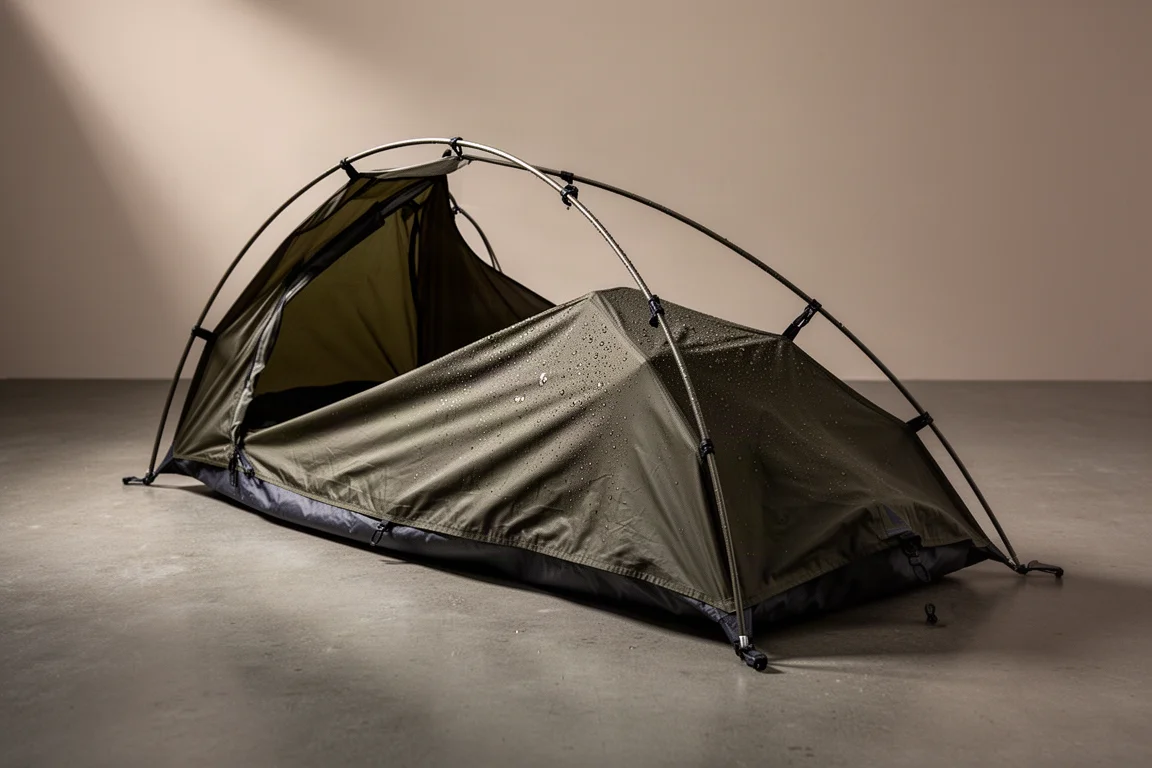
Hooped bivvy bags sit in a strange corner of the shelter market. To many people they look like a sleeping bag cover with a pole threaded through it, and the familiar jokes follow: a wheelie bin liner, or a coffin. In the right conditions, though, this is a genuinely capable piece of kit, and the Rab Ridge Raider shows why the format has held its ground with fast and light campers.
The Ridge Raider is a single person hooped bivvy built from eVent fabric. The shell is highly waterproof, with rain visibly beading and running off the surface, while the membrane stays highly breathable at the same time. That pairing matters more than it sounds. It is the difference between a night spent wiping down the inside of your shelter and a night spent asleep.
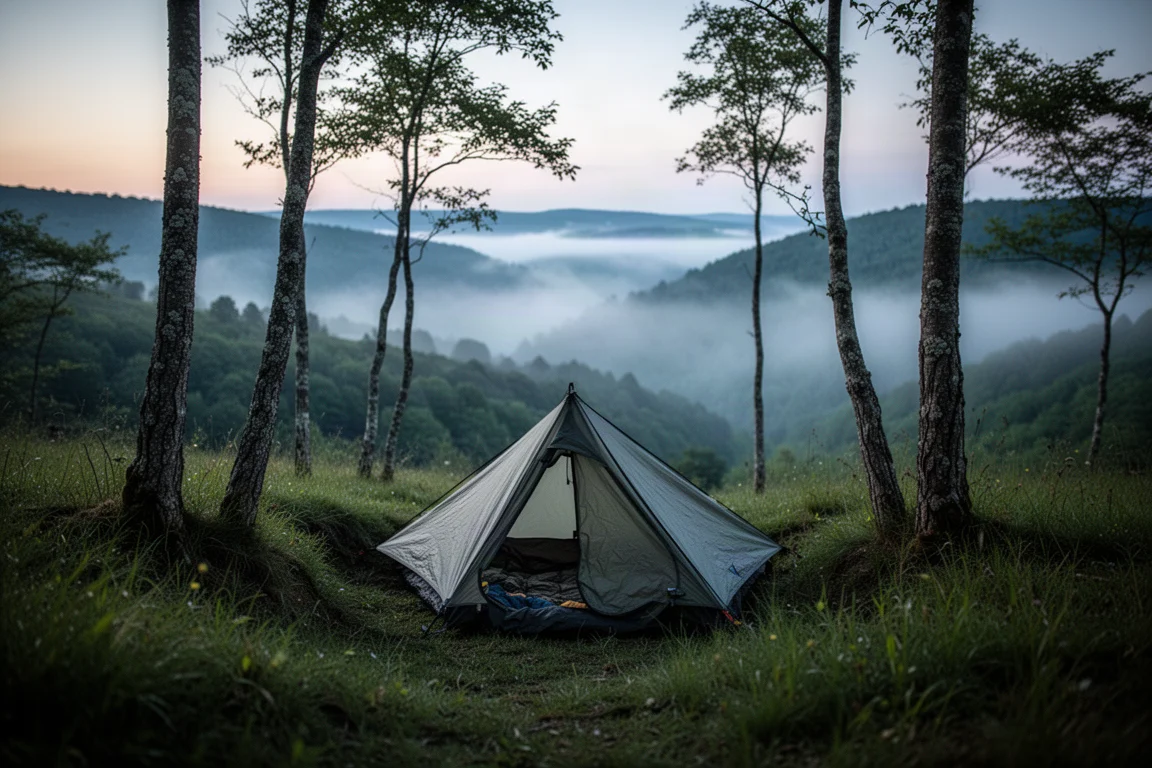
It weighs roughly a kilogram, around 1,040 grams, which places it in the same territory as several lightweight backpacking tents. So the case for carrying one is not about shaving grams. It is about where you can pitch, how quickly you can pitch it, and how little of you is exposed while you do it.
Who This Bivvy Is For
This shelter suits campers who value speed and discretion over living space. If a good night out means walking until dusk, rolling out a bed in under a minute and waking somewhere a tent would be impractical or unwelcome, the format makes a great deal of sense.
It is also a strong choice for anyone who dislikes insects. A full no-see-um mesh panel covers the opening, so the shelter can be left open for airflow while midges, mosquitoes and spiders stay outside. That is a real advantage over a conventional bivvy bag, where the mesh often rests directly against your face and biting insects can still reach skin through the fabric.
Finally, it suits anyone who wants to sleep under the stars without committing to a fully enclosed tent. With the mesh zipped and the outer partly open, you get an uninterrupted view of the sky and still have a waterproof shell within reach if the weather changes.
Main Strengths
Waterproof eVent Fabric and Breathability
The headline strength is the fabric. Rain beads and rolls straight off the eVent shell rather than soaking in, and the material breathes well enough that condensation is close to a non-issue. In damp, still conditions, where cheaper coated fabrics tend to leave you clammy, this one stays remarkably dry inside.
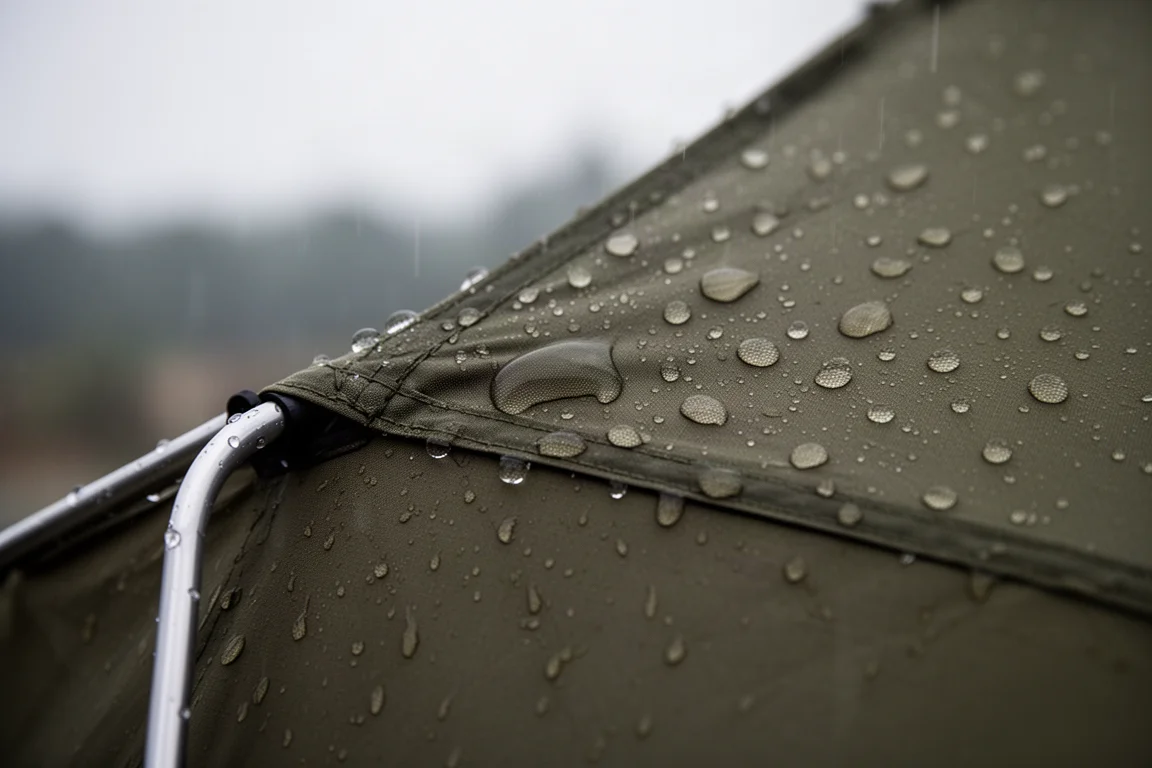
Breathability is what separates a bivvy you enjoy using from one you merely tolerate. A shell that traps moisture makes for a cold and uncomfortable night, and no amount of clever pitching fixes it. The eVent construction is the main reason the Ridge Raider justifies its place above budget alternatives.
The hoop itself does more than hold the fabric off your face. It creates angled surfaces for water to run away from the opening, and it lifts the shell into a shape that encourages airflow across the sleeping area.
Full Bug Protection and Ventilation
The mesh panel is a small detail with an outsized effect on comfort. It can be zipped fully shut when the weather turns, and the fabric behind it remains breathable, so you stay protected without feeling sealed in.
Most conventional bivvy bags have no bug net at all. Where they do, the netting tends to lie across your face, which means you can still be bitten through it if your skin touches the material. Raising the mesh on a hoop solves that problem directly.
Ventilation works with the mesh rather than against it. Leaving the outer partly open on a clear night gives you a wide slot of airflow and a view of the sky, while the hoop keeps the fabric clear of your head.
Fast Pitching and a Low Profile
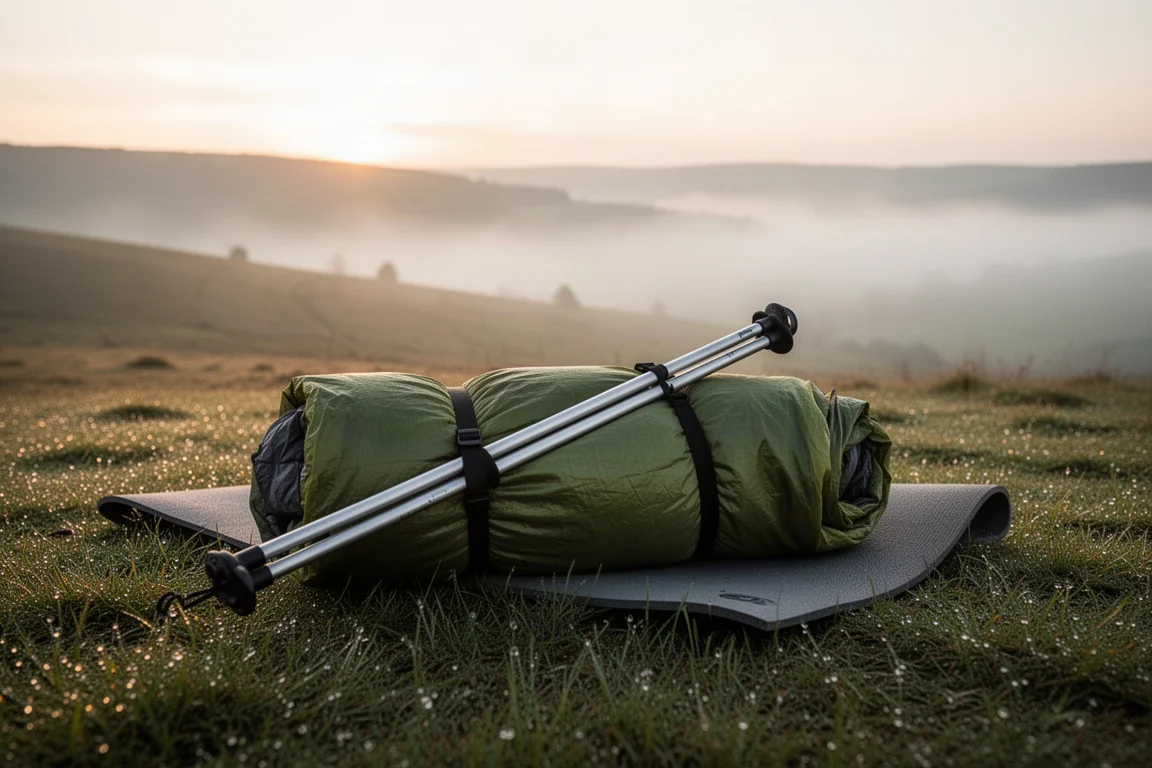
Setup is genuinely quick. Because the sleeping bag and mat can stay inside the bivvy, rolled up as one bundle, pitching is mostly a matter of unrolling and threading the pole. From start to finish, under a minute is realistic.
The low profile is the other half of the appeal. A bivvy can be tucked into a gully, threaded between trees or nestled against a wall in places where a tent would stand out immediately. Guy lines are supplied if you want to tie it down, and the construction is robust enough to handle strong winds.
Packing away is just as fast. Drop the pole, roll the whole bundle up, and it goes straight into a pack, which makes early starts and quick exits straightforward.
Things to Consider Before Buying
Living Space and Packing
Inside, there is more room than the exterior suggests. A rucksack fits at the foot end or beside your head, and there is enough space to read if you want to. The hoop keeps the fabric off your face throughout.
Even so, this is not a tent. Anyone who feels claustrophobic in confined spaces may find it uncomfortable, and campers who carry a lot of kit will struggle to fit everything inside. In that case the rucksack ends up outside for the night, which is not ideal in wet weather.
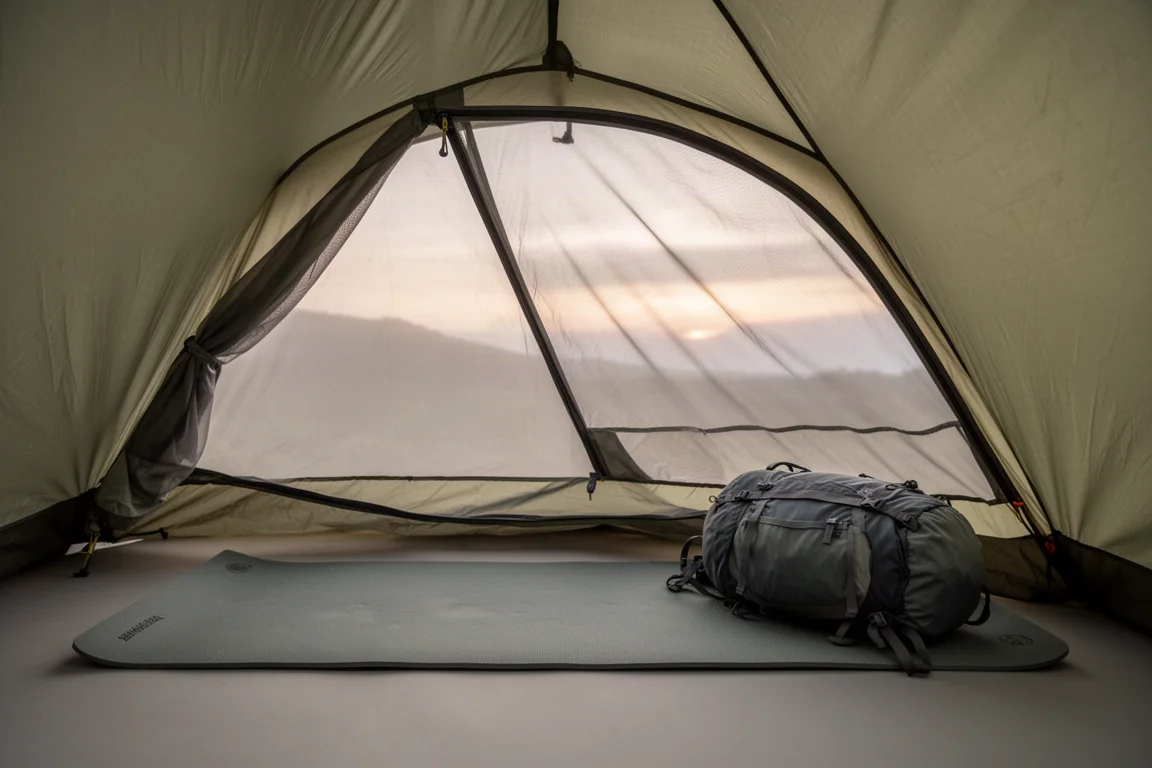
Getting in takes a little practice. The practical method is to remove your boots first, stand on the groundsheet area so your feet stay dry, then slide in and zip up from inside. Getting out reverses the sequence. It becomes second nature after a couple of trips.
Wet-Weather Setup, Cooking, and Winter Nights
A bivvy is fine in rain once you are inside it. The awkward part is arriving at camp in heavy rain, when you have to strip wet layers, organise your gear and get into the shelter. A tarp can help, but it adds weight, and at that point a tent may be the simpler answer.
Cooking is limited too. The usual approach is to lie inside with the opening unzipped and use a stove just outside, which keeps most of the weather off. A small microfibre cloth is worth carrying to mop up any moisture that finds its way in.
Winter camping deserves honest consideration. Long nights are part of the appeal of bivvying in summer, but twelve hours holed up in a shelter this size is a different proposition when it is dark and cold. The pole can be unclipped so the top half drops away for changing clothes, which helps, but the space remains tight.
Buying Advice
The Ridge Raider is the kind of purchase that rewards a clear-eyed look at how you actually camp. If you want a shelter you can pitch almost anywhere, in under a minute, with full insect protection and very little condensation, it earns its place in a pack.
The trade-off is cost. This is a more expensive option than budget bivvy bags such as the Snugpak Stratosphere or the Alpkit Inanna, and the premium buys the eVent fabric and the breathability that comes with it. Cheaper bags will keep the rain out, but they tend to be less comfortable in damp conditions.
If you are new to the format, it is worth trying a lower-cost bivvy first to confirm that this style of camping suits you. If you already know you enjoy sleeping out and want a shelter that performs well in mixed conditions, the Ridge Raider is a sound long-term choice.
Conclusion
The Rab Ridge Raider makes a convincing case for the hooped bivvy. It is waterproof, highly breathable, quick to pitch and unusually discreet, and the hoop adds bug protection and airflow that conventional bivvy bags cannot match. It is not for everyone. Anyone who needs space, cooks properly at camp or camps through long winter nights will be happier in a tent. For fast, low-profile trips in mixed weather, it is excellent.
Product link
View more details for Rab Ridge Raider
This product is mentioned in the review. Check the specifications, options, and compatibility before buying.
View more details for Rab Ridge RaiderFurther reading
Related Reviews
Camping Shelters
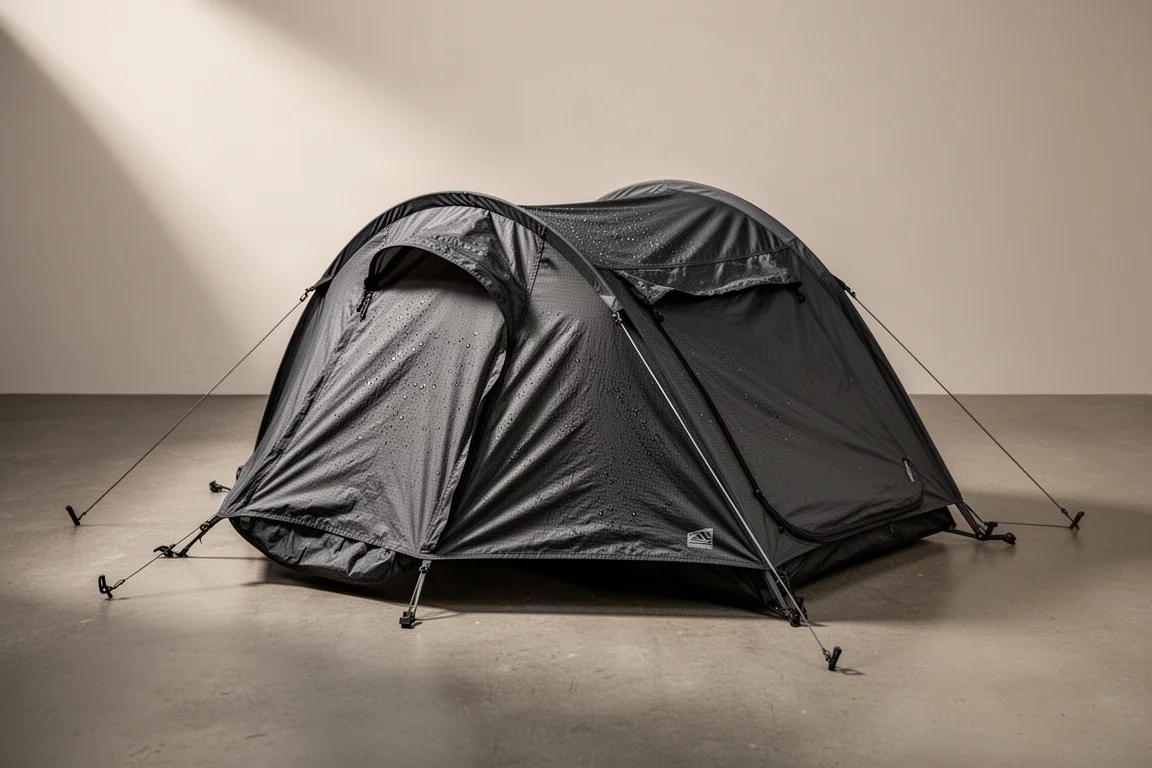
Alps Mountaineering Stealth 1 Bivy Review: A Waterproof Claim That Does Not Hold Up
The Alps Mountaineering Stealth 1 Bivy carries a 2,000 mm hydrostatic head rating and a waterproof claim, but sustained rain exposure and build quality concerns make it difficult to recommend.
Camping Shelters
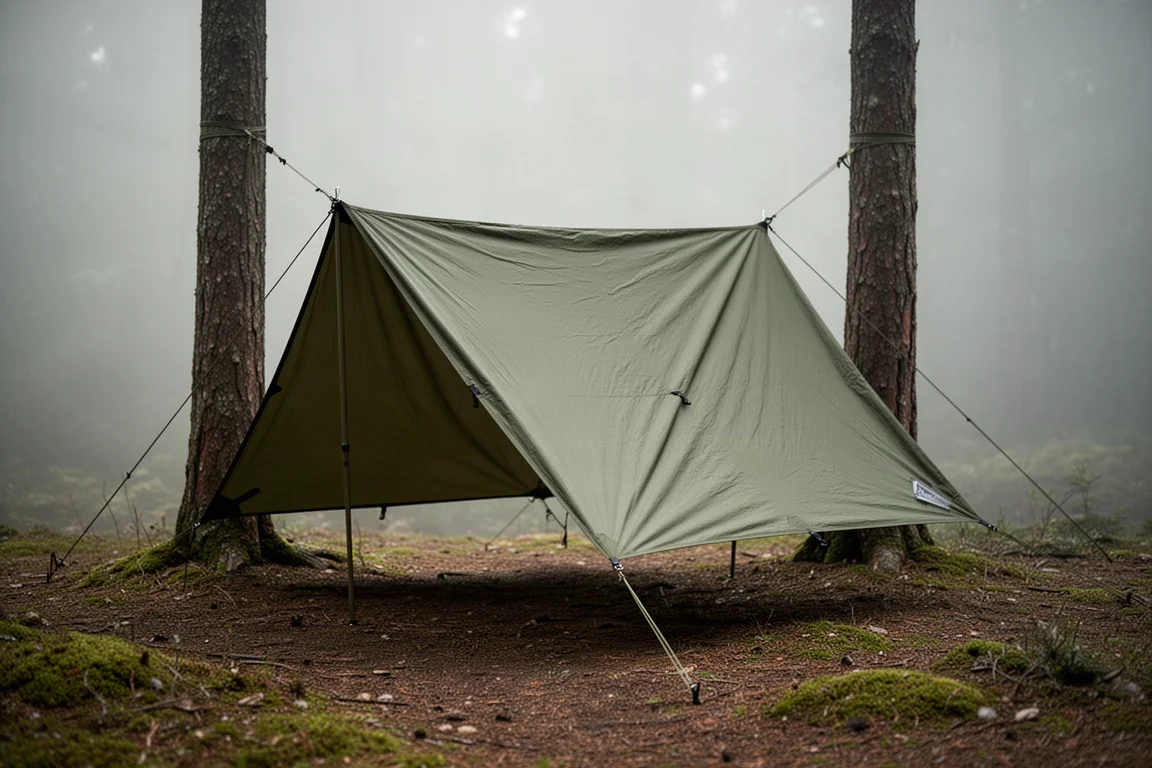
AquaQuest Safari Hybrid 20 ft x 13 ft Tarp Review: Two Years Under a Very Large Roof
A long-term look at the AquaQuest Safari Hybrid 20 x 13 tarp, covering build quality, weather protection, setup realities, and who should buy one.
Camping Shelters
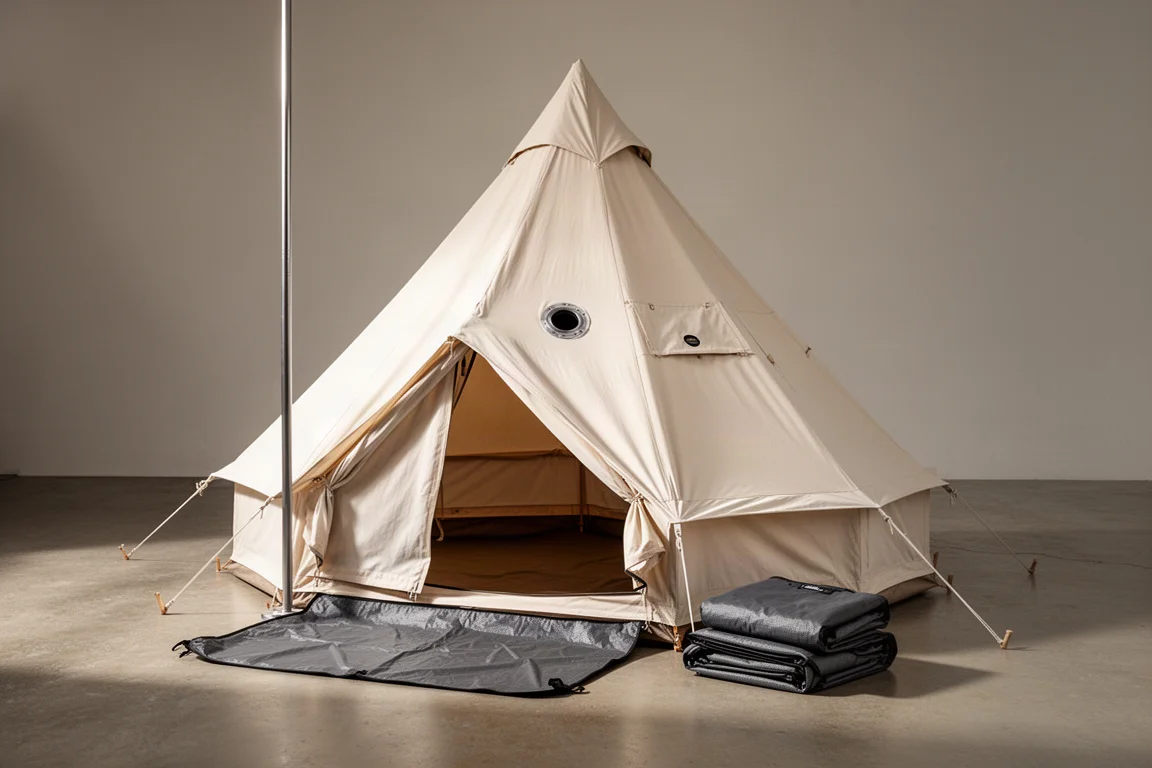
Backcountry Light Mesa 3 Hot Tent and Floor SL Tarp Review
A practical look at the Backcountry Light Mesa 3 four-season hot tent and its optional Floor SL Tarp, covering materials, stove jack design, packed weight, pricing, and the trade-offs to weigh before buying.