Floorstanding Speakers
Quadral Revela 2 Review: A Three-Way Floorstander That Rewards Careful Matching
A close look at the Quadral Revela 2, a £3,499 three-way floorstander with a ribbon tweeter, deep controlled bass and a relaxed midrange, plus what to consider before buying.
Introduction
Floorstanding speakers between roughly £3,000 and £5,000 are the most unpredictable part of the market. Below that band, a well-executed stand mount usually delivers more fidelity for the money. Above it, larger cabinets start to justify themselves. In between, almost anything can happen, which makes the Quadral Revela 2 a genuinely interesting proposition.
The Revela 2 is a three-way floorstander retailing in the UK at £3,499 a pair. It sits above the Revela 1 stand mount, a speaker that has set a high bar below £3,000 thanks to a pure ribbon tweeter and a doped wood pulp mid woofer. The question with any larger sibling is whether extra drivers and a bigger box build on that formula or blur it.
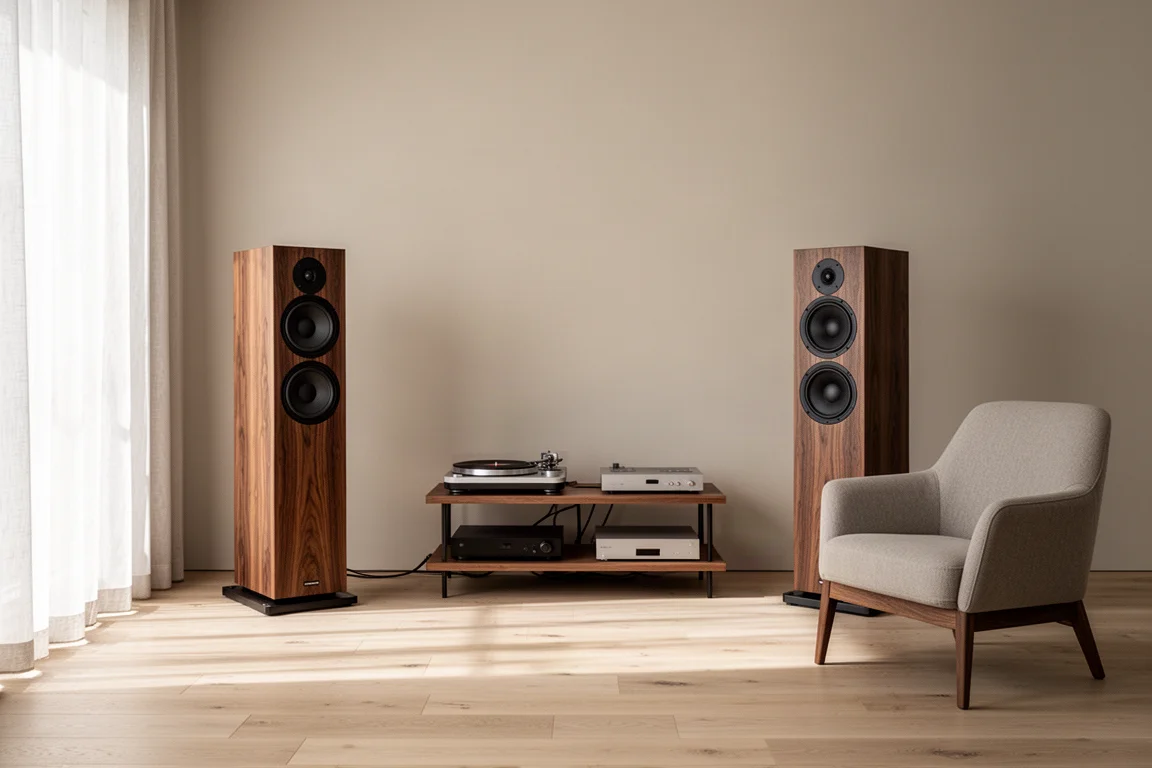
The short answer is that the character shifts rather than simply scaling up. The Revela 2 keeps the ribbon tweeter and the wood pulp cone technology, adds a dedicated midrange driver and a second woofer, and delivers a bigger, more relaxed presentation with considerably more low-frequency reach. The trade-off is that it asks more of your room and your amplifier.
Who This Product Is For
The Revela 2 makes most sense for listeners with a room larger than roughly 4.3 by 3.7 m (14 by 12 ft). It needs space behind it and a generous distance between the two cabinets to keep the midrange from thickening up.
It also suits people who enjoy the matching process. This is not a speaker that flatters every amplifier equally. Listeners willing to try a few options, and to move the speakers around until the bass tightens and the image locks in, will be well rewarded.
It is less suitable for anyone who wants a set-and-forget purchase, or for smaller rooms where a stand mount plus matching stands is the more sensible route.
Design and Build Quality
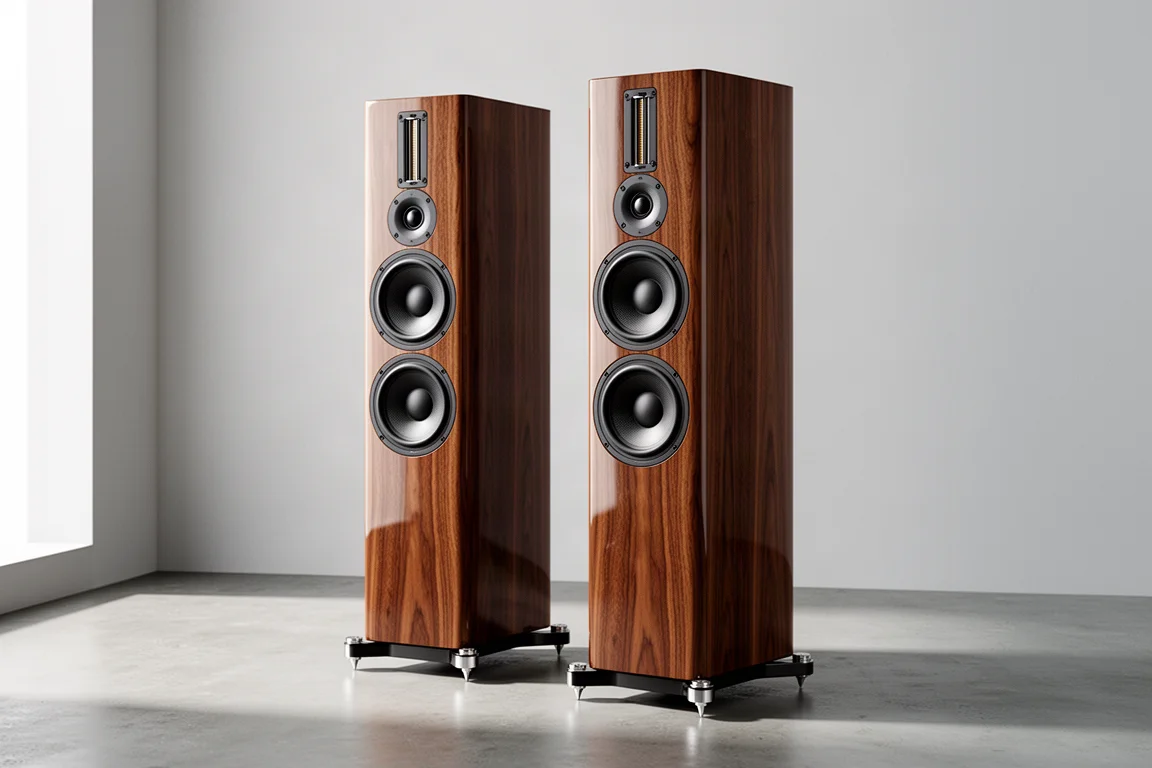
The Revela 2 measures 965 by 350 by 325 mm and weighs 31.8 kg (38 by 13.8 by 12.8 in and 70 lb). An all-black finish is available, but the real wood walnut veneer that wraps around the back and sides is the more striking option, and the high gloss finish suits the taller cabinet particularly well. Fit and finish hold up from the wide outrigger feet and their chrome spikes right to the top of the enclosure.
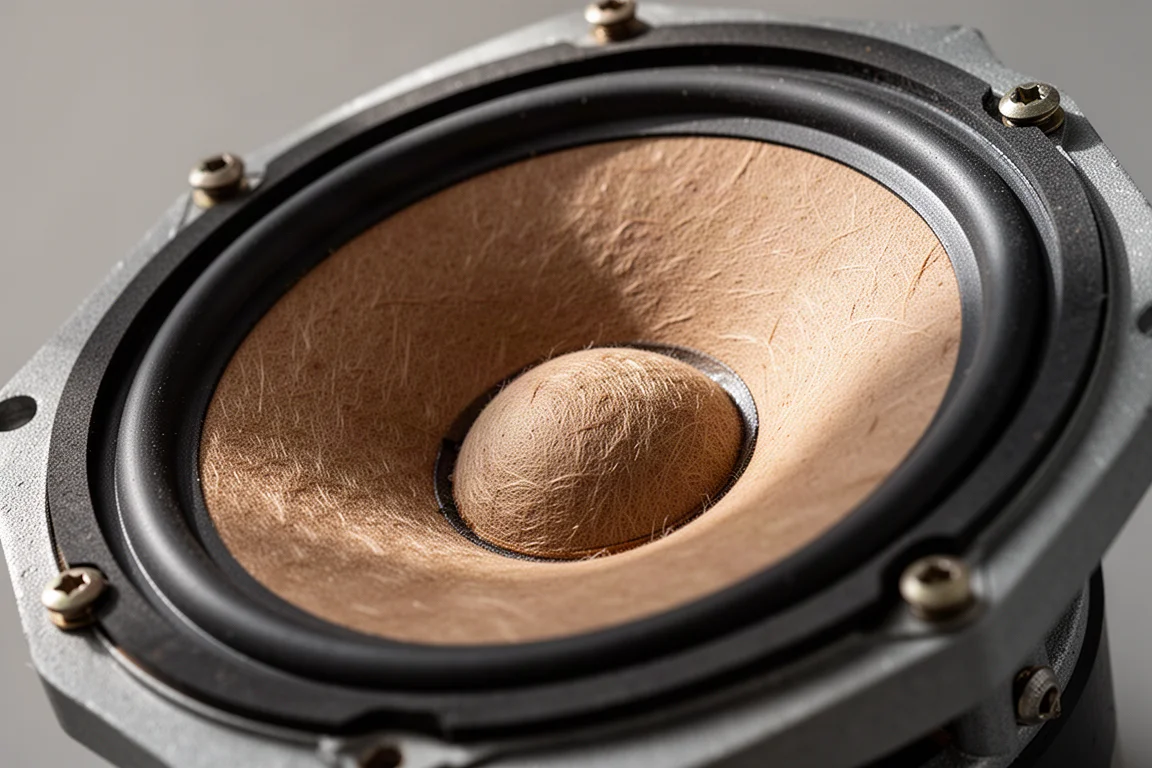
Bass is handled by two 165 mm (6.5 in) woofers, specified with a minus 3 dB point of 40 Hz and running up to 650 Hz. Their cone material, named Revela, is a wood pulp infused with para-aramids to add stiffness and damping. The drivers were developed from scratch, with substantial magnet structures housed in heavy diecast chassis, which goes some way to explaining the cabinet weight. A 150 mm (6 in) midrange unit covers 650 Hz to 3,800 Hz, and the crossovers use acoustic Butterworth filter networks.
At the top sits a 60 mm (2.4 in) pure ribbon tweeter, identical to the one used in the Revela 1, though it does not have to reach as low in this three-way arrangement. The design has evolved over years of ribbon development, with an improved magnet structure and waveguide that raise bandwidth and linearity while lowering distortion. Twin flared rear ports extend the low end, the cabinets are heavily braced internally, and the large radius corners are there to reduce edge diffraction, which can otherwise compromise soundstaging in a large enclosure.
One detail to note before ordering: there is a single set of high-quality binding posts, so bi-wiring and bi-amping are off the table. Everything else about the construction suggests a speaker built to a serious standard.
How the Revela 2 Sounds
Tonally, the Revela 2 is a little warmer than the Revela 1, with more bass weight and noticeably more extension. The design team has clearly prioritised quality over quantity in the low end, so the extra reach arrives with control rather than bloat.
The bigger change is in the midrange. Because a three-way design gives the midrange its own dedicated driver, vocals and lead instruments come across as more open and relaxed. The Revela 1 is a touch forward in the upper midrange, never harsh but noticeably more assertive. The Revela 2 sits ever so slightly on the polite side by comparison, and many listeners will prefer that balance over long sessions.
What stands out most is how free the speakers sound. Resonances and edge diffraction normally tie a large cabinet’s output to the box to some degree, but the Revela 2 largely disappears, behaving like a much smaller speaker. It throws a wide and deep soundstage with solid, stable imagery, and the ability to place performers precisely depends on preserving high frequencies. Here the tweeter benefits from having fewer frequencies to cover than it does in the two-way stand mount, so detail, refinement and the sense of air all move up a level.
With careful positioning and a sympathetic amplifier, the placement of the Bill Evans Trio on “Nardis” was exemplary, as was the weight and texture of each note on the double bass, the timbre of the piano and the light brushwork on drums.
Amplifier Matching and Positioning
The Revela 2 is rated at 89 dB into a 6 ohm load, and despite being the larger speaker it is easier to drive than the Revela 1. That extra sensitivity helps, and the crossover appears electrically forgiving as well.
Amplifier choice still matters a great deal. A 50 W per channel integrated such as the Audiolab 6000A Mark II, at £699, proved more than sufficient to get a clear sense of what the speakers can do. A 200 W per channel design opened up the soundstage further, adding dynamics and resolution. Warm-sounding amplification paired with these slightly warm speakers produces, predictably, a warm result.
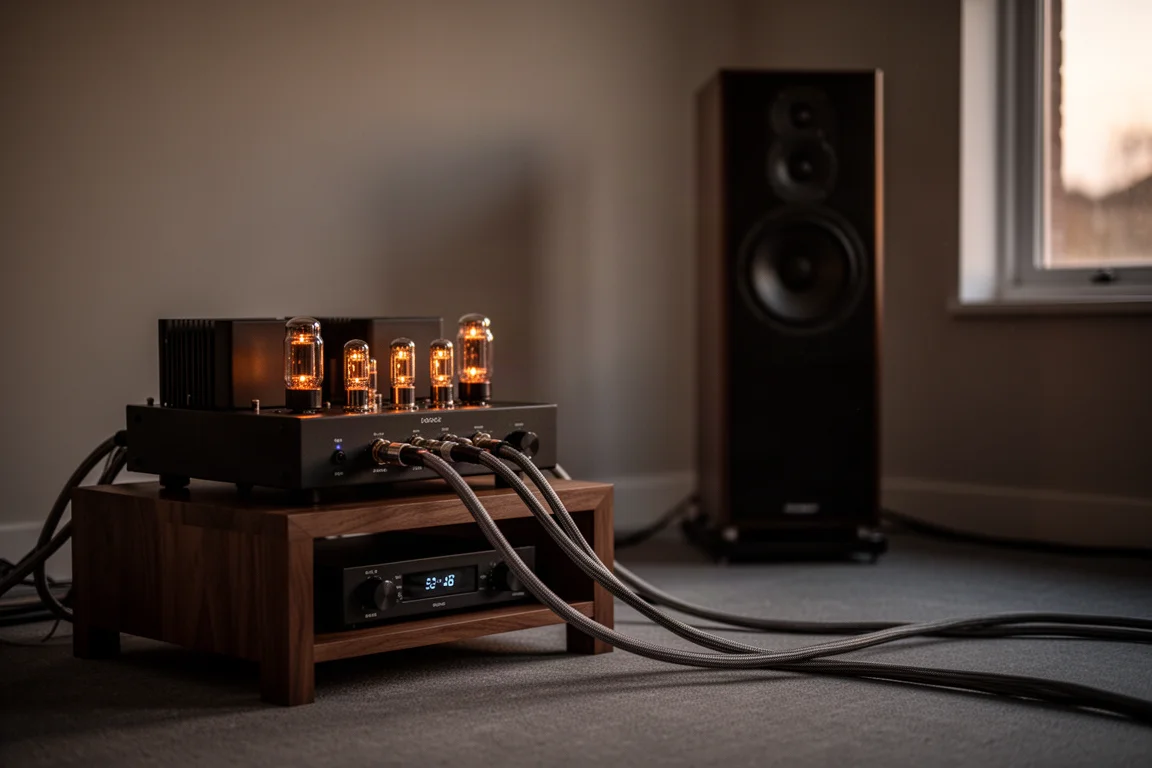
Not every pairing worked. Some solid-state combinations came across as muddy and soft, and one well-regarded integrated sounded dynamically flat and rather uninvolving. The speakers came alive with a good valve amplifier, and even a single-ended 300B design drove them to sensible listening levels in an average-sized room without compressing dynamics or softening the leading edge of notes. If a speaker were struggling, that compression is exactly where it would show.
Positioning follows from the tweeter. Ribbon tweeters typically have wide horizontal dispersion but narrow vertical dispersion, so the tweeters need to sit close to ear height, which is easier to achieve with a floorstander than with a stand mount. In a room of roughly 4.3 by 3.7 m, placing the cabinets just over 2.5 m (8 ft) apart kept the midrange from sounding thick, and pulling them 115 cm (45 in) into the room, measured from the centre line of the front baffle, kept the bass tight.
Things to Consider Before Buying
The Revela 2 is fussier than its smaller sibling. It wants space, it wants experimentation with amplifier matching, and it wants the tweeters at the right height. Buyers who cannot provide those conditions may never hear what the speaker is capable of.
There is also a single set of binding posts, which rules out bi-amping and bi-wiring for enthusiasts who rely on those options.
Worth knowing: the Revela 1 stand mount is £1,800, and the matching stands add £700, bringing that combination to £2,500, a full £1,000 less than the floorstander. In a smaller room, that pairing is the more logical choice.
Elsewhere in the market, the Scansonic MB 2.5 B at £3,750 shares a slightly warm tonal balance and strong soundstaging, with heavier bass and a midrange that is not quite as open. The Buchardt A500, at around €4,000, images even better but has a more polite upper midrange. The passive ATC SCM 20 at just under £4,000 offers greater midrange texture and tonal shading with tighter bass, though as a sealed box it will not match the floorstander for dynamics, bass extension or top-octave expression. The Neat Elite Classic matches the Revela 2 on price in a real wood finish and shares its slightly warm balance, controlled bass and articulate treble, but it is a smaller speaker and will not shift as much air.
Buying Advice
If you have the room and the patience, the Revela 2 is a rewarding speaker. Budget for the matching process as much as for the speaker itself. A modest integrated amplifier can get you started, and a more powerful or valve-based design will show you considerably more of what the speaker can do.
Give the speakers room to breathe. Aim for a wide spacing between cabinets, pull them well forward of the wall behind them, and get the ribbon tweeters close to ear height. Small adjustments here change bass tightness and midrange openness more than most component swaps.
If your room is smaller than roughly 4.3 by 3.7 m, consider the Revela 1 with matching stands instead. It is a harder load to drive but it costs £1,000 less as a package and will suit a tighter space.
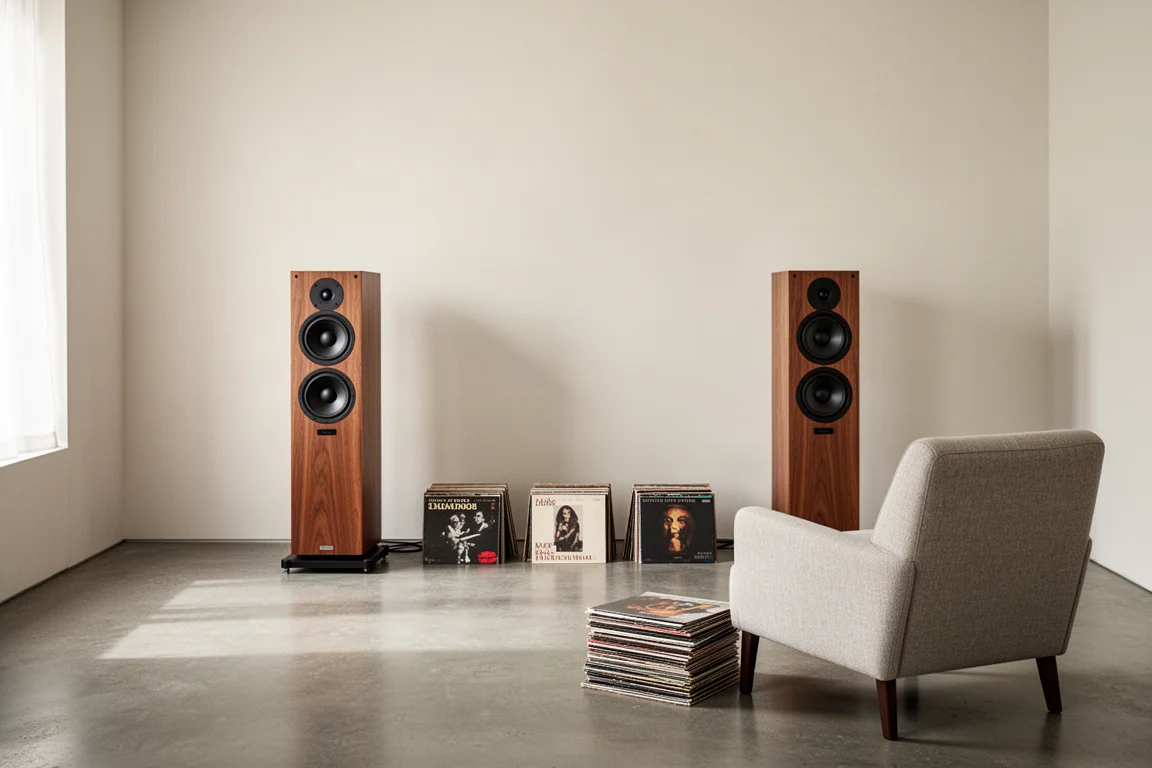
Whichever route you take, treat the purchase as the beginning of a setup process rather than the end of one. Take the time to try more than one amplifier and to fine-tune the placement, because the difference between an average result and an excellent one with this speaker is largely in those two variables.
Conclusion
The Revela 2 is a three-way floorstander that builds on the strengths of the Revela 1 without simply repeating them. It adds bass weight and extension, opens up the midrange with a dedicated driver, and delivers a soundstage that belies its cabinet size. The warmer balance and slightly polite upper midrange will not suit everyone, and it does demand careful matching and placement.
Get those things right and the results can be exceptional, particularly with valve amplification. For listeners with a suitable room and a willingness to experiment, the Quadral Revela 2 earns a strong recommendation.
Product link
View more details for Quadral Revela 2
This product is mentioned in the review. Check the specifications, options, and compatibility before buying.
View more details for Quadral Revela 2Further reading
Related Reviews
Floorstanding Speakers
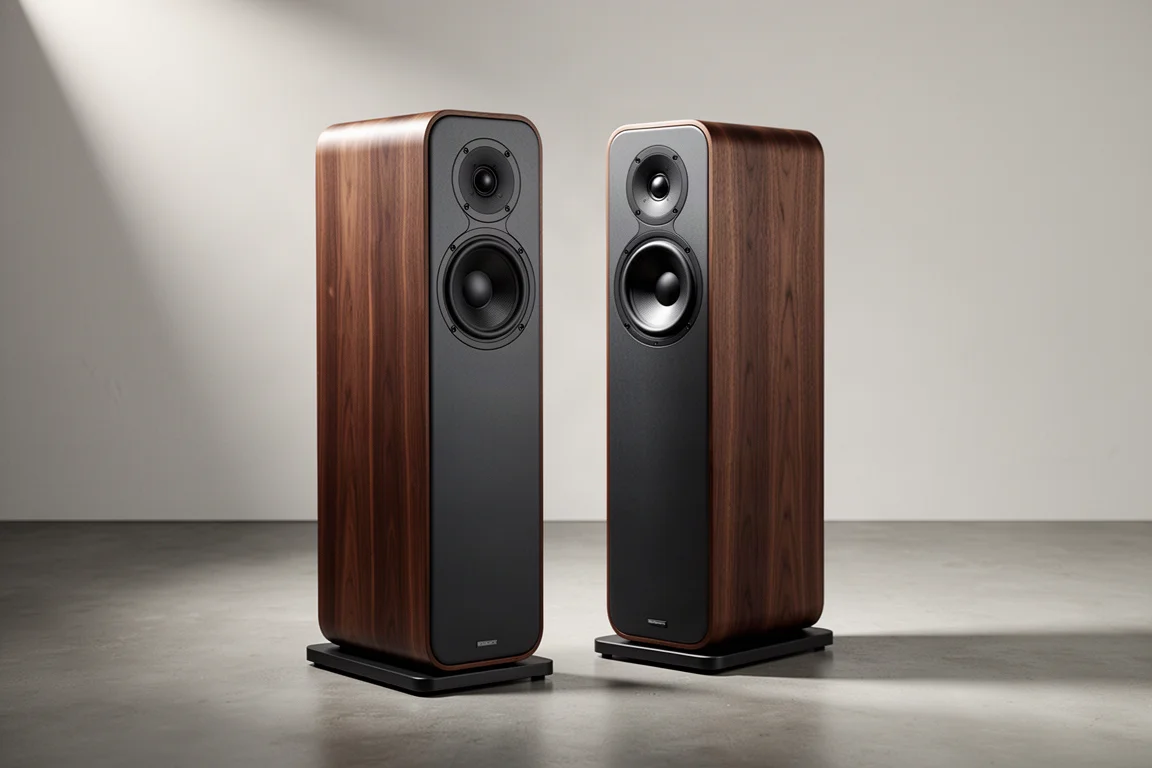
Acoustic Energy AE109 Mark II Review: A Refined Floorstander at £699
The Acoustic Energy AE109 Mark II is a slim, warm sounding floorstander that delivers clarity, midrange body and strong imaging in small to medium rooms.
Floorstanding Speakers
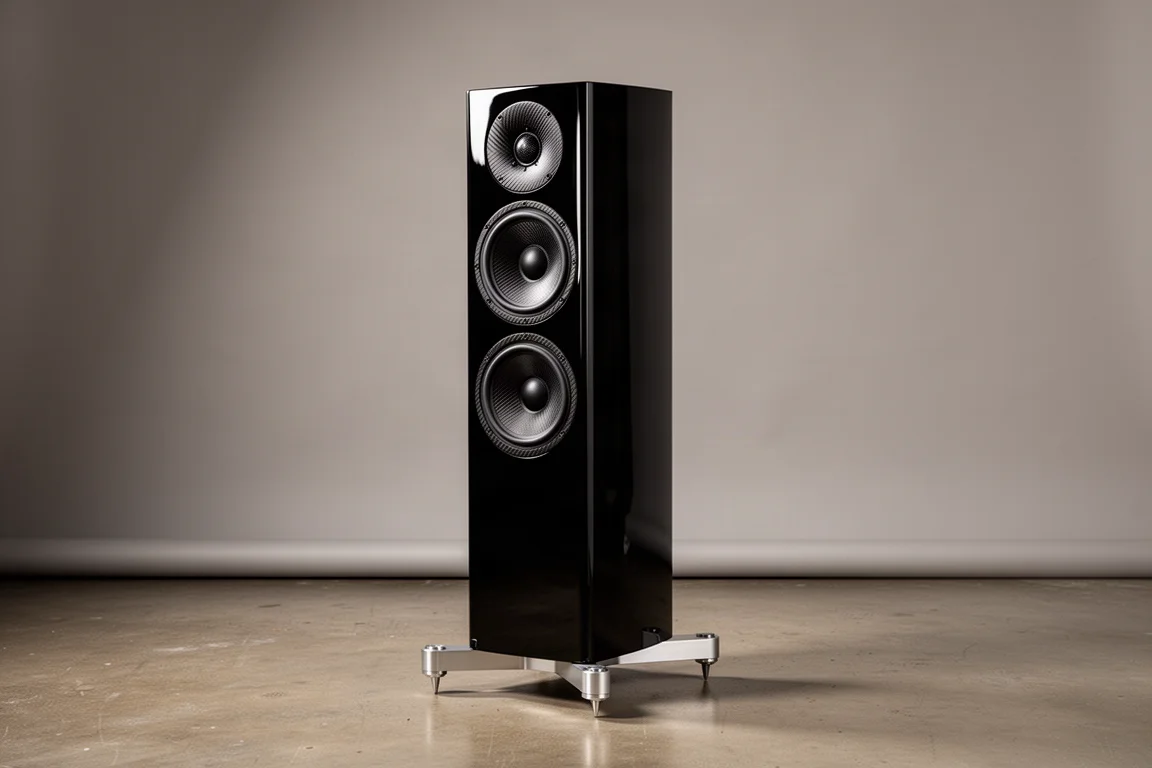
Acoustic Energy AE509 Review: A Slim Floorstander With Deep, Defined Bass
A practical look at the Acoustic Energy AE509, a slim floorstanding speaker with carbon fibre drivers, deep and well-defined bass, and an easy-going character that rewards careful system matching.
Floorstanding Speakers
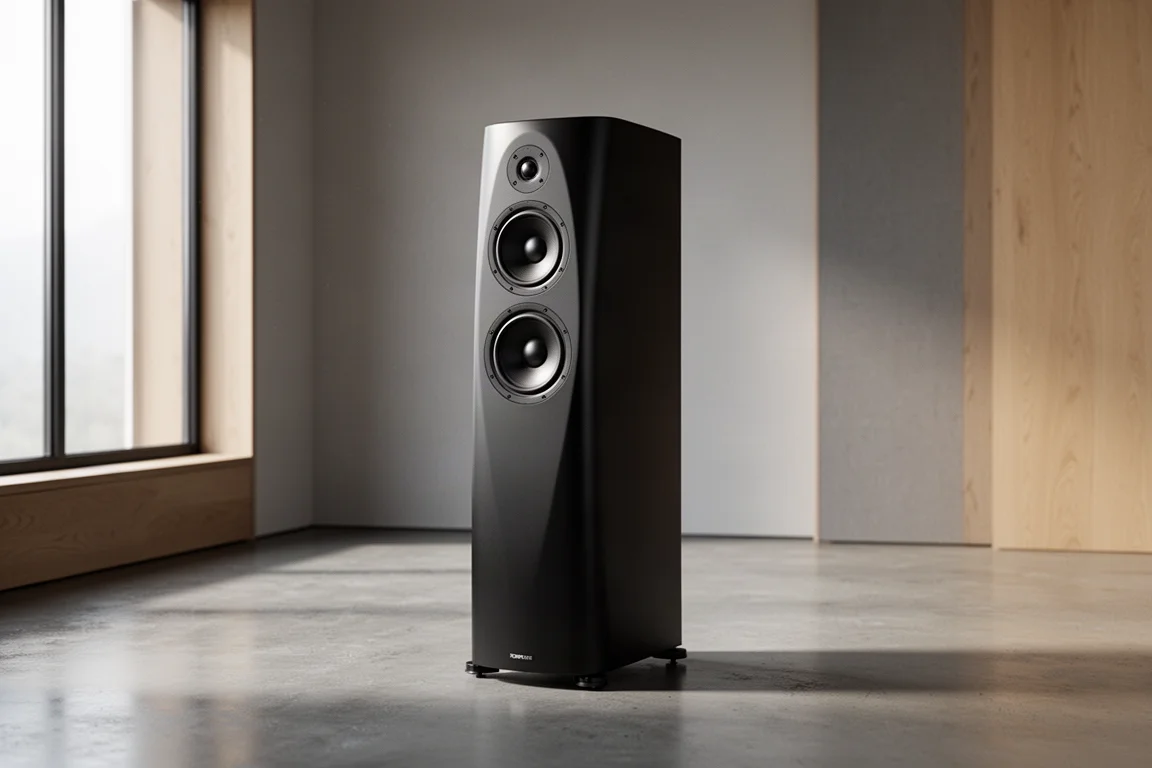
Arendal 1528 Tower 8 Review: Reference Neutrality With Real Demands
A close look at the Arendal 1528 Tower 8, a nearly five-foot, 200-pound floorstander that rewards generous space, serious power, and high listening levels with reference-grade neutrality.