Floorstanding Speakers
Q Acoustics Concept 50 Review: A Floorstanding Speaker That Plays Bigger Than It Looks
A $1,999 floorstanding loudspeaker with flagship-derived cabinet technology, superb imaging, and clean bass, plus one area where it asks for compromise.
Introduction
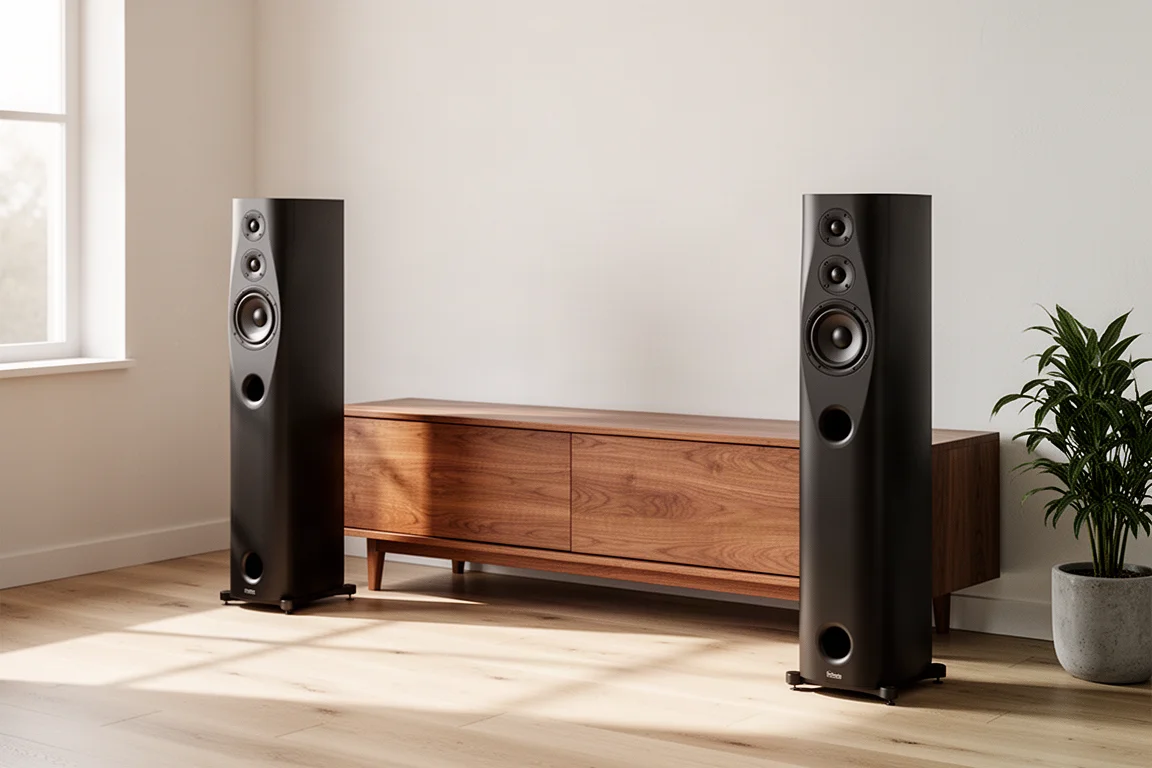
The Q Acoustics Concept 50 is a floorstanding loudspeaker priced at $1,999 and offered in three gloss finishes: gloss black, gloss silver, and gloss white. It is a compact tower by high-end standards, yet it carries a meaningful amount of engineering borrowed from the company’s flagship Concept 500.
Its proposition is easy to grasp. Buyers get a slim, furniture-friendly cabinet with a mirror-like lacquer finish, plus a set of vibration-control techniques that are genuinely uncommon at this price point. The goal is a speaker that delivers scale, imaging, and bass weight without demanding a large room or exotic amplification.
This article covers what the Concept 50 does exceptionally well, the one area where it asks for compromise, and the practical questions worth settling before you buy.
Who This Product Is For
The Concept 50 suits listeners who want a two-channel tower that can carry most music on its own. Its low-frequency output reaches down to roughly 42 Hz, which covers all but the deepest musical notes, so a subwoofer becomes optional rather than mandatory for a wide range of material.
It also makes sense for home theater owners. Voices are rendered with precision, dynamics come through clearly on demanding soundtracks, and the speaker integrates well into a multichannel system. Anyone looking for a premium tower that handles both music and film without a separate monitor setup will find the use case straightforward.
Design and Build Quality
The cabinet measures 40.4 inches tall, 12.6 inches wide, and 16.5 inches deep, and each speaker weighs around 50 pounds. The rounded contours of the cabinet make it look smaller than those figures suggest, and the footprint is easy to place in most rooms.
Construction is where the Concept 50 justifies its price. The cabinet uses a gel core design, with two layers sandwiched around a non-setting gel intended to convert high-frequency vibration into heat. Point-to-point internal bracing, positioned with the help of finite element analysis and laser interferometry, targets the panels most susceptible to low-frequency reverberation. A two-plate suspension system isolates the cabinet from internal vibration, and the crossover is mounted to the isolation base rather than the cabinet, keeping it away from driver vibration and electromagnetic interference. The driver assembly is fitted to an aluminium baffle before it is attached to the cabinet.
The speaker uses an MTM layout: a 0.9 inch fabric dome tweeter flanked by two 5 inch woofers, with the tweeter crossed over at 2.1 kHz. That tweeter is hermetically sealed and mechanically isolated from the front baffle to shield it from resonances generated by the mid-bass drivers.
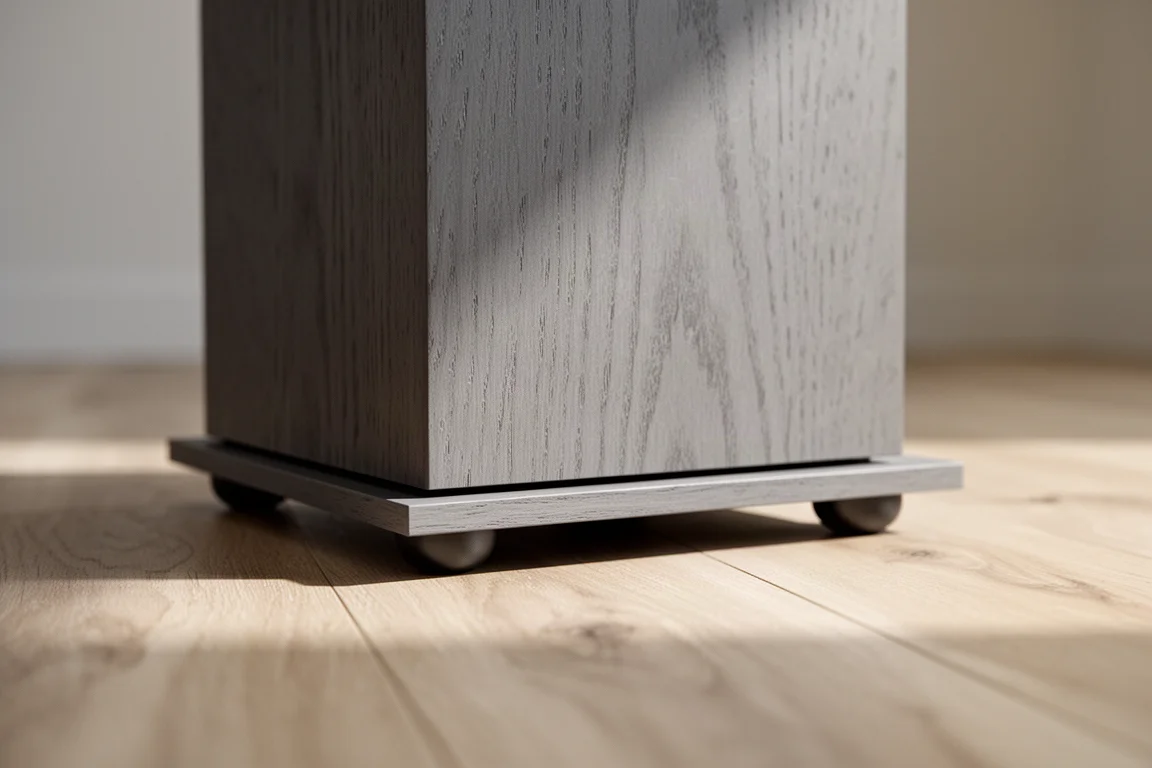
Around the back, separate terminals serve the high and low frequency sections, and removing the metal straps makes bi-amping possible. The binding posts are dense, high-quality plastic and tighten confidently with spades or bare wire, which is not always a given even on considerably more expensive speakers. The grille is magnetic, covers the drivers only, and ships with a protective cloth that has a cutout for the tweeter. Accessories include an isolation base plate, leveling spikes for carpeted floors, rounded feet for hardwood, the required screws and Allen wrench, and a port plug.
Main Strengths
Sensitivity is rated at 90.5 dB with a nominal impedance of 6 ohms and a minimum of 3.6 ohms, so a competent AVR or integrated amplifier with a robust amplification section is enough to drive them. Inexpensive entry-level receivers are not the right match.
Soundstage and imaging are the headline strengths. The Concept 50 plays considerably larger than its footprint suggests, with a deep and expansive presentation and vocals locked firmly in the centre. Instruments are easy to place within the stage, and layered vocal and choral elements remain distinct rather than collapsing into one another.
Bass is punchy, dynamic, and clean. The cabinet stays free of audible resonance or bloat when the low end is pushed, and basslines are articulated tightly across the speaker’s range. The midrange is smooth, with female vocals rendered with convincing timbre and a real sense of space, so familiar recordings often sound newly detailed.
Dynamics carry over to film soundtracks as well. Paired with capable subwoofers, the Concept 50 paints a large stage and rounds out the bottom end for the kind of physical impact home theater depends on.
Things to Consider Before Buying
The top end is the one area that lands at par rather than above it. The treble comes across as polite and slightly subdued, and a gradual dip in the response begins around 2 kHz. On cymbals, triangles, trumpets, and horns, that final layer of sparkle and realism is softer than what more expensive designs with different tweeter technologies deliver.
There is no tweeter level control, so any adjustment has to come from your AV receiver’s tone controls or from applying EQ. If you already like what the speaker does with bass and midrange, it is worth listening closely to the upper midrange to confirm that its character matches your taste.
Placement also matters more than the compact cabinet suggests. If bass sounds bloated in a given room, that is a positioning and room effect rather than a trait of the speaker itself.
Setup and System Matching
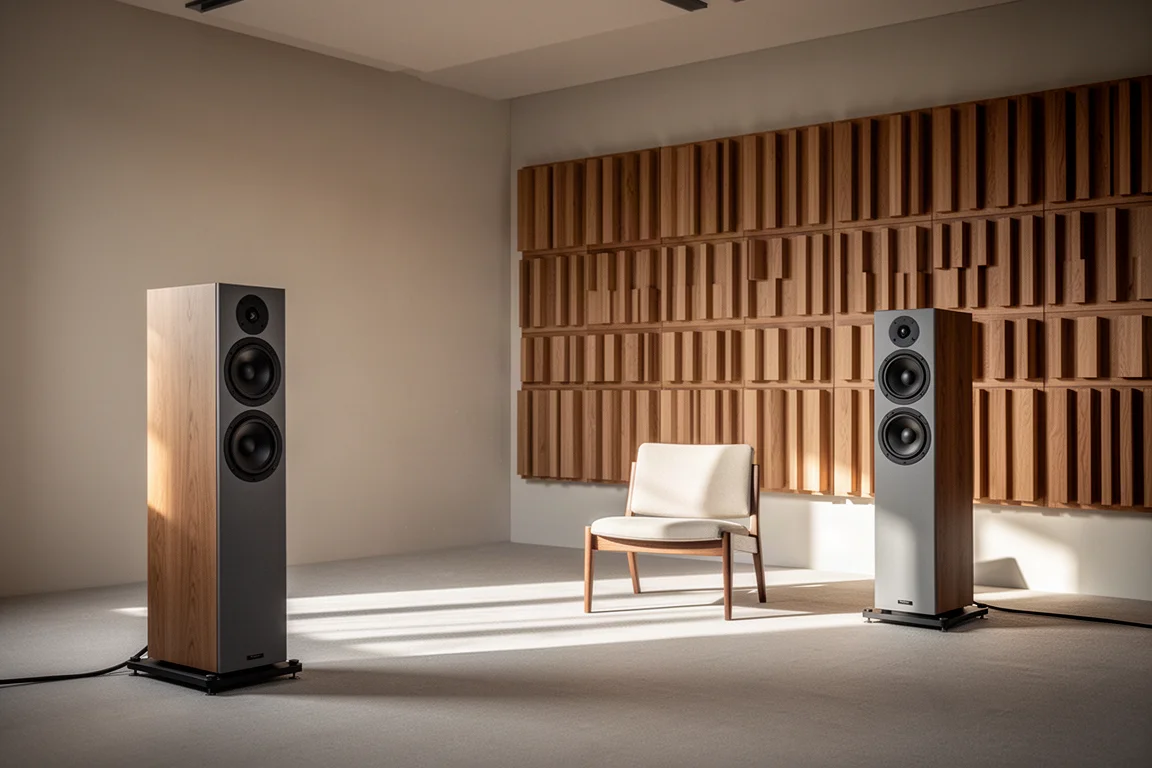
Towing the speakers in toward the main listening position produced the most convincing results. Room correction and equalisation were switched off during listening, with sources feeding the speakers directly.
The supplied accessories cover the practical details. Leveling spikes let you steady the cabinet on carpet, the rounded feet suit hardwood, and the port plug gives you a way to tune low-frequency behaviour when the speaker sits close to a wall. For stereo music, the Concept 50 rarely needs a subwoofer. For film, adding one or more subwoofers in a multi-subwoofer configuration lifts the experience considerably.
Because the terminals are separate for high and low frequencies, bi-amping and bi-wiring remain available as upgrade paths, and the binding posts make those connections easy to tighten with confidence.
Buying Advice
At $1,999, the Concept 50 represents strong value in high-end audio. It brings cabinet and vibration-control technologies down from a far more expensive flagship model, and it consistently performs above its price class in imaging, soundstage depth, bass quality, and midrange refinement.
The sensible approach is to weigh the trade-off honestly. If your priority is an expansive, relaxed presentation with punchy bass and precise vocal placement, the Concept 50 is an easy recommendation. If your reference point is a brighter, more forward top end with pronounced treble detail, audition the speaker first and decide whether its softer character suits your room and preferences.
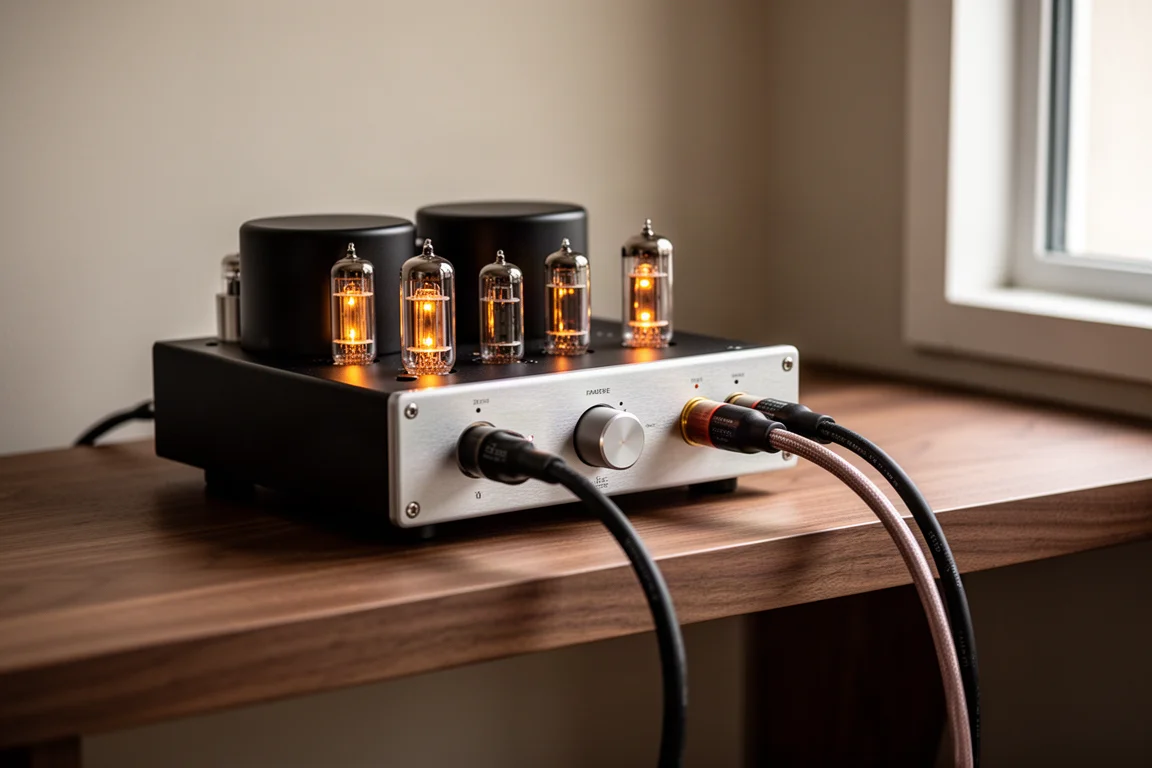
Give it an amplifier with a solid power supply, place it with some care, and the speaker rewards the effort with a presentation that feels far larger than its dimensions imply.
Conclusion
The Q Acoustics Concept 50 is a thoroughly engaging floorstanding speaker that gets the fundamentals right. It images exceptionally well, paints an expansive soundstage, and delivers clean, dynamic bass without needing a subwoofer for most music. Its polite treble is the one point to check against your own taste, and it is a fair trade at this price.
For listeners who want a genuine taste of high-end performance in a slim, room-friendly tower, the Concept 50 deserves a place on the audition shortlist.
Product link
View more details for Q Acoustics Concept 50
This product is mentioned in the review. Check the specifications, options, and compatibility before buying.
View more details for Q Acoustics Concept 50Further reading
Related Reviews
Floorstanding Speakers
Acoustic Energy AE109 Mark II Review: A Refined Floorstander at £699
The Acoustic Energy AE109 Mark II is a slim, warm sounding floorstander that delivers clarity, midrange body and strong imaging in small to medium rooms.
Floorstanding Speakers
Acoustic Energy AE509 Review: A Slim Floorstander With Deep, Defined Bass
A practical look at the Acoustic Energy AE509, a slim floorstanding speaker with carbon fibre drivers, deep and well-defined bass, and an easy-going character that rewards careful system matching.
Floorstanding Speakers
Arendal 1528 Tower 8 Review: Reference Neutrality With Real Demands
A close look at the Arendal 1528 Tower 8, a nearly five-foot, 200-pound floorstander that rewards generous space, serious power, and high listening levels with reference-grade neutrality.