Floorstanding Speakers
Q Acoustics 5040 Review: Tower Speaker Sound Without the Premium Price
A two-way floorstanding tower that gets close to a far more expensive design in the same range, with a neutral mid-range, easy amplifier matching, and a few trade-offs worth knowing before you buy.
Introduction
Q Acoustics has a habit of moving technology down its range, and the 5040 is the clearest example yet. This two-way floorstanding tower shares its driver layout, its tweeter design, and much of its measured behaviour with the Concept 50, a considerably more expensive tower in the same line-up, yet it sells for roughly half the money.
That makes it an interesting purchase rather than a budget compromise. The 5040 is a speaker you can build a long-term stereo system around, and it behaves well with a wide spread of amplifiers. This review covers what it does well, where it gives ground to the step-up model, and who should consider it.
Who the Q Acoustics 5040 Is For
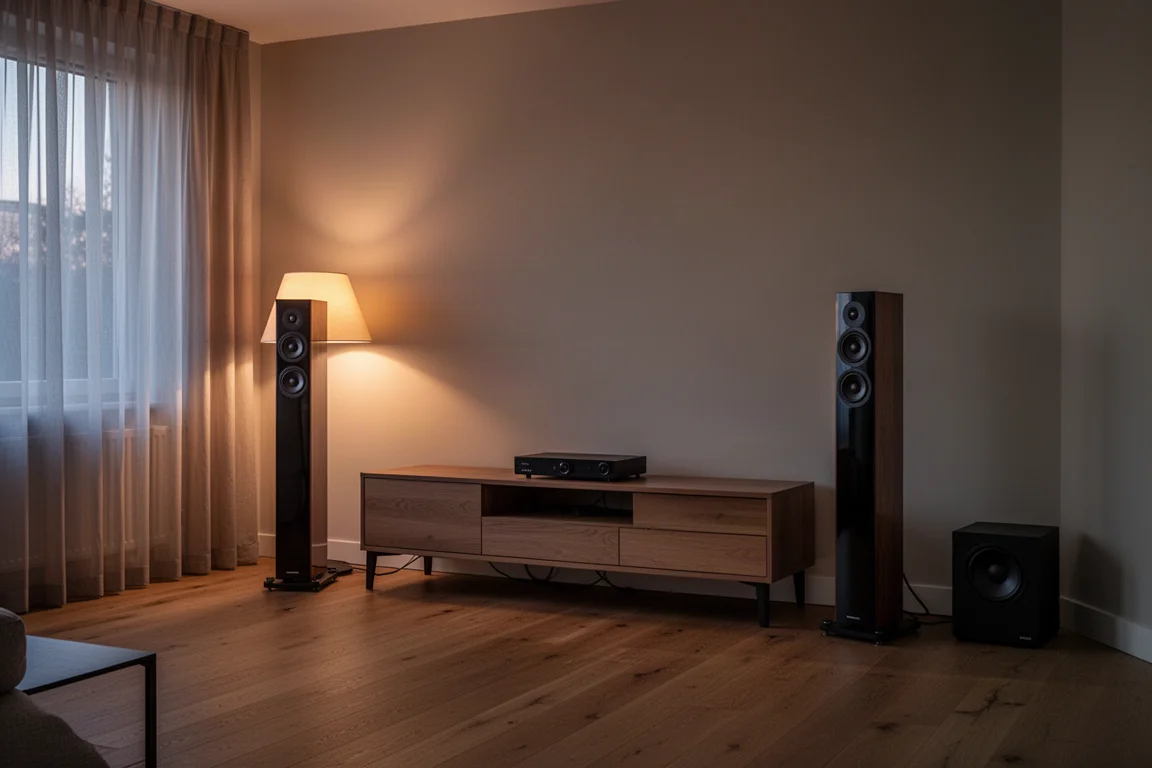
The 5040 suits listeners who want a neutral, full-range floorstander without crossing into high-priced territory. A rated sensitivity of 91.5 dB and a nominal 6 ohm load make it easy to pair with a broad range of amplifiers, which makes it a sensible anchor for a system built around a mid-priced integrated amp.
It is also a strong option for stereo home theater. Intelligibility is high, so vocals and dialogue stay clear without a dedicated centre channel, and the cabinet stays composed when the material gets busy.
The one clear caveat is deep bass. The 5040 is full range enough for most music, but listeners who spend a lot of time with electronica, metal, or Dolby Atmos home theater will want to add a subwoofer. Without one, the low end stays nuanced and agile, and it never becomes booming or overpowering.
Design, Build, and Key Features
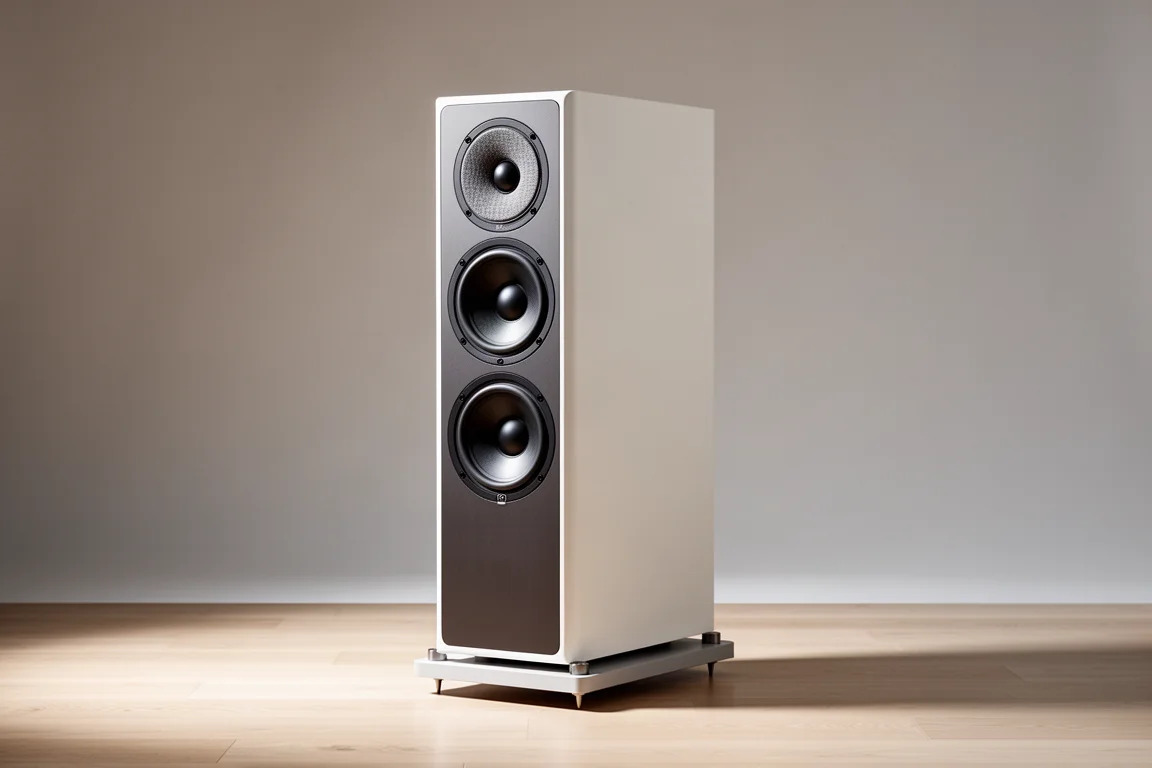
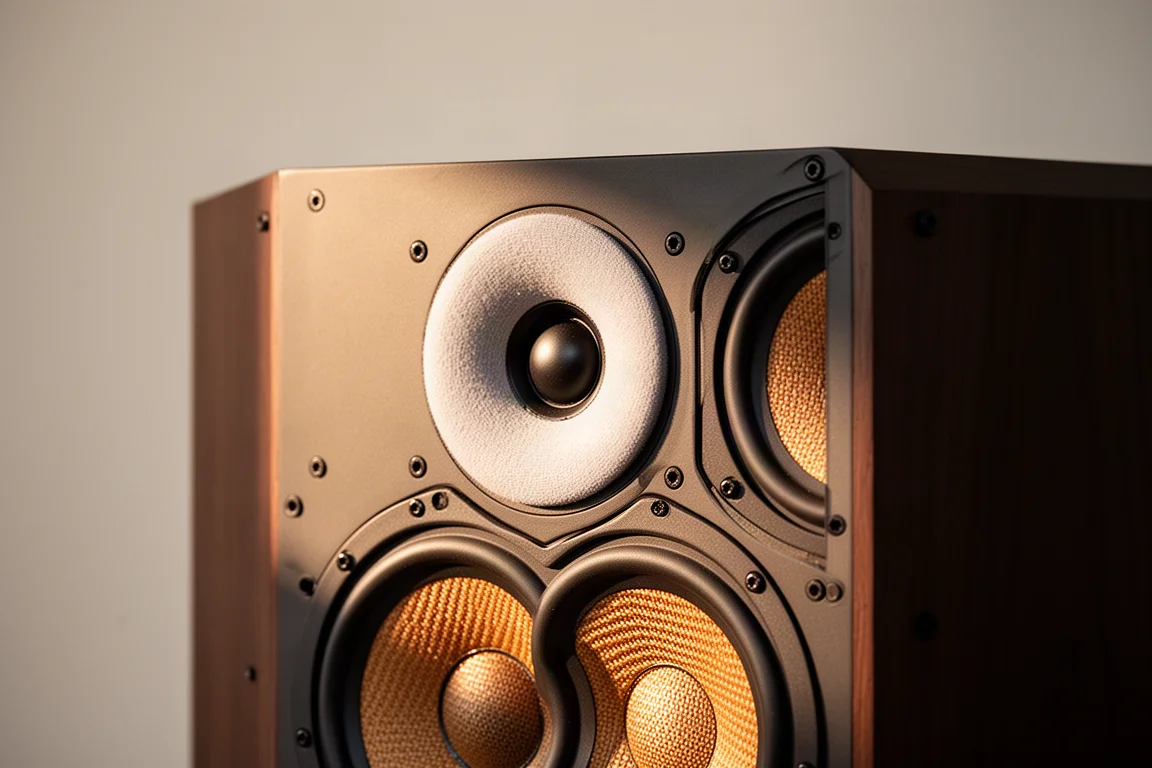
The 5040 is a two-way design built around two 5-inch bass drivers that use a new continuous curved cone profile. The cone shape is intended to improve integration with the tweeter while adding dynamic headroom.
Between those two woofers sits a hermetically sealed and isolated soft dome tweeter borrowed from the more expensive Concept series. The result is a classic MTM arrangement, with a rear-facing port and a cabinet that uses point-to-point construction along with an internal Helmholtz pressure equaliser. The reported frequency response is 39 Hz to 30 kHz, with a nominal 6 ohm impedance that dips to around 3 ohms.
Build quality holds up well next to the costlier model. The 5040 is slightly shorter and about 10 pounds lighter than the Concept 50, but it feels every bit as stout in the hand. It comes in four finishes: satin black, satin white, Santos Rosewood, and Holm Oak.
Around the back you get a single set of recessed binding posts, so there is no bi-wiring or bi-amping. The base is also simpler and noticeably less wobbly than the arrangement used on the step-up speaker, which is a welcome change during setup.
Sound Quality and Performance
Placed in the same position as the more expensive model, the 5040 measured neutral from roughly 40 Hz upward, and its in-room response came remarkably close to that of its costlier sibling. The main difference was a slight treble roll-off on the Concept 50, which is likely down to small variations in toe-in between the two setups.
The mid-range is the standout. It is close to textbook neutral, with no audible cabinet resonance colouring the natural timbre of instruments or voices. There is no chestiness and no boxiness, and instruments carry believable scale.
The treble is a touch less subdued than on the step-up model, which gives the 5040 slightly more sonic contrast. It stays refined and smooth, and it avoids throwing a spotlight on plosives or sibilance even with vocal-forward material. That extra top-end energy pays off dynamically too, because crescendos and cymbal hits land with a little more snap.
Imaging is a strong point. Both this speaker and the more expensive model separate detail cleanly across the stage and lock in a convincing centre image, and a small amount of toe-in tightens that focus further. The Concept 50 still disappears more convincingly into three-dimensional space, and its soundstage is the more open and transparent of the two. The 5040’s stage is very good, but it sits a little more forward.
Without a subwoofer, the low end is nuanced and agile rather than heavy. Add one and the presentation gains a final measure of grounding and dimension, which matters most for electronic music, metal, and immersive home theater mixes.
How the Q Acoustics 5040 Compares With Other Tower Speakers
If you want more scale and impact than the 5040 offers, the Klipsch 8000F Mark II and the Polk R700 are the two obvious places to look. The Klipsch brings bass dynamics and a live-like presence that the Q Acoustics cannot match, while the Polk is a true three-way that plays deeper than the 5040 can reach, at a higher price. If you want to feel like you are at the show, the Klipsch is the one to hear. If you want to pick a recording apart, the 5040 is the better fit.
Listeners who value liveliness at lower volumes have two other options worth weighing. The KLH Model Three has more top-end energy and a mostly linear mid-range, and its bass can hit harder when driven by a powerful amplifier, though not necessarily deeper. Its lack of a port may make it more forgiving of difficult rooms. The Triangle BR09 is specified at 35 Hz to 22 kHz, 92 dB, and 8 ohms, which makes it markedly easier to drive, and it often sells below its suggested retail price. Neither matches the 5040 for accuracy, and the Triangle in particular adds a little cabinet colouration in the lower registers.
Two more alternatives trade neutrality for character. The KEF Q750 is rated at 48 Hz to 28 kHz, 88 dB, and 8 ohms and is a little easier to drive, but it still rewards a competent amplifier. It is a great speaker, yet the 5040 manages to be as good for around 400 dollars less, and it comes across as more open and a little livelier. The Focal Chora 826 is the more forward and brighter choice, with more dynamic interest and better behaviour at low volumes. Its response leans slightly V-shaped, with a bass lift and an accentuated treble, and its soundstage is bigger and more open with excellent centre imaging. Its styling mixes several finishes, which will not suit everyone, and it is widely expected to be replaced before long.
Amplifier Matching and Placement
A sensitivity of 91.5 dB and a load that dips to about 3 ohms mean the 5040 is fairly amplifier agnostic, provided the amplifier is comfortable with 4 ohm loads and has roughly 50 watts or more on tap. Paired with a Crown XLS DriveCore 2 and with Audiolab models, it reached peaks above 100 dB without strain.
A small 30 watt amplifier is a different story. It kept the speaker musical and free from audible distortion up to about 85 dB in a 480 square foot room, which is plenty loud for casual listening, but it ran out of headroom beyond that. If you listen at higher levels, budget for more power.
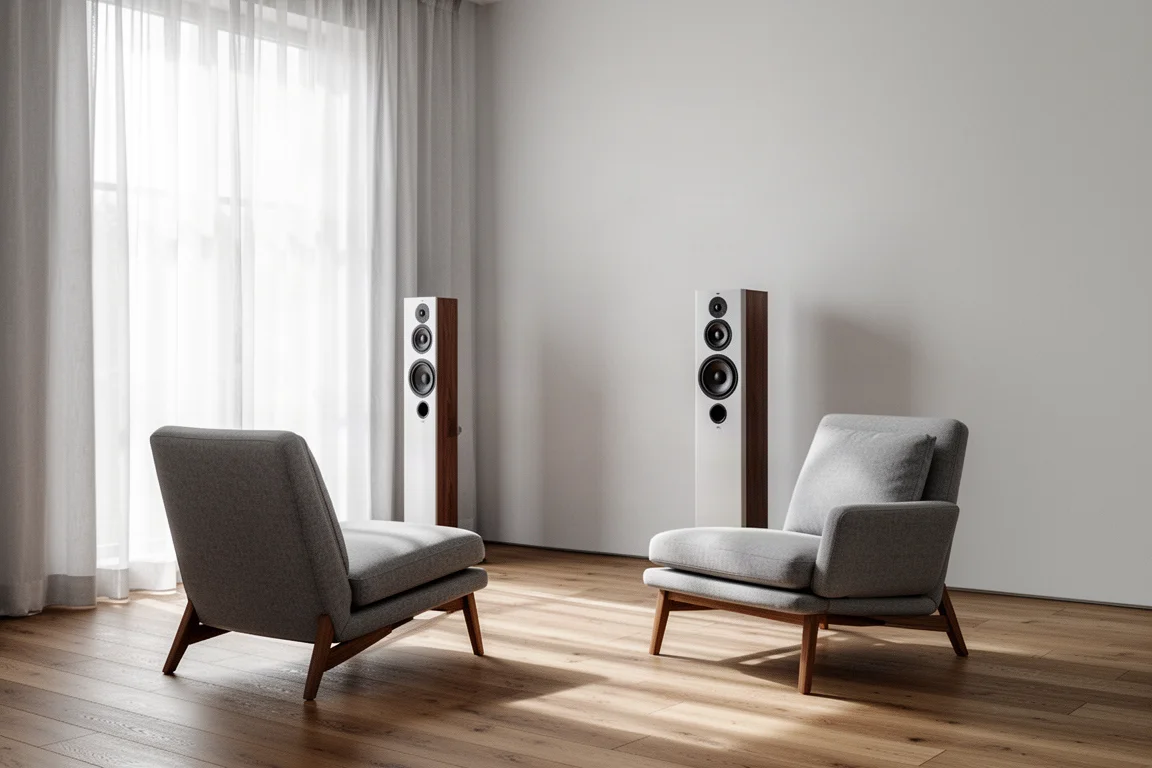
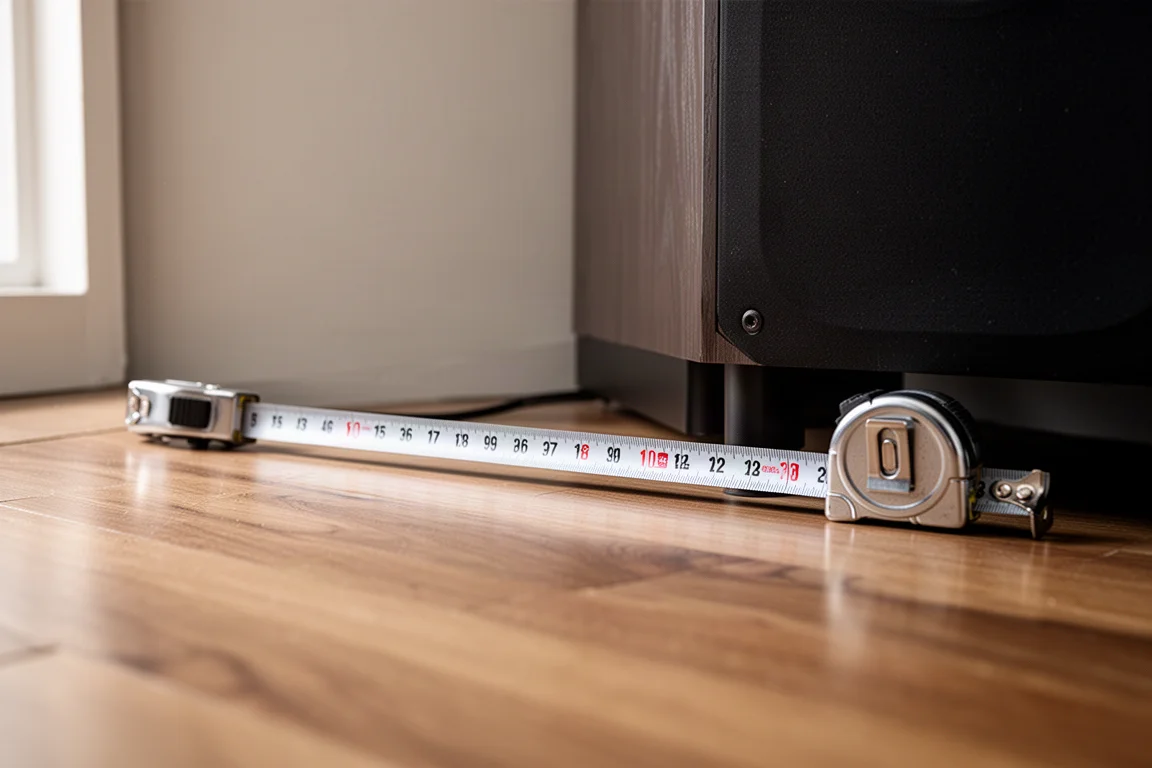
Placement is straightforward. Setting the speakers about 30 inches from the front wall, nine feet apart, and roughly 12 feet from the listening position produced good results, and a small amount of toe-in sharpened the centre image.
Things to Consider Before Buying
Bass depth is the main limitation. The 5040 reaches down to a reported 39 Hz, which covers most music, but the deepest electronic and cinematic material benefits from a subwoofer.
Soundstage is the other trade-off. The speaker’s stage is very good, yet it is more forward and less three-dimensional than the more expensive model in the range, which is where the extra cabinet bracing, damping, and weight of that design show up.
The single set of binding posts rules out bi-wiring and bi-amping, so anyone who likes to experiment with those setups should take note. The impedance dip to around 3 ohms also means a low-powered amplifier is not the right partner.
Buying Advice
At around 1,500 dollars a pair, the 5040 sits in a crowded part of the tower speaker market, but it makes a strong case for itself. The gap to the more expensive model is real but small, and the savings are large. If you already own the step-up speaker, there is no reason to change. If you are shopping with a tighter budget, or if the more expensive model is hard to find in stock, the 5040 is the sensible place to start.
If you find the 5040 enjoyable, spending more for the costlier model will only yield marginal gains. Putting that money into a better amplifier, a well-matched subwoofer, or another part of your system is likely to return more.
Conclusion
The Q Acoustics 5040 is a rare thing: a lower-priced speaker that gets close enough to a reference design to make the upgrade question genuinely difficult. It is neutral through the mid-range, easy to drive, well built, and available in finishes that look more expensive than the price suggests. For anyone who wants long-term listening satisfaction without moving into high-priced territory, it is one of the more confident recommendations in its class.
Product link
View more details for Q Acoustics 5040
This product is mentioned in the review. Check the specifications, options, and compatibility before buying.
View more details for Q Acoustics 5040Further reading
Related Reviews
Floorstanding Speakers
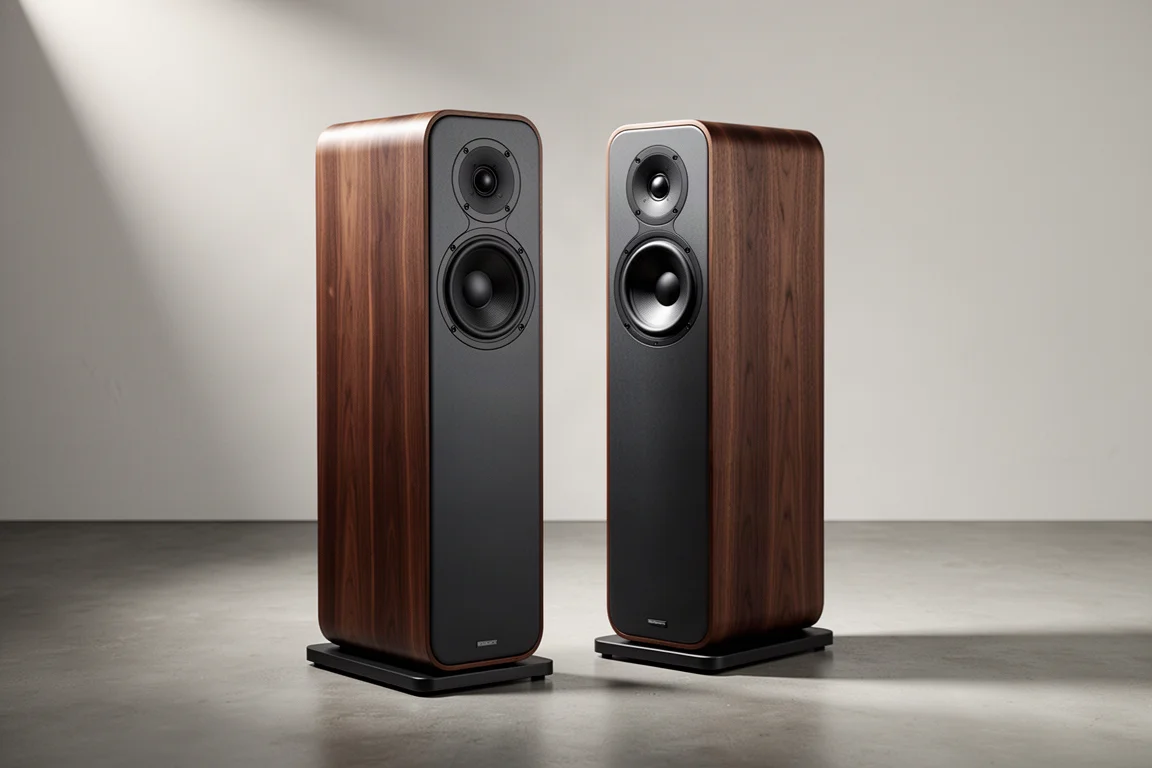
Acoustic Energy AE109 Mark II Review: A Refined Floorstander at £699
The Acoustic Energy AE109 Mark II is a slim, warm sounding floorstander that delivers clarity, midrange body and strong imaging in small to medium rooms.
Floorstanding Speakers
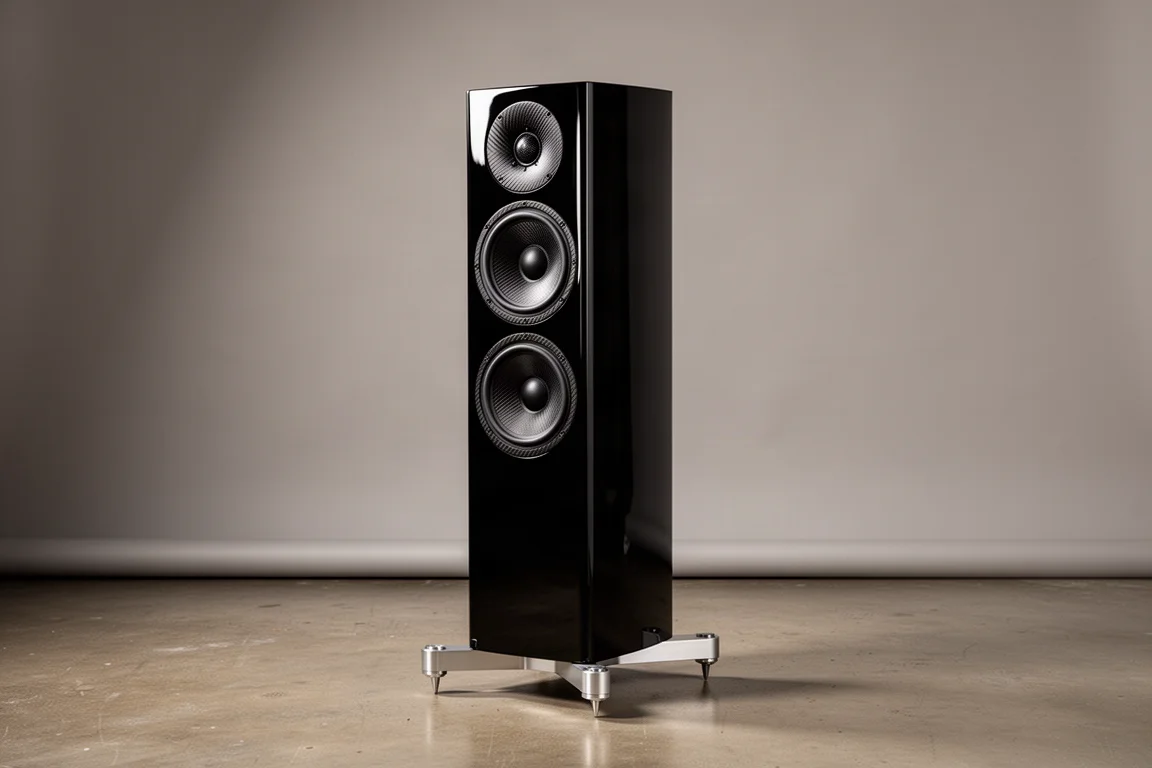
Acoustic Energy AE509 Review: A Slim Floorstander With Deep, Defined Bass
A practical look at the Acoustic Energy AE509, a slim floorstanding speaker with carbon fibre drivers, deep and well-defined bass, and an easy-going character that rewards careful system matching.
Floorstanding Speakers
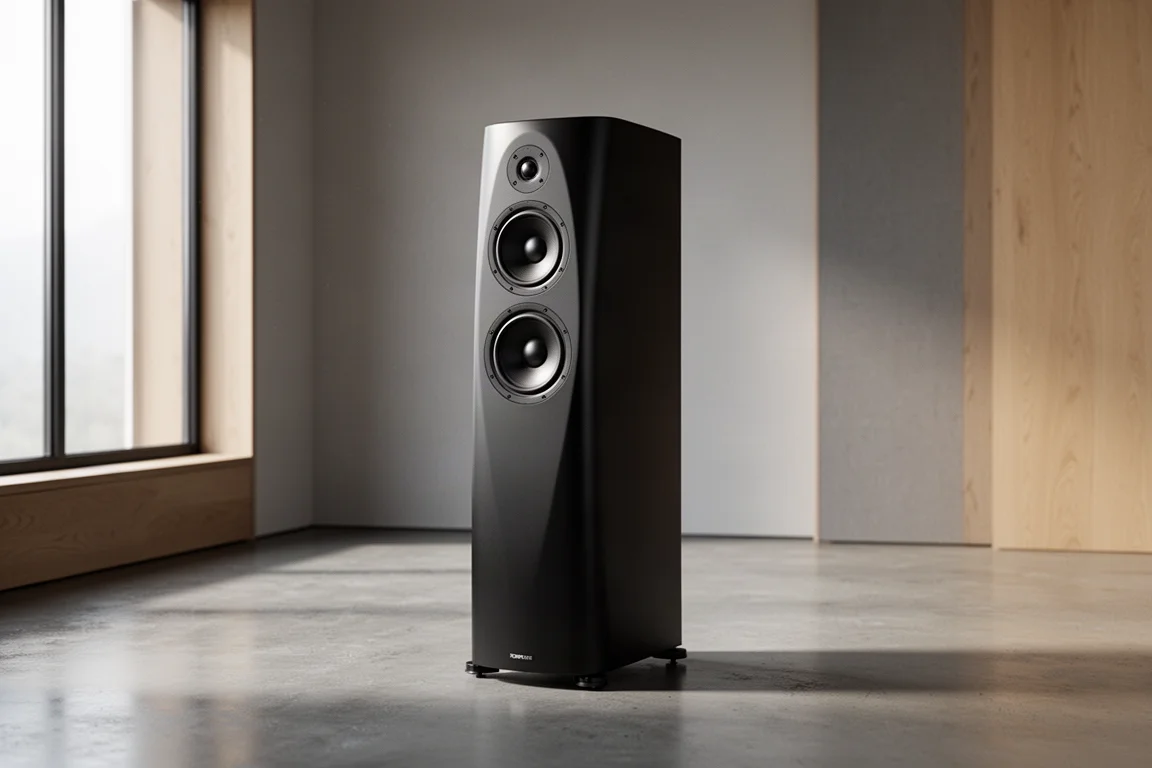
Arendal 1528 Tower 8 Review: Reference Neutrality With Real Demands
A close look at the Arendal 1528 Tower 8, a nearly five-foot, 200-pound floorstander that rewards generous space, serious power, and high listening levels with reference-grade neutrality.