Turntables & Analog
Pure Fidelity Symphony, Audio Origami PU8 and Esoteric Urushi: A $30,900 Analog Front End
A three-part analog front end built around a mixed collection of inherited records, featuring the Pure Fidelity Symphony turntable, the Audio Origami PU8 tonearm and the Esoteric Urushi Cobalt Blue cartridge.
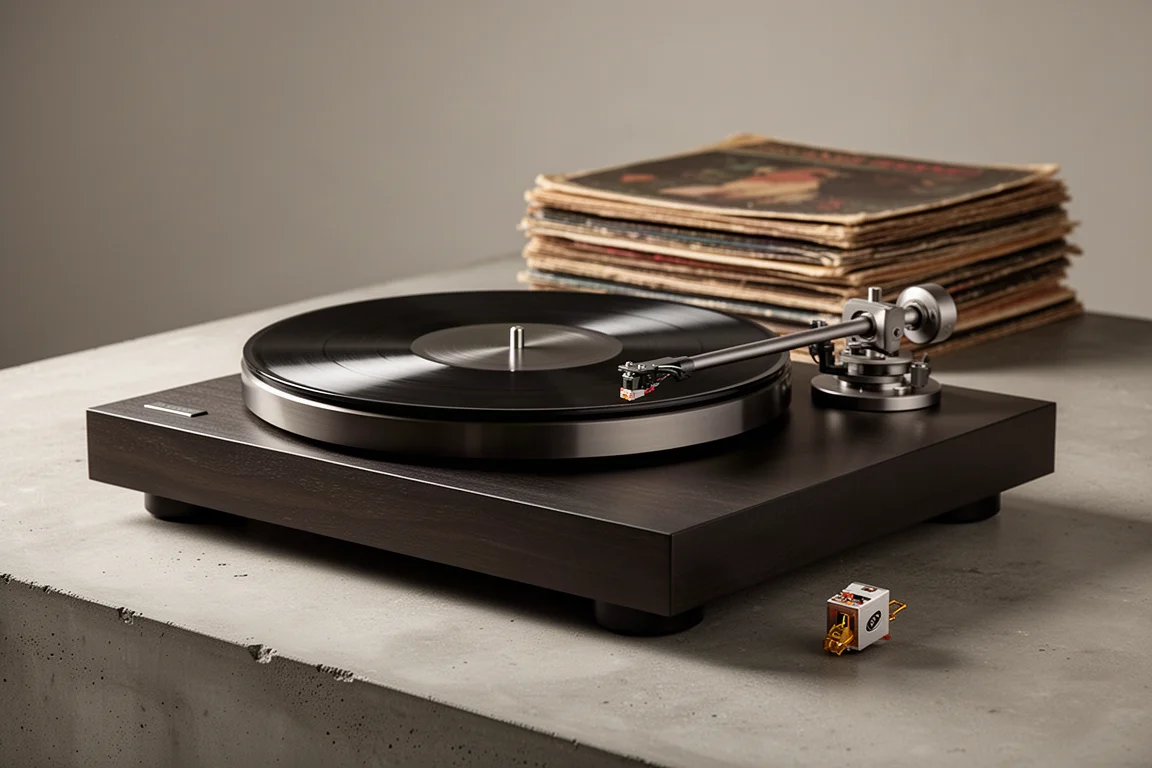
Introduction
Some audio purchases are about specifications and measurements. This one began with a stack of records.
The collection passed through three generations: a grandfather’s records, kept by a mother who had no system to play them on, and eventually handed to the person who would spend fifteen years trying to do them justice. Many of these records are decades old. They were pressed on whatever vinyl the budget allowed, sometimes mastered in a single session for radio play, and played hundreds of times by hands that were not gentle. They cannot be re-bought, cannot be streamed, and in some cases were never issued on CD at all.

What made the search difficult is that the goal was never simply a good turntable. It was a system that could make worn, uneven, historically ordinary pressings sound like they matter, while still doing justice to modern audiophile pressings. The endpoint is a three-part analog front end: the Pure Fidelity Symphony turntable at $17,000, the Audio Origami PU8 tonearm at $8,500, and the Esoteric Urushi Cobalt Blue cartridge at $5,400. Total: $30,900.
The road there started with a free Thorens TD 160 thrown into a deal for a Dynaco ST-70 and a PAS-3 preamplifier. It sounded terrible at first, not because of the deck but because the setup was wrong. Once a more experienced friend set it up properly, the lesson landed: a turntable is only as good as its setup.
What This Analog Front End Was Built to Do
Four requirements shaped this system.
Consistency across a mixed collection. A highly revealing deck can be a liability with worn records. A $300,000 flagship turntable auditioned years ago at a high-end audio store was astonishing with good pressings and merciless with poor ones, to the point where some records sounded worse through it than through far cheaper gear. The target here was the opposite: a deck that flatters nothing but punishes nothing either. The search also produced a useful fallback, in the form of a MoFi turntable that was the first deck to sound balanced across an entire mixed collection and remains a sensible recommendation for listeners who are not chasing a reference-level analog front end.
Low noise. Surface noise, rumble and coloration all compete with the music on old pressings, so quiet mechanical behaviour matters as much as tonal character.
A setup that does not demand an expert. Balance, alignment, anti-skating and cartridge mounting are where many high-end systems quietly go wrong.
Emotional engagement. A technically correct system that leaves a listener cold has failed at the only job that matters.
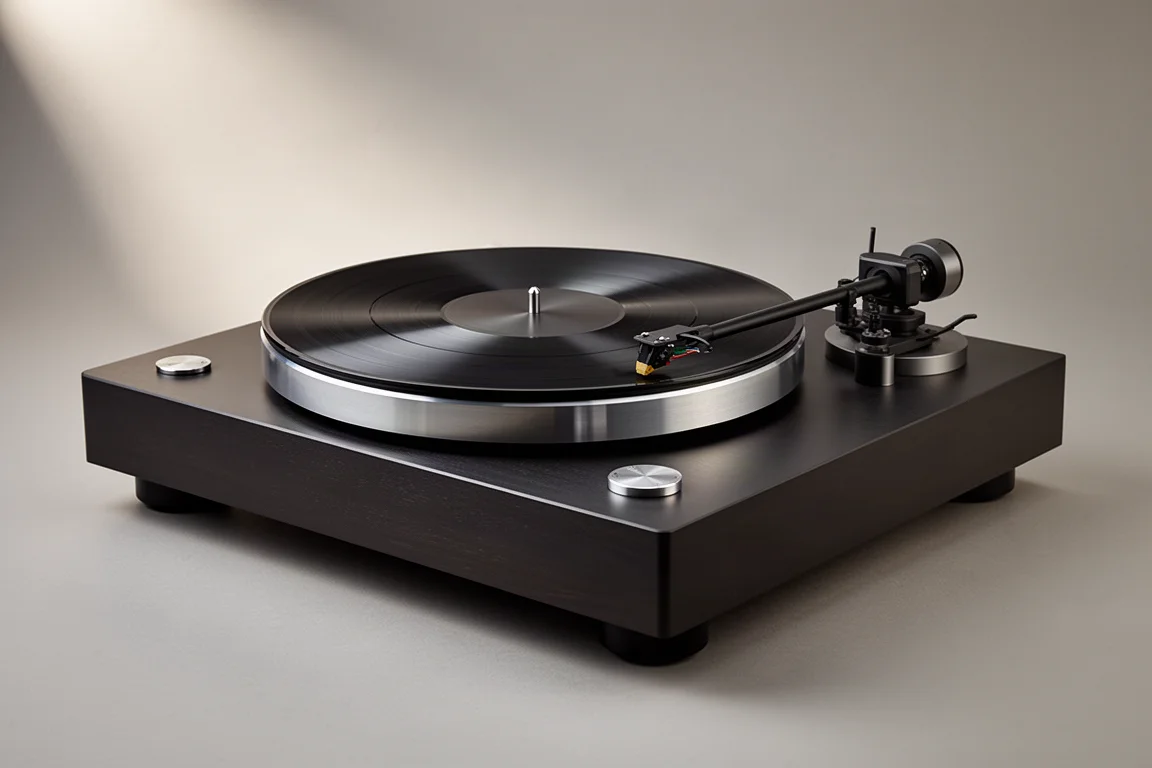
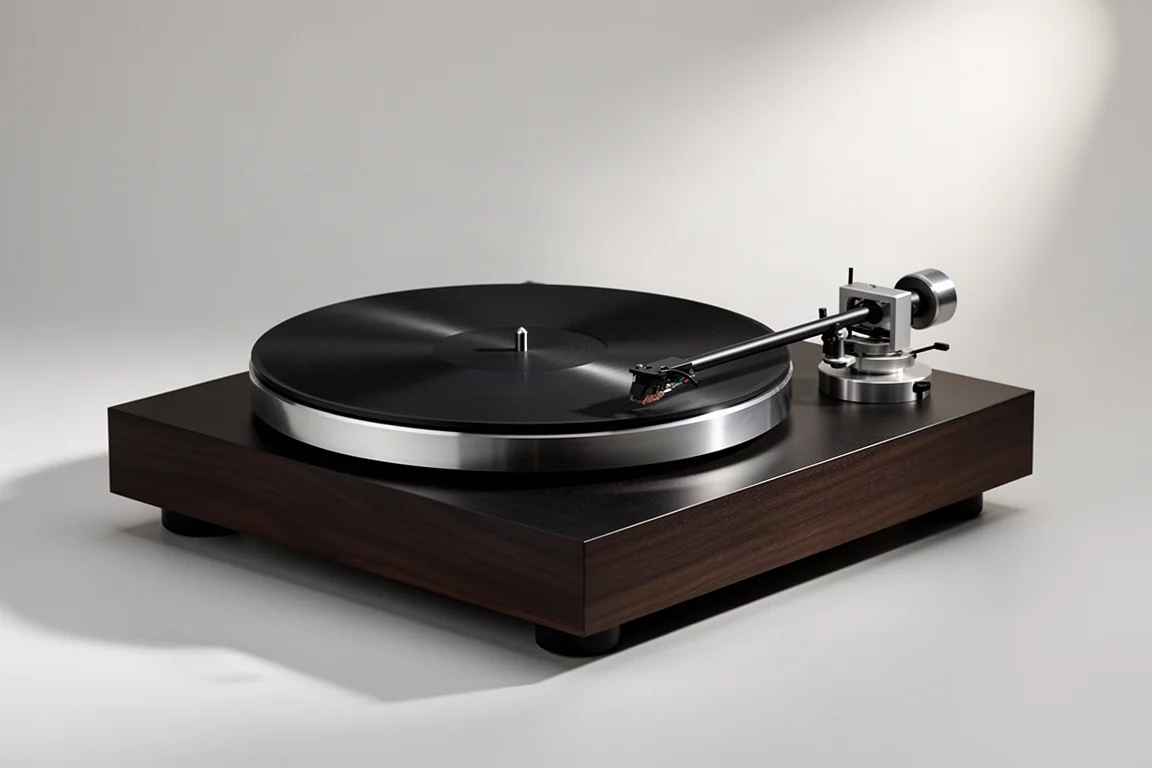
Pure Fidelity Symphony Turntable
The Symphony is the larger, more capable sibling of the Harmony, and Pure Fidelity’s own description of it is blunt: the Harmony on steroids. That framing sets expectations high, and the interesting part is how specifically it delivers.
Setup is the first surprise. The deck arrives calibrated and adjusted by an expert, and almost none of the usual alignment tooling is needed. On arrival, only a couple of small adjustments were required to account for a floor that was not perfectly level. For a turntable at this level, that is unusual, and it removes a large source of anxiety from the first evening of listening.
Then there is the performance. With the Harmony, roughly 80 percent of this collection sounded genuinely good. With the Symphony, the entire collection sounds sublime, difficult pressings included. The records that already sounded good did not simply improve slightly. They became grander, more open and more finely shaded, to the point of sounding like different records.
The most useful description is spatial. Music stops appearing to come from the speakers and instead sits in the room in three dimensions, an effect that is easy to call holographic and hard to describe any other way. At $17,000, this is the centre of the system, and it is the part that determines whether the rest of the investment is worth making.
Audio Origami PU8 Tonearm
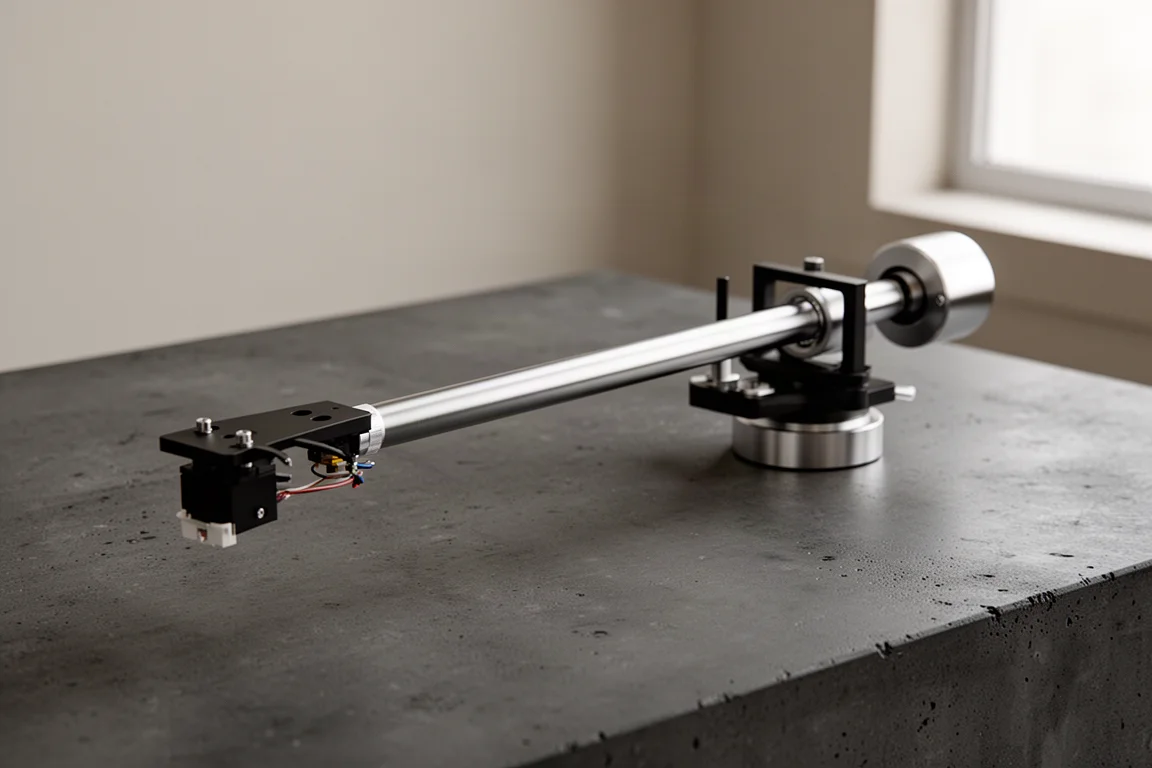
The tonearm on the Symphony is the Audio Origami PU8, a 12-inch design made in Scotland and priced at $8,500 on its own. One honest caveat applies: it has only been heard in this context, on this turntable, so there is no isolated verdict on how it behaves elsewhere. What can be said is that the pairing is exceptional.
Two qualities stand out. The first is setup. Expensive tonearms often demand expert-level adjustment to sound correct, while the PU8 is the most intuitive high-end arm to work with, with balance, alignment and anti-skating all behaving in a way that simply makes sense.
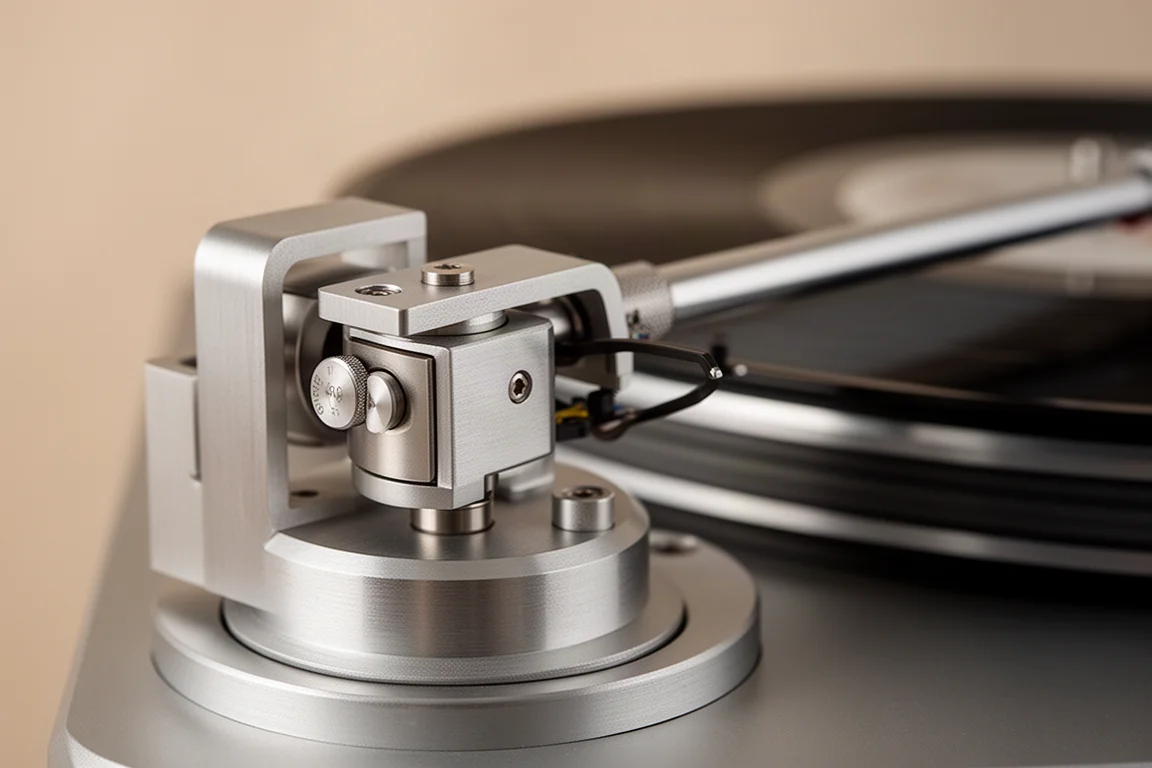
The second is quietness. The arm adds very little coloration of its own, and given how transparent the Symphony is, any character the arm contributed would be obvious. Whether the credit belongs to the arm, the turntable or the match between them is genuinely difficult to separate. The result is a magnificent piece of engineering that disappears into the system.
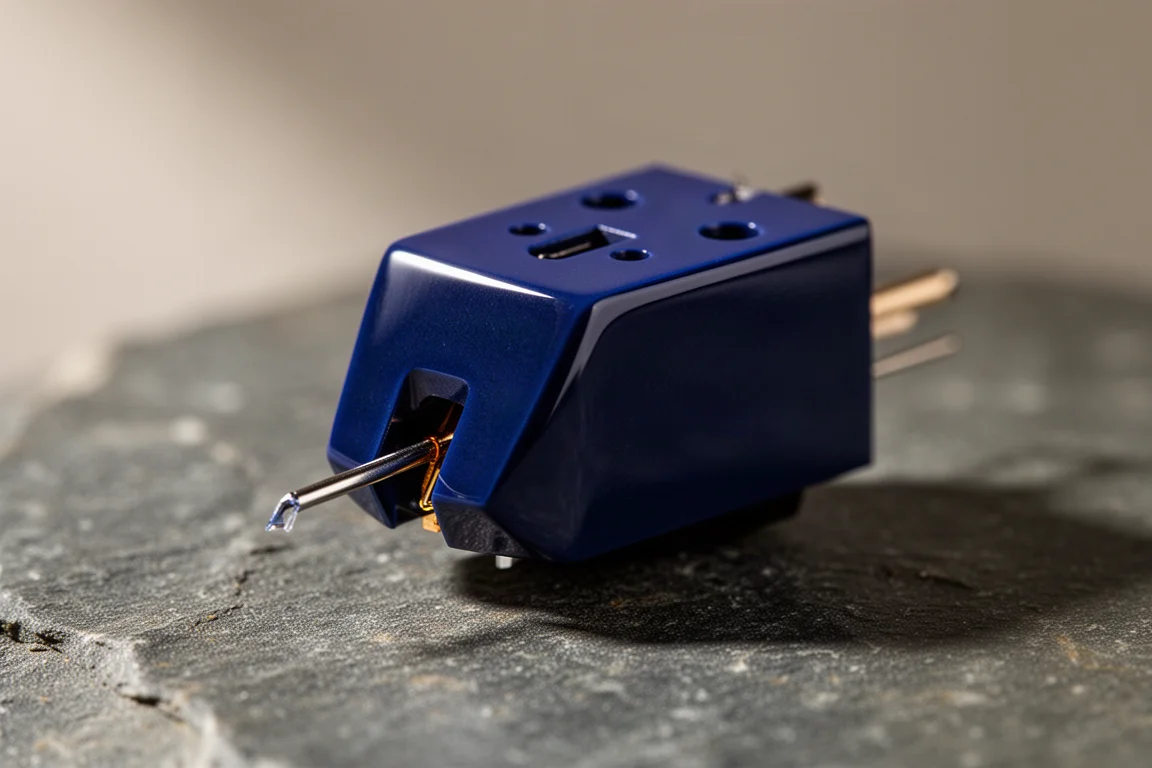
Esoteric Urushi Cobalt Blue Cartridge
The cartridge change was deliberate rather than exploratory. For years the system ran a Pure Fidelity Stratos, a moving coil cartridge with a warm, natural and non-analytical presentation that still retrieves detail, which is exactly what older pressings need. The goal was not a different flavour. It was more of the same, with more resolution.
After consulting a number of analog specialists, the consistent recommendation was the Esoteric Urushi Cobalt Blue, a hand-made cartridge from Japan priced at $5,400 and described, memorably, as the katana of cartridges.
It does what was asked of it. The cartridge does not change the personality of the system, it elevates it. The warmth and the natural tone remain, and the extra detail arrives without any shift toward a clinical or analytical presentation.
Pure Fidelity Harmony Turntable
The Symphony did not arrive in a vacuum. It replaced a Pure Fidelity Harmony, a deck that had been in service for three years and had already answered the central question of the search: yes, a turntable can make a mixed collection of ordinary pressings sound consistently good.
The Harmony behaves like a chameleon. Poor recordings and excellent recordings both come out sounding great, which is a rarer quality than it sounds. On roughly 80 percent of this collection it produced warm, inviting, detailed sound without a clinical noise floor jumping out of the speakers, and it surfaced inner details that had not been audible before. On newer audiophile pressings it delivered everything a much more expensive flagship had demonstrated in a store setting.
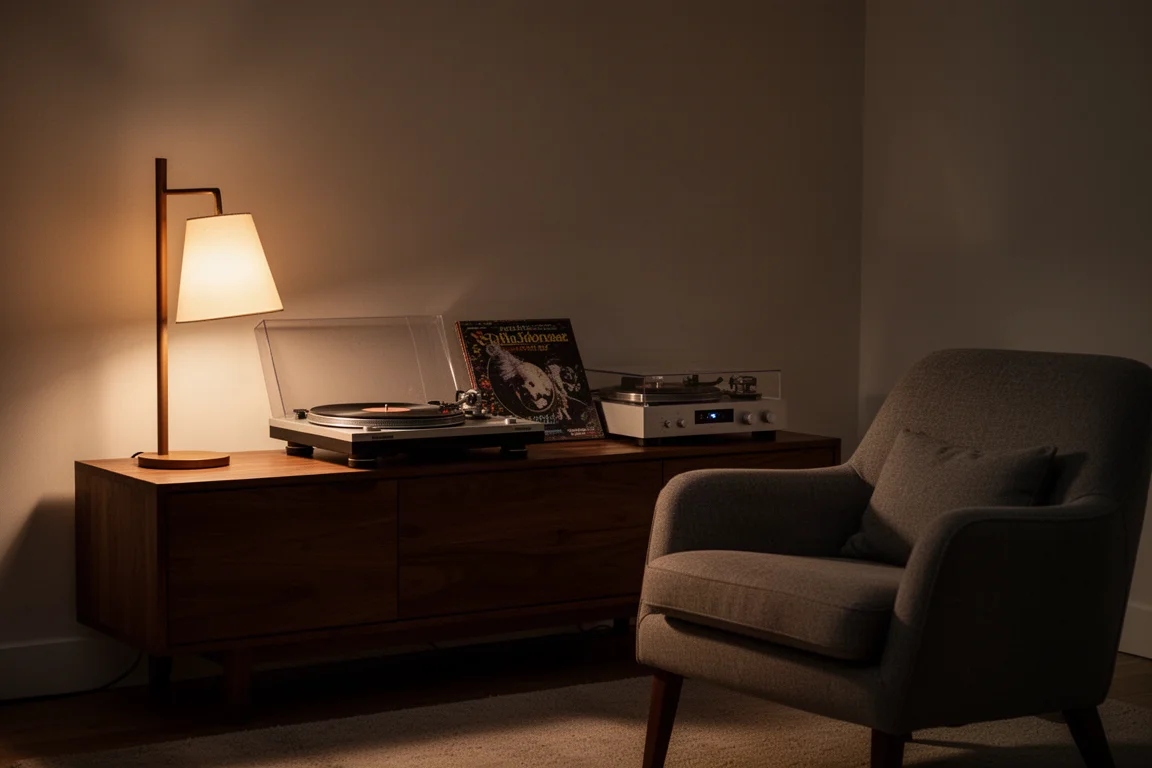
The honest limit is that 80 percent figure. A minority of records never fully clicked, and that gap is precisely what the Symphony closes.
Ownership is unusually low-effort. The Harmony arrives calibrated and set up by an expert, and the owner’s job is to plug it in, level it, and then stop thinking about it. It is, in the most literal sense, an heirloom-quality turntable, and for anyone who is not chasing the last few percent it is a very comfortable place to stop.
Pure Fidelity Stratos Cartridge
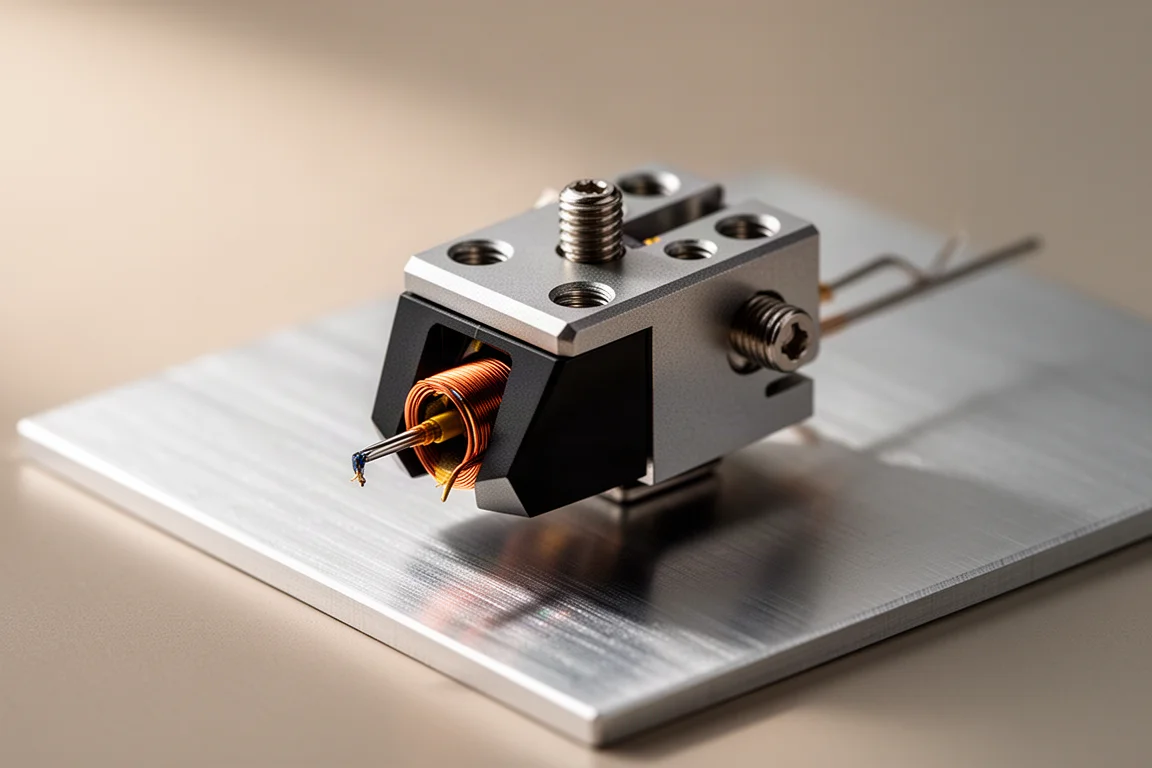
The Stratos is the cartridge the Esoteric Urushi was chosen to extend, and it deserves its own place in the story. Built by Pure Fidelity and designed by John Stratton, this moving coil cartridge ran for years on the Harmony and earned real affection.
Its character is warm, natural and non-analytical, with enough detail to keep old pressings engaging rather than merely tolerable. For the money it is an outstanding cartridge, and it remains the reason the upgrade path went toward more of the same sound rather than toward a different one. Listeners who like this presentation and are not ready to move up should feel no urgency to replace it.
Buying Advice
The three components here are a system, not a shopping list, and the total of $30,900 only makes sense if the goal matches the collection.
If your library is mostly clean modern pressings, the case for the Symphony is weaker. A deck like the Harmony, or a more affordable option entirely, will cover that material very well. If your library looks like this one, with decades-old pressings of widely varying quality that cannot be replaced, the calculus changes. The Symphony’s value is that it makes the difficult records listenable and the good ones remarkable, and that combination is what the money buys.
The PU8 tonearm is the least dramatic part of the purchase and possibly the most practical. A 12-inch arm that sets up intuitively and stays quiet removes a category of frustration that owners of high-end arms know well.
The Esoteric Urushi Cobalt Blue makes sense for a specific buyer: someone who already likes the Pure Fidelity house sound and wants it extended rather than replaced. If you want a different flavour instead of more of the same, this is not the cartridge to choose.
One practical note: the individual prices matter less than the match. The turntable is the foundation, the arm and cartridge are what let it show what it can do, and the whole point of this front end is consistency across a collection that most high-end gear handles unevenly.
Conclusion
A $30,900 analog front end is easy to dismiss from the outside. What it bought here was not bragging rights or a better specification sheet. It bought back evenings: two or three nights a week spent playing a grandfather’s records, and a collection that had been sitting unplayed for years finally doing what it was meant to do.
The technical summary is straightforward. The Pure Fidelity Symphony turntable delivers consistency across an entire mixed collection, the Audio Origami PU8 tonearm is quiet and unusually easy to set up, and the Esoteric Urushi Cobalt Blue cartridge extends a warm, natural presentation with more resolution. Together they solve a problem that cheaper decks and far more expensive flagships both struggled with.
That is the standard worth applying to any analog purchase: not how the system performs on a perfect record, but what it does with the records you actually own.
Further reading
Related Reviews
Hi-Fi Audio
Accuphase C-57 vs Allnic H-7000V: Two High-End Phono Stages Compared
A fully balanced solid-state phono stage with a pitch-black noise floor meets a tube design built for well-loved records. Here is how to choose between them.
Hi-Fi Accessories
Affordable Hi-Fi Accessories Under $100: A Practical Gift Guide
A practical guide to budget Hi-Fi upgrades, from 12-gauge speaker cable and isolation pads to affordable bookshelf speakers, a warm stereo receiver, and a vinyl anti-static device.
Phono Preamps
Ampapa A1 Review: A $130 Tube Phono Preamp With Tone Controls
A compact tube phono preamp with bass and treble controls, a headphone output, and a design-origin claim worth reading carefully.