Tower Speakers
PSB Imagine T65 Review: Deep Bass, High Output, and a Mid-Range Dip You Can Fix
A three-way tower speaker with remarkable low-frequency extension, strong dynamic headroom, and a broad mid-range dip that responds well to a couple of EQ bands.
Introduction
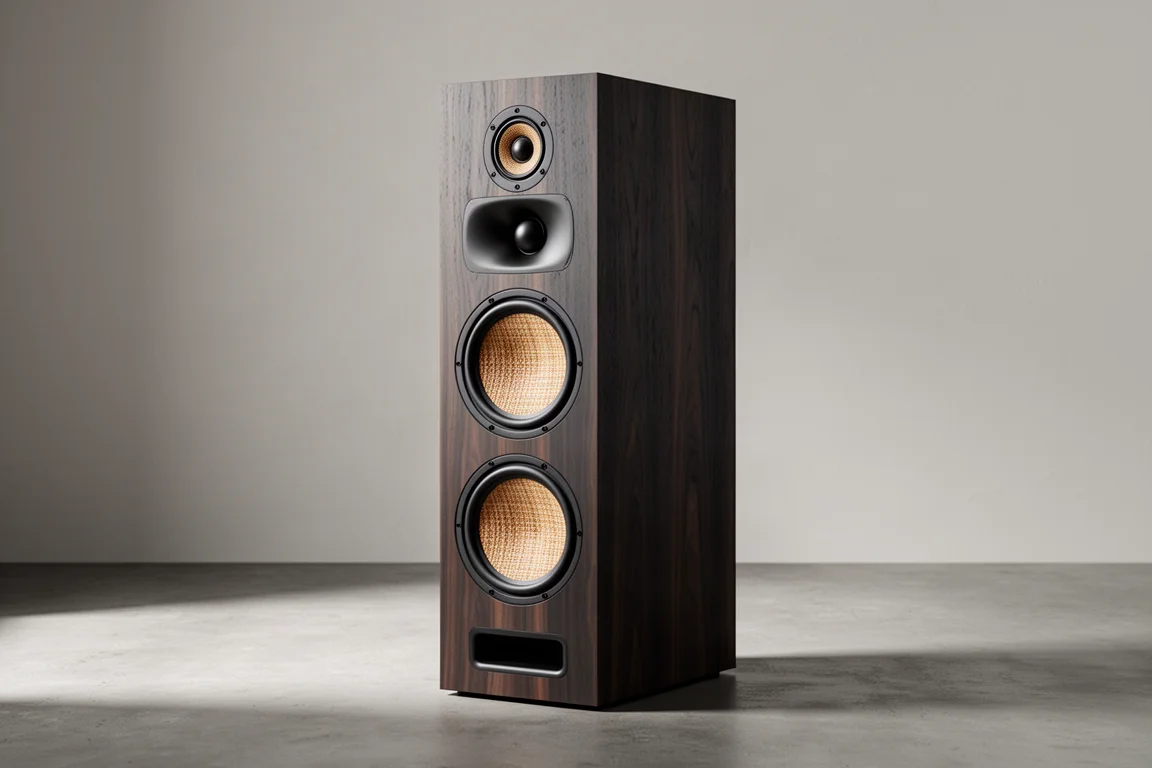
The PSB Imagine T65 is a three-way tower speaker that stands roughly one meter tall and sells for around $2,000 per pair. It is a recent addition to the PSB lineup, and the first thing that stands out is how much low-frequency output it delivers for the money.
Inside the ported cabinet you get two 6.5-inch mid-bass drivers, a 5.25-inch mid-range mounted above the tweeter, and a 1-inch titanium dome tweeter in a shallow waveguide. The unusual part is the spacing between the two mid-bass drivers: the lower one sits close to the floor rather than being stacked directly beneath its partner.
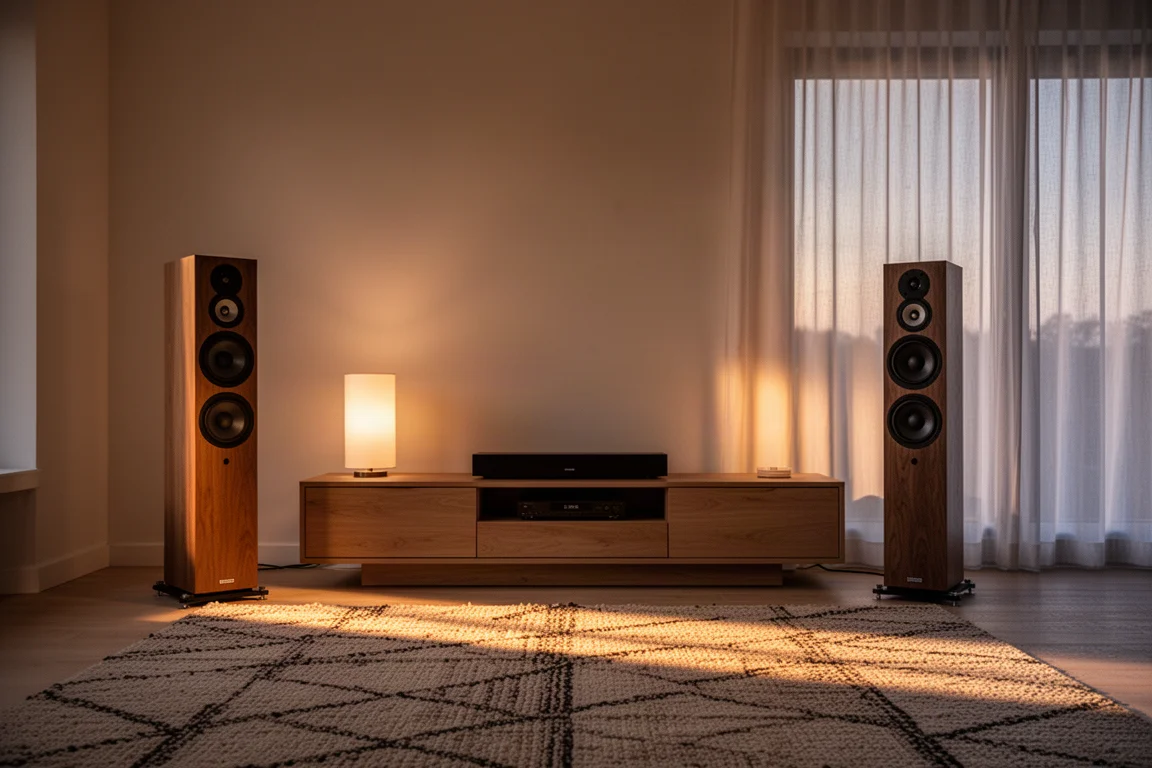
Published specifications list an F3 of 47 Hz and an F10 of 26 Hz, which is deep for a tower in this price class. In practice the T65 fills a room with weight and stays composed as the volume rises, and it does so without demanding a subwoofer for most two-channel listening.
Who the PSB Imagine T65 Is For
The T65 makes the most sense for three kinds of buyers.
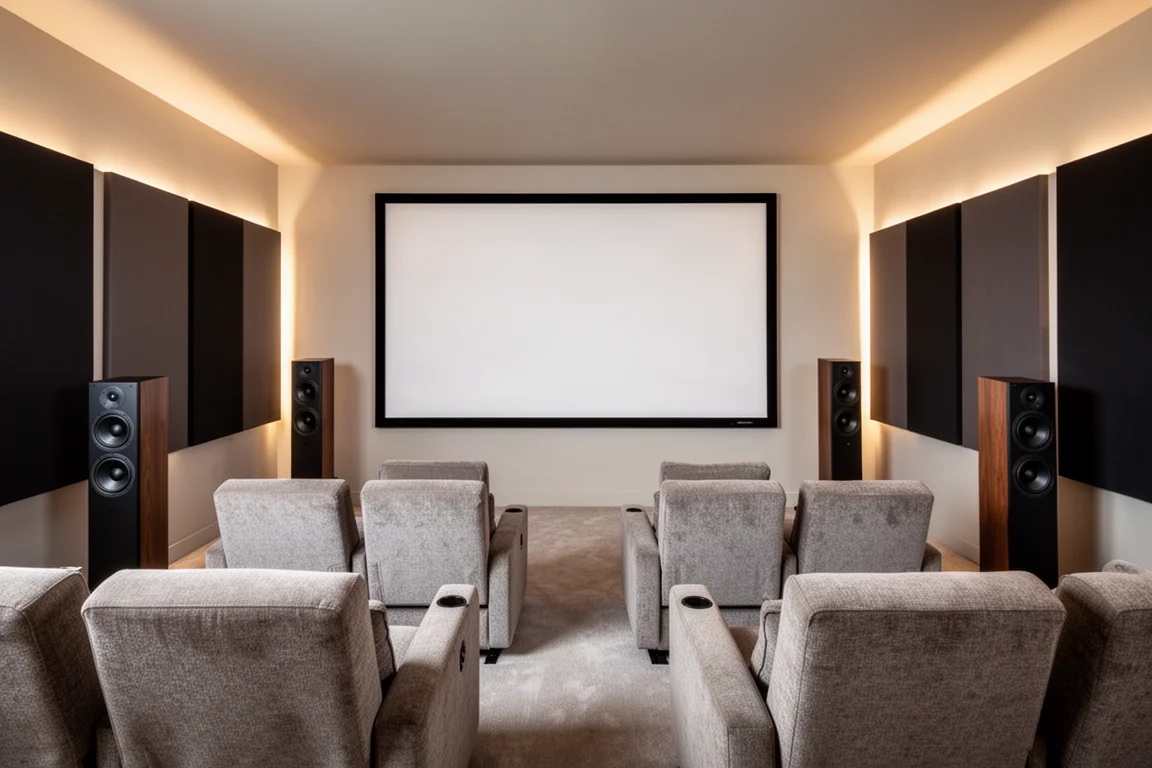
Home theater owners with more than one row of seating benefit from the wide vertical listening window, which is roughly plus or minus 25 degrees. That is far more forgiving than the narrow window most two-way designs offer, so listeners seated above or below the primary axis keep their intelligibility.
Two-channel listeners who want genuine bass extension without adding a subwoofer are the second group. The T65 reaches down far enough that a sub becomes optional rather than mandatory, depending on the music.
The third group is listeners who are comfortable applying a small amount of equalization. The speaker responds well to it, and a couple of bands in the mid-range transform the tonal balance.
Main Strengths: Bass Extension and Dynamics
Low-frequency performance is the headline. The T65 uses an extended bass shelf response, which means the cabinet can sit closer to the wall without turning boomy. There is also a mild elevation between roughly 80 Hz and 100 Hz that adds attack and punch to drums and bass lines.
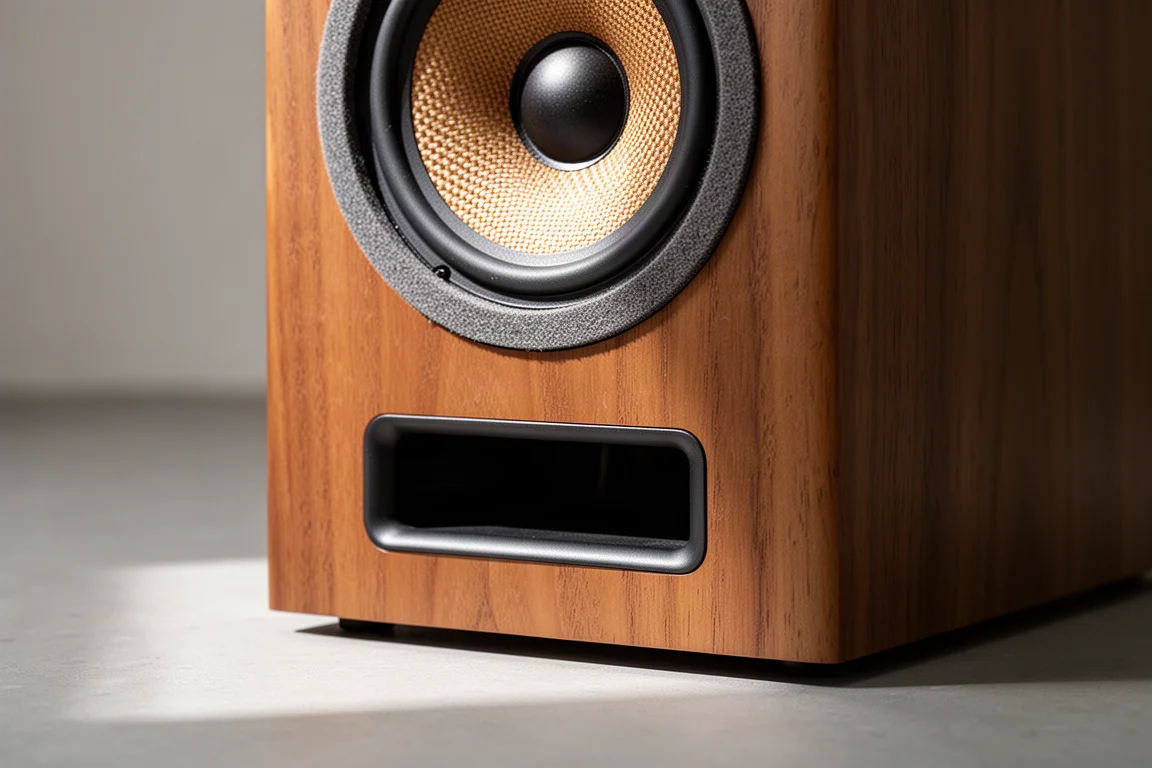
Kick drums land with real weight here. Compression measurements show no compression at all below about 50 to 60 Hz, and instead show a slight enhancement, so the bass can actually sound louder as you turn the system up. That is a large part of why the speaker feels so dynamic. Average sensitivity measures around 85.1 dB, which is normal for a tower of this size.
Design Details: Driver Layout and the Allison Effect
The placement of the lower mid-bass driver is deliberate. In a room, a speaker radiates in every direction at low frequencies, and the sound that reflects off the floor arrives slightly late, roughly three milliseconds behind the direct sound. That delay produces a cancellation in the region of about 300 Hz, which is why some speakers sound hollow or thin through the upper mid-bass. Moving one mid-bass driver close to the floor reduces the strength of that reflection and mitigates the cancellation, giving a fuller upper mid-bass.
The other design detail concerns where you aim your ears. On most speakers with a flat baffle, the tweeter defines the listening axis. On the T65 the reference axis sits at the top mid-range instead, which is above the tweeter. When you sit in a typical chair, your ears line up with that driver almost automatically, and measurements confirm that referencing the speaker to the mid-range smooths the upper mid-range and lower treble.
The Mid-Range Dip and What Equalization Can Do
The main thing to know before buying is that the T65 has a broad dip in the mid-range, roughly 2 dB from about 600 Hz to 3 kHz. Because the imbalance covers such a wide band, it does not announce itself as an obvious flaw. What you hear instead is dialogue and vocals that sit slightly back in the mix, and a mid-bass that seems heavier than it actually is.
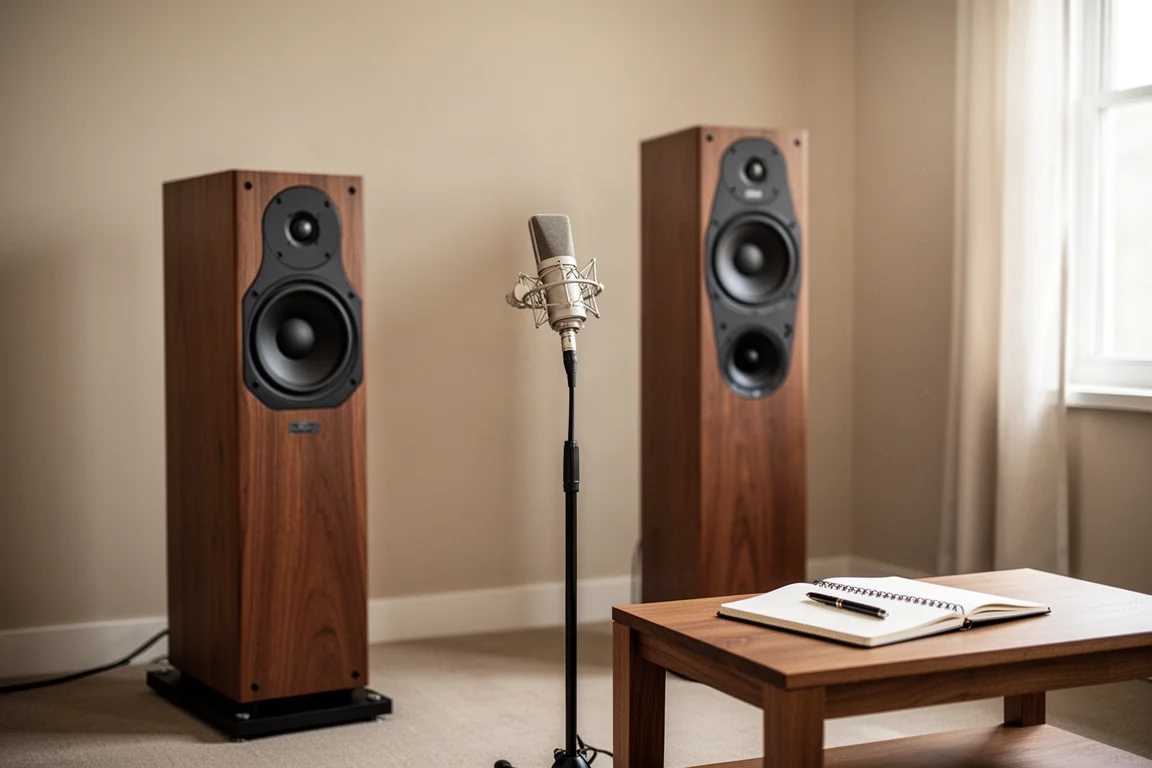
A couple of bands of EQ are enough to level that region out, and the speaker takes that correction well. The estimated room response stays within about plus or minus 3 dB overall, with a visible resonance around 500 Hz and a slight peaking in the upper treble from the titanium dome that is far less noticeable than the raw data suggests.
The horizontal contour data shows a discrepancy of roughly 10 to 15 degrees between 1 kHz and 3 kHz, which implies the mid-range to tweeter crossover is not perfectly in sync. In a room with reflective side walls this can add an enveloping, slightly forward character in the 2 to 3 kHz range, where clarity and attack live. Above 5 kHz the speaker narrows its radiation fairly quickly but stays consistent.
Things to Consider Before Buying
Amplifier matching deserves attention. The T65 dips below 4 ohms, so whatever you drive it with needs to be comfortable with a 4-ohm load.
Distortion behavior is generally well controlled. The speaker exceeds 3 percent distortion at about 60 Hz, but that is second-order distortion with clear separation from the third-order products, which points to a well-built motor. Multitone distortion shows a localized issue in the upper mid-range that was not audible during listening, and high-frequency distortion stays around or below 1 percent. Adding a subwoofer and crossing over removes part of that upper mid-range distortion as a side benefit.
Finally, expect to spend some time on setup. The vertical window of about 25 degrees is generous, but ear height and toe-in still matter, and the mid-range dip is worth addressing rather than living with.
Buying Advice
Power requirements are modest in practice. A 100-watt-per-channel amplifier rated for 4 ohms drove the T65 without strain at a listening distance of 10 feet in an 18 by 14 by 9 foot room, which suggests most quality integrated amplifiers will be sufficient.
When you set them up, sit so your ears are level with the upper mid-range driver rather than the tweeter, and give the cabinets a little breathing room from the side walls if the room is reflective. Budget a few minutes with a parametric EQ or a room correction system to bring the mid-range forward, and the result is a neutral, full-range tower that punches well above its price in the bass.
For home theater use, the wide vertical window and strong output capability make the T65 an easy recommendation for rooms with multiple rows. For two-channel listening, it is a strong option for anyone who wants deep bass without a subwoofer and is willing to make one small correction.
Conclusion
The PSB Imagine T65 delivers the two things that are hardest to find in a $2,000 tower: genuine low-frequency extension and the dynamic headroom to make kick drums and bass lines feel physical. Its one real compromise is a broad mid-range dip that pushes vocals and dialogue back until you apply a couple of bands of EQ. Listeners who are willing to do that get a neutral, room-filling speaker that works as well in a home theater as it does in a stereo system.
Product link
View more details for PSB Imagine T65
This product is mentioned in the review. Check the specifications, options, and compatibility before buying.
View more details for PSB Imagine T65Further reading
Related Reviews
Tower Speakers
Arendal 1610 Tower 8 vs MoFi SourcePoint 888 vs MoFi V10: Three Tower Speakers Compared
A close look at three large tower speakers in a similar price bracket, from the punchy, heavy-built Arendal 1610 Tower 8 to the coaxial MoFi SourcePoint 888 and the high-output MoFi V10.
Tower Speakers
Definitive Technology BP9020 Review: A Powered Tower With Real Bass and a Few Quirks
A slim tower speaker that hides a powered 8-inch subwoofer inside the cabinet, delivering deep bass and a wide stage alongside some clearly defined trade-offs.
Tower Speakers
Emotiva XT1 Tower Speakers Review: Serious Clarity Under $1,000
The Emotiva XT1 brings three woofers, a dedicated midrange and an AMT tweeter to the sub-$1,000 tower market. Here is where it delivers and what to weigh first.