3D Printing Equipment
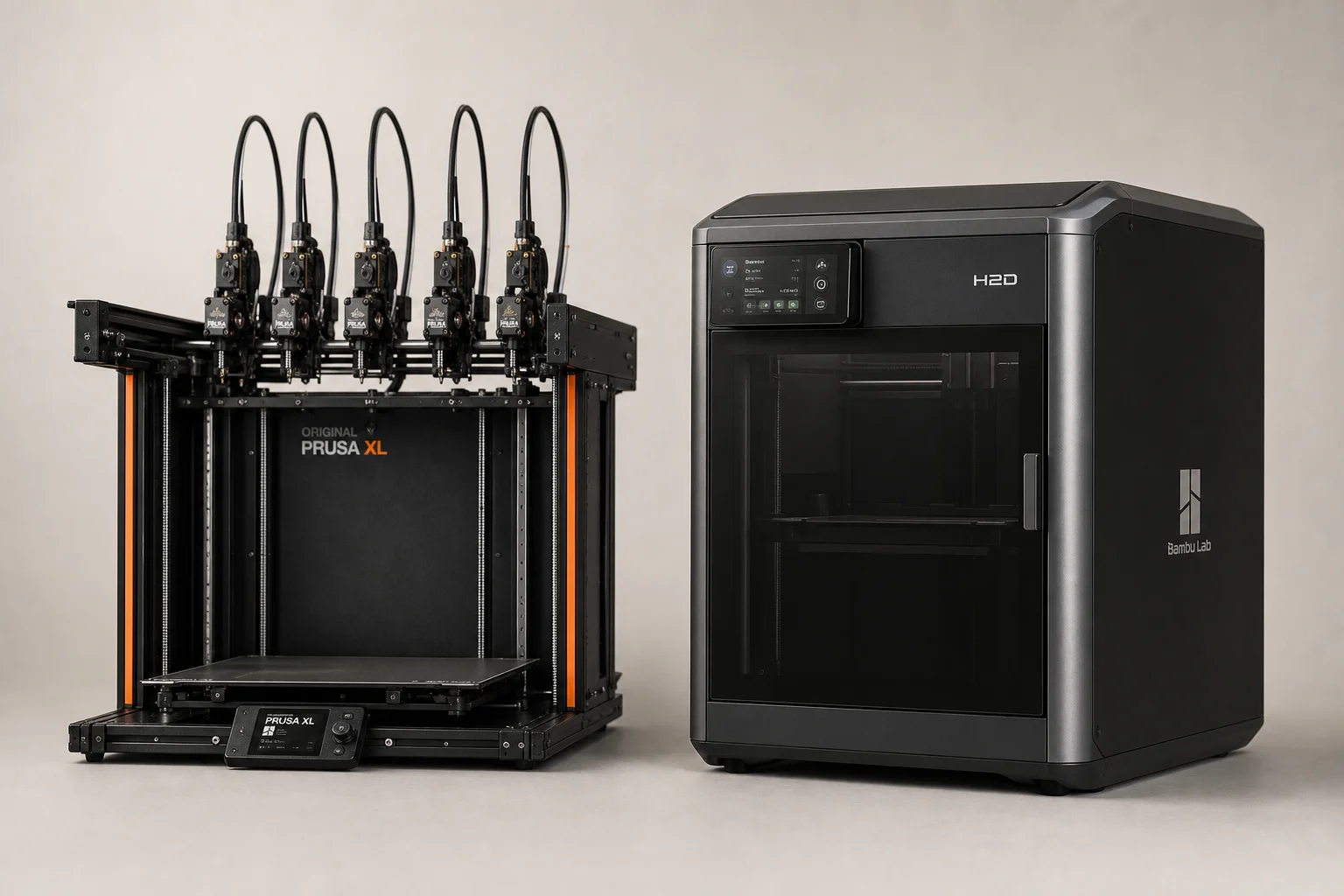
Prusa XL vs H2D: When a Slower, More Complex 3D Printer Makes Sense
The Prusa XL costs twice as much and prints slower than the H2D, but its five independent print heads unlock capabilities neither machine can match alone. Here's when each printer is the right choice.
Introduction
The Prusa XL costs roughly twice as much as the H2D and prints slower. On paper, it looks like an obvious mistake. But this comparison reveals a fundamental truth about 3D printing: the best machine depends entirely on what you’re trying to make, not just on speed and price.
Most people treat 3D printers as all-purpose tools. They are not. If you only own a hammer, every problem looks like a nail. The same logic applies to 3D printing technology. Many makers and companies solve every problem with FDM or SLA simply because those are the only tools they have. But when material properties matter—prosthetics, robotics, medical devices, or precision engineering—using the wrong technology stacks tolerances and compromises the final result.
The Prusa XL and H2D represent two different philosophies. Understanding their strengths and trade-offs helps you choose the right one for your actual needs.
Five Independent Print Heads
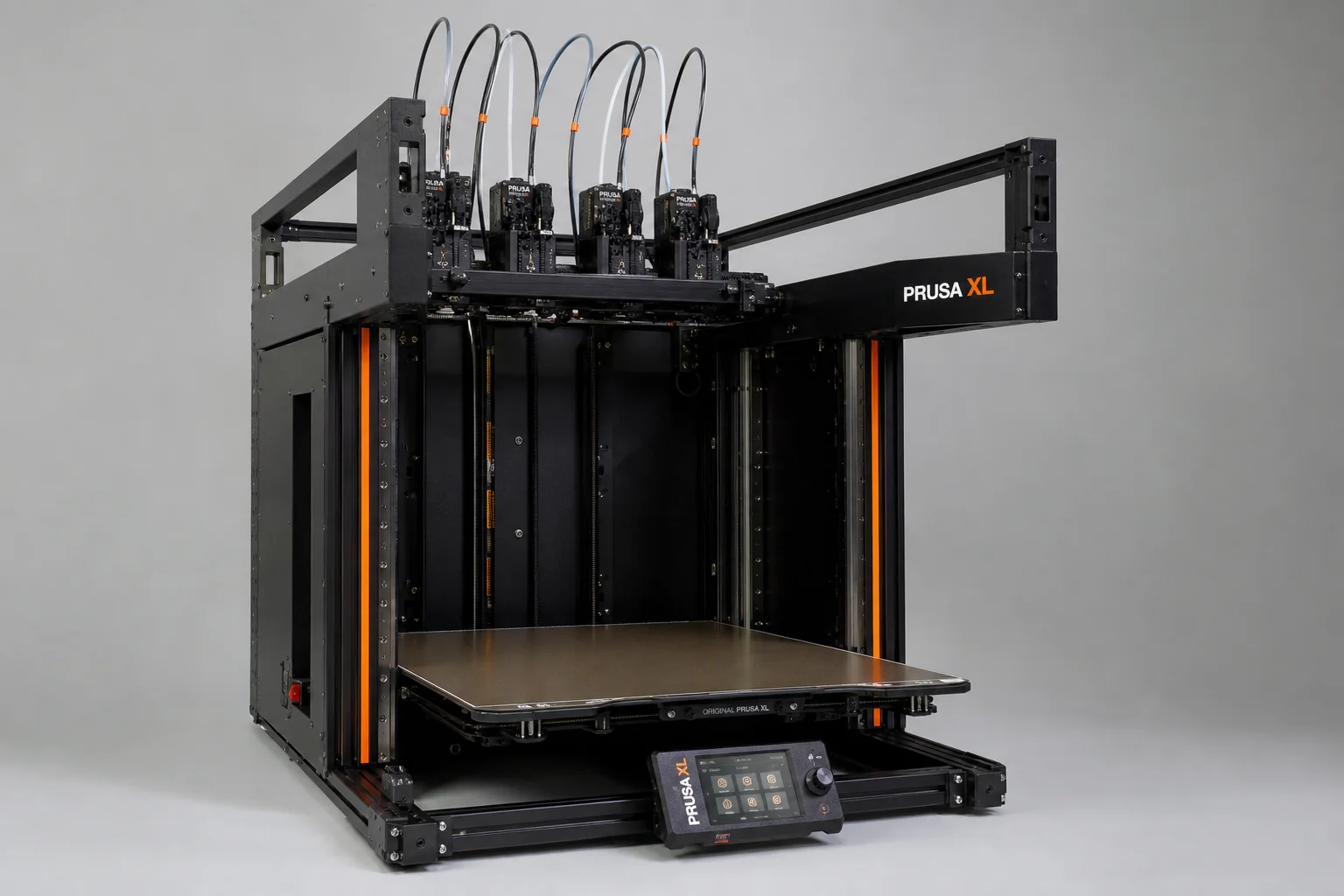
The Prusa XL’s defining feature is its five completely independent print heads mounted on a CNC-style tool changer mechanism. Unlike dual-nozzle designs that share a single head, each of the XL’s heads is fixed and swaps in and out as needed.
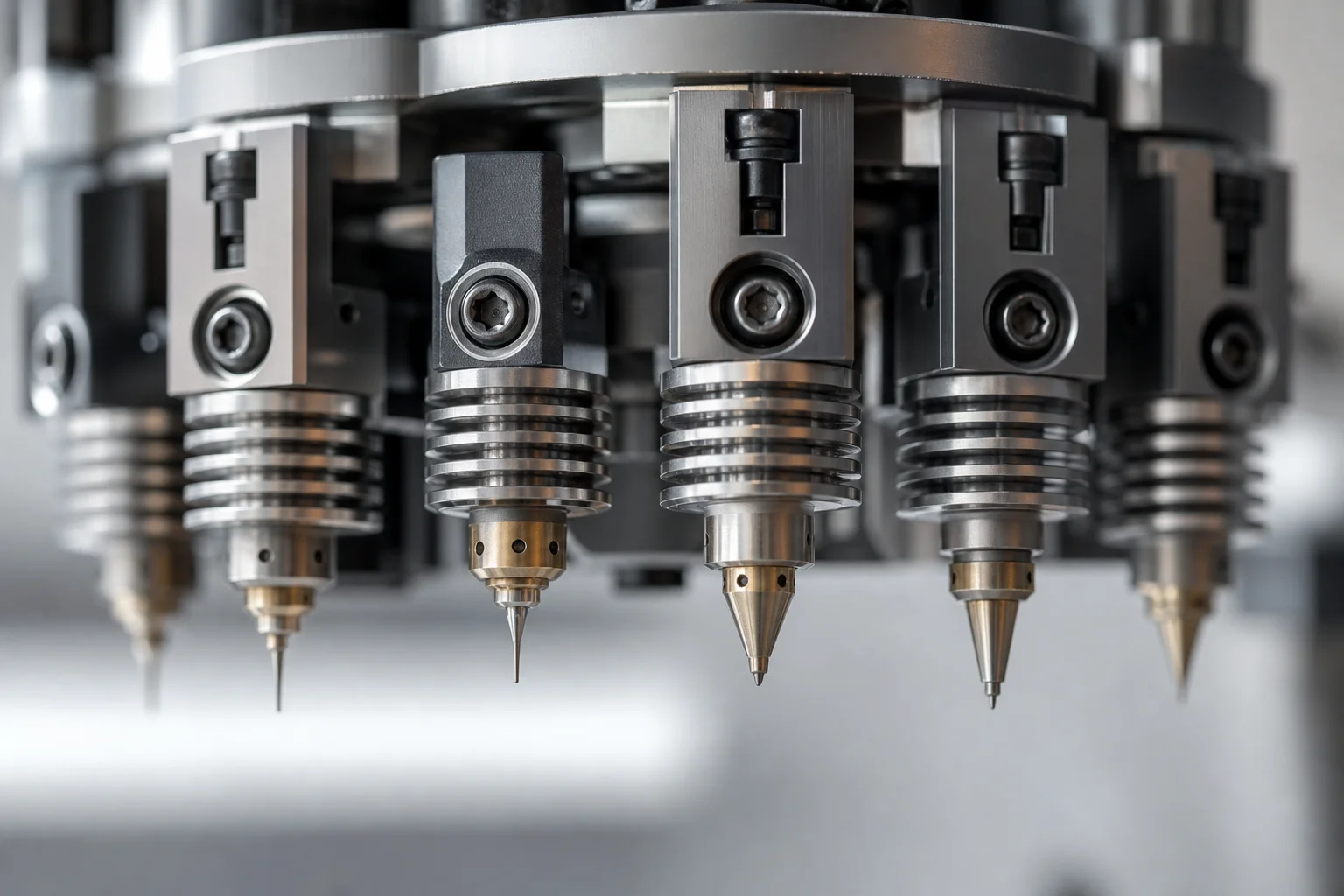
This architecture delivers two major advantages. First, the print assembly is lighter during printing because only one extruder and nozzle are active at a time. Second, and more importantly, you can load five wildly different materials in a single print. The heads can accommodate different melting points, extrusion widths, and nozzle diameters simultaneously.
For example, you could print the insole of a prosthetic with a coarse 0.8mm nozzle for speed, then switch to a 0.2mm nozzle for the outer surface where precision matters. Or mix TPU, PLA, ABS, and PETG in one job. The H2D cannot do this. Even with tool switching, the H2D works best when materials have similar melting temperatures. The XL’s flexibility is genuinely unique.
Modular Heated Bed Design
The Prusa XL uses a segmented heated bed with multiple small heat plates instead of one large heater. The firmware knows where the print head will travel and only heats the areas needed.
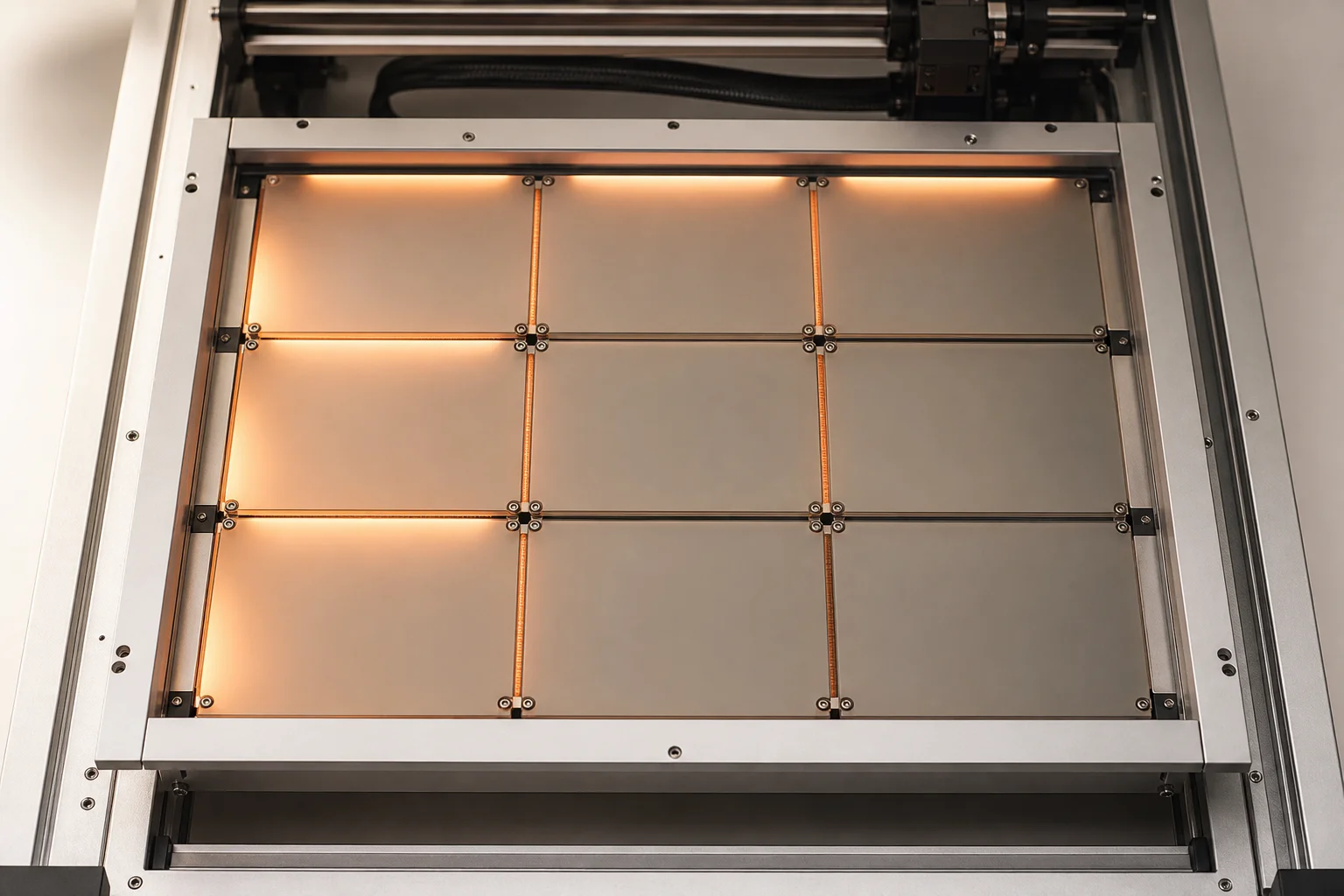
This approach saves energy and reduces heat-up time. It also eliminates cold zones on the edges that plague single-heater designs. For production workflows where you’re running multiple prints per day, the faster warm-up cycle adds up.
Build Quality and Frame Design
The Prusa XL uses industrial-grade hardware for its movement tracks, which is solid engineering. However, the open-frame design introduces flex, especially during fast prints with heavy tool heads attached. The frame can wiggle relative to the print head, and while Prusa reinforced it with strong aluminum parts, it does not match the stiffness of a fully enclosed design.
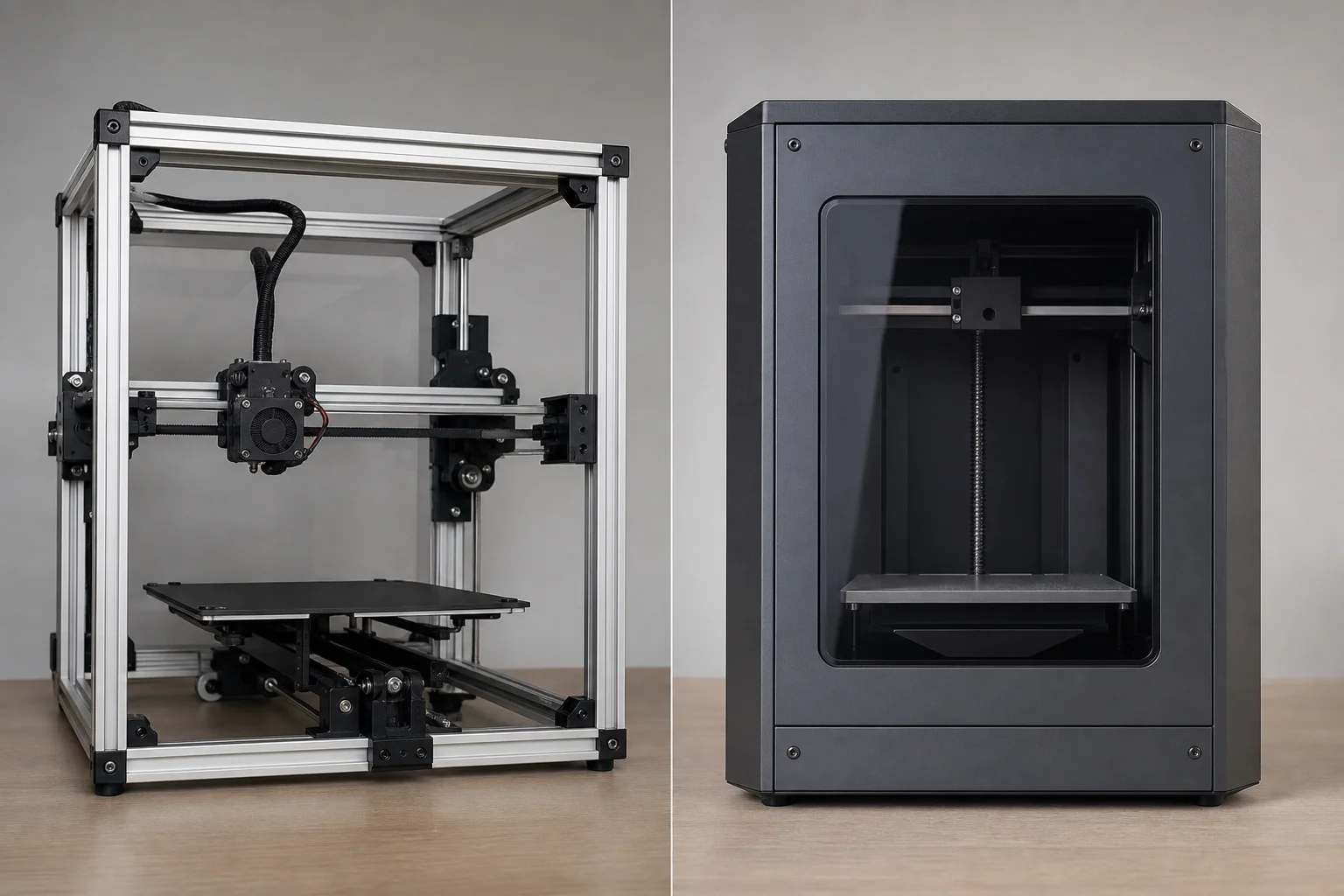
The H2D, by contrast, has a beautiful enclosed frame that is very stiff. This matters for print quality and precision. The XL also uses 3D-printed parts in its construction, which is a design choice that troubles many engineers. When you use an imprecise technology to manufacture something that should produce precise results, tolerances stack. It’s like making a copy of a copy of a copy.
Additionally, the XL’s print bed movement uses only two axes with industrial slides, which introduces some wobble. The H2D’s design avoids this problem entirely.
User Interface and Software Experience
This is where the Prusa XL shows its age. The control interface relies on a small rotary knob to navigate deep menu structures. Frequently used settings like support options are buried behind context menus or options windows, requiring multiple clicks every time you adjust them.
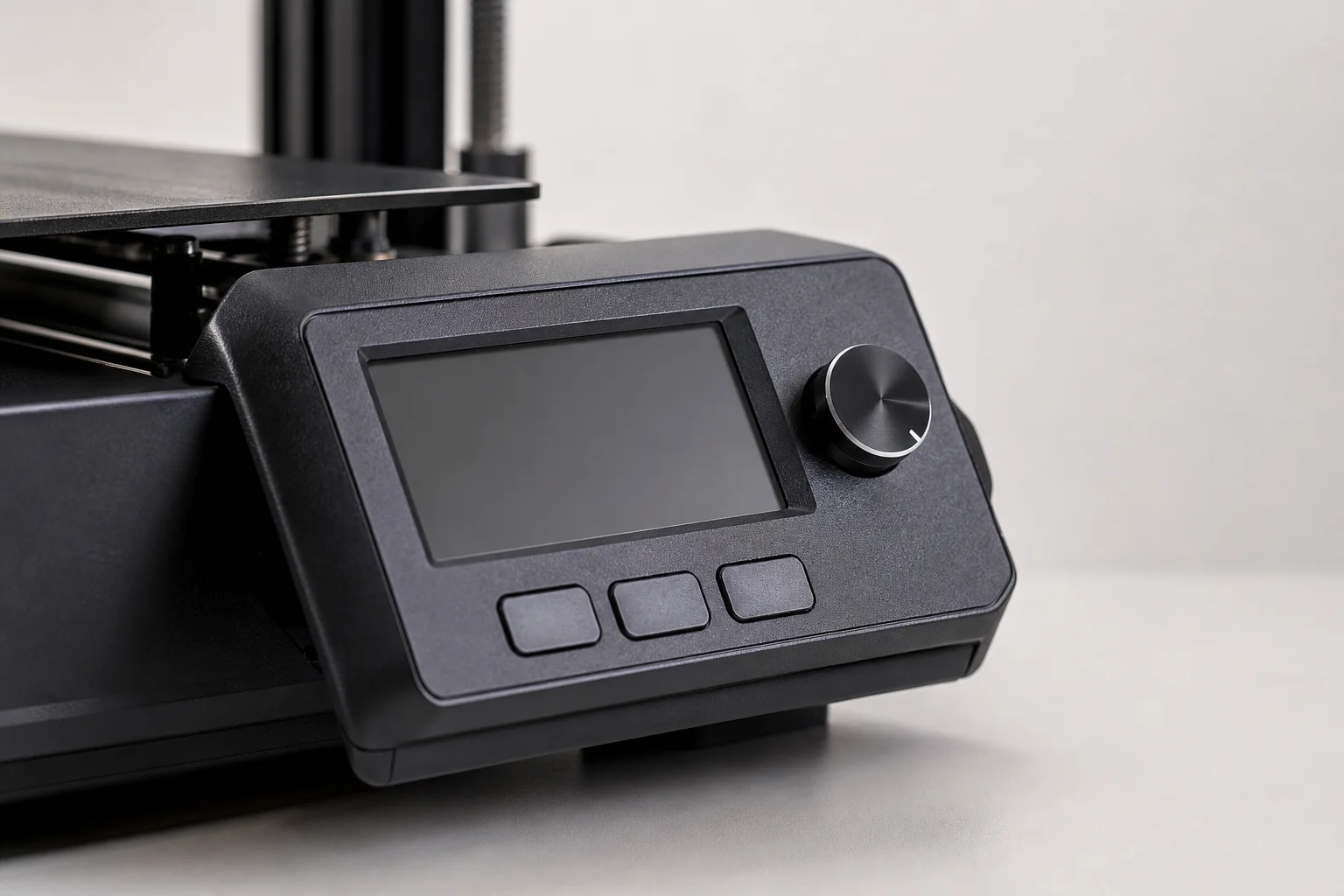
The slicing software is similarly overloaded and unintuitive. It offers tremendous customization—you can write custom code, change individual tool head behavior, and adjust nearly everything—but the interface does not prioritize common workflows. In an era of touchscreen displays and polished user experiences, the XL feels dated.
The firmware also has stability issues. Inserting a USB stick with certain files can cause the machine to crash and require a restart. These are not deal-breakers for experienced engineers, but they add friction to daily use.
Another concern: the Prusa XL is Prusa Research’s first machine with completely closed-source firmware. Prusa has historically been known for openness, so this shift is disappointing for tinkerers and researchers who want to modify behavior.
When Each Printer Makes Sense
If you prioritize print speed, reliability, and print quality, the H2D is the better choice. It is faster, more stable, and easier to use.
If you are an engineer pushing the boundaries of what is possible—mixing materials, optimizing nozzle sizes for different regions, or doing research that demands material flexibility—the Prusa XL is the right tool. Yes, it costs more and prints slower. But it unlocks capabilities neither machine can match alone.
The worst printer is sometimes actually the right printer.
Conclusion
The Prusa XL is not a dumb buy if you need what it offers. Its five independent print heads and material flexibility solve real problems in prosthetics, robotics, and precision manufacturing. The H2D is faster and easier to live with, making it the better choice for most makers. Choose based on your actual workflow, not just on speed and price.
Further reading
Related Reviews
3D Printing Equipment
Filament Dryer Comparison: Drywise vs Thorus and the Case for Inline Drying
Two commercial inline filament dryers tested against a DIY tin-can approach. What works, what doesn't, and why airflow matters more than you might think.
3D Printing
3D Printer Wishlist 2026: Industry Hopes and Manufacturer-Specific Improvements
A comprehensive review of what the 3D printing industry needs in 2026, from universal standards to manufacturer-specific feature requests across leading brands.
3D Printing
3D Printing Trends 2026: Multi-Material Systems, Stronger Filaments, and Desktop Metal Casting
FormNext 2025 revealed the direction of 3D printing in 2026: accessible multi-material printers, high-strength filaments, and innovative software solutions that bring industrial capabilities to the desktop.