Coral Care
Professor Polyp's Bubble Bath Review: A Coral Dip That Also Targets Nuisance Algae
A closer look at Professor Polyp's Bubble Bath, an oxidizing coral dip built on hydrogen peroxide and limonene that can also be dosed into the aquarium for nuisance algae.
Introduction
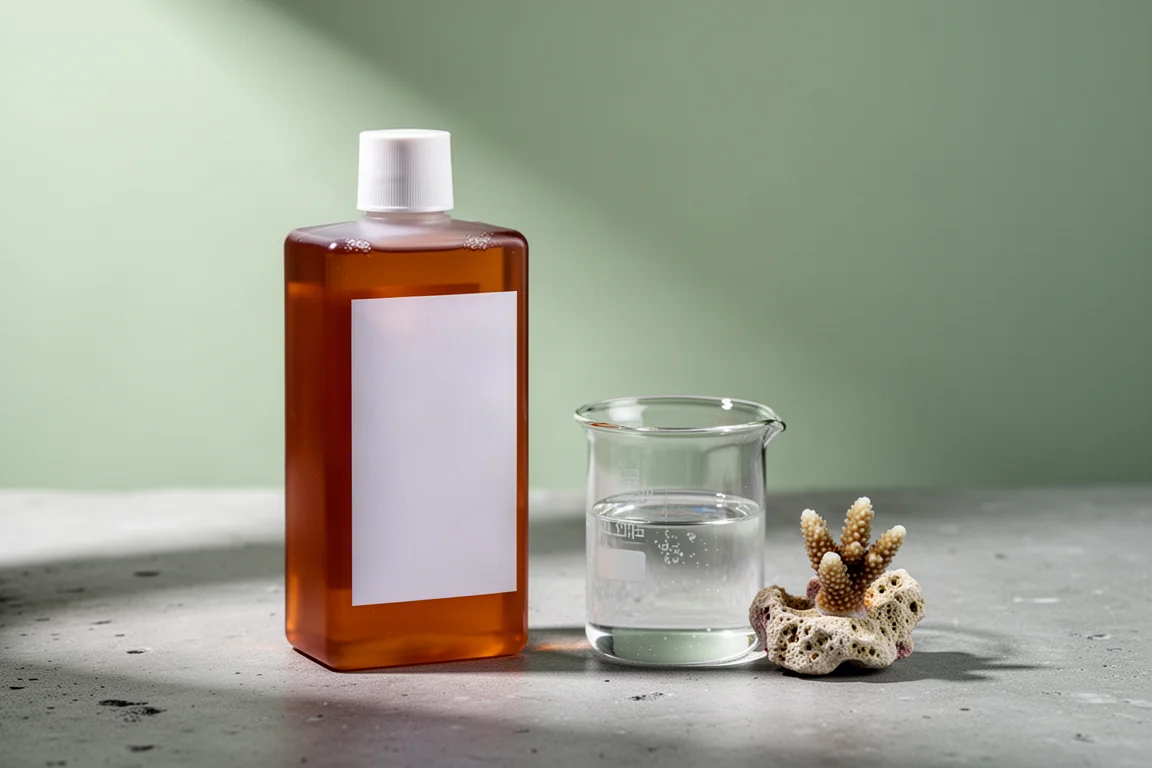
Most coral dips reefkeepers have relied on for years work through oils, iodine-based chemistry, or potassium permanganate. Professor Polyp’s Bubble Bath deliberately takes a different route. It is built around a patent-pending hydrogen peroxide and limonene-based oxidizing solution, designed to go after common coral pests and nuisance algae at the same time rather than specialising in only one of those jobs.
Its primary role is still familiar: a dip used before new corals enter the tank, reducing the risk of introducing hitchhikers that can cause problems later. What sets it apart is that the same bottle can also be dosed directly into the aquarium to help address nuisance algae.
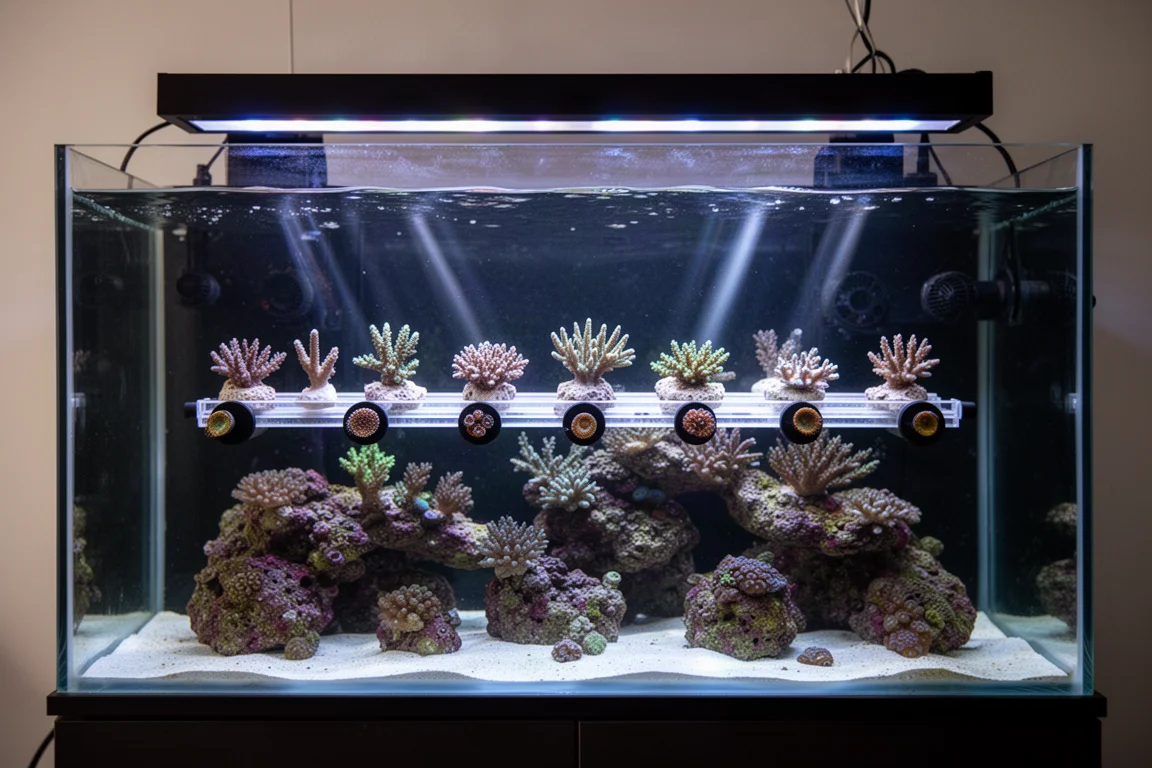
The product is available in 16-oz and 32-oz bottles as well as a 1-gallon jug, which gives hobbyists a choice between a small bottle for occasional frags and a larger format for regular dipping routines.
Who Professor Polyp’s Bubble Bath Is For
This dip suits reefkeepers who are already disciplined about inspecting and dipping every new coral before it goes into the display tank, and who want a single product that covers both animal pests and the algae that frequently arrives stuck to frag plugs.
It is also relevant for hobbyists running into hair algae or bubble algae on the plugs and bases of newly acquired frags, since the oxidizing chemistry is intended to break those down as well. And because the manufacturer states the formula is gentle on corals and anemones, it is positioned as an option for tanks where a direct in-aquarium dose is being considered rather than dip use alone.
What Makes Bubble Bath Different
The mechanism is where this product separates itself. Most dips rely on ingredients that irritate pests and encourage them to release from the coral, after which you rinse them away. Bubble Bath instead combines hydrogen peroxide and limonene with vinegar, RO/DI water, and sodium hydroxide to create an oxidizing reaction that is visible during use, with bubbles forming on the coral and the frag plug.
That oxidizing chemistry is designed to break down cellular structures in both plant and animal irritants. In practice that means it can help deal with things like hair algae or bubble algae that come in attached to frag plugs, not just the pests hiding in the coral itself.
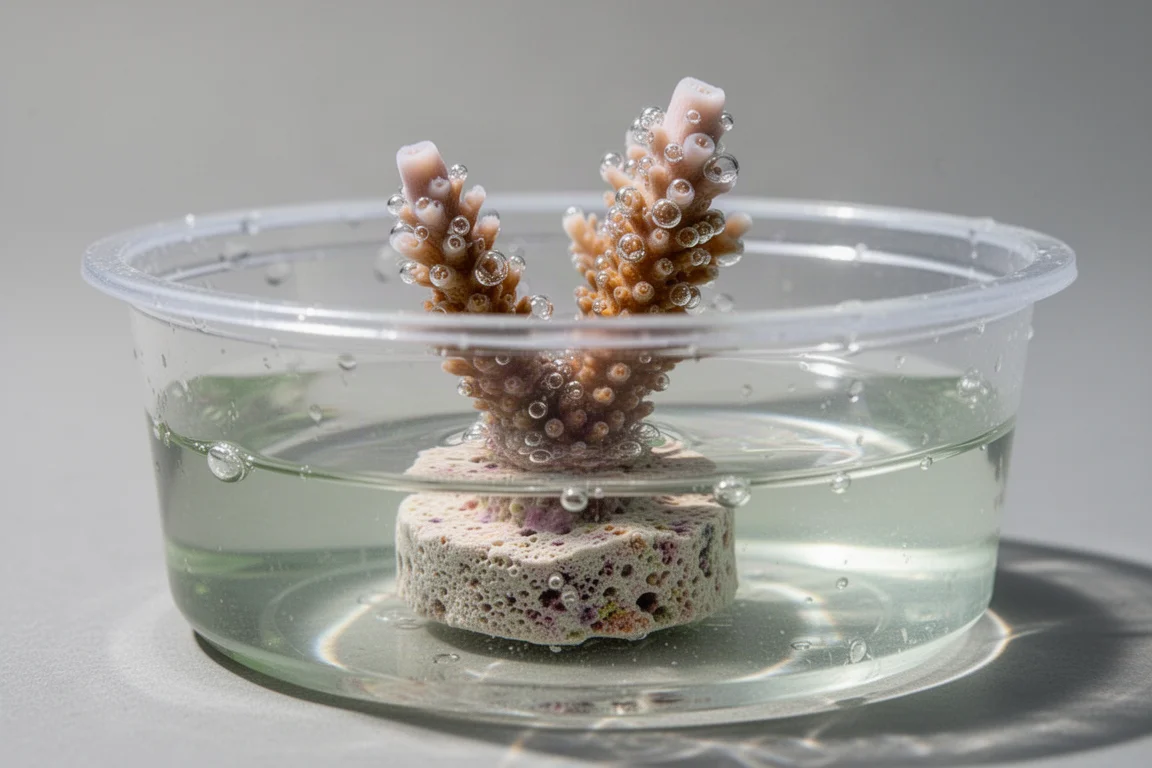
On the pest side, the intended targets include flatworms, nudibranchs, red bugs, bristle worms, isopods, and Asterina stars that show up tucked into frag plugs or coral bases. The manufacturer states the formula is gentle on corals and anemones, which is the basis for its second use as a direct aquarium dose against nuisance algae.
Using Bubble Bath as a Coral Dip
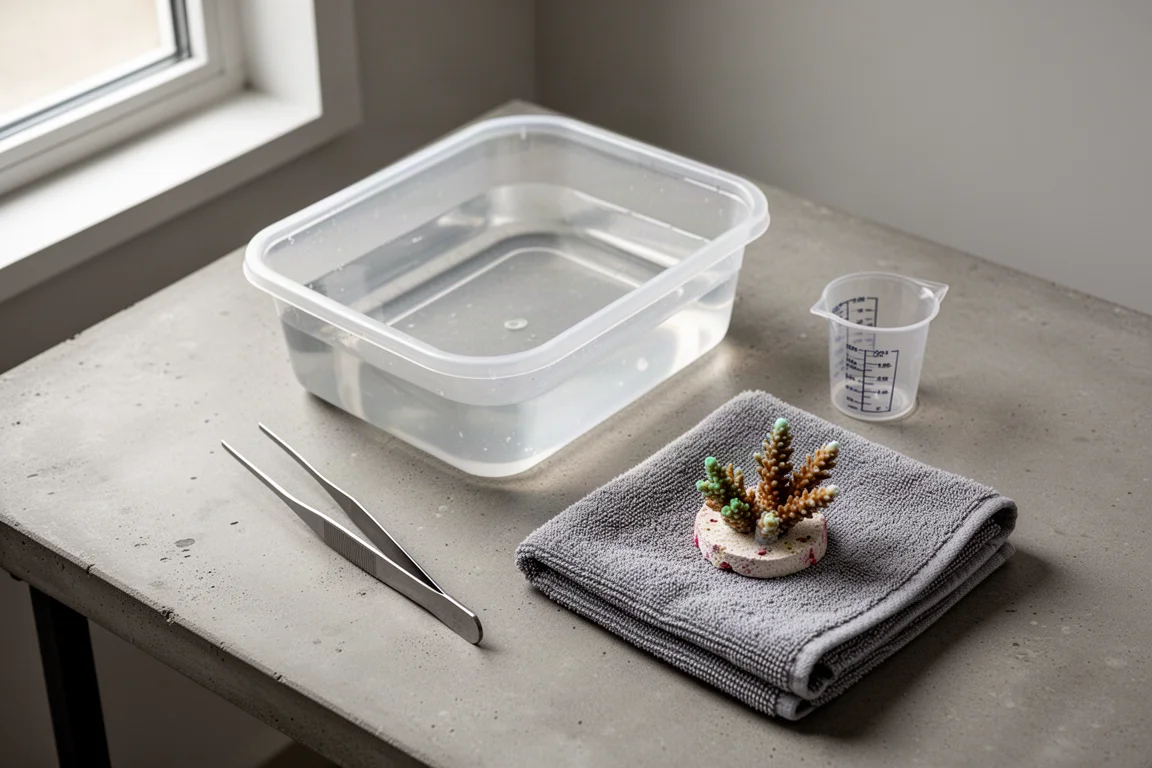
Dipping is straightforward. Mix one part Bubble Bath with five parts tank water, place the coral in the dip for about one minute, then rinse the coral in clean salt water before moving it into the tank or quarantine system. During that minute you will often see bubbles forming on the coral or the frag plug, which is simply the oxidation reaction at work in the solution.
Dosing Directly Into the Aquarium
For nuisance algae in the display, the bottle recommends removing carbon from the system first, then dosing 1.5 to 2.5 ml per 10 gallons of water twice daily. Some reefers may begin to see improvements in around two weeks, with more complete results often showing up after six to eight weeks. That timeline is worth planning around, because this is a gradual approach rather than an overnight fix.
Main Strengths
The clearest strength is the dual action. A single product that addresses pests during a pre-entry dip and can also be used in-tank for nuisance algae removes the need to buy two separate solutions for two related problems.
The visible reaction is another practical plus. Seeing bubbles form on the coral and plug gives a tangible sense that the dip is doing something, which makes it easier to judge that the process has run its course.
Finally, the routine is simple and the formats are sensible. A one-part-to-five-parts mix and roughly one minute of contact time keeps the dipping process short, and the 16-oz, 32-oz, and 1-gallon options let you scale the bottle to how often you bring new corals home.
For reefkeepers who treat dipping as a routine step rather than an occasional one, that combination of a quick procedure and a bottle sized to your habits is what makes the product easy to keep using.
Things to Consider Before Buying
The in-aquarium dosing path asks a little more of the user than the dip route. Carbon has to be removed from the system first, and the dose needs to be measured out at 1.5 to 2.5 ml per 10 gallons twice a day, so this is not a set-and-forget additive.
Results against nuisance algae follow a longer arc. Improvements may start around two weeks in, with more complete outcomes often appearing after six to eight weeks, so anyone expecting a fast visual change should adjust expectations accordingly.
It is also worth being clear about what kind of product this is. It is a pre-entry dip and an algae aid, not a replacement for careful coral inspection, quarantine practices, or general tank maintenance. The visible bubbling during a dip is normal and expected, so the presence of bubbles is not a sign that something has gone wrong.
Buying Advice
If you already dip every new coral, the main question is whether you want the added algae coverage on the frag plug itself. That is the strongest argument for choosing Bubble Bath over a conventional pest-only dip, especially if you regularly find hair algae or bubble algae arriving on new frags.
If you are mainly interested in the in-tank use, go in with a realistic timeline and a willingness to follow the stated schedule. Removing carbon and dosing twice daily for several weeks is a commitment, and the payoff is described in weeks rather than days.
Sizing is the last decision. A 16-oz bottle makes sense for occasional frags, while the 32-oz bottle and 1-gallon jug suit hobbyists who dip regularly or run several tanks. Matching the bottle to your actual dipping frequency keeps the product from sitting half-used on a shelf.
Either way, the product slots most naturally into an existing inspection and dipping routine rather than replacing one. It is another layer of protection before a new coral reaches the display tank.
Conclusion
Professor Polyp’s Bubble Bath is worth a look for reefkeepers who want a different approach to coral dipping. Its hydrogen peroxide and limonene oxidizing formula targets both common coral pests and the nuisance algae that often arrives on frag plugs, with a simple one-minute dip routine and an optional in-tank dosing schedule for algae problems in the display.
The trade-offs are mostly about expectations and process: measured dosing, carbon removal for in-tank use, and results that develop over weeks. For hobbyists who are already proactive about inspecting and dipping new corals, it is a sensible tool to have on the shelf.
Product link
View more details for Professor Polyp's Bubble Bath
This product is mentioned in the review. Check the specifications, options, and compatibility before buying.
View more details for Professor Polyp's Bubble BathFurther reading
Related Reviews
Saltwater Aquarium Setup
10 Questions About Cycling a Saltwater Aquarium: What You Need to Know
Essential questions and answers for cycling a reef tank or saltwater aquarium, from biome building to light management and bacterial supplements.

Hi-Fi Speakers
Acoustic Energy AE1 40th Anniversary Review: A Modern Take on a British Classic
A compact standmount that revives a 1980s favorite with all-new parts, a warm mid-centric balance, and a price of £1,499 per pair.

Studio Monitors
ADAM Audio A8H Review: A Three-Way Studio Monitor That Also Knows How to Have Fun
A three-way active studio monitor with an 8-inch woofer, a handmade AMT tweeter, and two distinct tunings, the ADAM Audio A8H aims to satisfy both critical work and everyday listening.