Camping Lights
Princeton Tech Helix Backcountry vs Olight O Lantern: Two Camping Lanterns Compared
A practical comparison of two capable rechargeable camping lanterns, covering weight, light output, battery life, waterproofing, and everyday usability.
Introduction
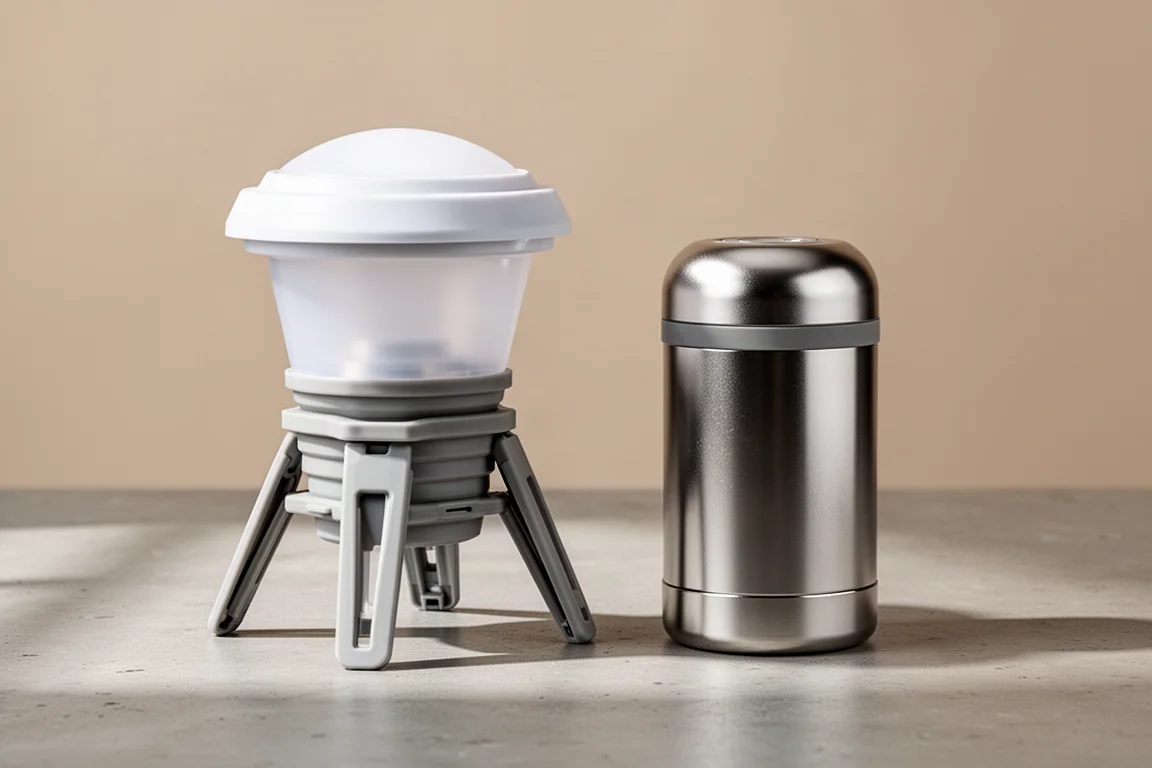
A camping lantern is the kind of product that earns its place quietly. It lights a tent, sits on a dinner table, and waits in a drawer for the night the power goes out. Two lanterns that handle all of this well are the Princeton Tech Helix Backcountry and the Olight O Lantern. Both have the same maximum output of 850 lumens, which makes them unusually fair to compare, yet they take very different approaches to weight, materials, and flexibility.
What Makes a Good Camping Lantern
A lantern is not a flashlight. The job is diffused, ambient light: enough to illuminate a space without dazzling anyone, and easy on the eye when you are socialising after dark. The obvious use is camping, particularly inside a tent or on a table in the evening, but the same qualities make a lantern useful at home during a power cut and inside a car if you break down at night.
Good lanterns also earn points for how they can be positioned. Sitting flat on a table is the baseline; hanging from a line or a hook extends their reach considerably. Battery life, weather resistance, and packability then separate the good from the great.
Princeton Tech Helix Backcountry: Design and Positioning
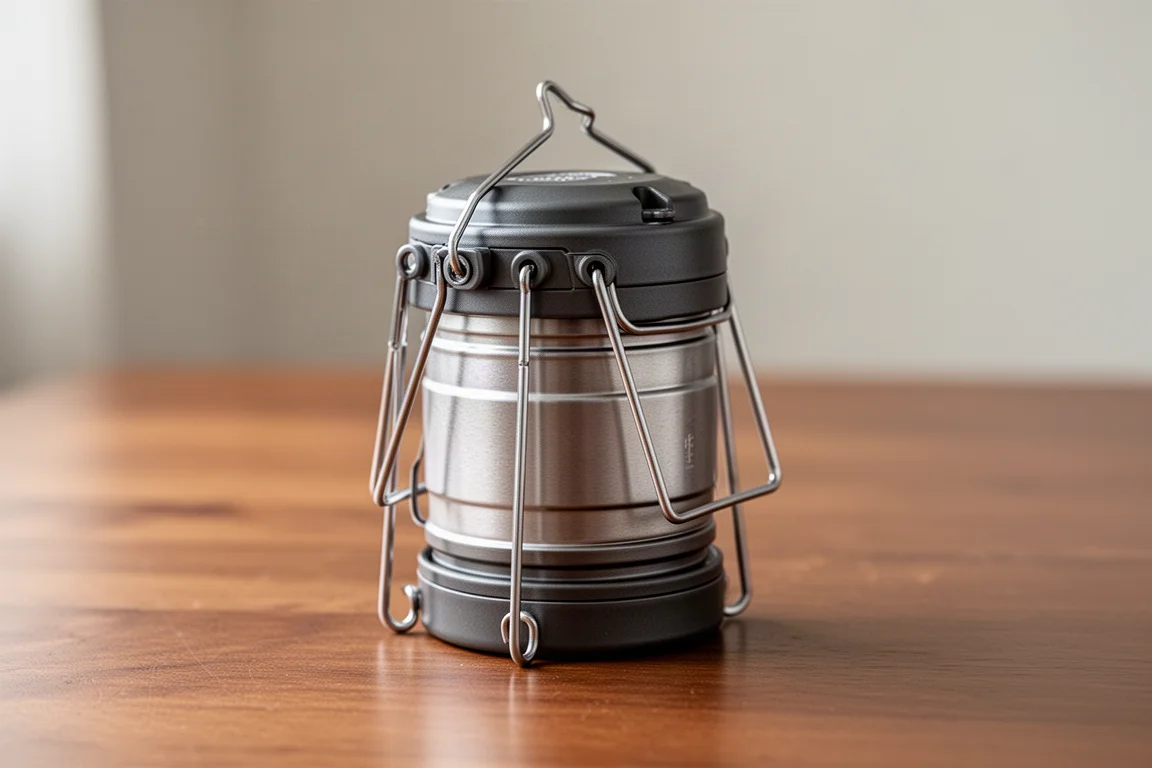
The Helix Backcountry looks larger than it is, and that is the clever part of the design. Fold the legs in, push the top down, and it collapses into a compact shape weighing just 155 grams. The plastic feels genuinely solid in the hand, and the fact that it is manufactured in the USA, in New Jersey, is a rare and pleasant surprise in this category.
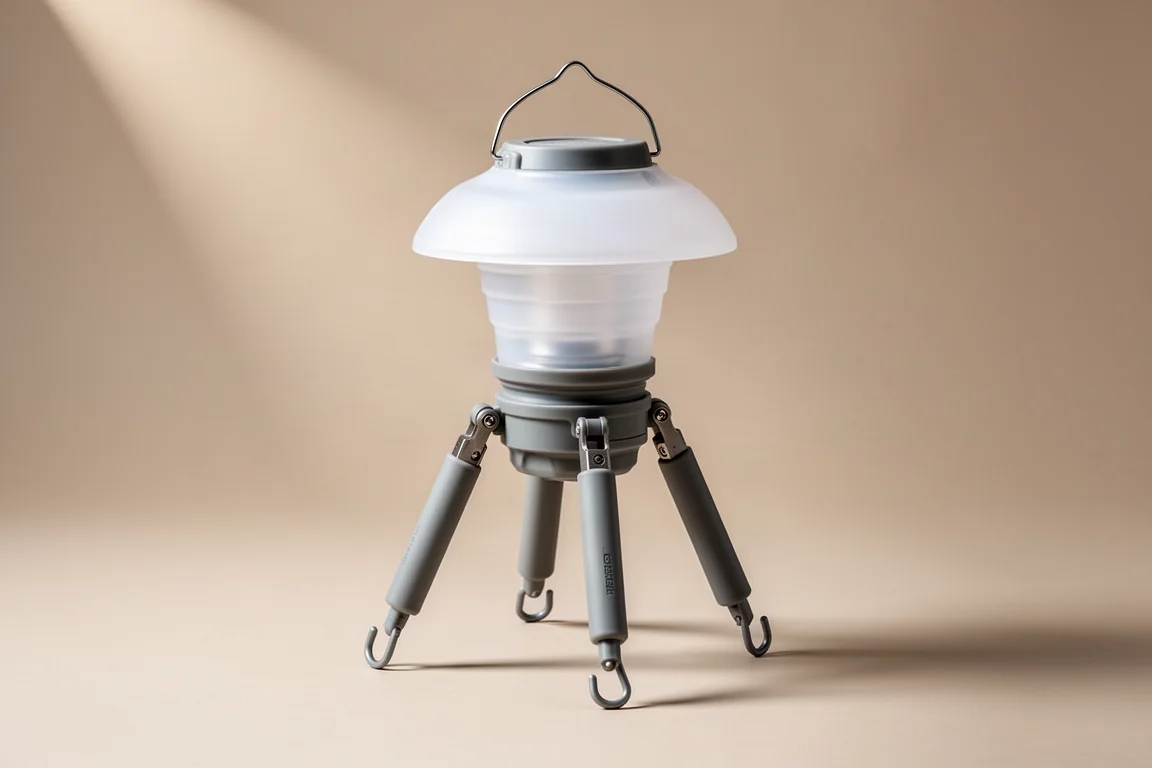
Positioning options are extensive. The legs let it sit steadily on flat or uneven ground, and each leg carries a hook so it can be suspended from a line. A wire handle on top offers another hanging point, or a way to thread cord. Unclip the diffuser and it converts into a focused flashlight, and because the legs articulate, you can angle the beam at a working area and adjust brightness while it sits on a surface.
The diffuser holds one more trick: it contains a glow-in-the-dark material, so after you switch the white light off, the dome keeps glowing for quite some time.
Emergency Use and Red Light Modes
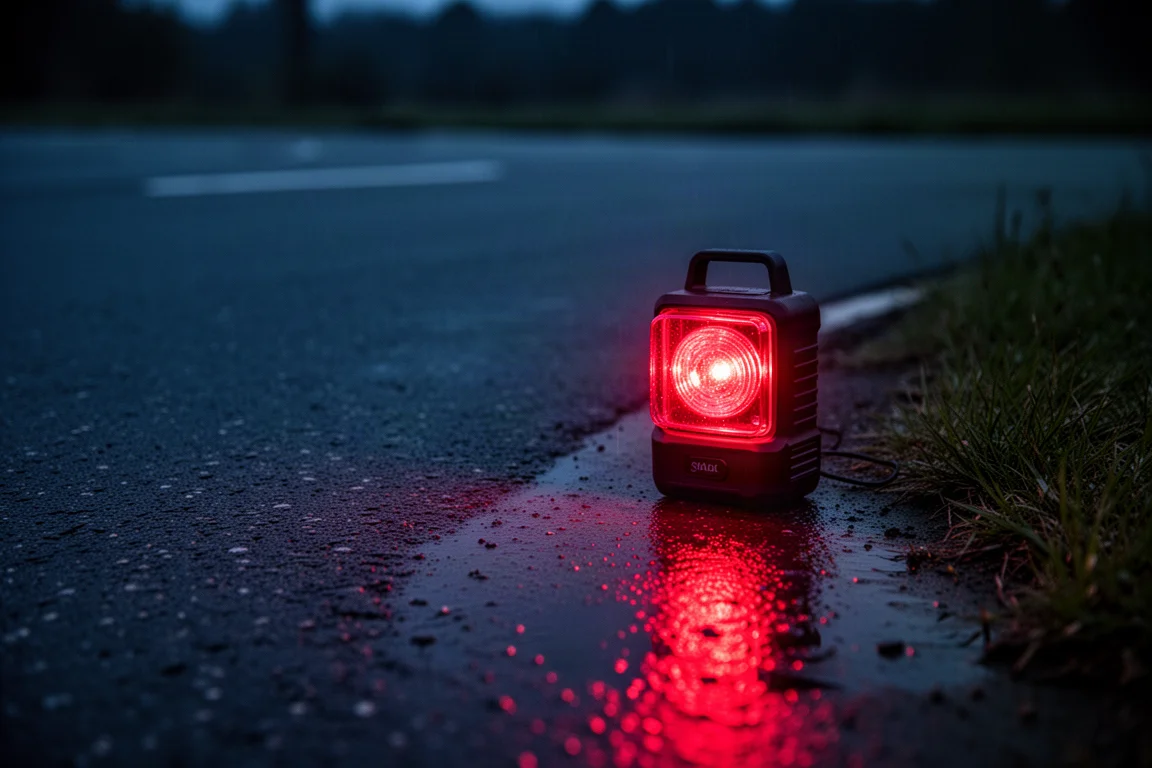
The Helix doubles as a genuinely practical emergency light. A flashlight with a narrow beam will not light a room the way a lantern does during a power cut, and in a car breakdown at night the lantern can illuminate the interior so you can make calls and organise a rescue. There is also a red strobing mode that works as a beacon to warn other motorists if you are stranded without working lights.
Operation is entirely gesture based. There are no physical switches: you swipe a control area to turn the white light on at full brightness, touch it to dim down, swipe twice for a mid level, or three times for flashing. Swiping from right to left brings on the red light, and pressing and holding cycles through its brightness range. The lack of a physical switch means there is no seam for water to sneak through, and the charging socket is sealed with a rubber cover. Occasionally a swipe needs repeating, which can be slightly frustrating, but in normal use it responds as intended.
Specs, Charging, and Battery Life
Maximum output is 150 lumens in lantern mode, with the red light lasting slightly longer than the white. On the highest white setting you get 6 hours of runtime, and 18 hours on the lowest. Red light manages 7 hours on high and 22 hours on low. The built-in rechargeable battery charges over micro USB in about three to four hours at one amp, and three green indicator lights under the rubber cover show charge level. A USB-C port would have been more convenient, but almost any USB charger or power bank will do the job. The IPX6 rating handles torrential rain and even a high-pressure hose, though it is not intended for submersion.
The Helix Backcountry costs £69 in the UK including tax, or about $55 in the US before tax, and carries a five-year warranty. Princeton Tech also offers a larger Base Camp model and a version of the Backcountry that runs on alkaline batteries instead of the rechargeable pack.
Olight O Lantern: The Compact Alternative
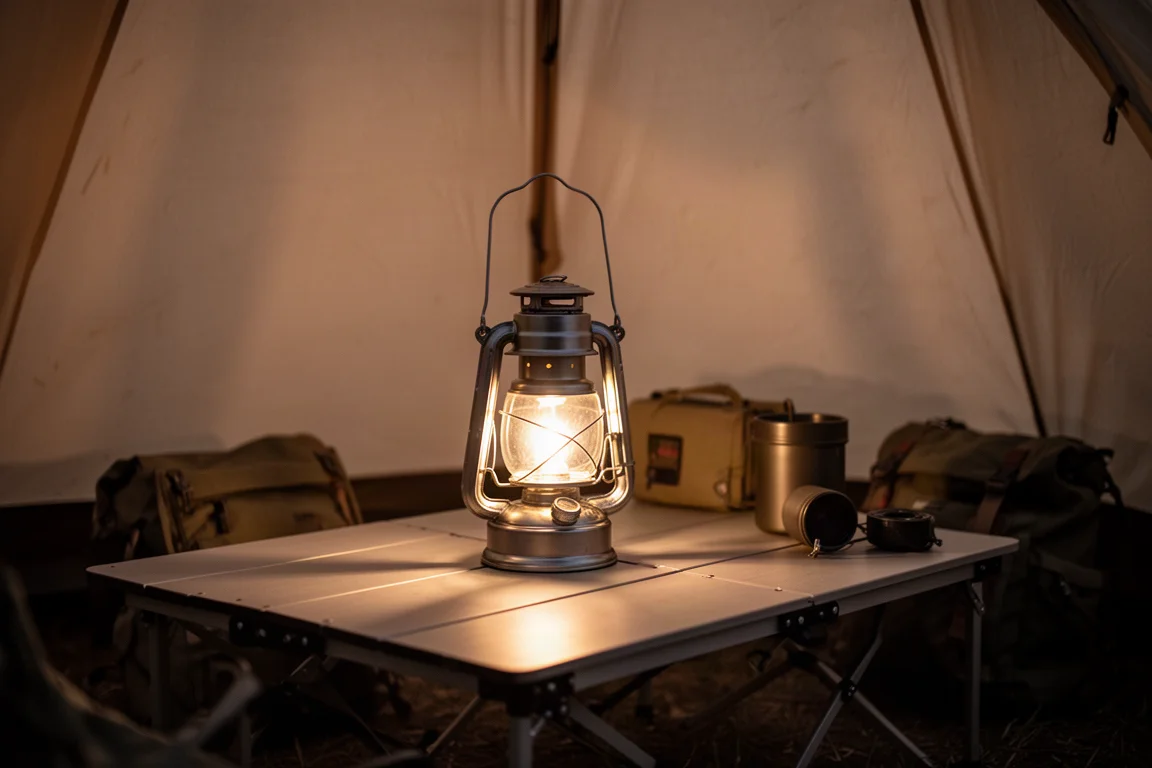
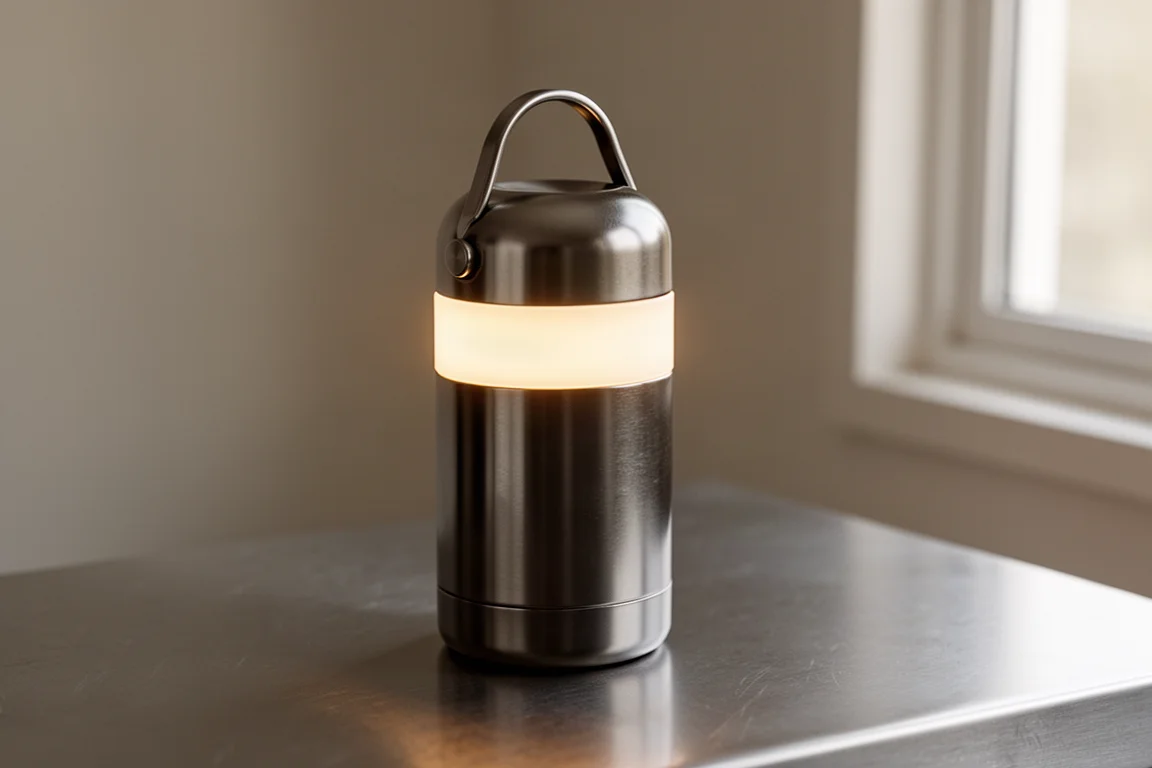
The Olight O Lantern matches the Helix at 850 lumens maximum output but takes a very different form. It is much smaller and built entirely of metal, which also makes it noticeably heavier at 237 grams despite its smaller size. On a flat surface it sits lower than the Helix, so it throws light over a shorter reach from a table, and it includes a handle for hanging.
Where it falls behind is flexibility. It lacks the Helix’s leg hooks for line suspension, its ability to convert into a flashlight, and its red flashing beacon mode. Waterproofing is IPX4, which is showerproof rather than stormproof. Battery life is close: 4 hours on the highest white setting versus the Helix’s 6 hours, though at the lowest setting the O Lantern stretches to 24 hours against the Helix’s 18. On the setting you are most likely to use, the Helix offers roughly 50 percent longer runtime. The O Lantern is the cheaper of the two at £59 in the UK.
Which One Should You Buy
Side by side, both are very good lanterns, but they suit different priorities. The Helix Backcountry offers more functionality: a convertible flashlight mode, a red emergency beacon, four hanging hooks, a taller stance for better light reach, stronger waterproofing, and a lighter 155-gram frame that makes it the clear choice for a backpack. The O Lantern counters with a smaller footprint, an all-metal build, lower weight of a different kind on the table rather than in a pack, and a lower price.
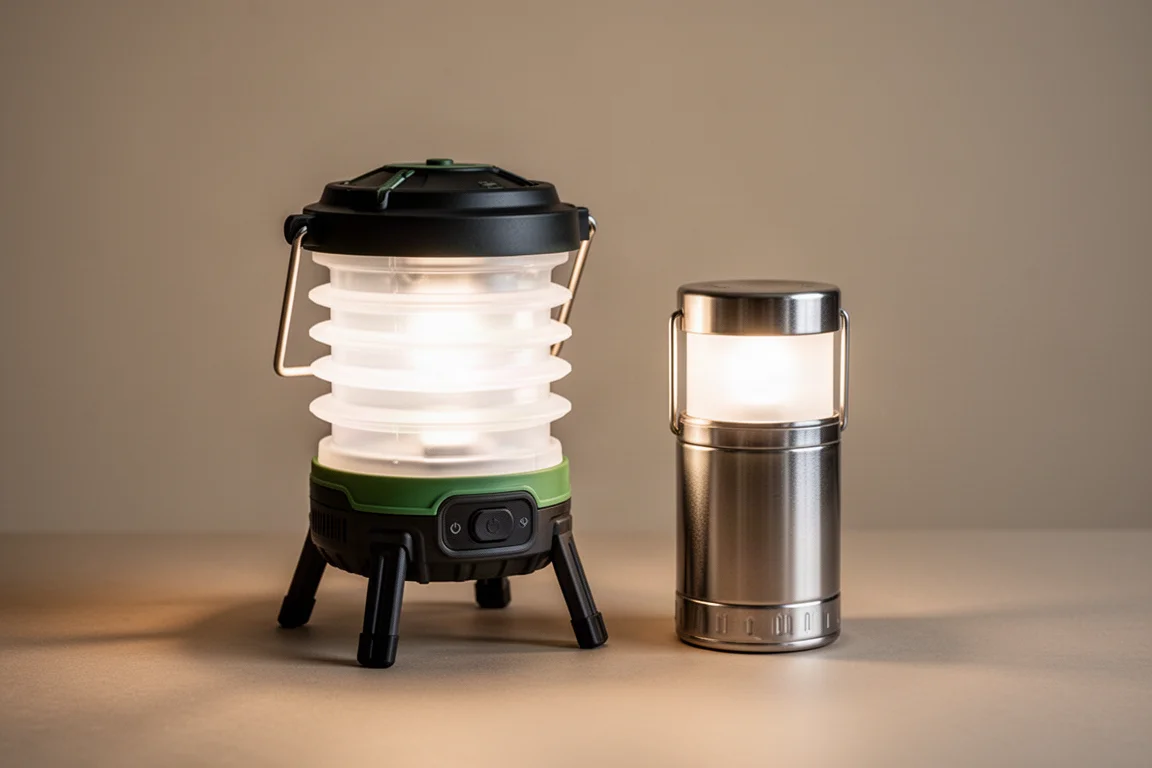
If raw output matters most and you prefer a compact metal body, the O Lantern is a solid pick. If you want one light that covers camping, backpacking, home emergencies, and roadside breakdowns, the Helix is the more complete package.
Conclusion
The Princeton Tech Helix Backcountry earns its place as a very flexible light: a dimmable white lantern, a red emergency mode, a convertible flashlight, and a thoughtful collapsible design that weighs just 155 grams. The Olight O Lantern remains a strong alternative for anyone who prioritises a compact metal build and a slightly lower price, and at the lowest settings its runtime is excellent. For most people, though, the Helix’s extra features and lighter pack weight tip the balance in its favour.
Further reading
Related Reviews
Camping Lights
Goal Zero Lighthouse Micro Charge vs Micro Flash: Which Compact Camping Light Is Worth It?
Two nearly identical rechargeable camping lights, separated by a USB output port, a carabiner, and roughly $5. Here is how to choose between them.
Camping Lights
Goal Zero Lighthouse Micro Flash Review: A Two-in-One Light That Earns Its Place
A pocket-sized flashlight and lantern in one body, with long low-brightness runtimes, IPX6 weather resistance, and a few usability quirks worth knowing before you buy.
Camping Lights
Goal Zero Micro Charge Review: A Compact 2-in-1 Camping Light
A practical look at the Goal Zero Micro Charge, a pocketable flashlight and lantern with phone charging, plus the trade-offs worth knowing before you buy.