Generators
PowerSmart 2200W Inverter Generator Review: Affordable Power That Holds Its Voltage
A small, budget-friendly inverter generator that keeps voltage steady, idles down in eco mode, and stays surprisingly quiet for the money.
Introduction
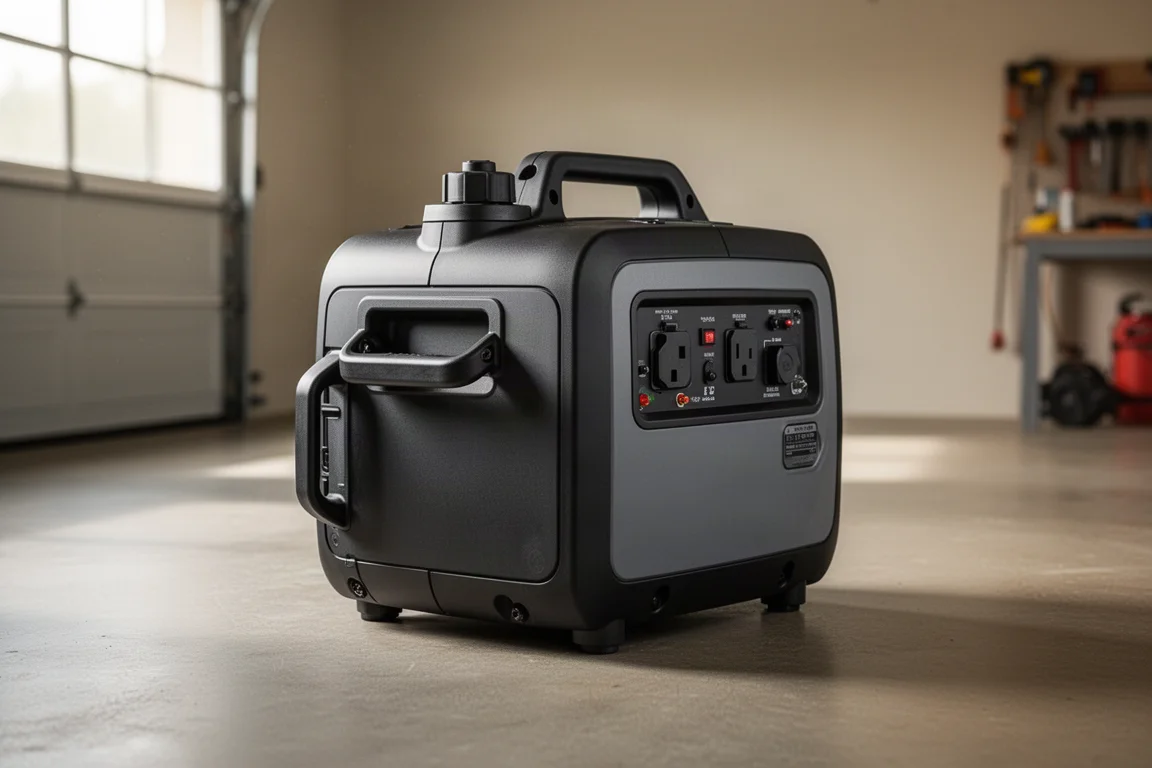
Plenty of people will tell you gasoline power is dead, but that is far from the truth. Battery-powered tools and power stations have improved a lot, yet none of them can keep running indefinitely the way a gasoline engine can. You can turn a drained battery situation around quickly just by refilling a one-gallon fuel tank. That is exactly the niche this PowerSmart 2200W inverter generator occupies: a small, inexpensive, fuel-efficient unit that is easy to maintain and holds its output where it should.
Who This Generator Is For
This unit makes the most sense for occasional users. It suits someone who will fire it up four or five times a year and does not want a large amount of money tied up in a generator. The build quality is respectable, and the design follows a familiar, well-proven small-engine pattern at a lower price than the big-name equivalents. For RV owners, campers, and anyone who wants backup power without a premium price tag, it is a compelling starting point.
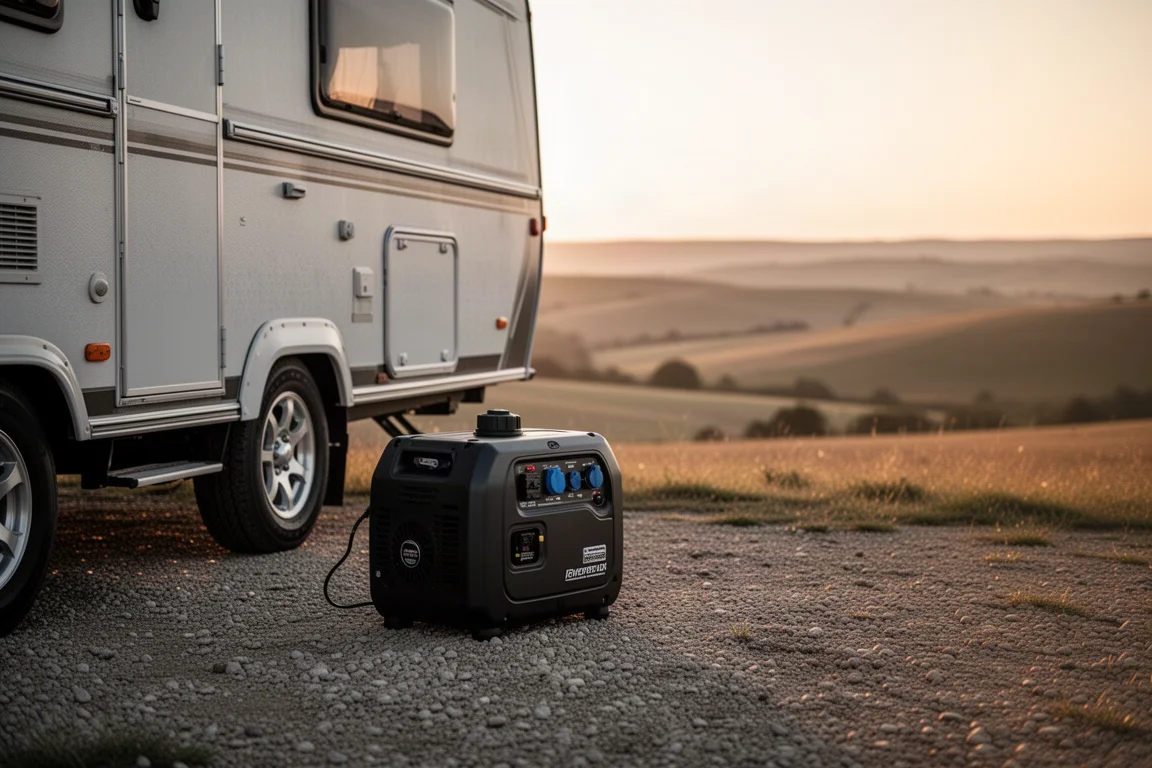
The practical use case demonstrated here is simple: run the large battery charger and the residential refrigerator during the day, then switch to battery power at night so campsite quiet time stays completely silent.
Setup and Maintenance Are Genuinely Simple
Any time you buy a gas engine, read the instructions and check the oil first. The engine ships with roughly 8 oz of oil already in it, but it takes about 16.9 oz total, so you need to add approximately 10 oz before first use. Checking and topping off is straightforward: the dipstick is right up front, and you check it before every run.
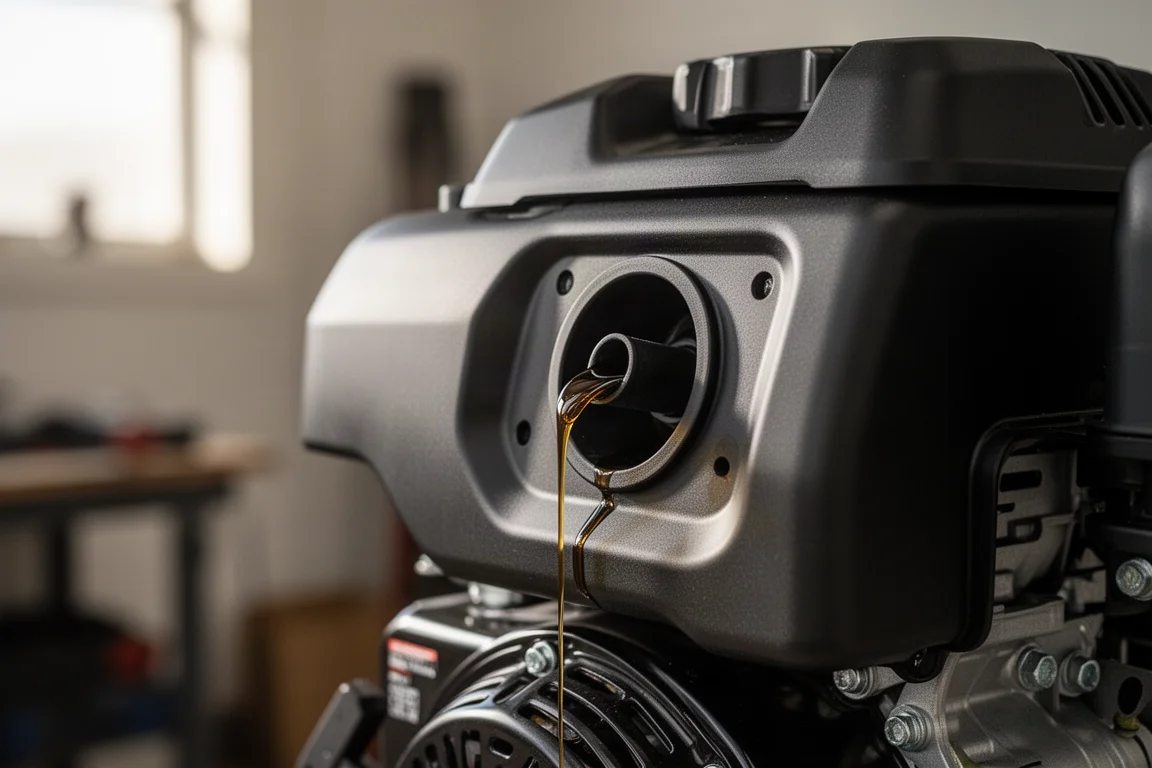
Routine service is just as accessible. The spark plug is reachable at the front if it ever needs attention, and the air filter, a simple foam element, sits behind a cover held by four screws. Pull that panel off and you can inspect it in seconds. One important care note: with so much ethanol in modern fuel, engines deteriorate quickly if fed the wrong gas. Use ethanol-free fuel where possible, and if you are out where you cannot find it, add a fuel stabilizer to protect the engine.
What You Get on the Panel
The control layout is thoughtfully arranged for a unit this size. The gasoline fill cap has its own vent on/off setting: keep it off when traveling so fuel does not vent in the sun, and turn it on when running so pressure relieves properly and air enters the tank.
The main engine switch is a two-in-one that cuts both the ignition and the fuel at the same time. That is convenient, though it has one quirk: if you like to run the fuel line dry before storage, you cannot, because switching off the fuel also stops the engine. A manual choke sits beside it, needing a pull for cold starts and a push in once running.
Eco mode is where an inverter earns its keep. With it on, the engine idles down to the lowest RPM that still maintains a steady 120 volts, adjusting automatically to the load. Switch eco mode off and the engine runs at full RPM with all the amperage ready for demanding tools like a circular saw. Most owners will leave eco mode on the whole time.
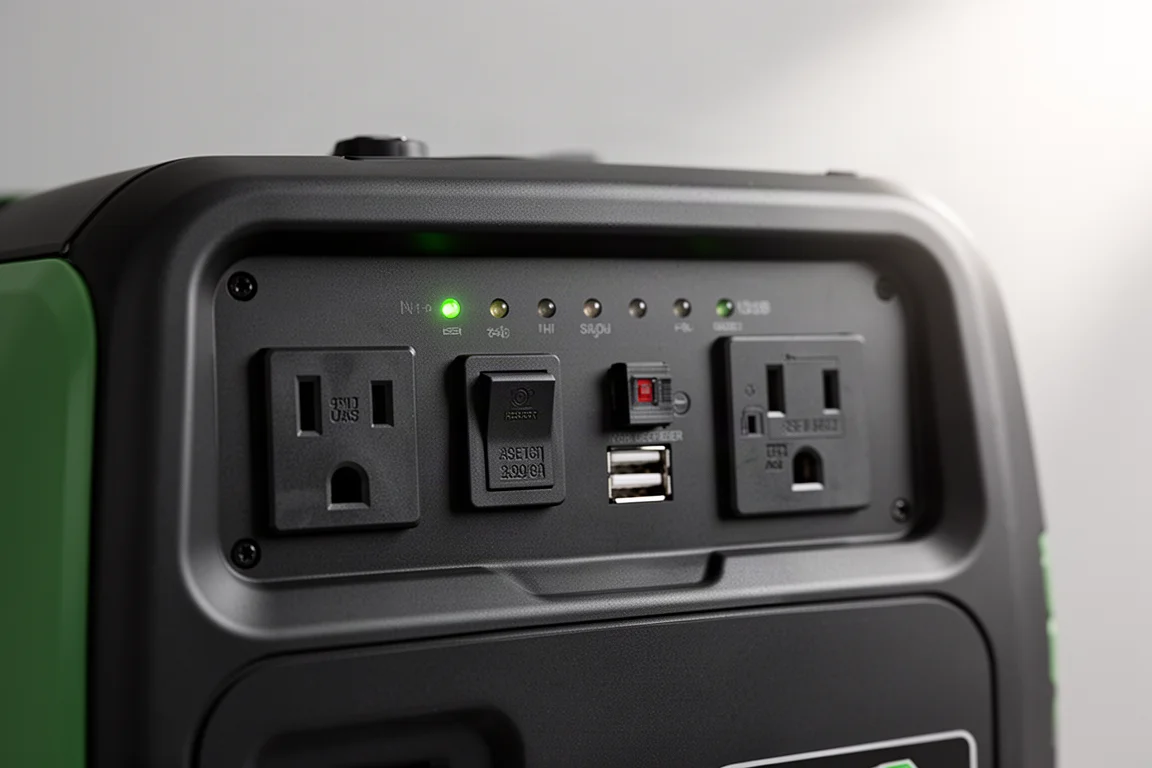
The panel also carries a reset breaker for tripped loads, a 12V cigarette-style output, two USB outputs, and two 15A household outlets with the sideways 20V-style slots. Because the unit delivers about 15.8 amps rather than a full 20, it will not run everything rated at 20 amps, though a vacuum rated for 20 that only draws around 15 will work fine. Indicator lights across the top flag low oil and over-voltage conditions, and the status light turns green when the unit is up and running.
Real-World Performance and Power Quality
Starting is painless: open the gas cap vent, switch the fuel and engine on, pull the choke, then push it back in. With eco mode engaged, the unit runs quietly at idle. Measured with a power meter, output held at roughly 123 volts, and pushing a 1,400W-class heat gun dropped the reading only to about 116 volts through a long extension cord, drawing around 11.5 amps at a frequency reading of 59.9 Hz. That frequency accuracy is exactly what you should expect from a proper inverter.
As the load dropped to half, the wattage fell to around 776W and the engine RPM dropped with it, saving fuel by running only as fast as the load requires. Voltage on a separate meter held steady at about 121.6 volts under load and 123 volts at idle, which is excellent regulation for a small inverter.
Noise levels impressed throughout. At both idle and full RPM, the unit stays quiet enough to hold a conversation standing right beside it. The main real-world drawback noted during testing was not the generator itself but the extension cord: long cords cost you voltage, so keep cord runs short or use adequately heavy cable.
Buying Advice
For an inexpensive inverter, this unit delivers on the fundamentals: it maintains voltage, produces the power it claims, and does so quietly. The maintenance routine is simple, and with basic care it should last a long time. Change the oil on schedule, confirm oil level before every run, avoid ethanol fuel when you can or use a stabilizer, and the investment holds up well. If your priority is a low-cost, low-hassle inverter for occasional use, this one is easy to recommend.

Conclusion
The PowerSmart 2200W inverter generator is not trying to be a premium machine, and that is its strength. It gives you clean inverter power, smart eco-mode fuel savings, genuinely simple maintenance access, and quiet operation at a price that makes sense for occasional users. Take care of the fuel and the oil, and it will take care of you.
Product link
View more details for PowerSmart 2200W Inverter Generator
This product is mentioned in the review. Check the specifications, options, and compatibility before buying.
View more details for PowerSmart 2200W Inverter GeneratorFurther reading
Related Reviews
Generators
A-iVolt 10000-Watt Inverter Generator Review: Big Power, Surprisingly Quiet
A 10,000-watt starting / 8,000-watt running dual-fuel inverter generator with electric, pull, and remote start, GFCI outlets, and parallel capability.
Generators
Genmax vs Predator vs Honda: 2000-Watt Inverter Generator Showdown
We put three 2000-watt inverter generators through noise, power quality, fuel efficiency, and engine wear tests to see whether a $370 model can match a $1,200 Honda.
Generators
Best 2300-Watt Inverter Generators: Quiet Power for Camping and Backup
A hands-on look at the Maxpeedingrods MXR 2300 alongside the Honda EU2200i and Pulsar G2319N, with honest notes on price, noise, and features.