Work Lights
Porter Cable Work Lights: Four Bright Options That Skip the Battery System
Two corded and two battery-powered Porter Cable work lights with high lumen output, tough panels, and LiFePO4 batteries, all without needing a proprietary battery lineup.
Introduction
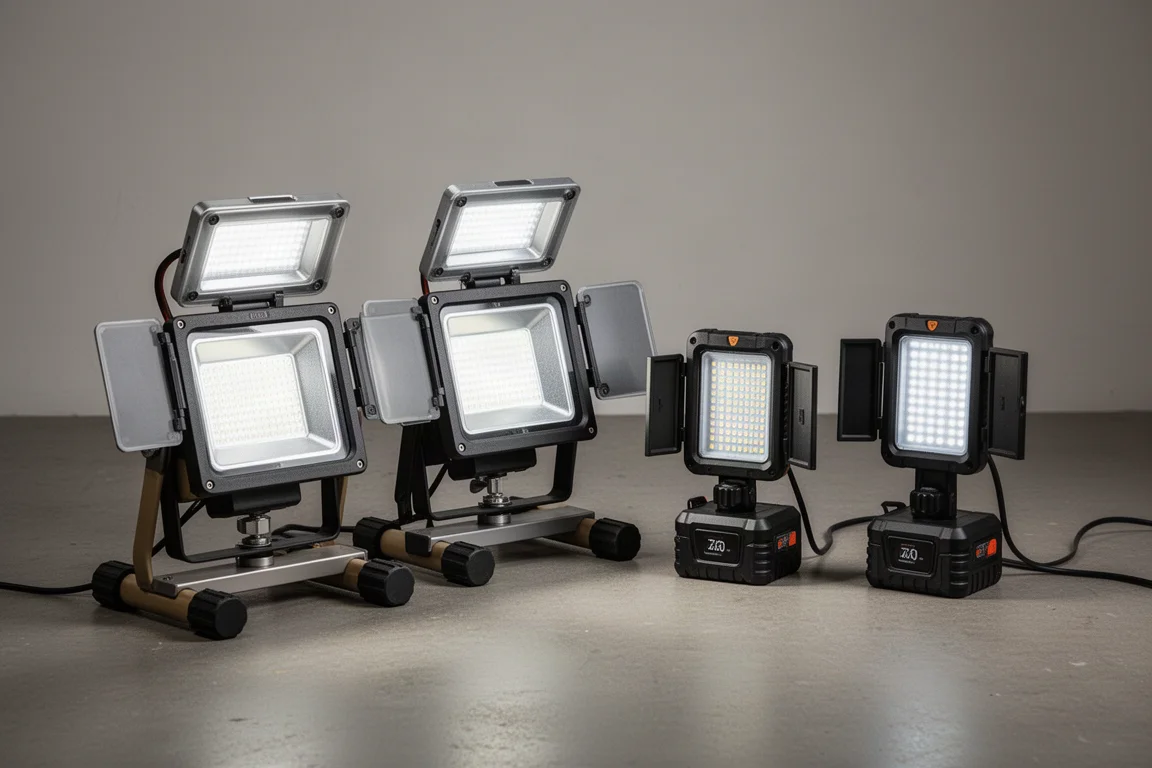
Porter Cable has put out a work light lineup that hits a sweet spot: the right lumen counts, sensible color temperatures, and prices well below the premium brands, without locking you into a proprietary battery platform. The range covers two corded models at 10,000 and 5,000 lumens, plus two battery-powered models at 1,500 and 3,000 lumens. Here is how they compare and who each one suits.
Why This Lineup Stands Out
The corded and battery lights differ in a few interesting ways. The corded models run at 4,000K, a slightly warmer tone that is comfortable for long work sessions indoors, while the battery models sit at 5,000K, a brighter white that lands near the sweet spot for task work. Output ranges from 1,500 lumens on the smallest battery light up to 10,000 lumens on the largest corded model, so there is a clear step for every use case.
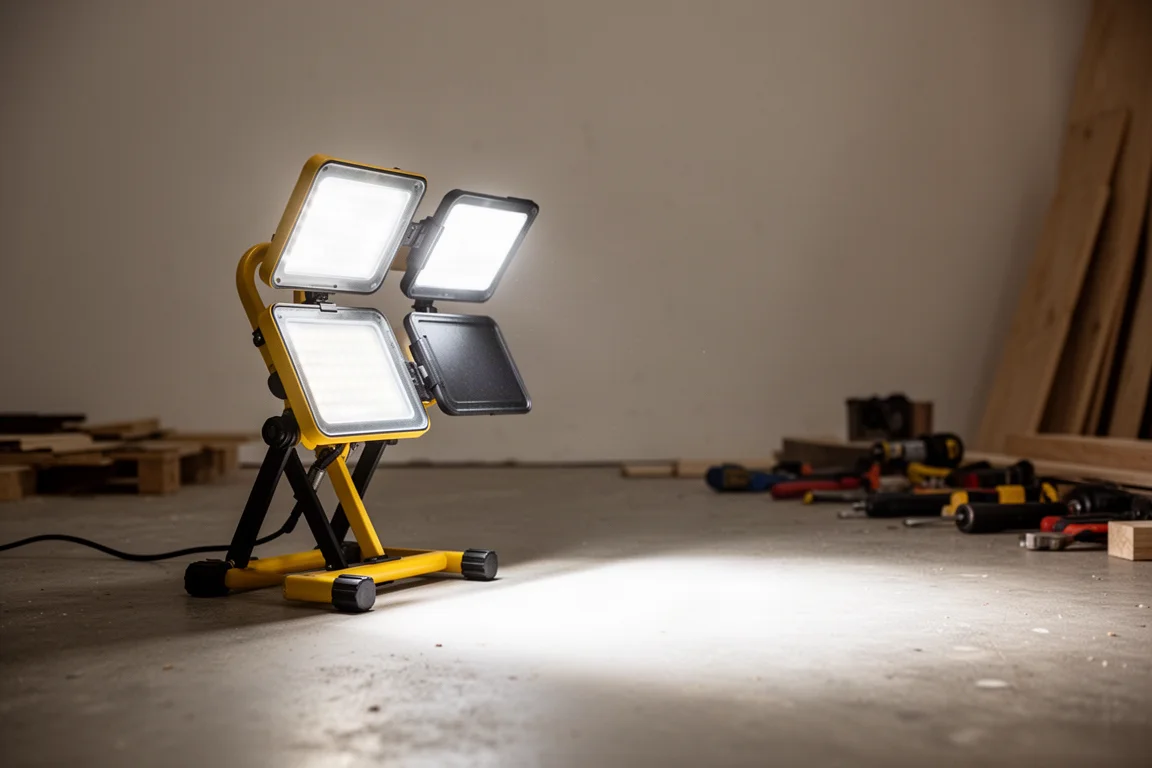
Another practical point: none of these lights require you to be inside the Porter Cable battery system. The battery models charge over USB-C with a standard phone charger, which keeps the entry cost low compared with lights that expect you to buy into a full battery lineup.
Build Quality: Same Design Across the Board
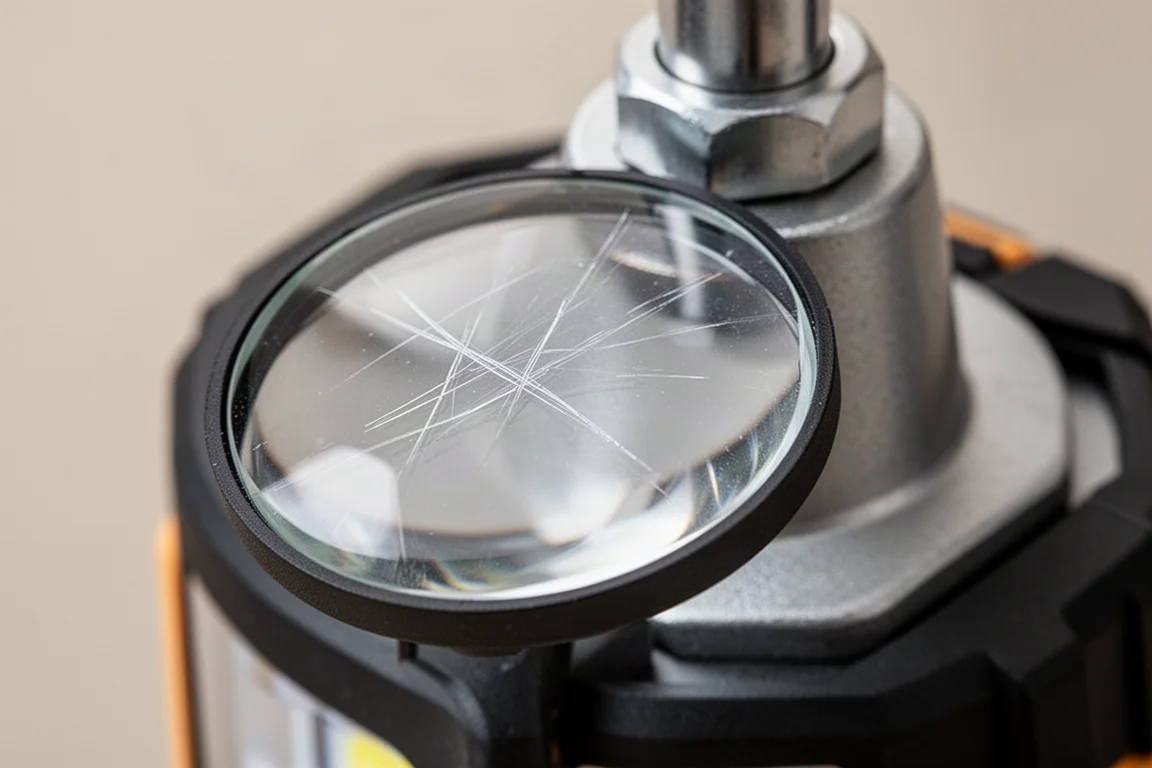
All four lights share the same basic construction. The lens panel is a hard, scratch-resistant material that shrugs off contact with a utility blade without marking, which matters on a job site where lights get knocked around. The top base is metal, though the underside is plastic and will dent under a blade.
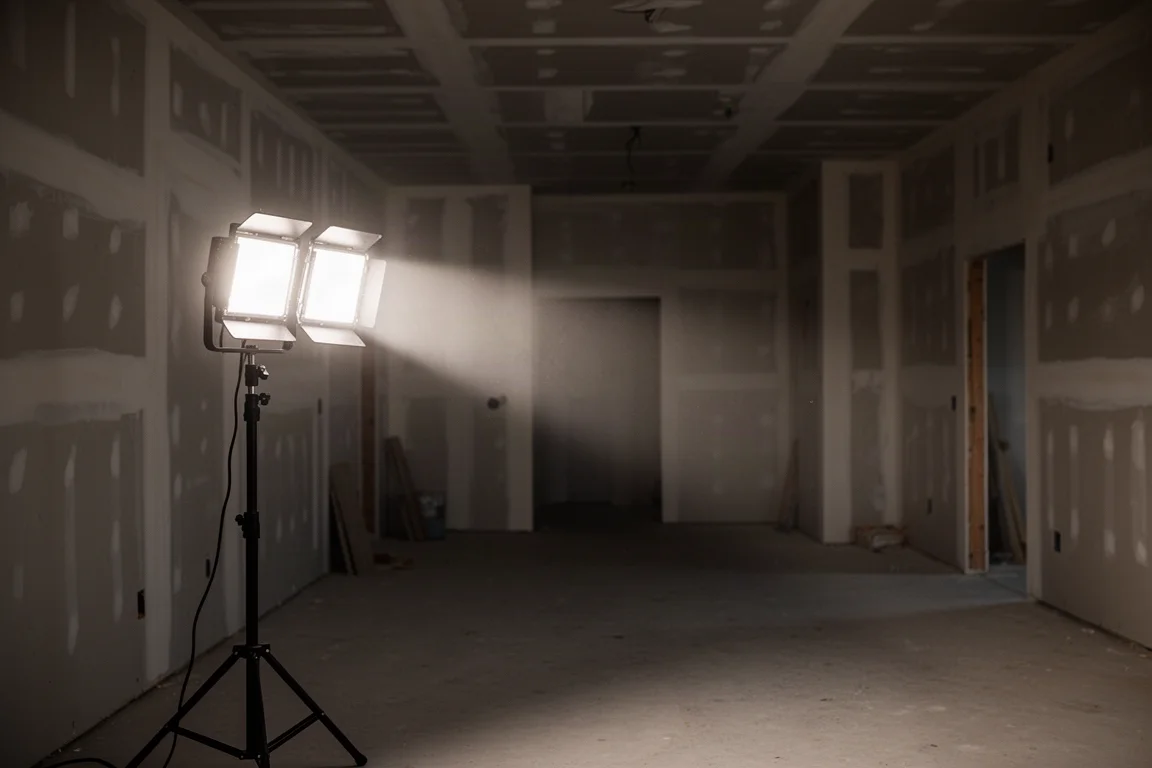
The corded models include keyhole slots in the base, spaced 6.5 inches apart, plus an extra small keyhole that works with a long screw sticking out from a wall or post. On the back there is a switch with off, half, and full settings, so you can dial output between half and full power. The panels adjust on a detented screw and fold back for storage, and the side wings tilt forward, backward, or all the way around, letting you push serious light in multiple directions at once.
One tip: loosen the adjustment screw before repositioning the panels. If you force them while tight, you will wear down the detents, and once the mechanism slips into a detent it becomes harder to unlock. The only real complaint is that if the panel catches between detents and you tighten it, it can drop and loosen again, so you need to find the center detent section.
Battery Models: LiFePO4 Cells and USB-C Charging
The two battery lights stand out for what is inside them: lithium iron phosphate (LiFePO4) batteries rather than lithium ion. LiFePO4 cells are rated for around 5,000 charge cycles in laboratory conditions, which translates to roughly 2,500 to 3,500 real-world cycles. Charge one daily and you are looking at about 10 years of use with 80% of the capacity still remaining. This is the battery chemistry electric vehicles are moving toward. The trade-off is that LiFePO4 does not perform as well in cold weather.
The smaller battery model puts out 1,500 lumens and houses a single 3.2V 6Ah battery. The larger one delivers 3,000 lumens with two of those batteries inside, though the runtime works out the same because of the extra LEDs. On high you get just about 2 hours, and on low just over 3 hours. Charging over USB-C takes up to 4 hours because of the lower amperage, so you cannot keep one on the charger and swap them back and forth.
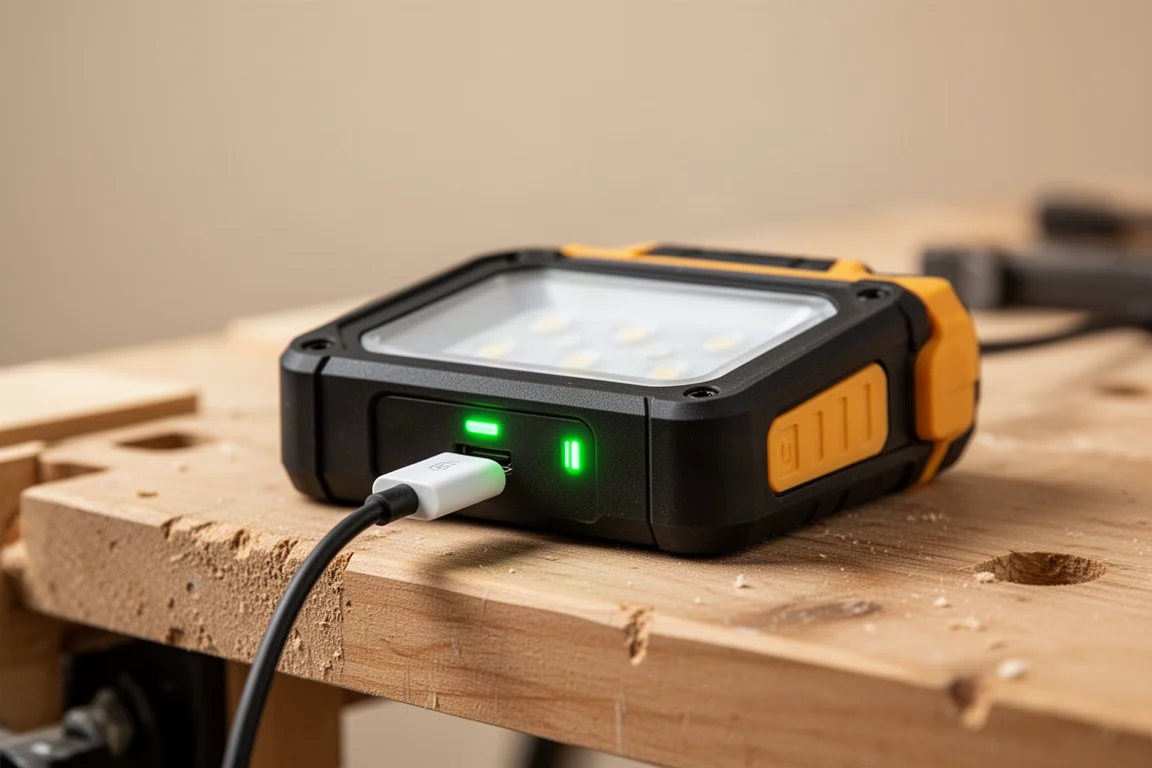
Both battery models have a green battery fuel meter that lights up and blinks while charging, which is a nice touch. They stand stably and can tilt fully upward without tipping, and they are balanced enough to hang on a protruding screw if you work at it. The one thing missing compared with the corded models is keyhole slots in the base, which would have made wall hanging easier.
Corded Models: Serious Output for Long Jobs
The 5,000 lumen corded light is built identically to the rest of the lineup, including the pass-through plug and USB port. The 10,000 lumen model is the standout of the whole series: on low it matches the 5,000 lumen light’s full output at around 2,500 lumens, and on full it floods a huge area, easily lighting a 40-foot-wide space at distance. It is too bright to work under a car hood with, but positioned further away it transforms a dark room or night-time outdoor work.
The corded models also include a 10 amp pass-through outlet, so you can daisy-chain additional lights or plug in a charger, radio, or phone. The USB port covers smaller charging duties too. The 10,000 lumen light lists at $49, which is strong value given the quality LED and high CRI rating in a comfortable color temperature for indoor work with minimal eye strain.
Buying Advice
If you mostly run long job-site sessions, painting, drywall, or construction work where you can run an extension cord, the corded models are the pick. They offer the best output, the pass-through power, and wall-hanging keyholes. The 10,000 lumen model suits large spaces and outdoor night work kept at a distance; the 5,000 lumen model fits single rooms and closer-range tasks.
If you need portability and do not want to buy into a battery platform, the battery lights are excellent. Their strengths are the long-life LiFePO4 cells and USB-C charging; their weaknesses are the modest runtime, the slow 4-hour charge time, and the lack of hanging keyholes. For under-hood or close-range work they are simply too bright even on half power, so position them accordingly.
Conclusion
This Porter Cable lineup delivers strong output, thoughtful build quality, and honest pricing across four well-differentiated models. Corded buyers get massive light and pass-through power for extended indoor work, while battery buyers get durable LiFePO4 cells and platform-free charging. Match the lumen count to your space and you will likely be as impressed by the value as by the brightness.
Product link
View more details for Porter Cable 10,000 Lumen Corded Work Light
This product is mentioned in the review. Check the specifications, options, and compatibility before buying.
View more details for Porter Cable 10,000 Lumen Corded Work LightFurther reading
Related Reviews

Work Lights
Milwaukee M12 Rover Review: A Compact Work Light That Goes Where You Do
The Milwaukee M12 Rover is a compact, versatile work light with three brightness levels, multiple mounting options, and USB-C charging for your devices.
Work Lights
Best Folding Work Lights Compared: Budget Picks to Tool Truck Tough
Seven folding work lights tested for real lumen output, runtime, charging, and drop durability, from a $20 Amazon seller to Snap-on.
Work Lights
Best Hinged Work Lights: 7 Options for Aiming Light Exactly Where You Need It
From classic Maglite designs to modern dual-hinged stick lights, seven work lights that make it easy to aim a beam into tight spaces.