Work Lights
Best Folding Work Lights Compared: Budget Picks to Tool Truck Tough
Seven folding work lights tested for real lumen output, runtime, charging, and drop durability, from a $20 Amazon seller to Snap-on.
Introduction
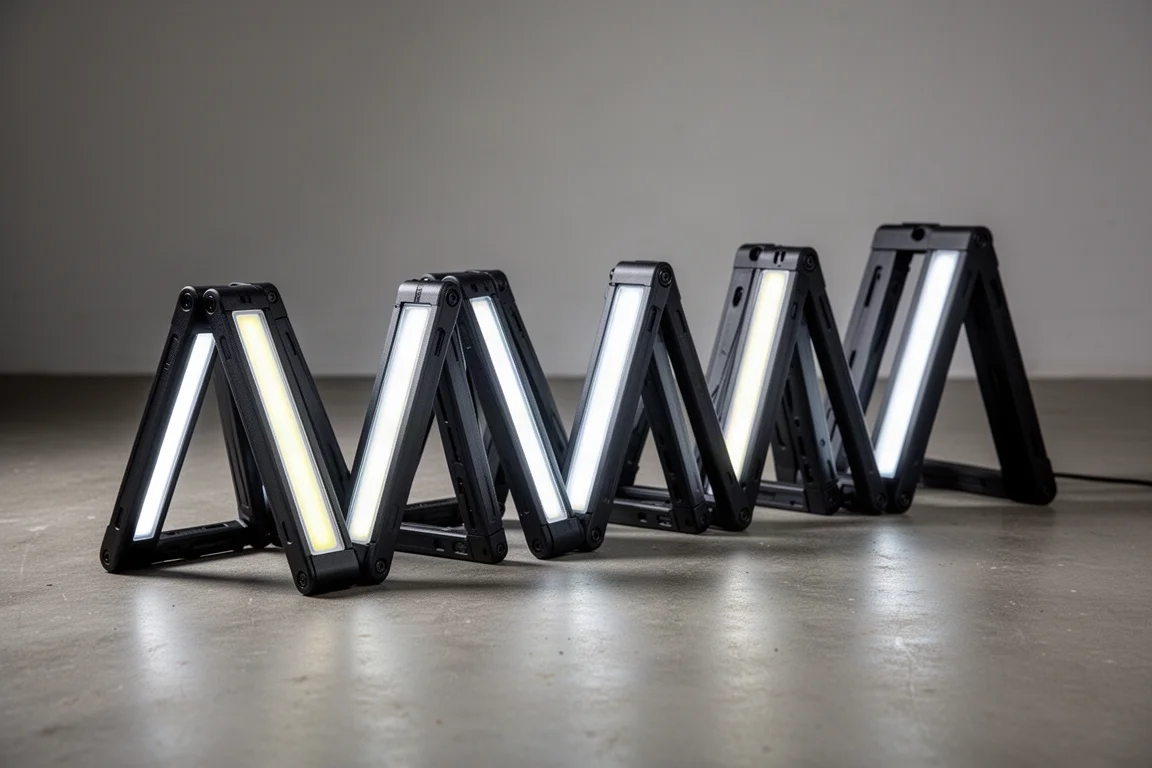
Folding work lights all look alike on the spec sheet: similar advertised lumen claims, similar runtimes, and prices that stretch from around $20 on Amazon to $150 at the tool truck. That price gap seems silly if every light delivers on its promise, so this comparison put seven of them through the same gauntlet: true lumen output measured in a calibrated integrating sphere, output over time, charging behavior, and pavement drop testing with water dips mixed in. The results split the field cleanly into two halves.
How We Tested
Each light was measured against its advertised output after a 30-second settle per the ANSI FL1 standard, then tracked over a full runtime to see how honestly it held its high mode. Charging speed, battery capacity, magnet strength, hooks, and fold design were noted in use. Finally, every light took drops on pavement from increasing heights plus dips in water, because that is simply what happens to work lights on the job.
Durapower Folding Work Light: The $20 Amazon Bestseller
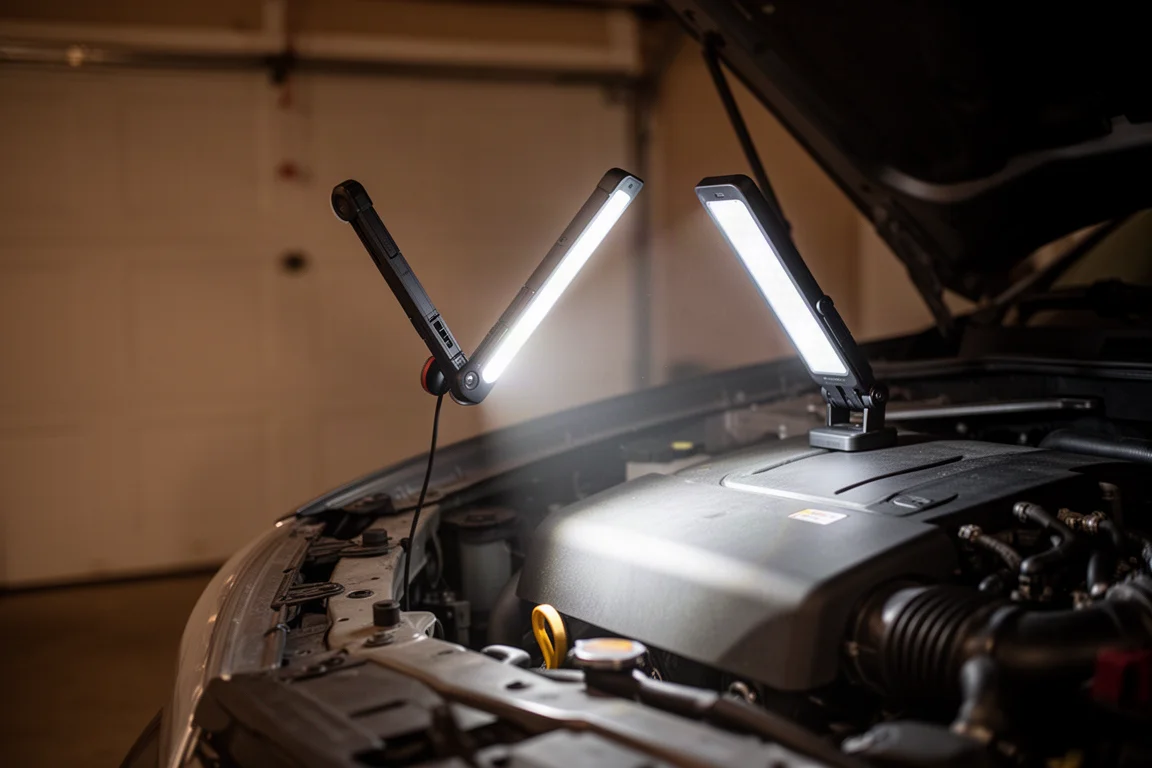
The Durapower is one of the best-selling lights of this type on Amazon, advertising 800 lumens from COB LED strips with a design very similar to the Snap-on. In use it is wobblier than you would prefer, the detent positions feel plasticky and hollow, and the storage hook is so hidden it took a razor to pry it out. It does charge over USB-C, though at a modest 1 amp.
Measured output tells the real story: around 352 lumens, just 44 percent of the 800 claimed, and it drops out of high in under 30 seconds. The folded flashlight mode advertises 100 lumens and makes about 80, all focused into one spot. It even underperforms the cheaper-claiming Harbor Freight Brawn.
Harbor Freight Icon 800 Lumen Folding Work Light
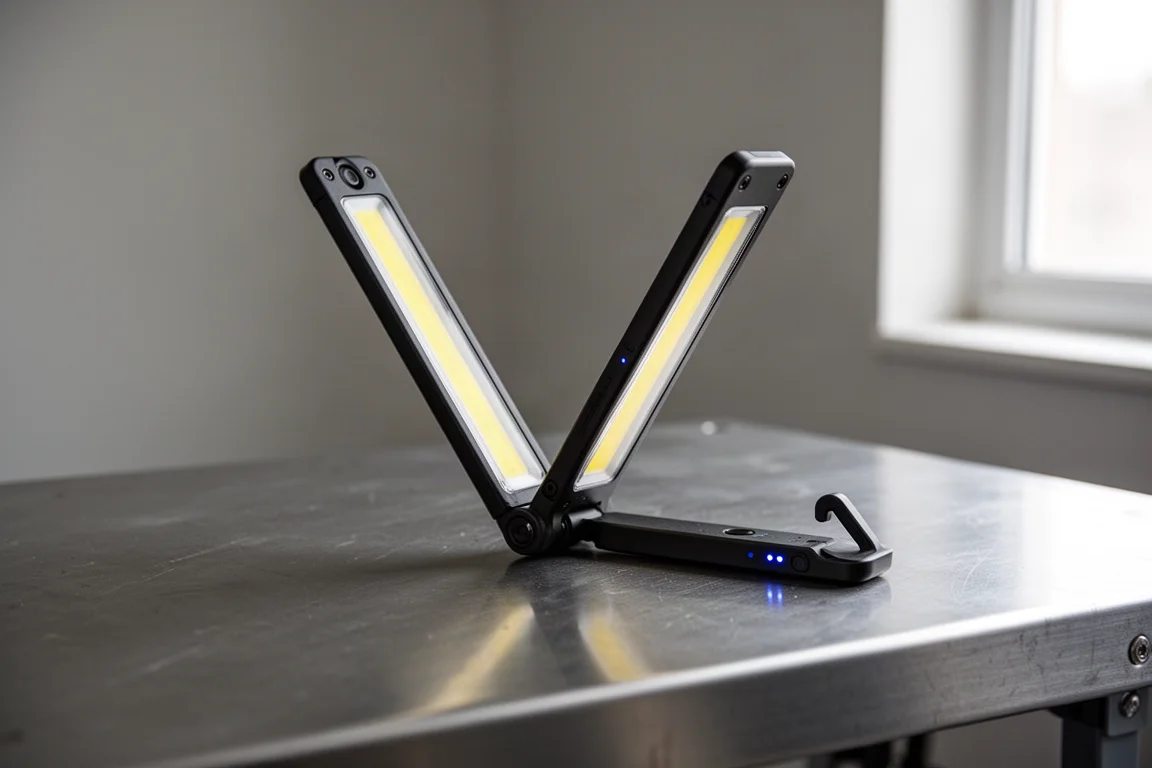
Harbor Freight’s Icon 800 is their professional-line folding work light at $40, and it feels far more solid than the Durapower or the Brawn. Its magnet is genuinely good, and the main light measures around 742 lumens, about 93 percent of the advertised 800, which is among the closest ratings of any Harbor Freight light we have tested. The secondary light puts out 320 to 350 lumens, very usable.
The frustrations are design choices, not performance. The main and secondary lights are placed backwards relative to the single fold direction, so when magnetized at most angles, only the secondary light points where you need it. The 18650-style cell is not removable or swappable like the Brawn’s, and it charges at only about 0.85 to 0.9 amps over USB-C.
GearWrench 83135 Flex Head Work Light
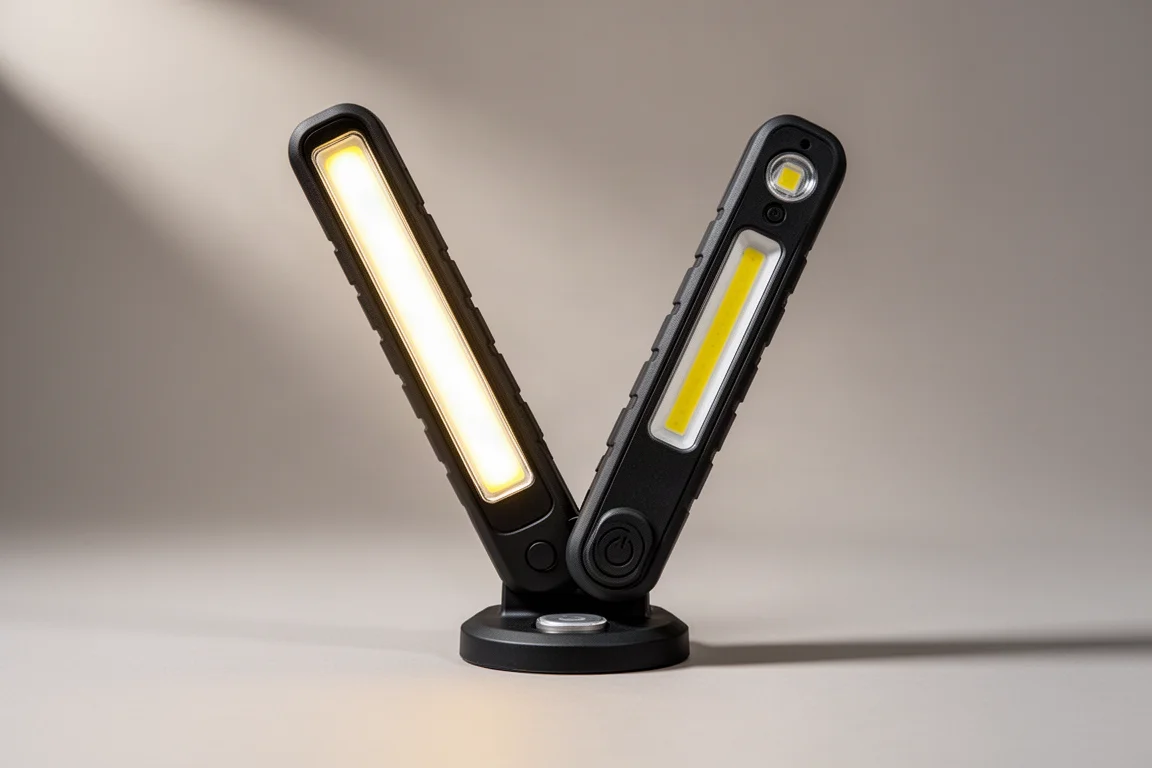
The GearWrench 83135 is their highest-spec flex head model at $58, advertising 500 lumens. Its double hinge is genuinely useful, folding either way, and the hook and base magnet fit the bill. Measured output lands around 445 lumens, 90 percent of advertised.
The confusing part is charging: a barrel connector plugged into a USB wall adapter, which combines the worst of both worlds, the non-universal cable of a barrel plug with the speed cap of USB. The top light is also a letdown at just 33 lumens, compared to the Icon’s very usable 151, and you have to cycle through it every time you turn the light on.
Matco PC Fold 850: The Wireless Charging Standout
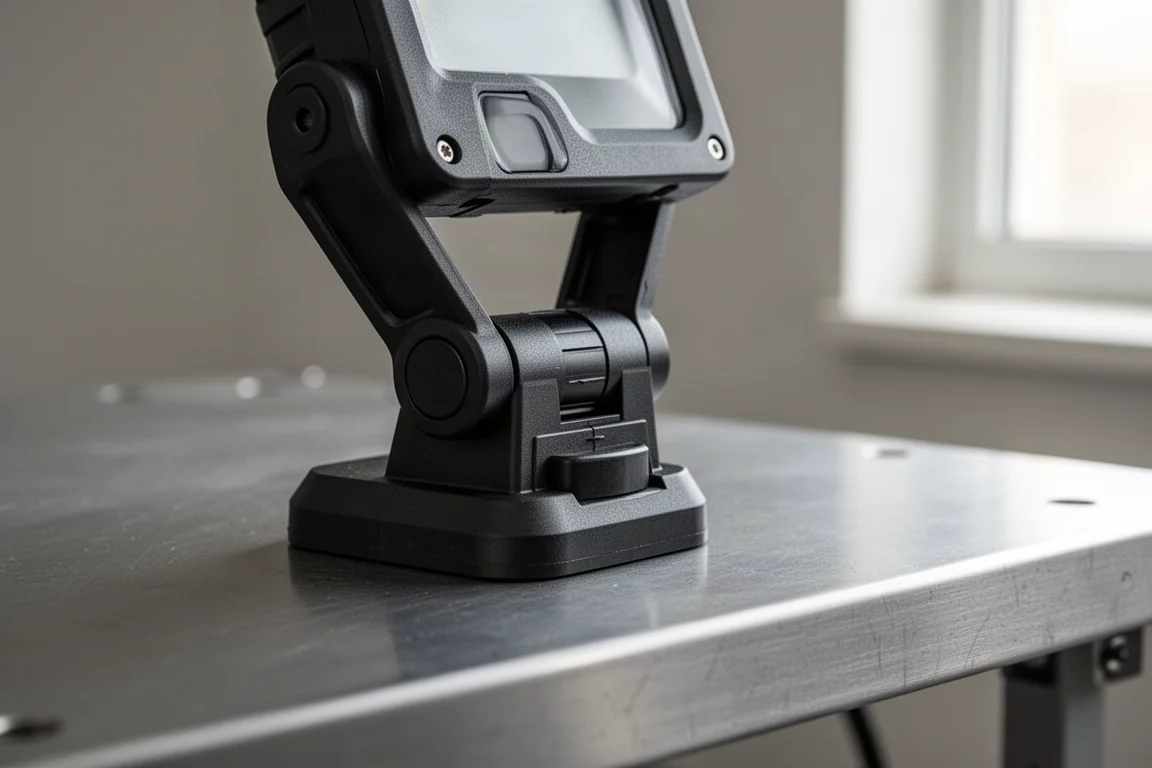
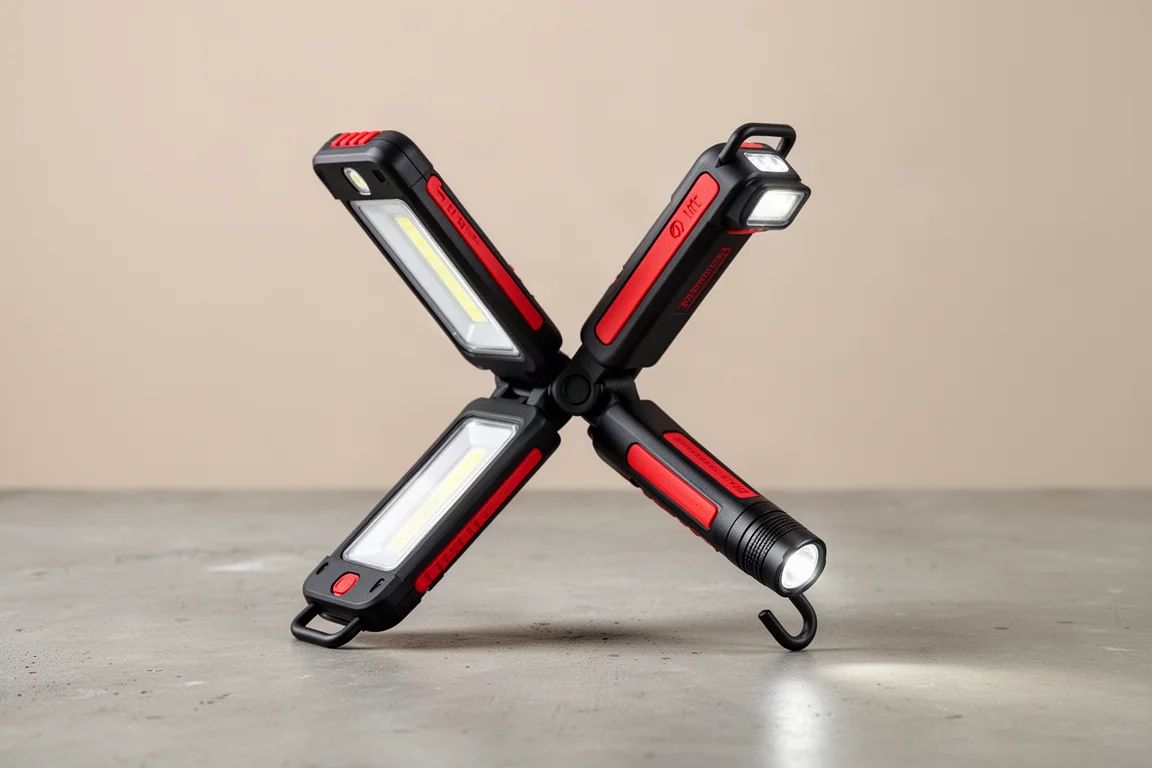
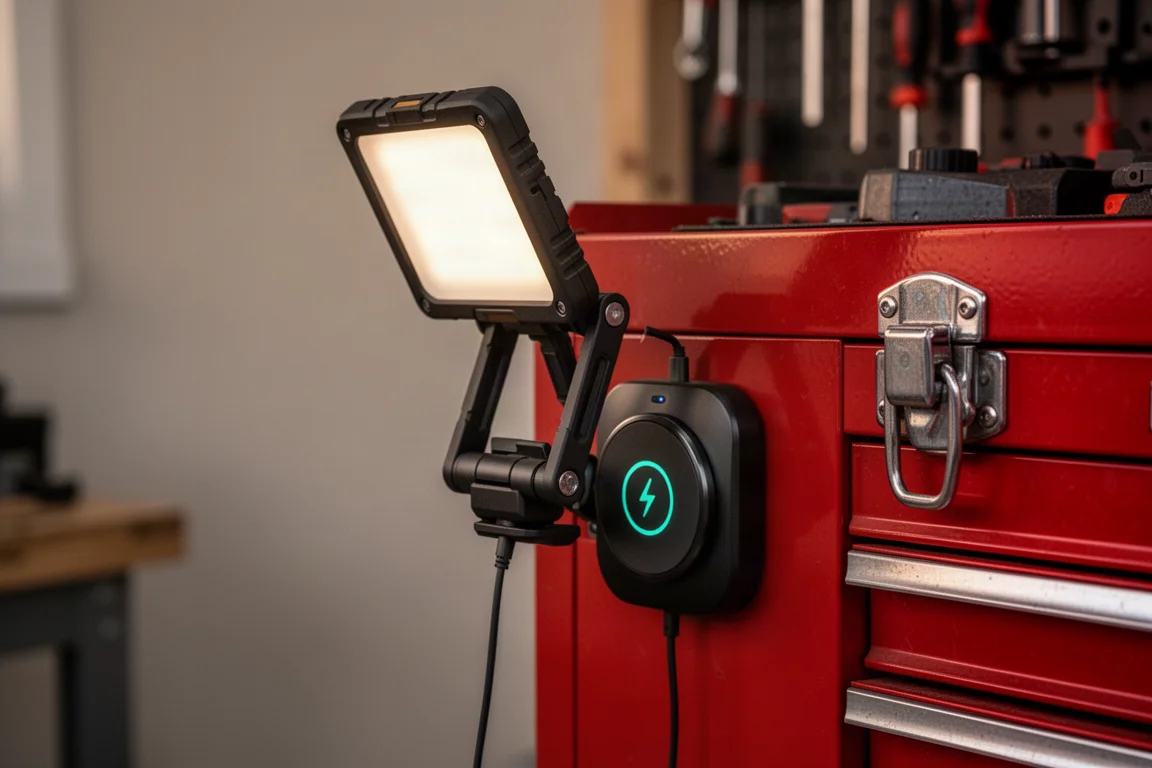
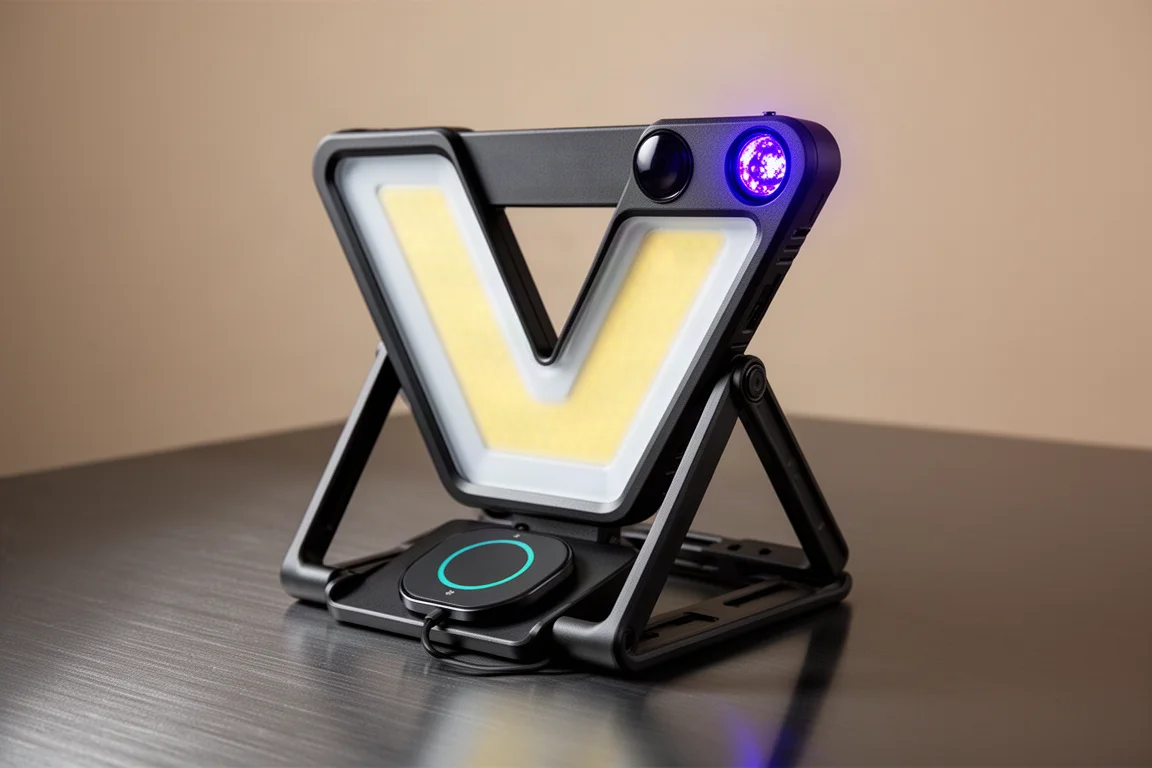
The Matco PC Fold is part of the Pro Charge line and charges over USB-C at 1.25 to 1.5 amps, or wirelessly via a magnetic wall charger that sticks to the side of a toolbox, plus it includes a cradle that charges cell phones. It also packs a UV blacklight on top for dye leak detection, a 400-lumen secondary light usable while folded, and the main light works at multiple unfold angles, a more sensible layout than the Icon’s.
Measured at around 870 lumens against an 850 claim, it is dead on. It carries the largest battery of the group, a 3,250mAh cell, and stayed in the 500 to 600 lumen range longer than everything else, with the best area under the curve. Along with the Snap-on, it was also one of only two lights that survived everything thrown at it.
Snap-on ECARG068 600 Lumen Flex Light
The Snap-on ECARG068 is the smaller of their two flex lights, and its size fits the category best. It uses a proprietary swappable battery, so you can buy a spare ($40) and skip charging downtime entirely. It charges over USB-C but at only 0.75 amps, slow enough to make that second battery tempting.
Measured output is around 575 lumens, 96 percent of the advertised 600. The flashlight end is the most useful of the group at 310 lumens, and the light switches intelligently: main light only when open, flashlight only when closed. The magnetic base is its weak point, sharing space with the battery hatch. In durability testing it could not be killed, surviving spikes alongside the Matco despite looking far from factory stock.
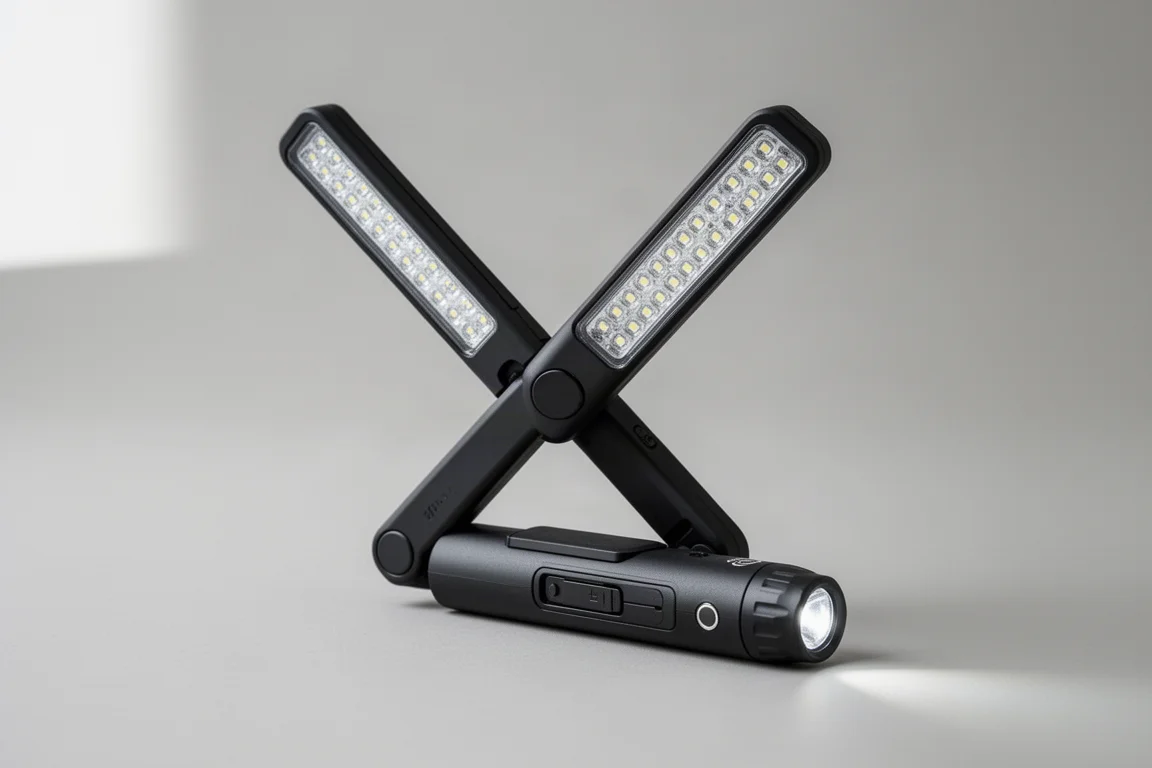
Streamlight Folding Stinger and the Brawn
Two previously tested lights round out the chart. The Harbor Freight Brawn advertises around 390 lumens and honestly delivers about 350, holding that level, with the advantage of a removable battery and easy warranty service, but it is plagued by durability issues, scoring 1 out of 10. The Streamlight Folding Stinger is another 800-lumen model whose two internal 18650 cells give it excellent runtime and a rare 10 out of 10 durability score. What holds it back: micro-USB and a measured 8.5-hour charge time with no way to swap the batteries. Updated to USB-C and faster charging, it would be a no-brainer.
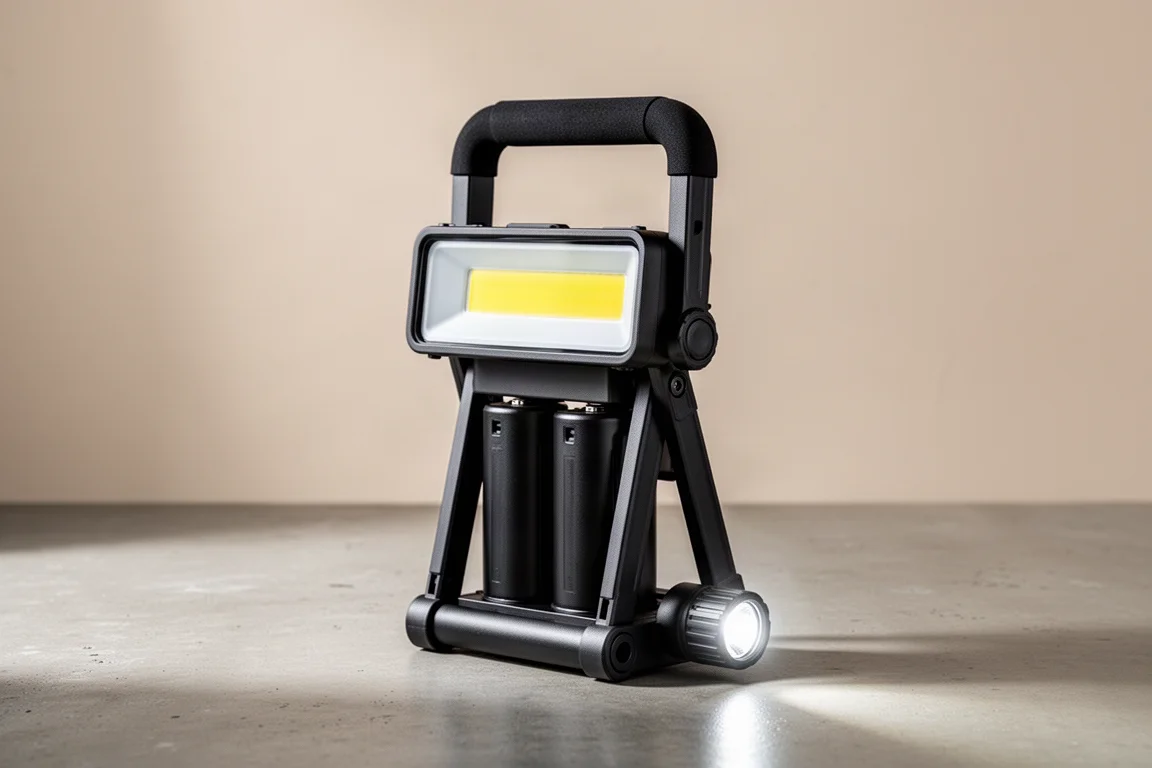
Runtime and Charging Takeaways
Measured battery capacities explain most runtime differences. Most lights in the group have similar capacities and delivered fairly similar total lumen-minutes. The Durapower’s small measured 1,700mAh cell barely turned on long enough to earn a five-star review before being shelved. The Matco’s large cell accepted 3,190mAh of charge and maintained its output level easily. Oddly, the tiny Durapower battery still took three hours to charge, while the Matco’s big battery charged fastest thanks to its higher amperage, though wireless charging evens that out.
Durability: Where the Field Splits in Two
Drop testing separated this list decisively. The Durapower survived three drops at three feet before intermittent issues, then broke apart at ten feet, scoring 2 out of 10. The Icon failed on its very first official drop, an unprecedented result, scoring 0 out of 10, and the Brawn scored 1 out of 10. The GearWrench lost its hanging hook after one drop and died completely by the third, also scoring 2 out of 10.
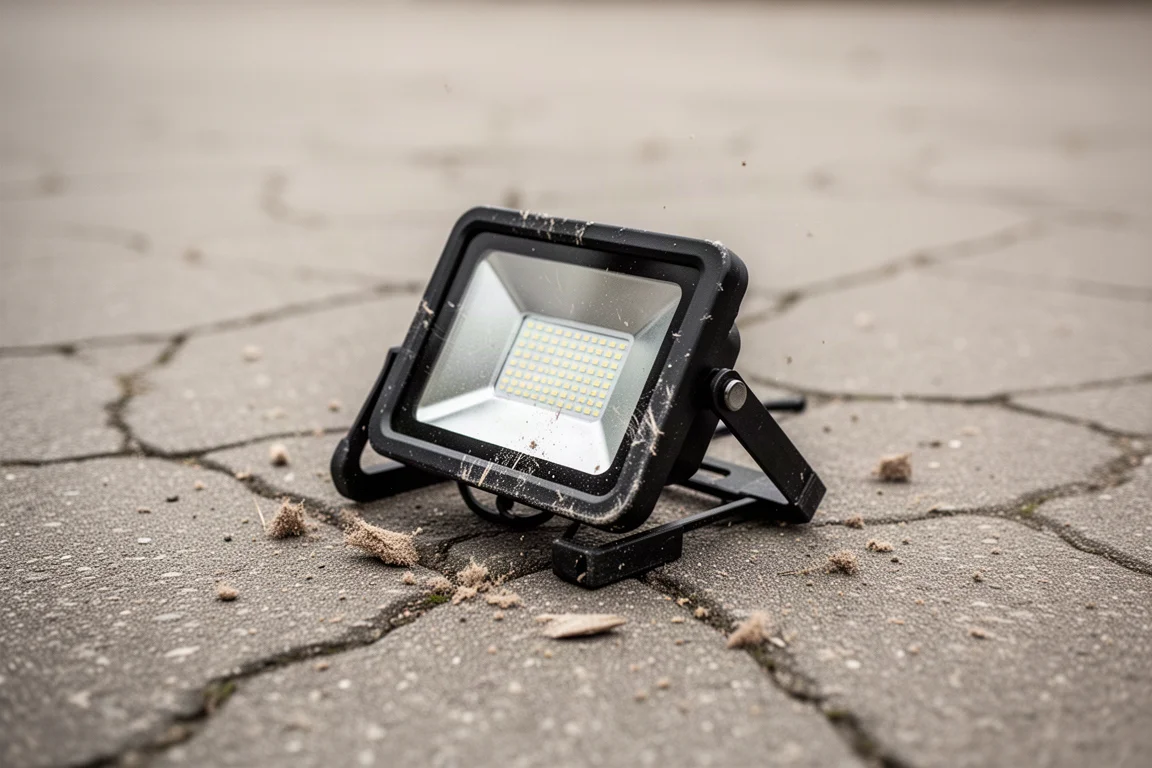
Then the field split. The Matco and Snap-on graduated to being spiked into the pavement and kept working through a dozen attempts, both battered but functional, earning 10 out of 10 scores. As soon as the price jumped up majorly, so did durability, which is rare in lights; even a $250 flashlight has underperformed cheaper lights in this kind of testing before.
Buying Advice
The Matco PC Fold comes out on top by the numbers: accurate output, the best runtime curve, flexible charging, and top-tier durability. The Snap-on ECARG068 is the alternative if swappable batteries appeal more than wireless charging. In the budget tier, the choice between the Icon and the Brawn is a toss-up: both have similar pluses and minuses, with the Brawn offering a removable battery and easier warranty service. The Streamlight Folding Stinger is a runner-up overall, awkward in size and painfully slow to charge. The Durapower is hard to recommend at any price given its measured output, and the GearWrench sits in an awkward middle with quirky charging and poor durability.
Conclusion
Cheap folding work lights advertise the same specs as the expensive ones, and some of them even come close on raw output. What the money buys is honesty in the lumen number, longer sustained brightness, smarter charging, and lights that survive the drops that end a budget light’s life. If you use a work light daily, the premium tier genuinely earns it here. If yours gets used occasionally and gently, the budget options will still turn on; just do not expect them to last.
Further reading
Related Reviews

Work Lights
Milwaukee M12 Rover Review: A Compact Work Light That Goes Where You Do
The Milwaukee M12 Rover is a compact, versatile work light with three brightness levels, multiple mounting options, and USB-C charging for your devices.
Work Lights
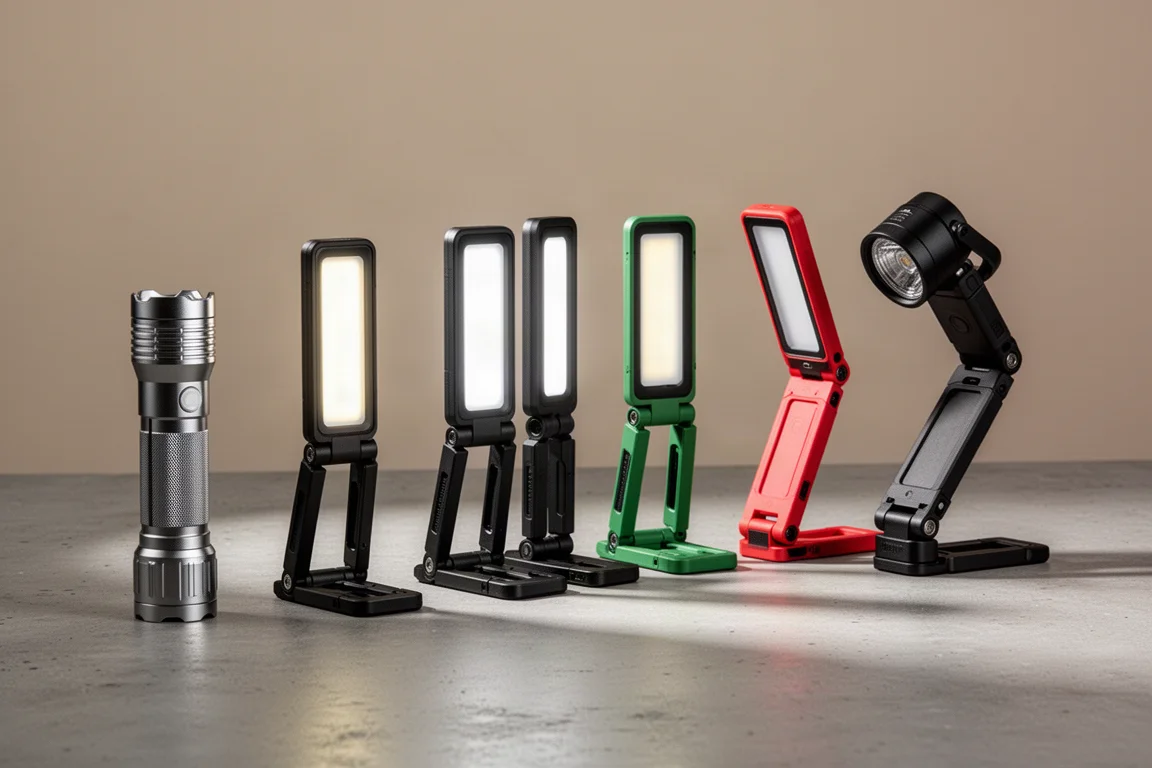
Best Hinged Work Lights: 7 Options for Aiming Light Exactly Where You Need It
From classic Maglite designs to modern dual-hinged stick lights, seven work lights that make it easy to aim a beam into tight spaces.
Work Lights
Three Milwaukee Rechargeable Lights That Earn a Spot in Your Toolbox
A hands-on look at the Milwaukee 20114R clip light, 2015R pivoting task light with spot mode, and 2016R flat flashlight with laser.