Work Lights
Best Hinged Work Lights: 7 Options for Aiming Light Exactly Where You Need It
From classic Maglite designs to modern dual-hinged stick lights, seven work lights that make it easy to aim a beam into tight spaces.
Introduction
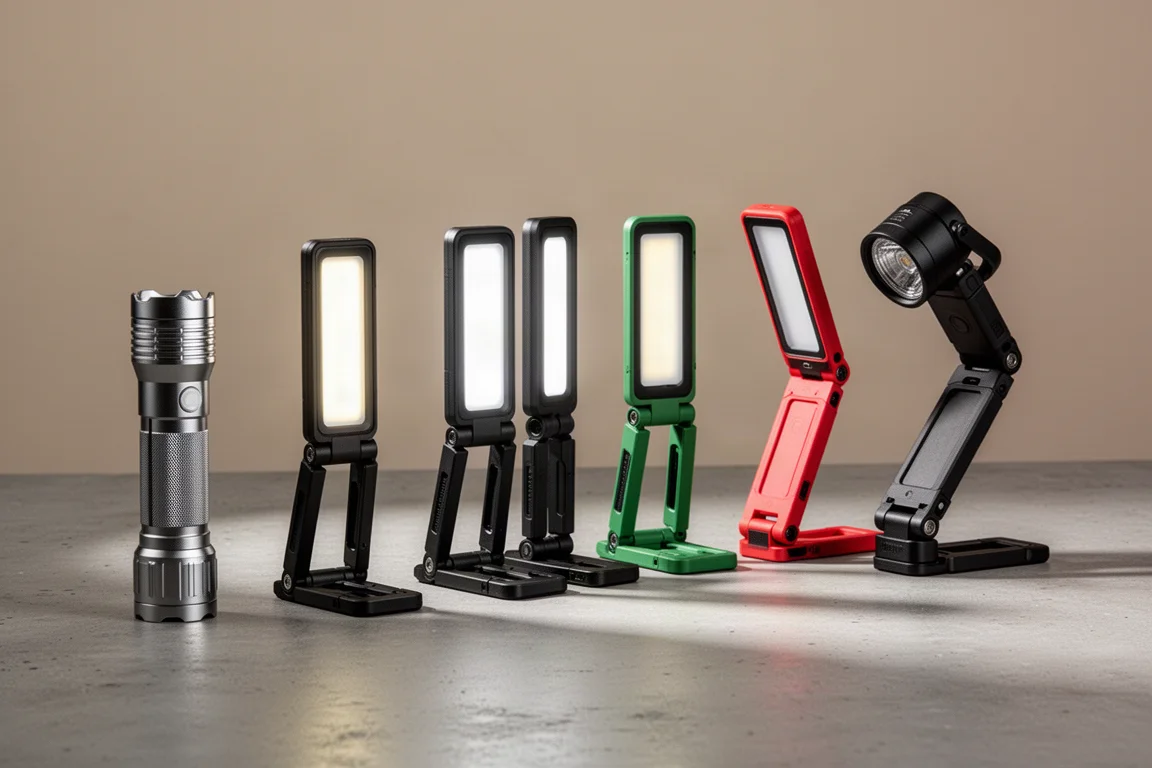
Work lighting has changed dramatically over the past few years. The old incandescent flashlight that ran on a stack of D batteries has given way to a whole family of LED designs with hinges, magnets, hanging hooks, and dual emitters. The goal is simple: get bright light pointed exactly where you need it, hands-free, and keep it there.
This roundup covers seven lights spanning that evolution, from the classic tube design to today’s dual-hinged stick lights, with notes on what each does well and where each falls short.
Why Hinged Lighting Matters
The classic cylindrical flashlight has an awkward problem: it needs a hand, an armpit, or a mouth to hold it in place. Anyone who has balanced a flashlight under one shoulder while working on a car knows the limitation. Modern hinged lights solve this with a base you can set down, a magnet you can stick on steel, and a swivel or hinge that lets you direct the beam without moving the whole unit.
There is now an explosion of different designs. Some look awkward on a desk, but each has a native environment where it shines. Stick lights in particular are evolving faster than most other lighting styles, and each design branch is being refined on its own.
One practical note: many of these lights sell for around one hundred dollars at the top end, with entry points much lower. You will drop them, they will get wet, and you will probably leave some behind on a job, so it is worth thinking about which lights you can treat as semi-disposable.
Swivel Classics: Maglite, Snap-On, and Braun
Maglite Classic
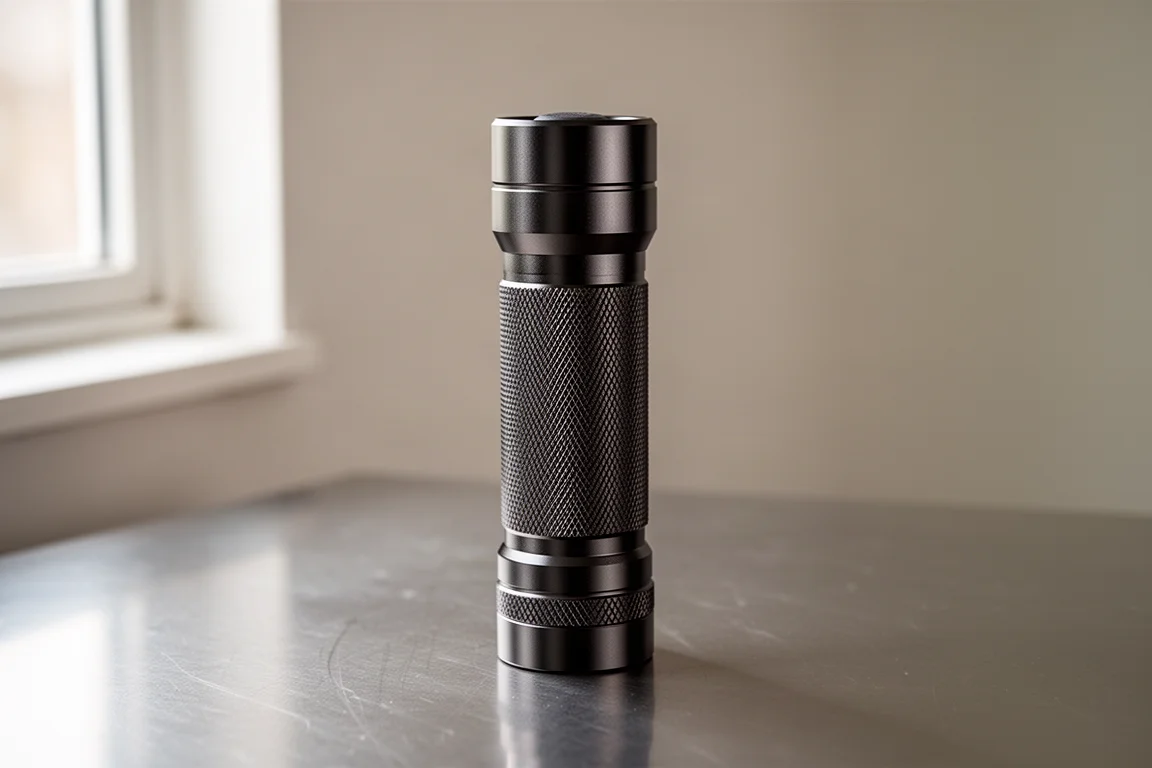
The Maglite is the original old-school option. It runs on D batteries with an incandescent-era design that was once considered high-tech. In practice it offers low light output, short bulb life, and considerable weight, so much that it famously doubled as something of a weapon. Some companies still make the classic form factor with updated LED emitters, but the fundamental problem remains: with no hinge or base, you end up holding it under one arm or between your teeth.
Snap-On Work Lights
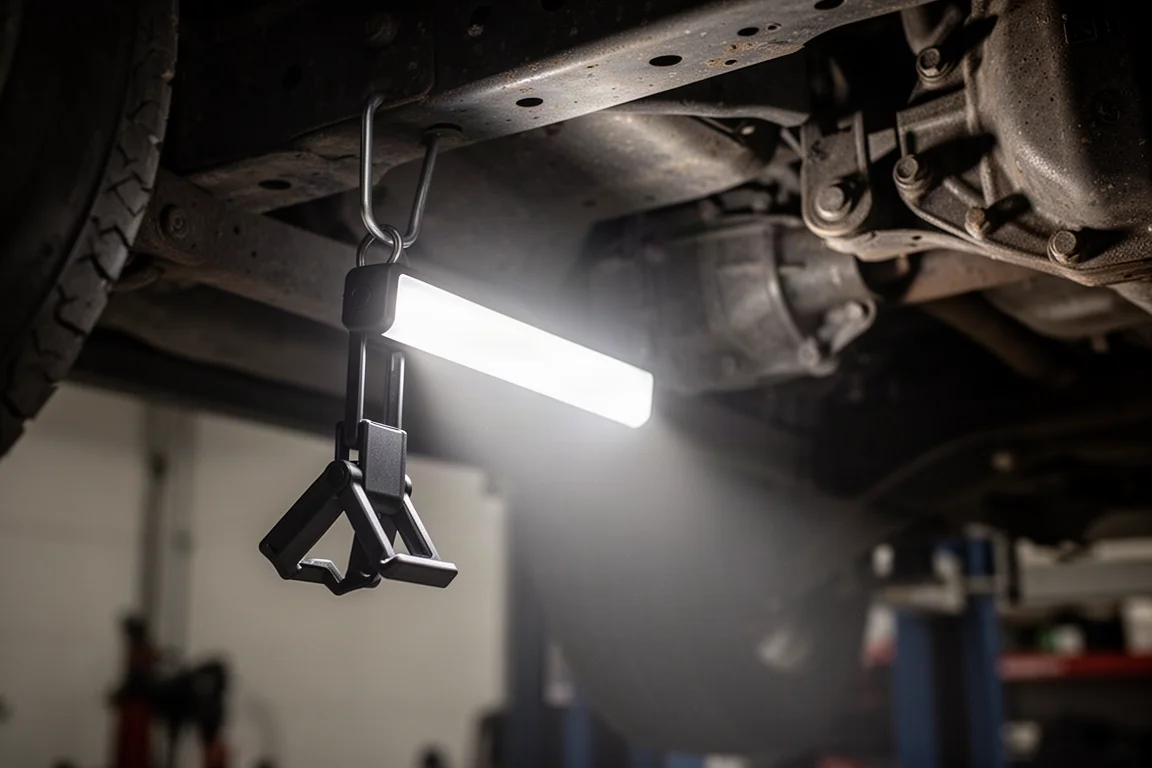
Snap-On’s swivel design is a refined version of a classic. The standard swivel mechanism lets the light point in many different directions, and the build quality is solid. It is a good design, but not the final word, and Snap-On keeps releasing new lighting options with nearly every catalog. The small point light in this family is one of the most useful shapes for close work, though you have to cycle through modes to reach it.
Braun Dual-Hinged Light
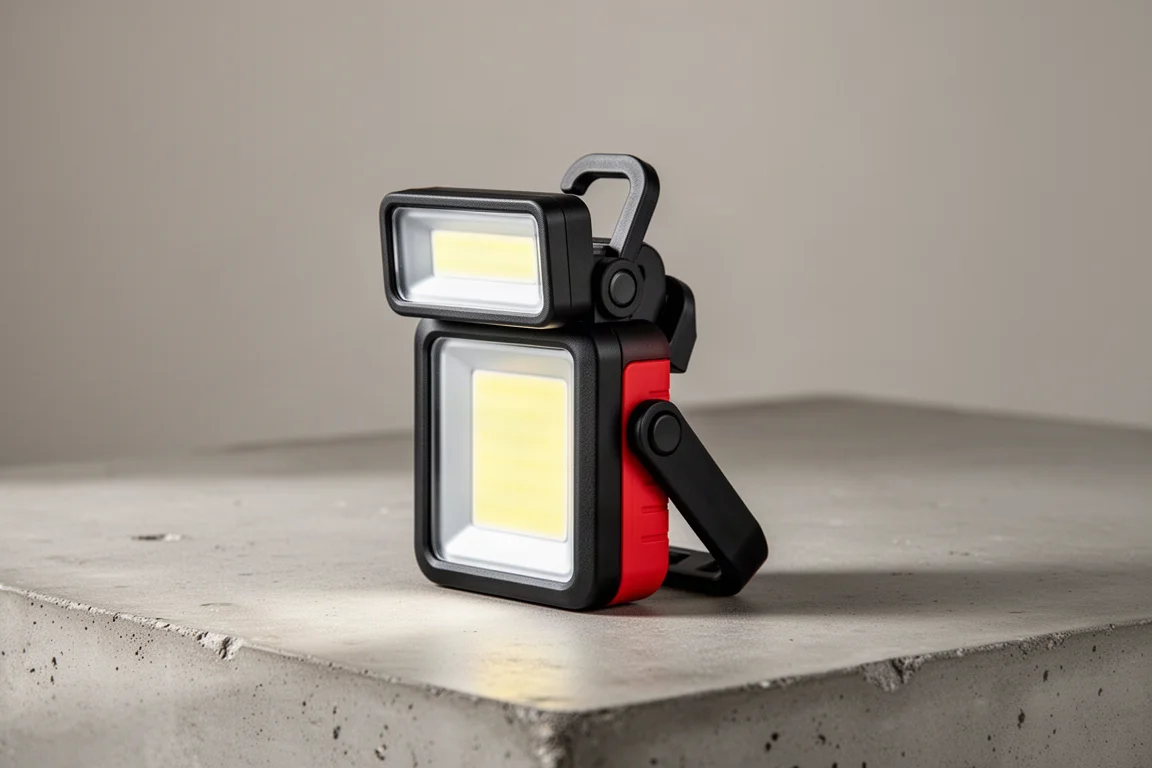
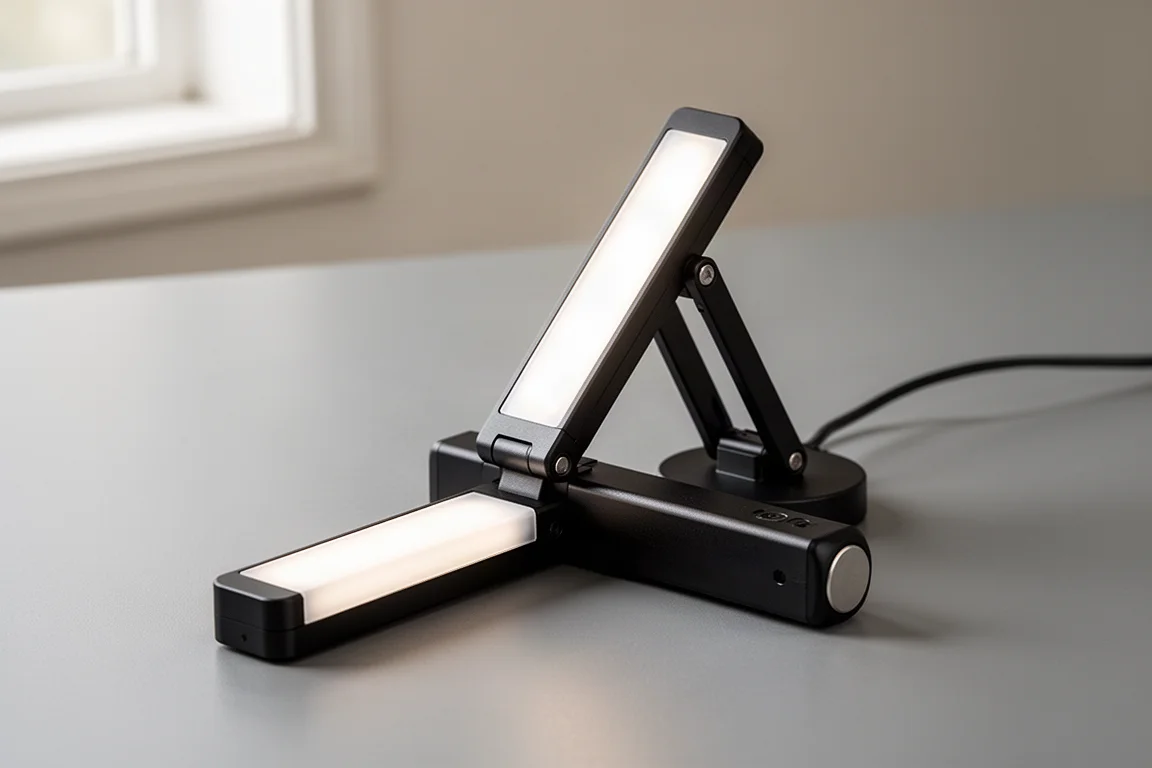
The Braun dual-hinged light is a popular design with a head that folds all the way over backward. Because you can rotate the base, it does not need to turn sideways. It offers a point light up front rather than emitters on both sides, and the magnet is by far the weakest of the group, which limits where you can place it. Aligning the beam anywhere other than along the swing arm can also be tricky.
Dual-Light Designs: Nebo and Klein
Nebo Light
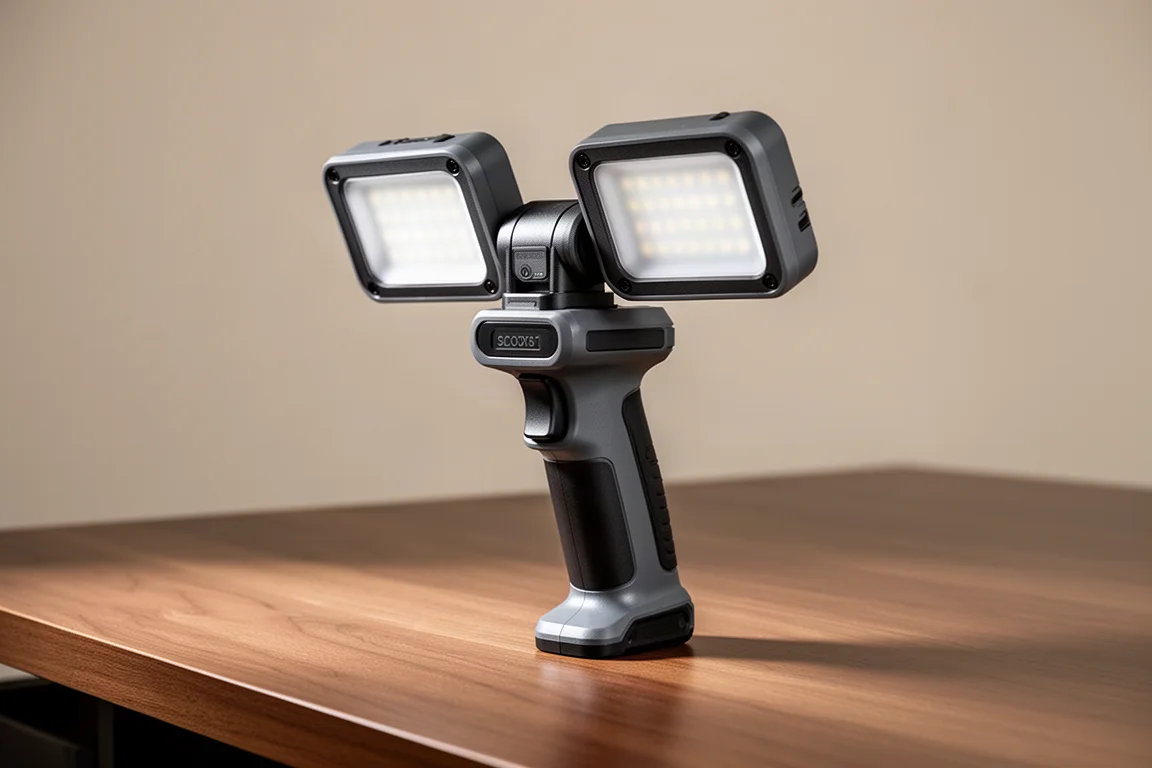
Nebo takes a handle-based approach with a split between spot and flood, or two flood emitters. The head turns around and adjusts in other ways, giving you flexibility in how the light is aimed. Nebo makes a large number of lights at accessible prices, sometimes almost disposable, which suits buyers who expect to abuse or lose a light on the job.
Klein Dual Light
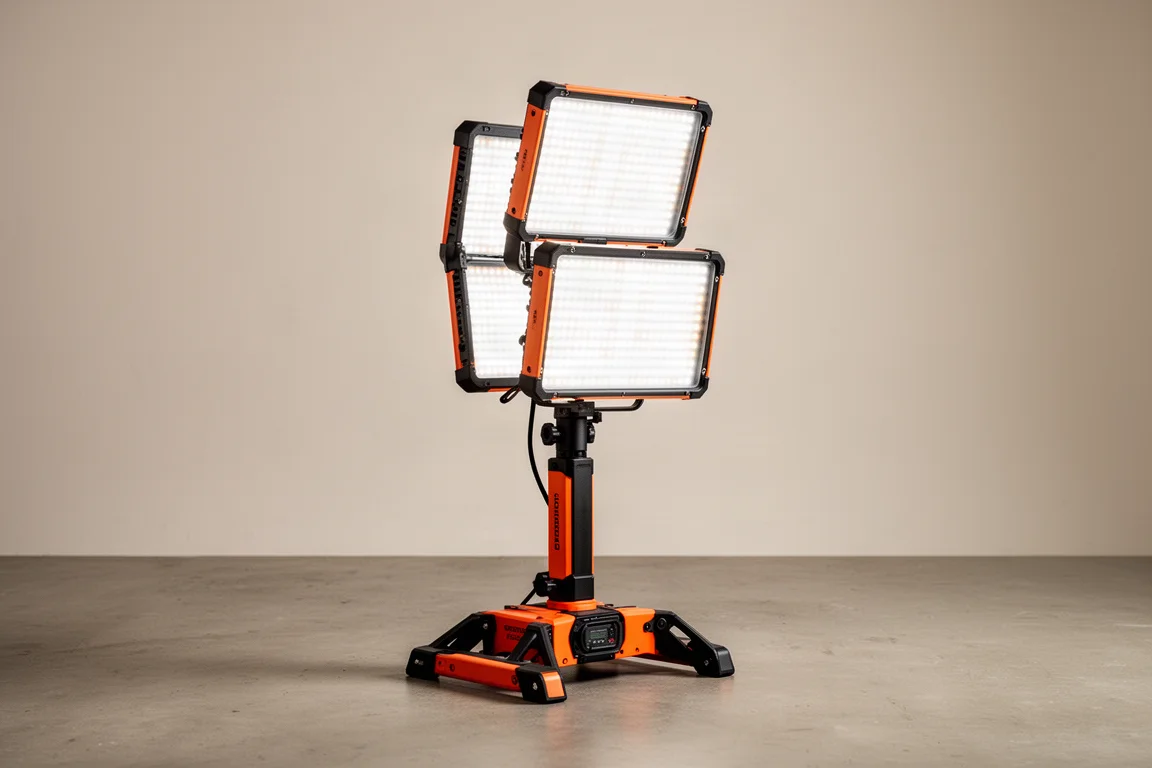
Klein’s larger dual light does very similar dual-emission duty and has proven itself in use. It is an excellent light in its own right, aimed at users who want a bigger, more substantial unit for illuminating a whole work area rather than a single point.
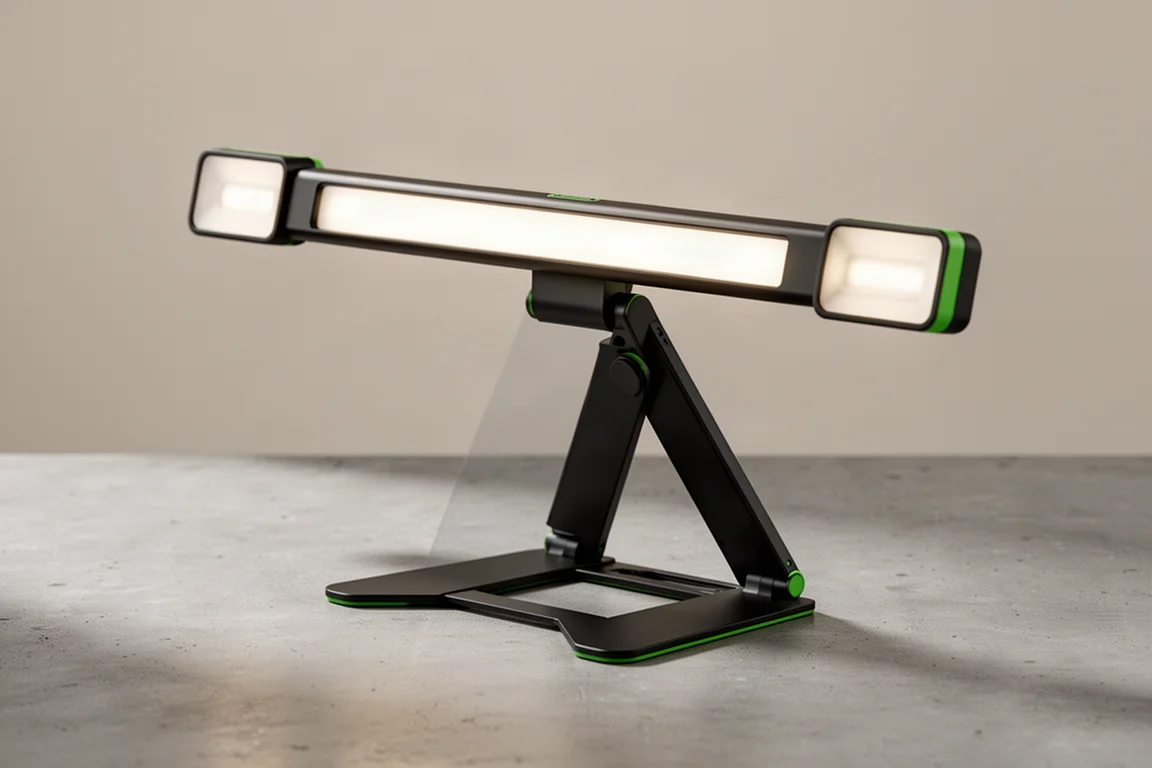
Icon Stick Light
The Icon stick light is a strong performer in the evolving stick-light category. It is powerful, offers multiple light options, and supports running both sides at once, which turns it into a fairly sophisticated area light. The base is strong enough to sit securely, and it hangs easily, which turns out to be more useful than expected. The powerful magnet is a standout, though the variable power feature is arguably an unnecessary addition of buttons, interface, and circuitry. This is a two-handed light to position, and one tip: color-specific sales can be worked around by buying what is on sale and exchanging it a week later for the color you want once the sale ends, since retailers typically treat colors identically.
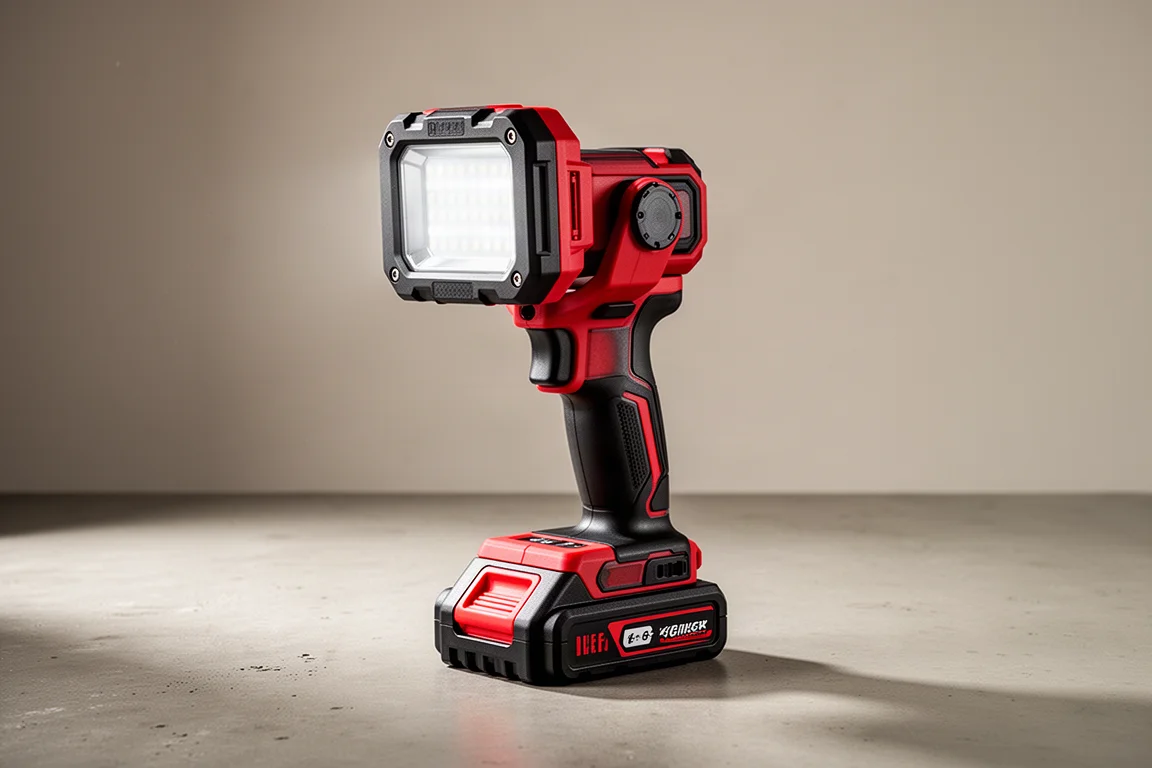
Milwaukee M18 Light
The Milwaukee M18 light is the current favorite here. Lumen count matters less than the quality of the light, how easily the beam can be pointed where you want it, and how quickly you can find the mode you need. When a job needs more than a smaller stick light can deliver, stepping up to the M18 system provides the extra output. Milwaukee is clearly exploring this product space actively.
Things to Consider Before Buying
A strong magnet is essential. Several designs in this category rely on magnet mounting, and a weak magnet forces you to push the light down to keep it aligned, or simply fails to hold the position you want. The Icon has one of the strongest magnets, the Braun the weakest, and the Snap-On point light sits somewhere modest.
Consider how many buttons stand between you and the mode you want. Designs with dedicated controls for each emitter are faster to use in practice than those that cycle through everything. Price varies widely: top-end stick lights run around a hundred dollars, classic Maglites retail around forty, and Braun options cost even less.
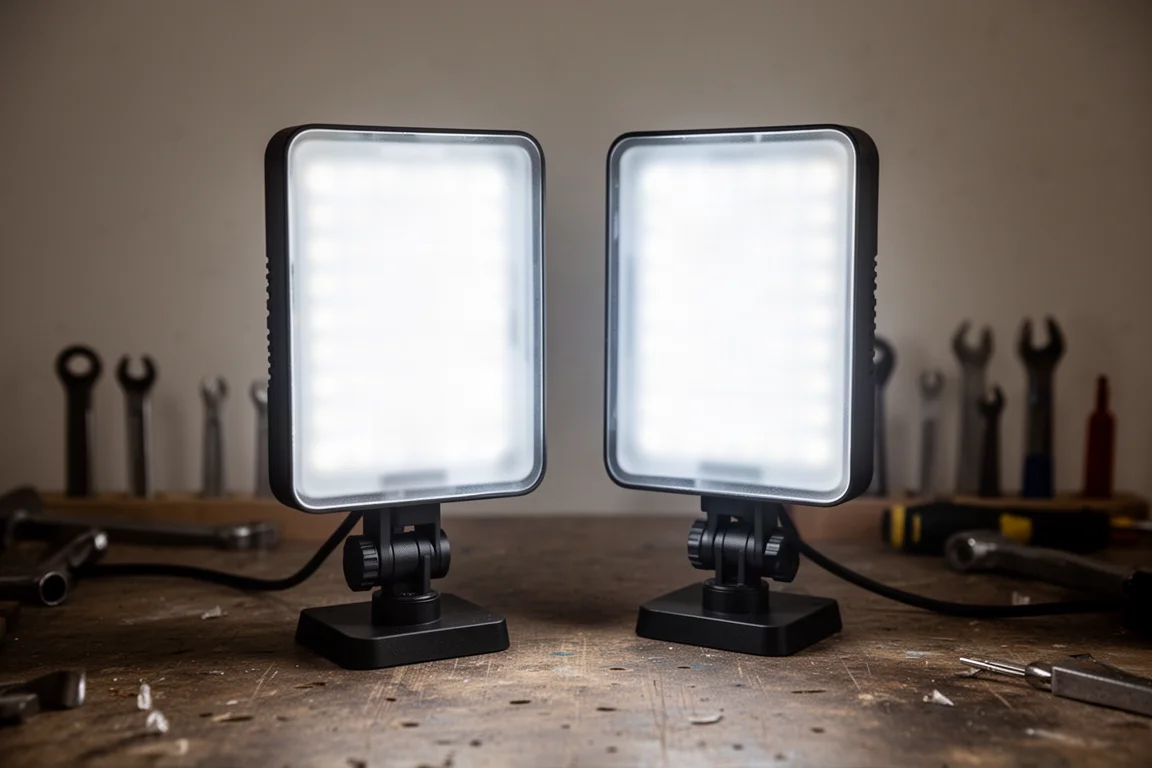
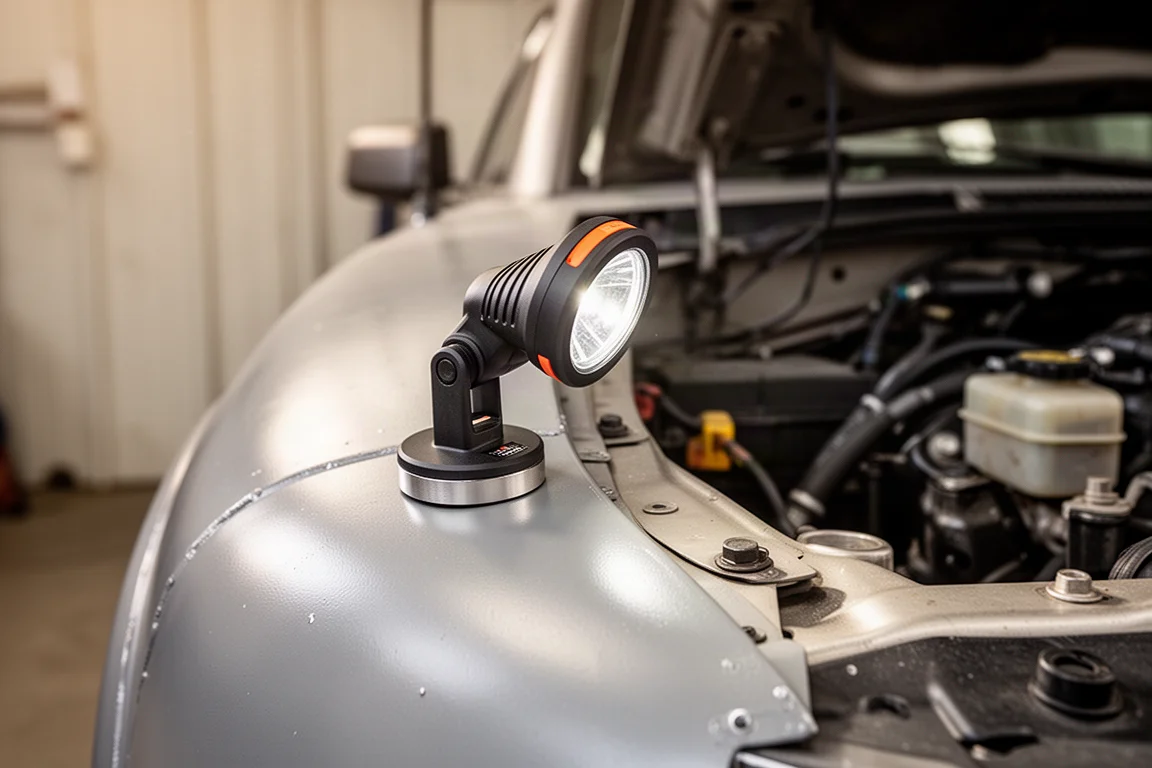
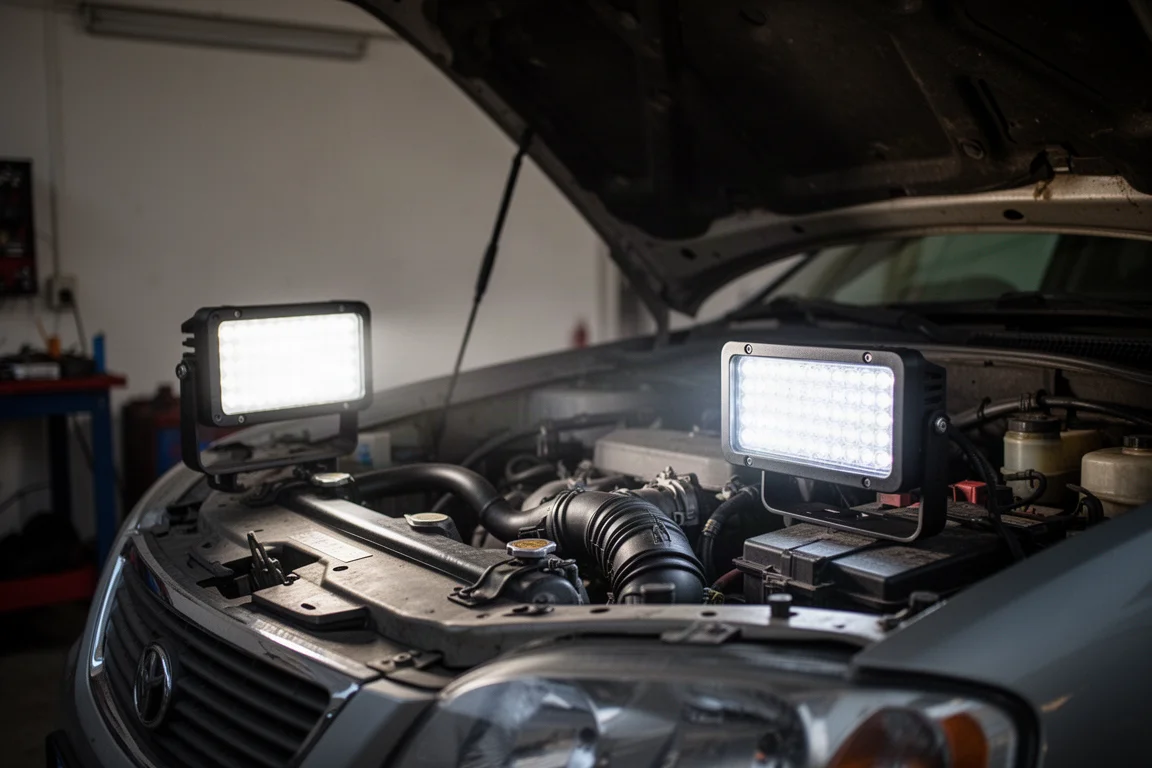
One last observation worth acting on: bright lights are not just for darkness. Working in daylight, adding a powerful focused beam into an engine bay or under a car makes detail visibly easier to see, because the contrast between natural light and added light matters. Carrying a strong flashlight during daytime work is a habit worth forming, not just a nighttime tool.
Conclusion
You cannot have too many lights. The right choice depends on how you work: the Icon stick light is the fastest all-rounder for most jobs, the Milwaukee M18 steps up when more output is needed, and the budget-friendly Braun or Maglite options cover occasional use. Whatever you pick, prioritize a strong magnet, quick mode access, and a hinge or base that lets you aim the beam without holding it.
Further reading
Related Reviews

Work Lights
Milwaukee M12 Rover Review: A Compact Work Light That Goes Where You Do
The Milwaukee M12 Rover is a compact, versatile work light with three brightness levels, multiple mounting options, and USB-C charging for your devices.
Work Lights
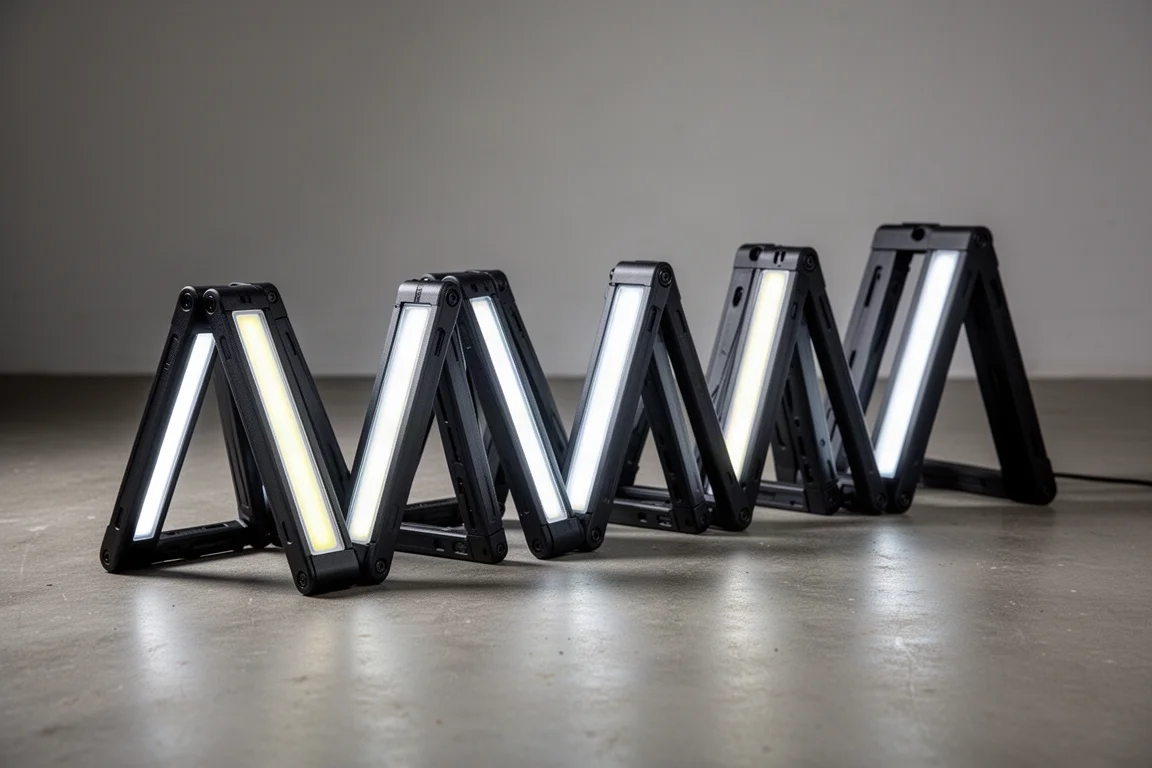
Best Folding Work Lights Compared: Budget Picks to Tool Truck Tough
Seven folding work lights tested for real lumen output, runtime, charging, and drop durability, from a $20 Amazon seller to Snap-on.
Work Lights
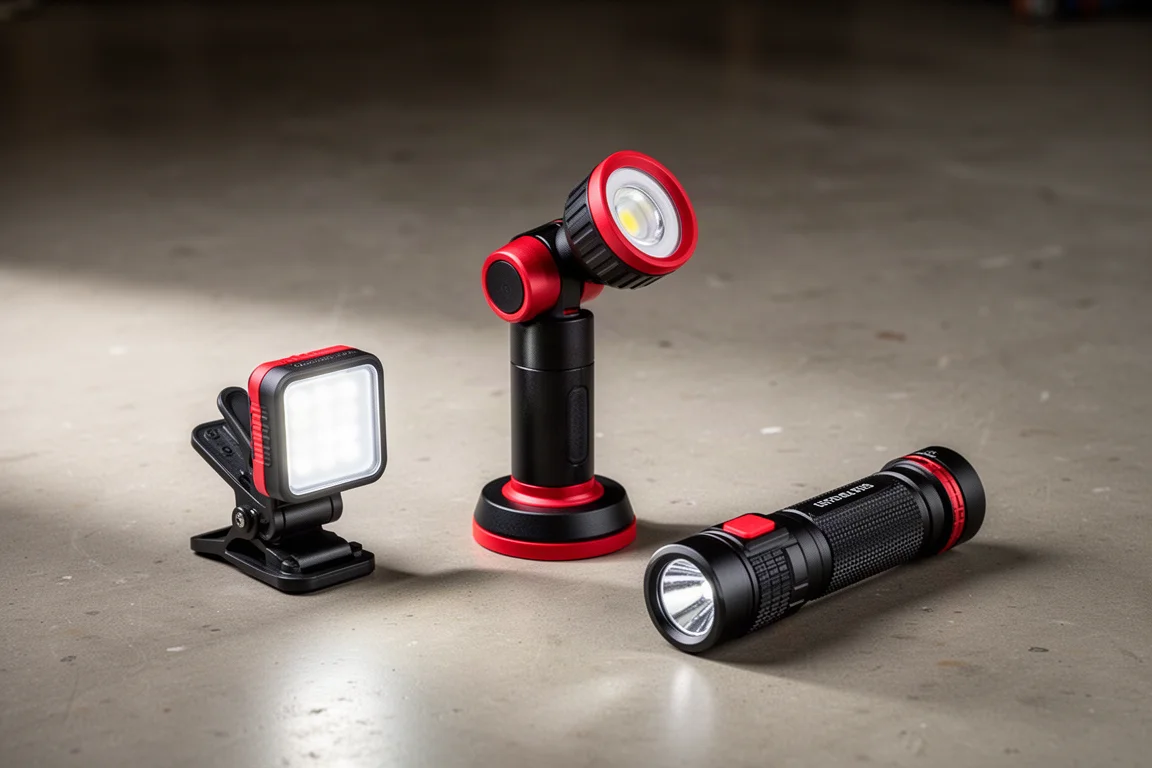
Three Milwaukee Rechargeable Lights That Earn a Spot in Your Toolbox
A hands-on look at the Milwaukee 20114R clip light, 2015R pivoting task light with spot mode, and 2016R flat flashlight with laser.