Speakers
Portable Party Sound and Floorstanding Hi-Fi: Three Speakers Worth Considering
A waterproof portable speaker with a built-in subwoofer, plus two versions of a direct-to-consumer floorstander, compared on bass, room fit, and price.
Introduction
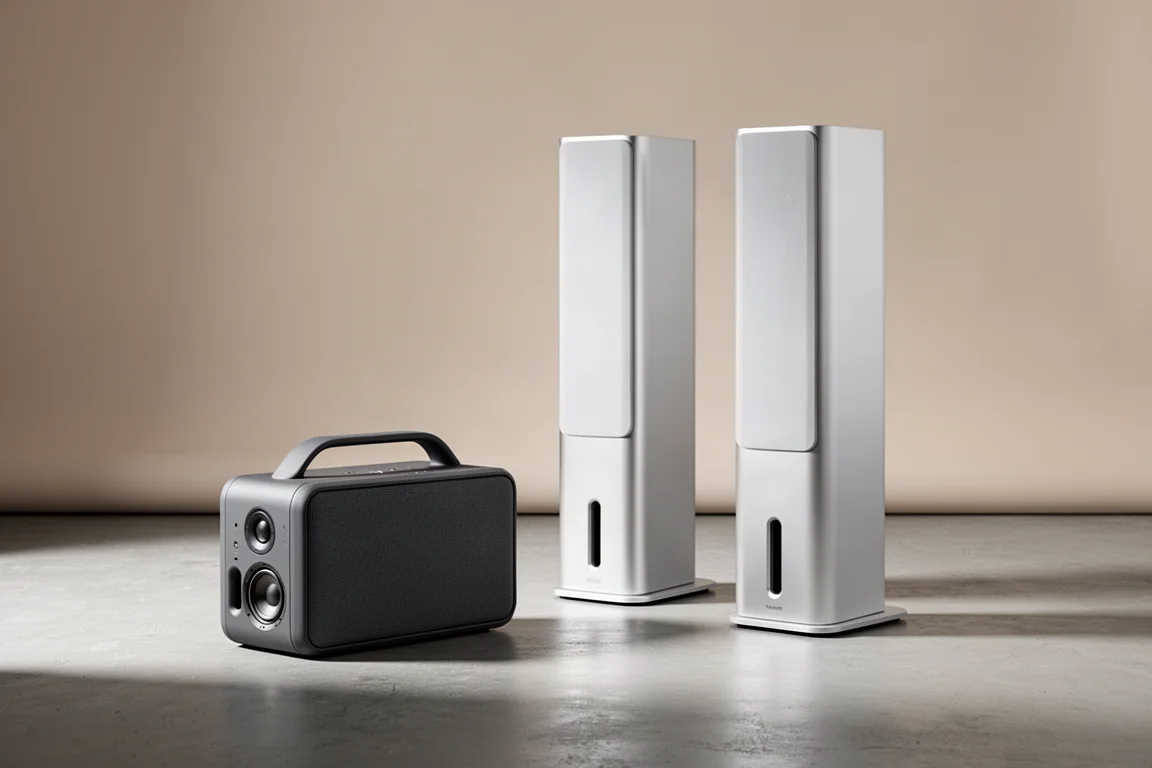
Some listening happens indoors, seated, with the lights low. Some happens beside a pool with wet hands and a cold drink within reach. This roundup covers both ends of that range: a portable speaker that carries its own subwoofer, and a pair of floorstanding speakers from a direct-to-consumer brand that has been selling audio gear for more than 20 years.
The floorstander comes in two versions, one with two 5.25-inch woofers and one with two 6.5-inch woofers. They share a cabinet philosophy, a tweeter, and a general sound signature, but they differ in bass output and in price, which makes the choice between them more interesting than it first appears.
Price matters in all three cases, so each section below covers what you actually get for the money and where the trade-offs sit.
How We Evaluated These Speakers
Three things decided whether a speaker earned a place here: how it handles bass, how it treats the midrange and treble over a long listening session, and whether the price makes sense for the hardware inside. For the portable model, weather resistance, battery life, and app features counted as well. For the floorstanders, amplifier requirements and room fit were part of the equation.
Reported frequency response figures were treated with caution. Manufacturer numbers are often measured in an anechoic chamber, while a real room adds boundary reinforcement and a degree of bass lift, so a speaker can sound fuller in a living room than its spec sheet suggests. That is worth remembering when comparing a claimed low-frequency limit against what you actually hear at home.
Soundcore Boom 2: Portable Bass That Actually Hits
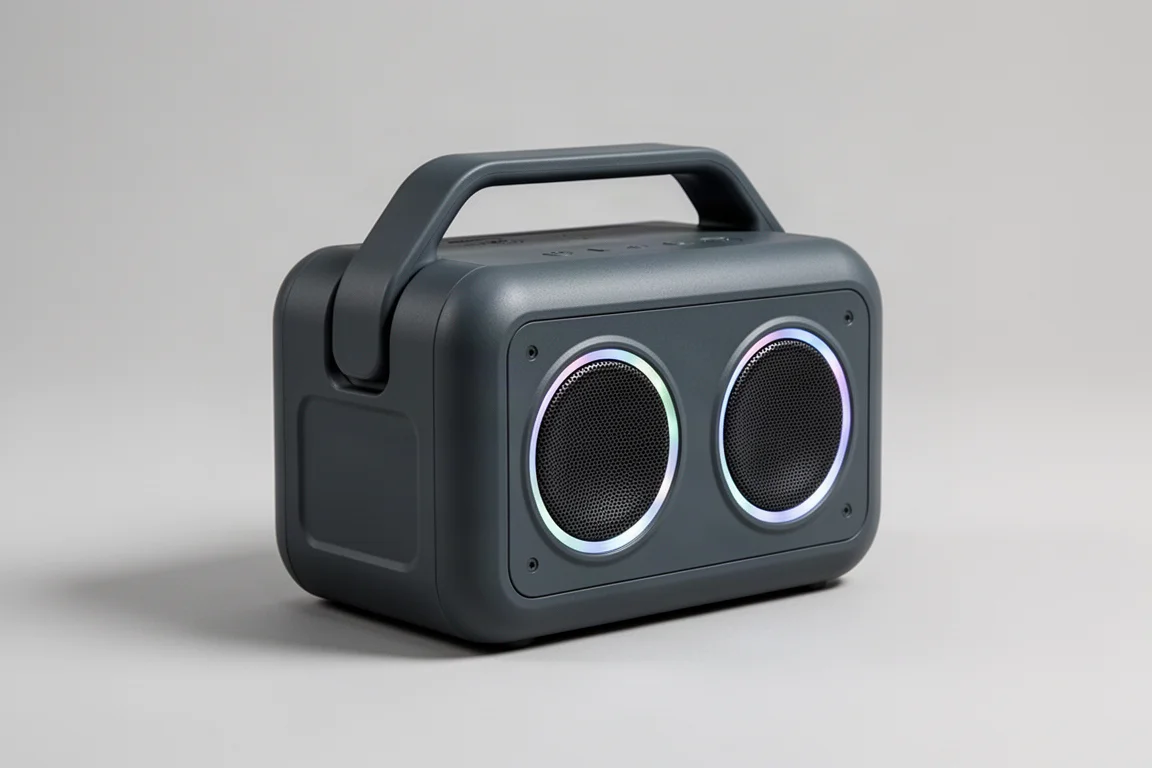
The Boom 2 is a 2.1 design, which in a portable speaker means there is a dedicated subwoofer inside the cabinet rather than a pair of full-range drivers doing all the work. Two tweeters and a woofer run through an active crossover, and two passive radiators with LEDs help move air. Output is rated at 60 W, rising to 80 W when the bass boost is engaged, with BassUp 2.0 handling that processing.
Battery life is quoted at 24 hours, and the speaker doubles as a power bank, so it can top up a phone while it plays. An integrated handle makes it easy to carry, and the enclosure is fully waterproof and floats, which matters on the day it ends up in the water.
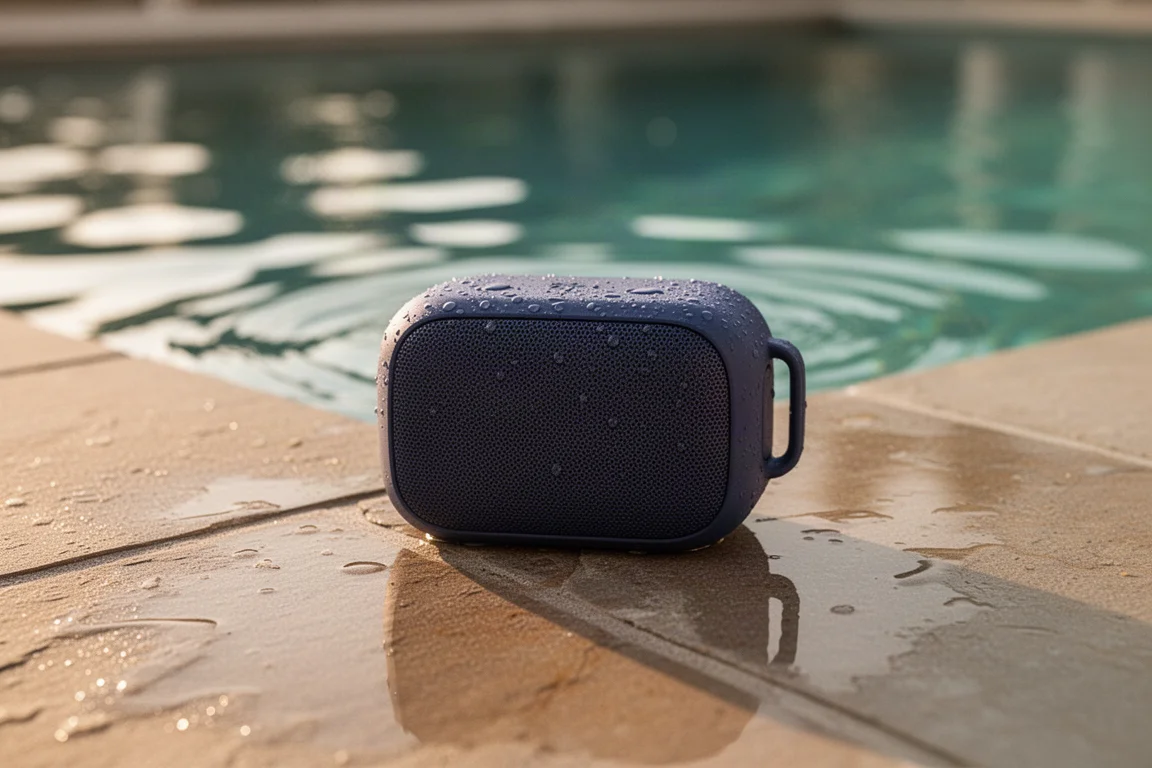
The companion app adds a nine-band EQ for shaping the sound, and PartyCast 2.0 handles linking. Two units can be paired for a stereo setup, and the same system scales up to 100 speakers. At under $200, the combination of a real subwoofer, 24-hour playtime, and full water protection is the main argument for it.
Aperion Audio Novus 5.25: The Value Floorstander
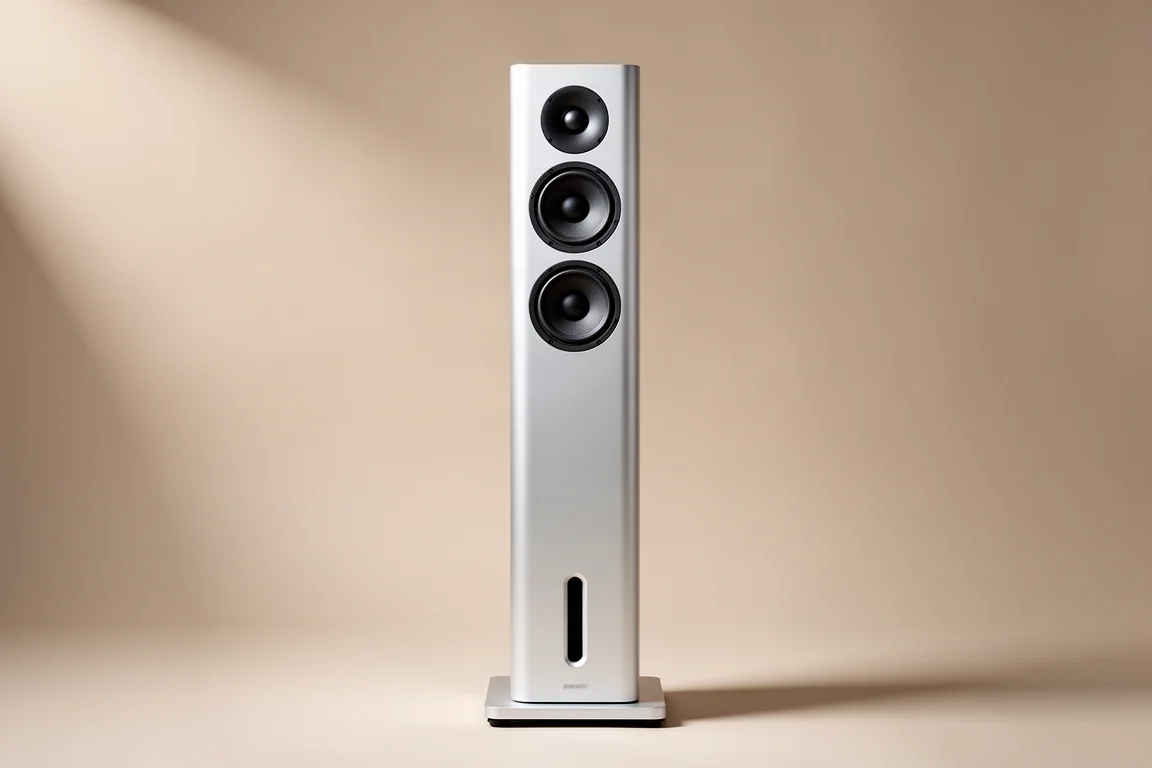
Aperion Audio has sold direct to customers for over 20 years, and the Novus is its current floorstanding line. This version uses two 5.25-inch aramid fiber cone woofers in a 2-way MTM arrangement, with the tweeter centred between them. That tweeter is a 1-inch silk dome with ferrofluid, a design that tends to sound natural rather than forward.
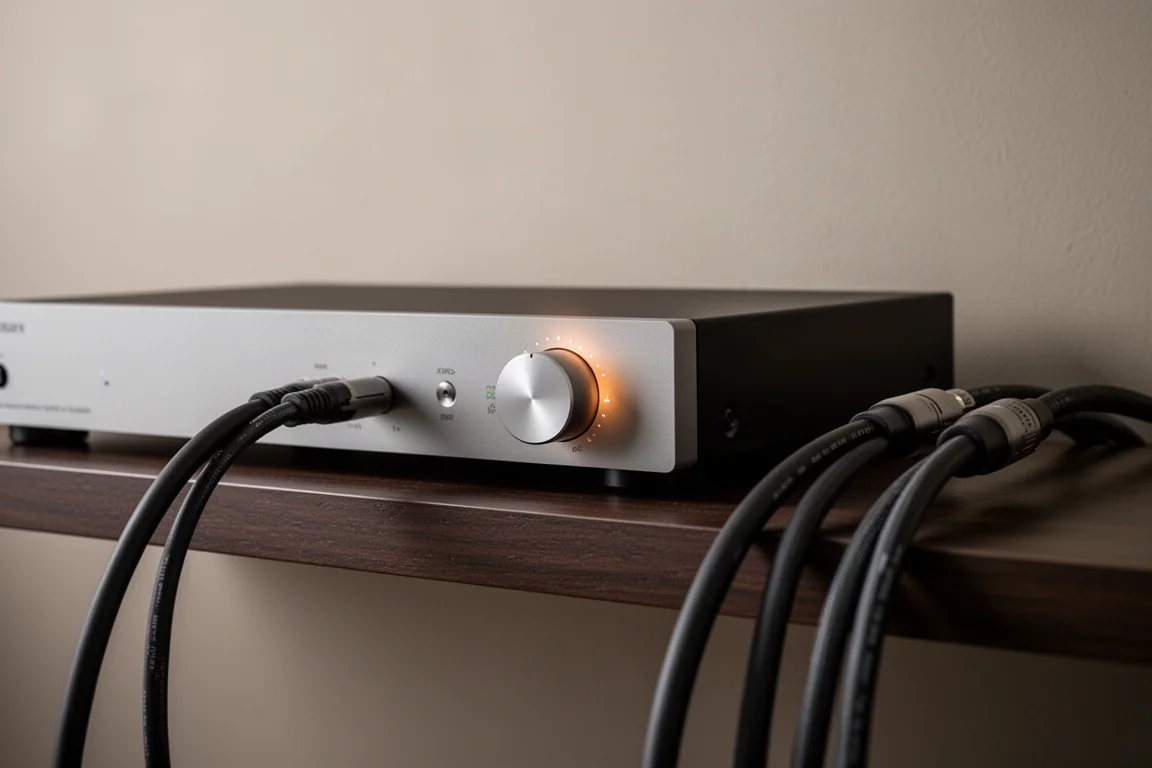
Sensitivity is reported at 88 dB and impedance at 4 ohms, which means the speaker wants an amplifier that is comfortable driving a 4-ohm load. A receiver rated at 50 W per channel can manage it if it handles that load, and a modest 60 W integrated amplifier proved a particularly strong pairing, while an AV receiver opens up plenty of DSP options for tuning the sound to the room. Reported low-frequency extension is 36 Hz at -3 dB, a manufacturer figure that should be read as a claim rather than a guarantee in a normal room.
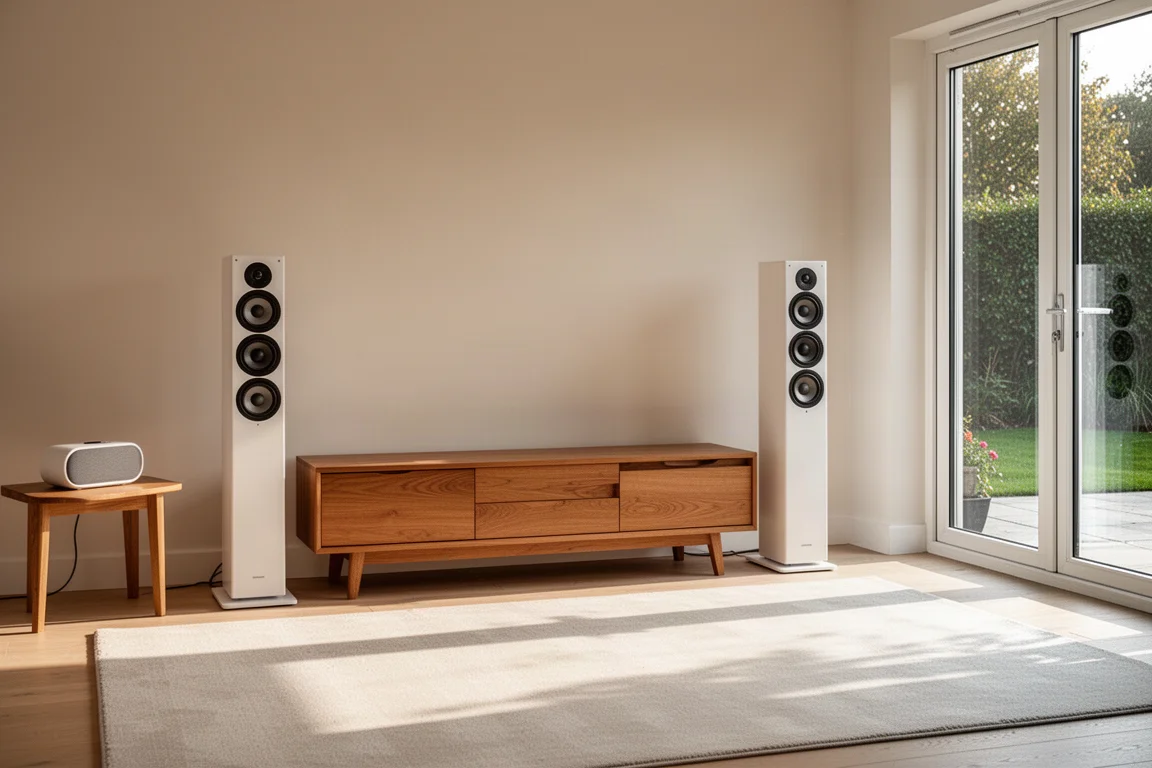
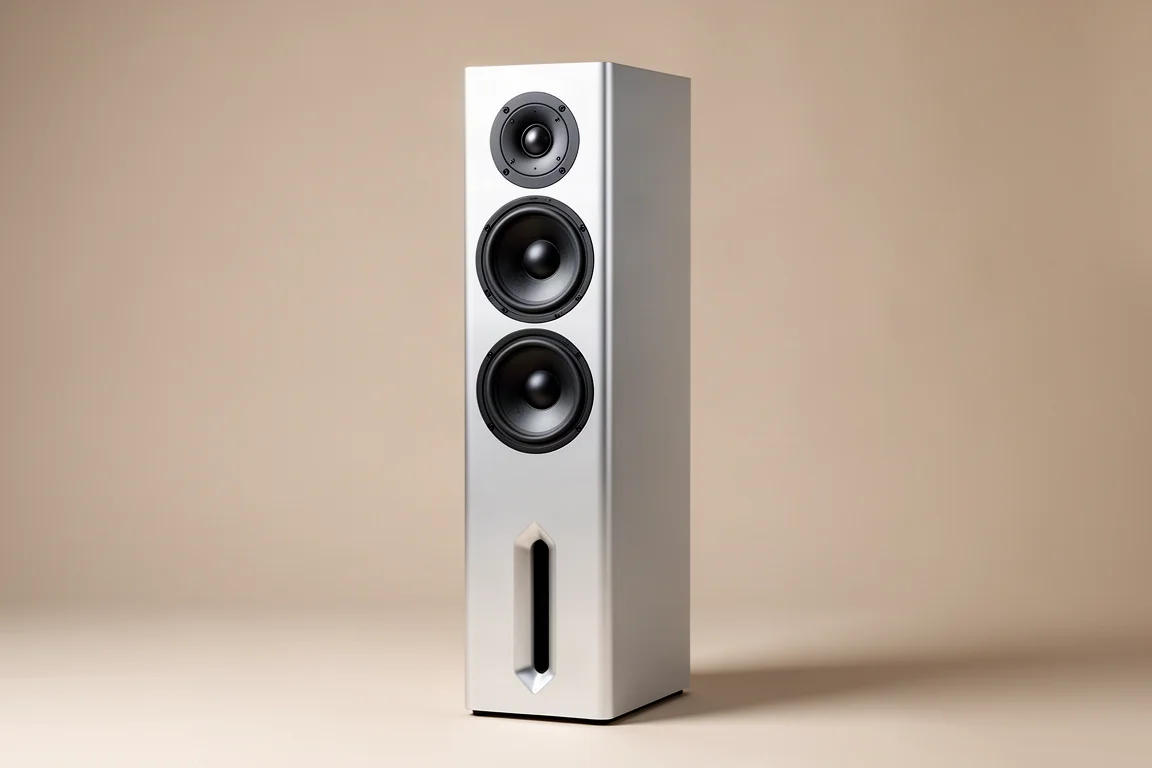
The cabinet is internally braced against resonance, and the port is front-firing, cut as a vertical slot with a bevel that gives the speaker a distinctive face. Dimensions are 7 inches wide, 37 inches tall, and roughly 9 inches deep, at 36 lb each, so the footprint stays small for a floorstander. Finishes are white or black, both with a matte, heavily layered paint finish rather than a high-gloss one.
On sound, the 5.25-inch version is the more articulate of the two Novus floorstanders. Bass is quick and controlled, with enough punch to carry dense, fast drum work without smearing individual hits together. The upper midrange is slightly recessed, which steps female vocals back a touch while male vocals sit more or less in line, producing a warmer presentation that stays comfortable at high volume instead of becoming fatiguing. Treble from the silk dome is detailed and natural rather than bright, and a jumper on the back lets you trim the top end if you prefer it calmer. Current pricing is $419.40 per speaker, about $840 for a pair, down from a regular $699 each.
Aperion Audio Novus 6.5: More Low-End, Higher Price
The larger Novus floorstander swaps the 5.25-inch woofers for 6.5-inch units and keeps the rest of the recipe: the same silk dome tweeter, the same braced cabinet approach, and the same 4-ohm load that rewards a capable amplifier. It is a genuinely strong sounding speaker, and the extra cone area translates directly into more bass output.
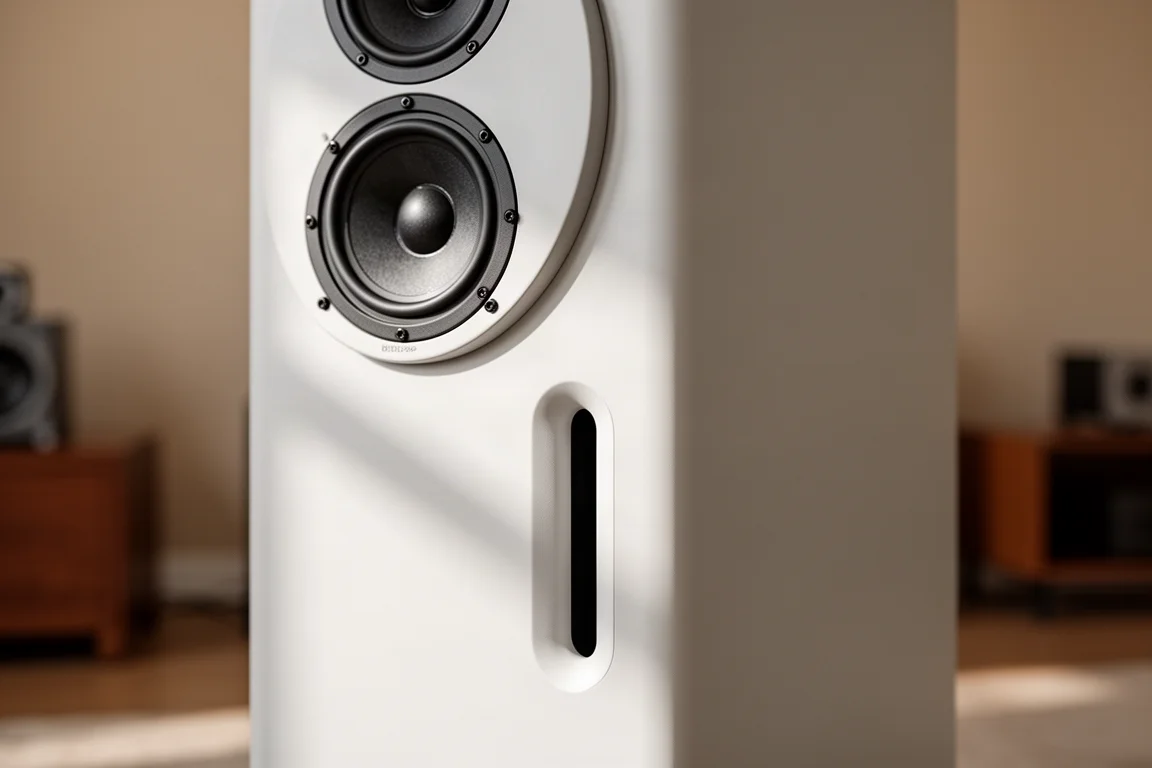
That additional low end comes with a trade-off. The larger woofers can push enough energy that some of it bleeds into the midrange, which costs a little definition compared with the smaller version. It also costs more, and at its regular price of around $1,400 per pair it sits in a different bracket entirely. If you have a large room and want the extra weight behind the low notes, the 6.5-inch model delivers it. If you want the cleaner, faster bass, the 5.25-inch version is the better buy.
Matching the Speaker to the Room
The Boom 2 and the Novus floorstanders solve different problems, and the sensible starting point is where you actually listen. The portable speaker suits porches, pool decks, campsites, and fire pits, places where a stereo cannot go and where weather resistance and battery life matter more than imaging.
The Novus is the more versatile of the two floorstanders for indoor use. It does not overwhelm a medium-sized room, yet it plays big enough to fill a larger one, which is close to a sweet spot for most people in most situations. Check the amplifier before anything else. With 4-ohm impedance and 88 dB sensitivity, a modest amplifier will work provided it is stable into 4 ohms, and the soundstage these speakers throw is one of their stronger qualities.
What to Check Before You Buy
The first thing to confirm is amplifier compatibility. A 4-ohm load is not difficult, but it does rule out receivers that are only rated for 8 ohms, so check the manual before ordering a pair.
The second is the treble jumper on the back of the Novus. If you pull it to soften the top end, store it somewhere you will find it again, because losing it removes the option of going back to the stock tuning. It is a small part and easy to misplace.
The third is finish and stock. Both the white and black Novus finishes look matte and substantial in person, and availability can vary by finish, so it is worth checking what is actually in stock before committing to a colour. For the portable speaker, the main thing to weigh is whether a bass-forward tuning suits your taste, since the app EQ can shape it but not remove its character.
Conclusion
These three speakers cover very different needs. The Soundcore Boom 2 brings a genuine subwoofer, 24 hours of playtime, and full water protection to outdoor listening at under $200. The Aperion Audio Novus with 5.25-inch woofers delivers articulate, quick bass and a natural treble in a small floorstanding footprint at a direct-to-consumer price. The 6.5-inch version trades some midrange definition for extra low-end weight and a higher price tag.
If your listening happens outdoors, start with the portable. If it happens in a living room, decide how much bass weight you want and how large the space is, then match the amplifier to a 4-ohm load. Both Novus versions share the same sound signature, so the decision comes down to low-end quantity against control and cost.
Further reading
Related Reviews
Speakers
13 Under-the-Radar Speakers Still Worth Buying
Thirteen speakers that quietly stayed in production while newer models took the spotlight, from budget bookshelf pairs to a full-size tower.
Speakers
Arendal 1528 Monitor 8 Review: A Three-Way Standmount With Serious Dynamic Headroom
A three-way standmount speaker with extremely low distortion, high output capability, and deep bass for its size, plus the setup details worth knowing before buying.
Speakers
Arendal 1723 Monitor S Review: A Compact Monitor With Serious Ambition
A close look at the Arendal 1723 Monitor S, a compact MTM monitor with a waveguide-loaded tweeter, an HDF cabinet, and flexible ported or sealed operation for music and home theater.