Hot Tents
Pomoly Hot Tent Review: A Large Tipi Shelter for Cold-Weather Camping
A spacious tipi-style hot tent with a tall profile, adjustable stakeout points, and a few practical caveats around stakes and propane condensation.
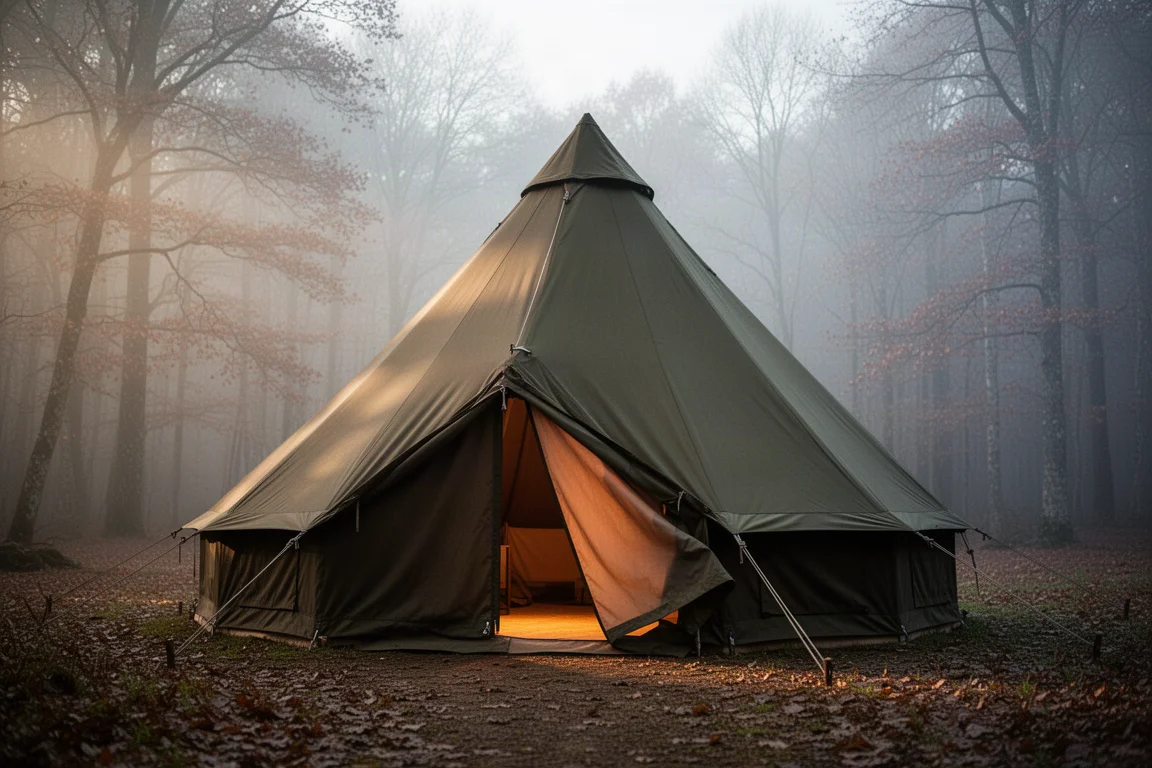
Introduction
A tipi-style hot tent earns its place in a gear closet when it does three things well: give you room to move, hold heat, and stand up to the weather you actually camp in. The Pomoly hot tent aims at all three with a conical canvas shelter that pitches over a single center pole and a footprint designed around a cot and a heat source.
The version used here is the two-to-five person size, and a smaller one-person option also exists. Conditions were unusually dry, with a fire ban in effect, so the shelter was heated with a portable propane heater rather than a wood stove. That choice shaped much of what follows, from interior comfort to the condensation that built up overnight.
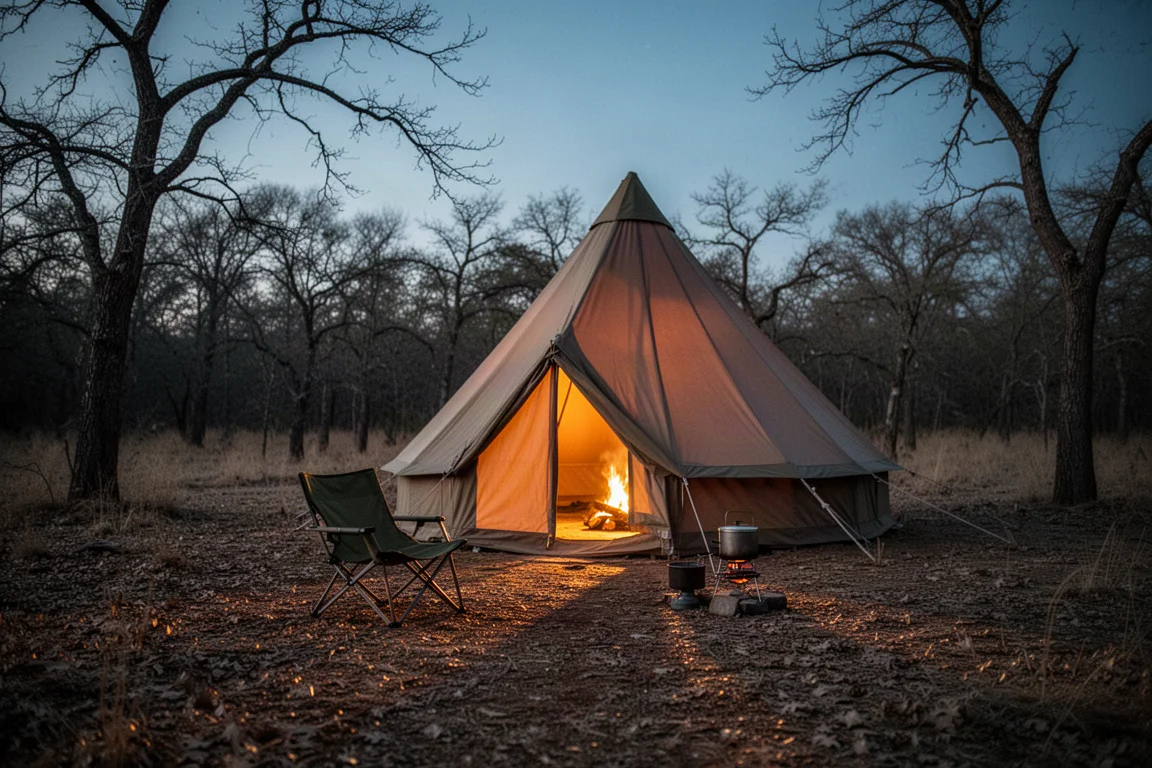
This review covers how much space the tent really offers, how it pitches for a first-timer, where the heat retention stands out, and which small details are worth fixing before your first trip.
Who This Tent Is For
This is a shelter for campers who want a basecamp rather than a minimal bivy. The two-to-five person size is aimed at solo campers running a cot plus a heat source, and at small groups who want to sit inside together on a cold evening. A smaller one-person version exists for anyone who wants the same tipi shape in a lighter, more compact package.
It also suits anyone who already owns, or plans to own, a hot tent heat source. The shelter is built around a center pole and a fitted top cap, which is what makes it compatible with a wood stove setup or, as in this case, a portable propane heater.
Size and Living Space
The most immediate impression is scale. This is the largest tipi tent in the lineup used for this trip, and the interior reflects it: a cot, a sleeping bag, and a heat source all fit with floor space left over. There is enough room to move around, take off boots, and keep gear off the ground rather than piled against the walls.
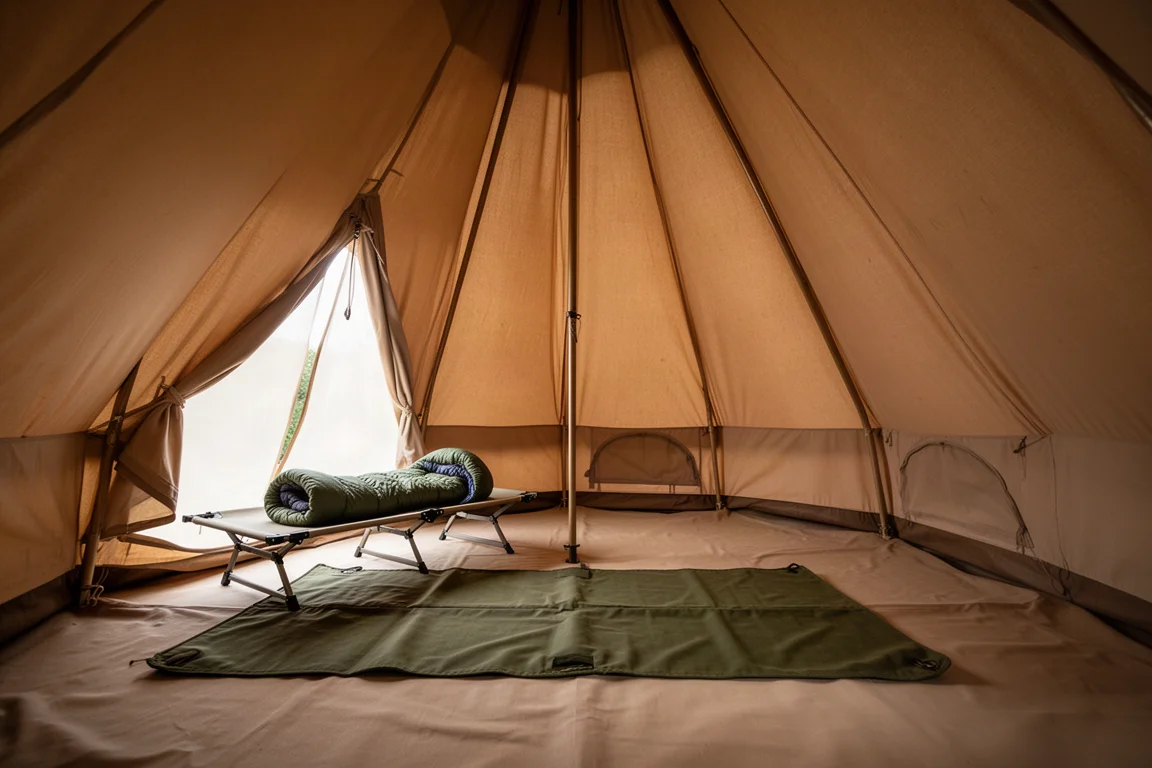
The tall conical profile contributes to that feeling. Fabric curves up to a high apex, so the usable volume sits above you rather than pressing in at shoulder height. That floor area also means a full-size camp mat or a treated canvas tarp can be laid down as a groundsheet, which makes the interior far more comfortable to live in on a cold night.
Setup, Cap Fitting, and Weather Protection
First-time pitching went smoothly. The tent goes up over a single center pole, and the adjustable stakeout points let you tune tension as you work around the perimeter. On sloped ground that adjustability matters, because it allows the shelter to sit reasonably level even when the site itself is not.
The one step that can trip up newcomers is the top cap. The easiest approach is to separate the pole into halves, fit the cap while the tent is still low, attach a few stakeout points, and then raise the pole and make final adjustments. It looks awkward partway through and settles once everything is tensioned.
Weather protection deserves a note of caution rather than a verdict. The trip took place in unusually dry conditions with a fire ban in place, and the expected rain never arrived, so a full rain test was not possible. What can be said is that the fabric and construction look solid, and the shelter held its shape through gusty evening wind.
The Included Stakes Are the Weak Point
The supplied stakes are the clear weak point. They are short, thin, and the tops are sharp enough to dig into your hand when you push them in. On soft ground with leaf litter, they had to be driven all the way down to hold at all, and even then the grip was marginal.

Replacing them with longer stakes is a sensible first move, and an inexpensive one. The tent itself is not the problem here. Everything above the stakeout points, from the fabric and seams to the adjustable stakeout loops, looks to be of good quality, and those adjustable points give you plenty of options for fitting a better set of pegs.
Condensation and Propane Heat
Burning propane releases water vapor, and inside a single-wall tipi that moisture has nowhere to go. After an evening of heating, the interior walls were noticeably damp, and the tent needed to be dried out before being packed away.
That is a heat-source characteristic more than a tent defect, and it is worth planning for. If you heat with propane, expect condensation on the walls and give yourself time to air the shelter out at home rather than rolling it up wet. The tent is built to accept a hot tent setup, though a wood stove was not used during this trip, so the moisture behavior of that configuration is not something this trip could confirm.
Buying Advice
Decide first how you intend to heat the shelter. If you plan to run a portable propane heater, budget for the fuel and for the drying routine that comes with it. Propane prices and one-pound canister availability have been volatile, so it is worth checking local supply before committing to that route.
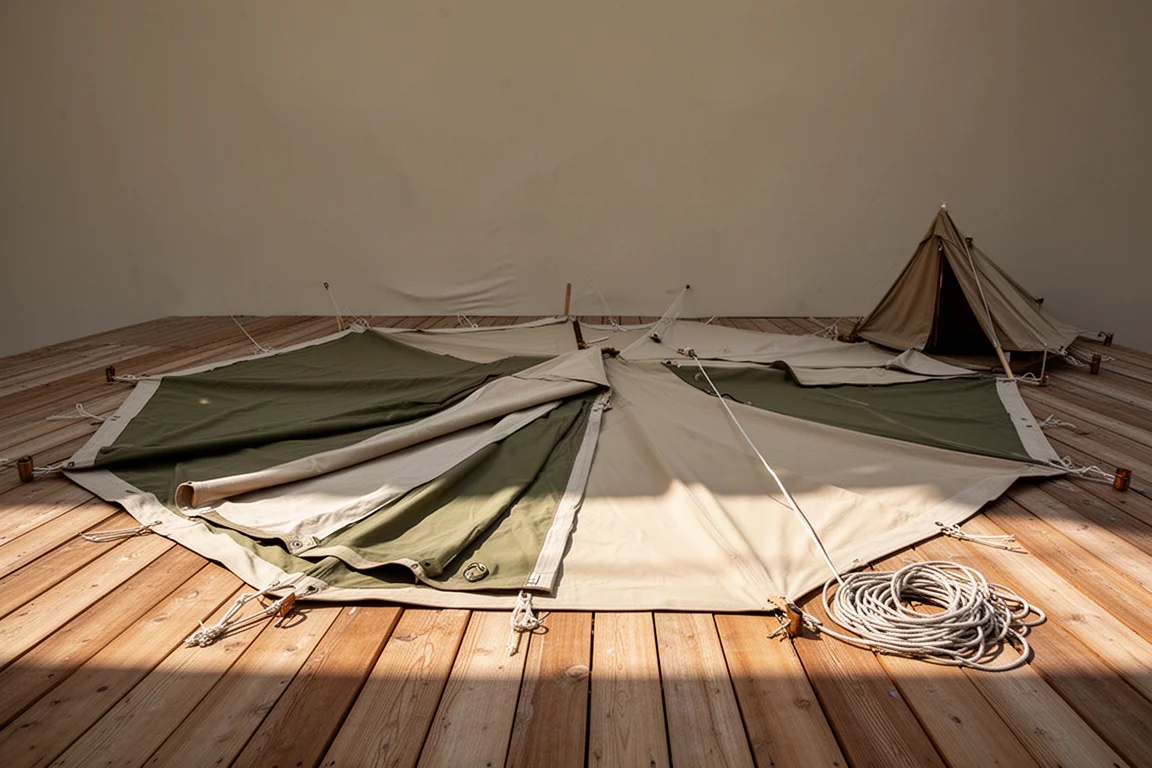
Size is the second decision. The two-to-five person version is a basecamp shelter: comfortable with a cot and a heater, and bulky enough that it makes the most sense for car camping or short carries. If you want the tipi shape in a lighter, smaller package, the one-person version is the more practical choice.
Finally, plan for storage and drying. A large canvas shelter needs somewhere to air out, and the condensation that comes with propane heating turns that into a routine task rather than an occasional one. Campers who can live with that routine, and who replace the stakes, will get the most out of this tent.
Conclusion
The Pomoly hot tent delivers the thing that matters most in a cold-weather shelter: genuine interior space. It pitches easily on a first attempt, offers adjustable stakeout points that make imperfect ground manageable, and looks well made where it counts. The supplied stakes should be replaced, propane heating brings condensation that has to be managed, and rain performance has not yet been tested in sustained weather. With those caveats understood, it is a compelling option for campers who want a big, heatable tipi without stepping up to a permanent basecamp setup.
Product link
View more details for Pomoly Hot Tent
This product is mentioned in the review. Check the specifications, options, and compatibility before buying.
View more details for Pomoly Hot TentFurther reading
Related Reviews
Hot Tents
Naturehike Massive Tent Review: An Affordable Four-Season Hot Tent Tested in the Cold
An affordable four-season hot tent that pairs with a wood stove and held a comfortable interior on nights in the mid-20s. Here is what stood out and what is still unproven.
Hot Tents
Pomoly Dome X6 Review: A Six-Person Hot Tent With Real Standing Room
A practical look at the Pomoly Dome X6, a six-person dome hot tent with three doors, three vents and a stove jack, plus what to weigh before buying.
Camping Shelters
Backcountry Light Mesa 3 Hot Tent and Floor SL Tarp Review
A practical look at the Backcountry Light Mesa 3 four-season hot tent and its optional Floor SL Tarp, covering materials, stove jack design, packed weight, pricing, and the trade-offs to weigh before buying.