Tower Speakers
Polk R500 Tower Speaker Review: Neutral Sound With One Simple Fix
The Polk R500 delivers neutral tower-speaker tonality at around $1,300 a pair, with one lower-treble peak that a single band of EQ can smooth out.
Introduction
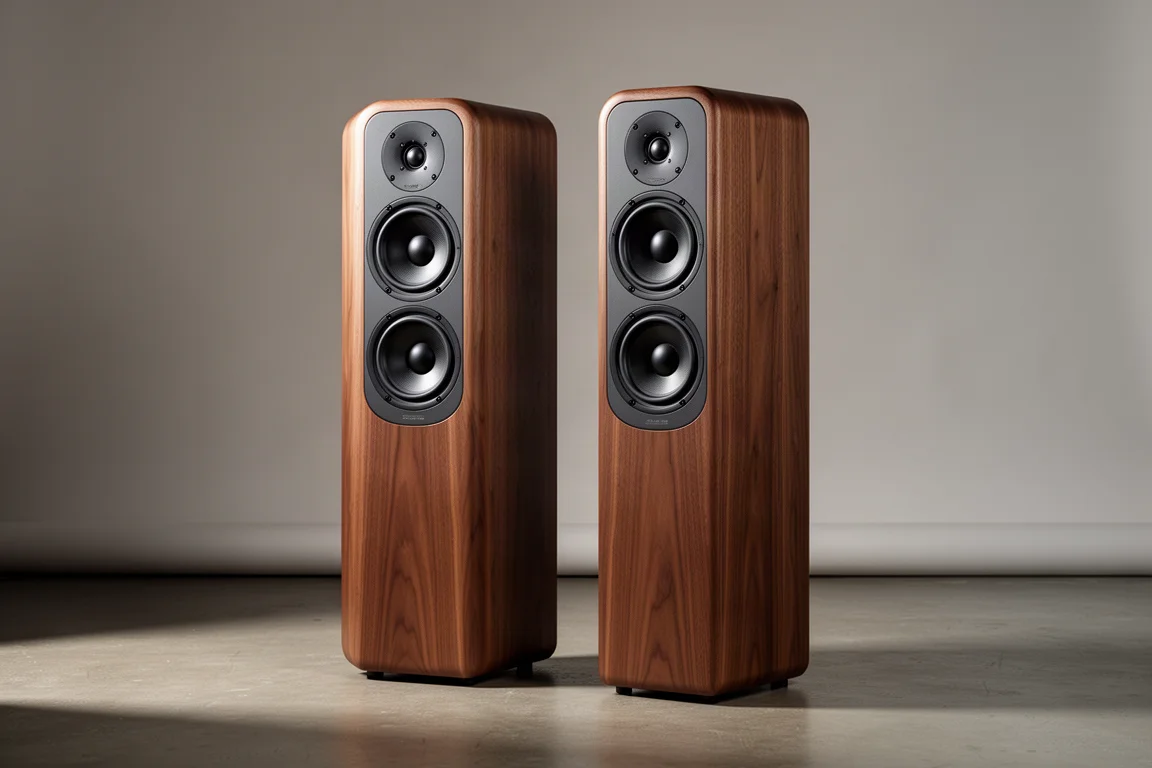
The Polk R500 is a slim floorstanding tower speaker that sells for around $1,300 a pair, and it arrives in a segment where most designs pick a personality: either forward and exciting, or calm and polite. The R500 lands firmly in the neutral camp. Across a wide spread of material, from older soul and pop recordings through to contemporary rap and film soundtracks, the speaker keeps a balanced character through the midrange and avoids the hard brightness that smaller bookshelf models in the same family can show. It is offered in walnut, black, and white finishes, which makes matching an existing room straightforward.
Two things shape the experience more than anything else. The first is a lift in the lower treble, somewhere between roughly 4 kHz and 6 kHz, that adds a shouty edge to upper frequencies when the speaker is aimed away from the listener. The second is that the same speaker, aimed directly at the listener and given one small equalisation cut, becomes notably smoother and far easier to live with. That combination makes the R500 a strong value for buyers who are willing to spend ten minutes on setup.
Who This Speaker Suits
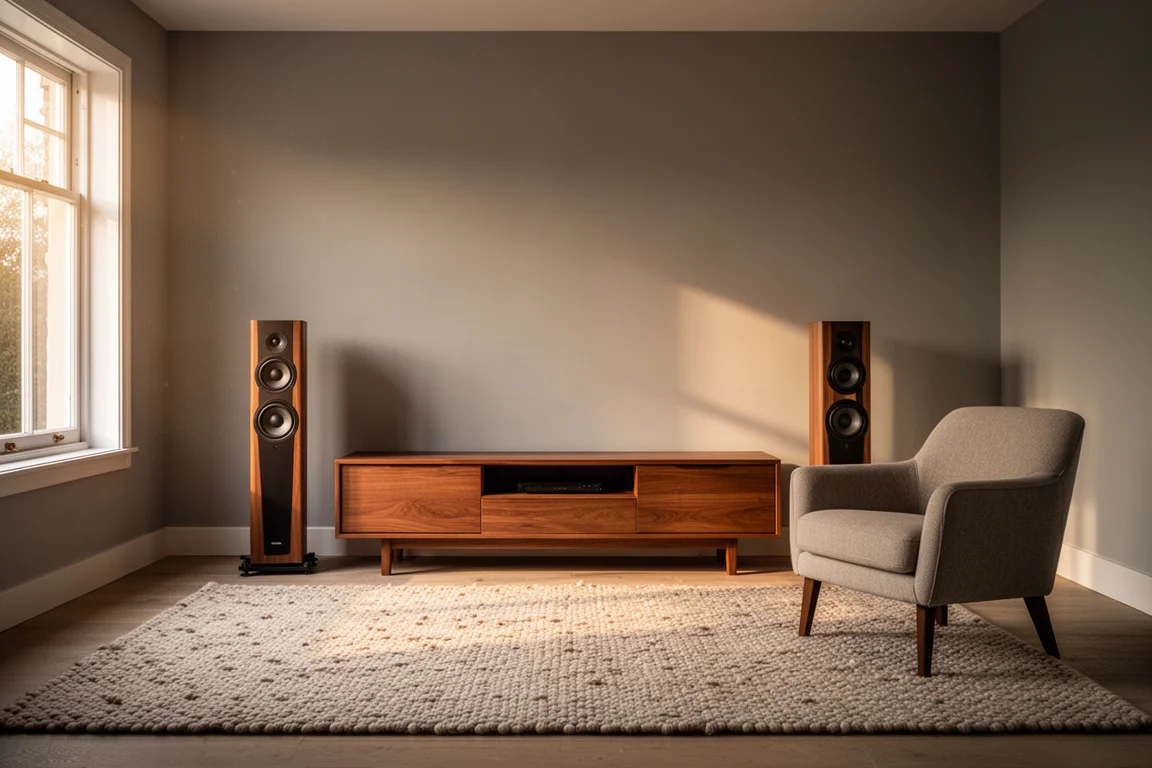
This is a tower for medium-sized rooms and for listeners who value neutrality over drama. In an 18 by 14 foot room with 9 foot ceilings, the R500 filled the space comfortably when driven by an amplifier rated at 100 watts into 4 ohms, with headroom to spare. A smaller amplifier rated at 120 watts into 4 ohms but delivering closer to 90 watts in practice ran out of volume at a 10 foot listening distance, so the speaker does reward a solid power supply.
It also suits home theatre use. The R500 takes equalisation well, and the shouty region responds cleanly to a single corrective filter, which makes it easy to integrate into a multichannel setup. Buyers planning to use it for film should pair it with a subwoofer, since the lower octaves are limited for a floorstanding design. Anyone who wants a speaker that sounds its best with zero adjustment, and who intends to angle the cabinets outward into the room, will find the R500 harder to love.
Tonality and Overall Balance
Measured performance backs up the listening impression. Average sensitivity sits at about 86 dB at 2.83 volts at 1 metre, and the impedance minimum dips to roughly 4.1 ohms, which means the speaker needs an amplifier that is comfortable with a low-impedance load. Linearity is good, staying within roughly minus 3 dB to plus 2 dB across the band, and the bass extension figures are respectable for a slim tower: F3 at 51 Hz and F10 at 33 Hz.
Overall tonality is surprisingly neutral. Anyone familiar with the brighter voicing of the smaller bookshelf models in this range may expect a forward sound, and the R500 does not deliver that. There is no significant issue in the midrange, and the cabinet looks and feels like a considered piece of furniture rather than an afterthought. The estimated in-room response stays smooth and flat through the bass and lower midrange, which is the region that determines how easily a speaker can be equalised. Where the response diverges from its own trend, the result is audible: a rise in the 4 to 6 kHz area that reads as brightness or shout.
Treble Behaviour and Placement Notes
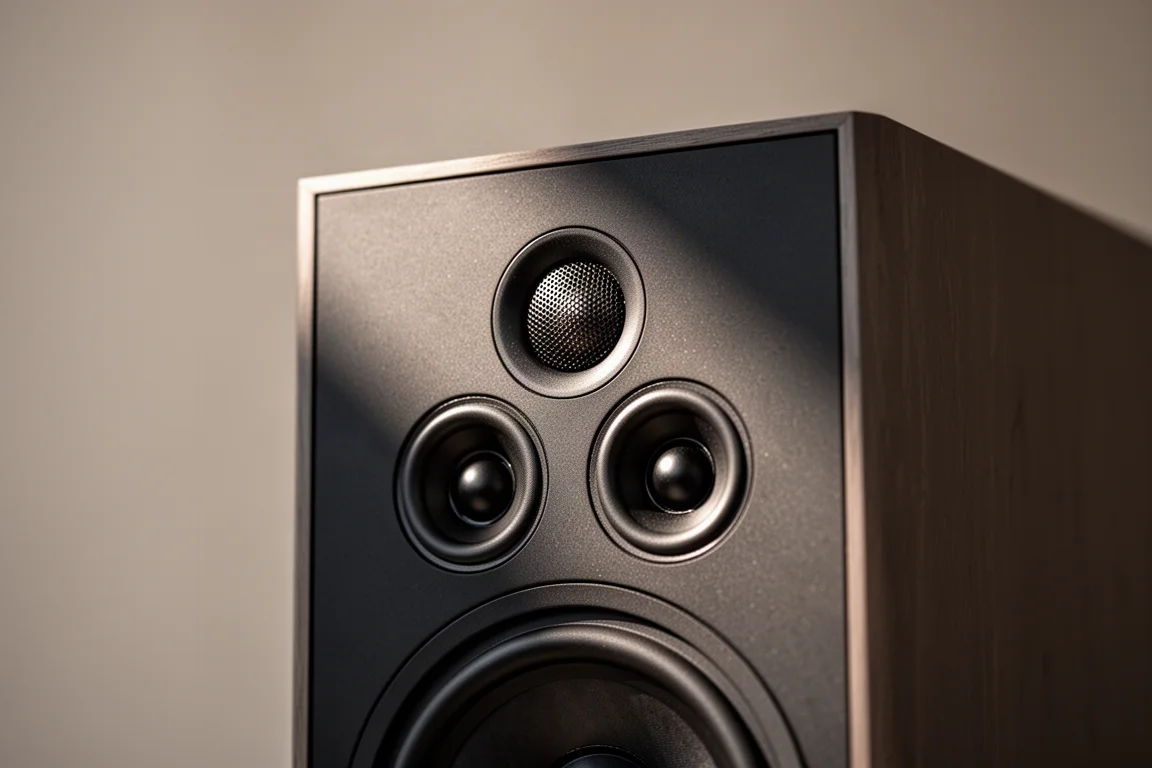
The behaviour of the ring radiator tweeter explains most of what listeners will notice. Above roughly 7 kHz the tweeter narrows its radiation quite sharply. When the cabinet is aimed directly at the listening position, that narrowing is not especially obvious, because there is enough energy in the upper frequencies to keep the presentation open. Toe the speaker outward, though, and the upper treble falls away faster than the lower treble, so the 4 to 6 kHz lift is left exposed. The result is a shouty or sibilant quality that toeing out does not fix, and in fact makes worse.
Vertical placement matters just as much. On the tweeter axis, the speaker is at its best. Move your ear 10 to 20 degrees above or below that axis and a suckout appears in the upper midrange and lower treble, roughly between 2 kHz and 5 kHz, where the drivers below the tweeter stop combining properly. In practice that sounds like a loss of attack, dynamics, and dialogue clarity rather than an obvious tonal shift. Keeping ears at tweeter height is not a preference here, it is a requirement. Horizontal directivity tells a similar story, with radiation widening around 3 kHz and narrowing through the high frequencies, which is why the speaker wants to be pointed at the listener rather than past them.
Bass Output and Amplifier Matching
Two 5.25 inch midwoofers handle the lower registers, and output is adequate for the driver size rather than generous. Below roughly 40 to 50 Hz the bass simply is not there, and the lowest octaves lack the weight needed for genuinely punchy kick drum impact. Upper kick drum harmonics around 120 Hz come through fine. A cabinet resonance in the region of 160 to 170 Hz pulls down the mid-bass area, which can take a little energy away from certain punchy effects and vocals. It is worth noting that this resonance does not drone or linger, it subtracts rather than adds.
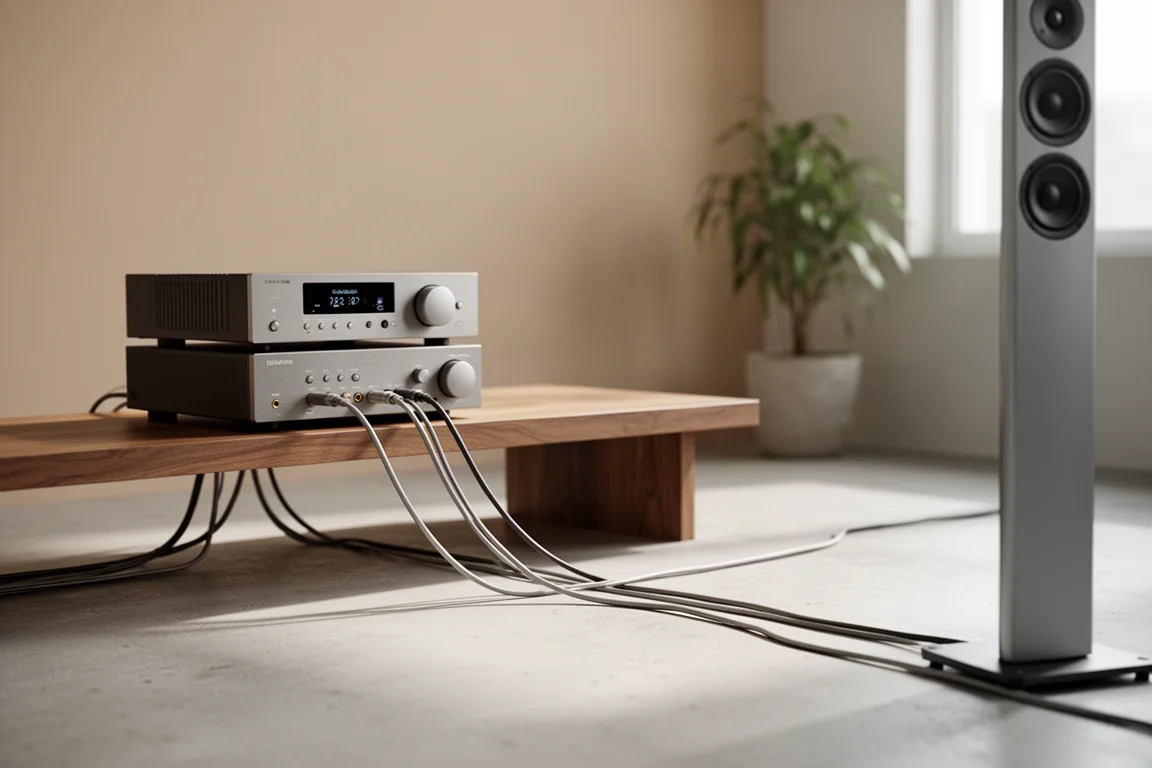
For music, the practical answer is straightforward: lower bass content will want a subwoofer, and home theatre users will already have one. Pairing the R500 with a subwoofer crossed over around 80 Hz is a sensible approach, and it does not remove every low-frequency limitation, but it resolves the most obvious ones. On the amplifier side, the speaker needs roughly 100 watts into 4 ohms to feel comfortable in a medium room. Give it that, place it sensibly, and it will play at domestic levels without strain.
Things to Consider Before Buying
Distortion is well controlled at moderate levels. At 86 dB at 1 metre the figures look good, and at 96 dB they remain reasonable for a speaker of this size. Multi-tone distortion, however, rises noticeably around 1 kHz, and that behaviour persists even when the speaker is crossed over to a subwoofer at 80 Hz, which suggests it is not simply a matter of woofer excursion. It is not something that stood out during listening, but it is present in the measurements and worth knowing about.
Compression data gives a clearer picture of dynamic range. From 76 dB to 86 dB, roughly 10 dB of range, the speaker performs very well, and it still looks good when 20 dB of range is demanded. Push to 26 dB, from 76 dB up to 102 dB, and the high frequencies begin to lose output while the mid-bass and sub-bass regions drop away as well. That places dynamic range performance at a medium level overall: better than many designs, but not class-leading. Listeners who keep levels sensible, or who use a subwoofer, will rarely encounter the limit.
The other consideration is the equalisation requirement. Without a corrective cut, that 4 to 6 kHz lift is distracting over long sessions, particularly if the cabinets cannot be aimed at the listening position. With the cut applied, the speaker changes character entirely and becomes easy to enjoy for hours. Buyers should go in expecting to use one filter, not hoping they will not need it.
Buying Advice
The fix is simple and cheap. A single parametric band centred around 5 kHz, cut by about 2 dB with a Q of roughly 3 to 4, removes most of the shout. A high shelf filter of about 2 dB near 4 kHz achieves a similar result. Because the response in that region is smooth and flat underneath the peak, it takes correction cleanly, which is exactly what you want from a speaker you plan to tune.
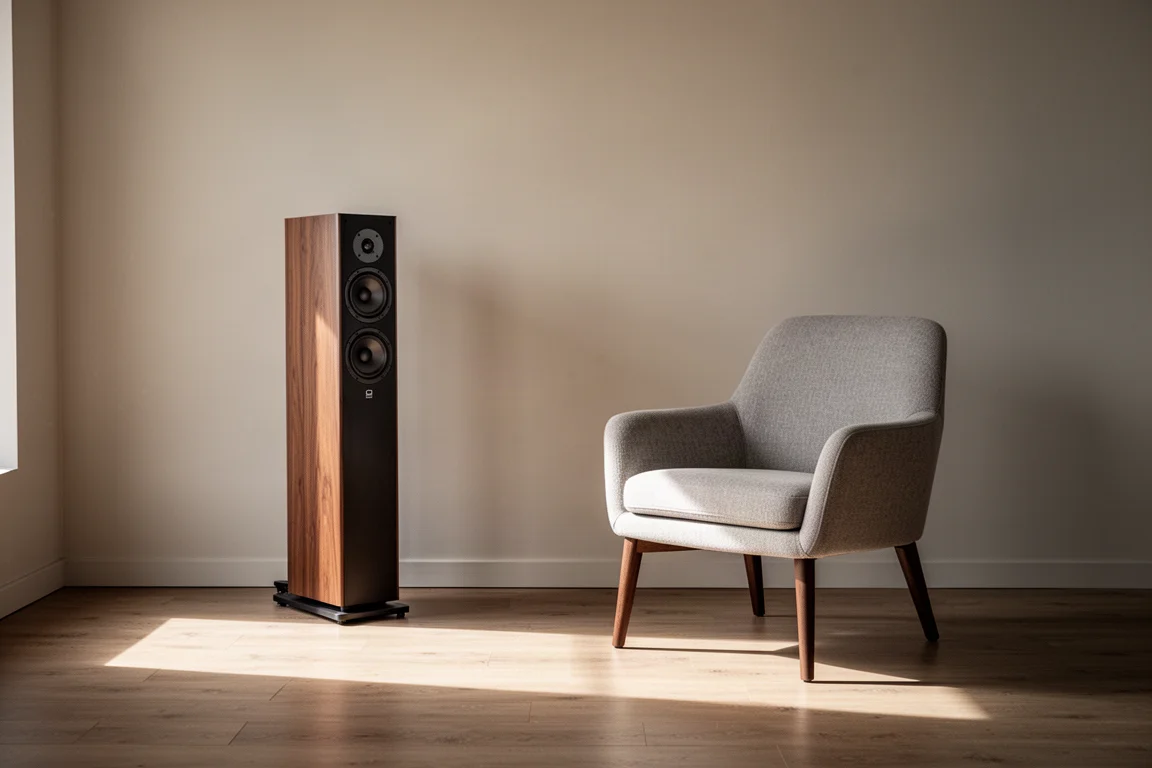
Placement deserves the same attention. Bring the cabinets at least 2 feet out from the wall behind them, and further if the room allows, then aim them directly at the listening position. Sit with your ears level with the tweeter. Feed them from an amplifier that can deliver around 100 watts into 4 ohms, and add a subwoofer if you watch films or listen to bass-heavy music. At roughly $1,300 a pair, the R500 represents reasonable value for the performance on offer, particularly in walnut, black, or white finishes that let it blend into a room rather than dominate it. Buyers who want a neutral tower and are willing to spend a few minutes with an equaliser will get a great deal out of it.
Conclusion
The Polk R500 is a genuinely neutral floorstanding speaker with good linearity, a low impedance minimum that asks for a capable amplifier, and enough bass for most music when paired with a subwoofer. Its weakness is a lower treble lift between roughly 4 and 6 kHz, made more obvious by the narrow radiation of its tweeter above 7 kHz. Aim the cabinets at your seat, sit on the tweeter axis, and apply one modest EQ cut around 5 kHz, and the speaker becomes smooth, balanced, and easy to recommend. For buyers who want neutrality and are comfortable with a small amount of tuning, the R500 is a sensible choice at its price.
Product link
View more details for Polk R500
This product is mentioned in the review. Check the specifications, options, and compatibility before buying.
View more details for Polk R500Further reading
Related Reviews
Tower Speakers
Arendal 1610 Tower 8 vs MoFi SourcePoint 888 vs MoFi V10: Three Tower Speakers Compared
A close look at three large tower speakers in a similar price bracket, from the punchy, heavy-built Arendal 1610 Tower 8 to the coaxial MoFi SourcePoint 888 and the high-output MoFi V10.
Tower Speakers
Definitive Technology BP9020 Review: A Powered Tower With Real Bass and a Few Quirks
A slim tower speaker that hides a powered 8-inch subwoofer inside the cabinet, delivering deep bass and a wide stage alongside some clearly defined trade-offs.
Tower Speakers
Emotiva XT1 Tower Speakers Review: Serious Clarity Under $1,000
The Emotiva XT1 brings three woofers, a dedicated midrange and an AMT tweeter to the sub-$1,000 tower market. Here is where it delivers and what to weigh first.