Floorstanding Speakers
PMC Prodigy 5 Review: A Compact Floorstander With Unexpected Scale
A transmission line floorstander that stays small on the outside while delivering deep bass, high power handling, and a warm, forgiving character.
Introduction
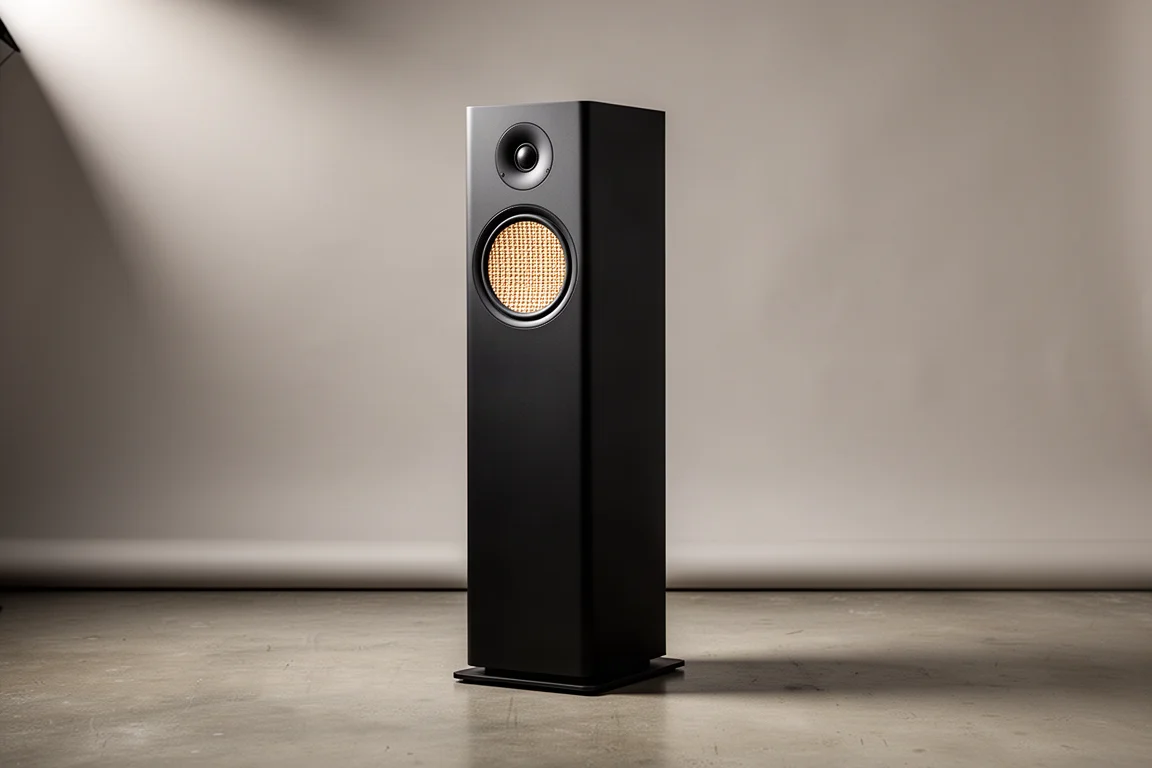
PMC, which stands for Professional Monitor Company, was founded in Great Britain in 1991 by Peter Thomas, and the Prodigy 5 is the company’s compact floorstanding model. It measures roughly 36 inches tall and 6.5 inches wide, with a 5.25 inch mid and bass driver using a cone made from natural fibers, and a 1 inch soft dome tweeter set into a shallow waveguide. The number that stands out on the specification sheet is the low frequency limit, quoted at minus 3 dB at 35 Hz, which is remarkable for a cabinet this size.
That figure comes from the cabinet as much as from the drivers. PMC builds its speakers around a transmission line design the company calls ATL. Instead of a conventional ported or sealed box, the Prodigy 5 uses a folded internal line with foam placed strategically along its length, and the bass leaves the cabinet through twin ports at the bottom of the front baffle. The result is greater finesse, higher power handling, and deeper, clearer bass than a conventional box of the same size would manage.
In the United States the Prodigy 5 sells for $2,799 per pair. Black satin is the only finish offered, and cloth grilles are available at extra cost, $140 per pair.
Who the PMC Prodigy 5 Is For
The Prodigy 5 is for listeners who want full range sound without giving up floor space or visual calm. A stand mount speaker on a 28 inch stand occupies about the same footprint, yet it will not reach as deep, will not play as loud without distortion, and will not feel as dynamic. The Prodigy 5 closes most of that gap while staying physically modest.
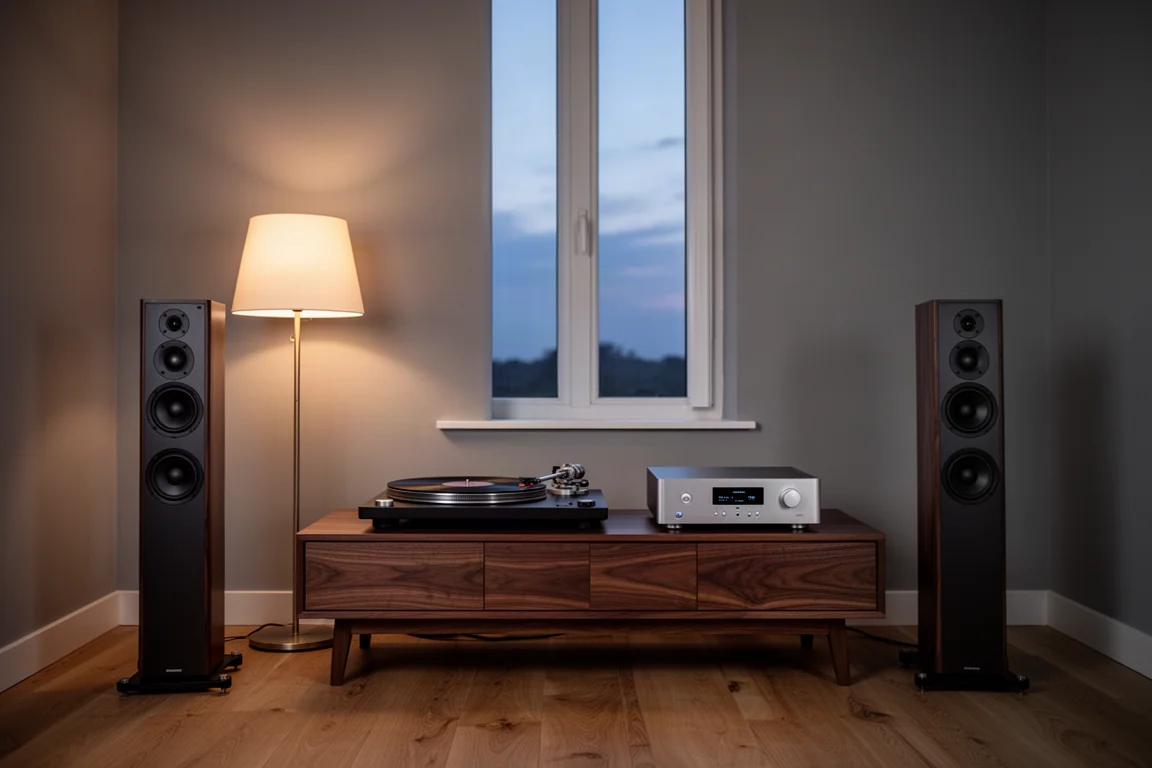
It is also a strong candidate for anyone who wants a speaker that simply does its job without drawing attention to itself. The cabinet is demure rather than ostentatious, which suits rooms where the hi-fi has to share space with everyday life. Listeners who move between quiet late night sessions and louder weekend listening will find the same speaker covers both, which is unusual at this size.
Design and the ATL Transmission Line
The heart of the design is the transmission line. A cutaway of the cabinet shows a folded internal path that looks nothing like the inside of a ported or sealed box, with foam damping placed at specific points along the line to shape how energy travels through it. Bass exits through twin ports at the bottom of the front baffle, which keeps the rear panel clean and makes the speaker a little easier to place near a wall than a rear ported design.
Physically the Prodigy 5 is restrained. It sits on small outriggers with spiked feet, and there is a single set of binding posts on the back, so there is nothing elaborate about the connections. Drivers are proprietary PMC designs, and the speaker is designed and manufactured in the United Kingdom, though the drivers themselves are not built in house by PMC.
The remaining specifications are worth noting. Impedance is rated at 6 ohms, and sensitivity is quoted at 87 dB, which is on the low side. That number matters more than the others when it comes to choosing an amplifier.
Main Strengths: Sound Quality, Scale, and Dynamics
The first surprise is how much volume the Prodigy 5 absorbs without complaint. Played at mid 80 dB levels it sounds entirely at ease, and pushing into the high 80s changes nothing about its composure. Even in the low 90 dB range the speaker keeps its footing, which is not what a cabinet this size usually suggests.
Piano recordings show what the transmission line buys. On a 1970s analogue Deutsche Grammophon recording of Chopin etudes, the Prodigy 5 never sounded thin and never sounded hard. It carried tone, scale, and dynamic shading in a way that made the performance easy to follow rather than merely reproduced. Prepared piano works by John Cage, with their wide dynamic range and unfamiliar timbres, were just as convincing.

Voices are another strength. On a Japanese pressing of Sarah Vaughan’s “Send in the Clowns”, her voice came across as tonally right and strikingly present in the room, which is the kind of quality that keeps a listener coming back to a system.
The overall balance sits slightly on the soft side of neutral, a touch mellow rather than forward. That is a genuine advantage with imperfect material. Compressed recordings, overly bright recordings, and generally rough mixes are noticeably more palatable here than they would be on a harder, more analytical speaker.
Living With the Prodigy 5: Placement, Volume, and Character
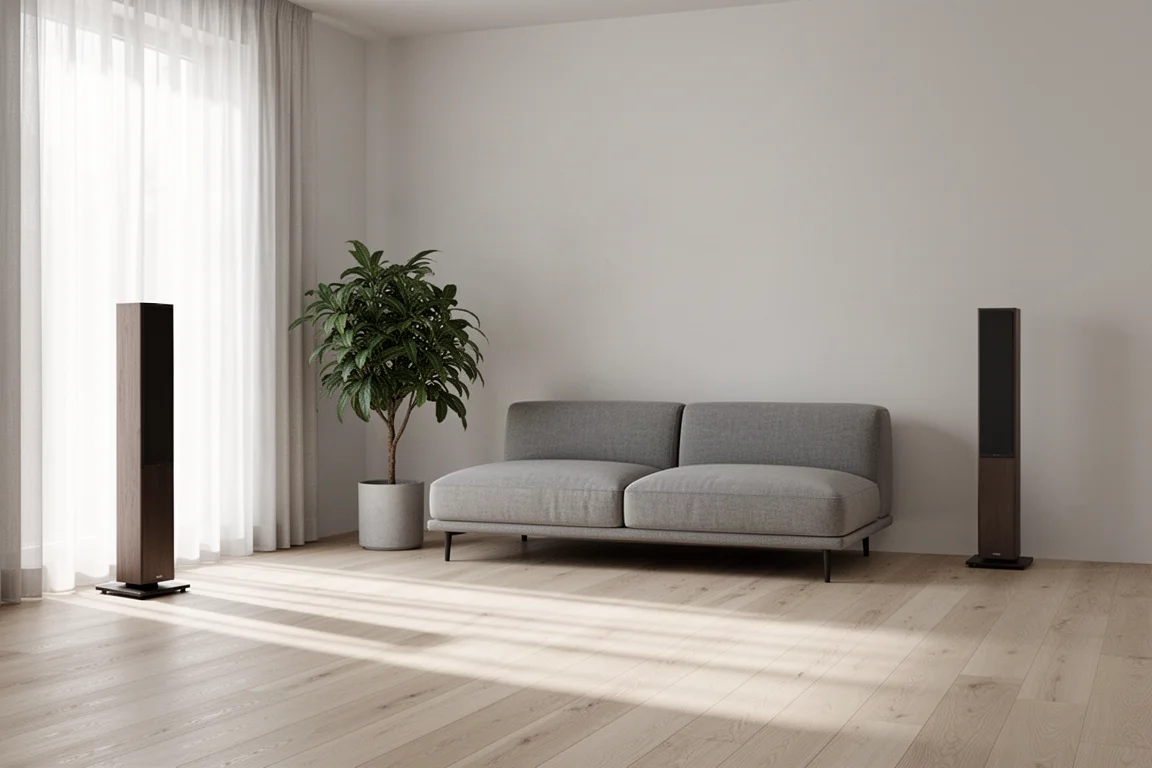
In a room roughly 3 feet from the wall behind the speakers, with the pair about 9 feet apart measured center to center and a listening seat about 9 feet back, the Prodigy 5 produced its best sound. Moving them further out into the room was clearly the optimum arrangement, and it rewarded the extra effort with a wider, more open presentation.
Not everyone has that luxury, so the speaker was also auditioned much closer to the wall, about 15 inches away from a wall of records and books. That placement still worked surprisingly well. The main cost was the soundstage, which felt compressed and lost some of its dimensionality, but the result was better than expected and remains a workable compromise for smaller spaces.
Volume behaviour is worth understanding before buying. The Prodigy 5 is enjoyable at quiet, late night levels, though it does not hold together at low volume the way a high efficiency horn design would. Give it a little gas, into medium loud or louder territory, and it lights up, feeling more alive and more energetic. This is a speaker that rewards being used properly.
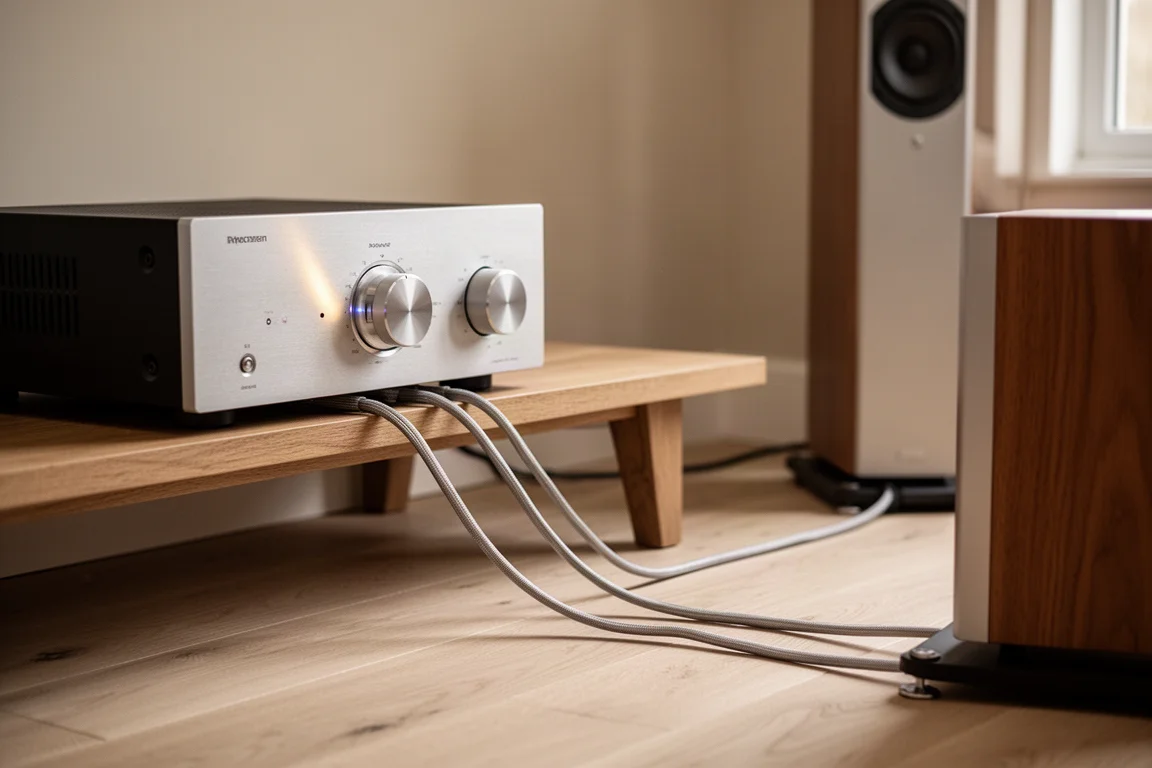
Amplification choices matter given the 87 dB sensitivity rating and 6 ohm impedance. A no frills integrated amplifier with genuine current delivery proved a good match, and a higher powered solid state amplifier confirmed the same character. Listeners with low powered amplifiers should audition carefully rather than assume the speaker will be easy to drive.
Comparing it with the Zu Audio Dirty Weekend 6, a floorstander of similar height that uses a 10 inch full range driver plus a separate tweeter and sells for around $2,300 per pair in the configuration used here, highlights two very different philosophies. The Zu is brighter and less warm in balance, with livelier, faster dynamics and more jump. The Prodigy 5 counters with a more three dimensional soundstage and a more natural tone on vocals. Neither is simply better, and a listener who wanted something in between could reasonably prefer either.
What the comparison makes clear is that the Prodigy 5 has a distinct personality rather than a neutral one. It trades a little forwardness for warmth, dimensionality, and a relaxed treble that makes long listening sessions easy.
Things to Consider Before Buying
- Sensitivity is rated at 87 dB, which is on the low side. A capable amplifier matters more here than with many comparably sized speakers.
- The bass capability is genuinely deep for the cabinet size. In a very small room, around 10 by 12 feet, that low end might overload the space, and a speaker with more limited bass could actually be the better fit.
- Black satin is the only finish, and cloth grilles cost $140 per pair on top of the speaker price.
- Optimum performance comes from pulling the speakers out into the room. Placed tight against a wall they remain very good, but the soundstage shrinks noticeably.
- Quiet late night listening is pleasant rather than spectacular. The speaker comes alive when given some volume.
Buying Advice
The Prodigy 5 earns a place on the shortlist for two kinds of buyers. The first is the listener who wants a really good sounding system without fuss, one that can be set up and then largely forgotten. The second is the enthusiast working with space limitations, who needs a full range floorstander that behaves like a much smaller speaker in the room.
Budget for the whole system rather than the speaker alone. At $2,799 per pair, plus $140 per pair if grilles are wanted, the Prodigy 5 sits in premium territory, and an amplifier with real current delivery is part of the cost of getting the most from it. Buyers with a small, lightly furnished room should also weigh whether a speaker with less low frequency extension might integrate more easily.
Conclusion
The PMC Prodigy 5 looks like a small floorstander and behaves like something considerably larger. Its transmission line cabinet delivers a quoted 35 Hz low frequency limit, high power handling, and the ability to play loud without strain, while the voicing stays warm, forgiving, and easy to live with. The trade offs are real: low sensitivity demands a capable amplifier, deep bass can overwhelm a very small room, and the best soundstage requires pulling the speakers out from the wall. For listeners who want a discreet, full range speaker that disappears into the room and simply works, it is a compelling option.
Product link
View more details for PMC Prodigy 5
This product is mentioned in the review. Check the specifications, options, and compatibility before buying.
View more details for PMC Prodigy 5Further reading
Related Reviews
Floorstanding Speakers
Acoustic Energy AE109 Mark II Review: A Refined Floorstander at £699
The Acoustic Energy AE109 Mark II is a slim, warm sounding floorstander that delivers clarity, midrange body and strong imaging in small to medium rooms.
Floorstanding Speakers
Acoustic Energy AE509 Review: A Slim Floorstander With Deep, Defined Bass
A practical look at the Acoustic Energy AE509, a slim floorstanding speaker with carbon fibre drivers, deep and well-defined bass, and an easy-going character that rewards careful system matching.
Floorstanding Speakers
Arendal 1528 Tower 8 Review: Reference Neutrality With Real Demands
A close look at the Arendal 1528 Tower 8, a nearly five-foot, 200-pound floorstander that rewards generous space, serious power, and high listening levels with reference-grade neutrality.