Sim Racing
Playseat Challenge DD F1 Edition Review: A Foldable Cockpit That Handles Direct Drive
A practical foldable sim racing cockpit that balances adjustability, mobility, and enough rigidity for modern direct drive wheel bases.
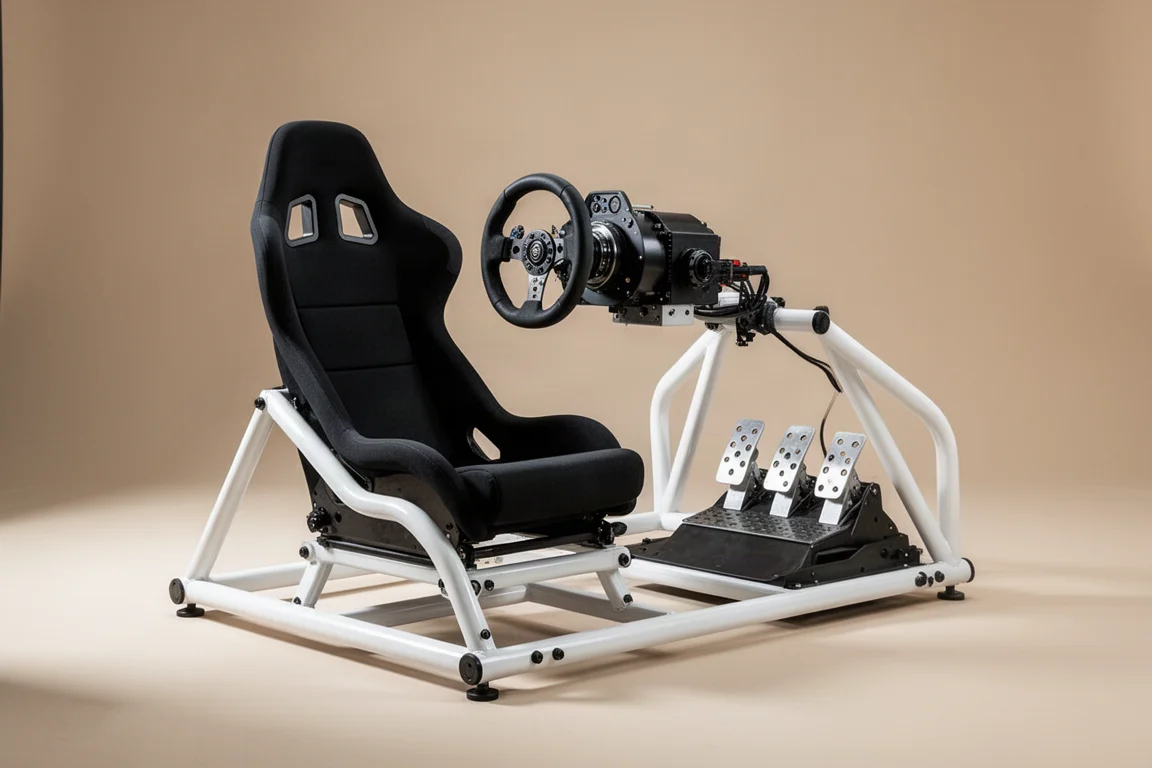
Introduction
The Playseat Challenge DD F1 Edition is a foldable sim racing cockpit designed for a specific kind of user: someone who wants a direct drive capable rig that can be tucked away when not in use. It sits in a part of the market where practicality matters as much as performance, and it aims to deliver both without demanding a permanent dedicated space.
This cockpit is not an end game rig. It is not designed for motion platforms, button boxes, or elaborate appendages. Instead, it is built for the person who wants to fold the rig into a corner, share it with friends and family, and still enjoy a solid direct drive experience. The question is whether it manages to balance those competing priorities well enough to recommend.
Who This Cockpit Is For
This cockpit is intended for sim racers who need a rig that can disappear when it is not in use. It is designed to sit in a corner, fold away, and avoid becoming a permanent fixture in the living room. It is also meant to be shared, with adjustment points that can be reached while seated, making it practical for households with multiple drivers of different sizes.
It is not for someone looking for a rigid, expandable aluminum profile rig. The design philosophy here is different. Every adjustment is interconnected, which means moving one part of the rig influences other parts. That is a trade-off that makes sense for a foldable cockpit, but it does limit how precisely you can dial in a perfect driving position.
The cockpit is also positioned as a formula style rig. While there is a reasonable range of adjustment for seat height and pedal position, the reality is that it is more about fitting your body shape than achieving a specific driving style. You are unlikely to switch between an upright GT position and a reclined formula position. Instead, you find the setting that works for your body and your equipment.
Assembly Experience
The cockpit arrives flat-packed and well packaged. Assembly is straightforward, with everything lining up correctly and no issues with misaligned holes or parts that needed modification. The instructions are clear enough that a nine-year-old was able to put the entire rig together with minimal help, needing assistance only with a couple of press-fit metal fittings that required more hand strength.
The build took roughly an hour for a child working through it independently. An adult familiar with similar assembly tasks could likely complete it in around 20 minutes. Mounting the wheel deck and pedals actually took longer than assembling the frame itself. If you can put together flat-pack furniture, you will not have any trouble with this cockpit.
There were a few minor scuffs on the white paint in small areas, which appeared to be production or packaging related rather than shipping damage. It is not a perfect finish, but it is cosmetic and does not affect function.
Adjustability and Fit
The cockpit offers a range of adjustments, many of which can be operated while seated. The wheel deck can slide forward and back, tilt through a wide range of angles, and move up and down. The pedal tray can slide in and out, and the pedal angle can be adjusted to suit different pedal sets. There is also a pivot adjustment that changes the pedal height relative to your seating position.
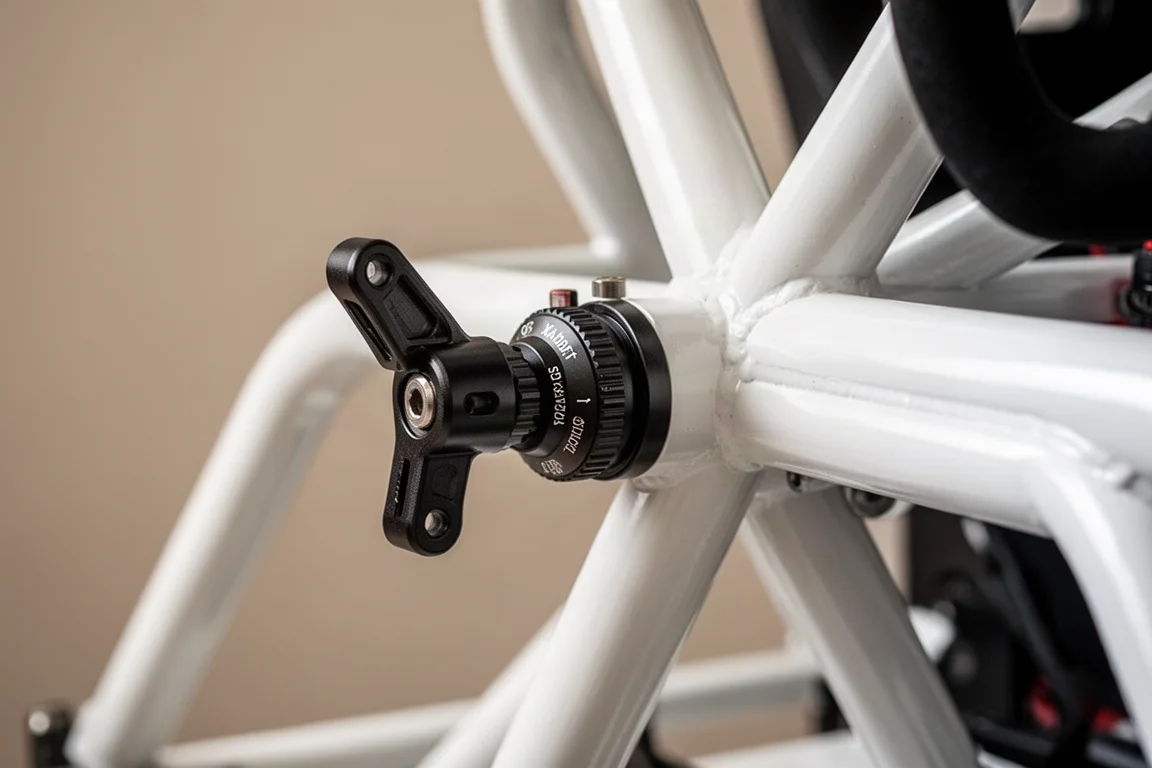
The Xadapt adjusters on the sides use a toothed locking mechanism with quick release levers, similar to what you would find on a mountain bike front wheel. These control the overall height of the rig, but they also influence the wheel deck position. Raising the rig brings the wheel deck slightly forward, while lowering it moves the wheel back. The pedal position remains unaffected by this adjustment.
For a driver around six feet tall, the cockpit can be adjusted to a comfortable position, but it does feel close to the upper limit. Taller drivers or those with longer legs may find the wheel deck a little cramped, even with the mounting plate pushed as far back as it will go. The seat back is linked to the pedal position, so pushing hard on a brake pedal transfers force into the seat back, which can feel spongy under heavy braking.
The seat itself uses a breathable honeycomb material with good airflow. Velcro straps allow you to tighten the seat back for more lumbar support or loosen it to sink lower into the chair. It is not as supportive as a dedicated sim racing seat, but it is the best example of this style of seat that has been tested. For sessions longer than a couple of hours, some drivers may find their back gets sore, but that will depend on body type and personal preference.
Rigidity and Driving Experience
The cockpit was tested with a range of equipment, from entry-level Logitech gear to high-end Fanatec Podium direct drive hardware capable of 33 Newton meters peak torque. The rig handles the forces well, with flex that is visible in footage but not enough to be a deal breaker.
There is a slight loss of fidelity in the finer force feedback details compared to a completely rigid aluminum profile rig. The granular effects from high-end direct drive bases are somewhat dampened by the movement in the frame. For most drivers, this will not be noticeable, but it is there for those coming from a fully rigid setup.
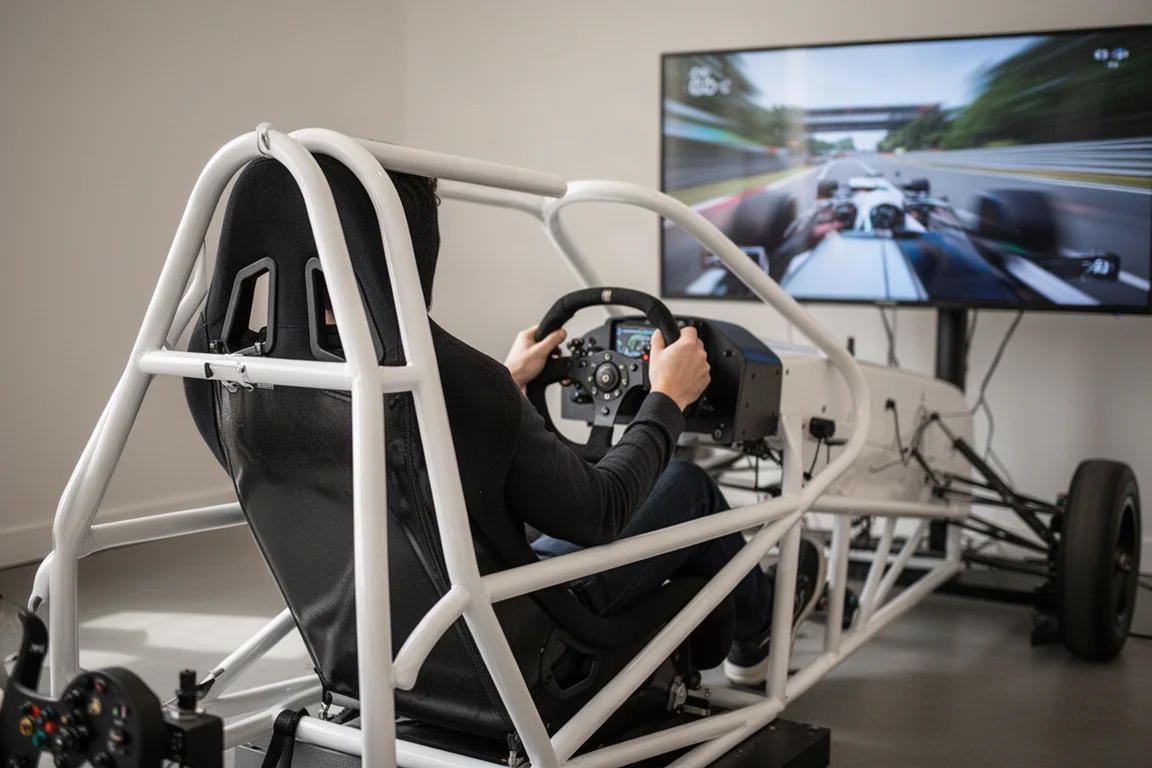
The seat back is the biggest compromise. Because it is linked to the pedal tray, braking force pushes into the seat back, which flexes noticeably. This makes brake inputs slightly less consistent and precise than they would be on a rigid rig. With softer pedal configurations, it is absolutely fine, but very stiff load cell pedals will highlight the limitation. Over time, most drivers would adapt, but it may take a while to match lap times achieved on a more rigid setup.
The pedal tray itself also shows some flex, particularly with high-end pedals that have their own mounting tray. Mounting pedals directly to the tray would increase the flex further. A thicker material or additional ribbing would help, but for entry-level pedals or soft setups, this is unlikely to be an issue.
Foldability and Mobility
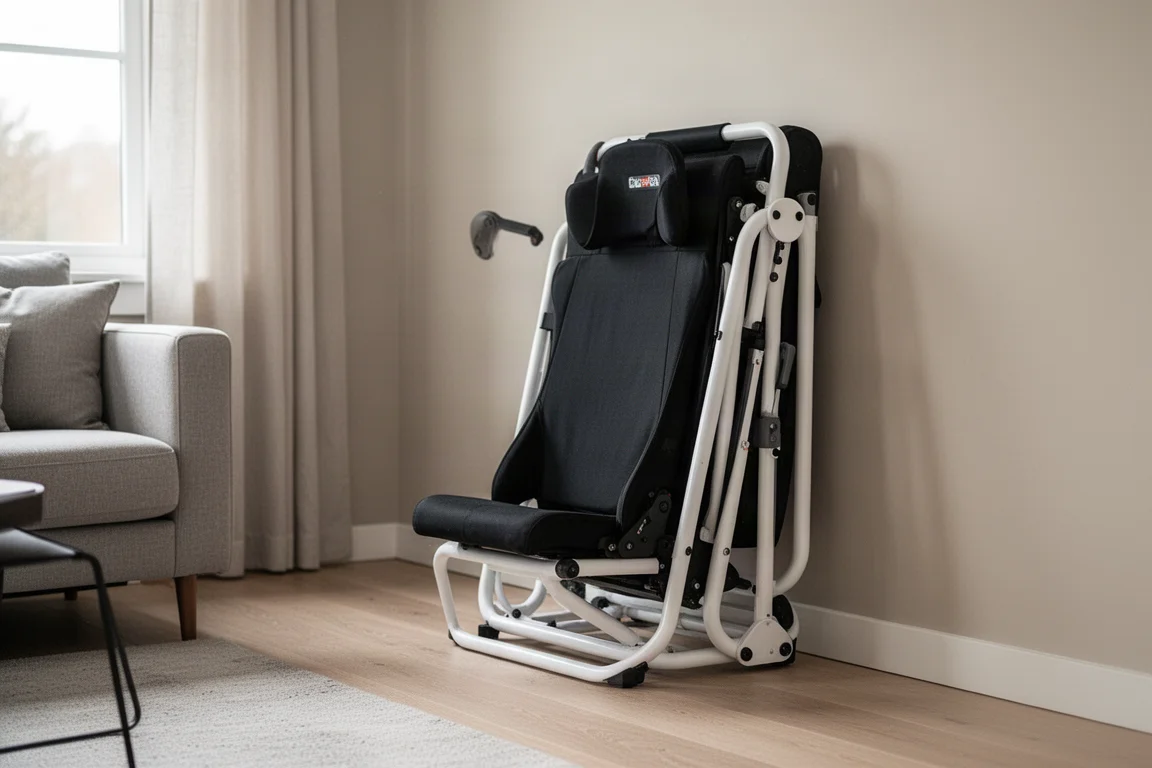
The folding mechanism works well in practice. The process involves removing the steering wheel, adjusting the pedal tray, raising the wheel deck, and then folding the frame. It takes a few steps, but it is manageable and can be done solo. The built-in caster wheels make it easy to move the rig around, even with the wheel base and pedals attached.
The folded cockpit is compact enough to tuck behind a couch or against a wall, though it will not fit under a bed. There are a few pinch points to be aware of when folding and moving the rig, so common sense is required, especially with children around.
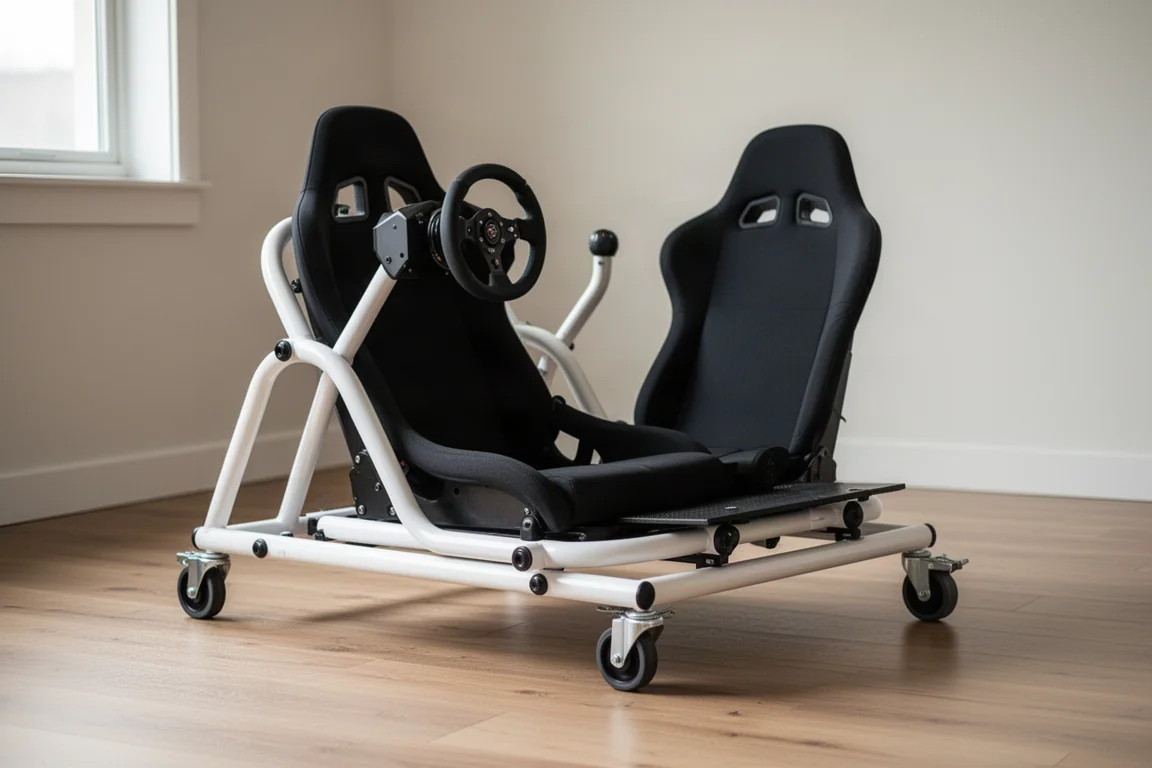
The casters can be removed for a more fixed setup, but leaving them on does not seem to sacrifice much rigidity. The overall balance between practicality and rigidity is better than any other cockpit of this type that has been tested.
Buying Advice
The Playseat Challenge DD F1 Edition retails at $399 or €399, £349 in the UK, and 799 in Australia, though it has been seen for as low as 699 at some local retailers. Unlike many cockpits at a similar price point, this comes with everything you need to get racing out of the box, including the seat. You only need to supply the wheel, wheel base, and pedals.
Playseat has a well-established network of resellers worldwide, so it is worth checking local retailers to avoid shipping costs and import duties. The quality is a clear step up from cheaper folding cockpits, and the price feels fair for what is included.
This cockpit is not for everyone. If you need a rigid, expandable rig for a permanent setup, an aluminum profile cockpit is a better choice. But if you need something that can fold away, is easy to adjust between drivers, and can handle a modern direct drive wheel base, this is a strong option.
Conclusion
The Playseat Challenge DD F1 Edition is a well-designed foldable cockpit that makes intelligent compromises. It is not as rigid as an aluminum profile rig, and the seat back flex under heavy braking is the biggest limitation. But for its intended purpose, it delivers a surprisingly good driving experience.
If this kind of cockpit fits your situation, it is easy to recommend. It gets you racing without requiring a permanent dedicated space, and it handles direct drive hardware better than expected. The adjustability is practical, the assembly is simple, and the folding mechanism works. It is not an end game rig, but it does not need to be. It is a cockpit that understands its audience and serves them well.
Product link
View more details for Playseat Challenge DD F1 Edition
This product is mentioned in the review. Check the specifications, options, and compatibility before buying.
View more details for Playseat Challenge DD F1 EditionFurther reading
Related Reviews
Sim Racing
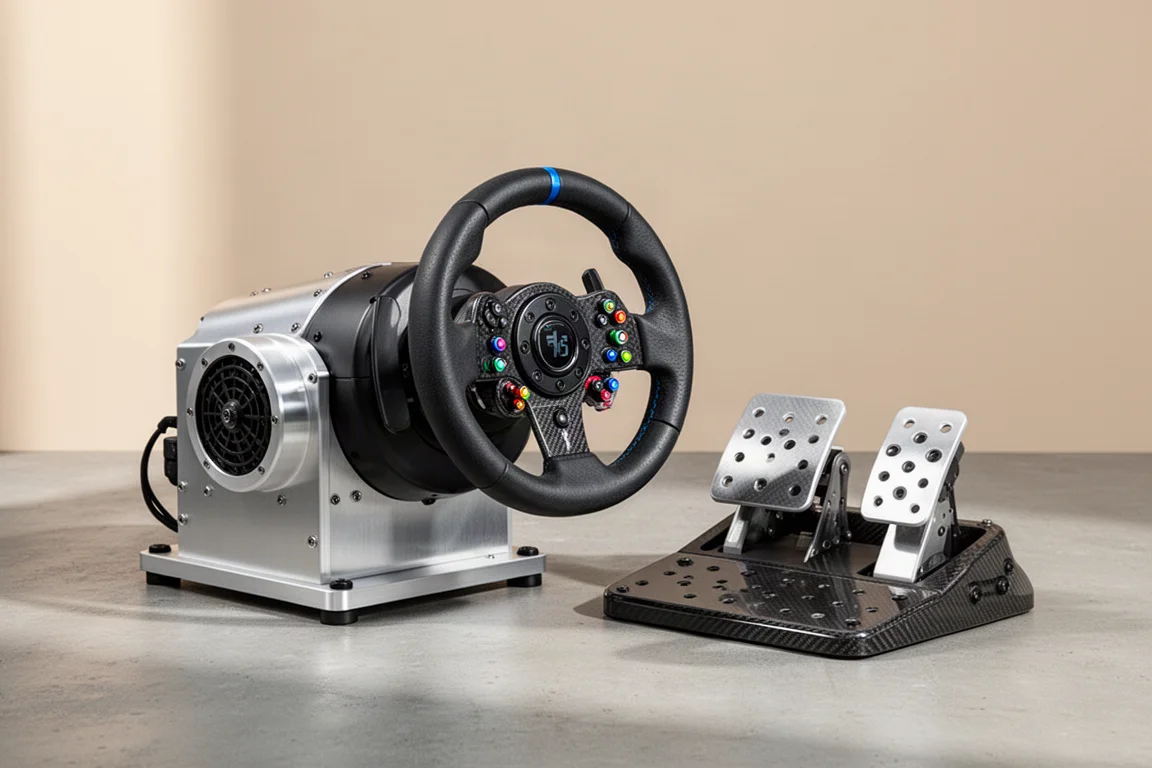
Asetek Initium Direct Drive Bundle Review: A Strong Entry Point With a Standout Pedal Set
The Asetek Initium bundle brings a 5.5 Nm upgradeable wheelbase, a functional round wheel, and a surprisingly capable pedal set to a crowded entry-level direct drive market.
Sim Racing
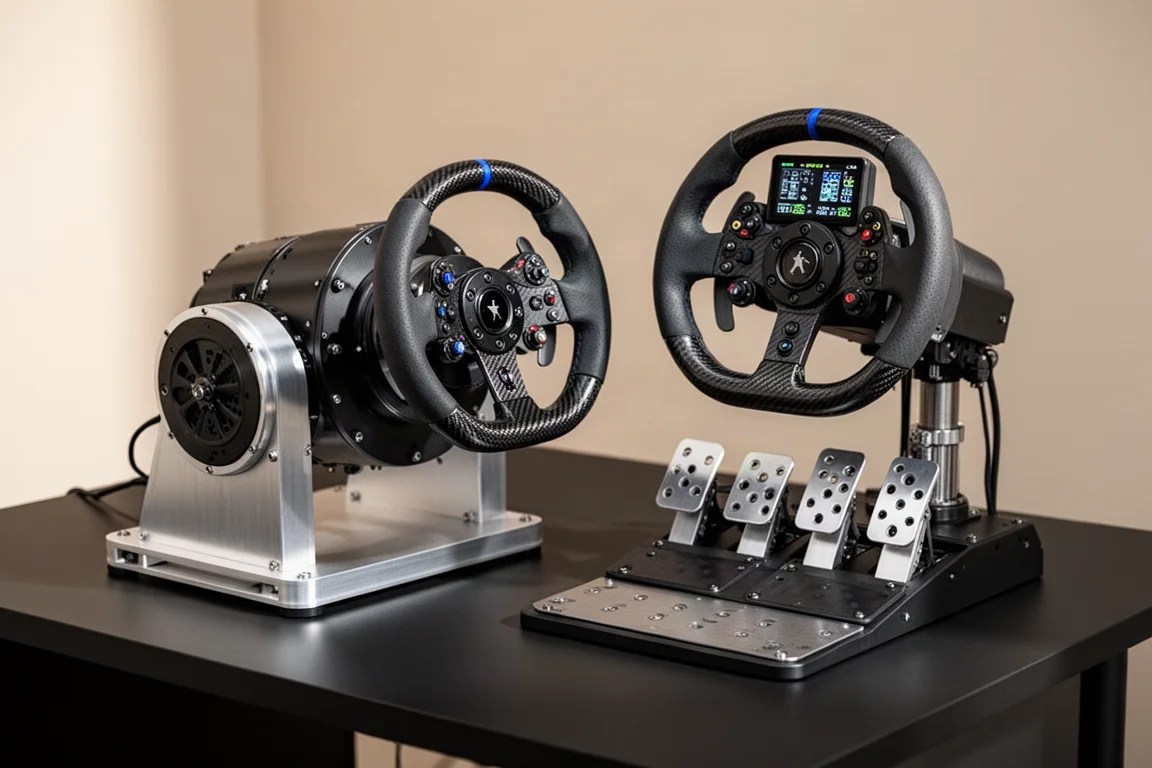
ConSimPit Ecosystem Overview 2026: Wheelbases, Pedals, and Wheels
A detailed look at ConSimPit's sim racing ecosystem, covering wheelbases, pedals, and steering wheels with honest observations on quality and value.
Sim Racing
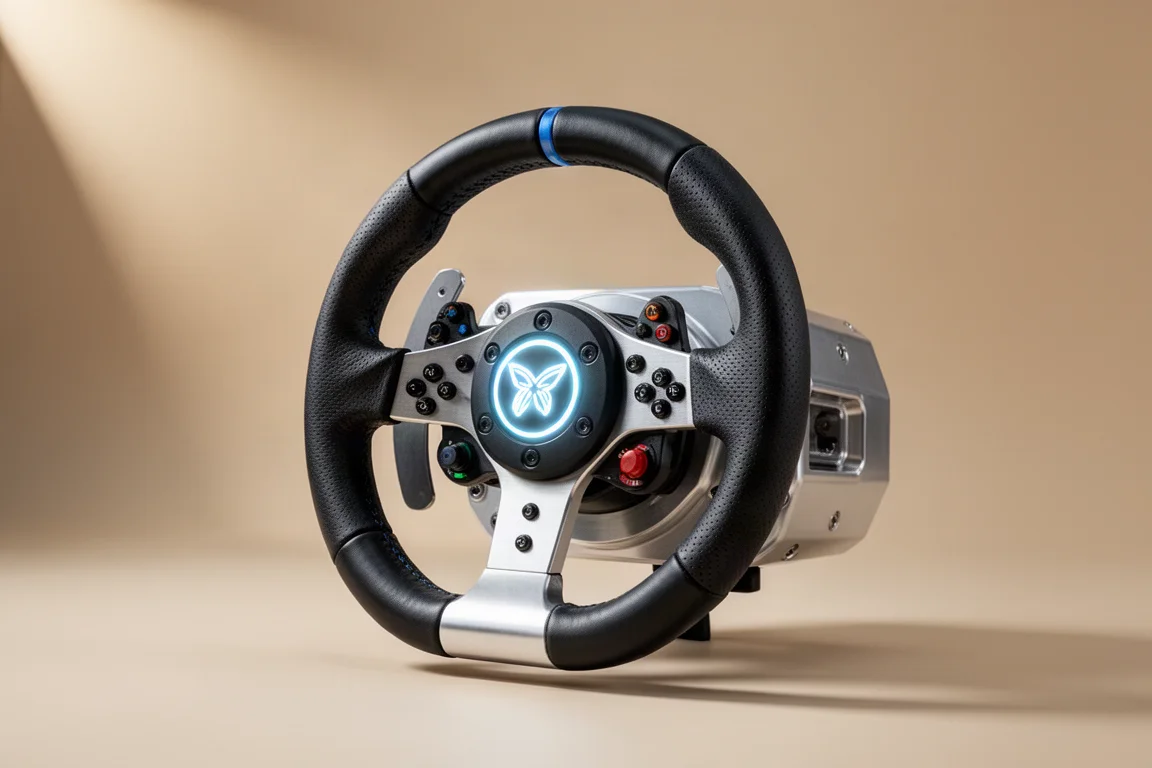
Cube Controls Astra Review: A Lightweight Sim Racing Wheel That Nails the Fundamentals
The Cube Controls Astra is a lightweight aluminum sim racing wheel that focuses on build quality and driving feel over extra features.