Road Bikes
Pinarello Dogma 2 vs Dogma F8 vs F: How 10-Year-Old Pro Bikes Compare Today
Three Pinarello pro bikes from three eras, compared on weight, aerodynamics, braking, tire clearance, and how they actually ride.
Introduction
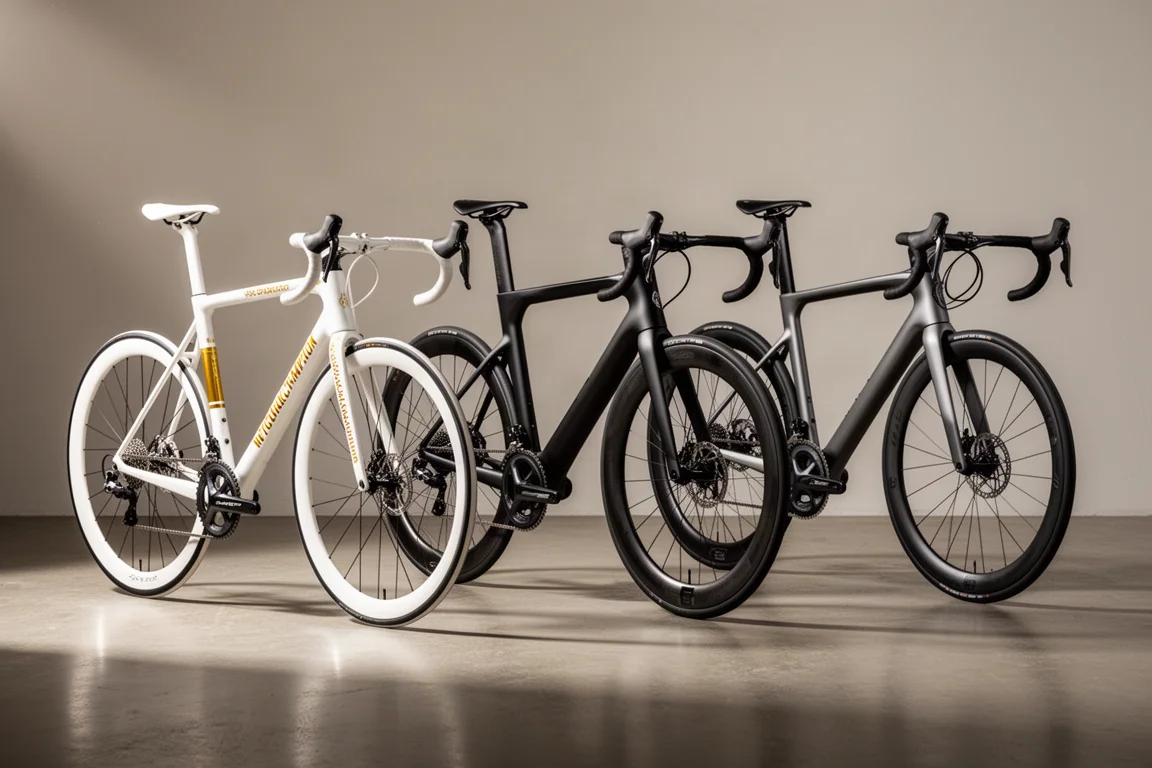
Three Pinarello road bikes, three distinct eras of racing design. The Dogma 2 carried Bradley Wiggins through the 2012 season in his national champion colours. The Dogma F8 took over for the 2015 season. The Pinarello F is the platform that current professionals race on.
All three were built to win the biggest races in the sport, and all three did. The useful question for a rider shopping for a used pro-level frame, or simply wondering how much has really changed, is what separates them beyond the paint and the badges.
This comparison covers the frames, the components, the measured weights, and how each bike behaves on the road.
What Changed Between 2012 and Today
Four areas account for most of the difference between these bikes: brakes, tires, cockpit width, and gearing.
The Dogma 2 runs rim brakes and tubular wheels, with clearance for little more than 23 mm tires. The F8 keeps rim brakes but moves to a shaped, aerodynamic frame. The Pinarello F adds disc brakes, clearance for tires up to 32 mm, and a fully integrated front end.
Cockpit width changed just as dramatically. In 2012 the peloton favoured wide drop bars, and the Dogma 2 still wears them. Modern pro bikes have moved to narrow bars around 38 cm wide, which reduces frontal area and, in turn, drag.
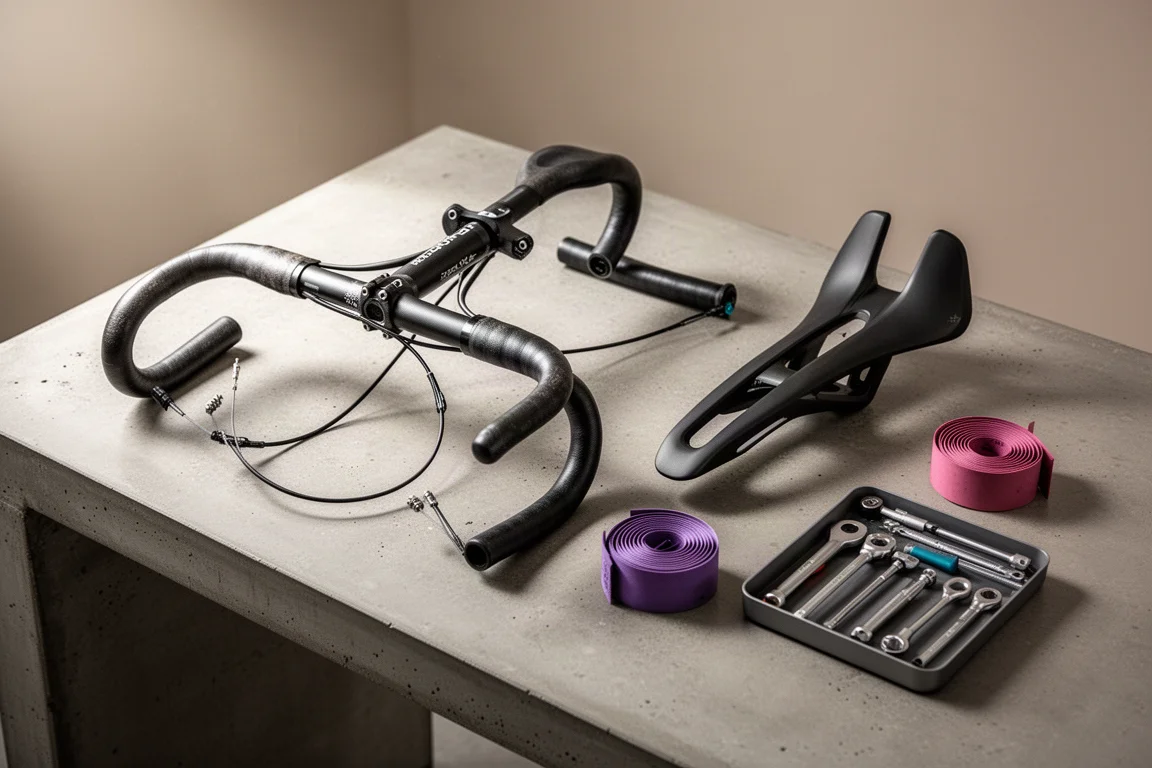
Gearing tells a similar story. The Dogma 2 runs first-generation Shimano Di2 with 10 speeds and a narrow range at the back. The F8 moved to an 11-speed group, and current bikes offer a wider spread again. On steep climbs, that difference is felt directly.
Frame shaping is the other major shift. The Dogma 2’s wavy, organic tube profiles were designed for compliance and stiffness rather than aerodynamics. The F8 broke from that approach entirely, and the F continues the aero silhouette with more integration.
One detail has stayed constant across all three generations: threaded Italian bottom brackets. Pinarello kept them even as most of the industry moved to press-fit, reportedly because the team mechanics insisted on them.
Pinarello Dogma 2: The 2012 National Champion Build
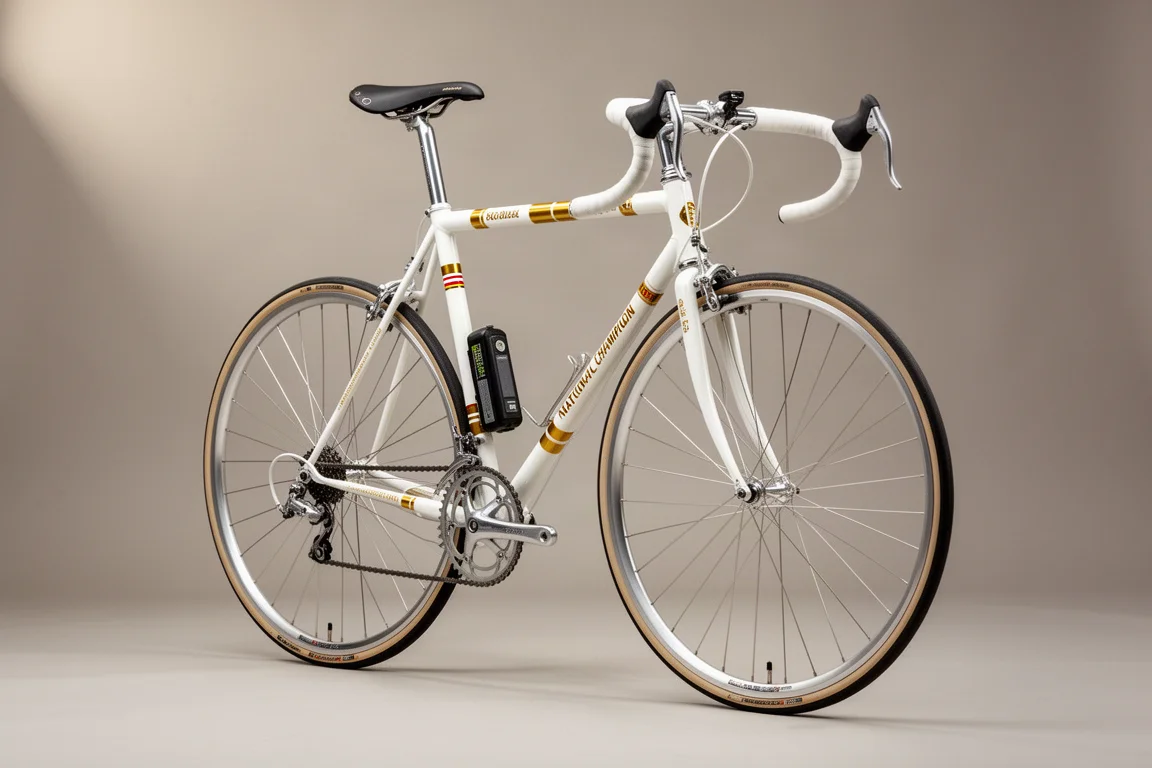
This Dogma 2 was built for Bradley Wiggins in the national champion colours he raced for Team Sky, and it appeared at events such as the Volta ao Algarve, the Tour de Romandie, and Paris-Nice. Only four examples of this colourway were produced, and only two were raced. The matching saddle, decorated with a graphic of Wiggins on a scooter, was equally limited at four pieces.
The build is a snapshot of 2012 racing technology. An SRM power meter sits up front, paired with O’Symmetric chainrings. Gears come from the first generation of Shimano Di2, a 10-speed system with an external battery bolted to the down tube. At the time, electronic shifting was rare enough in the peloton that its presence alone marked the bike as special.
Wheels of that era were tubular and narrow, and the frame leaves little room beyond 23 mm tires. That single constraint shapes much of how the bike rides today.
Living With the Dogma 2: Comfort, Stiffness, and Braking
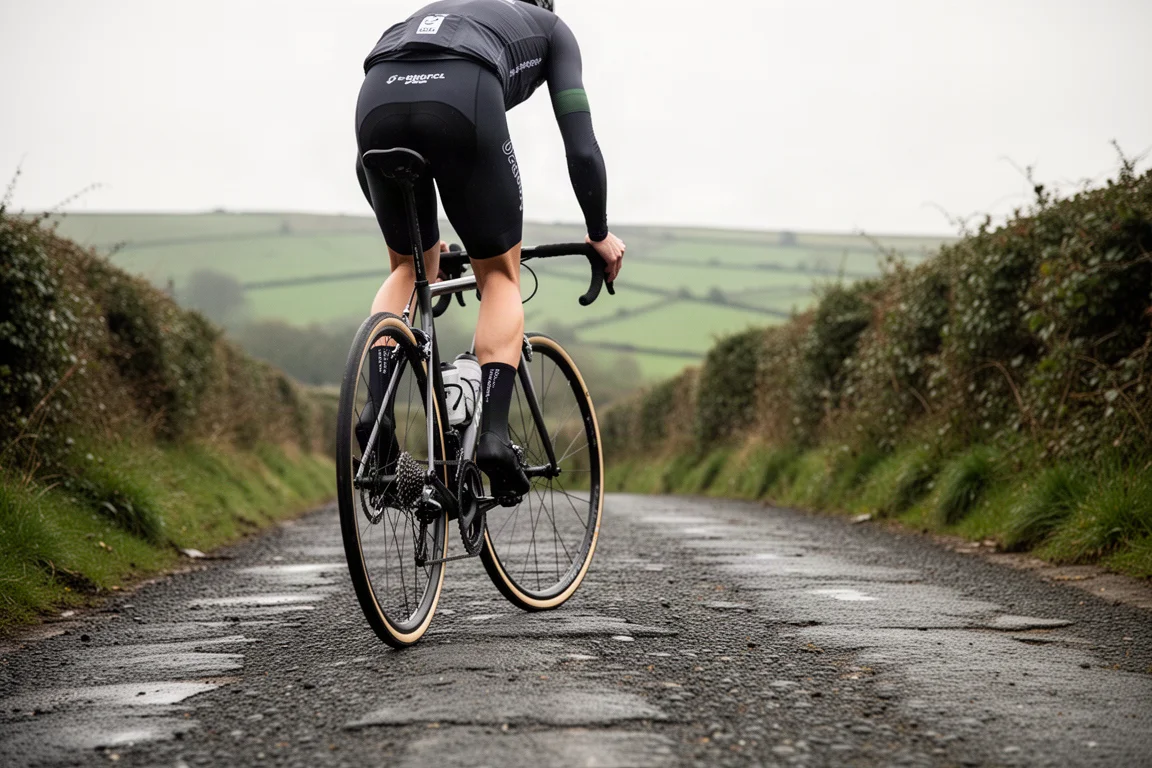
Despite the skinny tires and minimal clearance, the Dogma 2 is surprisingly comfortable. The frame absorbs rough surfaces better than its narrow rubber suggests, and pressing on out of the saddle reveals a stiffness that still feels impressive. It is easy to see why a rider of that era described the bike as perfect.
Two things date it immediately. The first is the gear range at the back, which runs out quickly on steep gradients and forces a change in riding style. The second is braking. Rim brakes improved steadily through that period and then gave way to discs, and the Dogma 2’s setup feels a clear step behind modern stopping power.
The wide handlebars add to the sensation. They were standard at the time and helped win major races, but they make the front end feel slow and cumbersome compared with a modern narrow cockpit.
Set against the two newer bikes, the Dogma 2 feels antiquated, and the narrow tires and lack of aerodynamic shaping are the main reasons. As a piece of racing history with genuine provenance, though, it is hard to beat.
Pinarello Dogma F8: The 2015 Aero Leap
The F8 was a fundamental redesign. Pinarello worked with Dimitris Katsanis and Jaguar to reshape the frame around aerodynamics, and the claimed result was a 47% reduction in drag compared with the Dogma 2. Visually, the silhouette is close to what the current Pinarello F uses.
This particular example belonged to Bradley Wiggins and was raced in the 2015 season. Roundels on the top tube mark his major victories, including London 2012, the Tour de France, and his Olympic golds.
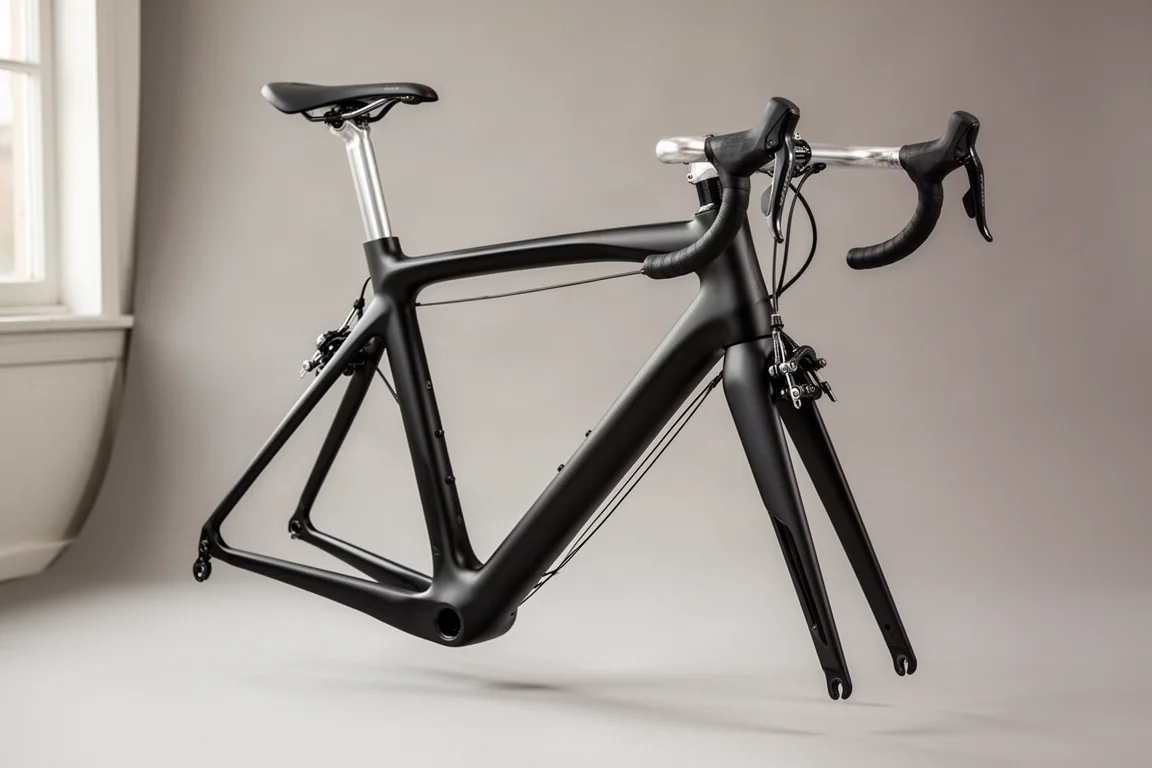
The weight is the headline number. On the scales it came in at 6.80 kg without pedals, right at the UCI weight limit, and that is with a titanium-railed saddle and an alloy bar and stem rather than exotic carbon parts. Lighter components could take roughly half a kilogram off it, but the bike had to meet the limit for racing.
Shifting is handled by second-generation Shimano Dura-Ace Di2, an 11-speed system with a junction box hanging under the stem. Braking is still rim-based, using single-mount calipers, and the cables enter the frame externally at the front rather than running through the headset.
Riding the F8: Light, Smooth, and Still Quick
The weight difference is obvious from the first pedal stroke. Everything about the bike feels solid and smooth, from the hubs to the bottom bracket, and back to back against the Dogma 2 it is clearly the quicker machine. The aerodynamic shaping plays a large part in that.
The wide handlebars are still present, and they hold the bike back slightly, but they do not undo the overall impression. This is a bike that feels fast in a way that has little to do with fashion.
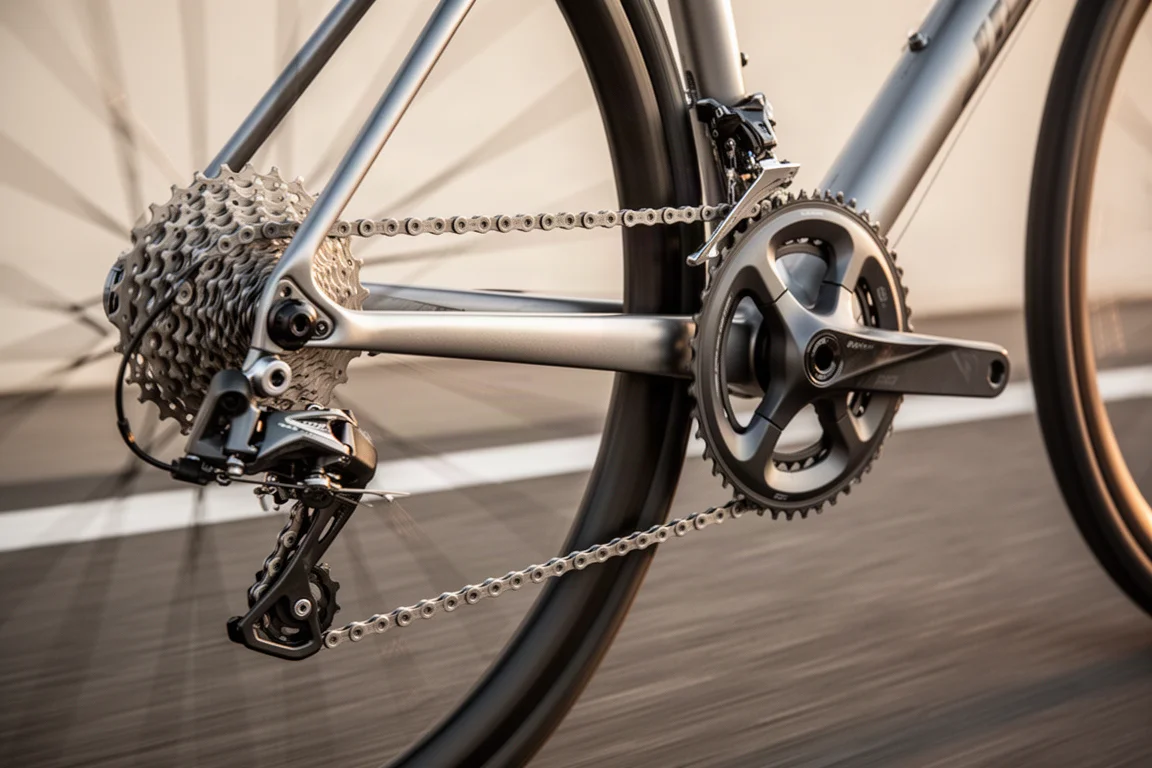
Even a decade after it was raced, the F8 remains a phenomenal bike, and it would still be capable of winning the biggest races in the world. Fit narrower, more aerodynamic bars and faster-rolling tubeless tires and that case becomes stronger still. For a rim-brake design, it represents one of the high points of the format.
Pinarello F: The Modern Pro Platform
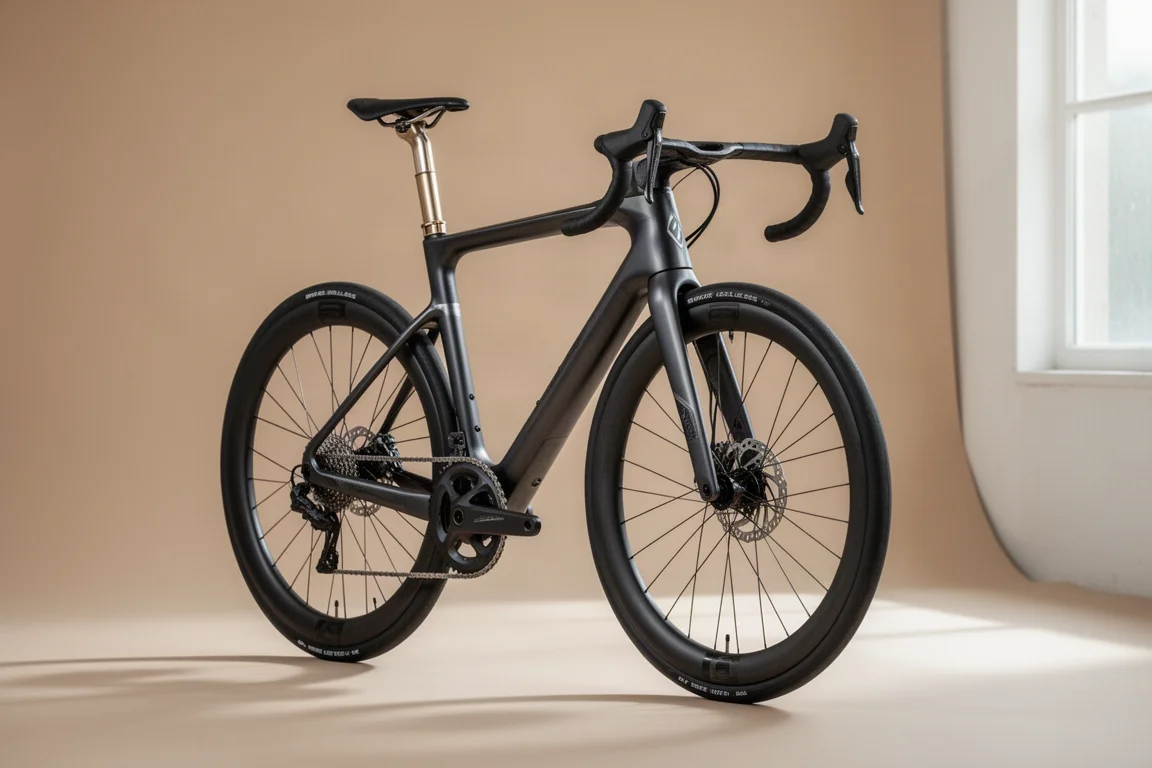
The Pinarello F is what the current generation of professionals rides, and the front end shows it. The cables are gone, the round bar and separate stem are gone, and in their place is a neat integrated cockpit just 38 cm wide. Narrow bars are one of those changes you notice the moment you ride them.
Disc brakes bring a clear gain in stopping power and consistency, and tire clearance opens up to 32 mm. This build runs 28 mm tubeless tires front and rear, which is a large part of why it delivers the smoothest ride of the three.
On the scales, the F sits at 7.5 kg, roughly half a kilogram heavier than the F8 and about the same as the Dogma 2. Some of that comes from the disc brakes and the wheels, which are Ultegra specification here; a Dura-Ace set would save around 100 to 200 grams. The frame itself is still light, with titanium hardware at the seatpost clamp and in the headset.
It is also a Grand Tour winner, most notably at the Giro d’Italia, so the extra weight has not held it back where it counts.
Weights, Tires, and Gearing Compared
The numbers make an interesting point. The F is the heaviest of the three in this company, and yet it is not the slowest. Modern tubeless tires roll faster than the tubulars of 2012 even though they are wider and heavier, and disc brakes, a wider gear range, and a more aerodynamic frame all add function that the scales do not capture.
The Dogma 2 is roughly the same weight as the F, but it is the least aerodynamic of the group and is limited to narrow tires and a small gear range. The F8 sits between them: lighter than both, aerodynamic, but still built around rim brakes and an older cockpit layout.
In other words, weight alone no longer tells you which bike is fastest. Tire construction, frame shaping, and integration now carry at least as much of the load.
Buying Advice
The right choice depends on what you want from the bike.
If provenance and history matter most, the Dogma 2 is the obvious pick. It is a genuine racing artefact in a colourway that was barely produced, and it still rides with a stiffness and comfort that hold up. Go in knowing that tire clearance stops around 23 mm, the gear range is limited, and braking is a generation behind.
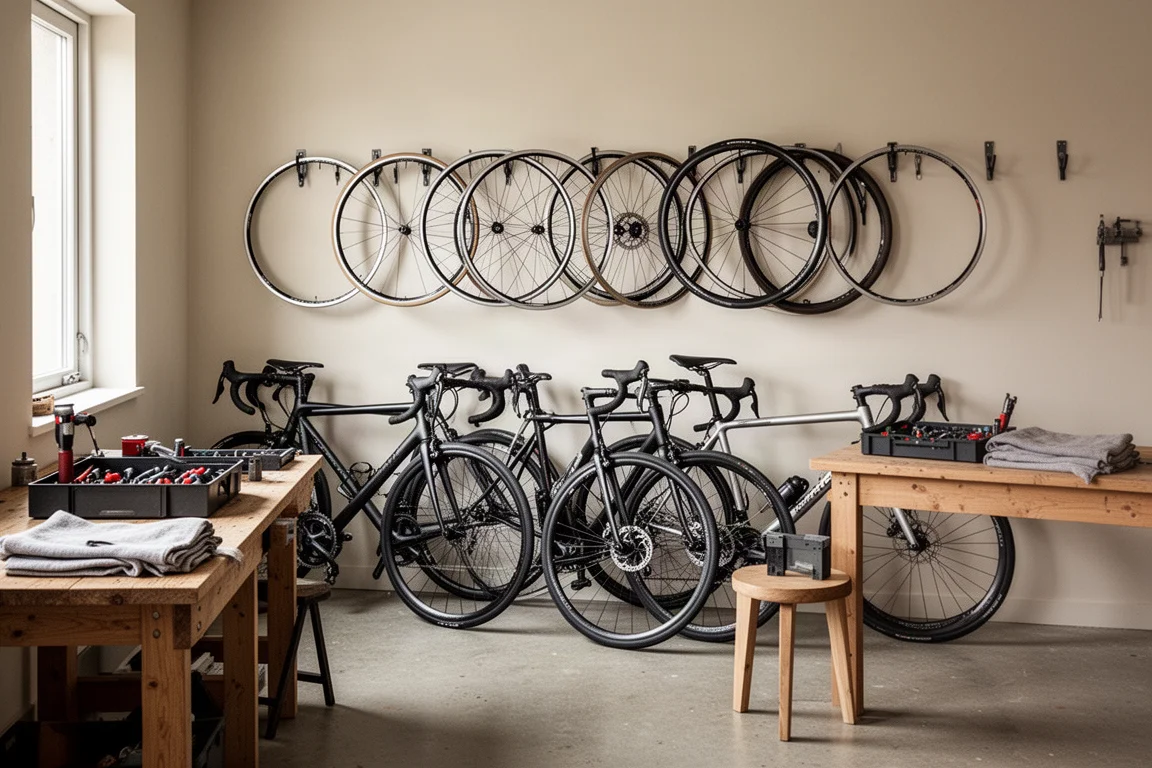
If you want the fastest bike of the three in pure performance terms, the F8 is the sweet spot. It is the lightest, it carries a substantial aerodynamic advantage over the Dogma 2, and it still feels quick against a modern machine. The trade-off is rim braking and a wider cockpit than today’s norm.
If you want a bike that matches current professional standards, the F is the one to choose. Disc brakes, wider tires, a narrow integrated cockpit, and clearance for 32 mm add up to the most versatile and comfortable ride here, at the cost of a little weight.
On any used pro-level frame, check the specification carefully, because builds vary widely. The F8 shows how much difference components make: a titanium-railed saddle and an alloy cockpit kept it at the UCI limit, and swapping parts could move the number either way.
Conclusion
A decade of development has not made older pro bikes obsolete, but it has changed what makes them fast. The Dogma 2 wins on history and still surprises with its stiffness, the F8 remains a genuinely quick and remarkably light rim-brake machine, and the F shows how much braking, tire volume, and integration now contribute to speed.
Weight went up along the way, which is the counterintuitive part. Braking power, gear range, tire clearance, and rolling resistance went up with it, and on real roads those gains matter more. Any of the three would be a rewarding bike to own; the question is simply which era of racing you want under you.
Further reading
Related Reviews

Road Bikes
10 New Road Bikes Worth Watching: Aero, Titanium, Steel and Endurance Standouts
A practical roundup of 10 new road bikes, from aero flagships chasing single-watt gains to titanium, steel and endurance platforms built for real roads.
Road Bikes
2026 Tour de France Road Bikes: Six Race Machines Worth a Closer Look
Six race bikes from the 2026 Tour de France grid, reviewed for paint, silhouette, wheels and the specification details that matter to buyers.
Road Bikes
3T Strada Italia Review: A Radical Aero Road Bike That Rides Smooth
A made in Italy carbon aero road bike with a deep head tube, wide tire clearance and a genuinely comfortable ride. Here is what to know before buying.