Stationery
Pilot Acro Ball Review: The Hybrid Ink Ballpoint That Beats Regular Ballpoints
The Pilot Acro Ball and its Japanese sibling, the Pilot Acro, use the same hybrid ink refill to deliver a smoother, more consistent ballpoint writing experience.
Introduction
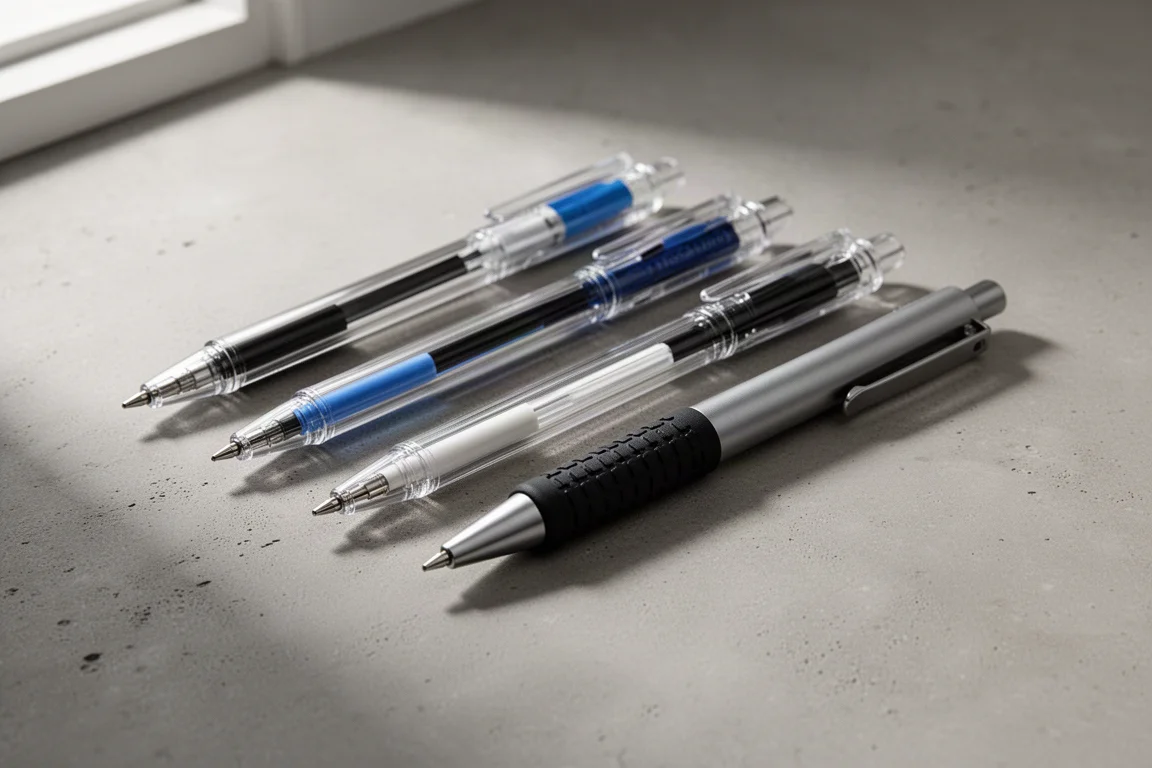
Fountain pens get most of the attention, but there are plenty of everyday jobs where a ballpoint is simply the better tool: writing on slick sticker labels, filling out greeting cards, signing checks, or writing on plastic surfaces. For those tasks, the Pilot Acro Ball has become a favorite, and for good reason.
What makes the Acro Ball and its Japanese-market sibling, the Pilot Acro, interesting is that both use the same refill and the same ink. The difference is really about body style, availability, and tip size options. Once you understand that, choosing between them becomes much easier.
What Makes Hybrid Ink Different
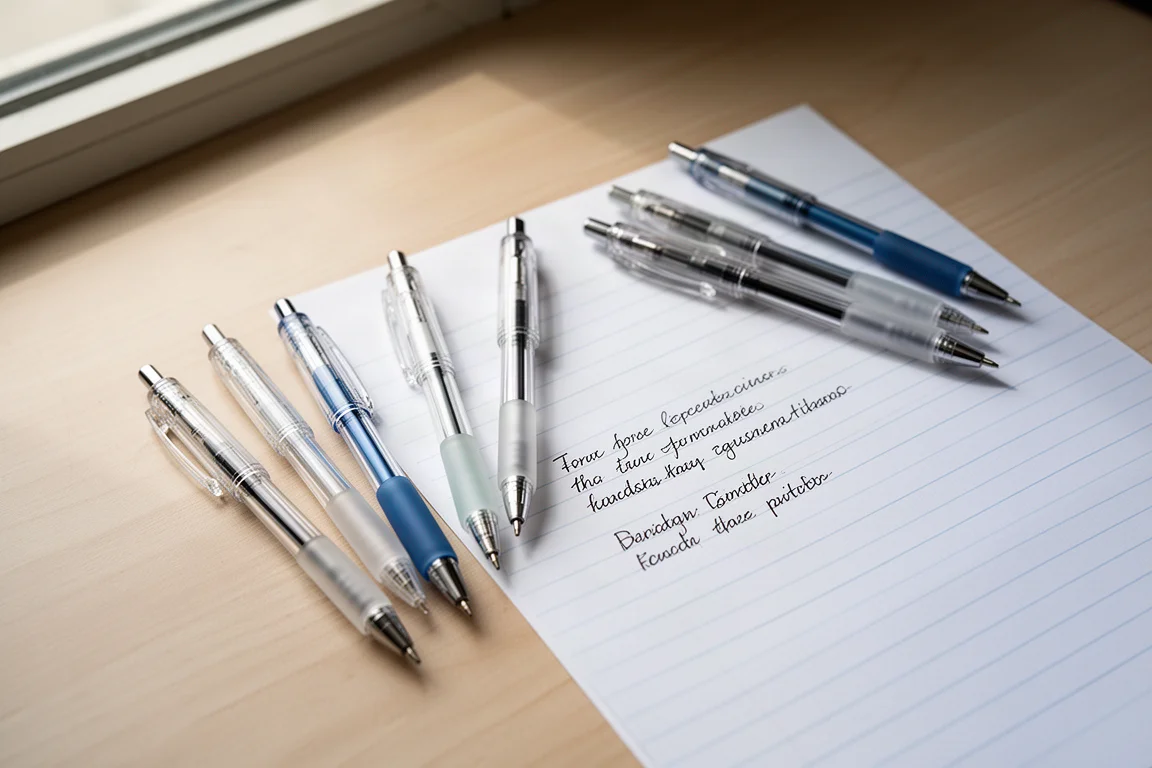
Traditional ballpoint ink is thick, oily, and prone to globbing, skipping, and railroading when the tip dries out between uses. The Acro family instead uses a hybrid ink that sits between ballpoint and gel pen ink. It is less viscous, so it flows faster and more smoothly, while still behaving like true ballpoint ink.
Two practical benefits follow from this. First, the writing experience is noticeably smoother and more consistent than a standard ballpoint, with far fewer skips. Second, the pens resist drying out with non-use. Pens left unused for months picked up and wrote immediately, with no scribbling needed to get the ink flowing and no hard starts at all.
The Acro Ball: Pilot’s Wider International Version
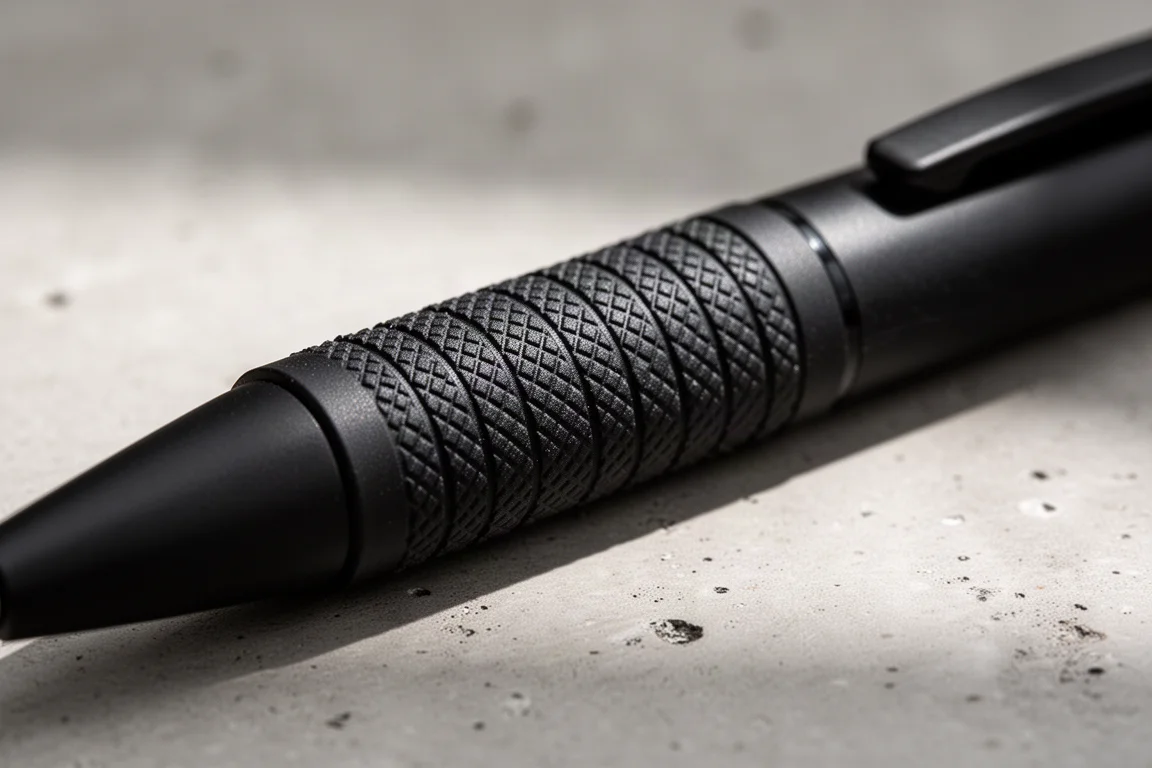
The Acro Ball is the version marketed in the United States. It has a larger, thicker profile with a rubber grip described as having a sort of shoe-tread texture, which turns out to be very comfortable and gives a secure hold. Only two tip sizes are widely found: a Fine at about 0.7 mm and a Medium at 1.0 mm. Body style variety is limited, though occasional special-edition artist designs do appear.
Availability is the Acro Ball’s biggest advantage. After a slightly harder-to-find launch, it is now stocked at mainstream retailers like Target, Office Depot, Office Max, and Staples. If you are in the US, you can pick one up almost anywhere.
The Pilot Acro: The Japanese Line
In Japan, the pen is sold simply as the Pilot Acro, and the range is much broader. The base model, the Acro 300, sells for around 300 yen, roughly three US dollars or less. Body styles include clear demonstrator barrels, vintage-inspired colors, opaque black plastic, and even metal versions in the Acro 500 and Acro 1000 tiers. Tip sizes go finer too: beyond the 0.5 and 0.7 shown here, Japan also gets a 0.3, which suits writers who prefer very fine lines.
The trade-off is availability. Outside Japan, Acros generally require a niche pen shop or a specialist retailer that stocks Japanese pens. Digging a little is often necessary, but the extra variety in bodies and tip sizes can make it worthwhile.
One Refill to Rule Both
Open either pen and you find the same cartridge: Pilot’s BRFV10 refill, with a letter after the 10 indicating the tip size. F is the Fine 0.7 mm; EF marks the 0.5 mm. That means the ink experience is identical across every body style and both markets. Choose based on how the pen feels in your hand and where you can actually buy it.
Writing Performance: Three Tip Sizes Compared
On smooth Rhodia paper, the three tested tips show clear differences. The Medium 1.0 mm Acro Ball is the thickest and the least favorite of the three. It is very smooth and a good blue color, but it behaves the most like a regular ballpoint, with occasional skippy marks most visible in spirals. It still beats a standard ballpoint, but it is the weakest of the lineup.
The Fine 0.7 mm, tested in the Acro 300, produces a sharper, more consistent line with much less skipping. Letters come out solid and even. The Extra Fine 0.5 mm performs about the same as the Fine to most eyes, and since any remaining skips are barely noticeable on such a small line, the finer tips are the ones worth prioritizing.
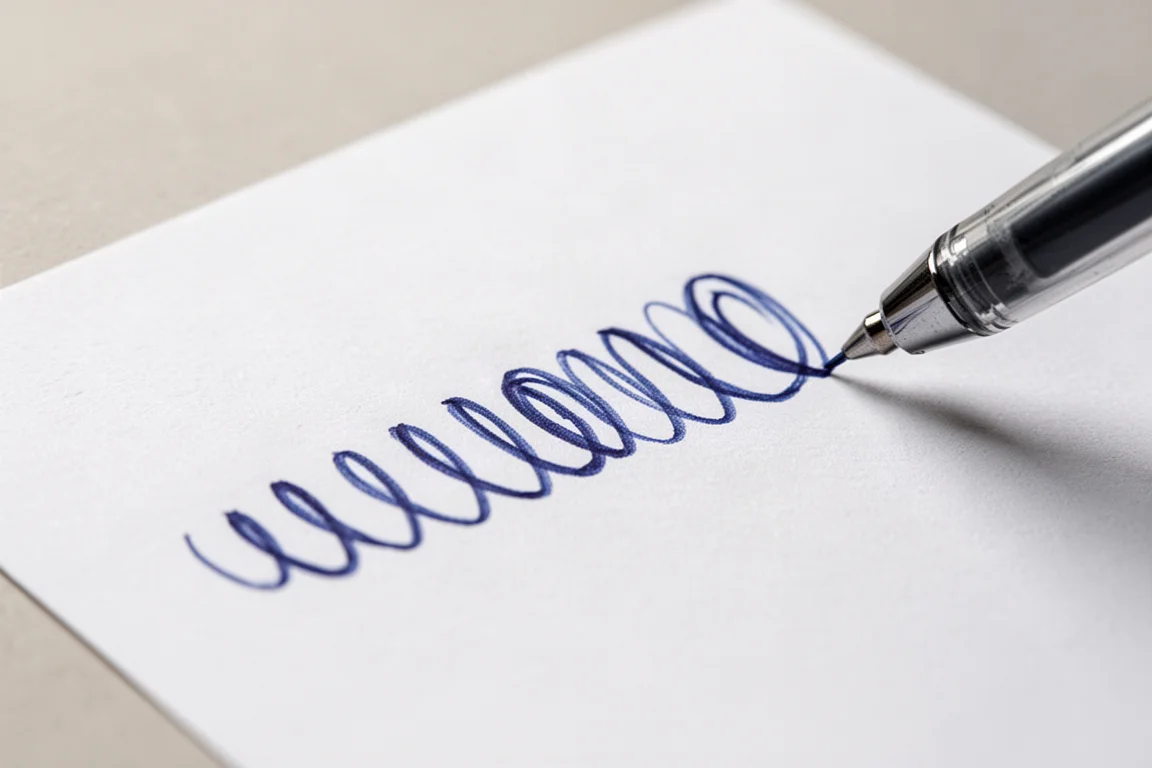
On ordinary copy paper, all three perform exactly as a ballpoint should: no see-through, no bleed-through, just clean lines with a slight impression, which is precisely what you want from this category.
How It Compares to the Jetstream and Zebra Blend
Two obvious alternatives also use hybrid ink. The Uni-ball Jetstream in 0.7 mm is a fine pen, but next to the Acro 300 Fine, its line reads less sharp and less dark, which is why the Acro earns the preference here. The Zebra Blend in 0.5 mm also uses hybrid ink but produced a somewhat faint line with a little skipping in testing.
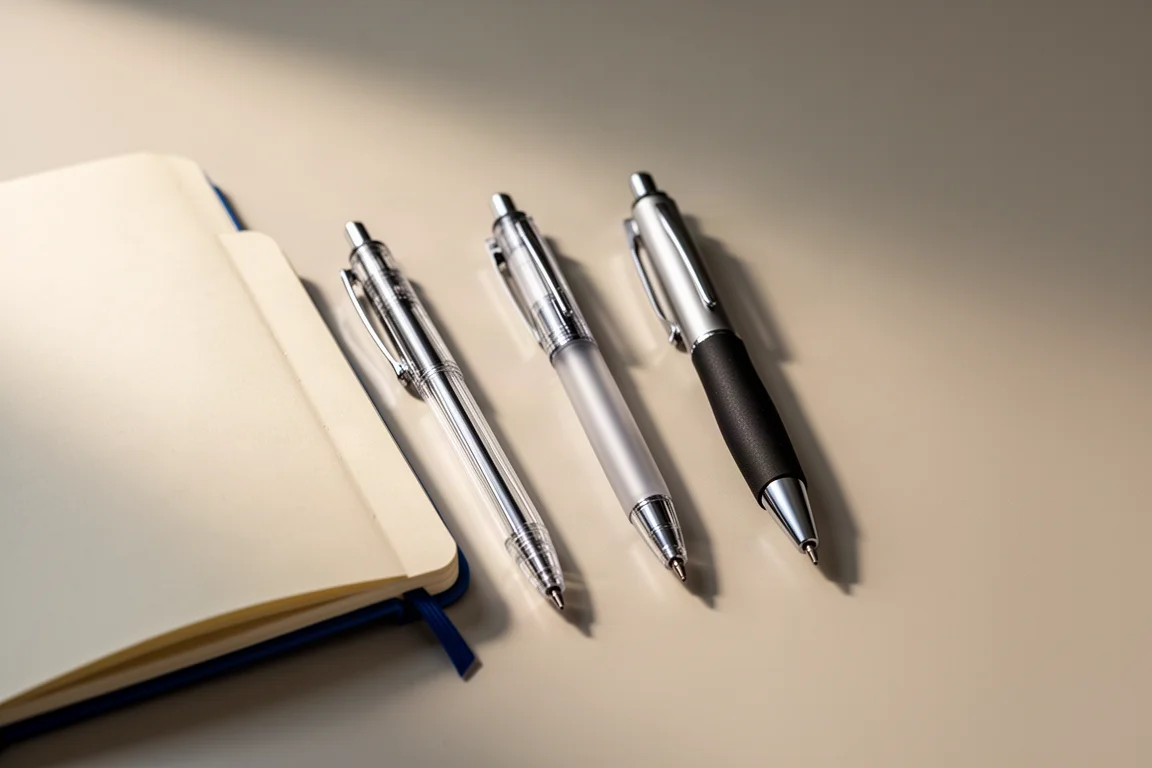
All three are good pens, and any of them will serve you better than a traditional ballpoint. But when reaching for a ballpoint, the Acro family remains the first choice.
Buying Advice
If you are in the US and want something you can grab locally, the Acro Ball with the Fine 0.7 mm tip is the straightforward pick. Skip the Medium unless you specifically like a thick line. If you are willing to order from a specialty retailer, the Japanese Acro 300 offers slimmer vintage-style bodies, more colors, and finer tips including 0.5 and 0.3 for a comparable price. Either way, you are getting the same excellent hybrid ink refill.
Conclusion
The Pilot Acro Ball and Pilot Acro solve the classic ballpoint problems: gloopy ink, skipping, and tips that dry out between uses. With a smoother hybrid ink, comfortable bodies, a shared refill, and mainstream or specialty availability depending on which version you choose, this is an easy recommendation for anyone whose life occasionally demands a great ballpoint.
Product link
View more details for Pilot Acro Ball
This product is mentioned in the review. Check the specifications, options, and compatibility before buying.
View more details for Pilot Acro BallFurther reading
Related Reviews
Stationery
Musgrave Pencils Review: Four Classic Pencils from Tennessee's Last Pencil Factory
We put four Musgrave pencils to paper, from the classic Harvest to the Unigraph 1200 drawing pencil, to see what a century-old Tennessee workshop can still do.
Stationery
Fountain Pen Tiers Explained: From Starter Pens to Luxury Grails
A practical overview of the different levels of fountain pens and inks, from a sub-$20 starter setup to Italian piston fillers and retractable gold-nib everyday carries.
Stationery
HP Premium 32 lb Copy Paper Review: A Fountain Pen Friendly Everyday Printer Paper
A heavy, smooth 120 GSM copy paper that handles fountain pens far better than standard printer stock, with only minor trade-offs in shading and sheen.