Speakers
Perlisten S7T Review: Consistent Sound Across Every Seat in a Real Room
A practical look at the Perlisten S7T floorstanding tower, including multi-seat in-room measurements, its waveguide design, and what to weigh before buying.
Introduction
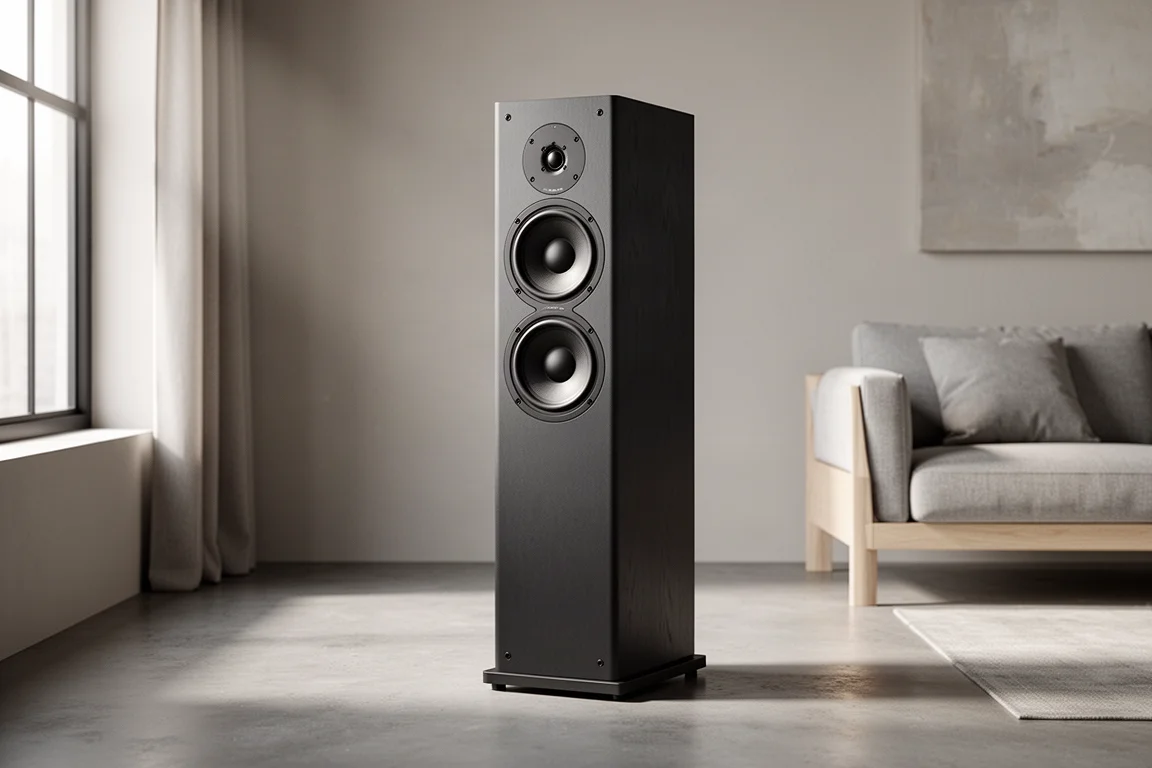
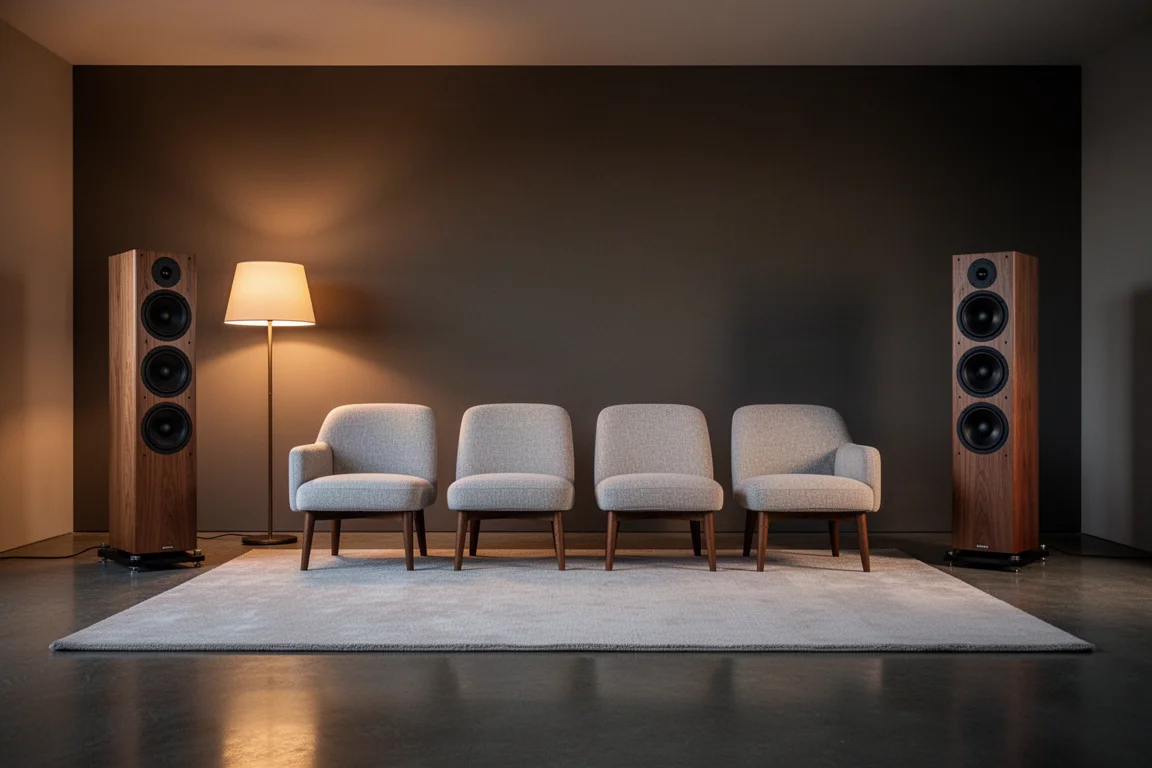
A speaker can look impressive on paper and still behave very differently from one seat to the next in a normal room. The Perlisten S7T takes the opposite approach. It is a floorstanding tower built around a beam-forming driver array that the company calls a DPC waveguide, short for Directivity Pattern Control. A beryllium tweeter sits at the center, with two midrange drivers above and below it, all sharing a single waveguide. The design targets wide horizontal dispersion and narrow vertical dispersion, so more energy reaches the listener and less of it bounces off the ceiling and floor.
That approach matters most in rooms that were never designed for critical listening. A lightly treated family room with an asymmetric layout, a couch with several seats, and speakers placed fairly close to the front wall is a much harder test than a dedicated studio.
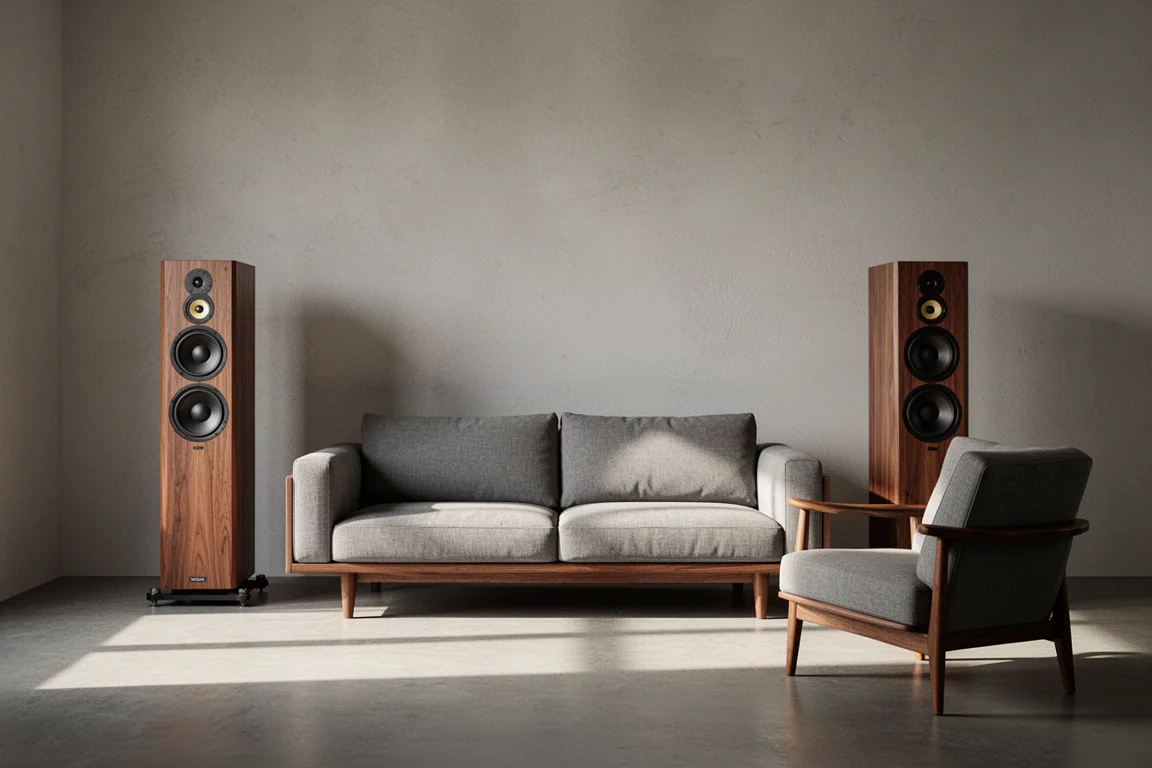
The S7T was run as the front pair in a system that also used in-wall subwoofers and multi-channel processing, which is a realistic way to evaluate a tower of this kind. The real question is not whether it can sound good in one sweet spot. The question is whether it holds together across the whole seating area.
Who This Product Is For
This is a speaker for listeners who care about consistency rather than a single perfect seat. If your room has more than one chair that matters, if you split your time between two-channel music and a multi-channel setup, or if you want a tower that behaves predictably in a space with limited acoustic treatment, the S7T’s design goals line up with those priorities.
It also suits listeners who prefer light, targeted tuning over heavy-handed correction. A speaker that already measures evenly leaves more room for small adjustments and less risk of chasing problems that are not really there.
Main Strengths
The first strength is pair matching. Measured from 300 Hz out to 20 kHz, the left and right towers tracked each other almost identically. When two speakers share very similar tonality, the result is precise imaging and a stable center image, because your ears are not being asked to reconcile two different versions of the same recording.
The second is consistency across seats. The DPC waveguide sums the drivers on the intended listening angle and reduces their output elsewhere, which is what allows the speaker to hold its character as you move off axis. In a room where the listening area spans roughly 8 feet, that behavior is the difference between one good seat and several usable ones.
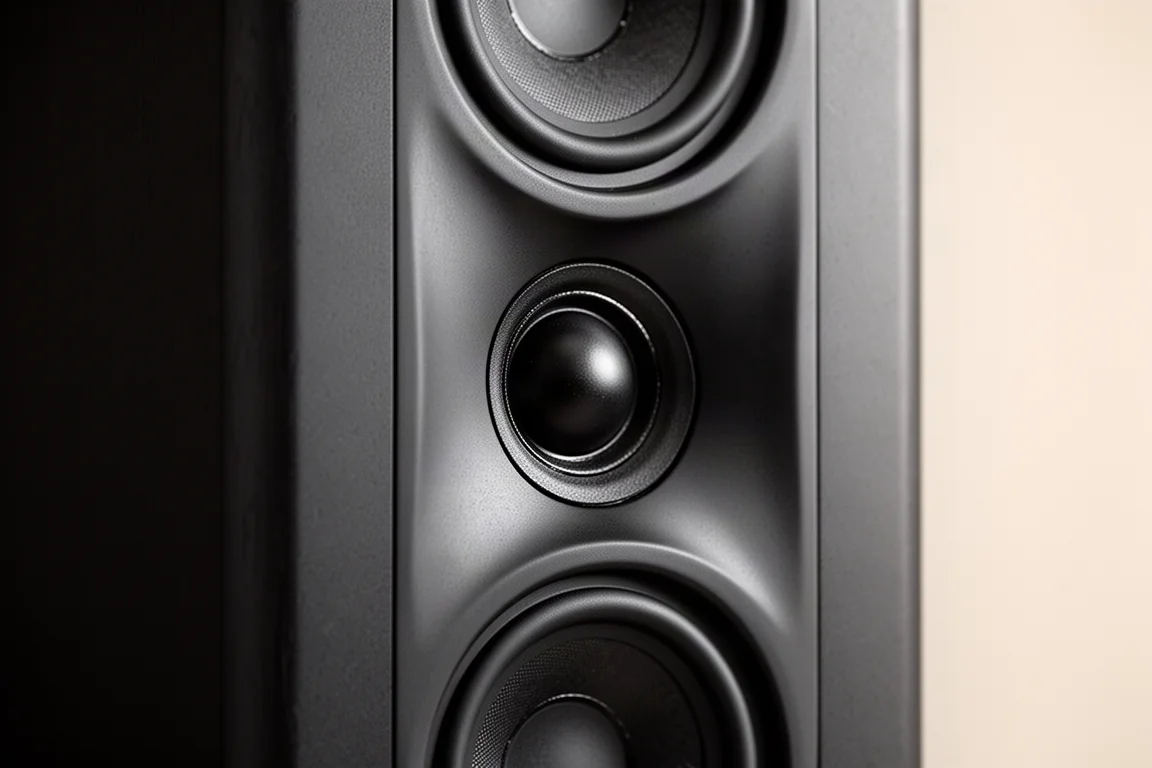
The third is that the speaker does not demand aggressive equalization. Because it measures linearly to begin with, small shelving filters are enough to tailor treble to taste, and there is little reason to apply full-range auto correction to a speaker that is already well behaved.
What the Measurements Show
Measured across four seats in the room, with the main listening position roughly 13.5 feet from the speakers, the response stayed within plus or minus 3 dB from 300 Hz all the way to 20 kHz. That consistency held across the full listening area rather than tapering off at the outer seats, and the high frequencies stayed intact even at the position furthest from the speaker.
Full-range measurements taken with the subwoofers engaged and no equalization showed the expected room resonances in the bass. Those are a property of the room rather than the speaker, and they are the part of the response that responds well to correction once the common peaks across all seats have been identified.
Why Waveguide Control Matters in Real Rooms
A conventional speaker without a properly implemented waveguide tends to show two things in the same room. The first is a discontinuity where the midrange and tweeter hand over, because their directivity does not match. The second is a more pronounced high-frequency rolloff as you move away from the speaker.
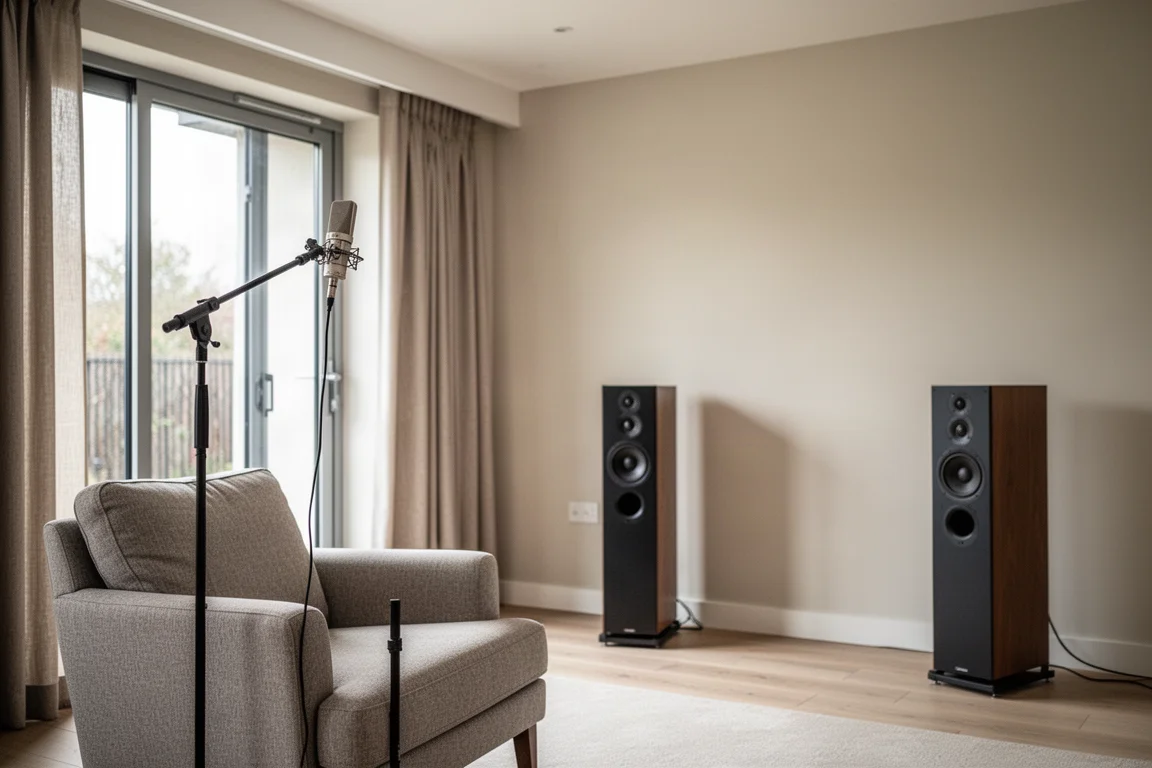
Controlled dispersion reduces both problems. Narrow vertical dispersion limits how much sound is sent toward the ceiling and floor, which matters in a lively room where reflections would otherwise blur detail. Wide horizontal dispersion keeps the listening window generous, so listeners to either side of the center seat still hear a coherent presentation.
Things to Consider Before Buying
Room behavior still applies. The raw in-room response showed bass resonances that need equalization or careful subwoofer integration to clean up, so the speaker’s full-bandwidth performance depends on how the rest of the system is set up.
Full-range listening also assumes subwoofers. The towers were evaluated as part of a system where subwoofers handle the lowest octaves, and integrating them well takes some care.
The speaker sits at the upper end of the market, and its strongest advantage, controlled directivity, only pays off when the speakers are positioned with attention to the listening angle and the room’s reflective surfaces.
Finally, this is a speaker for listeners who value restraint. If your instinct is to run heavy full-range auto correction, you would be working against one of the design’s main virtues.
Buying Advice
Buy the S7T if your priority is even tonality across a real seating area rather than a single narrow sweet spot. It makes the most sense in a room with several listening positions, in a system that already includes capable subwoofers and a processor or amplifier with flexible equalization.
If you mainly listen alone, close to the speakers, in a heavily treated room, the design’s specific advantages will be less visible, and a simpler speaker may serve you just as well. Either way, budget for setup time. Careful placement and a small amount of tuning do more for a speaker like this than any dramatic correction curve.
Conclusion
The Perlisten S7T is an interesting case because its strengths are measurable rather than rhetorical. Near-identical left and right response, a plus or minus 3 dB result across a wide seating area, and a design that asks for very little equalization add up to a speaker that behaves the way a well-engineered tower should in an ordinary room. If that kind of consistency is what has been missing from your setup, this is a design worth a serious look.
Product link
View more details for Perlisten S7t
This product is mentioned in the review. Check the specifications, options, and compatibility before buying.
View more details for Perlisten S7tFurther reading
Related Reviews
Speakers
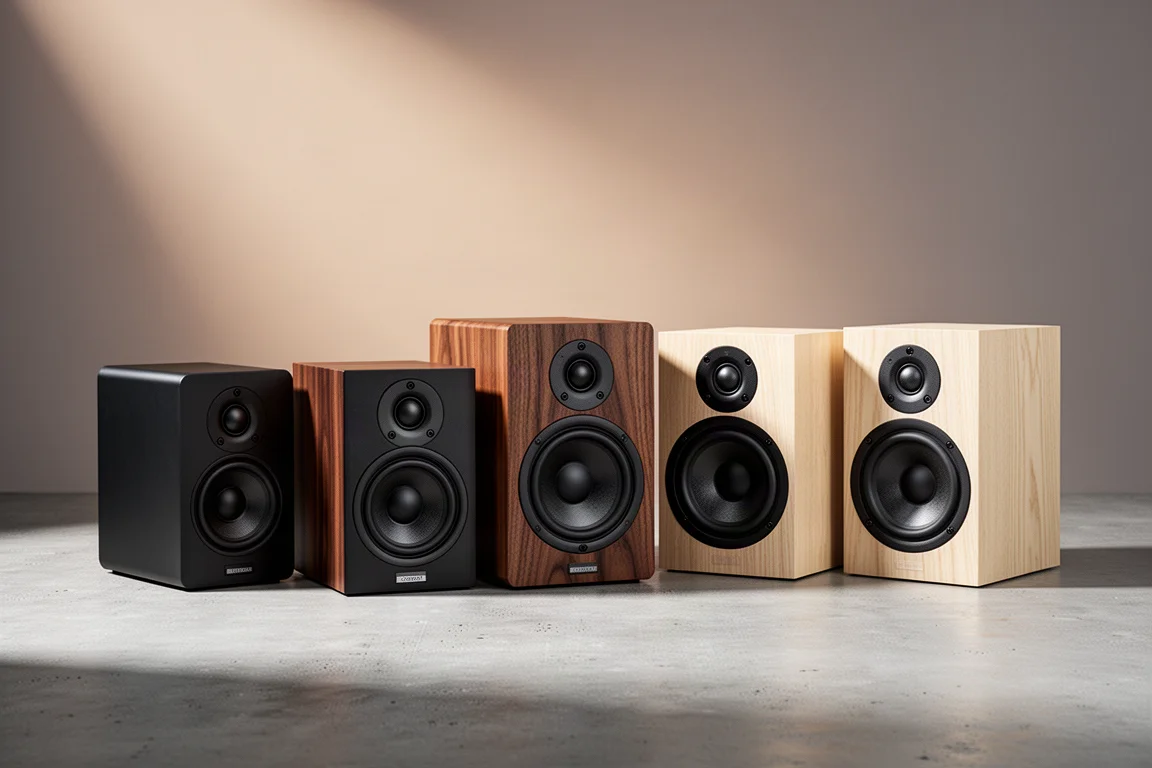
13 Under-the-Radar Speakers Still Worth Buying
Thirteen speakers that quietly stayed in production while newer models took the spotlight, from budget bookshelf pairs to a full-size tower.
Speakers
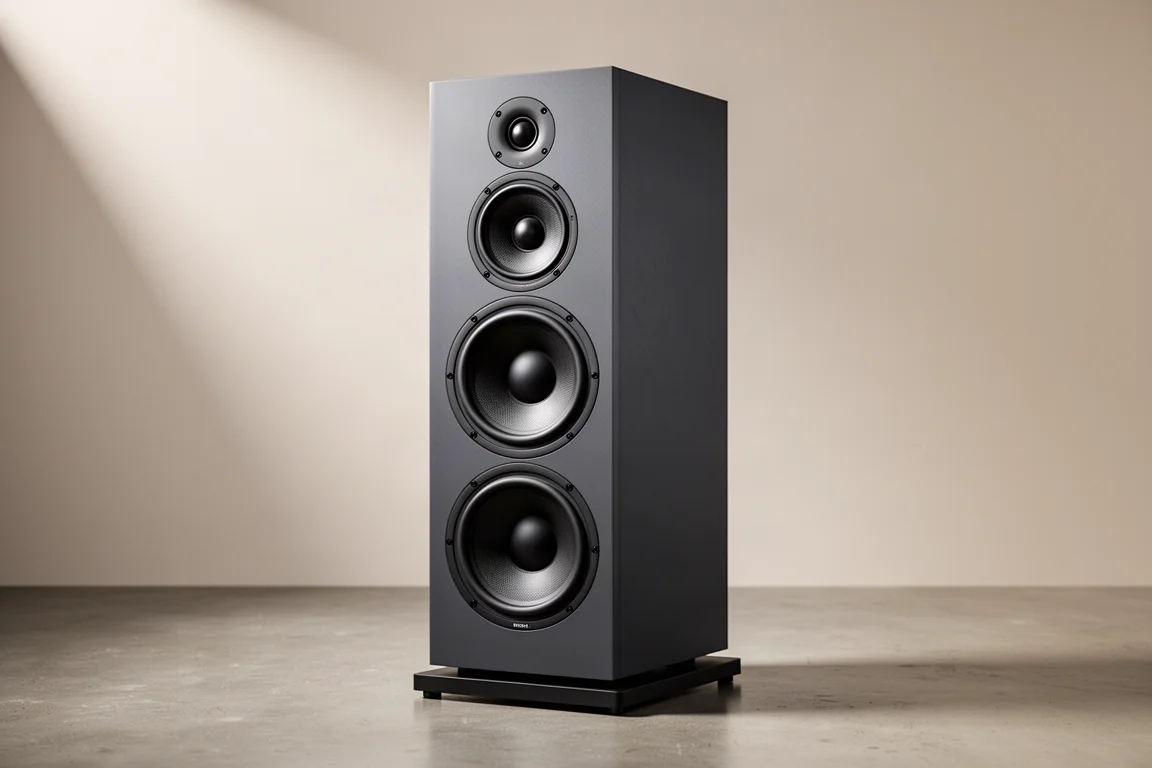
Arendal 1528 Monitor 8 Review: A Three-Way Standmount With Serious Dynamic Headroom
A three-way standmount speaker with extremely low distortion, high output capability, and deep bass for its size, plus the setup details worth knowing before buying.
Speakers
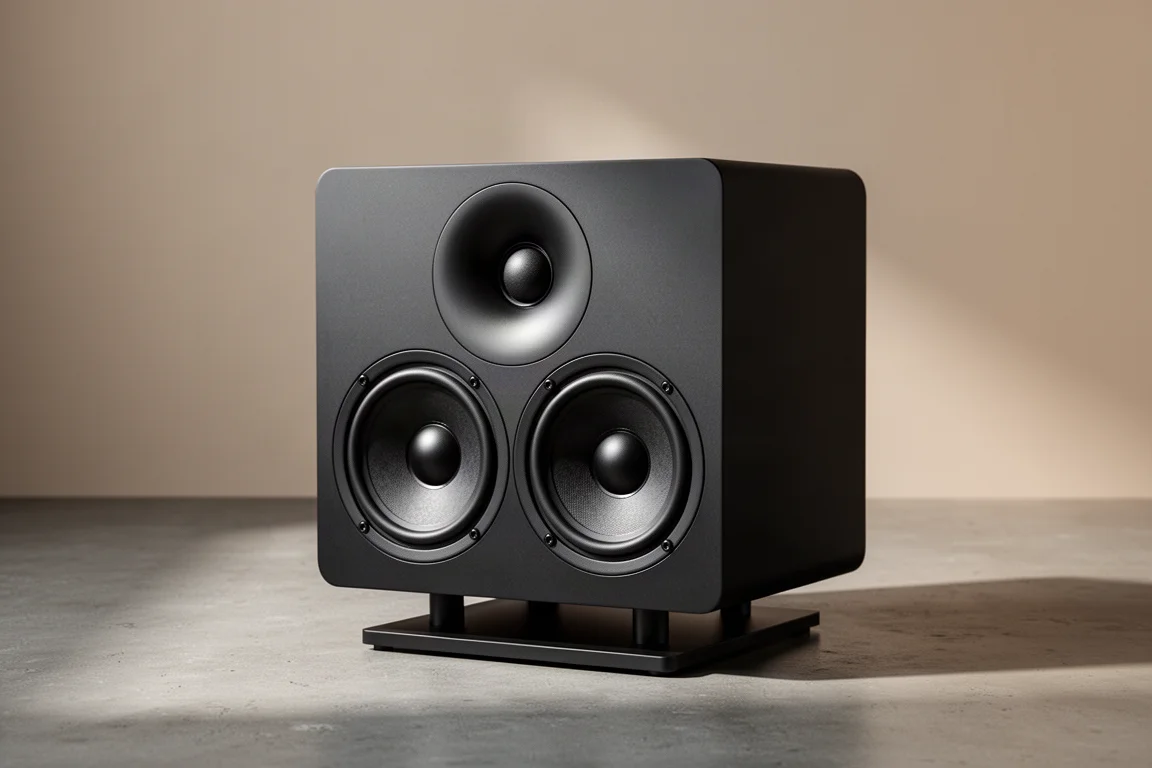
Arendal 1723 Monitor S Review: A Compact Monitor With Serious Ambition
A close look at the Arendal 1723 Monitor S, a compact MTM monitor with a waveguide-loaded tweeter, an HDF cabinet, and flexible ported or sealed operation for music and home theater.