Stationery
Pentel Super Multi 8 (XPH803) Review: A Classic Multi-Pen Gets a 2026 Refresh
The renewed Pentel Super Multi 8 packs eight refills into a compact body. We look at what changed, what still works, and where this retro multi-pen falls short.
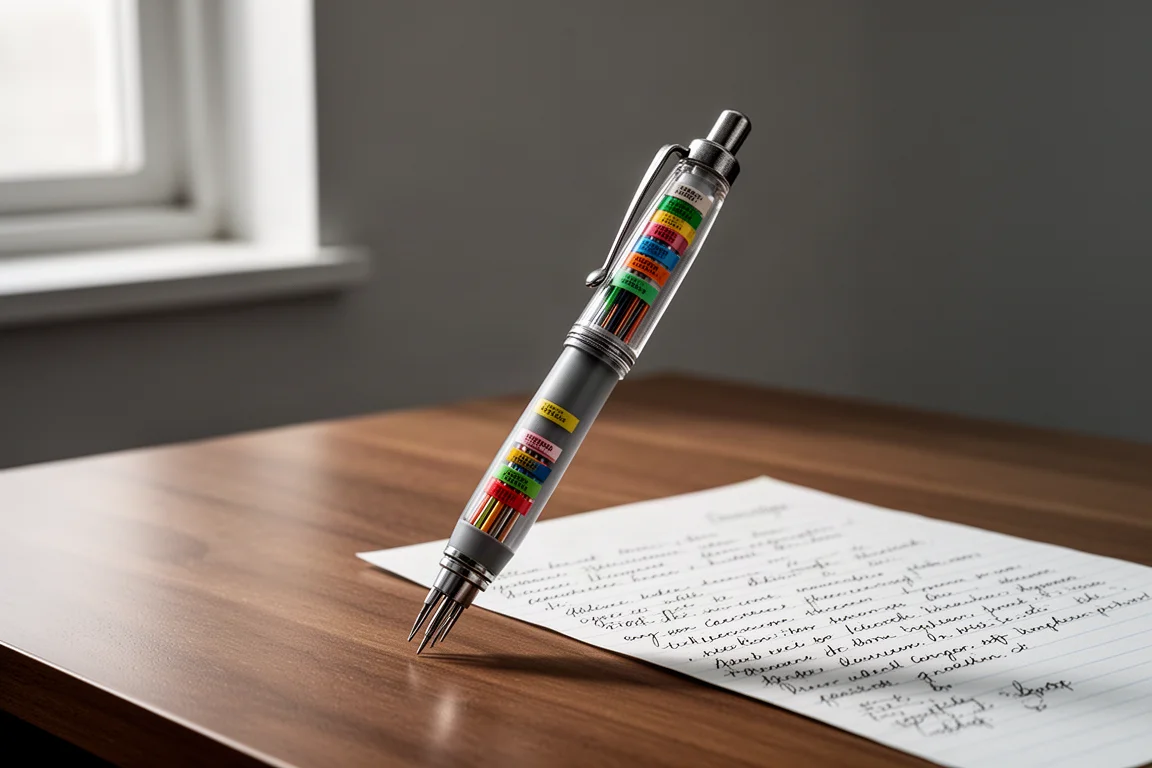
Introduction
Few writing instruments have a story quite like the Pentel Super Multi 8. The lineage dates back to 1982, when the original drop-mechanism holder with switchable lead colors debuted as a world first. In 1987 it was reborn as the Multi 8 in designer and drafting versions, and in 1988 the Super Multi 8 arrived with a ballpoint refill built in. It even won a Good Design Award in 1989, and the design has barely changed in the roughly four decades since.
The 2026 renewal, released January 22, keeps that legacy intact while quietly modernizing the details. The new model, the XPH803, retails at 3,300 yen including tax. Note that the previous version is still on sale, so double-check the model number before buying: the renewed version carries an X at the start of its model code.
What the Renewed XPH803 Actually Is
This is not a brand-new product but a refreshed version of the regular Super Multi 8. The barrel is resin, with gaps that let you see the refills inside, finished in grey with the logo and refill labels printed along the body. For a pen holding eight refills, it is remarkably compact and light, with a slightly top-heavy balance.
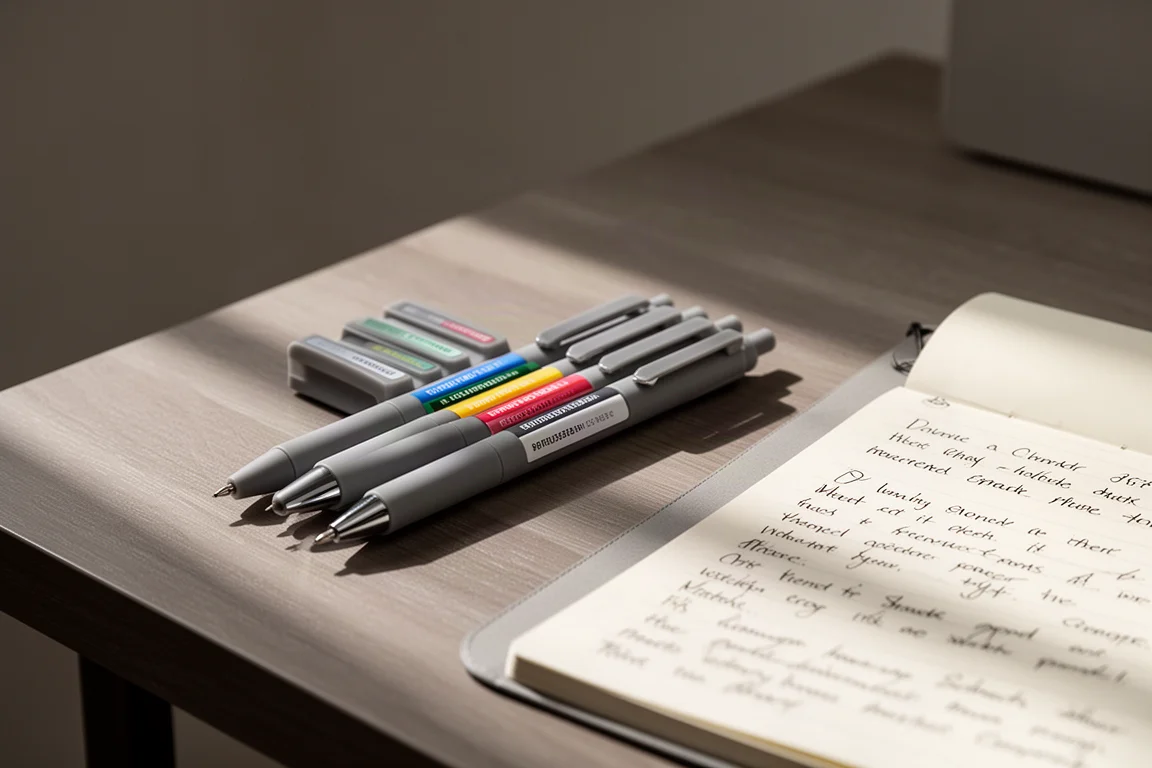
The packaging has changed too: the old plastic case is now a paper-based design with a more modern, pop-influenced look, and it is much easier to see which refills are included. There is also a variant bundled with spare refills, and a transparent-bodied Art Multi 8 in the same series that ships with sketch-friendly colors, which could suit travelers who illustrate in notebooks.
How the Drop Mechanism Works
Choosing a refill is simple: align the clip with the label of the refill you want, then knock. The lead or refill drops into the tip. The clip action is a little stiff, with a distinct click as it switches positions. Since this is a drop-style pen, you catch the lead with your finger and adjust the length, though the lead will not fall straight out if you forget; it stays put on its own. Ballpoint refills stop at the right position automatically, so no adjustment is needed.
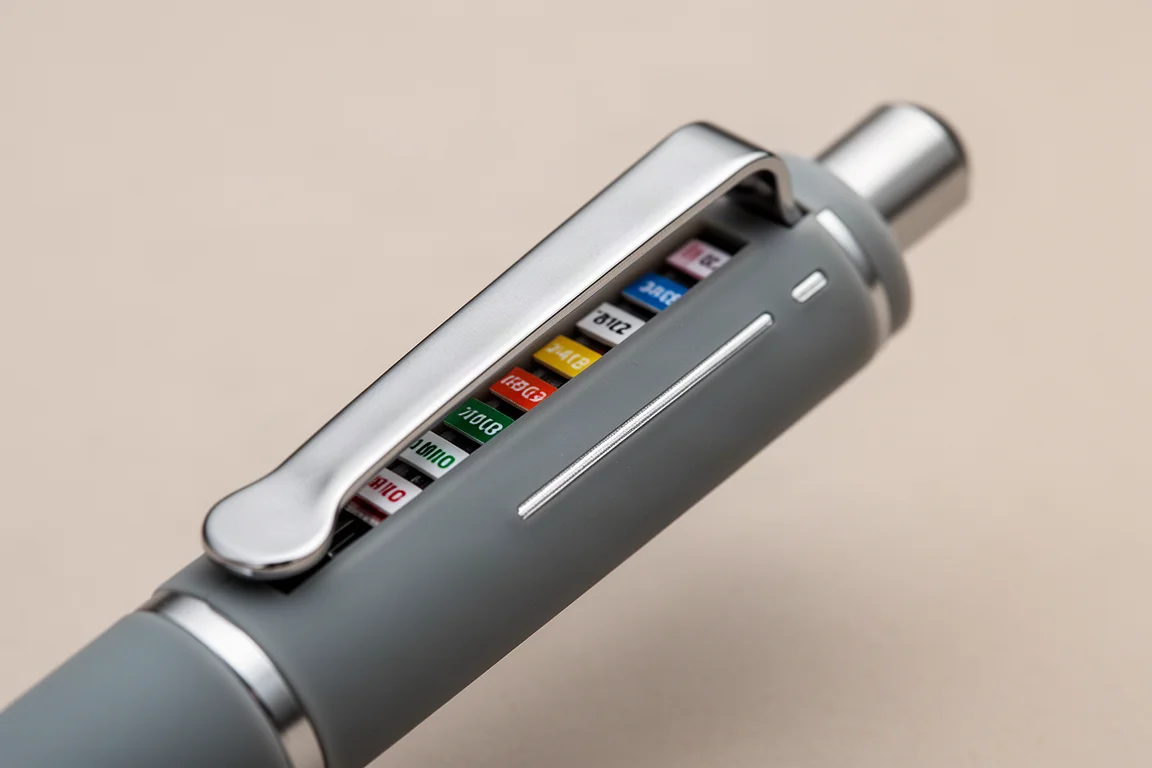
Swapping refills follows the same principle. Align the clip with the target refill, then align the silver line on the knock section with the clip and knock, and the refill drops out for replacement. To store one, hold the pen tip upward while knocked so gravity returns the lead, and always return the silver line to its original position. The lead must be fully retracted before the next one will switch out, so check carefully.
One important caveat: there is no cross-compatibility with other refills. Standard D1 ballpoint refills can be trimmed to length and inserted, but they may jam or fail to knock properly, so it is not recommended. Standard 2mm lead, on the other hand, can be broken to the right length in a pinch.
What Changed in the Renewal
The biggest difference from the old model is the initial refill lineup. The older version shipped with 0.7mm black, red, and blue ballpoint; colored lead in red, a non-copy PPC shade, fluorescent yellow, and fluorescent pink; and a 2mm HB lead. The renewed XPH803 drops the PPC non-copy color and now carries red, blue, fluorescent yellow, and fluorescent pink as its four colored leads, alongside the same three ballpoint colors and 2mm HB lead.
That PPC non-copy lead was an interesting oddity: text written with it would not appear when photocopied, useful for notes you wanted to keep off duplicated documents, though it also meant anything written in that color would vanish on a copy.
The overall refill lineup across the series remains twenty types, so you can customize the pen to your taste by buying separate refills.
Writing Performance
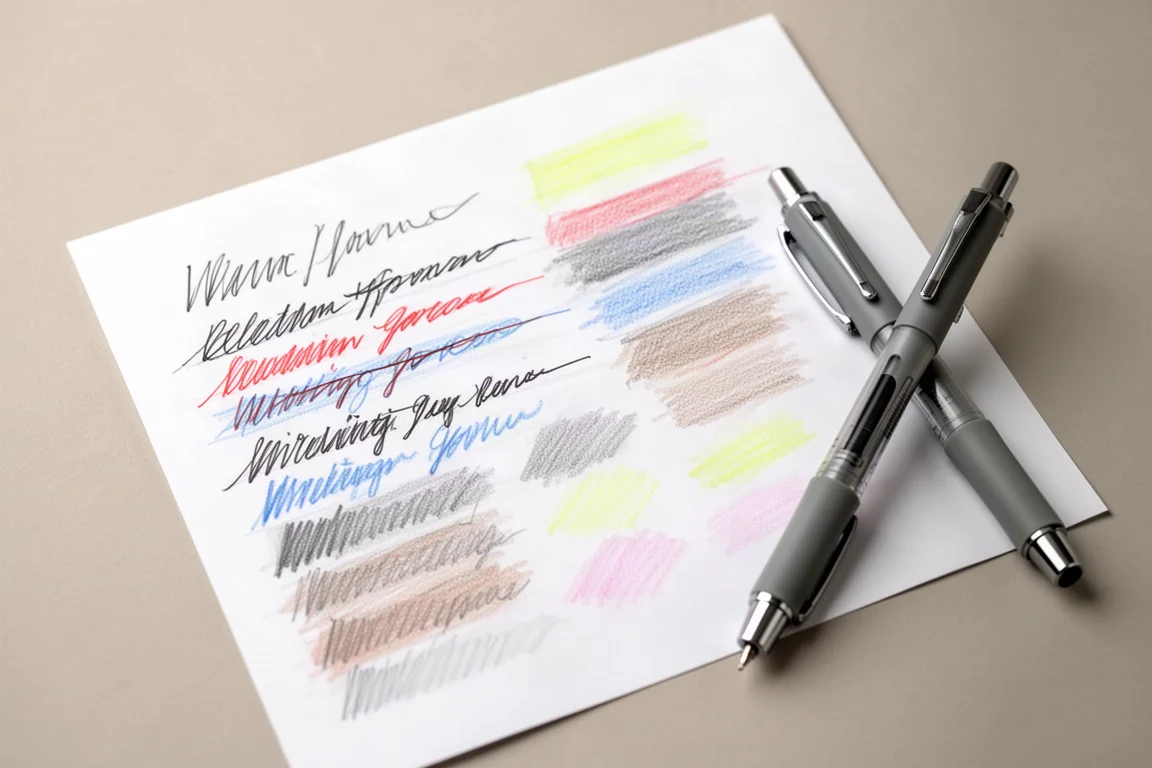
The colored leads are usable but this is not a soft, layering-friendly pencil lead, so illustrators used to waxier colored leads may find it limiting. The fluorescent leads are noticeably pale on paper; the pink looks like the more practical of the two, while the yellow comes out very light.
The ballpoint is the pleasant surprise here: it writes very smoothly, though the ink viscosity is on the higher side, not the low-viscosity feel of something like a Jetstream, so it can skip slightly on occasion. The 2mm HB lead is comfortable and easy to write with, and it is a shame HB is the only hardness offered.
The tip uses a three-pronged chuck that grips the lead firmly, which means virtually no wobble at the pen point. That stability is one of the pen’s best qualities. The grip has grooves to reduce slipping, though they are quite shallow, so they help less than you might hope.
Strengths
The retro design is a genuine part of the appeal. It won the Good Design Award in 1989, and while it does not look modern, the vintage character is exactly what makes it charming. The completely stable tip gives an excellent writing feel, especially for the ballpoint and pencil. Balance is reasonable, and fitting eight refills into this size and weight is genuinely impressive. Overall it is a very easy pen to handle.
Things to Consider Before Buying
The rattling is the biggest complaint: refills are not fixed inside the barrel, so the pen clicks audibly every time it moves. The lack of refill cross-compatibility is also a letdown, especially for ballpoint refills, and offering only HB lead feels limiting when at least a B would have been welcome.
The barrel is printed with the names of the initial refills, which becomes confusing if you swap in different purchased refills, even though the transparent window helps. The drop mechanism also has a learning curve, and getting the lead length right takes practice at first. Finally, the fluorescent leads are hard to use well, with the yellow in particular being far too light.
Buying Advice
The XPH803 makes the most sense for stationery lovers who appreciate design history and want one compact pen that covers everyday writing, colored annotation, and pencil work. If your priority is smooth everyday ballpoint writing plus a usable pencil lead, this pen delivers both with unusual stability for its size.
If you mainly want bright highlighter-style marking, wait: the weak fluorescent leads are the most obvious gap, and a future higher-end model combining ballpoint and fluorescent marker refills would be an easy recommendation. For now, the Super Multi 8 remains a quirky, likable niche pen rather than a must-have for everyone.
Conclusion
Nearly forty years after its debut, the renewed Pentel Super Multi 8 is still a fascinating pen to pick up. The renewal changes less than you might expect, mainly the packaging and the colored lead lineup, while keeping the design, the drop mechanism, and the eight-refill charm fully intact. Its flaws, the rattling refills, the pale fluorescent leads, and the strict refill compatibility, are real but forgivable in a pen this characterful. If a compact body holding eight refills sounds appealing, the XPH803 is worth a closer look.
Product link
View more details for Pentel Super Multi 8 (XPH803)
This product is mentioned in the review. Check the specifications, options, and compatibility before buying.
View more details for Pentel Super Multi 8 (XPH803)Further reading
Related Reviews
Stationery
Musgrave Pencils Review: Four Classic Pencils from Tennessee's Last Pencil Factory
We put four Musgrave pencils to paper, from the classic Harvest to the Unigraph 1200 drawing pencil, to see what a century-old Tennessee workshop can still do.
Stationery
Fountain Pen Tiers Explained: From Starter Pens to Luxury Grails
A practical overview of the different levels of fountain pens and inks, from a sub-$20 starter setup to Italian piston fillers and retractable gold-nib everyday carries.
Stationery
HP Premium 32 lb Copy Paper Review: A Fountain Pen Friendly Everyday Printer Paper
A heavy, smooth 120 GSM copy paper that handles fountain pens far better than standard printer stock, with only minor trade-offs in shading and sheen.