Bike Wheels
Parcours Chrono Spoked Wheel Set Review: What Real-World Stability Testing Suggests
A closer look at the Parcours Chrono spoked wheel set, the handling-stability research behind it, and what riders should weigh before buying.
Introduction
At the Ironman World Championships, disc wheels are not permitted on the bike course. The reasoning behind the rule is easy to follow: the race is held on an island where riders can meet significant crosswinds once they reach the main body of the course, and a solid rear disc presents a large surface to that wind.
Parcours took a different route into that question. Working with Nottingham Trent University, the brand set out to measure what actually happens to a bike when wind loads the rear wheel, using instrumented test runs and rider feedback rather than assumptions. The Parcours Chrono spoked wheel set sits at the centre of that work, because the comparison under study is the Chrono spoked set against a Chrono front wheel paired with a solid rear disc.
This review looks at what that research covers, what the Chrono spoked set is designed to do, and what riders should keep in mind before deciding.
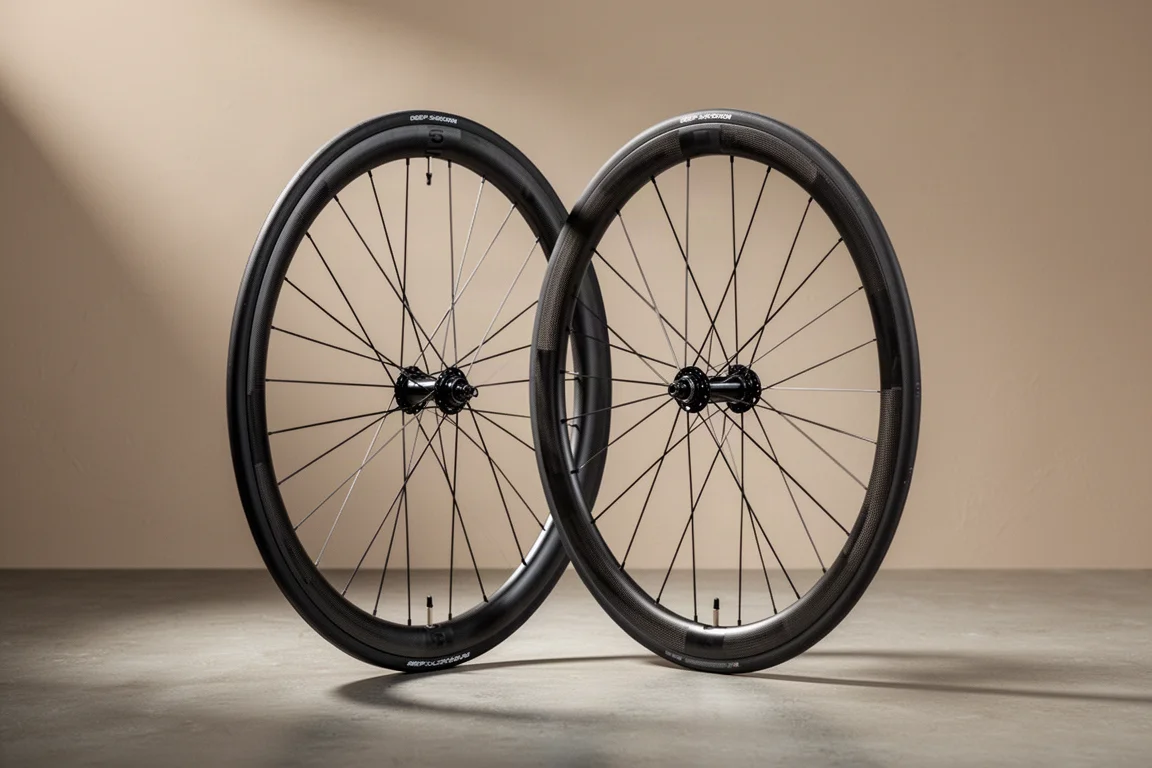
What the Parcours Chrono Spoked Wheel Set Is
The Chrono spoked wheel set is Parcours’ spoked option for time trial and triathlon use. In the stability study, it serves as the reference configuration: riders complete out-and-back runs on the spoked set, then repeat them with a Chrono front wheel combined with a solid rear disc, and the two setups are compared directly.
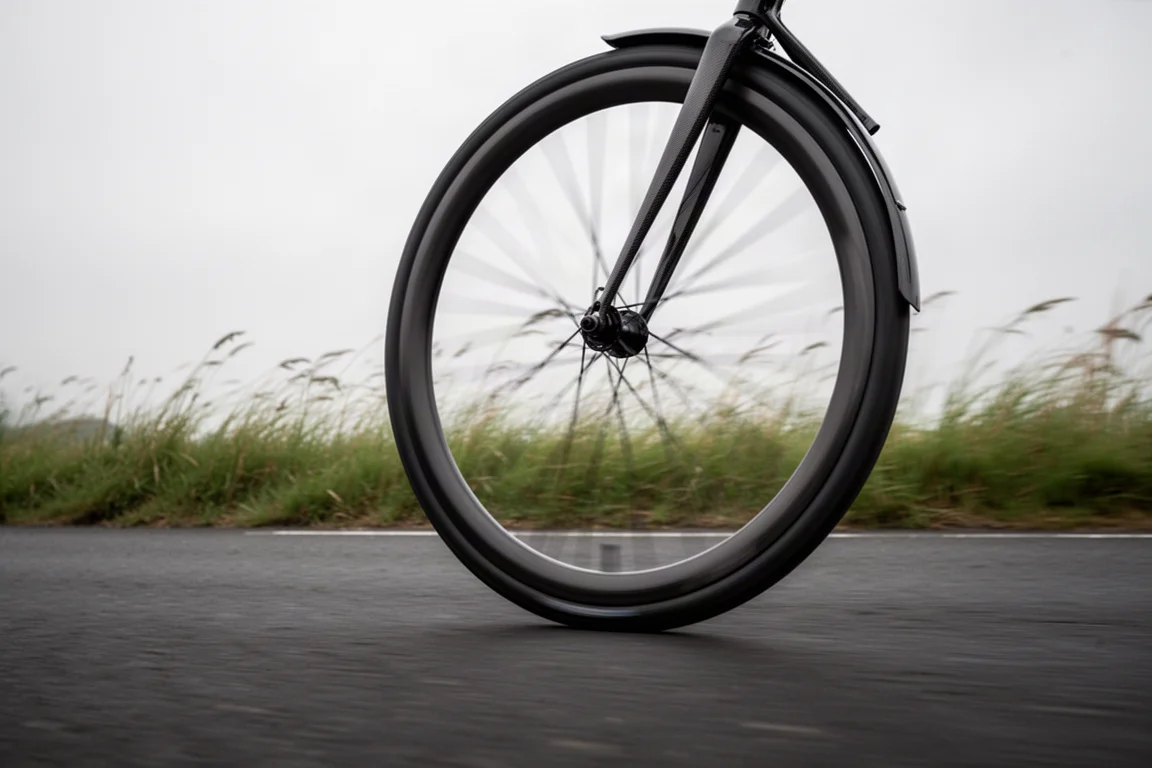
Because a spoked wheel lets air pass through the structure, it behaves differently from a solid disc under lateral wind load. That difference is exactly what the research programme was built to quantify, and it makes the Chrono spoked set the natural baseline for anyone trying to understand how wheel choice affects bike handling in real conditions.
Who This Wheel Set Is For
This wheel set is aimed at riders who race against the clock, whether in triathlon or time trial events, and who want a setup that stays predictable when the wind picks up.
The topic matters most on exposed courses. Flat, open roads with few hedgerows or buildings give the wind a clear run at the bike, and those are the conditions where a rider notices every movement through the front end. If your racing calendar regularly includes coastal or island courses, or long stretches of open farmland, the handling question is not academic. It is the difference between staying locked in the aero bars and sitting up to steady the bike, which costs time and, more importantly, can put a rider in an unsafe position.
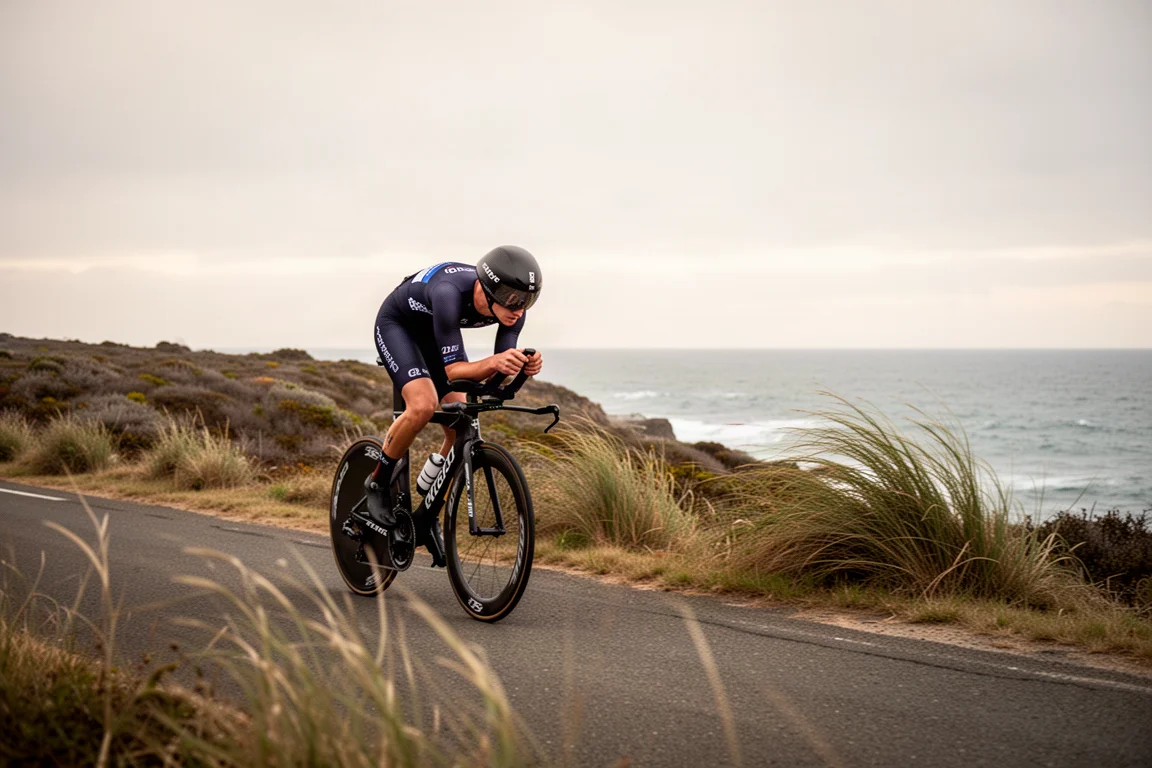
Riders who have previously favoured a disc rear wheel for aerodynamic reasons also have a reason to look at the spoked alternative, since the research programme was designed specifically to test whether the two setups handle differently.
What the Stability Research Found
The study uses a three-axis accelerometer mounted at the handlebar end. As the rider moves, the sensor records acceleration in three directions, which captures handling instability moments: the sudden twitch or jerk that arrives when a gust catches the wheel rather than the slow, steady sideways push of a constant wind.
That distinction matters. A constant side force is something a rider can lean against and manage. The unsteady input is the harder problem, because it is what forces a rider up out of the aero bars to regain control, or worse, creates a genuinely unsafe moment. The rule that restricts disc wheels was written to protect against that kind of instability.
The early findings run counter to the assumption behind the ban. The data patterns show that running a rear disc improved handling stability and reduced the instability moments that cause a rider to lose composure. Parcours explains the mechanism in terms of pressure. When airflow meets a solid rear disc, it builds a high pressure area on the upwind side, and because no air passes through the disc, the downwind side stays at comparatively low pressure. That pressure differential is larger than it would be with a spoked wheel.
The larger differential shifts the centre of pressure further back on the bike, toward the rear wheel. The brand draws an analogy with lowering a person’s centre of gravity: a lower centre of gravity makes someone harder to push over, and moving the centre of pressure rearward makes it harder for an instability moment to develop at the front of the bike. Parcours also notes that a disc cannot eliminate the steady side force it generates, but because the rider’s weight sits predominantly over the rear wheel, that steady force is much less of a concern than an unpredictable gust.
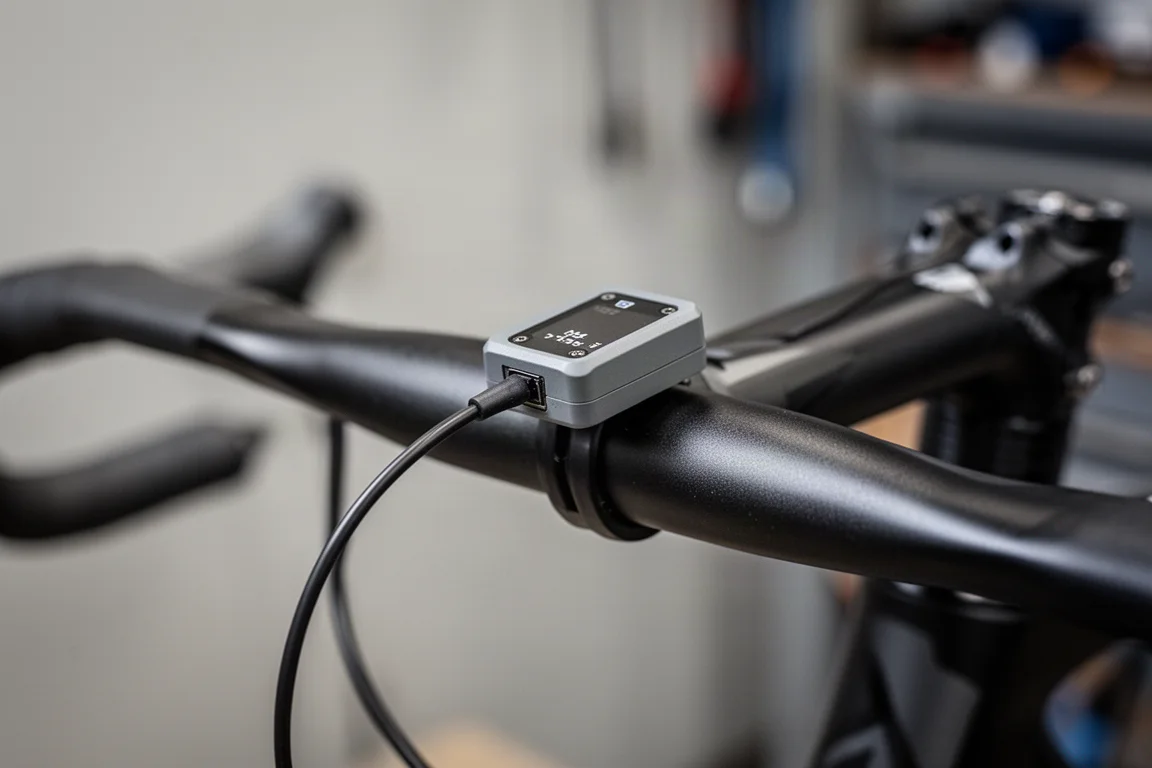
Alongside the sensor data, the programme collects rider surveys covering perceived stability, safety, control, and the level of concentration required to hold a line. The objective and subjective strands are analysed together, and the early stages of both point in the same direction. The next step is to try to attach a number to the effect, so that the stability benefit of a rear disc can be expressed as a measurable quantity rather than a general impression.
Main Strengths
The most useful thing about the Chrono spoked wheel set is the context it is sold in. It is not presented as a component in isolation, but as one half of a comparison that Parcours and Nottingham Trent University have been running across many out-and-back test runs, with the data analysed alongside rider-reported feedback on stability, safety, control, and concentration.
That combination of methods is a genuine strength. Sensor data captures what the bike does, and rider feedback captures what the experience feels like, which is what ultimately determines whether someone stays in the aero position or sits up. Reading the two side by side gives a fuller picture of handling than either would produce alone.
For riders whose events follow rules that restrict disc wheels, the spoked set is also the practical choice. It complies with the format as it stands while still being the configuration the brand uses to benchmark stability, which means buyers are getting a wheel set built around a clearly defined handling question rather than purely around aerodynamics.
Parcours is straightforward that the work is ongoing and that the underlying mechanism is still being examined in detail, which is a reasonable position for a technical claim of this kind.
Things to Consider Before Buying
The study is not finished. Parcours describes the findings as the first stages of the testing, with clear differences emerging between the two setups, but the quantification stage is still to come. Riders who want a single definitive number attached to the handling benefit will need to wait for that work to complete.
The disc wheel restriction itself is a race rule, not a limitation of this wheel set. It is worth being clear about the distinction, because the debate over whether the rule is well founded does not change what is permitted on race day at events that enforce it.
It is also worth keeping expectations realistic. The research suggests that a rear disc can reduce the sharp instability moments that catch riders out, but it does not remove the steady sideways force that a solid wheel generates in a crosswind. The advantage described is about control and composure in gusty conditions, not about making wind disappear. A rider who struggles in strong, constant crosswinds should still expect to feel the wind on the bike.
Buying Advice
The Chrono spoked wheel set makes the most sense for riders who race time trials or triathlons on exposed courses and who want a configuration that meets current disc-wheel restrictions without giving up a considered approach to handling.
Before committing, it is worth thinking about the conditions you actually race in rather than the conditions you imagine. Riders who mostly compete on sheltered, technical courses will notice the stability question far less than those who spend hours on open, wind-swept roads. If your calendar is dominated by flat and exposed racing, the handling behaviour of your rear wheel deserves real weight in the decision.
It also helps to consider the wheel set as part of a system. The Chrono spoked set is designed to work as a matched pair, and the research programme compares it both as a complete set and as a front wheel paired with a rear disc. That gives riders a clear route to experiment within a single, consistent family of wheels rather than mixing brands and hoping the handling characteristics align.
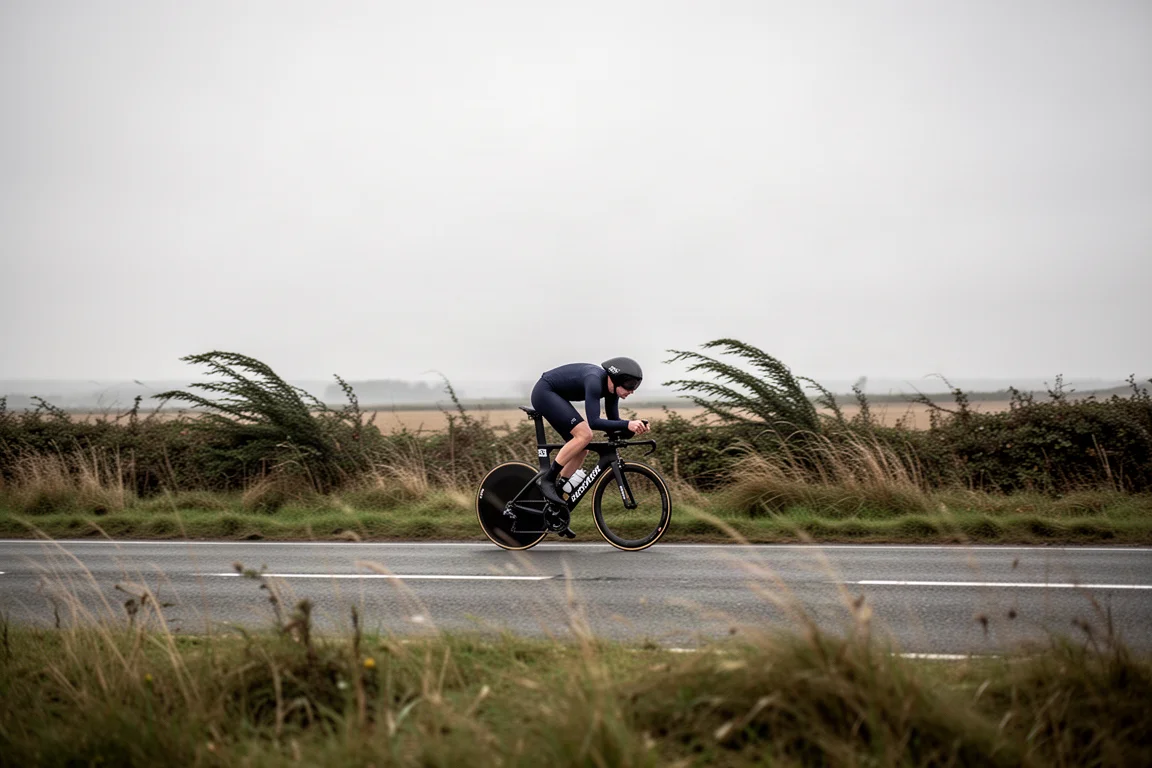
If your priority is a compliant wheel set from a brand that has invested in measuring real-world stability, the Chrono spoked option is a defensible choice. If your priority is the last increment of aerodynamic gain and your events permit a disc, the study’s own findings suggest that debate is far from settled.
Conclusion
The Parcours Chrono spoked wheel set is a time trial and triathlon wheel set with an unusually well documented development story behind it. Working with Nottingham Trent University, Parcours has been measuring handling stability with handlebar-mounted accelerometers and rider surveys, and the first results indicate that a rear disc may actually improve stability rather than compromise it.
For buyers, the practical takeaway is narrower than the wider debate. The Chrono spoked set is the compliant, matched-pair option, and it is the benchmark against which that comparison is being made. Riders who race in windy, exposed conditions and want a considered, rule-compliant setup have a clear reason to look closely at it, while riders expecting wind to stop mattering entirely should temper that expectation until the research is complete.
Product link
View more details for Parcours Chrono Spoked Wheel Set
This product is mentioned in the review. Check the specifications, options, and compatibility before buying.
View more details for Parcours Chrono Spoked Wheel SetFurther reading
Related Reviews
Bike Wheels
Number 6 Racing Superlight Aero Wheels Review: Deep Rim Speed Without the Weight
A carbon road wheelset that pairs 52mm and 58mm rims with a measured weight below 1,300g, plus the trade-offs to weigh before buying.
Cycling Gear
Aero Helmets and Bottle Setups Tested: Six Options Ranked by Measured Watt Savings
Wind tunnel data on six aero helmets and bottle setups, with real watt savings, practical trade-offs, and guidance on what is worth buying first.
Road Bike Tires
Best Road Bike Tires 2026: Six Options Tested From Budget to Premium
Six road tires across a wide price spread, from around £20 to £92, compared in real-world timed runs on wet roads to see what extra money actually buys.