Tower Speakers
Paradigm Monitor SE 8000F vs Premier 800F: Which Tower Speaker Should You Buy?
A close look at two Paradigm tower speakers: the high-output Monitor SE 8000F and the more refined Premier 800F, plus how to choose between them.
Introduction
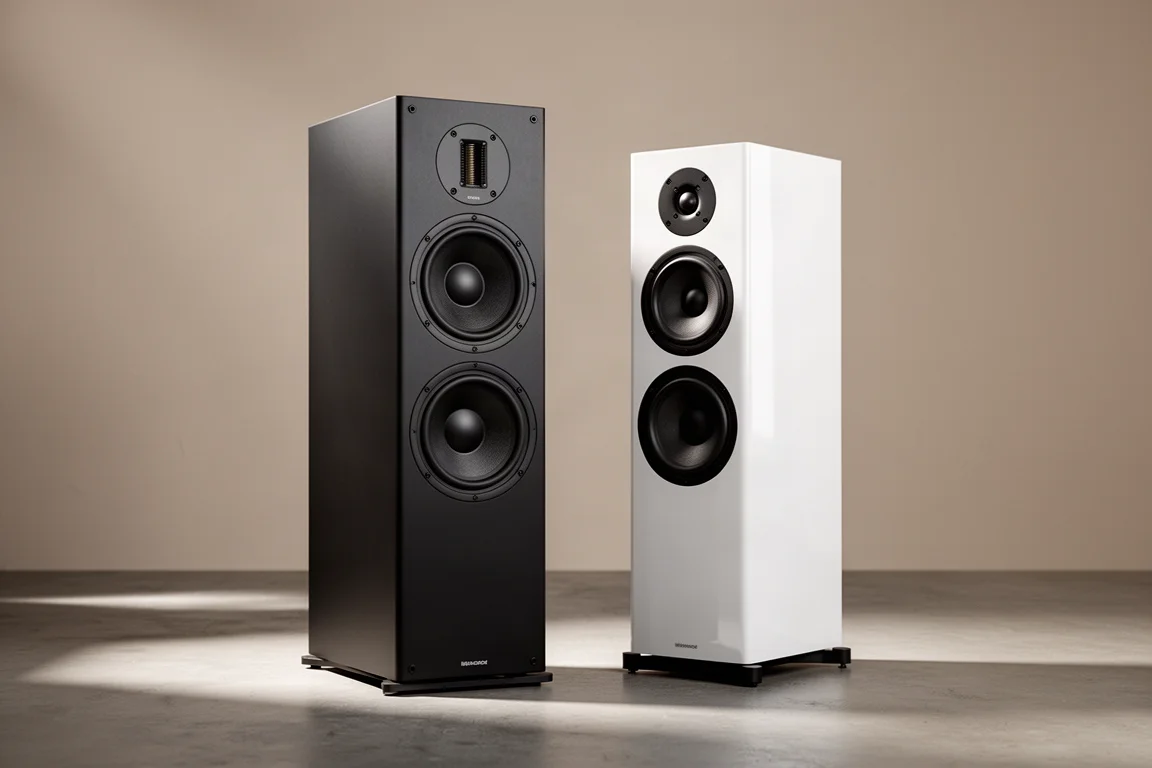
Paradigm builds tower speakers across several series, and two of them sit close enough in purpose to make a direct comparison worthwhile. The Monitor SE 8000F is the larger, higher-output model in the Monitor line, while the Premier 800F comes from the step-up Premier series and costs more for a smaller cabinet. Both are rear-ported towers aimed at listeners who want full-range sound without adding a subwoofer right away.
The two speakers share a family resemblance in driver technology, but they take different routes to the same goal. One leans on output, surface area, and value. The other leans on refinement and a more compact footprint. Which one makes sense depends on the music you play most, the size of your room, and how much amplifier you already own.
What These Two Paradigm Towers Have in Common
Both models use a one-inch dome tweeter mounted in a waveguide. The waveguide extends low-frequency sensitivity so the tweeter can be crossed over lower, and it contributes additional output and efficiency. Each tweeter also uses a perforated PPA lens, which works like an advanced phase plug by cancelling out-of-phase energy to reduce on-axis beaming.
Both are bass reflex designs with rear-firing ports, and both are rated as 8-ohm compatible while behaving more like 4-ohm loads in practice. Paradigm applies the same core thinking across its range, from the value-focused Monitor series through the Premier, Founder, and Persona lines, so the differences here come down to size, output, and price rather than a completely different design philosophy.
Paradigm Monitor SE 8000F: Big Output, Strong Value
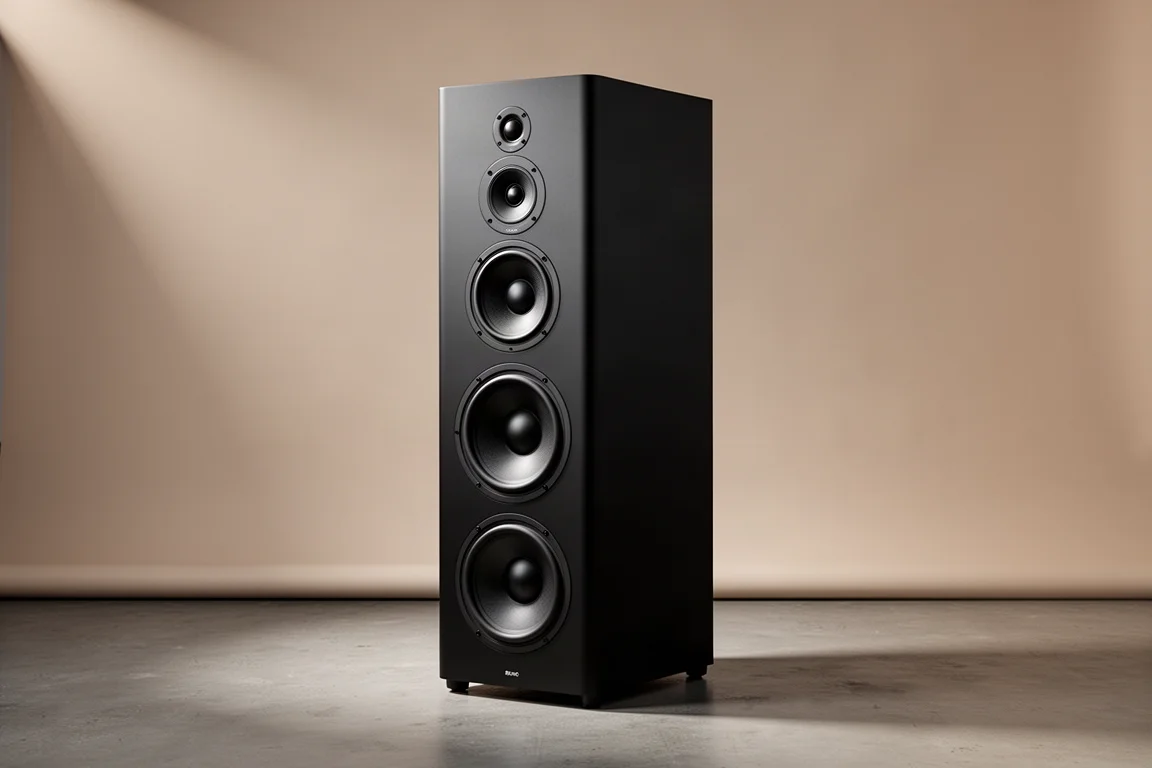
The Monitor SE 8000F is a five-driver, three-way ported tower with two rear ports, each roughly three inches across and flared to reduce turbulence. The tweeter is a one-inch aluminum dome with a neodymium magnet and a large heat sink on the back, a detail that matters because budget neodymium tweeters often compress thermally at high volume. Paradigm addressed that directly.
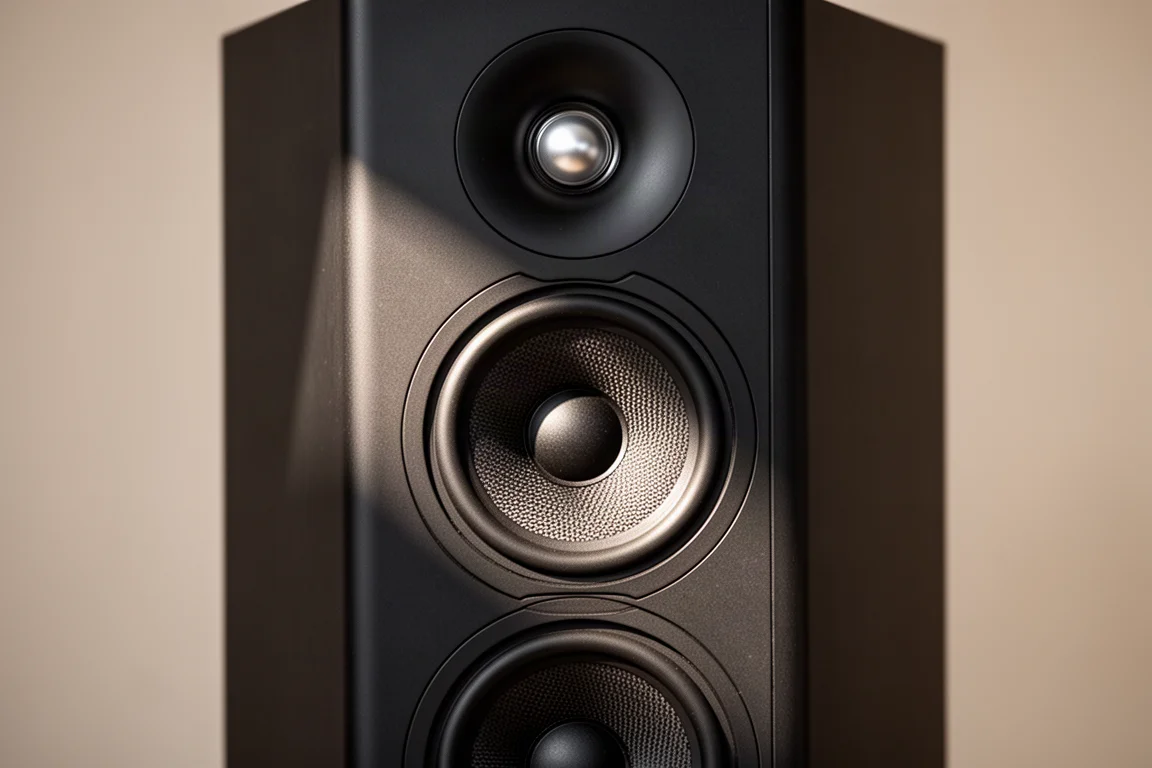
Below the tweeter sits a 6.5-inch poly cone midrange in its own wooden sub-enclosure with generous Dacron insulation rather than a thin plastic cup, and it is vented under the spider for better power handling and cooling. Three eight-inch polypropylene woofers handle the low end, with substantial motor structures and large magnets. The stamped steel baskets are not as thick as they could be, a normal compromise at this price.
The cabinet is half an inch thick throughout, including the front baffle, and it is well braced internally. A single pair of binding posts keeps things simple. Paradigm rates the speaker at 45 Hz to 21 kHz plus or minus 3 dB, 95 dB in-room sensitivity (92 dB anechoic), and 150 watts of continuous power handling. It stands 45 inches tall, 11 inches wide, and 17 inches deep, and weighs 69 pounds. Finishes are matte black or gloss white.
Measured in room, the story improves: usable bass extended down to roughly 30 to 31 Hz, about 10 Hz deeper than the Premier 800F. The midrange sits a little forward and the treble is a touch bright, and a small rise around 4 kHz appeared below the tweeter axis, though the response was linear at the actual listening height. The grills, which are rigid MDF frames with tight mesh, were preferred in place for taking a little edge off the top end.
Driven by a Denon A110 integrated amplifier with its matching player, and by a Yamaha RX-A6A receiver, the Monitor SE 8000F never bottomed out and delivered deep, tactile bass that carried into the next room. It suits rock, R&B, rap, and jazz particularly well, and Paradigm offers a matching center channel and surrounds in the same series for anyone building out a home theater.
Paradigm Premier 800F: More Refined, More Expensive
The Premier 800F sits above the Monitor SE 8000F in price and takes a different approach. It uses a similar one-inch X-PAL dome tweeter with the same PPA lens, paired with a 6.5-inch midrange and two 6.5-inch bass drivers featuring an ART wedge surround. It is also a bass reflex design, but with a single rear port.
Specifications reflect the trade-off. Paradigm rates the Premier 800F at 43 Hz to 25 kHz plus or minus 3 dB, with 92 dB in-room sensitivity (89 dB anechoic) and 180 watts of continuous power handling. It measures 41 inches tall, 9 inches wide, and 13 inches deep, and weighs 53 pounds, so it is noticeably easier to place than the larger Monitor. Finish options are broader too: gloss black, gloss white, and espresso grain.
Measured in-room bass landed around 40 to 41 Hz, which is respectable but clearly short of what the 8000F produces. What the Premier 800F gives back is refinement. Vocals and articulation come across with more polish, which is why it remains a strong choice for listeners who prioritize detail over sheer low-frequency weight. It costs more, and it moves less air.
Bass Performance and Room Size
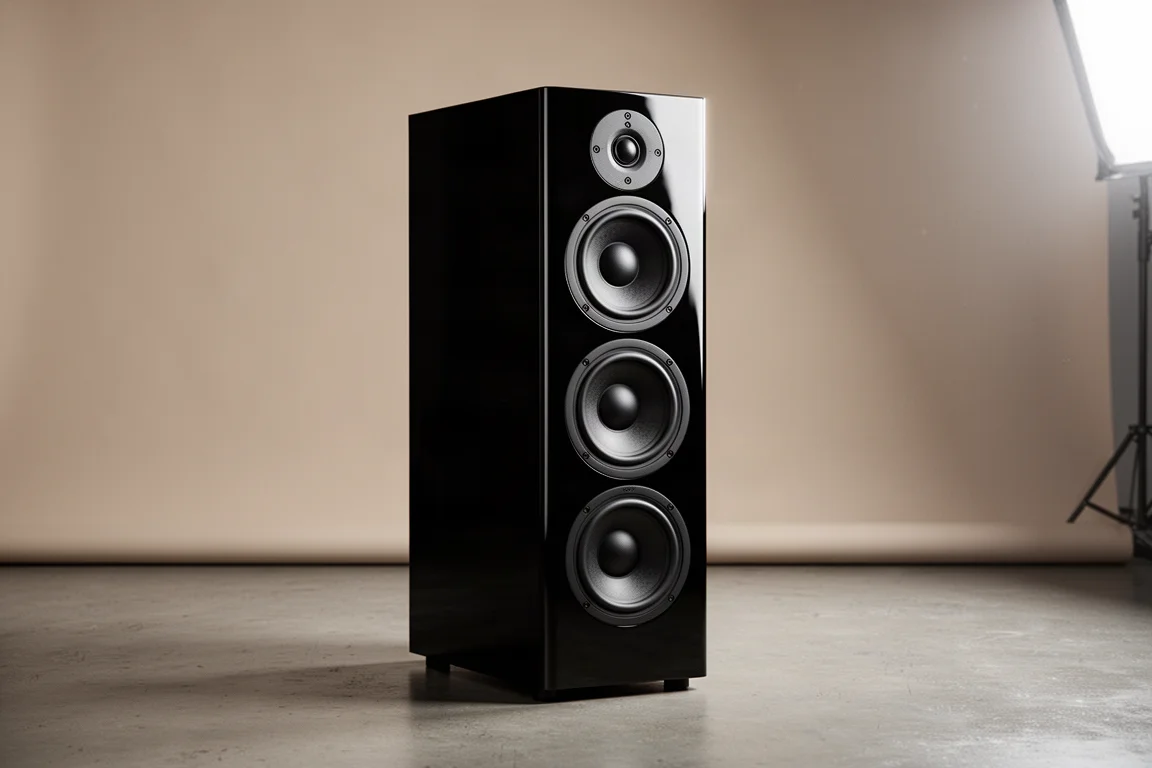
The clearest practical difference between these two towers is how much low-frequency energy they put into a room. The Monitor SE 8000F reached usable output in the low 30 Hz range in room, and that depth was audible as much as it was measurable. For a listener building a two-channel system, or a home theater system without a subwoofer budget yet, that extension means satisfying full-range sound from the towers alone.
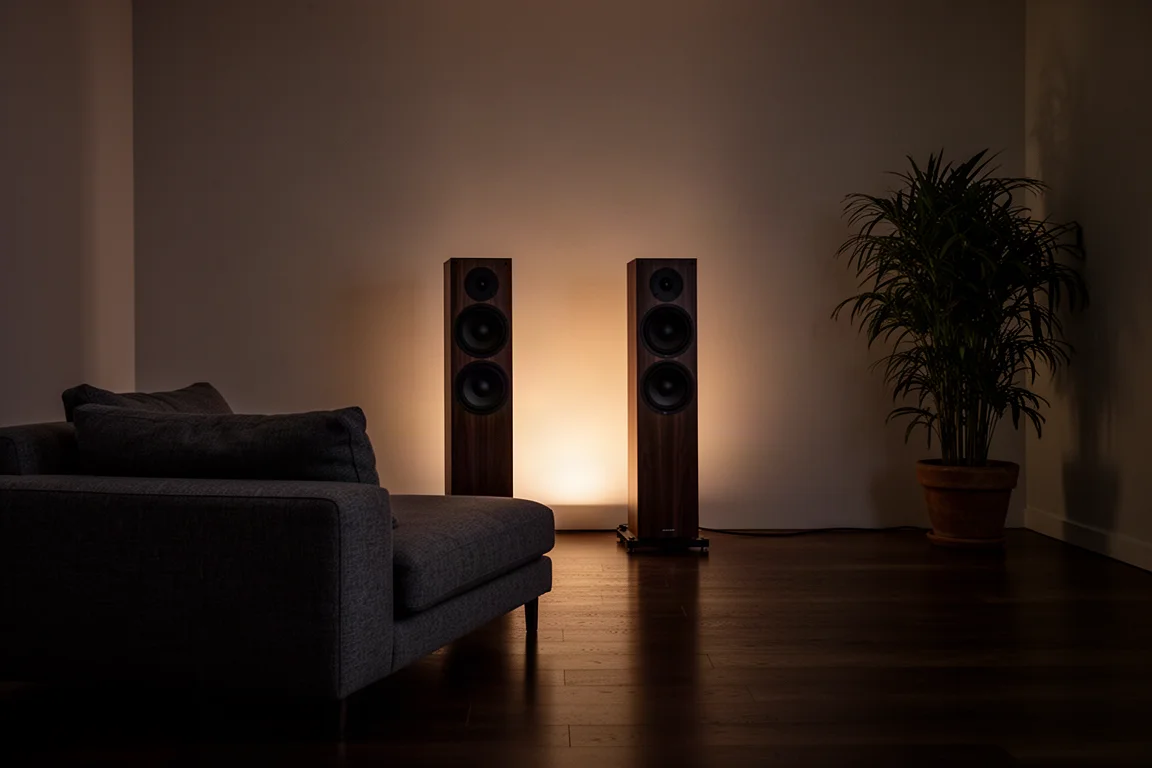
The Premier 800F, by comparison, measured around 40 to 41 Hz in the same kind of setup. That is still a genuinely capable tower, and in a smaller room the difference may matter less than the improvement in midrange and treble polish. Both speakers use rear-firing ports, so the wall behind them is part of the equation, and both reward a little breathing room rather than being pushed flat against a boundary.
Amplifier Matching and Everyday Setup
Sensitivity is where the Monitor SE 8000F pulls ahead in daily use. Measured in room at about 92 dB across 300 Hz to 3 kHz, it matches Paradigm’s published figure and means the speaker needs less power than the Premier 800F to reach the same loudness. That lands in the same territory as the high-sensitivity designs this price class is known for, and it makes the 8000F an easy match for modest receivers and integrated amplifiers.
Both speakers are specified as 8-ohm compatible but behave closer to 4 ohms, so an amplifier with a solid power supply is the safer pairing. With amplifiers delivering well over 100 watts per channel continuously, neither tower showed strain, and the Monitor SE 8000F in particular took that power without complaint.
Buying Advice: Which Paradigm Tower Is Right for You
If maximum bass output and value per dollar are the priority, the Monitor SE 8000F is the straightforward pick. It plays louder with the same amplifier, digs deeper in room, and works well for rock, R&B, rap, and jazz without a subwoofer in the chain. A retail price of $849 each puts a full-range tower system within reach, and it has been discounted below that at times.
If vocal articulation and a more refined top end matter more than low-frequency weight, the Premier 800F is the better fit at $1,199 each. It takes up less floor space, offers a wider choice of finishes, and delivers the kind of detail that makes vocal and acoustic recordings shine. The trade-off is real: less bass, higher cost.
Either way, the shared technology is what makes both speakers competitive. The waveguide and PPA lens on the tweeter, the attention to midrange enclosure design, and the bracing inside the cabinets are the sort of details that do not always appear at these prices.
Conclusion
The Monitor SE 8000F and the Premier 800F are less rivals than two answers to the same question. One prioritizes output, bass depth, and value. The other prioritizes refinement and a smaller footprint. Neither is a wrong choice. Match the speaker to the music you actually listen to and the room you actually have, and either tower will serve well for years.
Further reading
Related Reviews
Tower Speakers
Arendal 1610 Tower 8 vs MoFi SourcePoint 888 vs MoFi V10: Three Tower Speakers Compared
A close look at three large tower speakers in a similar price bracket, from the punchy, heavy-built Arendal 1610 Tower 8 to the coaxial MoFi SourcePoint 888 and the high-output MoFi V10.
Tower Speakers
Definitive Technology BP9020 Review: A Powered Tower With Real Bass and a Few Quirks
A slim tower speaker that hides a powered 8-inch subwoofer inside the cabinet, delivering deep bass and a wide stage alongside some clearly defined trade-offs.
Tower Speakers
Emotiva XT1 Tower Speakers Review: Serious Clarity Under $1,000
The Emotiva XT1 brings three woofers, a dedicated midrange and an AMT tweeter to the sub-$1,000 tower market. Here is where it delivers and what to weigh first.