Center Channel Speakers
Paradigm Founder 90C Review: A Large Three-Way Center Channel With Real Trade-Offs
The Paradigm Founder 90C brings a three-way layout, deep bass, and high sensitivity to a large center channel, but its upper midrange and distortion behavior raise serious questions.
Introduction
A center channel carries most of the dialogue in a home theater system, and it is also the speaker most often asked to cover several seats at once. Two-way designs place the woofers to the sides and the tweeter in the middle, which can produce cancellation through the upper midrange and a noticeably different sound for listeners sitting off to the side of the room. A three-way layout separates the midrange and tweeter from the woofers, which is the usual way to reduce that problem and to keep dialogue more consistent across a row of seats.
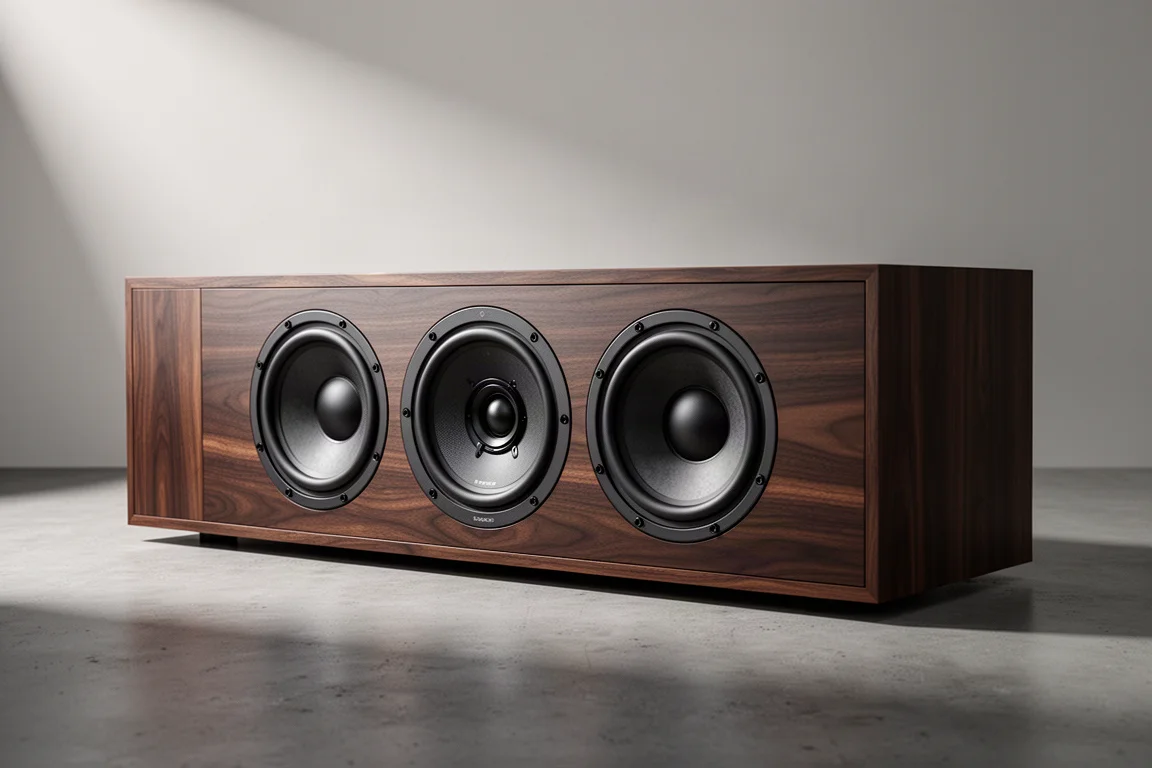
The Paradigm Founder 90C is a three-way center channel with a coaxial midrange and tweeter in the center, two 7-inch mid-bass drivers on the sides, and two passive radiators. It is a large speaker, and it is positioned as a serious option for a multi-seat home theater where output and low-frequency extension matter.
On paper, that layout is exactly the kind of design that should solve the classic center channel problem. In practice, the measurements and listening notes tell a more complicated story, and most of the difficulty sits in the frequency range that carries dialogue.
Who This Speaker Is For
This is a large center channel intended for rooms that can accommodate it and for systems expected to play at home theater levels. Its cabinet size and driver complement suit a standard multi-seat or multi-row setup rather than a compact living room arrangement, and the two passive radiators help it reach lower in the bass than a typical center channel of similar width.
Listeners considering the Founder 90C are most likely running several seats across the room and care about intelligibility in all of them, not only the middle chair. A smaller room would scale the output requirement down, but the physical size of the cabinet still needs to be planned for.
The appeal of a three-way center channel is straightforward: keep the midrange and tweeter away from the woofers so the seats to the left and right of center hear something close to what the middle seat hears. Whether that goal is met depends entirely on how well the coaxial midrange and tweeter are integrated, and that integration is where this speaker runs into trouble.
Main Strengths
Bass performance is the clearest strength. The Founder 90C measures an F3 of 54 Hz and an F10 of 41 Hz, so it should have no difficulty reaching down to roughly 50 Hz in most rooms. For a center channel, that is genuinely useful low-frequency capability, and it showed up in listening as a solid, extended low end.
Sensitivity is also good at roughly 90 dB, which means the speaker does not demand a great deal of power to reach a given output level. That is a meaningful practical advantage in a home theater where the center channel does the heaviest lifting.
Vertical directivity is another positive. There is roughly a plus or minus 40 degree window in which the speaker maintains reasonably consistent behavior, which is more than enough for most multi-row seating arrangements.
The drivers also hold up well with excursion. Adding a subwoofer to the system did not change the multitone distortion behavior much, which suggests the drivers themselves are behaving consistently as they move.
Things to Consider Before Buying
The measured on-axis response is where the picture changes. Paradigm specifies linearity of plus or minus 2 dB from 55 Hz to 23 kHz. The independent measurement shows roughly plus or minus 3.45 dB from 80 Hz to 16 kHz, and the response becomes noticeably inconsistent above about 2 kHz.
Directivity shows a significant jump in the region where the tweeter rolls in. Because different angles behave differently in that area, equalization cannot correct it. A listener can adjust what arrives on axis, but the reflections arriving from other directions will not follow.
The estimated in-room response points to a poor midrange and tweeter handoff, and that is what produces the lack of definition, detail, and attack heard in the upper midrange. The same region is where dialogue clarity lives, which makes it the most consequential weakness in the design. The estimated response also suggests ringing around 5 to 6 kHz and possible high-frequency breakup near 20 kHz.
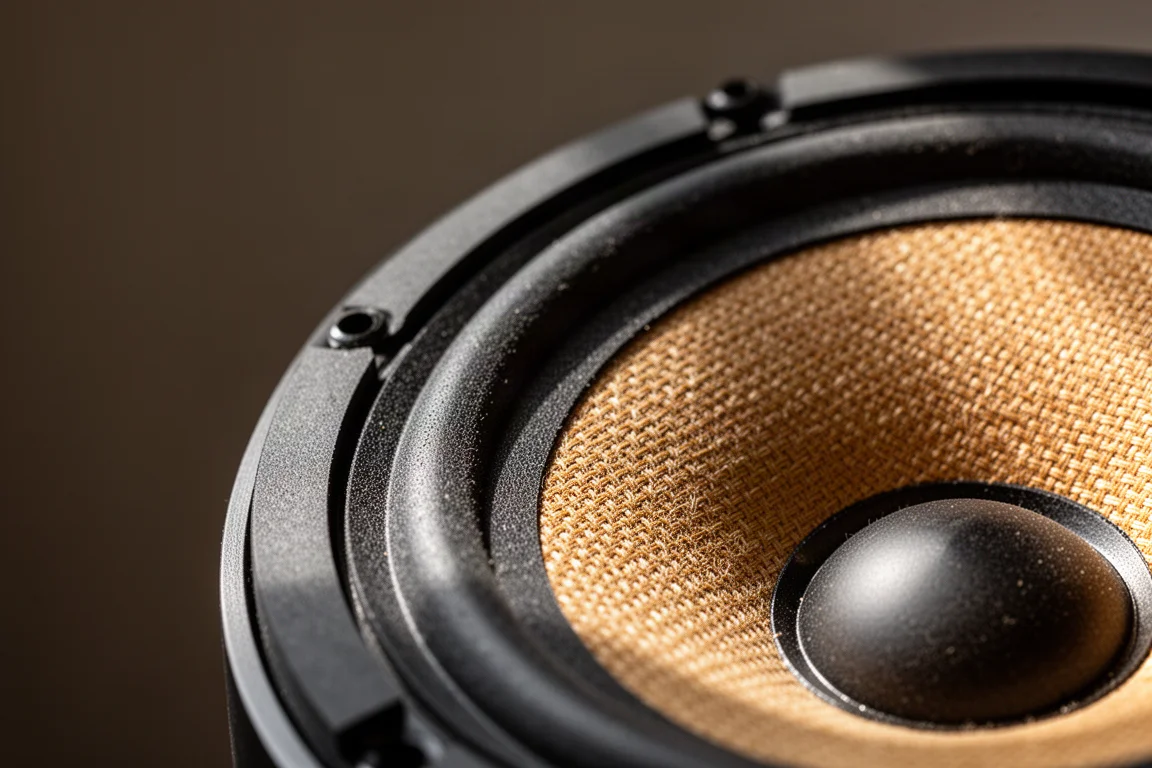
There is also a resonance near 3.5 kHz. A likely cause is the termination between the tweeter and the midrange that acts as a waveguide for it, where an imperfect handoff can create resonance and diffraction effects.
For a speaker of this size, these are not minor deviations. They shape the character of the sound in the range that matters most for speech, and they are audible rather than academic.
Dialogue Clarity Across Seats
The horizontal behavior is the central question for a multi-seat room. Sitting directly in line with the speaker, a listener hears one response. Moving roughly 20 degrees to either side introduces a dip in the upper midrange, and that dip is where dialogue intelligibility and clarity are affected.
The problem compounds with distance from center. Further off axis, not only does the direct sound change, but the reflections arriving at the listening position change as well. A listener seated well to one side hears a different midrange than the middle seat, and the energy bouncing off the walls and returning to that seat is different too.
Vertically, the speaker is considerably better behaved. The roughly plus or minus 40 degree window means a front row and a row behind it can hear reasonably similar sound, and for most multi-row home theaters that is sufficient. In a typical setup, the seats that matter fall within about 15 to 20 degrees of center, which makes the horizontal inconsistency the more relevant limitation.
Output and Distortion at Higher Levels
Distortion measurements at 86 dB and at 96 dB both show elevated midrange distortion. For a speaker of this size, with two 7-inch woofers that should comfortably handle the midrange, the level of distortion is higher than it should be. A shallower crossover slope in the midrange is a plausible contributor, though that would require closer driver-level measurement to confirm.
Multitone distortion tells a similar story, with higher midrange distortion that sits above a reasonable 3.3 percent threshold. Compression behavior in the midrange is also weaker than expected. The peaking and enhancement pattern that appears alongside it is typically linked to distortion, and it arrives quickly in the midrange as level increases.
Taken together, the distortion and compression results suggest that the speaker is working harder than it should in the midrange, which is the opposite of what a large three-way center channel is supposed to deliver.
Setup and Amplifier Matching
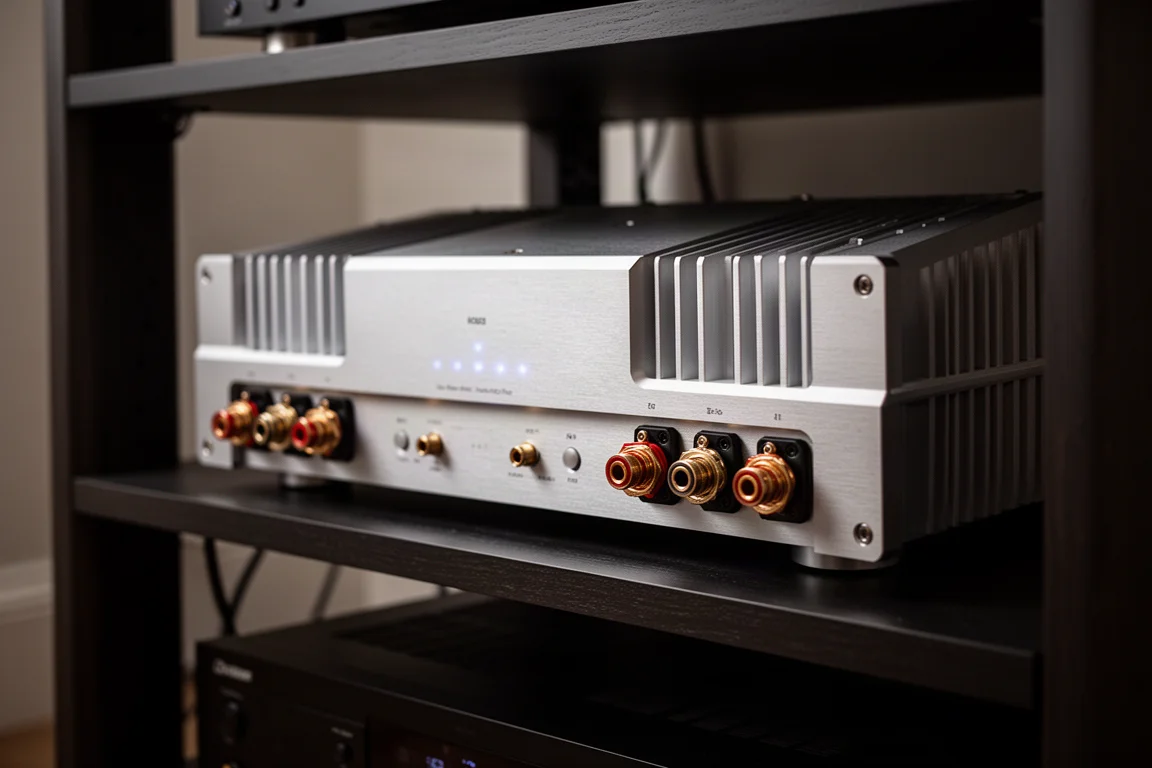
Nominal impedance is about 4 ohms, and the impedance curve dips to roughly 1.6 ohms. That makes the Founder 90C current hungry for a class AB amplifier, and an amplifier rated to handle a 2-ohm load is the safer match. Crossing the speaker over above roughly 80 to 100 Hz reduces the strain on the amplifier considerably. Class D amplification is likely to be less of an issue, but a strong, current-capable class AB design remains the more demanding requirement.
Buying Advice
At around $2,900 for a single center channel, and given its size, the Founder 90C is a significant investment. Its strengths are real: extended bass to roughly 50 Hz, high sensitivity, a wide vertical window, and drivers that stay consistent with excursion. Those qualities matter, and they are the reason the speaker deserves consideration at all.
The decision hinges on priorities. If the goal is consistent dialogue clarity across a wide seating area, the measured upper midrange behavior and the elevated midrange distortion at higher output are the two areas to weigh carefully. The resonance near 3.5 kHz and the directivity jump where the tweeter rolls in cannot be addressed with equalization.
Amplification should be planned before purchase. Confirm that the amplifier can handle the low impedance dip, or plan to cross the speaker over above 80 to 100 Hz so it is not asked to deliver deep bass on top of everything else.
Buyers who value the low-frequency extension, the sensitivity, and the vertical coverage, and who can drive the speaker properly, will find those qualities intact. The question worth answering honestly is whether the midrange performance meets the standard the rest of the design sets.
Conclusion
The Paradigm Founder 90C gets the architecture right in principle. It is a genuine three-way center channel with a coaxial midrange and tweeter, two 7-inch mid-bass drivers, and two passive radiators, and it delivers bass extension and sensitivity that many center channels cannot match.
Where it falls short is the range that carries dialogue. The midrange and tweeter handoff, the directivity jump, the resonance near 3.5 kHz, and the elevated distortion at higher output all sit in the region a center channel exists to serve. Those characteristics affect how clearly speech is reproduced and how similar the experience is from seat to seat.
For a large room with demanding requirements, the honest recommendation is to weigh the measurements against your own priorities, confirm your amplifier can handle the load, and decide whether the low-frequency and sensitivity advantages are worth the compromise in the upper midrange.
Product link
View more details for Paradigm Founder 90C
This product is mentioned in the review. Check the specifications, options, and compatibility before buying.
View more details for Paradigm Founder 90CFurther reading
Related Reviews
Bookshelf Speakers
Acoustic Energy A100 Mark II Review: A Compact Standmount With an Expansive Soundstage
The Acoustic Energy A100 Mark II brings clarity, natural tonality and a wide soundstage to an entry-level standmount, with a few setup details worth knowing first.
Hi-Fi Speakers
Amphion Argon 3L X Review: A Neutral Floorstander That Fits Real Rooms
A Finnish-made floor-standing speaker with neutral tonality, agile passive-radiator bass, and forgiving room placement, plus the trade-offs worth knowing before you buy.
Room Correction
Anthem ARC Genesis Beta Review: Smarter Speaker and Subwoofer Integration
A practical look at Anthem's ARC Genesis beta, including phase-aware speaker calibration, all-pass subwoofer blending, and the settings worth adjusting.