TVs
Panasonic Z95B OLED Review: Reference Picture, Real Trade-Offs
A practical look at the Panasonic Z95B OLED: tandem panel brightness, filmmaker mode accuracy, built-in Technics sound, and the Fire TV compromises to weigh first.
Introduction
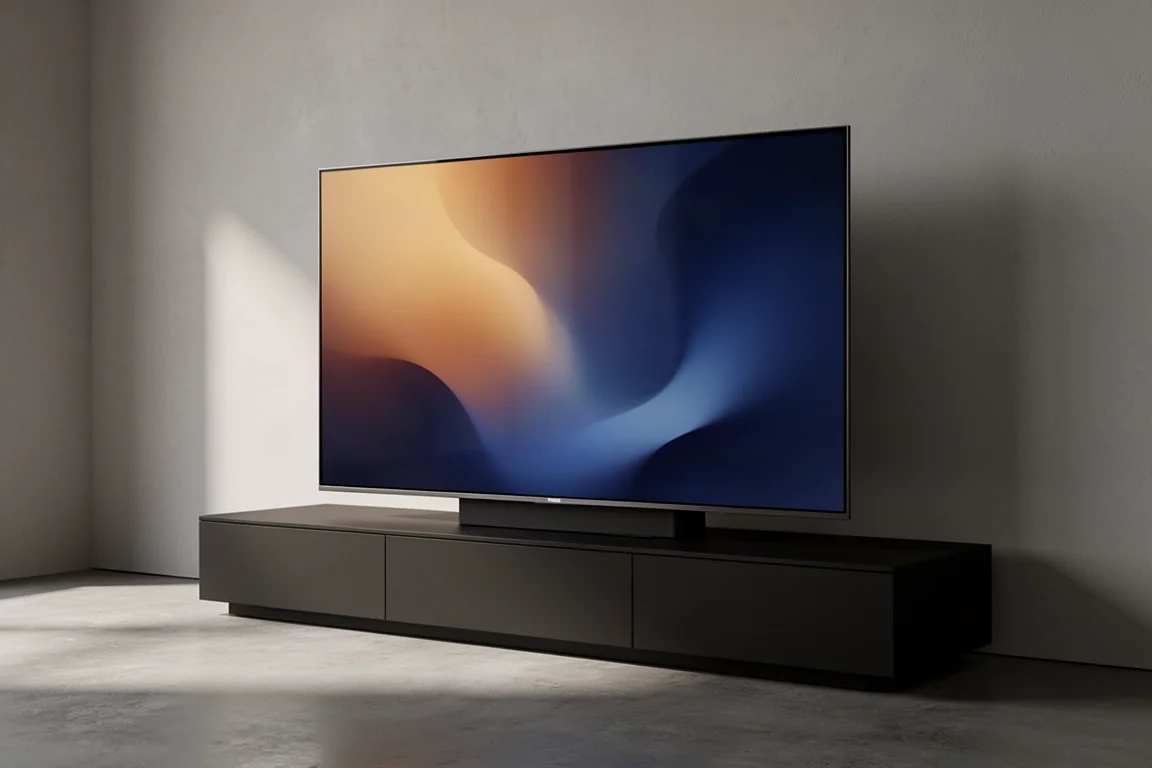
Panasonic spent the plasma era as the reference brand for installers and calibrators, and the Z95B OLED is its bid to hold that position again. The panel is a primary RGB tandem OLED sourced from LG, a design that stacks multiple light-emitting layers rather than asking a single layer to produce all of the color and brightness. Stacking layers this way improves efficiency, raises peak brightness, deepens color, and extends panel lifespan.
The practical payoff shows up in HDR. The Z95B delivers specular highlights and overall light contrast that come close to what a bright mini LED can do, while keeping the deep black levels and color purity that OLED is known for. It behaves like a hybrid of two display philosophies, and it is priced accordingly.
This guide covers what the Z95B does well, where it asks for compromises, and which buyers will get the most out of it.
Who the Panasonic Z95B Is For
The Z95B is aimed at viewers who care about picture accuracy first. Filmmaker mode arrives essentially reference-grade without a calibration visit, which matters for anyone who wants a film-like image rather than a bright, heavily processed one. It is also a strong fit for buyers who would rather not add a soundbar, since the built-in audio system goes further than most.
The size range is limited to 55, 65, and 77 inches. That is a narrower lineup than many rivals offer, and there is no larger option for viewers who want a genuinely oversized screen.
Buyers who need the biggest possible panel will have to look elsewhere, while anyone shopping in the 55 to 77 inch window gets a set that prioritizes image quality over convenience features. It also suits dark-room viewing, where OLED contrast and the set’s calibration-friendly picture modes can be used to full effect.
Brightness and HDR Performance
Brightness is where the Z95B separates itself from earlier OLEDs. In a 10 percent window, the set reached 2,200 nits in both standard dynamic range and Dolby Vision. Full-screen measurements settled around 300 nits in SDR and 322 nits in Dolby Vision. After calibration, peaks hovered near 1,000 nits with full-screen brightness just under 300 nits sustained. By a wide margin, this is the brightest OLED in its class, though LG’s G5 uses similar panel technology and was not part of this comparison.
Out of the box, the default picture modes are dim, but the brightness controls in the menu can be pushed much further and the results are dramatic. The chassis helps here. Its extra depth allows better internal cooling, so the panel leans less on automatic brightness limiting to protect itself.
That combination is unusual. Bright mini LED sets can hit similar highlight intensity but cannot match OLED black levels, and most OLEDs cannot match this level of highlight punch. With HDR material, the difference shows up in small bright details such as reflections, lamps, and specular highlights.
Color Accuracy and Filmmaker Mode
Filmmaker mode is the profile to use first. It measured average Delta E values of about 2 for both grayscale and color, with brightness around 700 nits, which is accurate enough that no calibration is required to enjoy it.
The other presets are less convincing. The default normal mode measured Delta E of 15 and 16 with brightness capped at 222 nits. The cinema preset improved accuracy slightly to Delta E of 9 and 11 but dropped brightness to roughly 208 nits. True Cinema is the most accurate profile on paper, with Delta E around 1.5, but it measured only 89 nits, dimmer than some projectors and too dark for anything but a fully blacked-out room.
Calibrating the Professional 1 profile produced marginally better grayscale and color figures, around Delta E of 1, along with more light, with peaks reaching 916 nits. For most owners the takeaway is simpler: filmmaker mode offers the best balance of brightness, punch, and accuracy straight out of the box.
Color handling holds up across content types. Primary colors, skin tones, detail, sharpness, and motion all performed well with 4K material in both standard dynamic range and Dolby Vision, and the set’s contrast gives HDR highlights a realism that OLEDs have historically struggled to deliver. Upscaling is another strength. HD material scaled to 4K looked natural rather than overly smooth or artificially sharpened, to the point that a well-mastered HD transfer can look more filmic than a sharper 4K remaster of the same title. Switching on the AI enhancement modes, however, degrades that fidelity and adds enough processing load to affect motion.
Design, Cooling, and Built-In Sound
Most OLEDs compete on thinness. The Z95B does not. Its chassis measures over two inches deep all the way around, which makes it look more like an older edge-lit LED than a current flagship. The trade-off is functional: the extra volume allows better internal cooling and creates room for a serious speaker system.
That audio system, developed with Technics, is a genuine surprise. It offers more adjustment options than any television in its class, including automatic setup, room correction, and manual tuning on top of that. With the right settings it can reach soundbar levels of intelligibility and spaciousness. Bass is the one area where it falls short of dedicated speakers from Sonos or Samsung, so buyers who want deep low-end response will still want to add hardware.
Smart TV Experience and Gaming
The operating system is the Z95B’s weakest element. Amazon’s Fire TV platform is slow to respond, heavy on advertising, and in some cases presents marketing as content. Basic actions such as powering on, changing volume, and switching inputs take longer than they should. The remote is highly directional, and the sheer number of available picture and sound adjustments can be confusing for anyone new to Panasonic’s menus. Connecting an external streaming device is the simplest way around the interface.
Connectivity is otherwise solid. There are four HDMI inputs, split between HDMI 2.1 and HDMI 2.0. All four accept signals up to 4K 60 and support HDR formats including Dolby Vision, HDR10+, and HLG. The 2.1 ports support refresh rates up to 144 Hz at 4K, but one of them shares its connection with ARC and eARC, so owners with more than one console will need to swap cables to keep gaming features active on every device.
Motion handling is good with native 4K and HD content, particularly cinematic 24p material, and it improves as frame rates rise. Heavily compressed live sports broadcasts can show occasional stuttering, which is consistent with what competing sets do. Gaming motion was stronger, especially in slower, story-driven titles.
Things to Consider Before Buying
A few details are worth weighing before committing to the Z95B.
The first is the operating system. Fire TV’s sluggish navigation and advertising load are difficult to ignore, and an external streaming device is close to essential for a smooth experience.
The second is a strobing effect that can appear in brighter areas of the image when peak brightness is pushed to its maximum, when certain frame interpolation settings are enabled, or when the AI picture modes are active. Viewers who leave brightness slightly below its ceiling and avoid motion smoothing are unlikely to notice it.
The third is the AI processing. The enhancement modes can degrade the fidelity of upscaled imagery and add enough processing load to affect motion, so the more natural picture modes are usually the better choice.
Finally, there is the physical design. The deep chassis stands out against ultra-thin rivals, and the size range stops at 77 inches. Pricing is premium: the 77 inch model retails at $4,300, which is nearly $1,000 more than a comparable LG G5, and an 83 inch G5 can be had for roughly what the 77 inch Panasonic costs. Large mini LED sets also sell for considerably less, which is worth noting for buyers who mainly want screen area.
Buying Advice
For buyers whose priority is picture quality, the Z95B sets the benchmark among the 65 inch OLEDs it competes with. Against the LG C5 and the Samsung S95F, it leads on image quality, out-of-box accuracy, and overall brightness.
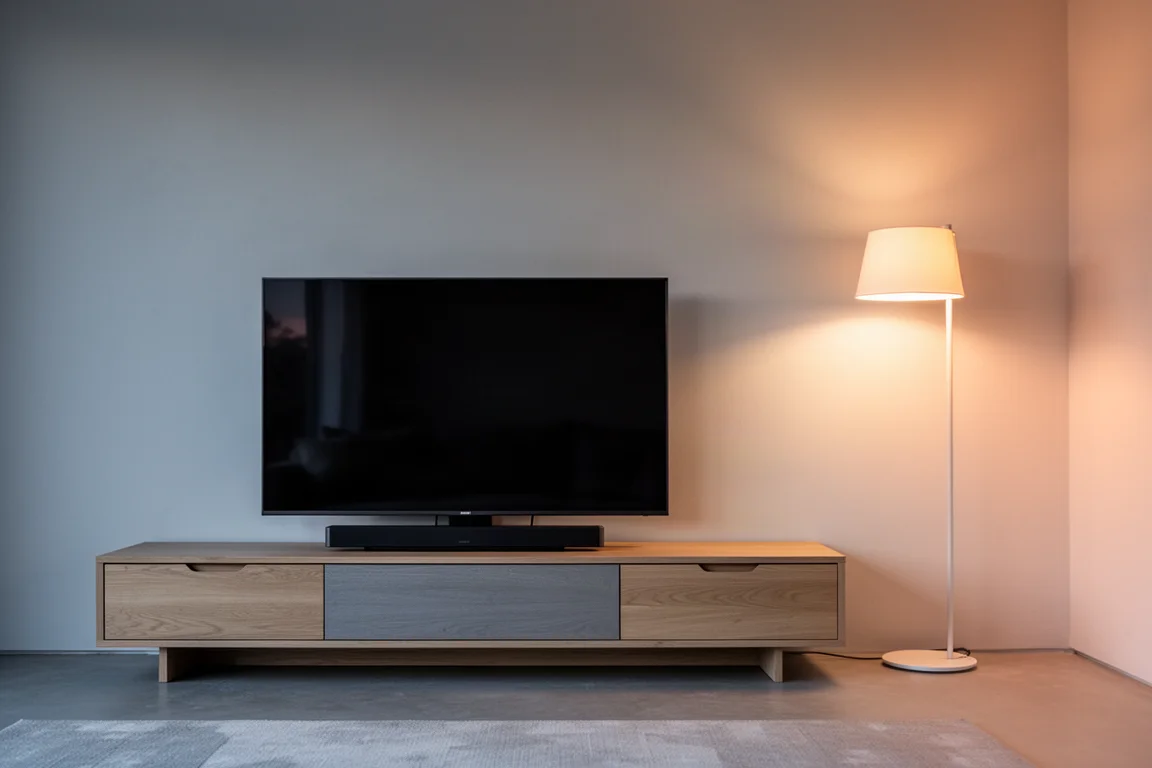
The calculus changes if picture quality is not the only consideration. Buyers who value a slick interface, an ultra-thin profile, or a glare-resistant matte surface may prefer what other brands offer, and anyone who needs a screen larger than 77 inches will have to shop elsewhere. For everyone else, the Z95B rewards a short learning curve with one of the most natural, cinematic images available on a consumer television, and the built-in sound system removes an upgrade that most OLED owners end up paying for anyway.
Conclusion
The Panasonic Z95B is a reference-grade OLED with a genuine technical story behind it. Tandem panel construction gives it brightness that OLEDs have not previously reached, filmmaker mode delivers accuracy without a calibration fee, and the built-in Technics audio system is good enough to replace a soundbar in many rooms.
Its weaknesses are real but specific: a slow, ad-heavy operating system, a thick chassis, a limited size range, and a price that sits above comparable rivals. Buyers who can live with those trade-offs, and who put picture quality above everything else, will find very little to complain about once the set is dialed in.
Product link
View more details for Panasonic Z95B
This product is mentioned in the review. Check the specifications, options, and compatibility before buying.
View more details for Panasonic Z95BFurther reading
Related Reviews
TVs
Best Sony XR TVs Compared: X90K, X95K, A80K, A90K, A90J, A95K and Z9K
A practical guide to Sony's XR television range, from the value-focused X90K to the 8K Mini LED Z9K, with clear advice on which model suits which room.
TVs
Hisense 100UR8SG Review: A 100-Inch RGB Mini-LED That Takes On OLED
A 100-inch RGB mini-LED television with measured peak brightness of 3,850 nits, wide color volume, and a price far below large-format OLED.
TVs
Hisense U9 vs Hisense U8 vs Samsung S90C OLED: Which TV Is Worth Buying?
A practical comparison of two Hisense RGB Mini-LED televisions and an OLED alternative, with real strengths, trade-offs and a clear buying recommendation.