Survival Gear
Ozark Trail Emergency Thermal Tarp Blanket Review: Compact Shelter, Not a Blanket
A close look at the Ozark Trail emergency thermal tarp blanket: what a roughly 7 ft by 5 ft Mylar-backed sheet genuinely does well, and why it should never be relied on as a warm layer.
Introduction
Emergency thermal tarp blankets occupy an odd corner of the outdoor market. They sell in large numbers every year, they cost very little, and they are positioned as a backup plan for hikers who end up stuck outside overnight. The Ozark Trail Emergency Thermal Tarp Blanket is one of the most widely available examples, sold as a house brand through Walmart at roughly $12.
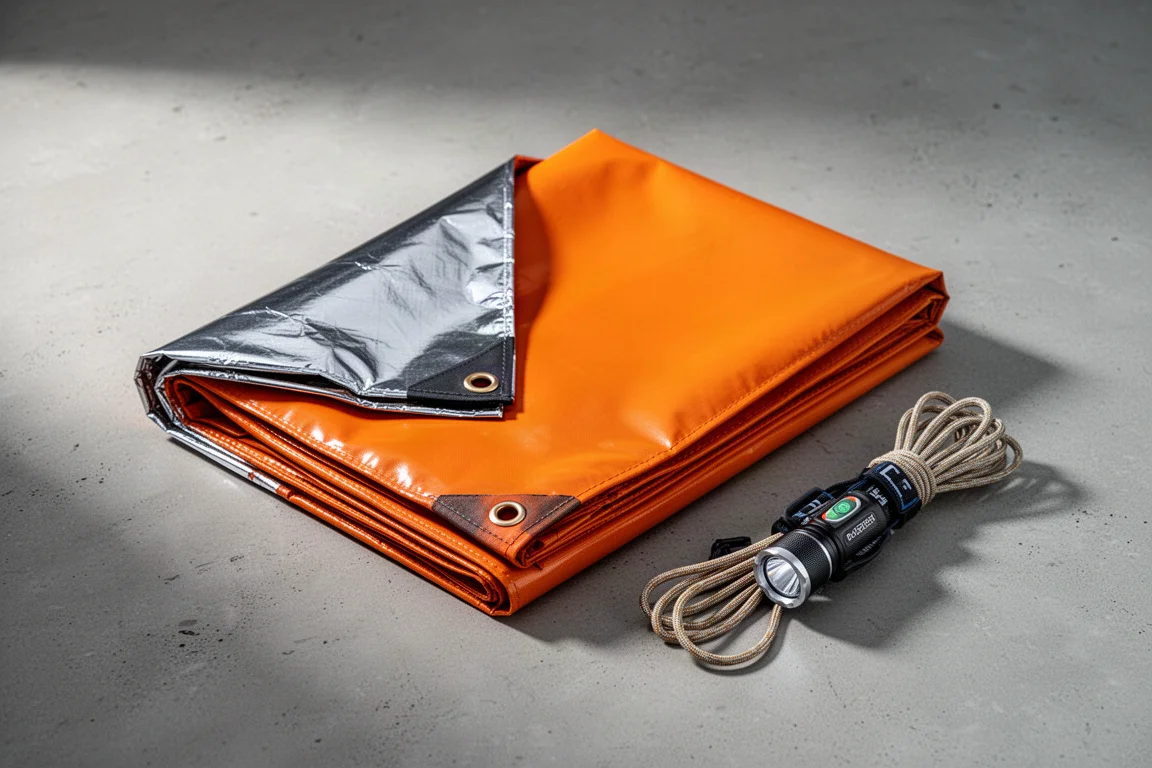
The idea behind the product is straightforward. It is a sheet of polyester fabric with a Mylar layer bonded to one side, built from three layers in total: an orange polyester face, a polyester mesh, and the reflective Mylar itself. It measures a little under 7 ft by 5 ft, which is the most common size in this category. The packaging says it is waterproof and windproof, and that is essentially all it claims.
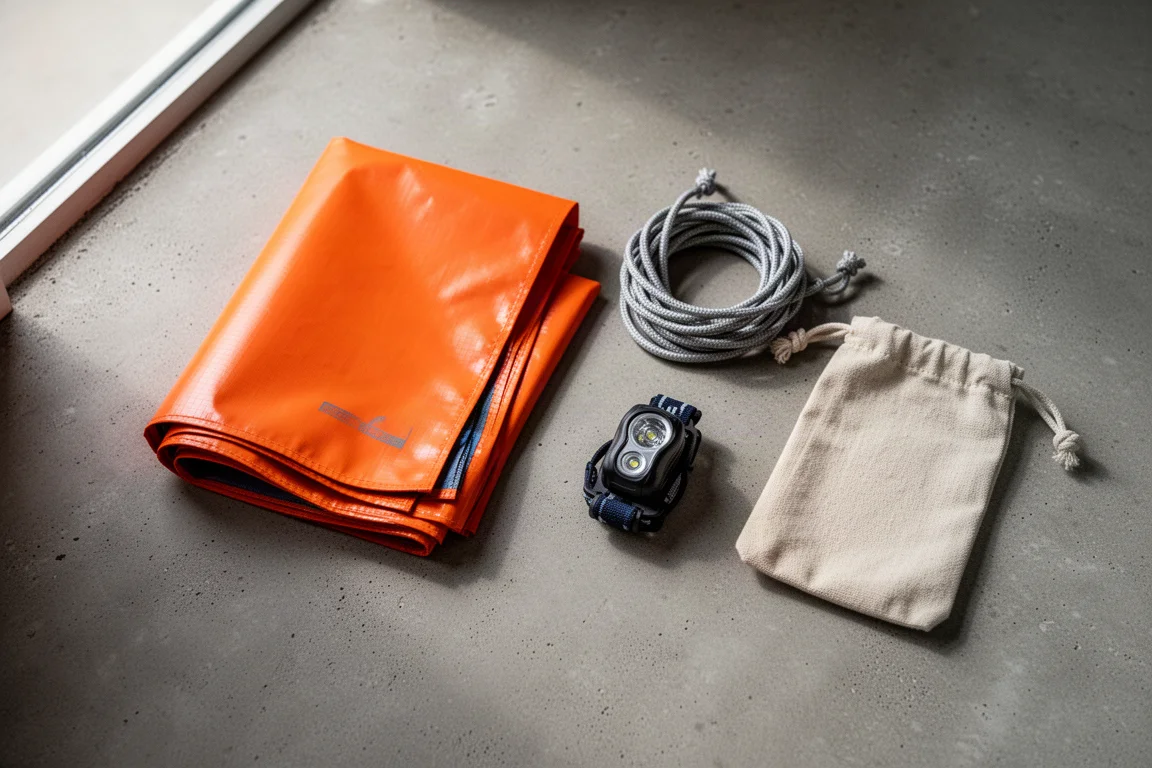
What it is not, despite the word printed on the label, is a blanket. A blanket insulates. This product reflects. That difference is the whole story of this review, and it matters far more than the low price suggests.
Who This Product Is For
This product suits a narrow but genuine set of uses. It works as a compact wind and rain barrier in a day pack or a car kit, as a highly visible signaling surface, and as a ground cloth. The bright reflective face is easy to spot, and the corner grommets let you lash it into a lean-to shelter if you carry your own cordage, which is sold separately.
It is a poor fit for anyone expecting warmth. If the plan is to wrap it around the body and sleep through a cold night, this is the wrong item. Genuine warmth comes from insulation: a sleeping bag, a proper blanket, or a real insulating layer. A reflective sheet is a different tool entirely.
Size also narrows the audience. Under 7 ft long and just under 5 ft wide is small for shelter duty. Full-body coverage is not realistic, and a tarp this size struggles to keep a person dry in wind-driven rain. Larger tarps can be just as light and offer considerably more protection.
Main Strengths
Wind blocking is where this product performs best. In overnight use with wind blowing directly against the back, the sheet blocked the breeze effectively, and sitting behind it the wind was barely noticeable. That is a real benefit in exposed terrain.
Rain resistance is genuine as well. The material is waterproof and does not let water pass through, so a properly pitched sheet sheds rain. The manufacturer also lists a high-visibility reflective surface that works as an emergency signaling device, which is a legitimate second job for a piece of gear this light.
Cost is the other obvious strength. At around $12, this is one of the least expensive emergency items you can add to a pack, and the format is small enough to disappear into the bottom of a day bag.

Versatility is worth noting too. The corner grommets accept cordage for a lean-to shelter, the sheet doubles as a ground cloth, and it can be used as a tarp when conditions turn. Each of those roles plays to what the material actually does: block wind, block rain, and stay visible.
Things to Consider Before Buying
Stiffness is the biggest practical problem. The material is rigid and does not drape. Wrapping it around the body is genuinely difficult, it flares open the moment it is released, and holding it in place takes constant physical effort. That makes restful sleep unrealistic, and the packaging artwork itself shows a user gripping the sheet from the inside to keep it closed.
Odor is another issue. A new unit carries a strong gasoline-like smell straight out of the packaging.
What ships in the box is minimal. This version includes nothing else: no storage bag, no guidelines, no tent stakes. Comparable versions at $20 to $25 add guidelines, stakes, and a pouch, though the sheet itself is virtually identical across brands.
Some sellers advertise that these sheets reflect 90 to 93 percent of body heat. Mylar carries a 90 percent heat retention rating, which means only about 10 percent of body heat passes through the material. That number sounds impressive on paper, but it does not translate into warmth in the field. Mylar is reflective, not insulating, and it is best suited to conditions around 55 F and above. Below that range it offers very little benefit, slowing heat loss at best.
Moisture is the safety concern. The material is completely non-breathable, so sealing yourself inside a Mylar shelter traps condensation. Mylar only works when it is dry, and once wet it stops working and becomes dangerous. It also conducts, which is why lying on a Mylar sheet on the ground pulls heat away from the body rather than returning it.
How It Performed Through the Night
Overnight use in cool forest conditions, with temperatures falling from the mid 50s F into the mid 40s F, matched the material science almost exactly. As a windbreak the sheet did its job. As a heat reflector worn against the body it did very little. Keeping it wrapped around the torso and legs meant holding it continuously, and letting go allowed it to spring open immediately.

The core limitation became clear as the night went on. Mylar reflects heat, it does not create or insulate it. When the body is already cold and producing less heat, there is very little to send back. Staying warm required movement, push-ups and jogging in place, and a fire was never a dependable answer given how much dry fuel an all-night burn demands. By morning the temperature sat around 46 F with wind picking up through the trees.
As a blanket, the product fails. As a shelter, it is too small to cover an adult properly. As a tarp, it works, but only within the limits of its dimensions.
What Mylar Can and Cannot Do
Mylar reflects heat. It does not insulate. That single sentence explains most of the confusion around emergency thermal products. In cool to cold conditions, Mylar slows the rate at which the body loses heat, but it will not prevent hypothermia. It buys time, and only if the user stays dry and stays out of the wind.
Fire is a partial exception. A reflective sheet will bounce some heat back from a fire, but nearly any surface does that, and a fire is never guaranteed in an emergency. Collecting enough fuel to burn through an entire night is an enormous amount of work, and dry wood may simply not be available.
Water is the other hard limit. Mylar is waterproof and windproof, which is useful, but it is also completely non-breathable. Condensation inside a sealed Mylar shelter can put a person at risk. Wet Mylar stops reflecting and becomes a liability.
Buying Advice
The honest framing for this product is that it is a small tarp with a reflective face, not a warmth layer. Buyers who want a compact windbreak, a rain shield, a signaling panel, or a ground cloth will find it does those jobs at a very low cost, provided they also carry cordage for pitching it.
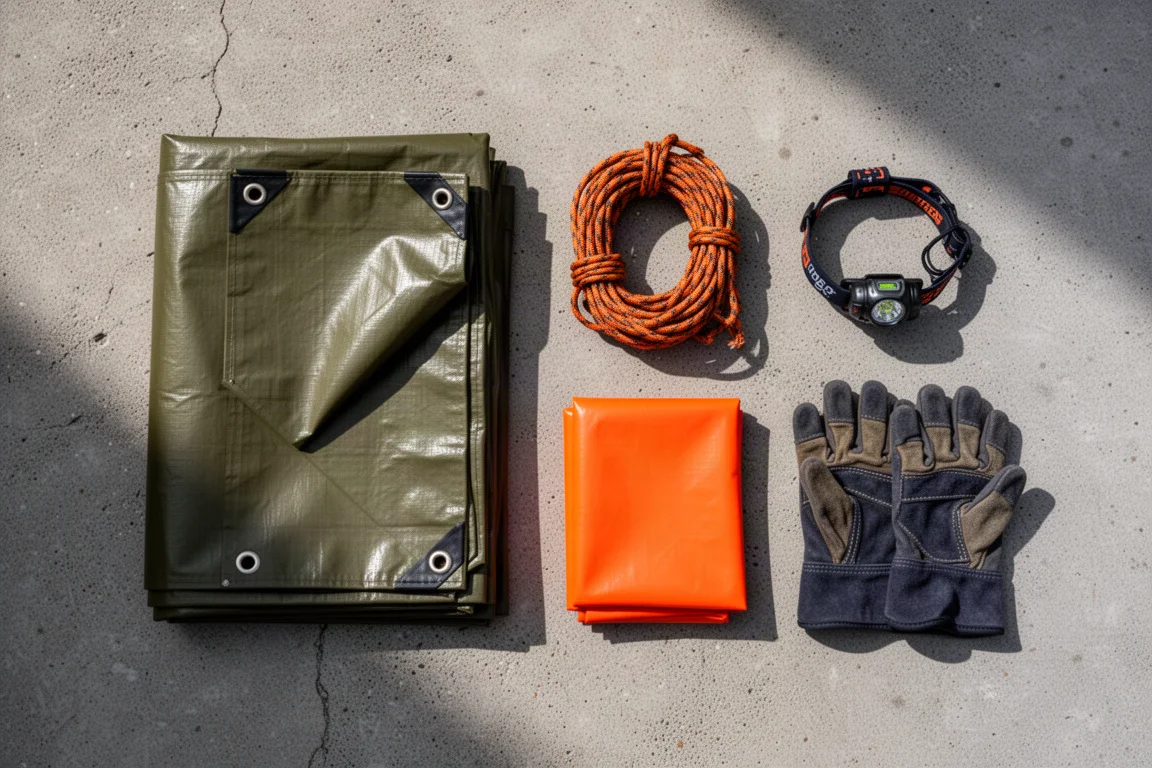
Buyers who want to stay warm overnight should spend their money differently. A larger tarp offers more shelter for a similar weight. A sleeping bag, a proper blanket, or a genuine insulating layer is what actually holds heat. If a Mylar sheet is part of the plan, treat it as one small tool among several and pair it with real insulation, a light source, and a way to call for help.
Conclusion
The Ozark Trail Emergency Thermal Tarp Blanket is an inexpensive, light, and genuinely useful wind and rain barrier that has been marketed as something it is not. Its waterproof and windproof performance is real. Its reflective surface is real. Its ability to keep a person warm while wrapped around them is not.
For a day pack or a car kit, it earns its place as a compact backup tarp and signaling device at around $12. For anyone expecting it to serve as a blanket in cold conditions, it will disappoint, and it should never be treated as a substitute for proper insulation. Buy it for what it does, not for what the label implies.
Product link
View more details for Ozark Trail Emergency Thermal Tarp Blanket
This product is mentioned in the review. Check the specifications, options, and compatibility before buying.
View more details for Ozark Trail Emergency Thermal Tarp BlanketFurther reading
Related Reviews
Survival Gear
Best Survival Bivvy Sacks 2026: Five Emergency Shelters Tested
Five survival bivvy sacks evaluated for warmth, portability, and reliability in emergency wilderness situations.
Survival Gear
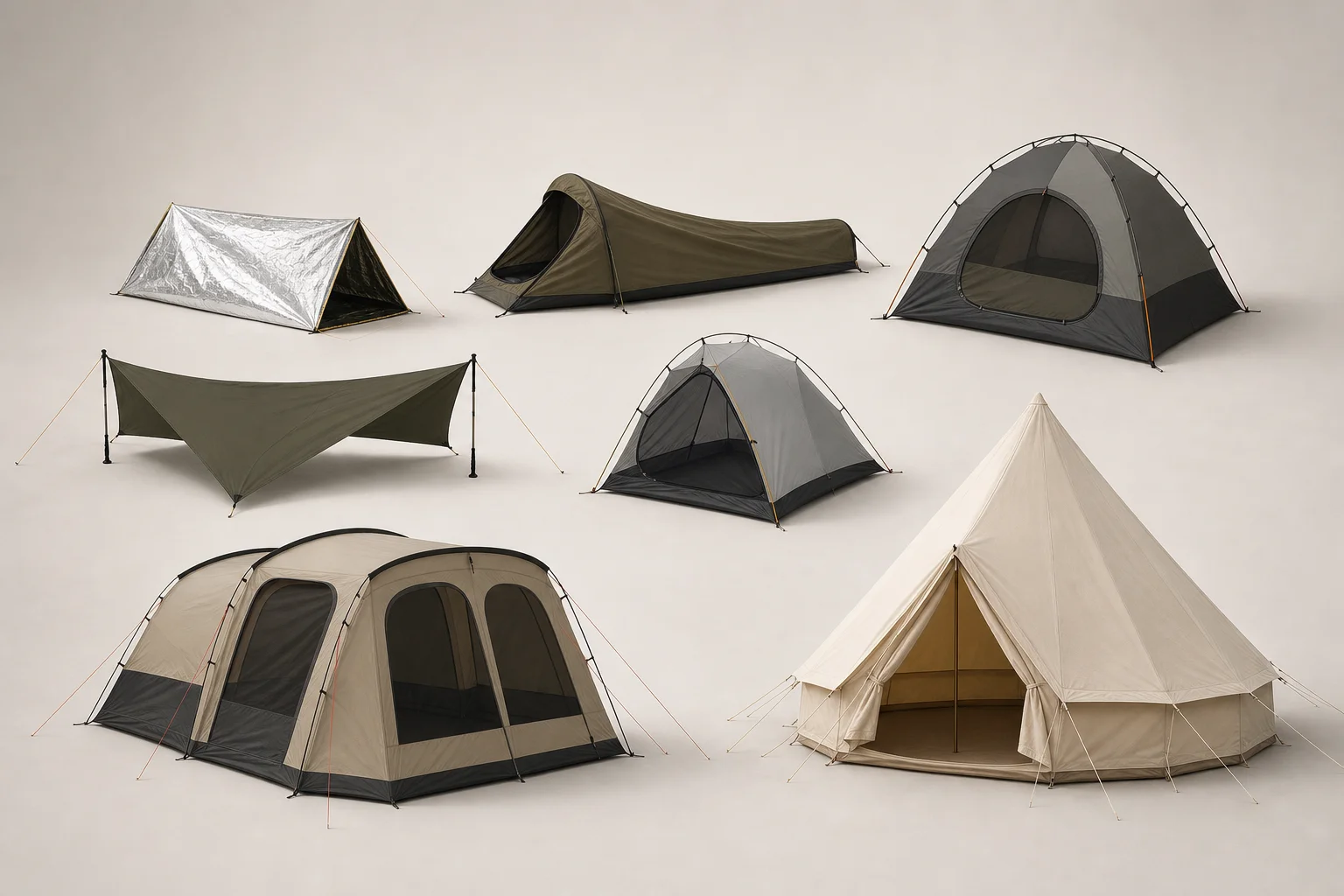
Best Survival Tents: 7 Shelters for Every Situation and Budget
From ultracompact emergency shelters to spacious canvas bell tents, we review seven survival tents trusted by bushcrafters and outdoor enthusiasts.
Survival Gear
Sierra Madre Emergency Sleeping Bag Review: Compact Warmth for Survival Kits
A practical emergency sleeping bag that traps body heat effectively in a compact form factor smaller than a Coke can. Real strengths and trade-offs for backpacks, vehicles, and survival kits.