Wearables
Oura Ring 5 Review: A Smaller, Longer-Lasting Health Tracker for Your Finger
The Oura Ring 5 brings a significantly smaller design and longer battery life, but sports tracking still lags far behind the competition. Here is what you need to know before buying.
Introduction
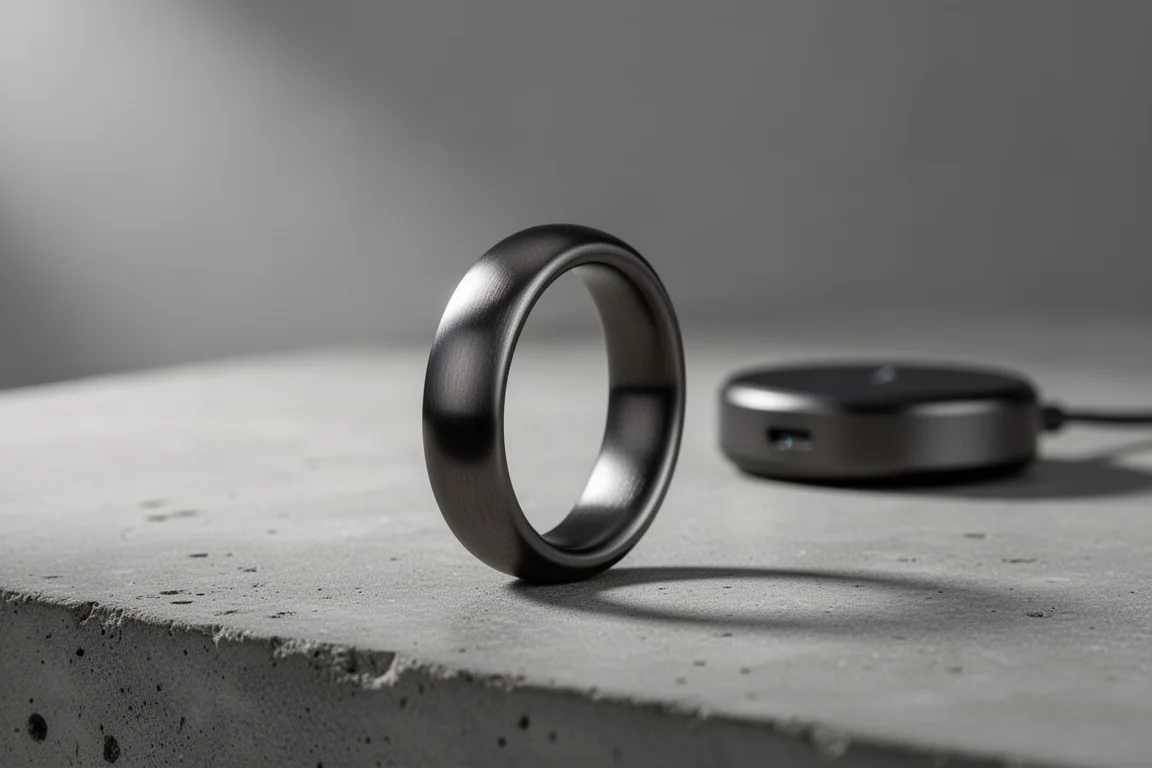
The Oura Ring 5 is the newest version of a smart ring line that has long been defined by one idea: health and sleep tracking without anything on your wrist. Over the past several weeks I have worn it through running, cycling, swimming, and everyday life to work out where it shines and where it falls short.
The base model now starts at $399, a $50 increase over the previous $349 starting price. Fancier finishes cost more, but the technology underneath is the same. Unlike some new releases, there are no new software features exclusive to this generation. What you are paying for is a noticeably smaller design and better battery life. Whether that is enough depends heavily on what you want from a tracker.
Sizing and Fit: Do Not Skip This Step
When you order, Oura first ships a sizing set: a collection of plastic sample rings with no electronics inside. The idea is to wear the sample on the finger you plan to use for about 24 hours, then confirm your size before the actual ring is shipped. Oura recommends the index finger, but any finger works as long as the ring stays put. The key is avoiding a ring that twists and swirls constantly, which reduces sensor accuracy. In practice, if it stays in one spot with the small notch facing the underside of your hand, you are set.
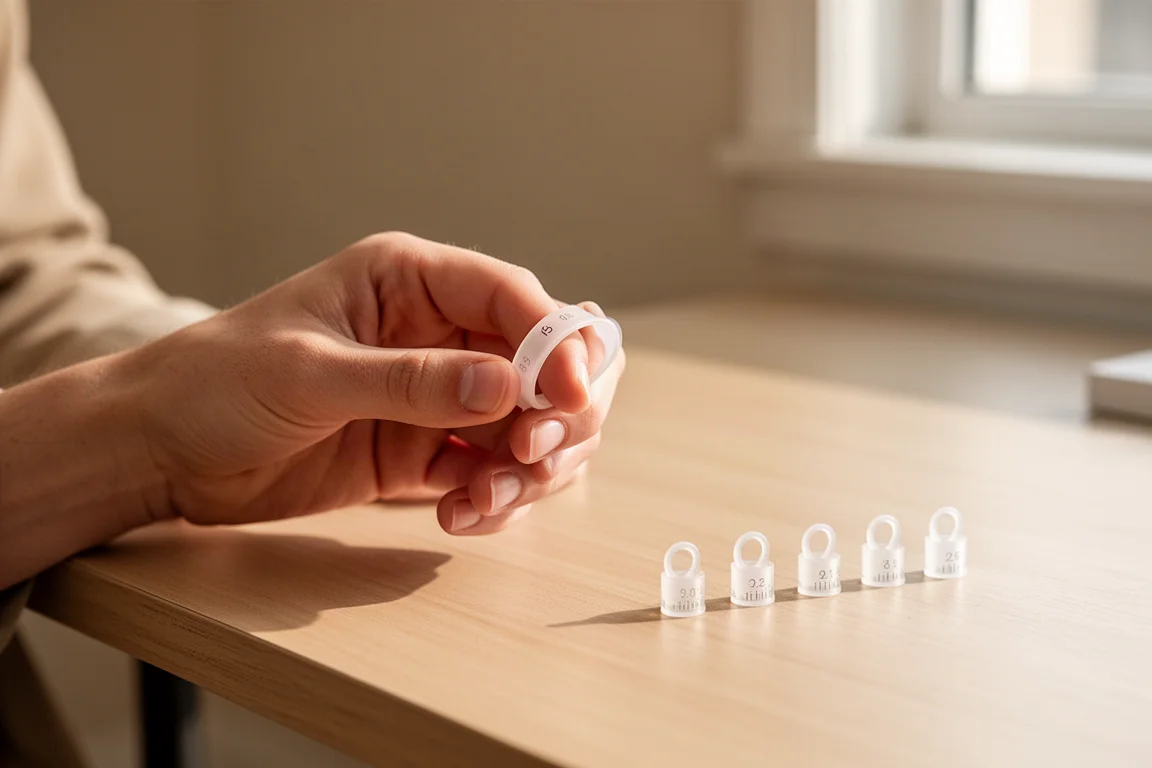
One important note: Oura Ring sizing does not match standard jewellery ring sizing, and the new sizing set covers sizes 6 through 13, a narrower range than the previous generation offered. Side by side in the same size, the Oura Ring 5 is dramatically slimmer across the width of the finger than the Oura Ring 4. Oura claims up to 40 percent smaller, and in some views that holds up. It is still a thicker band than a typical wedding ring, but day-to-day wearability has been excellent for me. There is no vibration motor and no audible alerts; everything happens on your phone. Faint sensor lights are visible from the inside at night at certain angles, but otherwise there are no status LEDs.
Sensors and Battery Life
Under the hood, the sensors are effectively the same as the Oura Ring 4. Oura rearranged the sensor layout and reduced the number needed, with accuracy expected to remain the same. Instead, the company reinvested that space into battery life, now claimed at 6 to 9 days. In my testing, my size 10 ring ran from 100 percent down to about 7 percent over roughly 7 days and 3 hours before needing a recharge, which lands within that claimed window.
One long-standing caveat: Oura rings are known for battery capacity degrading earlier than you might hope. My previous Oura Ring 4 dropped to around 2 days of battery life in under a year. To the company’s credit, the automated replacement process was flawless: I reported it through my regular account, and a free replacement arrived a couple of days later.
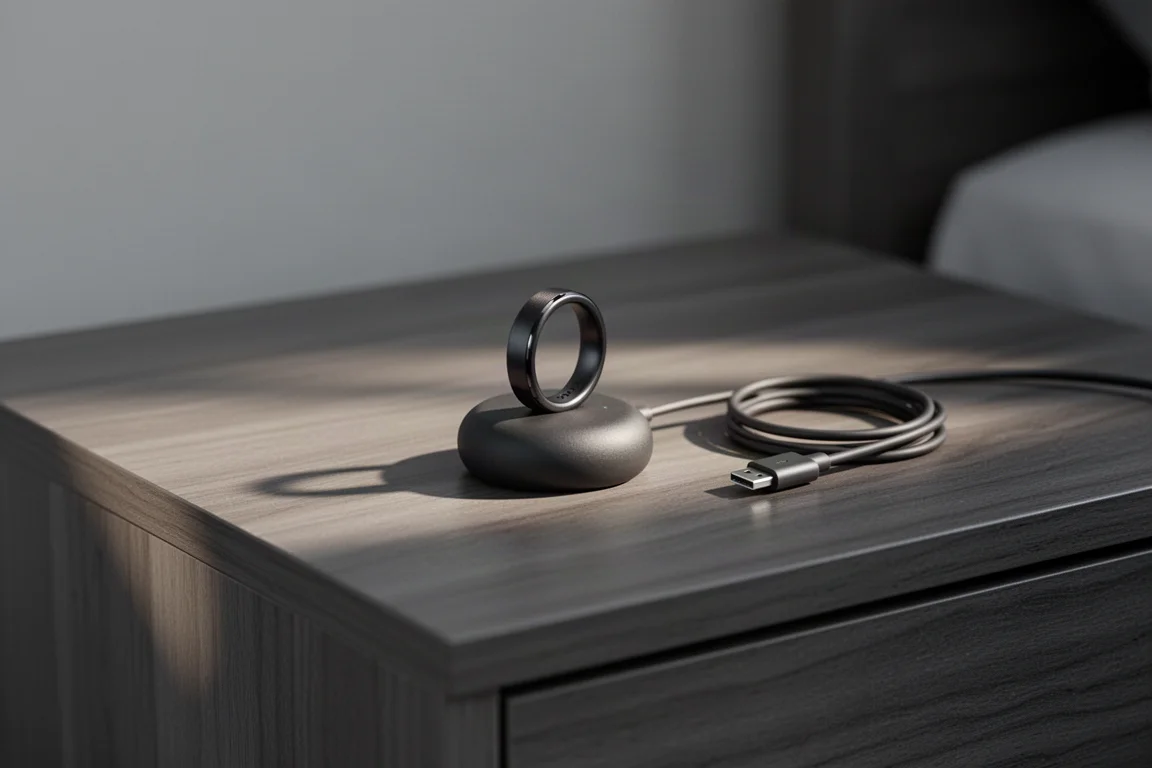
Inside the box you get the ring, a charging dock (which is different from the Oura Ring 4’s dock, an annoying change if you own both), and a USB-C cable. Setup is quick: briefly activate the ring on the charger, then wave your hand to validate motion sensing. You are good to go in minutes.
The App: Clean, Simple, and Somewhat Repetitive
The app received a refresh several months ago. The redesign simplified a lot of the interface; some people will find it cleaner, others will find it bland. The main page shows your core scores up top: Readiness, Sleep, Activity, heart rate, stress, and optionally Resilience, all of which you can reorder or remove.
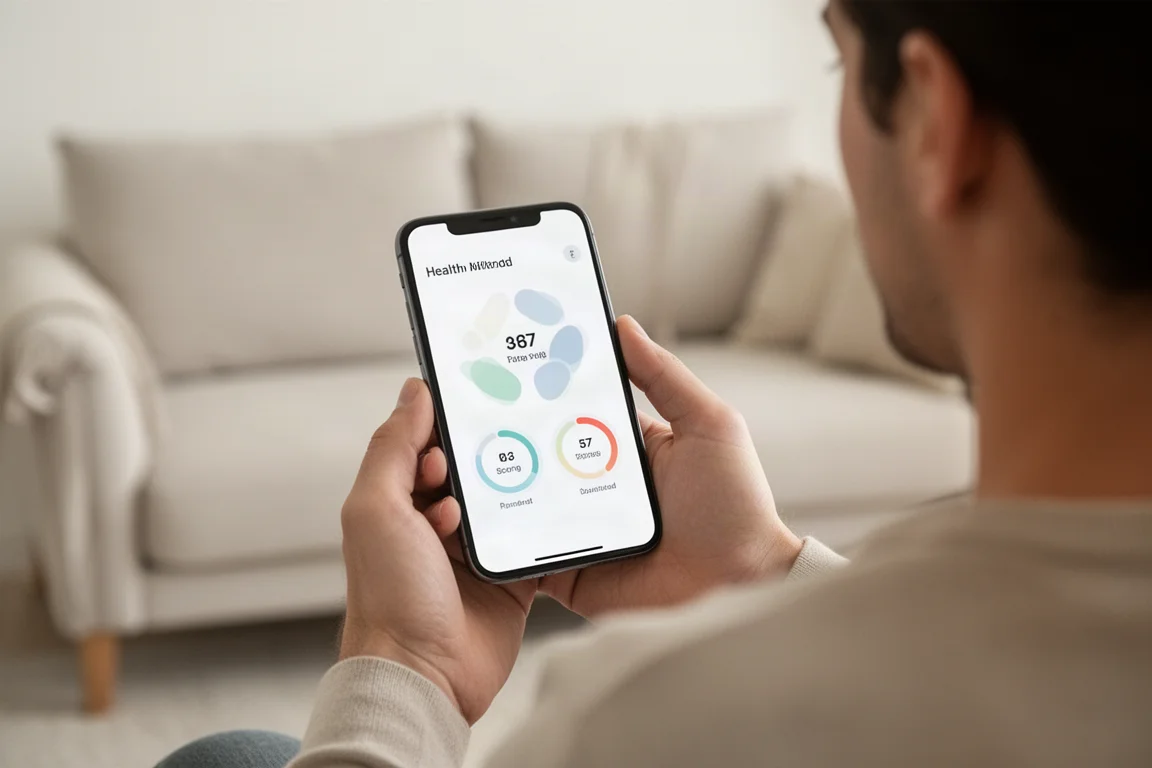
The Readiness score blends resting heart rate, HRV balance, recovery index, sleep balance and regularity, previous day activity, and activity balance into a single daily number. It is a similar concept to what Garmin, Fitbit, and many others offer. Sleep tracking remains solid, and the times it reported for falling asleep and waking up were accurate essentially every night in my testing. I put less weight on sleep-stage breakdowns, since even gold-standard comparison devices are only accurate in the best cases to a degree that would be unacceptable for a heart rate sensor.
Stress tracking is where I have reservations. Oura counts workouts as high-stress events, which makes little sense when most people exercise precisely to lower stress. Garmin nullifies workout periods from its stress picture; Oura does not, though it at least removes them from the daily stress total. The app also buries a fair amount of promotional clutter, including prompts to buy accessories and, oddly, encouragement to purchase the very ring you are already wearing. Elsewhere you find sleep debt trends, a body clock estimate, a Vitals tab with five to seven trending health stats including symptom radar and cardiovascular age, and a Health tab that largely repackages the same metrics across different time frames. After a while, the repetition becomes noticeable.
Sports Tracking: The Weak Point
This is where the Oura Ring 5 may fall apart for some buyers. The new Live Activity feature lets you record workouts with a timer and, for outdoor activities, GPS distance. But here is the catch: you cannot see live heart rate from the ring itself. To get live heart rate during an activity, you must pair a separate Bluetooth heart rate source, such as a chest strap or earbuds. That means buying a $60 to $100 strap or already owning another device, which is a poor ask for a $399 tracker.
Even the post-activity summary is sparse compared with competitors. You get a distance figure, a small map, heart rate zone times, and a heart rate graph, but no live heart rate, no zones during the workout, and no map while running. Whoop and even other offerings show more. Worse, when you sync an activity to Strava, the heart rate data does not come along, even though Oura has it in its own app. For anyone who cares about training data, that is a hard flaw to overlook.

The irony is that the heart rate accuracy itself is genuinely good. Across indoor trainer rides and flat or ascending runs, the ring tracked heart rate closely, with only occasional brief stumbles. The consistent pattern appeared on descents: on steep downhill trail runs, heart rate accuracy fell off the rails, then snapped back to normal the moment the terrain flattened or climbed again. With a good fit, this is a reliable heart rate sensor for most activities. It just refuses to show you the data live, and does not export it properly.
Should You Buy It?
The Oura Ring 5 makes sense in a specific scenario: you do not want anything on your wrist, you want a normal watch or other wristwear, and you value sleep trends, daily activity trends, general health stats, and cycle tracking, all at a relatively low subscription cost compared with some competitors. For general life, health, and wellness tracking in a ring form factor, it does a genuinely good job.
If you already own an Apple Watch, a Garmin, or most sports watches, there is little here for you. Those devices do virtually everything the ring does and more. And if you care about seeing heart rate during or even after workouts, this is not the device for that. It is also worth noting the Fitbit’s much lower price point undercuts the entire ring-plus-subscription model, though it is a very different form factor.
Conclusion
The Oura Ring 5 is a better ring than its predecessor: smaller, more comfortable, and with real battery life gains, backed by strong heart rate accuracy and dependable sleep tracking. But the sports experience remains a real gap, from the lack of live heart rate to the stripped-down Strava export, and the app feels repetitive and cluttered in places. If your goal is wrist-free health and wellness tracking, it is easy to recommend. If your goal is training data, look elsewhere.
Product link
View more details for Oura Ring 5
This product is mentioned in the review. Check the specifications, options, and compatibility before buying.
View more details for Oura Ring 5Further reading
Related Reviews
Wearables
Apple Watch Ultra 3 vs Garmin: Which Training Watch Wins for Athletes
A practical head-to-head comparison of the Apple Watch Ultra 3 and Garmin for serious training, covering GPS accuracy, data tracking, usability, and recovery metrics.
Wearables
Apple Watch vs Garmin for Running: A Year of Training Compared
After a year training for marathons with both devices, here's what actually matters when choosing a running watch.
Wearables
Apple Watch Ultra 3 vs Garmin Fenix 8 Pro: Satellite Messaging Compared
A practical comparison of satellite messaging on the Apple Watch Ultra 3 and the Garmin Fenix 8 Pro, covering connection methods, messaging workflows, coverage, and running costs.