Home & Emergency
OUKITEL P2001 Review: A 2000Wh Backup Power Station That Earns Its Place in an Emergency Kit
A hands-on look at the OUKITEL P2001 power station, covering real-world run times, charging speed, UPS function, and who it actually makes sense for.
Introduction
Backup power used to mean one thing: a gas generator in the garage. But power stations have quietly become a serious alternative, especially for people who cannot safely or legally run a combustion engine at home. The OUKITEL P2001 is a 2000 watt hour unit aimed squarely at that audience, promising fast recharging, a UPS function, and enough output for fridges, tools, and medical equipment. After spending real time with it, this review covers what it does well, where it falls short, and how to think about run times before you buy.
Who This Product Is For
The P2001 makes the most sense for people preparing for outages rather than replacing the grid. That includes apartment and city dwellers who have no safe place to run a gas generator, RV and cabin users, campers visiting parks with fire restrictions, and anyone teleworking who needs to get through a full workday when the power drops. It is also a meaningful option for the millions of people who rely on electricity for medical devices, where backup power is a lifeline rather than a convenience.
What Is a Portable Power Station?
A portable power station is essentially a very high capacity battery pack. It stores a charge and delivers it on demand, the same way a phone power bank works, just scaled up dramatically. Instead of topping off a phone for a few hours, a 2000 watt hour unit can run a full-size refrigerator for the better part of a day.
It is worth being precise about the “solar generator” label this unit carries. On its own, it is not a solar generator. It is a battery bank. Connect a compatible solar panel and the complete system becomes one. Compared with a gas generator, power stations are easier to operate, need far less maintenance, and are much safer: no exhaust, no carbon monoxide risk, and no reason a friend or family member cannot borrow one. The trade-off is capacity. A generator keeps running as long as you add fuel, while a power station requires planning around a finite charge.
Design and Everyday Handling
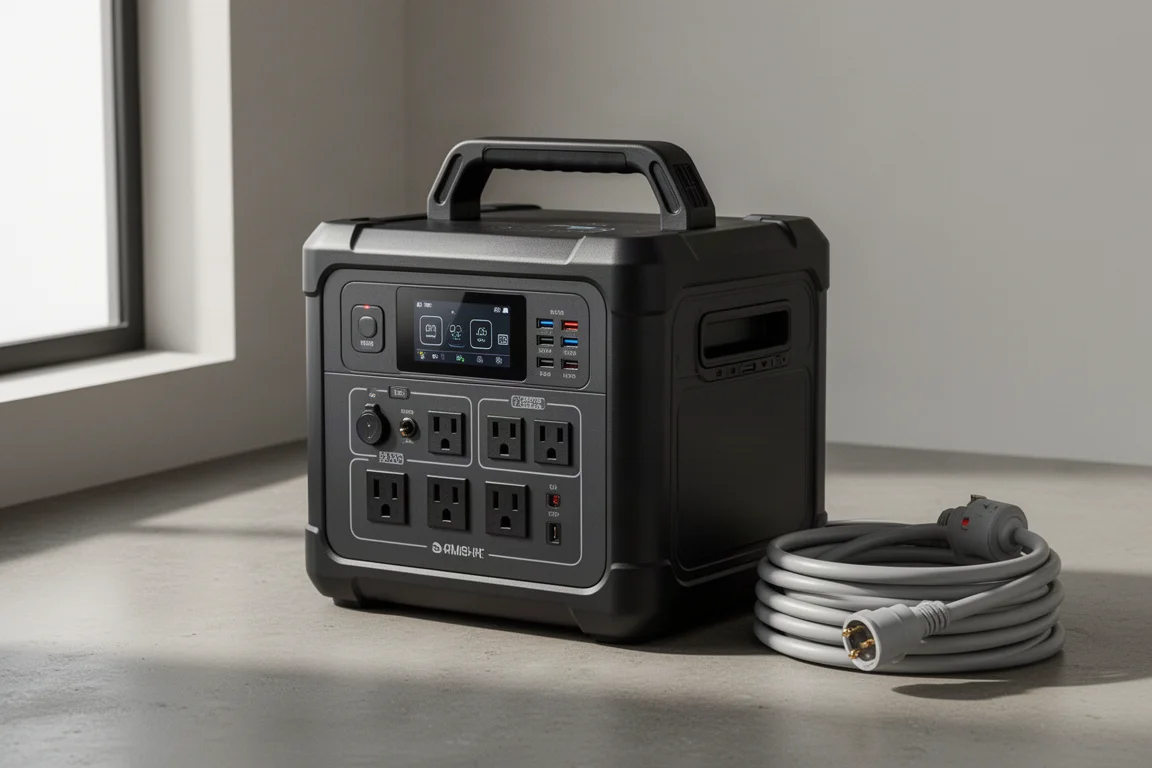
The P2001 is compact and sturdy for its class, weighing 48 pounds. That is hefty, but still genuinely portable, and the build feels solid. The front panel is organised into two input sections, one for enabling USB device charging and one for 12 volt DC connections, plus six 20 amp AC outlets powered by a 110 volt inverter. Those AC plugs can handle fairly high wattage appliances.
Charging through the AC input is the fastest and easiest method, but the unit also has an Anderson connector for simultaneous DC input, whether from the included car outlet cable or a solar panel input cable. A practical detail: there is no external charging brick to keep track of, and the included charging cable is 14 gauge and rated for high amps, so it should not be swapped for a cheaper substitute. The display lights up whenever the system detects an input, showing current load in watts, incoming wattage while charging, minutes until full, and remaining charge percentage. Fans kick on occasionally to cool the circuitry, about as loud as a PC, which is worth considering on a dusty construction site.
Real-World Run Times and Efficiency
The rated capacity is 2000 watt hours, or 2 kilowatt hours. On paper, that means a 2000 watt device runs for one hour and a 200 watt device for ten. In practice, power stations typically deliver 75 to 85 percent of their rated capacity, and the P2001 outputs about 1600 watt hours in real-world use. That is not a defect unique to this unit; it is how the category works, and it matters most when estimating long, low-wattage loads.
Two additional factors eat into run time. First, there is a parasitic draw: with the system on and the AC circuit active, an empty load drains the full charge in roughly 83 hours. A small toaster oven on broil at 700 watts barely notices this overhead, but a single 15 watt bulb that theoretically should run 100 hours will actually run closer to 36. Second, the inverter itself introduces losses, so using the DC ports when possible stretches the charge further.
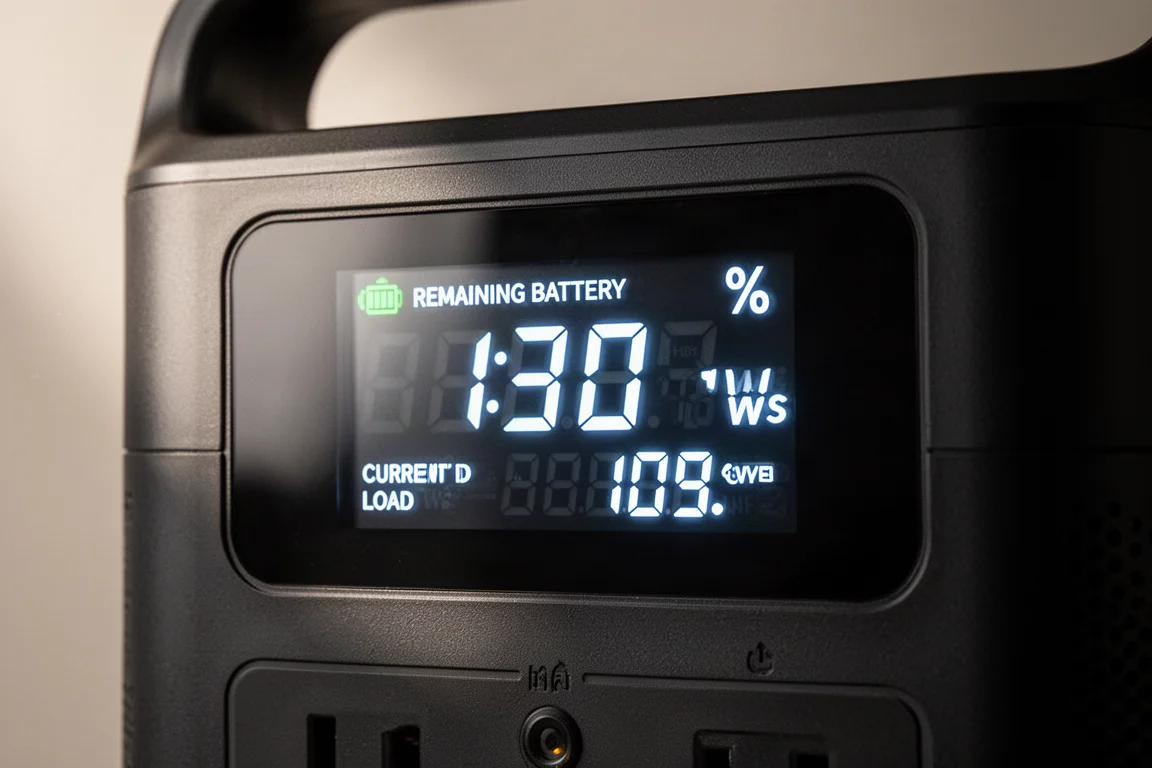
For constant loads, the built-in run time estimates are more trustworthy than back-of-envelope math, and the unit helpfully recalculates them as conditions change. In practical testing, a refrigerator that consumed 1.52 kilowatt hours over 24 hours ran for over 20 hours on the P2001, and two chest freezers drawing a combined 1.58 kilowatt hours per day lasted around 18 and a half hours together. In a 24 to 48 hour outage window, those numbers are genuinely useful. For longer stretches, plan to top off with solar, a generator, or another source.
Solar Charging and the UPS Function
One of the standout features is charging speed. The P2001 can supercharge in under two hours, which is a genuine advantage during rolling blackouts: when power briefly returns, you do not need much time to top it off before the next cut. That speed also makes it an efficient way to siphon energy from a gas generator during off hours, letting the two devices work together rather than compete.
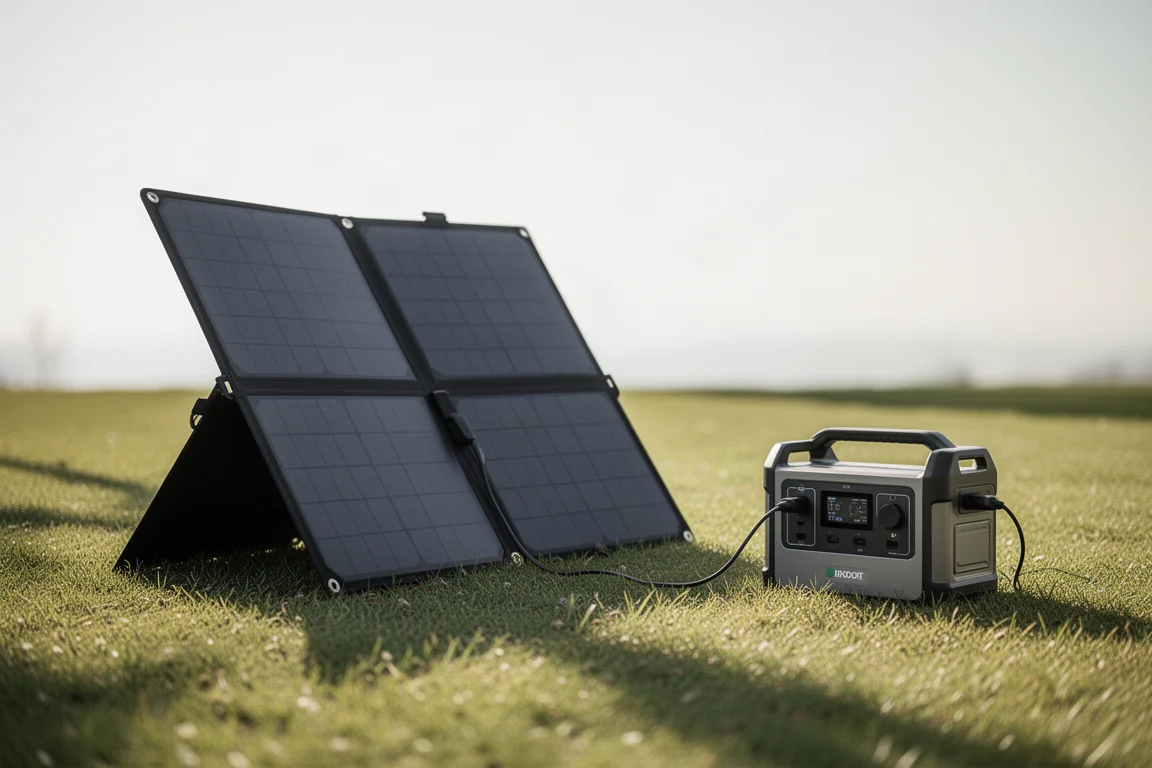
Solar input is supported up to 500 watts via the panel input cable, though you need to pay attention to voltage and amp limits when wiring multiple panels in parallel or series. In an eight-hour test with a portable panel, the charge rose from 12 percent to 29 percent, roughly 270 watt hours collected. Realistically, weather makes solar a bonus rather than a plan; aiming for 400 to 500 watts of panels is the sensible target if solar charging matters to you.
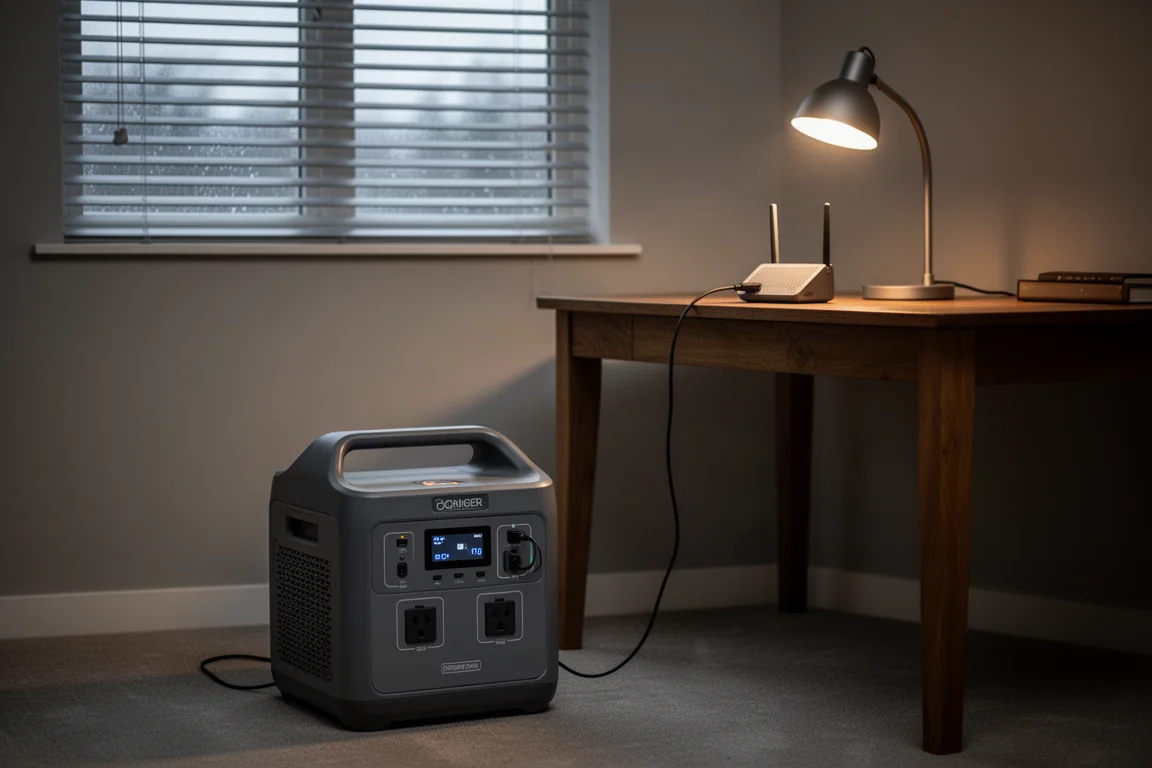
The UPS function is another feature worth highlighting. The unit switches to battery within 10 milliseconds of a power cut, the same job a traditional UPS performs for a computer, but with far more capacity, handling loads up to 1100 watts. Where a small UPS gives you minutes, the P2001 gives you hours. With pass-through charging, it can remain plugged in and powering devices at the same time, as long as connected devices stay under 1100 watts.
Battery Chemistry and Longevity
The P2001 uses lithium iron phosphate (LFP) battery cells rather than lithium NMC chemistry. LFP cells are safer and more stable, easier to store, and support many more charge cycles over the life of the unit. For an emergency device that may sit fully charged for long stretches and then be pressed into service, that chemistry profile is a meaningful advantage and a big part of the value proposition.
Things to Consider Before Buying
A few limitations are worth weighing. The P2001 cannot match the raw output of a large gas generator, though against a smaller inverter generator it can run a comparable number of devices. The parasitic draw makes very long, very low-wattage run times hard to predict, so short-burst use plays to its strengths. The cooling fans, while quiet, make it a poor fit for extremely dusty environments. And run time estimates from wattage meters, while helpful for measuring appliance consumption, cannot perfectly predict real-world results, particularly for appliances like fridges and freezers that cycle on and off.
Buying Advice
When comparing power stations, start with three specs: constant (running) wattage output, which determines what appliances it can handle; peak or surge wattage, which covers the brief startup spikes some devices create; and rated capacity in watt hours, which drives run time estimates. A simple wattage meter is an inexpensive way to measure what your appliances actually draw before you commit.
Beyond specs, consider recharge speed, warranty, battery chemistry, maximum solar input, weight, and the port selection you actually need. Comparing price per watt hour is a reliable way to judge value, and on that measure the P2001 is an extremely good deal. It does not have the highest capacity on the market, but at its price point it stacks up well against five comparable models in the same performance class. Extra capacity is never wasted on these units, but staying under 50 pounds matters if you need to move it around.
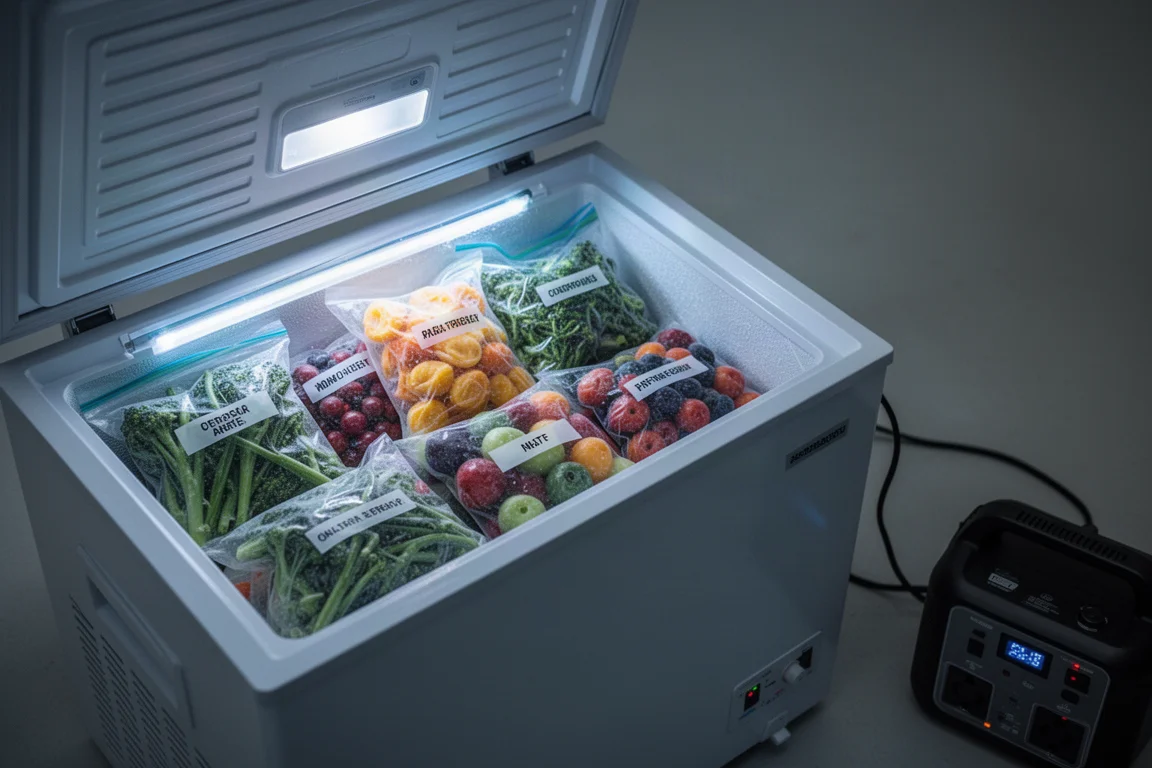
For emergency preparedness specifically, the P2001 is a strong fit. The LFP battery can sit fully charged and ready, it has plenty of output for critical devices over a 24 hour stretch, and the fast recharge gets it back in service quickly. At roughly 50 watts of draw, such as a CPAP or similar medical device, it can run through the entire night, with up to 24 hours of runtime depending on the device. It can also recharge power wheelchair or scooter batteries.
Conclusion
The OUKITEL P2001 is sturdy, easy to use, and versatile, with plenty of outputs, a genuinely useful UPS function, and fast charging that turns short windows of grid power into hours of backup. Real-world run times fall short of the rated 2000 watt hours, as they do for every unit in this category, but the tested numbers for fridges and freezers are impressive for the price. For anyone who cannot or should not run a gas generator, or who simply wants a safer, quieter backup for outages, this is an easy recommendation.
Product link
View more details for OUKITEL P2001
This product is mentioned in the review. Check the specifications, options, and compatibility before buying.
View more details for OUKITEL P2001Further reading
Related Reviews

Portable Power Stations
Anker SOLIX F3000 Review: A Powerful Portable Power Station With a Few Design Quirks
The Anker SOLIX F3000 delivers strong performance, fast charging, and a competitive price, but a few design choices may give you pause.

Power Stations
Anker SOLIX F3800 Plus Review: A Powerful 6,000W Power Station With Some Trade-Offs
The Anker SOLIX F3800 Plus delivers a robust 6,000W inverter, fast solar charging, and solid UPS performance, but high idle draw and a hefty weight give buyers real things to consider.

Power Stations
Jackery Explorer 5000 Plus Review: A Compact Whole Home Backup Power Station
The Jackery Explorer 5000 Plus packs a 5 kWh lithium iron phosphate battery, a 7200 W split-phase inverter, and a surprisingly compact footprint. Here is how it performs under real load.