Travel Luggage
Osprey Transporter 70 and Transporter 36 Carry-On: Two Travel Bags Built for the Long Haul
A practical look at Osprey's travel-focused Transporter duffel and cabin backpack, covering recycled ripstop construction, organisation, and carry comfort.
Introduction
Osprey builds luggage and backpacks and nothing else, and that focus shows in the Transporter range. Both bags in this guide were designed around travel rather than adapted from an existing hiking pack or a generic suitcase.
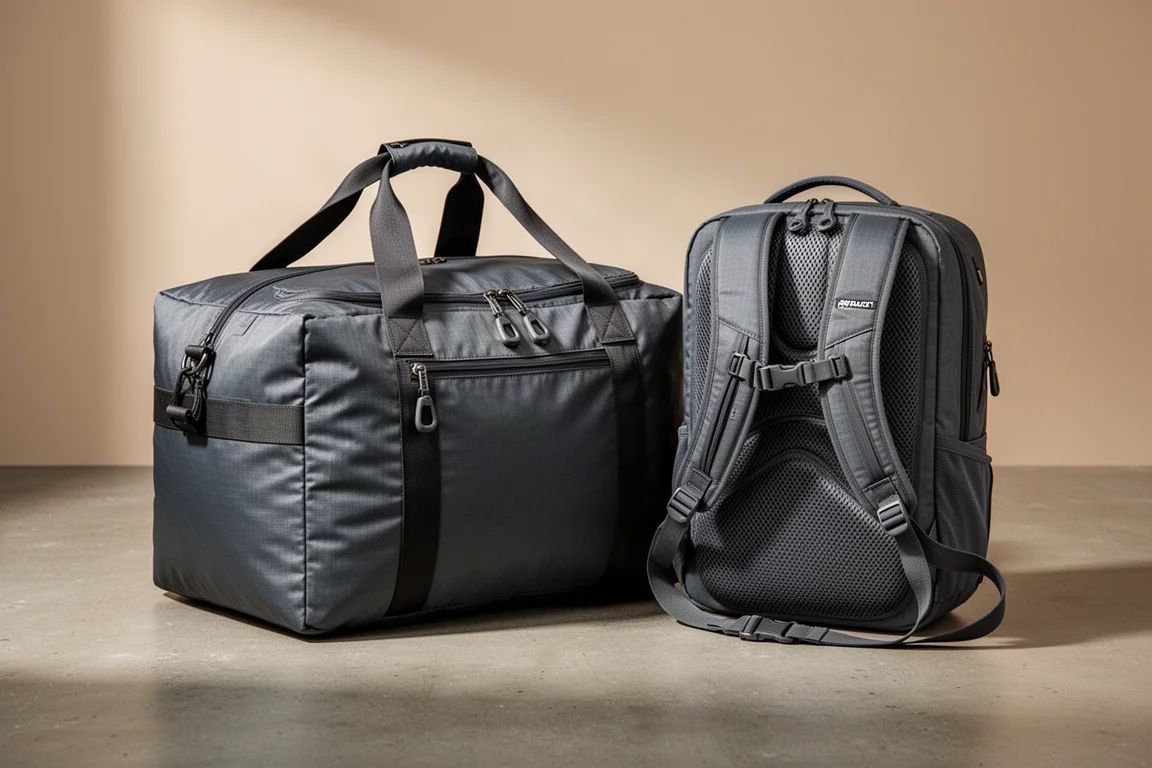
The Transporter 70 is a square duffel that can be split into two large compartments or opened into one big space. The Transporter 36 Carry-On is a cabin-sized bag with a breathable back panel, a stowable harness, and enough internal dividers to keep a work trip or a weekend away tidy.
Here is what each one does well, and who it is likely to suit.
Why the Osprey Transporter Range Stands Out
Both bags share the same foundations. The fabric, the hardware, and the handle layout are consistent across the range, so the choice between them comes down to how you travel rather than to build quality.
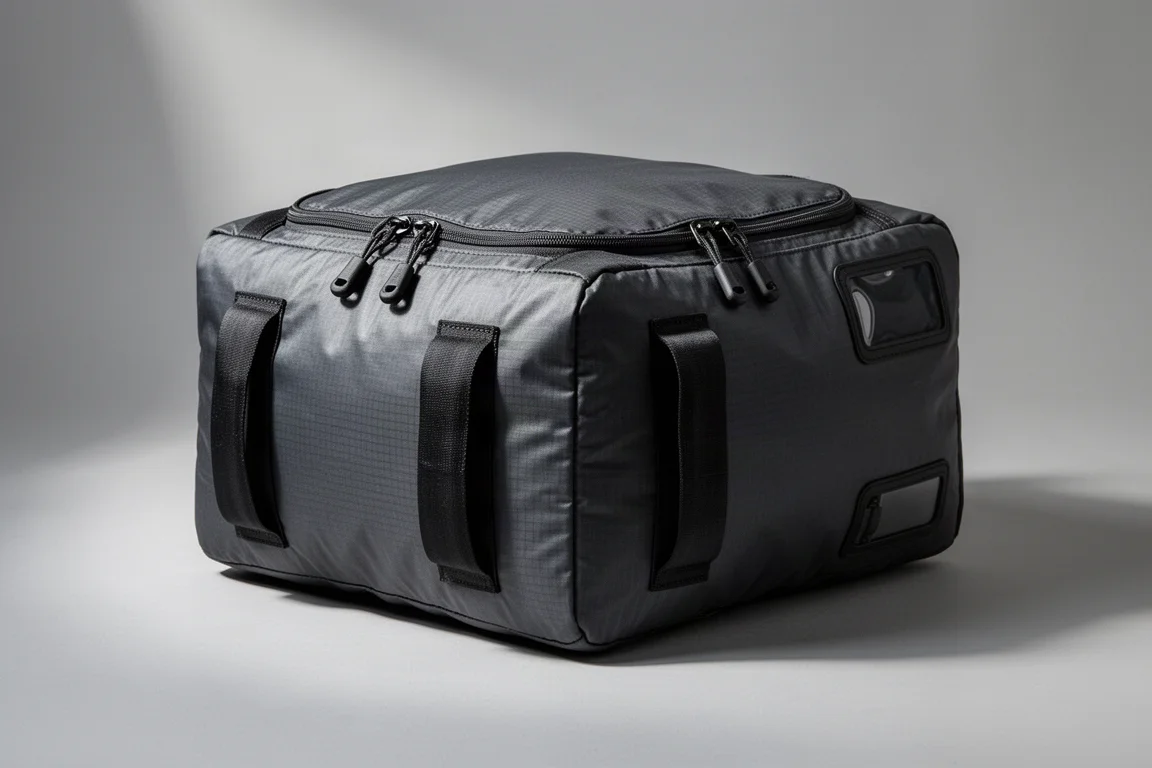
On the duffel, four large padded grab handles let you pick the bag up from any angle, and the carry-on uses the same generous padded handles. Zip pullers are big and easy to grab, and on the duffel they overlap so the openings can be secured with a small padlock.

Stowable harnesses appear on both bags as well. Straps tuck away into a dedicated pocket when the bag is heading onto a conveyor belt or into an overhead bin, then clip back into place when you need to carry the load on your back. On the duffel the straps come out of a zip and clip down at the bottom, which keeps the process simple.
Built to Take a Beating: Nanotuff Fabric and Recycled Nylon
The Transporter range uses Nanotuff, a bluesign approved material made from 100 percent recycled nylon ripstop. It is a tough construction rather than a lightweight one.
Denier counts are split across the bag. The main body uses 630 denier fabric, while the hardest-wearing areas such as the bases step up to 840 denier. That combination makes both bags burly and weatherproof, so they can be thrown around in transit without much worry.
For anyone who checks a bag or drags one across a wet platform, this is the part of the specification that matters most.
Osprey Transporter 70: The Square Duffel
The Transporter 70 is a 70 litre square duffel. The rectangular shape is deliberate: it lets you use the full volume, including the corners, instead of losing space to a rounded profile.
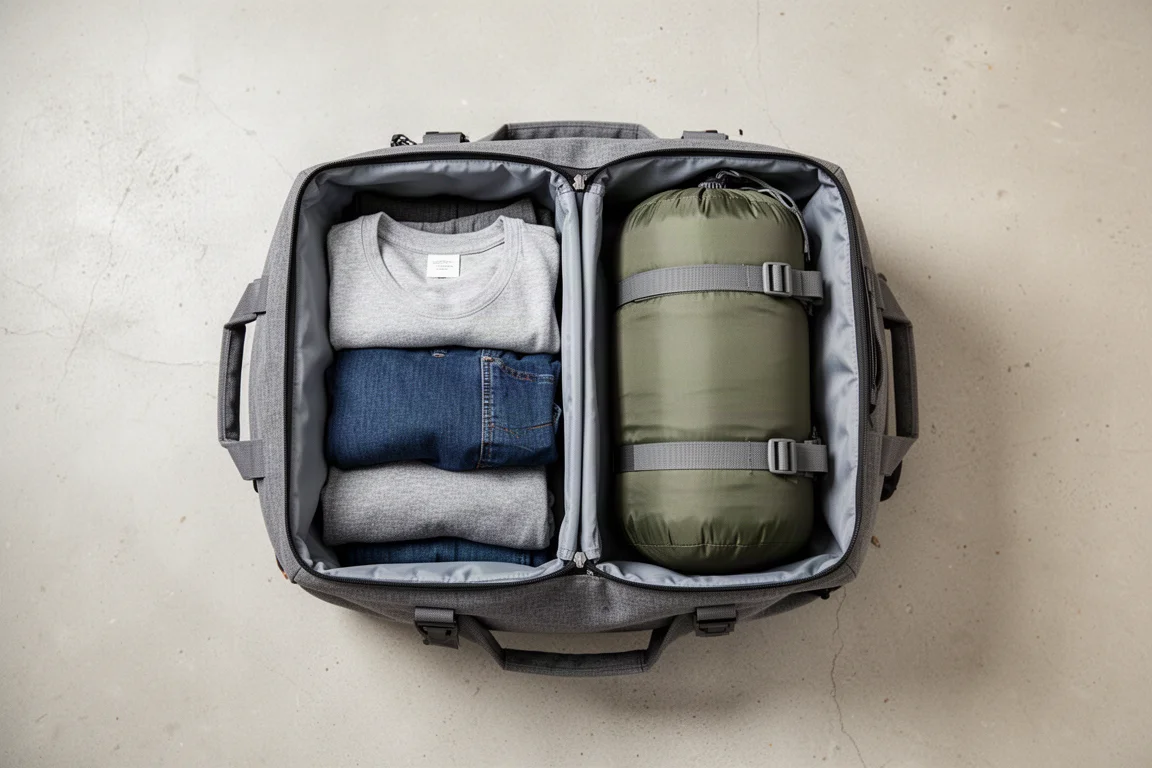
A large sleeping bag, for example, drops in without leaving awkward dead zones around it. The shape also stacks and packs more predictably than a traditional cylindrical duffel.
Practical details are handled well. There is an ID pouch at one end, plenty of points for clipping accessories and bundling items together, and chunky zip pullers that are easy to find with cold hands.
Living With the Transporter 70: Carry System and Interior
Inside, the duffel folds in the middle to create two large compartments. That split makes it easy to separate clean clothes from dirty washing, or wet kit from dry kit, without reaching for extra packing cubes.
Compression straps on one side let you squeeze down a bulging load before zipping. There are also two large dump pockets for essentials. If the organisation is more than you want, the big pockets roll back and clip down, turning the bag into one huge single compartment. You can also leave one side zipped and roll back the other, so the layout adapts to how you pack.
The lid has its own pocket, and the divider includes a small vent so a compartment used for laundry can breathe. A further pocket holds keys and a phone, with a key clip to keep them secure.
The carry system is comfortable and highly adjustable. The sternum strap slides up and down, tension straps at the top fine-tune the fit, and the entire harness can be removed if you only ever plan to use the grab handles.
Osprey Transporter 36 Carry-On: Cabin-Ready Organisation
The Transporter 36 is built as hand luggage, and its priority is making the most of limited space. Dimensions vary between aircraft and airlines, so it is worth checking the published measurements against your carrier’s cabin allowance before you fly.
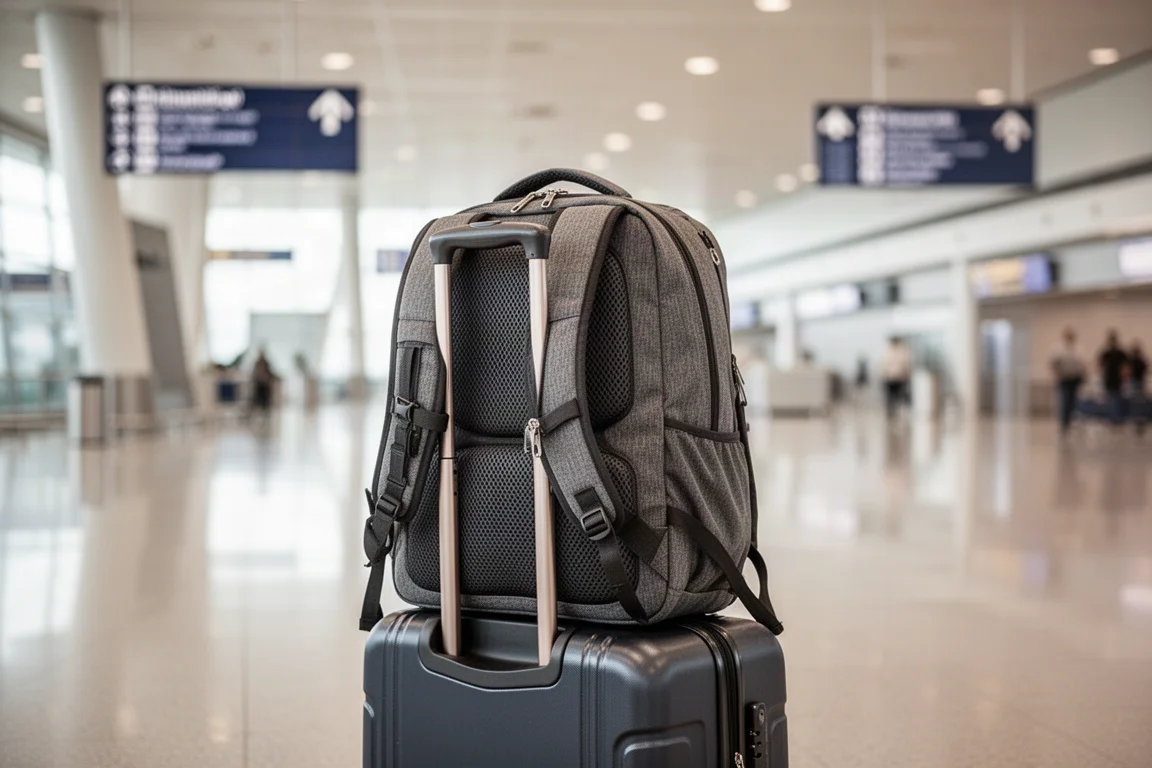
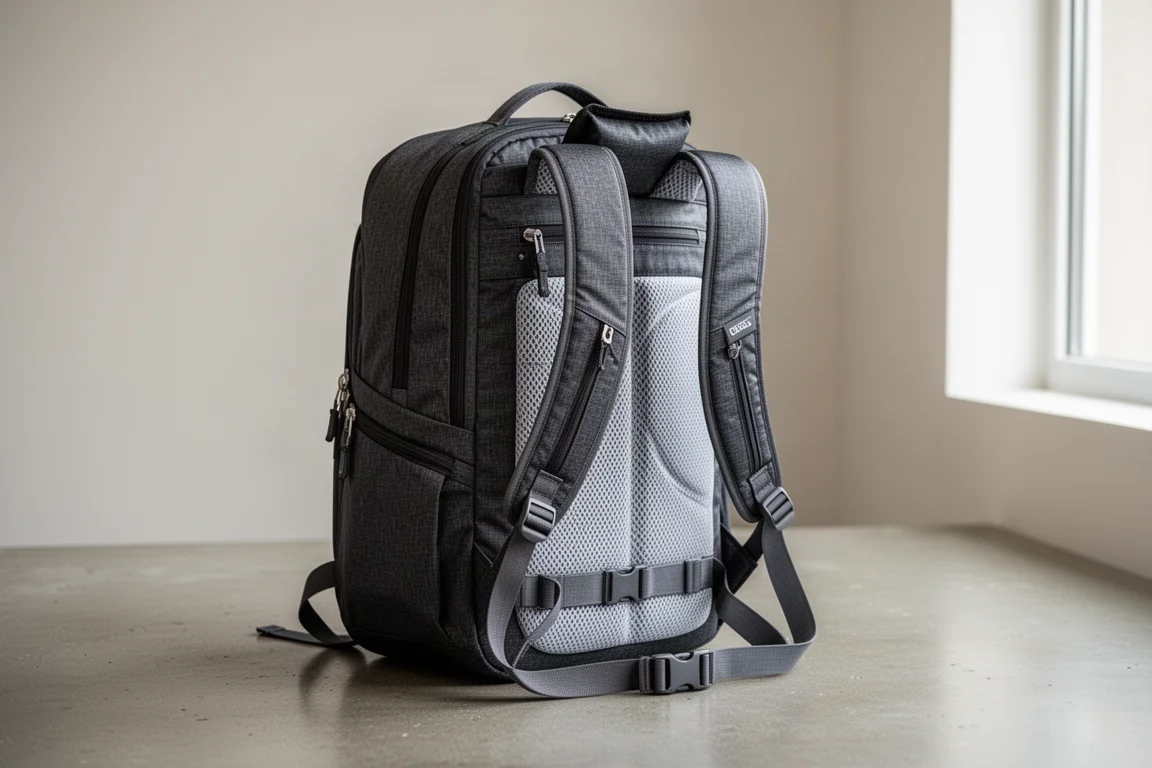
The back system is the biggest departure from the duffel. An air mesh panel keeps the bag breathable on hot days, whether you are walking through a city or heading out on a hill, and it carries weight comfortably. Shoulder straps stow into a purpose-built pocket, and the hip belt can be removed entirely or stored away. The sternum strap slides for fit and includes an emergency whistle.
On the back there is a sleeve that slides over the handle of wheelie luggage, so the bag can ride on top of a rolling case.
The main compartment opens clamshell style, which makes the whole load visible at once. Dividers and smaller compartments handle toiletries, socks, and smaller items, while a large divider separates bulkier layers such as a waterproof or an insulated jacket. A front zip pocket adds pen slots and a bungee section, with another zip inside for extra security.
The side pocket closes with a zip rather than a bungee, so a water bottle stays put when the bag is laid on its side, and it still swallows a large bottle easily. At the back, a generously padded laptop sleeve takes a laptop of around 16 inches, and a smaller inner sleeve stops a compact device from sliding around. A top zip with mesh lining lets clothes air out.
Who Each Bag Suits
The Transporter 70 suits travellers who pack in bulk: gear-heavy trips, sports kit, sleeping bags, and anything that benefits from being split into two large zones. It is also the more flexible of the two, since the internal layout can be reconfigured in seconds.
The Transporter 36 suits anyone flying with hand luggage only, and anyone who needs to combine a laptop and clothing in one bag. Its harness is designed for longer carries than a duffel’s, which makes it a reasonable option for a weekend away that includes some walking.
Buying Advice: Choosing Between the Two
Start with the trip rather than the bag. If your luggage goes in the hold and volume matters more than structure, the Transporter 70 is the straightforward pick. If it has to fit in a cabin and you want quick access to a laptop and organised small items, the Transporter 36 Carry-On makes more sense.
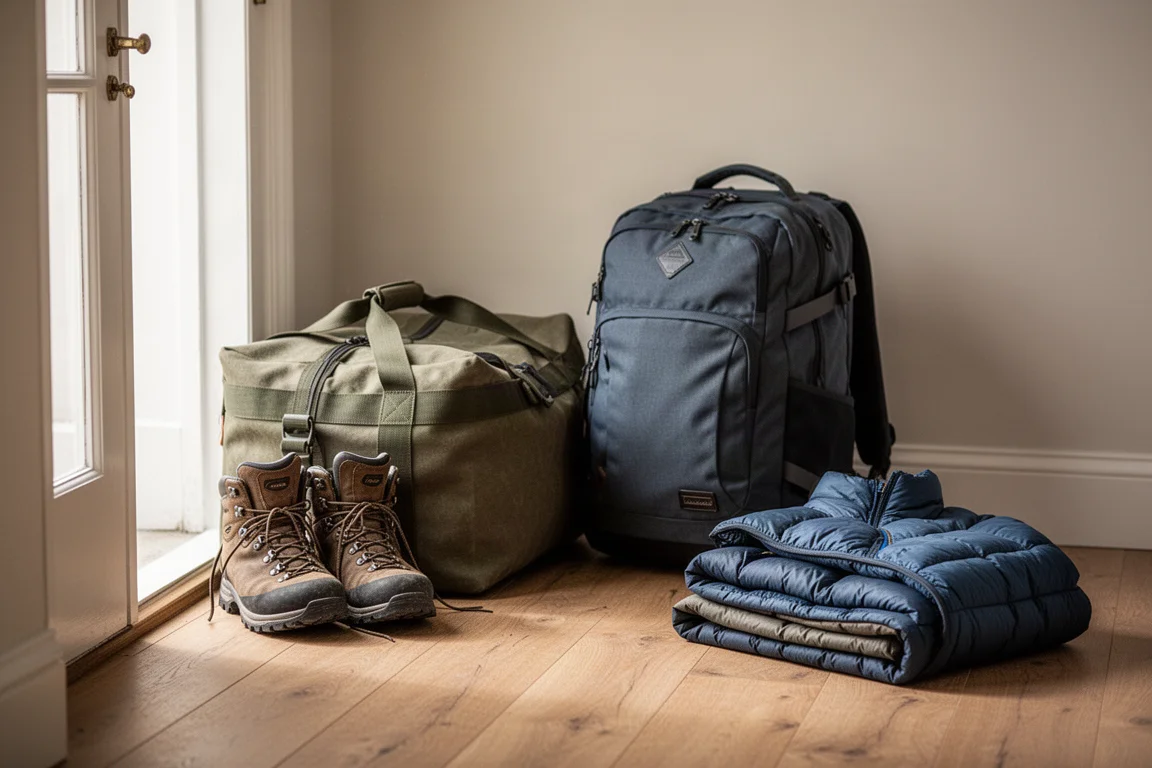
Consider the harness as well. The 70 litre duffel gives you tuck-away shoulder straps and a removable carry system, while the 36 litre carry-on adds an air mesh back panel, a removable hip belt, and a luggage pass-through sleeve for pairing with a wheeled case.
Both bags share the same recycled ripstop construction and the same approach to handles and hardware, so the decision rarely comes down to durability. It comes down to how much you carry and how you move it.
Conclusion
The Transporter 70 and the Transporter 36 Carry-On take two different routes to the same goal: tough, travel-focused bags that can be organised precisely or packed loosely depending on the day. The duffel wins on capacity and flexibility, while the carry-on wins on cabin-friendly structure and carry comfort. Match the bag to the trip and either one should serve you well for a long time.
Further reading
Related Reviews

Backpacking Gear
Building a 10 lb Base Weight: An Ultralight Backpacking Gear List
A practical walkthrough of the ultralight pieces behind a 10 lb base weight, from a 765 g pack and a roomy one-person tent to a full camp chair and a dependable water filter.
Road Bikes
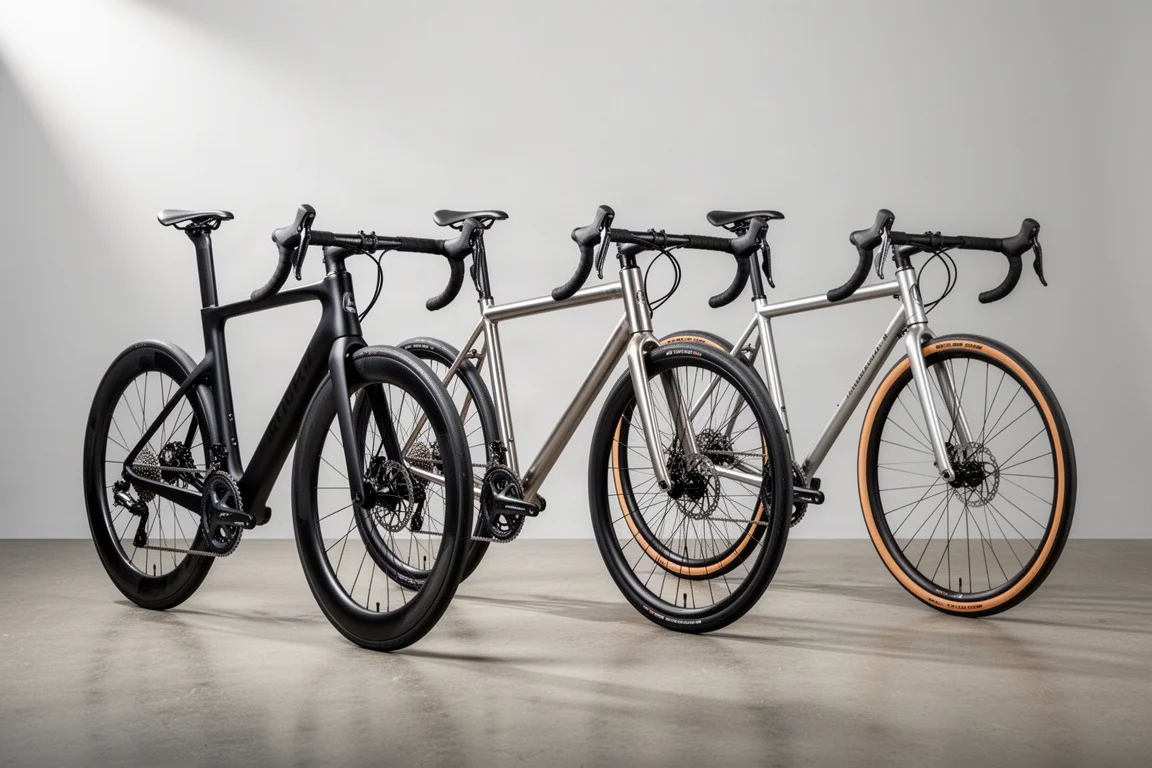
10 New Road Bikes Worth Watching: Aero, Titanium, Steel and Endurance Standouts
A practical roundup of 10 new road bikes, from aero flagships chasing single-watt gains to titanium, steel and endurance platforms built for real roads.
Bikepacking Gear
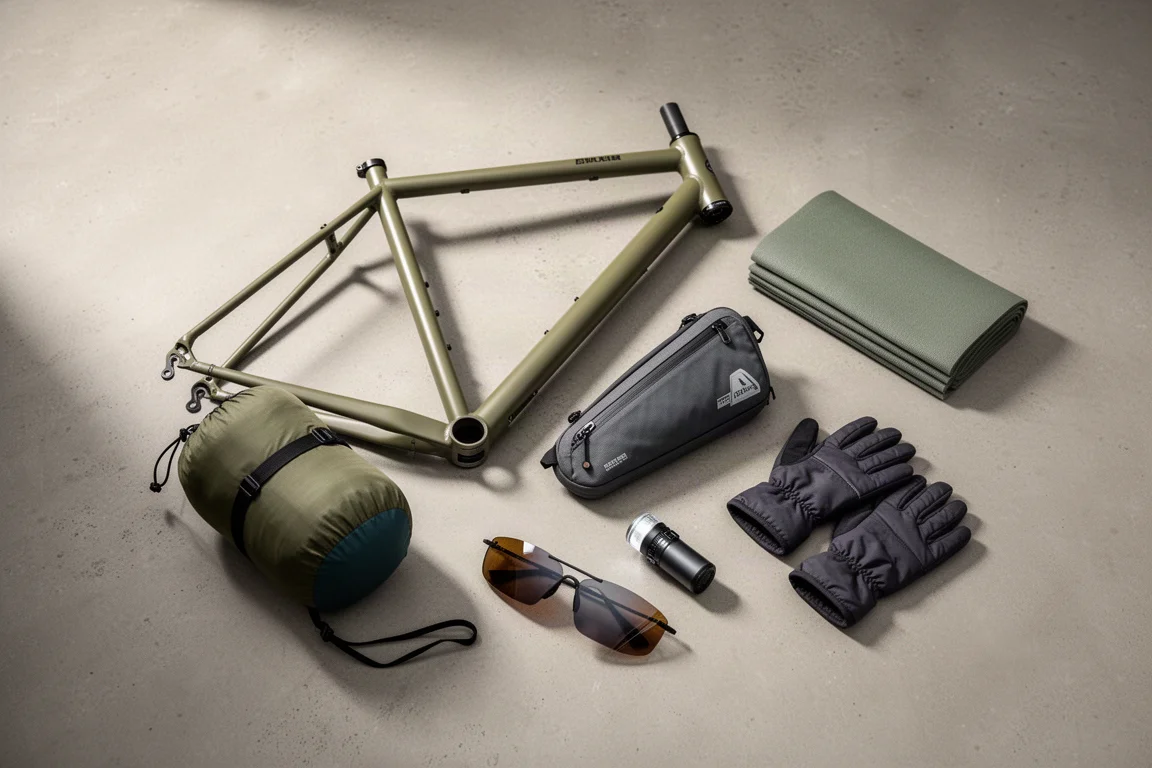
11 Bikepacking Essentials for Long-Distance Cycling
Eleven bikepacking essentials for long-distance cycling, from a steel gravel frame and a two-person tent to helmet lights, packable gloves, and a frame bag that puts weight in the right place.