Backpacking Packs
Osprey Levity 60 Review: Ultralight Comfort at 870 Grams
A 60 litre backpacking pack that weighs just 870 grams, with a suspended back panel and a padded harness, plus a deliberately short feature list to weigh up first.
Introduction
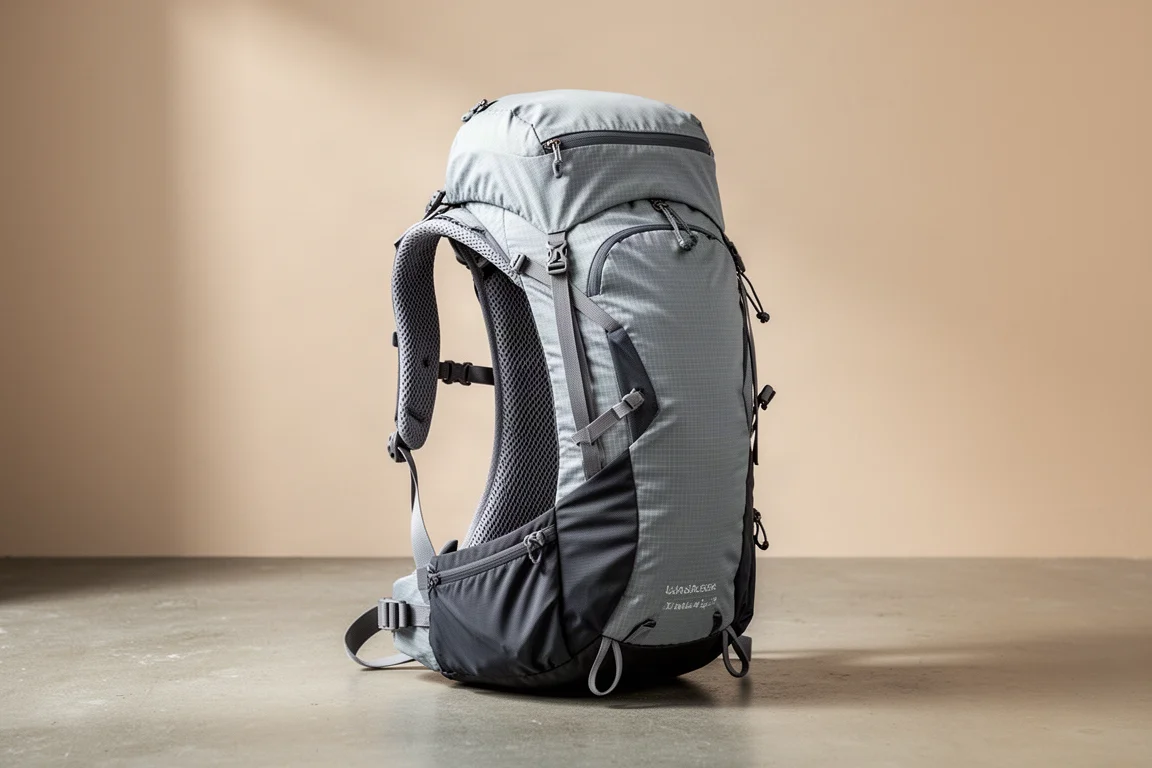
The Osprey Levity 60 is an ultralight backpacking pack that carries 60 litres while weighing just 870 grams. That figure is the headline, but it is not the whole story. To reach it, Osprey reduced the fabric weight and removed features that many backpackers take for granted, then kept the parts of the design that make a pack comfortable to carry all day. The result is a specialist pack rather than an all-rounder, and whether it suits you depends almost entirely on how you pack and how long you go out for.
Who the Osprey Levity 60 Is For
This pack is built for backpackers who treat weight as the primary specification. If you already carry a minimal kit, sleep in a light shelter, and plan trips of a week or more, the Levity 60 is designed around that style of travel. The medium size suits a frame of around 172 cm, or five foot eight.

Where it makes far less sense is the short trip. For a weekend out, the weight saving is unlikely to change your experience, and you give up everyday convenience for a number you may barely notice on the trail.
Main Strengths: AirSpeed Suspension and Real Comfort
The surprise here is comfort. Ultralight packs often feel like a compromise once they are loaded, but the Levity 60 keeps the AirSpeed suspended back system, so the pack carries on a proper frame rather than resting flat against your back. The mesh panel holds the load away from your spine, which keeps airflow moving and reduces heat build-up on warm days.
The hip belt uses EXOform construction, and the shoulder straps are genuinely well padded, which is not something you expect on a pack below one kilogram. Combined with the suspended frame, that means the load sits on your hips rather than pulling on your shoulders. Everything remains adjustable: the straps can be tuned at the top and at the bottom, there is a chest strap, and the hip belt offers a double adjustment.
Weight-Saving Trade-Offs in Fabrics and Features
Osprey saves grams in two ways. The first is the fabric mix: a slightly thicker 210 denier material in the higher-wear areas, paired with a very thin 30 denier silnylon that does most of the work on weight. That thin fabric is described as water resistant, tear resistant, and abrasion resistant, so it is stronger than it looks, but it is still a very light material.
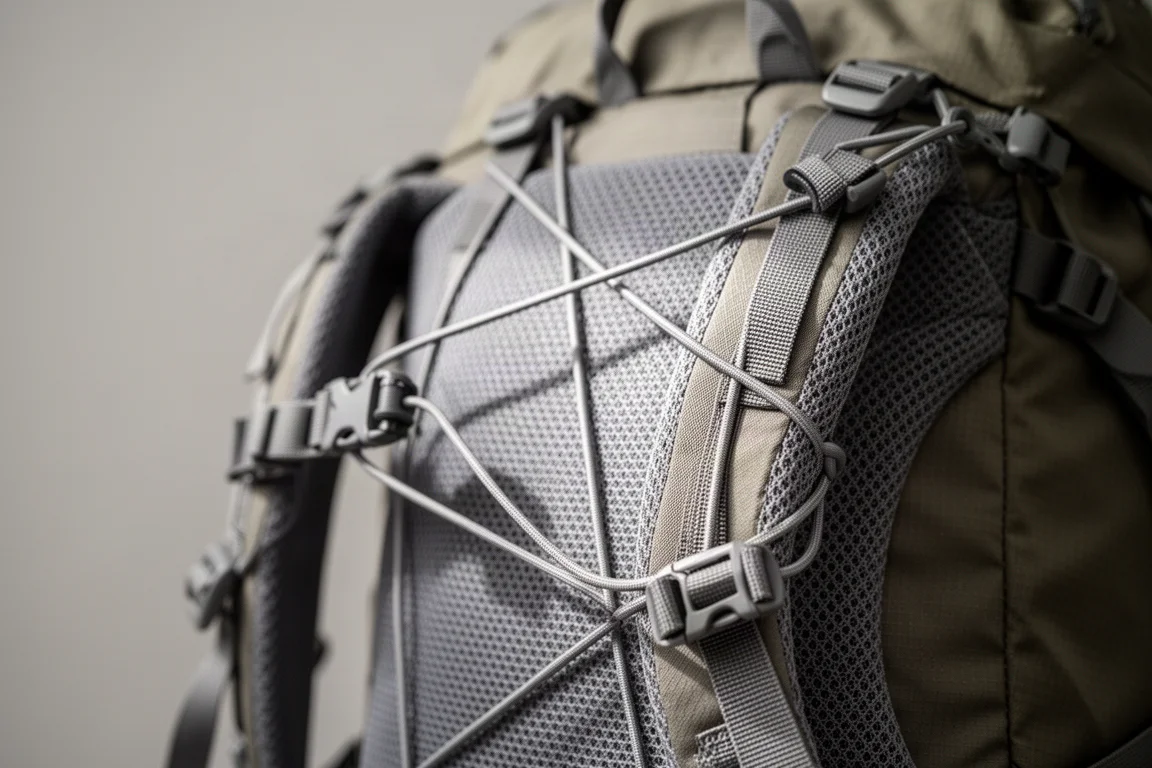
The second is the feature list. There are no hip belt pockets at all, which becomes the most obvious omission once you start walking. The buckles, clips, and fixings are all scaled down, and the interior is deliberately simple: one large open compartment with a hydration reservoir sleeve, plus a port at the top where the hose exits. The lid carries a pocket with a small key attachment, which is a useful place for valuables.
Fit, Sizing, and Adjustability
The medium size suits a frame of around 172 cm. Externally, the pack measures roughly 70 cm tall, 40 cm wide, and 33 cm deep, so despite the low weight there is a substantial amount of volume to work with.
The suspension can be tuned at the top and bottom of the shoulder straps, at the chest strap, and at two points on the hip belt. That range of adjustment is what allows the pack to stay stable when it is loaded heavily, and it is a large part of why the Levity 60 carries better than its weight suggests.
Packability and Organization on the Trail
Volume is not the issue here. Organization is. There is one main compartment, a side pocket on each side, a large stash pocket on the front, and the lid pocket. That is the full inventory. Anyone who likes to separate a sleeping bag, cook kit, clothing, and food into distinct compartments will find the Levity 60 frustrating, because almost everything ends up in the same space.
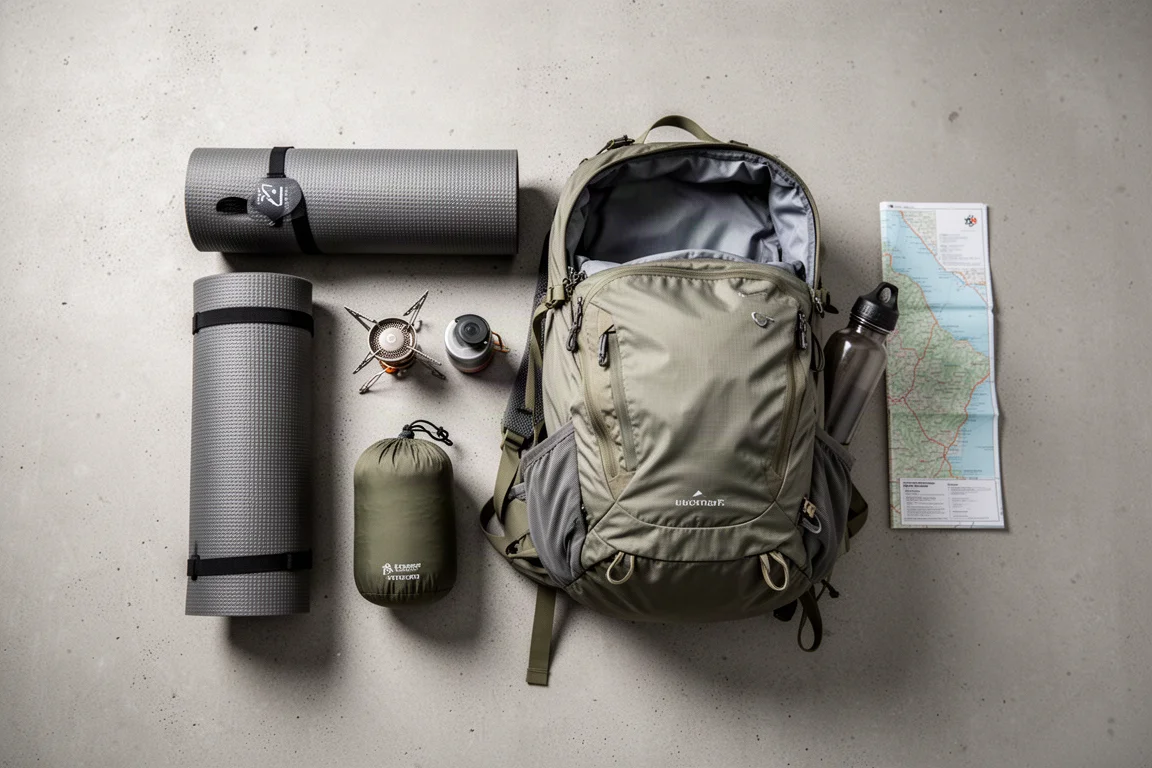
There are attachment points on the outside of the pack, which helps if you want to lash items down, but the design assumes you pack light and pack simply. If you are used to reaching for a hip belt pocket for a phone or a snack, plan for a different solution before you commit.
Things to Consider Before Buying
Gear protection is worth thinking about. The pack relies on a very thin fabric, and if you are carrying expensive equipment, a heavier pack may give you more confidence about what happens to the contents when the bag is set down on rough ground.
Price is the other factor. At around 240 pounds, the Levity 60 costs more than many packs that offer far more features. You are paying for the weight, and the value of that depends on how much you care about it.
Finally, consider whether a long trip is genuinely on your calendar. The benefit of a sub-kilogram pack is most meaningful over a week or more of walking, where every gram is carried for many hours each day. For a weekend, the trade-offs are much harder to justify.
Buying Advice
If you are shopping for a pack in this category, the Levity 60 makes sense when minimalism is already your style and you have lightened the rest of your kit to match. The 870 gram weight, the suspended back panel, and the padded harness are an unusual combination at this size.
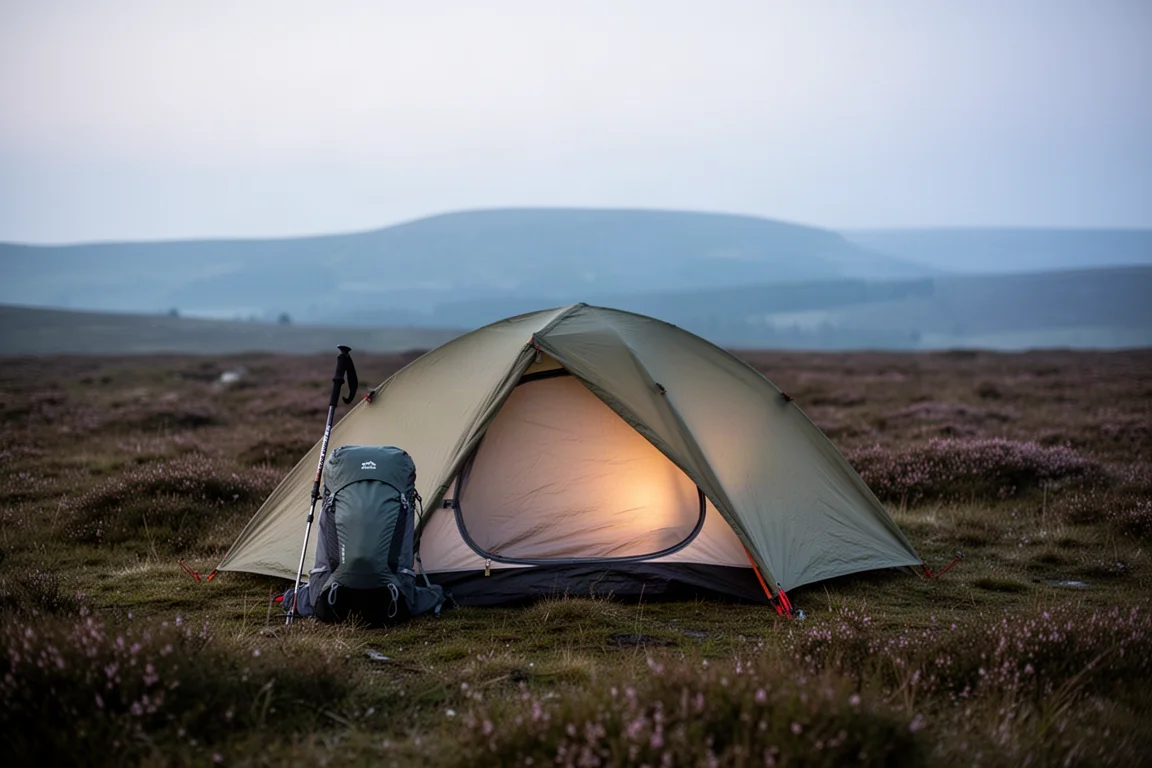
Worth knowing before you commit: the same brand’s Exos line adds back the hip belt pockets and a fuller feature set for a modest weight penalty, roughly 1.2 kg for the Exos 48 and around 1.3 kg for the Exos 58, with a lighter Exos LT also in the range. For most backpackers that trade is the easier one to live with over a long trip. The Levity 60 earns its place when the number on the scale is the thing you care about most, and when your trips run to a week or more rather than a weekend.
Conclusion
The Osprey Levity 60 is a remarkable piece of engineering: a framed, ventilated, genuinely comfortable 60 litre pack at 870 grams. It is also a specialist tool with a short feature list and a premium price. Buy it if you travel light and travel long, and look elsewhere if you want pockets, compartments, and a fabric that shrugs off rough treatment.
Product link
View more details for Osprey Levity 60
This product is mentioned in the review. Check the specifications, options, and compatibility before buying.
View more details for Osprey Levity 60Further reading
Related Reviews
Backpacking Packs
Backpacking Pack Types Compared: Traditional, Ultralight, Frameless, and Hybrid
Four pack categories, four representative packs, and a practical way to decide which kind of backpacking pack matches the weight of your gear.
Backpacking Packs
Best Backpacking Packs 2026: Six Picks for Every Style of Trip
Six backpacking packs that earned their place by weight class and purpose, with the real strengths and trade-offs to weigh before you buy.
Backpacking Packs
Big Agnes Prospector 50 Review: A Hybrid Pack That Sits Between Two Worlds
A 50-liter backpacking pack that mixes ultralight features with traditional padding and panel access. Here is who it suits and where it falls short.