Travel Bags
Osprey Farpoint 40 vs Farpoint 55: Same Bag, Two Setups, Plus Every Daypack Option
The Farpoint 40 and 55 share identical dimensions and capacity, but they split the organizational features and daypack strategy in ways that matter before you buy.
Introduction
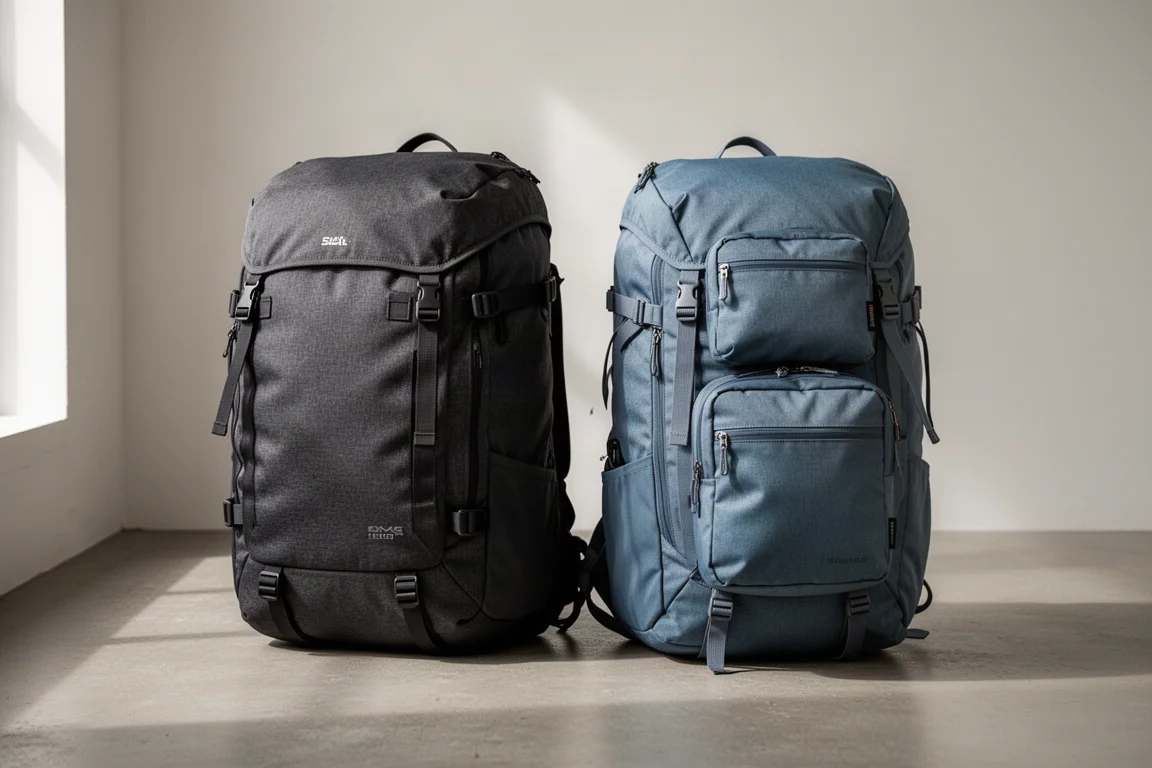
Osprey’s Farpoint 40 and Farpoint 55 look like two different sizes of the same bag, but they are actually the same 40-liter pack sold in two configurations. The 40 includes a laptop compartment and a top slash pocket but no daypack. The 55 includes a 15-liter daypack but drops the laptop sleeve and the slash pocket. Understanding that split is the key to choosing between them, and it also determines whether any of Osprey’s compatible daypacks are worth buying separately.
Dimensions and Capacity: Nearly Identical
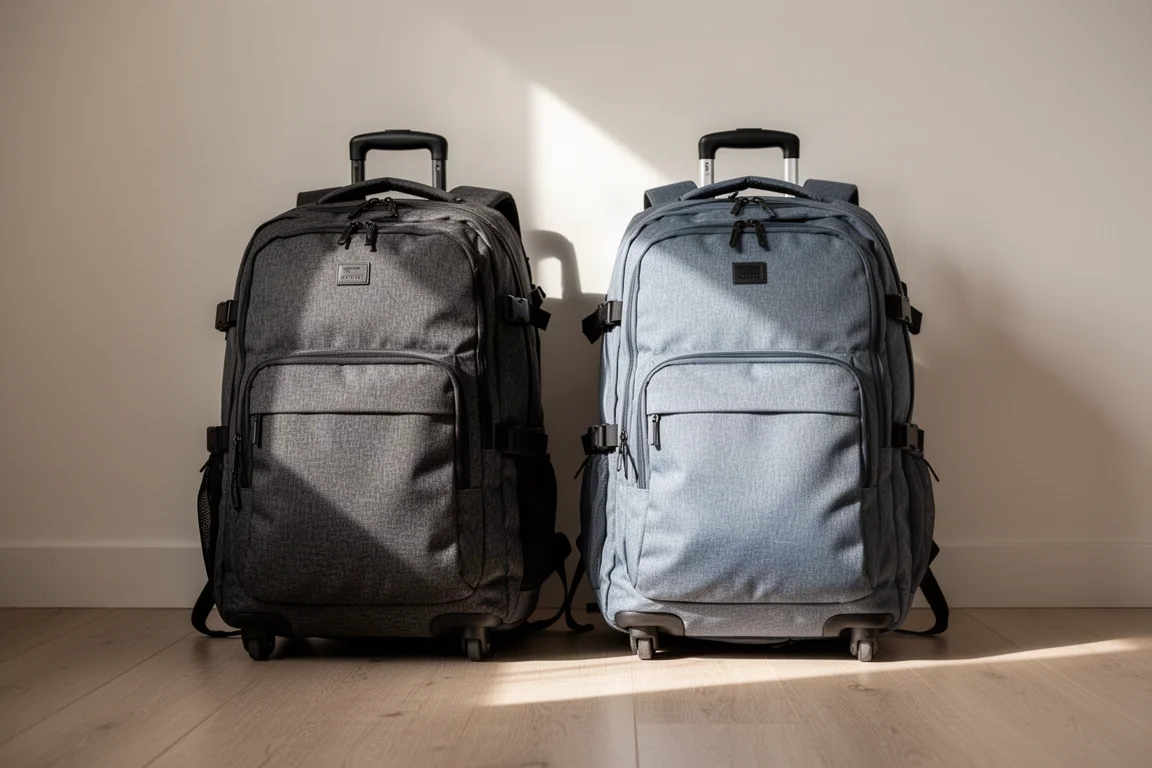
Osprey lists both packs at 22 by 14 by 9 inches (55 x 35 x 23 cm), which is confusing on paper since one is rated at 40 liters and the other at 55. The listed dimensions refer to the main 40-liter body without the daypack attached. Measured loosely packed with clothes, both packs share the same sturdy wire frame that fixes the length at about 22 inches, with a max width closer to 12 and a half inches thanks to good compression straps. Depth depends on how you pack, and both came out at roughly 10 inches deep in the same load-out.
A simple volume check confirms the shared capacity: packing the 55 full of loose clothes and transferring the same load into the 40 produces a nearly identical fill. The materials, hardware, adjustable harness system, shoulder straps, hip belts, pockets, back padding, and stowaway fabric flap are all identical between the two models.
The Real Differences: Gear Pouch, Slash Pocket, and Laptop Sleeve
The exterior shape and dimensions are the same, but three features separate the two packs. The current Farpoint 40 has a front gear pouch attached at the top and bottom with no zipper, intended for stashing bulky items like a jacket or towel on the outside of the pack. The 55 omits it because Osprey assumes you will be using the attached daypack.
The 40 also carries a top slash organizational pocket that the 55 lacks, again because the included daypack provides a similar top pocket. Finally, only the 40 has a side zipper opening into a padded laptop sleeve inside the main compartment. The sleeve is thin, so it barely impacts main-compartment volume unless a laptop is loaded, and it holds about a 16-inch laptop with a locking zipper.
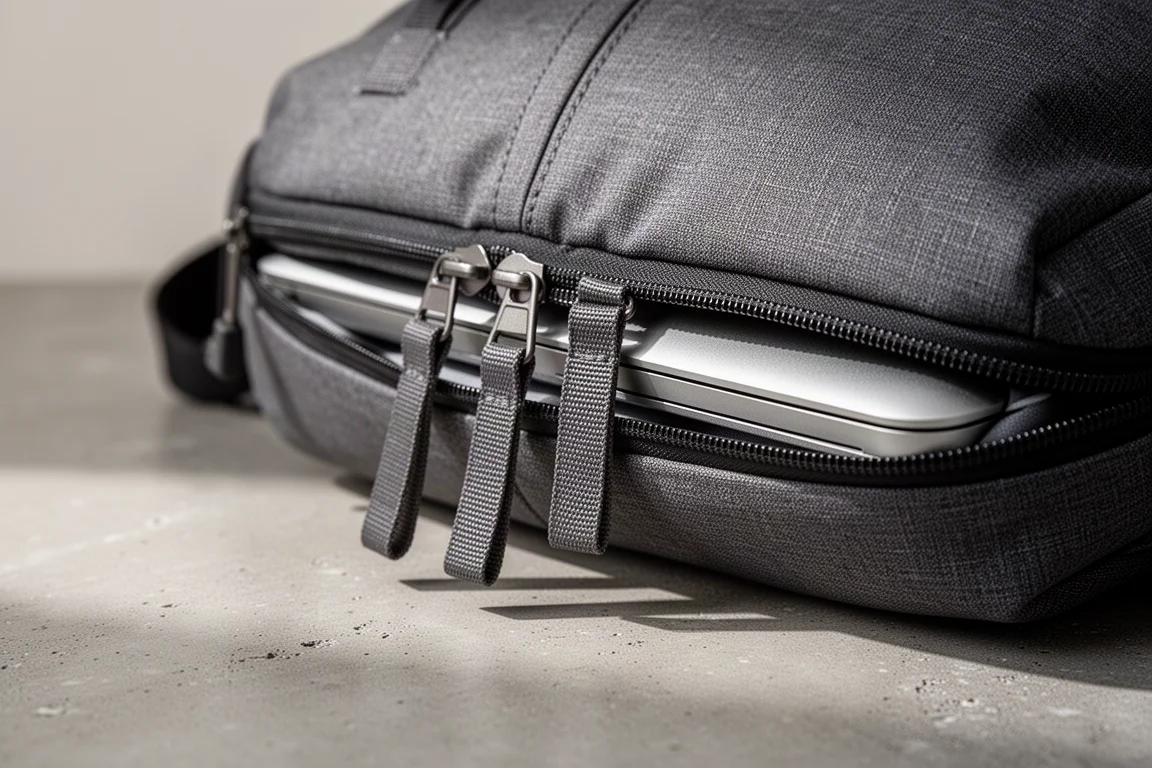
One carry consideration: in the 40, the laptop rides close to your back, which is generally the better weight distribution. In the 55’s daypack, the laptop sits farther from your back and changes how the load carries. A minor point in the 55’s favor is a slightly smaller mesh lid pocket compared to the 40.
Attaching a Daypack to Either Farpoint
Three daypacks are advertised as compatible with the Farpoint: the 13-liter Daylight, the 20-liter Daylight Plus, and the Farpoint Fairview travel day pack. The Farpoint 55 includes its own 15-liter daypack, but you can attach either of the other two to it as well.
The Farpoint travel day pack attaches differently from the others. It has two pass-through loops on the back instead of top attachment straps. You lay it on top of the main bag, run the compression straps through the loops, and cinch tight. Since both Farpoint models have the same tie-down straps on top, this works identically on either pack.
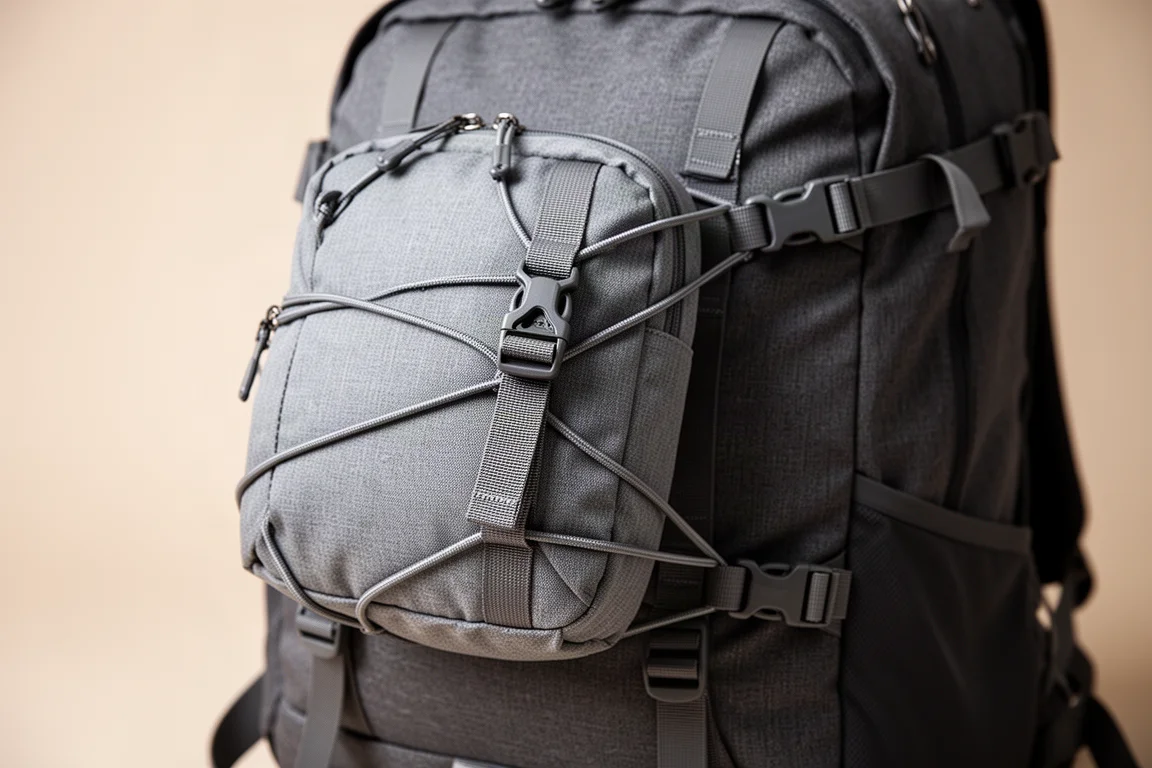
The Daylight and Daylight Plus share the same attachment setup despite their different volumes. Take the cinch strap on top of the daypack, run it through the fabric loop, buckle it, and cinch it down. A bottom adjuster buckle can feed through the bottom fabric loops, though it is difficult to get in place and not really necessary for securing the pack. The 55 has an extra fabric loop on the bottom middle of the pack that can take one of these buckles for additional security. The Farpoint travel day pack also has one exclusive option: a hidden buckle on the shoulder straps of both Farpoint models that lets you attach the daypack to the front of the bag.
Price Breakdown: Which Combination Makes Sense
The Farpoint 40 lists at $185 and the Farpoint 55 at $220. The Farpoint travel day pack and the Daylight are both $65, and the Daylight Plus is $75. Any daypack can pair with any main bag, but the math favors one clear path. A Farpoint 40 plus the Farpoint travel day pack costs $250, and the 40 with the Daylight is also $250, yet the Farpoint 55 delivers essentially the same setup for $220. Even the 40 with the Daylight Plus runs $260. If you want any daypack in the mix, buying the Farpoint 55 with its included 15-liter daypack is the best deal.
Conclusion
The Farpoint 40 and 55 are the same bag with different bundles: one adds a laptop compartment and slash pocket, the other adds a daypack and shifts that organization into a second bag. If you carry a laptop regularly and prefer it close to your back, the Farpoint 40 is the natural pick. If you want the daypack included, the Farpoint 55 is both cheaper and more complete than any 40-plus-daypack combination. It is a slightly odd product split, and it would arguably be cleaner if Osprey sold the base bag with and without a laptop sleeve and let you choose your daypack, but as currently priced, the 55 is the strongest value in the lineup.
Product link
View more details for Osprey Farpoint 40
This product is mentioned in the review. Check the specifications, options, and compatibility before buying.
View more details for Osprey Farpoint 40Further reading
Related Reviews
Travel Bags
Bubba Goose Duffel Review: A Featherweight 34L Duffel With Serious Materials
A minimalist X-Pac VX21 duffel from a Seattle workshop brand that weighs just over a pound while swallowing a huge main compartment.
Travel Bags
Carry-On vs Personal Item: Two Travel Bags Worth Comparing
A practical look at how much you can actually pack in a max-size carry-on duffel versus a personal-item-sized pack, and which travel style each suits.
Travel Bags
Double Oak Essentials Travel Bags: Weekender, Backpack, and Dop Kit Review
Three waxed canvas and full grain leather travel bags with YKK zippers and a lifetime warranty, reviewed up close.