Backpacking Packs
Osprey Atmos AG LT 50 Review: Anti-Gravity Comfort for Three-Season Backpacking
A detailed look at the Osprey Atmos AG LT 50, a 50-litre backpacking pack built around the Anti-Gravity suspension, with its ventilation, adjustment range, features and trade-offs.
Introduction
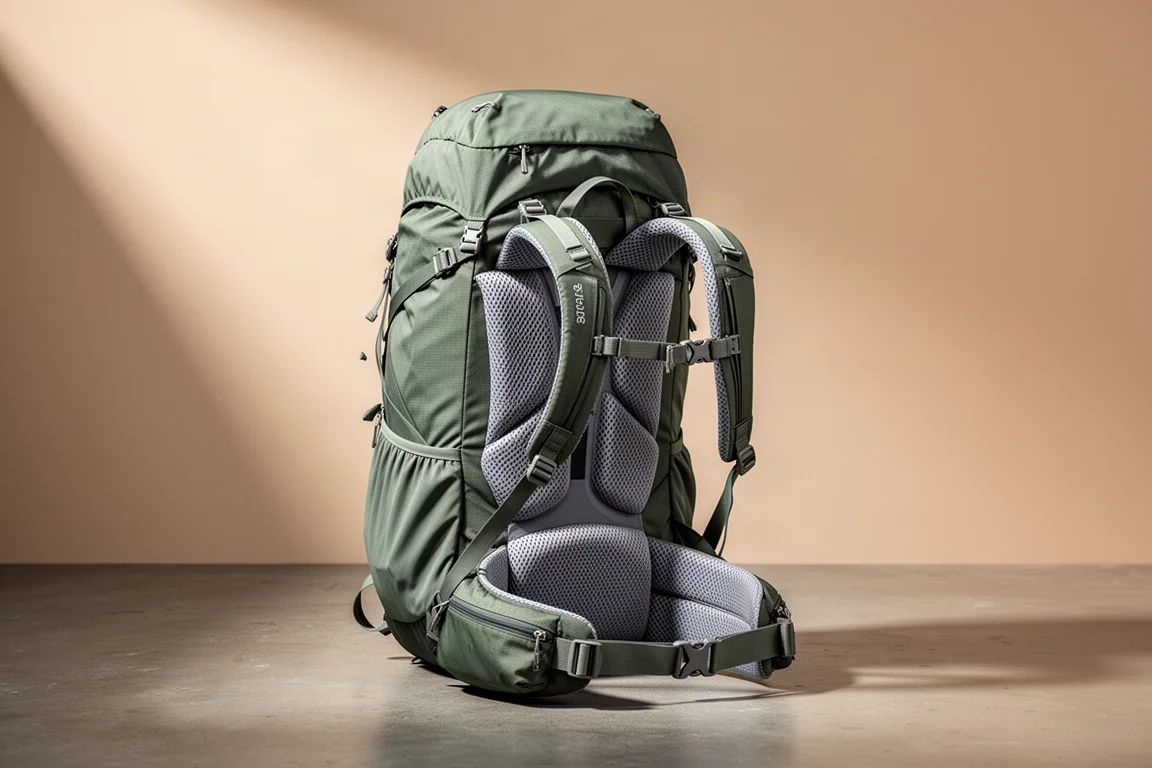
The Osprey Atmos AG LT 50 is a 50-litre backpacking pack built around the Anti-Gravity suspension, a carry system designed to make multi-day loads feel more manageable on the hips and shoulders. The LT version trims some grams from the standard design while keeping the thick padding, the ventilated mesh back panel and the wide adjustment range that define the range.

At 1.9 kg, the pack sits heavier than the name might suggest, and the weight saved over the non-LT version is modest rather than dramatic. What it does deliver is a harness that spreads load steadily, which tends to matter more than a few hundred grams once a pack is fully loaded.
Who this product is for
This is a pack for backpackers who want comfort and airflow rather than the lowest possible number on the scales. With a 50-litre capacity in the small/medium size and 53 litres in the large/extra large, it suits three-season trips in spring and autumn, when loads are still substantial and the extra padding around the hips and shoulders earns its place.
For winter trips, the capacity is likely to feel tight, and a larger pack is the more sensible choice. The harness is highly adjustable at both the back and the hip belt, so a broad range of builds can dial in a stable fit, including around 172 cm in the small/medium size.
Design and Carry Features
The Anti-Gravity system is the centrepiece. A suspended mesh back panel holds the pack slightly away from your spine, and the same ventilated mesh appears across the shoulder straps and the padded hip belt. The result is noticeable airflow across the back and shoulders, which is welcome in warm weather and useful year round.
Adjustment is simple. Torso height changes with a straightforward back adjustment, and the Fit-on-the-Fly hip belt lets you fine tune the fit while the pack is on. Twin zippered hip pockets add quick access, and the adjustable side pockets are positioned so a water bottle can be reached without taking the pack off.
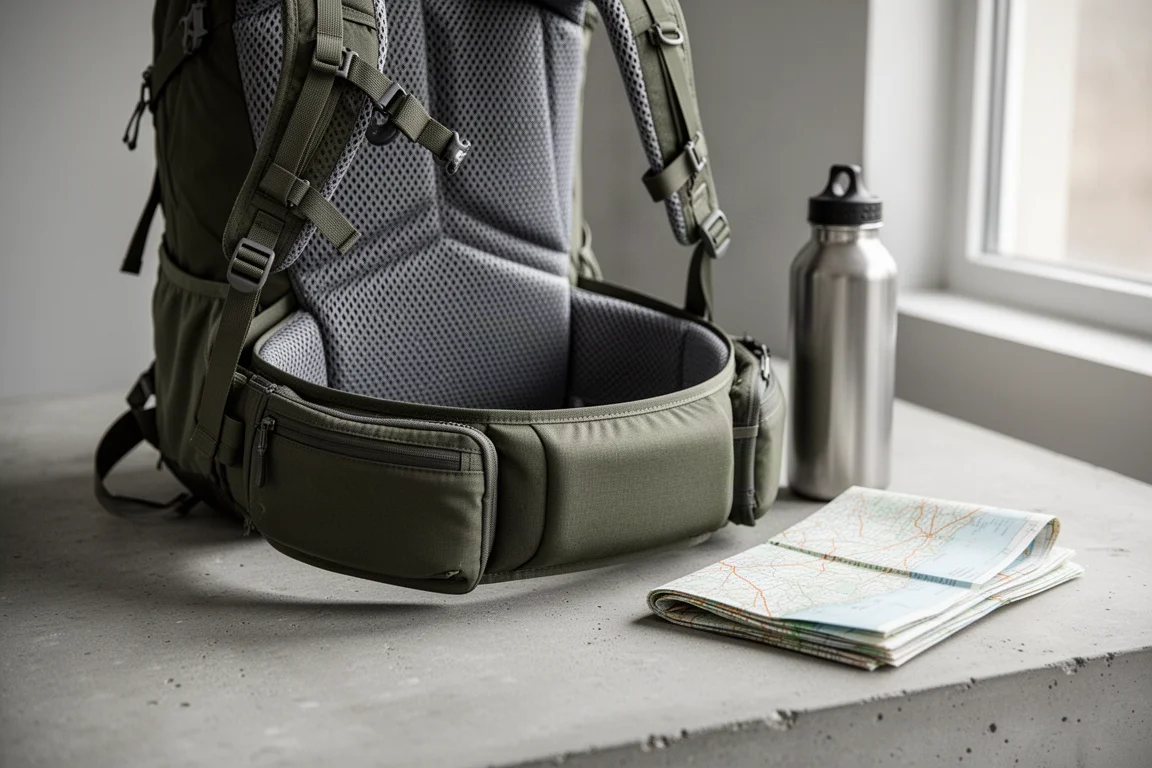
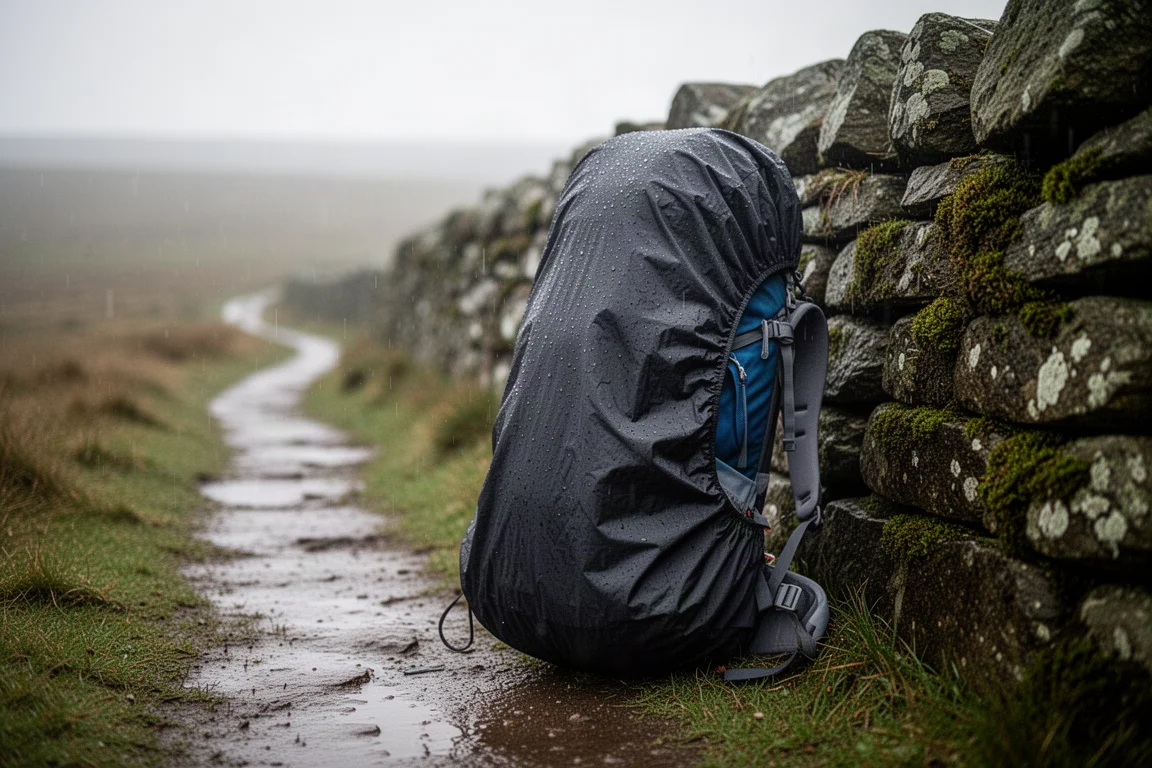
Above the harness, a floating lid with a large zip carries the essentials and includes lashing points and a carry handle. A generously sized front stash pocket adjusts for bulky layers, a sleeping mat harness takes a closed-cell roll, and an integrated rain cover is included and stowed at the base. There is no dedicated sleeping bag compartment, but a long side access zip runs down the pack for reaching mid-pack items.
Inside, a hydration reservoir pouch sits against the back panel, with a hose port routing the tube to the outside and a clip holding the reservoir high. The fabrics are 210D nylon made from recycled materials with a PFC-free durable water repellent finish, and the pack comes in black, blue and green.
Main strengths
The strongest argument for this pack is the carry. The Anti-Gravity suspension, deep padding and ventilation combine to make a loaded pack feel controlled rather than cumbersome, and the level of adjustment means the fit can be refined rather than approximated.
Organisation is equally well considered. Hip pockets, adjustable side pockets, the front stash, lid lashing points and the side access zip cover the ways gear is actually used on the trail. The included rain cover and the recycled nylon build with a PFC-free water repellent finish round out a package that feels finished rather than assembled.
Things to consider before buying
Weight is the main compromise. At 1.9 kg the pack is heavier than many backpackers would hope for in an LT model, and the reduction compared with the standard version is small. If shaving grams is the priority, this is not where the biggest savings will come from.
There is no sleeping bag compartment, which some backpackers prefer for quick access at camp, and the side access zip is the alternative rather than a direct replacement. The price is also a factor, at around £220, which places it firmly in premium territory. Capacity is worth checking too: the small/medium is 50 litres, while the large/extra large offers 53 litres, so the pack you order may be slightly bigger or smaller than expected.
Buying advice
Match the pack to the load you actually carry. For spring and autumn trips with a moderate to heavy load, the comfort and ventilation here justify the weight and the price. For winter trips or long expeditions, look at a larger capacity pack instead.
Sizing matters more than any specification. The dimensions are 88 cm tall, 35 cm wide and 30 cm deep, and the harness adjusts widely at the back and the hip belt, so it is worth confirming your torso length before ordering rather than defaulting to a size. If you are near the boundary between the two capacities, the extra three litres in the large/extra large can make packing for a longer trip noticeably easier.
Conclusion
The Osprey Atmos AG LT 50 is a comfortable, well-organised three-season backpacking pack with an excellent suspension system and a genuinely useful feature set. It is not the lightest option at 1.9 kg, and at around £220 it asks a premium price, but for backpackers who value how a load carries over how it measures on a scale, the Anti-Gravity system makes a strong case.
Product link
View more details for Osprey Atmos AG LT 50
This product is mentioned in the review. Check the specifications, options, and compatibility before buying.
View more details for Osprey Atmos AG LT 50Further reading
Related Reviews
Backpacking Packs
Backpacking Pack Types Compared: Traditional, Ultralight, Frameless, and Hybrid
Four pack categories, four representative packs, and a practical way to decide which kind of backpacking pack matches the weight of your gear.
Backpacking Packs
Best Backpacking Packs 2026: Six Picks for Every Style of Trip
Six backpacking packs that earned their place by weight class and purpose, with the real strengths and trade-offs to weigh before you buy.
Backpacking Packs
Big Agnes Prospector 50 Review: A Hybrid Pack That Sits Between Two Worlds
A 50-liter backpacking pack that mixes ultralight features with traditional padding and panel access. Here is who it suits and where it falls short.