Road Bikes
Orbea Orca Review: A Lightweight Climbing Bike With Real Character
The Orbea Orca prioritises climbing stiffness, comfort and customisation over outright low weight. Here is what the mid-tier build delivers, and where it falls short.
Introduction
The Orbea Orca is the Spanish brand’s lightest road bike to date, and the launch range makes Orbea’s thinking unusually clear. Rather than chasing a single do-everything machine, the company splits its road offering into a dedicated aero model and a dedicated lightweight climbing bike. The Orca is the climbing half of that equation, and it makes no real attempt at aerodynamic shaping beyond the internal cable routing that has become standard on modern road frames.
The flagship build is quoted at 6.7 kg, which is genuinely impressive. This article covers the mid-tier build, which costs around £6,000 and weighed in at roughly 7.5 kg on the scales. That is not heavy in absolute terms, but it is a meaningful gap to the top of the range, and it shapes much of what follows.
Who the Orbea Orca Is For
This is a bike for riders who measure a frame by how it responds under hard acceleration rather than by how it slices through air. The Orca leans hard into stiffness and frame rigidity for climbing efficiency, and that priority shows in the details of the tubeset.
It also suits riders who care about how a bike looks and how it can be specified. Orbea lets buyers customise the finish of the bike through its website, an option most brands simply do not offer, and it stands out as a genuine advantage when comparing value across the category.
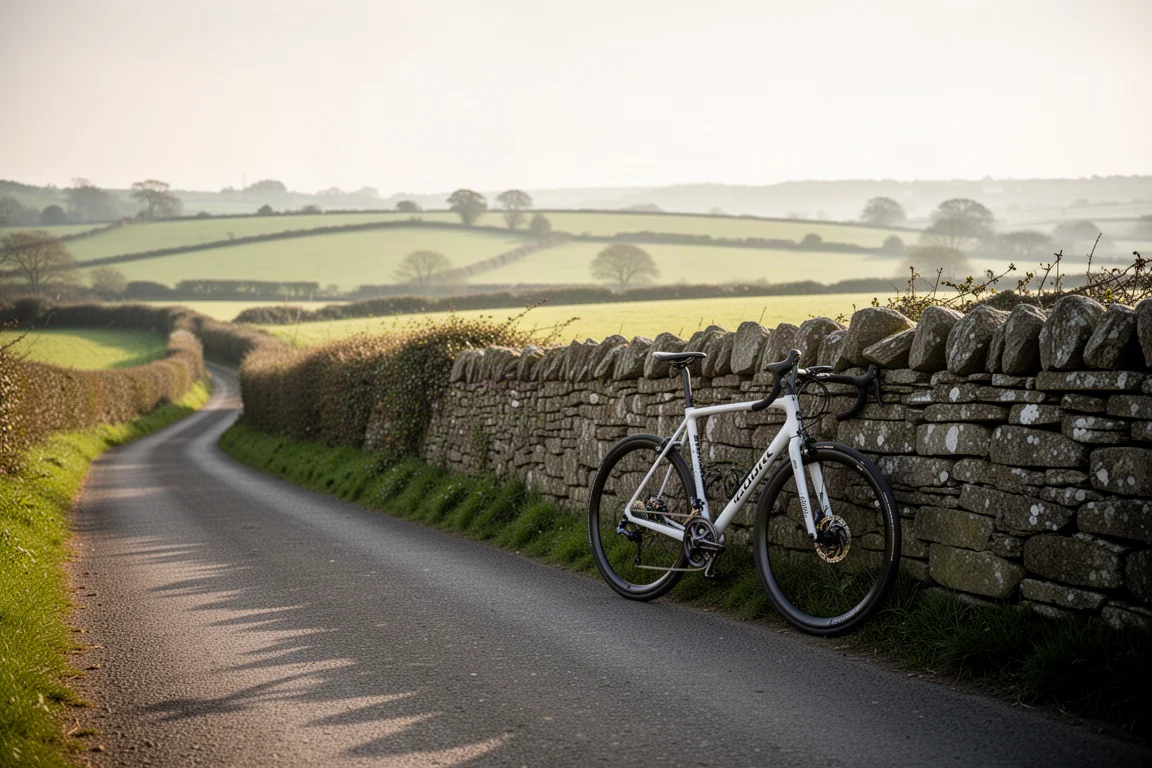
Riders who spend their time on long, sustained climbs, or who simply enjoy a lively, sporty road feel, will get the most from this platform. Riders chasing maximum speed on flat and rolling terrain should look at the aero side of the range instead.
Frame, Carbon Layup and Build
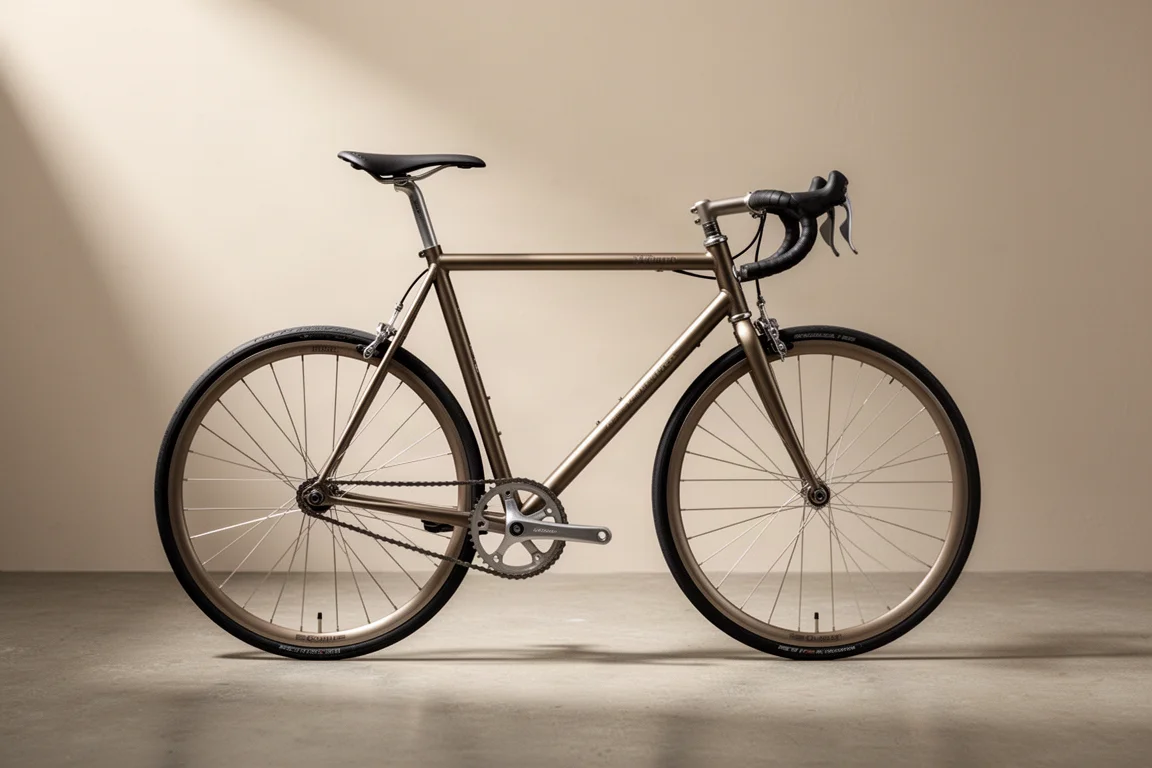
The shape is classic and, to these eyes, very well resolved. There is an almost level top tube, slim non-dropped rear stays, a slender fork, and a genuinely enormous down tube that swells as it meets the bottom bracket before tapering into the head tube. The contrasting fork on the non-drive side and the tan-wall tyres complete a sharp, cohesive look.
The frame is offered in two carbon versions with identical shapes and profiles but different fibre layups. The OM frame used here weighs just over 1,000 g in a size 55, while the OMX uses higher-grade carbon fibre at around 750 g. For context, a mid-range Giant TCR Advanced Pro at a similar price point has a frame close to 200 g lighter.
The build pairs a Shimano Ultegra Di2 12-speed groupset with Orbea’s own Shadow carbon rims on Zipp hubs. This model runs a two-piece handlebar and stem, while higher builds step up to a one-piece carbon bar and stem. Brake hoses run underneath the stem and the steerer tube is a conventional round design, which keeps stem and handlebar changes straightforward.
Climbing Performance and Stiffness
On the climbs the Orca does not feel heavy. At around 7.5 kg it is in line with plenty of high-end bikes, and the frame is clearly very stiff when pushing hard out of the saddle. It feels more exciting and more responsive on a climb than an aero race bike, and that stiffness is the single most convincing argument for this frame.
This is where the Orca makes its case best. Weight is only one input into climbing performance, and the Orca demonstrates that a slightly heavier bike with a rigid, responsive frame can still feel quick and, more importantly, enjoyable on a long ascent.
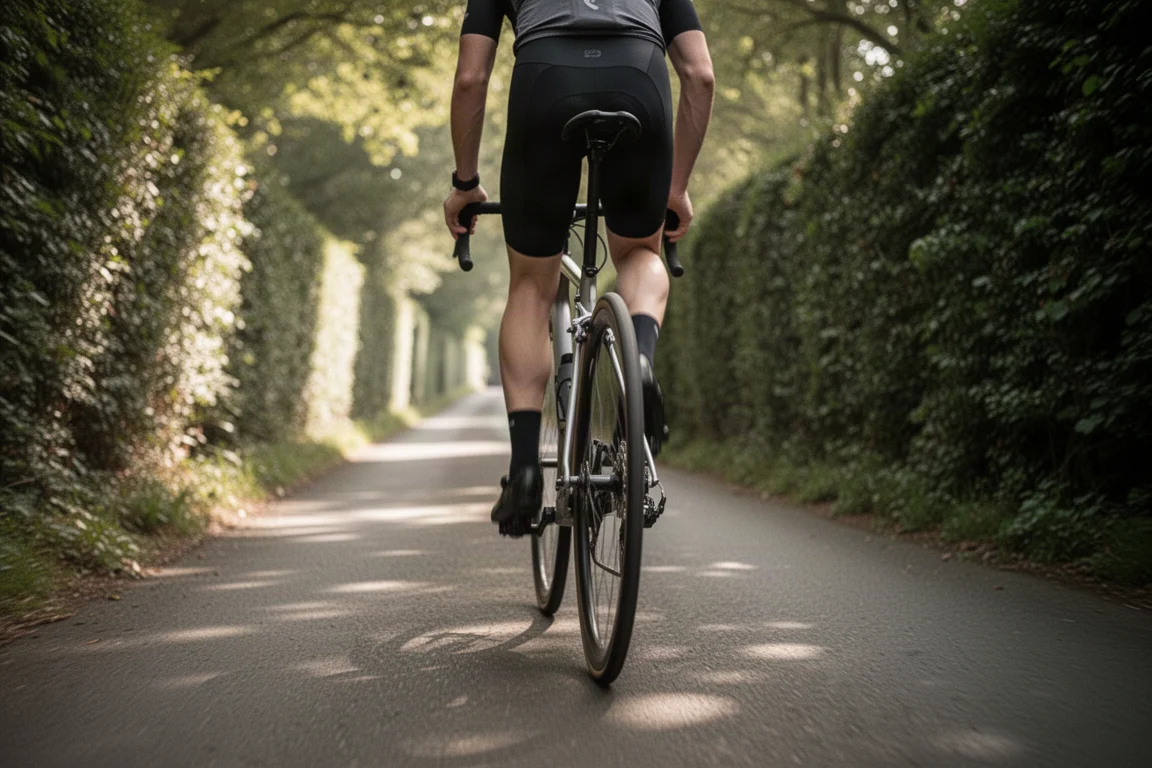
For riders who judge a bike by how it feels when the road pitches up, the Orca passes that test convincingly.
Rolling Speed and Comfort
On an 11 km rolling road circuit ridden at an average speed of 32 km/h, the Orca finished at the bottom of the leaderboard, though not far behind similarly weighted aero race bikes. That result suggests that while the Orca is not designed to be overtly aerodynamic, it is still reasonably efficient at those speeds.
Comfort is the bigger surprise. The ride is very smooth over rough roads despite only 28 mm tyres and a metal handlebar. The tyres are Vittoria Corsa Pro tubeless units run at low pressure, and there is clearance for 32 mm if you want to go wider. In practice the Orca is noticeably smoother than a lightweight aero race bike tested recently.
Details, Setup and Customisation
The seat post clamp is a genuinely good piece of design. A separate bolt adjusts the saddle tilt independently of fore and aft position, which makes dialling in saddle setup far easier than with many clamps on the market. The seat post itself is a round design.
There is a small wrinkle here. The clamp sits directly in the firing line of road spray, covered by a rubber flap that stays put, and the bolt underneath is a tiny 3 mm unit. A T25 or a 4 to 5 mm bolt would be a better choice for a component exposed to that much grit.
The bottom bracket is a press-fit BB386 with the full width of the shell used, a standard that has not caused problems on Orcas in the past. Internal routing runs through a conventional round steerer tube, and the brake hoses sit under the stem, so changing the stem or handlebar is not the headache it can be on fully integrated designs. The handlebar is nothing special, with a slight forward sweep at the hoods and a round diameter that makes mounting a computer or camera simple, though it lacks the polish of a carbon one-piece setup.
Things to Consider Before Buying
The top tube is the detail that deserves the most attention before ordering. It looks striking and it is very flat and very wide, with a definite edge running along its length. Riders who pedal with their knees tracking inward may find those knees contacting the top tube, and for some that contact is persistent enough to be a deal breaker. Other bikes in this category, including the TCR and the Ultimate, use a noticeably slimmer top tube in that area. Riders who pedal with a more neutral, knees-out style may never notice it at all.
Weight is the second consideration. Yes, 7.5 kg is not heavy, and many far more expensive bikes weigh about the same. But within this price bracket the Orca is not the lightest option, and knowing that a few hundred grams have been left on the table is a fair thing to weigh up, even if you will not feel it on a climb.
Competition is the third. A Canyon Ultimate CF SLX costs the same with the same groupset and similar wheels, but adds a carbon handlebar and stem and is a few hundred grams lighter. The Giant TCR Advanced Pro is around £500 less and also a few hundred grams lighter. A Specialized Aethos is roughly £2,000 more at 6.6 kg, close to a kilo lighter. Rivals also offer more pronounced aerodynamic benefits for riders whose priority is all-out speed everywhere.
Buying Advice
The Orca makes a strong case if your priorities are climbing feel, stiffness, comfort and the ability to specify the bike the way you want it. It offers good value relative to several rivals, it climbs better than its weight suggests, and it delivers excellent comfort on rough tarmac. The customisation programme through Orbea’s website remains a real differentiator.
The decision really comes down to where you sit on the sliding scale between aerodynamics at one end and weight at the other, and where you ride. If you want a versatile, sporty, comfortable road bike and your pedalling style keeps your knees clear of a wide top tube, the Orca is easy to recommend. If outright low weight for the money matters most, or you want maximum aero efficiency, the alternatives at this price point are worth a serious look first.
Conclusion
The Orbea Orca is a very likeable bike. It looks sharp, it climbs with genuine verve, it is remarkably comfortable for a race-oriented frame, and it comes with a level of customisation that few brands can match. It is not the lightest bike at its price, and it is not trying to be the most aerodynamic either, but it does not need to be to justify itself.
The wide, flat top tube is the one thing that could stop a purchase outright, and it is worth checking your riding position against it before committing. Set that aside and the Orca is a compelling, enjoyable lightweight road bike with a clear personality.
Product link
View more details for Orbea Orca
This product is mentioned in the review. Check the specifications, options, and compatibility before buying.
View more details for Orbea OrcaFurther reading
Related Reviews

Road Bikes
10 New Road Bikes Worth Watching: Aero, Titanium, Steel and Endurance Standouts
A practical roundup of 10 new road bikes, from aero flagships chasing single-watt gains to titanium, steel and endurance platforms built for real roads.
Road Bikes
2026 Tour de France Road Bikes: Six Race Machines Worth a Closer Look
Six race bikes from the 2026 Tour de France grid, reviewed for paint, silhouette, wheels and the specification details that matter to buyers.
Road Bikes
3T Strada Italia Review: A Radical Aero Road Bike That Rides Smooth
A made in Italy carbon aero road bike with a deep head tube, wide tire clearance and a genuinely comfortable ride. Here is what to know before buying.