Stereo Receivers
Onkyo TX-8470 Review: A Stereo Receiver With AVR DNA
A close look at the Onkyo TX-8470, an $800 stereo receiver with HDMI 2.1 switching, a built-in phono stage and streaming, plus the trade-offs to weigh first.
Introduction
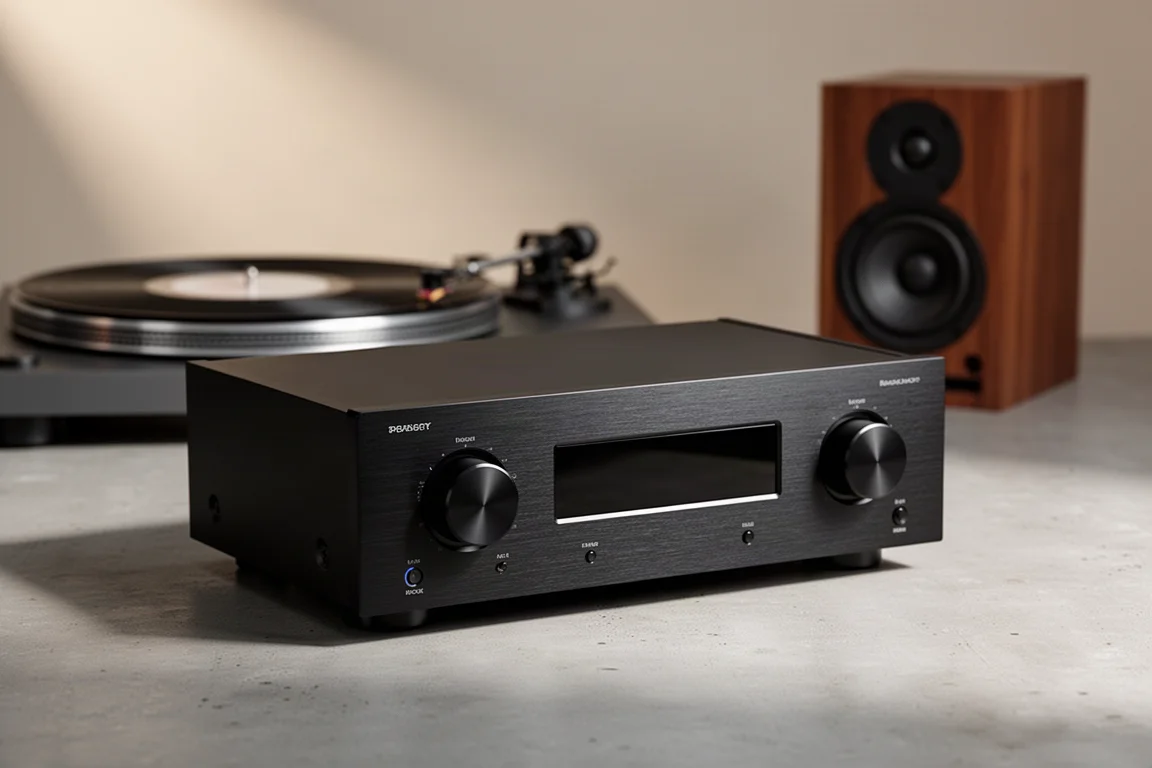
The Onkyo TX-8470 is a stereo receiver with home theater DNA. It pairs a class G style amplifier rated at 110 watts per channel into 8 ohms, with both channels driven, with four HDMI 2.1 inputs, a built-in phono stage that accepts moving magnet and moving coil cartridges, and full network streaming. At around $800, it targets listeners who want the flexibility of a modern AVR inside a two-channel box.
That idea has been circulating for years: build a solid stereo system around a receiver instead of spending a fortune on separates. The TX-8470 tries to make that argument in a single chassis. It gets the feature list largely right, and leaves a few important things on the table.
Who the Onkyo TX-8470 Is For
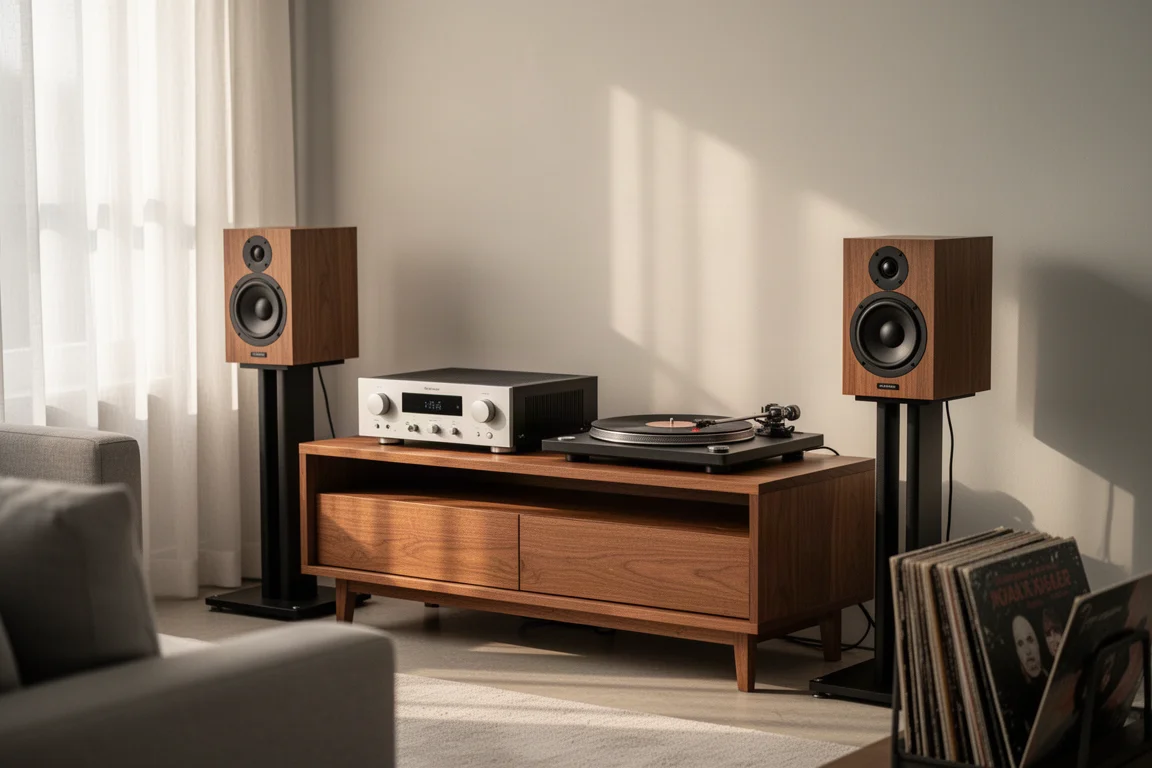
This receiver makes the most sense for listeners who want one box to handle everything in a two-channel system: a turntable, a television, a streamer and a pair of speakers. The phono input supports both moving magnet and moving coil cartridges, a level of flexibility that is not typical at this price. Dual sets of five-way binding posts let it drive two pairs of speakers, so you can run A/B comparisons or send audio to a second zone. There are preamp outputs if your speakers want more power, and a dedicated subwoofer output.
It is also a reasonable fit for 4-ohm speaker owners, since the TX-8470 is specified to support them, although Onkyo does not publish a power figure for 4-ohm loads.
The case against it is just as clear. This is a stereo receiver, not an AVR. Multichannel audio has to be set to stereo PCM, and there is no Dolby Atmos or DTS support. Anyone hoping for one box that covers music and movies should weigh that trade-off carefully, and anyone driving large, demanding tower speakers should look elsewhere.
Design, Connections, and Setup
The connection set covers most two-channel needs. There are three analog inputs, a built-in AM/FM tuner, a dedicated phono preamp, two optical inputs, one coaxial input and a USB input. The HDMI section is where the AVR DNA shows: four HDMI 2.1 inputs and one HDMI output with ARC, with all four inputs supporting video up to 8K60 and 4K120 and passthrough for HDR10, HDR10+ and HLG. Gaming features include VRR, ALLM and Quick Frame Transport.
Inside, a 32-bit AK4452 DAC handles high-resolution music files and everything in between. Network connectivity includes Ethernet, Wi-Fi, Bluetooth and AirPlay 2, with compatibility for Amazon Alexa and Sonos, including a Sonos Port. With a Roon Core and a Roon subscription on the same network, the receiver can act as a Roon player. The Onkyo Controller app adds access to streaming services such as Tidal, Spotify, Pandora and Deezer.
Setup is straightforward, if a little more basic than expected. HDMI ARC works well as long as the television’s audio output is set to PCM; leave the TV on any other setting and no sound will pass through. The on-screen menu offers the same adjustments as the front panel and the app, so the choice comes down to preference. The OSD can feel laggy, and rendering something as simple as a volume graphic over HDMI video can cause the picture to stutter. The app itself is basic beyond its streaming access.
Main Strengths: HDMI 2.1, Phono, and Streaming
Where the TX-8470 earns its keep is in switching and flexibility. HDMI functionality and input switching worked as advertised and stayed drama free through extended use. Gaming passed every test: 4K HDR with VRR engaged, with the signal passing cleanly through to the television.
The phono stage is serviceable. Performance lands in line with other entry-level phono preamps, which is a fair result given that a phono input at all is uncommon at this price point.

Streaming is the other strong point. Ethernet, Wi-Fi, Bluetooth and AirPlay 2 cover the common cases, and Roon playback adds a more serious option for listeners with a Roon Core on the network. Two pairs of speaker outputs, preamp outputs and a subwoofer output give the receiver room to grow, and tone controls plus balance provide some basic shaping for difficult rooms.
Sound Quality and Power Delivery
Tonally, the TX-8470 is neutral. Nothing in its frequency response stands out, the mid-range stays even, and the highs offer a decent sense of extension, though they can sound slightly dry and two-dimensional rather than airy. Adding a subwoofer can make the receiver seem bass heavy, but that is a setup choice rather than a character of the amplifier.
Power delivery is where expectations need managing. For an amplifier rated above 100 watts per channel, control is surprisingly average, and at the extremes the sound turns vague. The receiver is at its best between roughly 55 and 70 dB in room. Push past 70 dB and it begins to sound strained, losing composure, flattening out spatially and turning shouty. Below 50 to 55 dB there is little presence or dynamic contrast. Between 55 and 75 dB, dynamic contrast is decent. Above 75 dB there is almost no subtlety left. The usable enjoyment window is narrow.
Dialogue intelligibility is average at best and depends heavily on how loud the source material is mixed. Unlike many HDMI-equipped receivers, including others in the same family, this one offers no virtual or dialogue enhancement modes to help.
Things to Consider Before Buying
Two omissions stand out at this price. There is no bass management, so subwoofer level, crossover and phase all have to be set on the subwoofer itself. Room correction is also basic. For a receiver at around $800 from a brand known for capable AVRs, both are surprising.
Value is the bigger question. Spending roughly $100 more on an Onkyo RZ50 AVR brings more features, more connectivity, more power, better sound quality and Dirac room correction, and the additional channels simply go unused in a stereo setup. The 5.2-channel Onkyo TX-SR3100 retails for $399 and has been seen for less; despite a lower 80-watt rating, it drove 4-ohm speakers cleanly and confidently at high volumes, and it includes four HDMI 2.1 inputs, one HDMI 2.1 output with ARC and eARC, and support for the major HDR formats including Dolby Vision. Adding a WiiM streamer to the TX-SR3100 would still likely land under the TX-8470’s price. The Marantz Stereo 70 costs about $200 more and adds more HDMI inputs, dual subwoofer outputs and a class AB amplifier. The Marantz Model M1 sounds more refined and confident at every volume, with bass management, dialogue modes and Dolby Digital and Dolby virtual processing for a surround-like presentation from a single pair of speakers. Even the WiiM Amp is a more articulate and involving listen below 70 dB in room when a subwoofer is in the system, which makes it the stronger pick for background and casual listening, though it can sound overly bright when pushed hard.
The TX-8470 keeps two advantages in those comparisons: built-in Wi-Fi streaming and a phono preamp.
Setup Tips and Speaker Matching
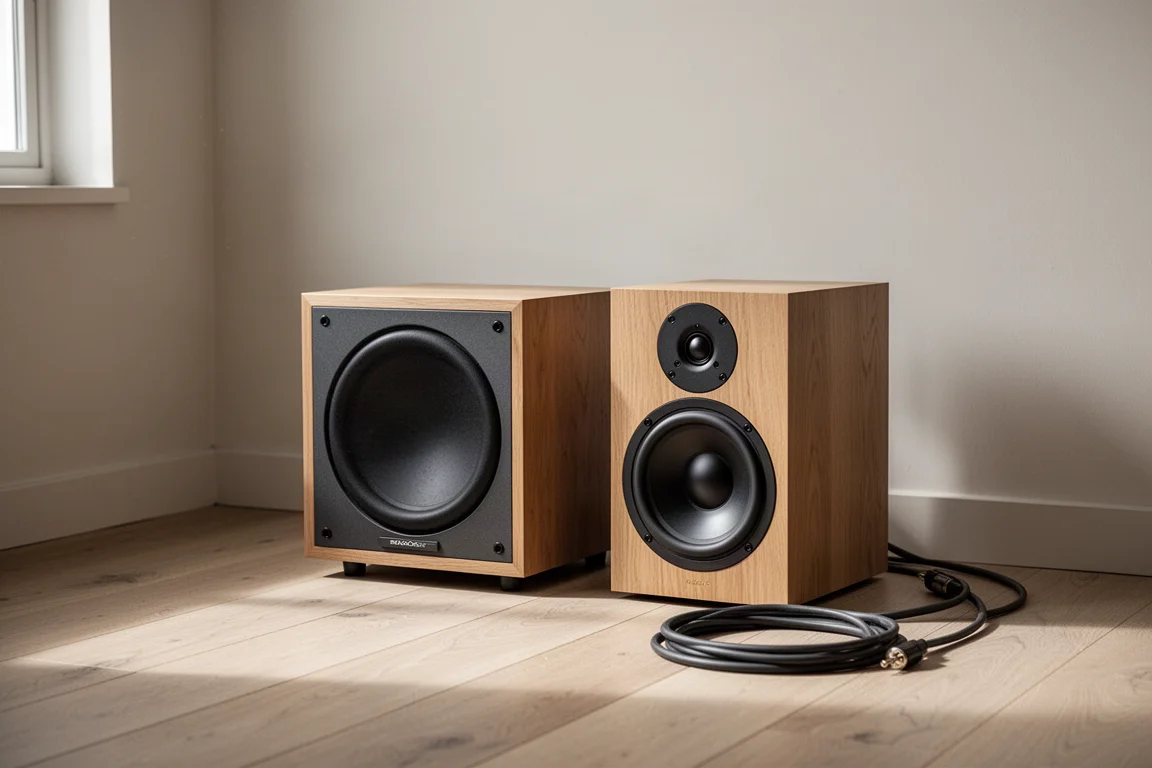
Speaker choice matters more here than with most receivers. Small bookshelf models such as the SVS Nanos and the ELAC Debut 3.0 paired well with the TX-8470, and neither is a full-range design, so a subwoofer helped ground their performance. Because the receiver has no bass management, the subwoofer’s own level, crossover and phase controls do the work; a crossover setting somewhere between 60 and 80 Hz suited both pairs.
A large tower speaker proved too much. The receiver produced sound, but it lacked the control to drive a demanding floorstander properly, sounding broad and vague at low volumes and simply louder rather than better as the level came up.
Two habits make living with the TX-8470 easier. Keep the television’s audio output set to PCM so HDMI ARC passes sound reliably, and pick whichever control method suits you, since the front panel, the on-screen menu and the app expose the same adjustments.
Buying Advice
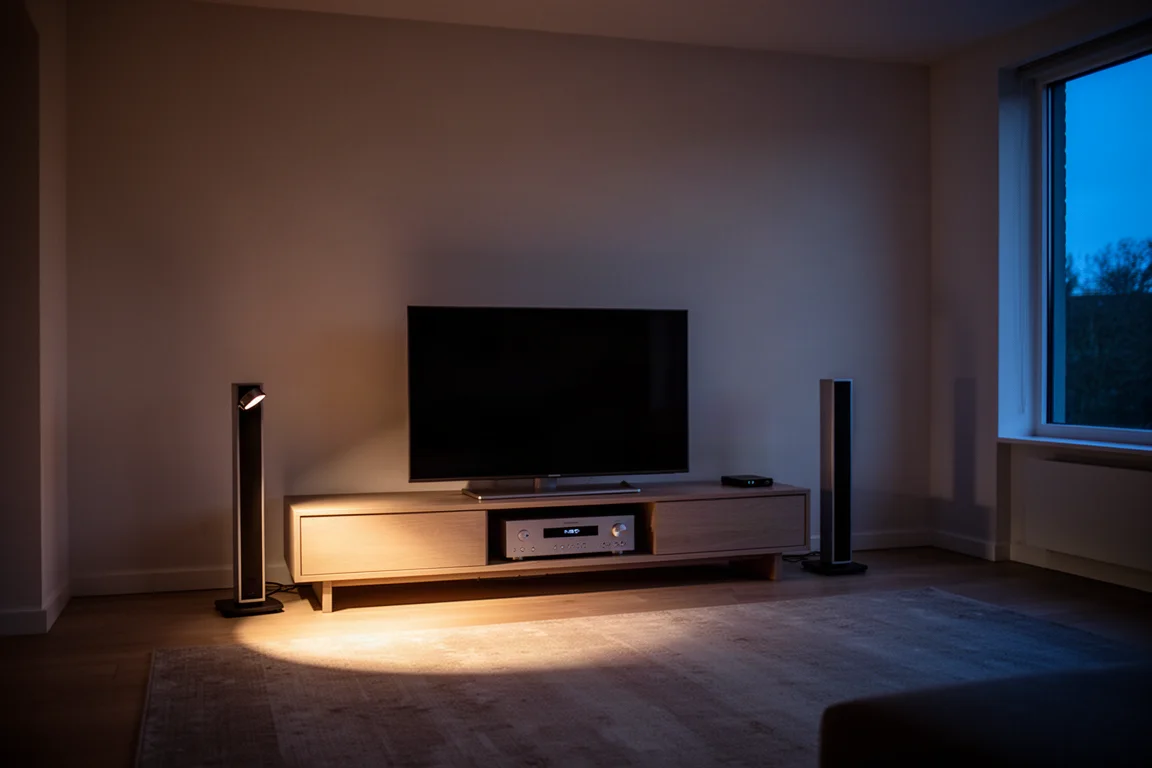
Choose the TX-8470 if you want one compact box that handles a turntable, a TV, a streamer and two pairs of speakers, and if your listening sits mostly in the 55 to 70 dB range with efficient bookshelf speakers and a subwoofer. Its HDMI 2.1 switching, phono input and network features are genuinely useful, and for the right room it covers a lot of ground without a rack of separate components.
Skip it if you drive demanding tower speakers, want surround sound or dialogue enhancement, or expect a two-channel experience that stays composed as the volume climbs. And if the price sits close to that of an AVR with room correction and bass management, the AVR is usually the better use of the money.
Conclusion
The Onkyo TX-8470 points in a sensible direction. It is the kind of product the two-channel world needs as soundbars and smart speakers take over living rooms, and the feature set is thoughtful: HDMI 2.1 switching, a phono stage that handles both cartridge types, streaming, and enough outputs to grow with. The execution, however, does not go far enough. Power delivery is average for the rating, the usable volume window is narrow, dialogue clarity is only fair, and bass management and room correction are missing at a price where competitors include them. Buy it for the connections and the convenience, not for the last word in two-channel performance.
Product link
View more details for Onkyo TX-8470
This product is mentioned in the review. Check the specifications, options, and compatibility before buying.
View more details for Onkyo TX-8470Further reading
Related Reviews
Stereo Receivers
Marantz Stereo 70s Review: A Slim Two-Channel Receiver With Real Home Theater Connectivity
A slim two-channel receiver that pairs natural stereo sound with 8K video switching, HEOS streaming, and a genuinely good phono stage.
Stereo Receivers
Outlaw Audio RR 2160 Mark II Review: A Stereo Receiver With Almost Every Input You Need
A feature-dense stereo receiver with a moving magnet and moving coil phono stage, switchable bass management, a built-in streamer, and 110 watts per channel at $999.
Stereo Receivers
Yamaha R-N1000A Review: A Network Stereo Receiver With HDMI ARC and Real Power
Measured performance, HDMI ARC, MusicCast streaming, and a capable moving magnet phono stage: what the Yamaha R-N1000A does well and what to weigh before buying.