Stereo Receivers
Marantz Stereo 70s Review: A Slim Two-Channel Receiver With Real Home Theater Connectivity
A slim two-channel receiver that pairs natural stereo sound with 8K video switching, HEOS streaming, and a genuinely good phono stage.
Introduction
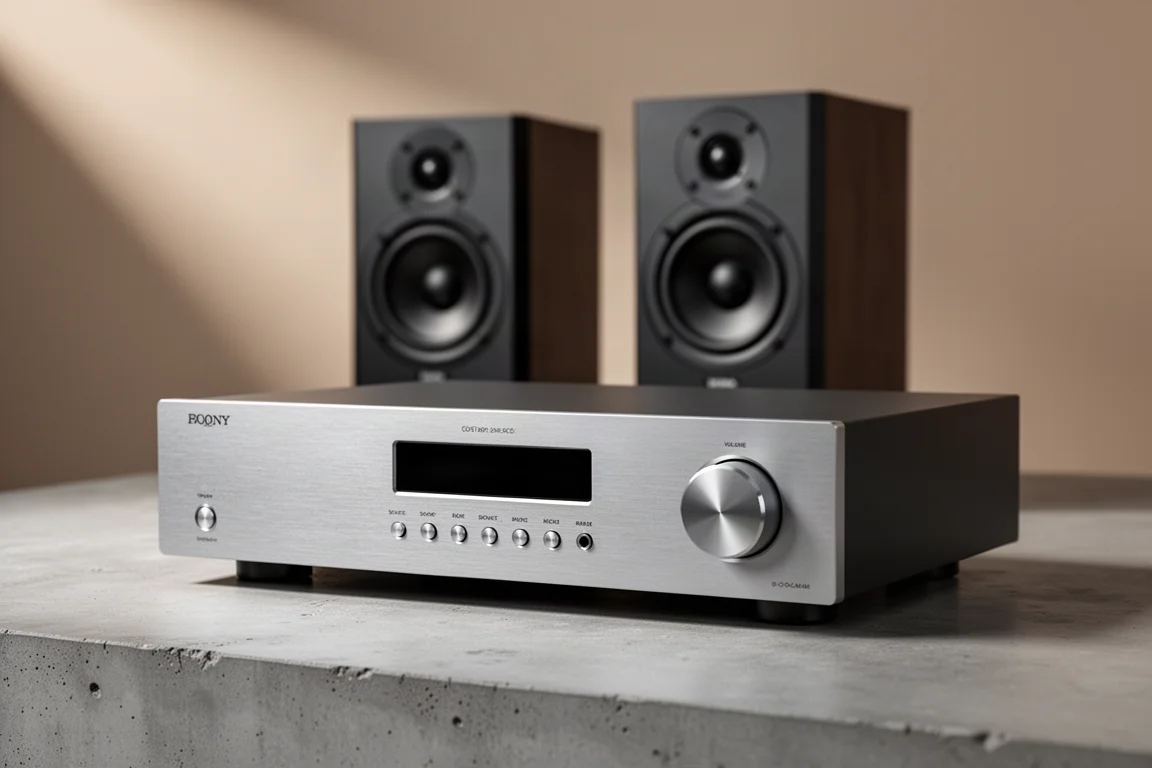
The Marantz Stereo 70s is a slim two-channel receiver that combines the natural stereo sound the brand has built its reputation on with a set of video switching and convenience features normally reserved for home theater receivers. The name is a nod to the 70 years since Saul Marantz founded the company in 1953.
For listeners who want better audio from their television and their music without building a surround system, this is a deliberately focused product. It replaces the NR1200 and, on paper at least, raises the bar in several areas.
Who This Receiver Is For
The Stereo 70s is built around a specific listener: someone who cares most about two-channel sound, keeps their TV in the same room as their stereo, and has no interest in surround sound. That person still wants clean audio from films and series, and wants the best possible sound for the money when listening to music.
It is also a natural step up for anyone currently using a soundbar or a single streaming speaker. Moving to a receiver plus a modest pair of bookshelf speakers is a substantial jump in sound quality, and this unit provides the video switching a television-based system needs.
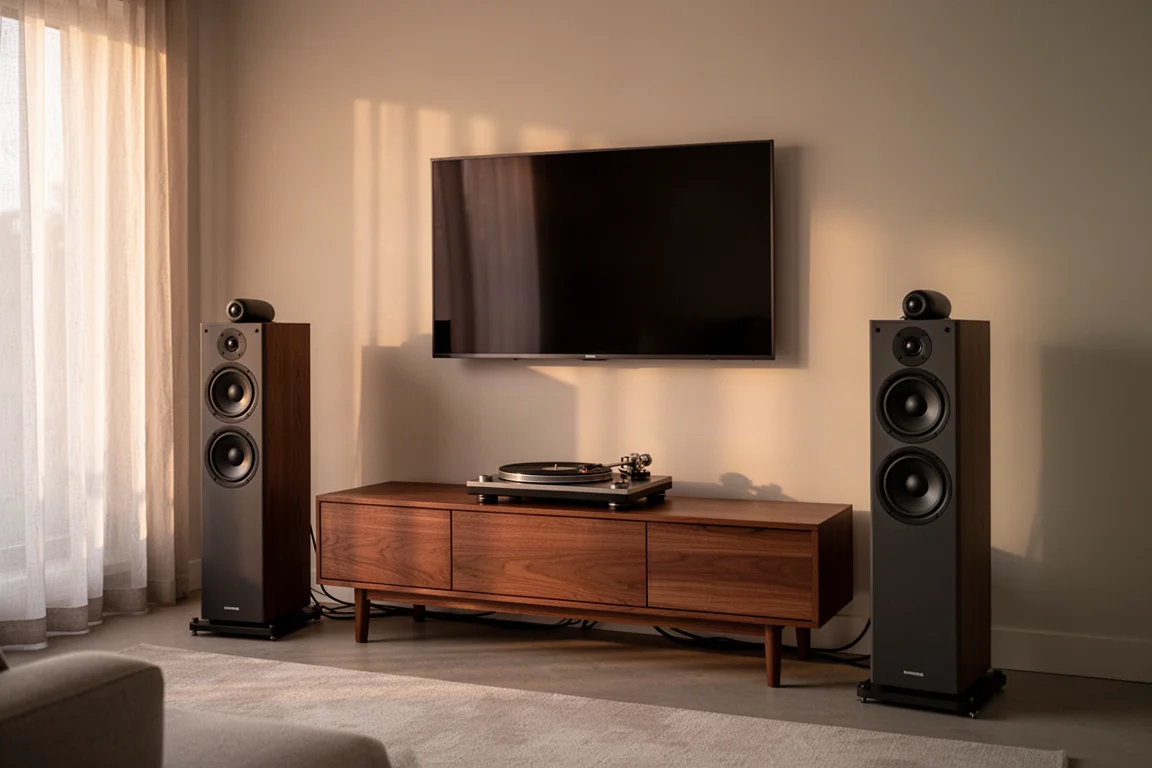
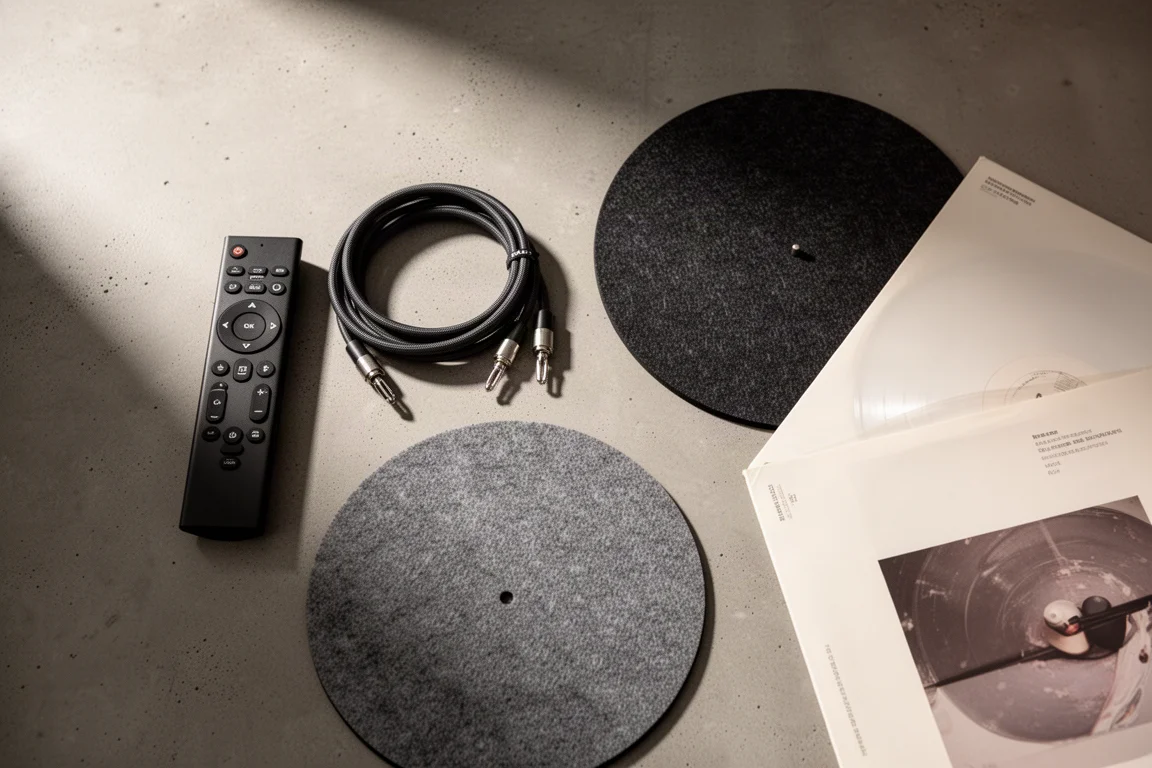
Vinyl listeners are covered too, thanks to a moving magnet phono input that uses the same phono preamp circuit found in Marantz’s more expensive receivers. If you own a turntable and want it to sound its best without adding a separate phono stage, that matters.
Design and Build Quality
The Stereo 70s follows the visual language introduced with the Model 30 integrated amplifier and the SACD 30n player. A raised section on the front panel carries the key controls, with a porthole display at the centre showing what is currently selected. The look is far cleaner than the NR1200 it replaces, with the clutter of small buttons and knobs removed.
The layout is symmetrical. A larger input selector sits on one side, with smaller knobs for speaker selection across two pairs, balance, bass, and treble, plus a larger volume control. The power button on the left balances a quarter-inch headphone jack on the right.
Despite the slim chassis, the unit weighs around 18.5 pounds, more than many five and seven channel home theater receivers. Most of that comes from the large power transformer, which plays a part in the warm, natural character the brand is known for. The volume knob in particular feels solid and tight in use.
Video Connectivity and Setup
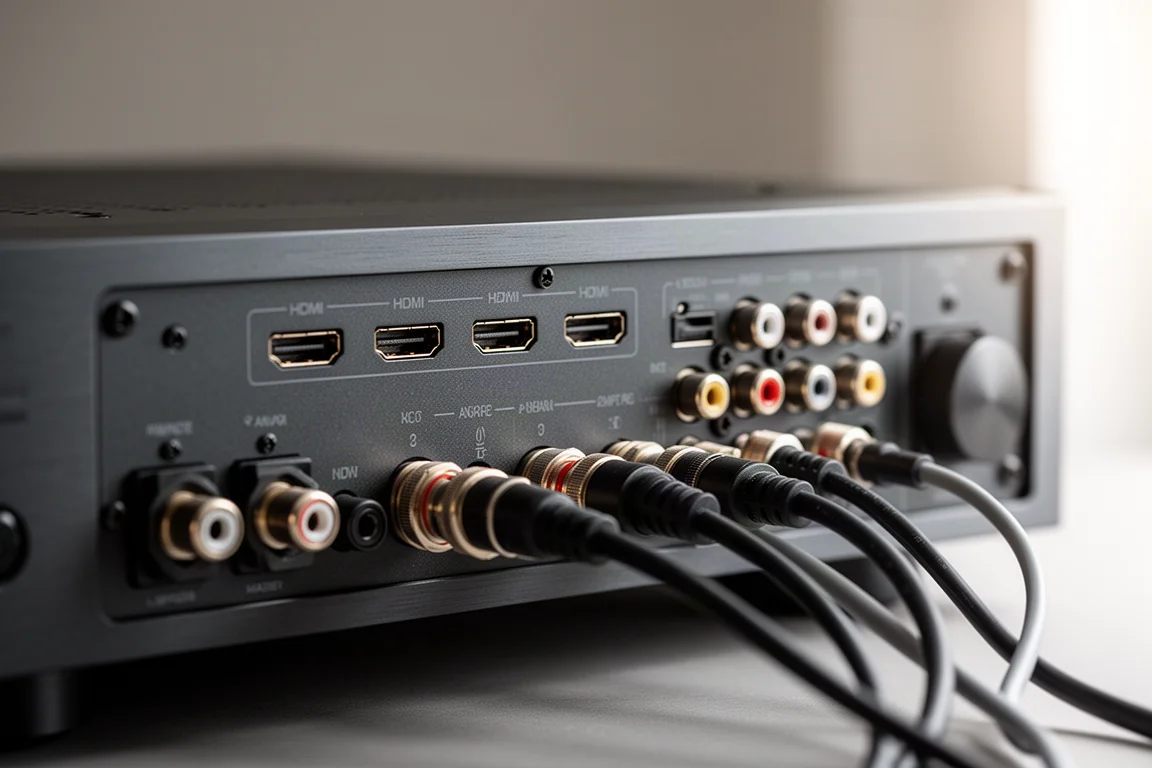
Video handling is where this receiver behaves like a home theater component. There are six video inputs, three of which accept 8K, and a single output that also serves as an audio return channel connection for compatible televisions. Any 1080p or 4K signal can be upscaled to 8K, selectable from the setup menu.
Format support covers what you would expect from a modern receiver: HDR, HLG, Dolby Vision, HDR10+, and dynamic HDR. Auto low latency mode is included, and a gaming pass-through input can be chosen in the menu. Variable refresh rate is supported across the inputs as well.
The setup menu is worth noting. A wizard walks through the initial configuration, and deeper menus provide clear on-screen explanations for each option, which makes it easier to get the most from the unit without guesswork.
Audio Inputs, Streaming, and Control
On the audio side you get three analog inputs, one coaxial and one optical digital input, and a USB-A host input. The FM tuner is built in and TuneIn internet radio is available, so you can listen to a local broadcast while watching a national video feed by pairing an analog or digital source with a video signal in the input menu.
Streaming is handled by the built-in HEOS platform, which opens up a wide range of high-resolution music services. AirPlay 2 and Bluetooth are included, along with Wi-Fi, Ethernet, and Bluetooth antenna connections on the rear panel, plus the standard control ports for linking other Marantz products.
Voice control options include Google Assistant, Alexa, Siri, and Josh AI. The supplied remote is backlit and easy to read, and a Smart Select feature assigns four buttons to four sources with their own configurations. An enhancement mode improves the sound of low-resolution audio sources and can be switched off for high-fidelity listening. Listening modes run from Stereo, which includes that enhancement if enabled, through Direct, which bypasses it along with the tone controls, to Pure Direct, which shuts down the display circuitry for the quietest possible operation.
Amplification and Sound Quality
Power is rated honestly: 75 watts per channel with both channels driven across the full 20 Hz to 20 kHz band at 0.08 percent distortion. Measured the way many brands prefer, at 1 kHz and higher distortion, it would be quoted at 100 watts per channel. The power amplifier section is a fully discrete Class AB design, similar to what Marantz uses in its more expensive audio-only integrated amplifiers.
The real story is the preamp stage. Marantz developed its HDAM, or hyper dynamic amplifier modules, in 1992, using fully discrete circuitry and hand-selected components to create the quietest possible signal path. This is the first time that technology has appeared in a slimline two-channel Marantz receiver, and the result is a background so silent that fine details in music come through clearly, with excellent imaging.
The digital-to-analog converter handles high-resolution audio up to 24-bit/192 kHz and DSD up to 5.6 MHz. Subwoofer integration is unusually flexible for a two-channel receiver: crossover frequency can be set in 10 Hz increments up to 120 Hz, with additional adjustments for speaker and subwoofer distance and level. In practice an 80 Hz crossover is a common starting point, and changes can be made quickly from the remote with a television connected.
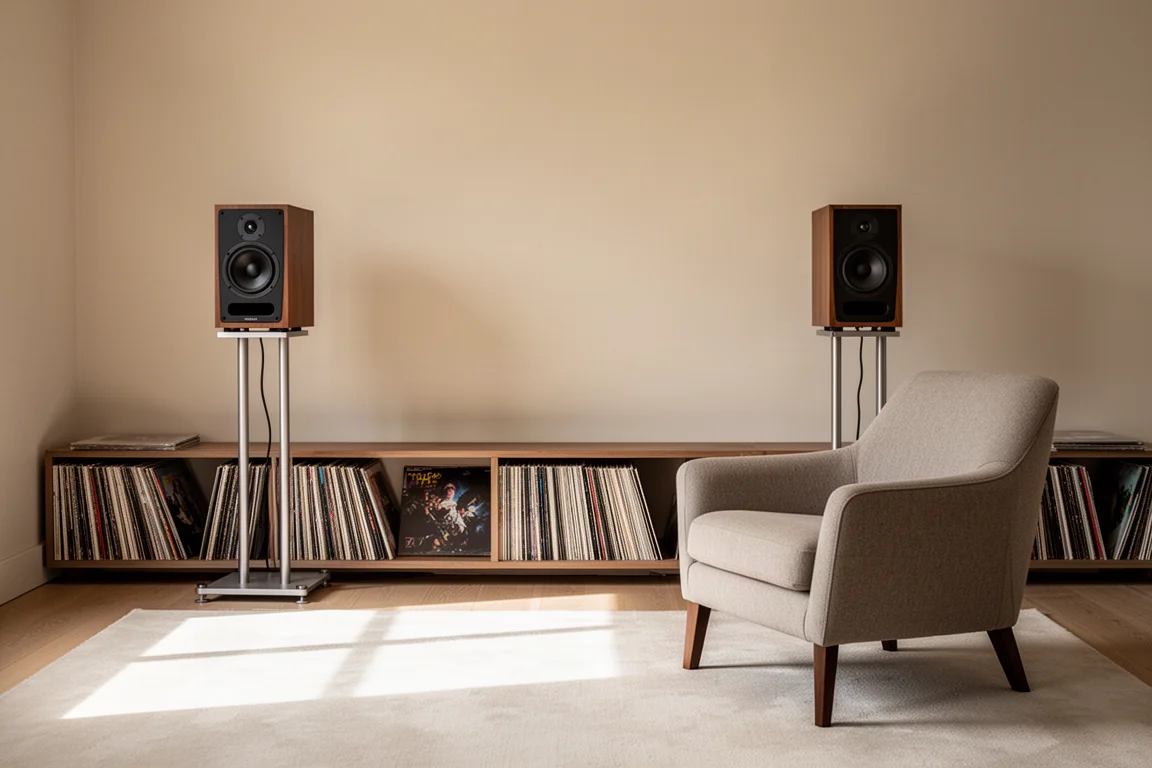
Two subwoofer outputs are provided, though they run in parallel rather than as discrete channels. Paired with capable bookshelf speakers such as the Bowers & Wilkins 600 series, the receiver has enough authority to fill a fairly large room without a sense of strain. Push it hard without a subwoofer and the bass can become less controlled, which is a fair limitation for a unit of this size rather than a fault.
Things to Consider Before Buying
The preamp outputs are always active, and a preamp-only mode in the menu disconnects the loudspeaker outputs to reduce distortion and raise maximum output voltage. That gives you a sensible upgrade path if you later want more power or a higher-quality amplifier.
It is worth being realistic about expectations. This receiver will not match a larger Marantz model costing two or three times as much. If you want nothing but pure analog two-channel amplification, a dedicated integrated amplifier at a similar price may well sound better. What you will not easily find elsewhere at this level is the same combination of connectivity and sound quality in one compact chassis.
Speaker connections are gold-plated and accept either bare wire or banana plugs, and they are a step above what is typical at this price. The terminals hold bare wire securely, and banana plugs fit tightly.
Buying Advice
The Stereo 70s makes the most sense for a specific setup: a television and a stereo system sharing one room, a turntable that deserves a good phono stage, and speakers that do not demand huge amounts of power. In that configuration it covers video switching, streaming, radio, and two-channel listening without a second box.
If your priority is maximum sound quality per dollar and you have no interest in video switching or streaming features, a simpler analog integrated amplifier is the more direct route. If you want one slim component that handles both music and television well, with room to grow through the preamp outputs, this is a strong option.
Conclusion
The Marantz Stereo 70s brings together the natural two-channel sound the brand has refined for decades with a feature set borrowed from its home theater receivers. It looks the part, it is easy to use, and it can grow with your system over time. For anyone stepping up from a soundbar or a basic streaming speaker into proper separate components, it is an excellent place to start.
Product link
View more details for Marantz Stereo 70s
This product is mentioned in the review. Check the specifications, options, and compatibility before buying.
View more details for Marantz Stereo 70sFurther reading
Related Reviews
Stereo Receivers
Onkyo TX-8470 Review: A Stereo Receiver With AVR DNA
A close look at the Onkyo TX-8470, an $800 stereo receiver with HDMI 2.1 switching, a built-in phono stage and streaming, plus the trade-offs to weigh first.
Stereo Receivers
Outlaw Audio RR 2160 Mark II Review: A Stereo Receiver With Almost Every Input You Need
A feature-dense stereo receiver with a moving magnet and moving coil phono stage, switchable bass management, a built-in streamer, and 110 watts per channel at $999.
Stereo Receivers
Yamaha R-N1000A Review: A Network Stereo Receiver With HDMI ARC and Real Power
Measured performance, HDMI ARC, MusicCast streaming, and a capable moving magnet phono stage: what the Yamaha R-N1000A does well and what to weigh before buying.