Camping Shelters
OneTigris Two-Person Screen Mesh Inner Tent Review: A Roomy Bug Shelter for Tarp Camping
A detailed look at the OneTigris Two-Person Screen Mesh Inner Tent, including its measured dimensions, build quality, three-door layout, and the tarp size it really needs.
Introduction
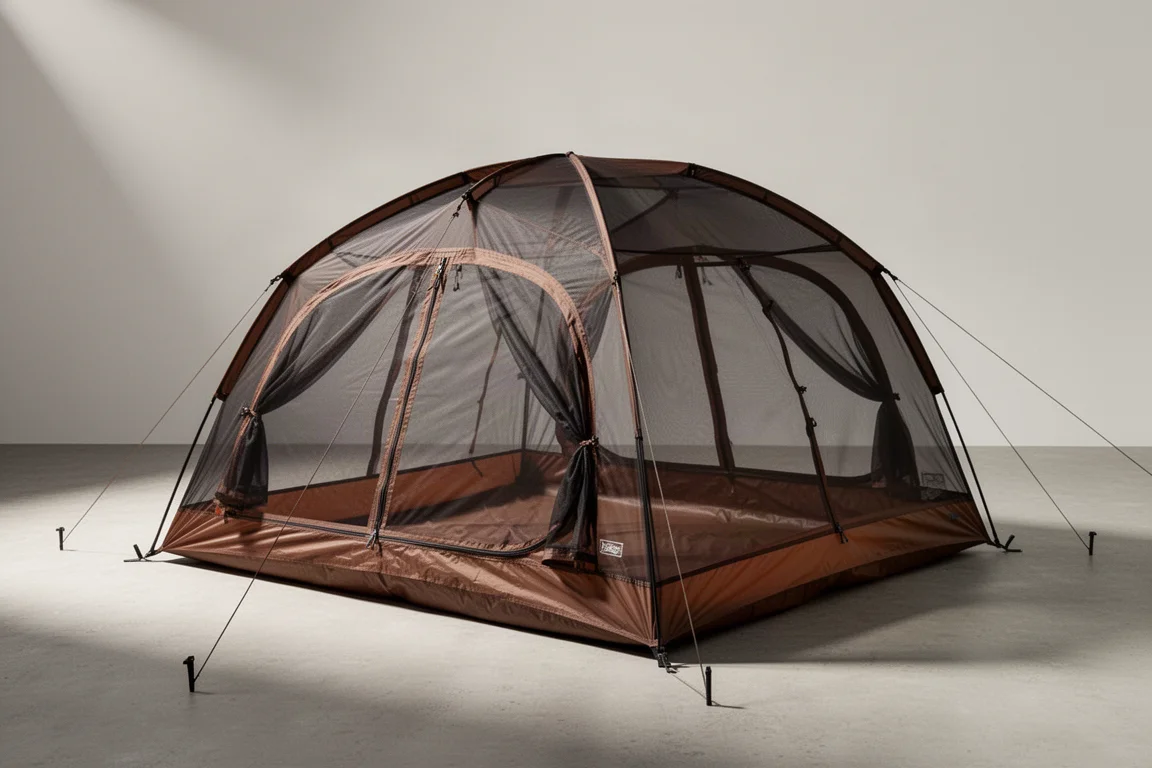
The OneTigris Two-Person Screen Mesh Inner Tent is one of those pieces of camping gear that looks modest on a specification sheet and feels entirely different once it is pitched. It is a mesh inner shelter rather than a conventional tent: a bathtub floor, a fully meshed body, and enough interior volume for two sleepers plus their gear. It can be pitched on its own, set up underneath a tarp, or used inside a larger tent, which makes it a flexible extra layer for anyone who camps where insects are a genuine nuisance.
This review covers what arrives in the kit, how the shelter is built, how it pitches, and where the practical limits sit. At around $60, it lands in a fair price bracket for a shelter of this size, and most of the trade-offs come down to space rather than materials.
Who This Product Is For
The clearest use case is bug pressure. In wooded, humid mountain regions, ticks, ants, mosquitoes and spiders can turn an otherwise pleasant night under a tarp into a chore. A mesh inner solves that directly: it keeps the sleeping area sealed while still allowing generous airflow, so the shelter stays comfortable in warm weather instead of turning into a sealed, stuffy box.
It also suits campers who want their pack off the ground and inside the shelter with them. With two people and a backpack or two, that matters, because gear left outside on damp ground is exactly how ticks end up hitching a ride.
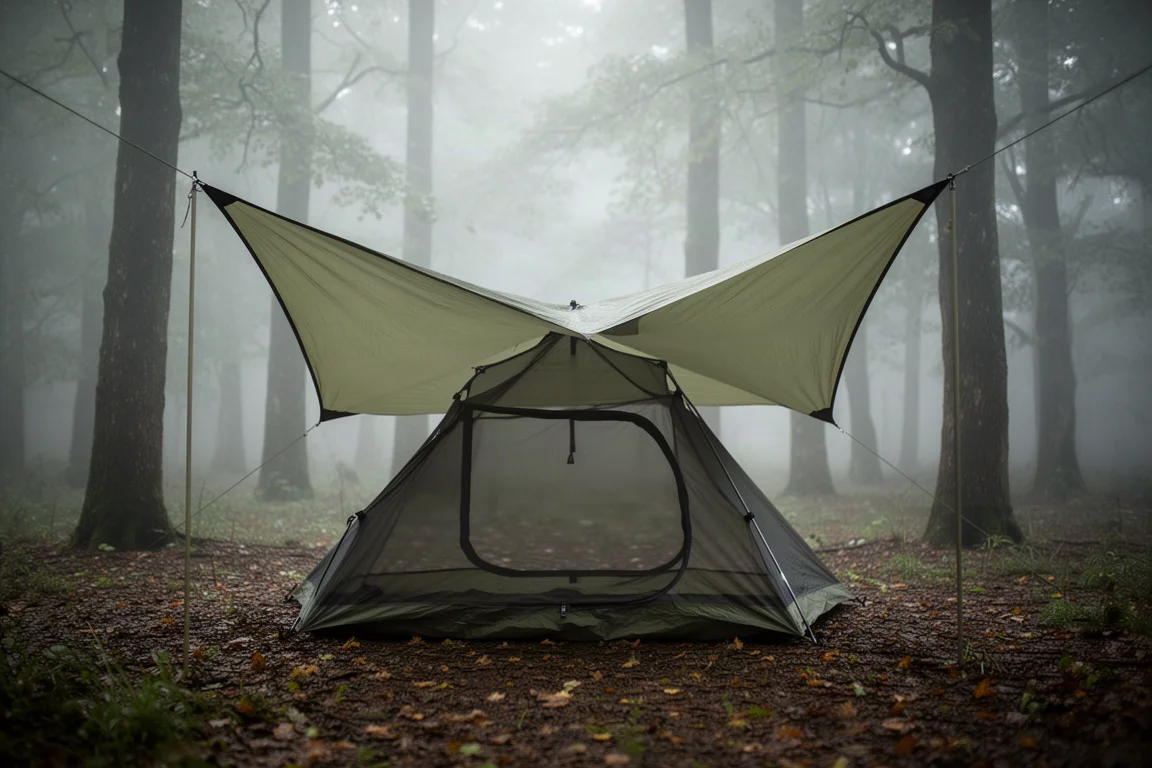
Tarp campers are the natural audience here. Paired with a suitably sized tarp, the inner creates a very light setup that offers both protection and versatility, and the same shelter can be used alone on dry, mild nights or dropped inside an existing tent as a secondary bug barrier.
Main Strengths
The design is thoughtful in the places that usually get overlooked on budget bug shelters, and the materials are a step above the bare minimum.
Interior Space and Measured Dimensions
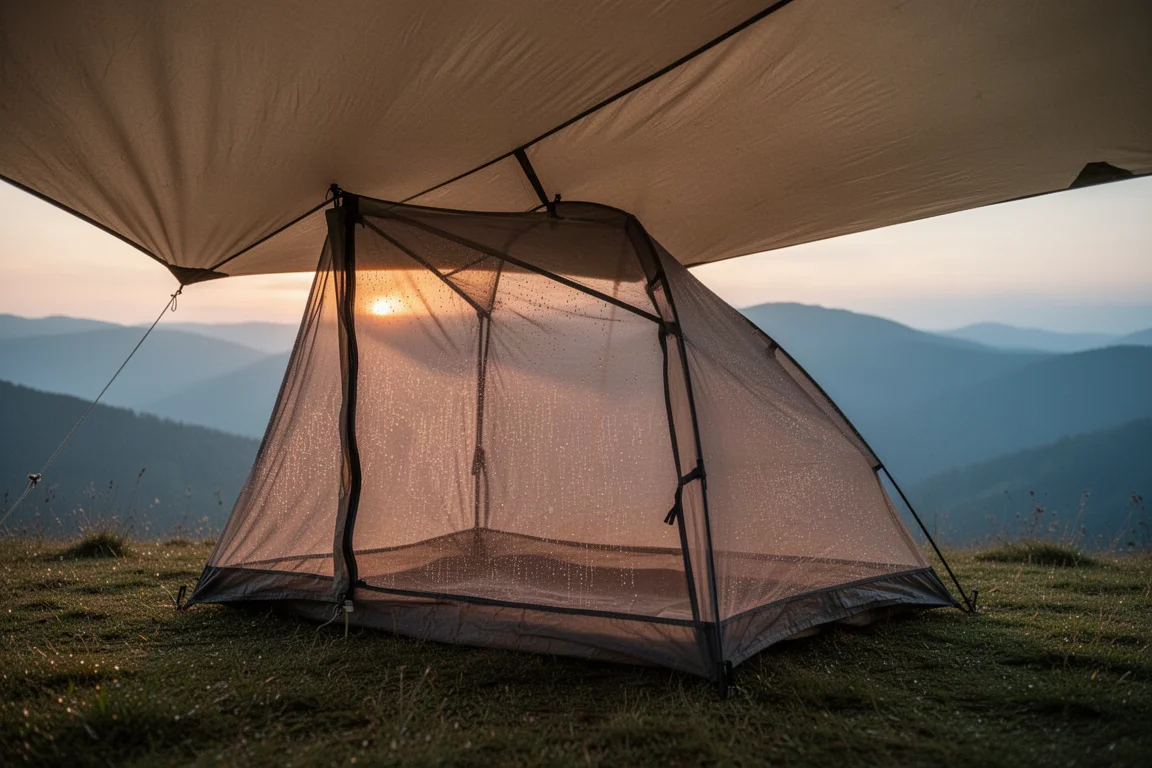
This is a large inner tent, and that is the first thing to understand about it. Measured in person, it comes in at 62 inches wide, 80 inches long and 50 inches tall. That is enough room for two sleepers plus packs, which is exactly why the two-person version makes sense for anyone who does not want to leave a backpack outside.
Packed down, the shelter measures 12 inches long by 6 inches wide, and the full kit weighs 2.4 pounds with every component included. As a height reference, the 50-inch peak fully extends a set of trekking poles used as the pitch, so the shelter is genuinely tall rather than a low crawl-in bivy.
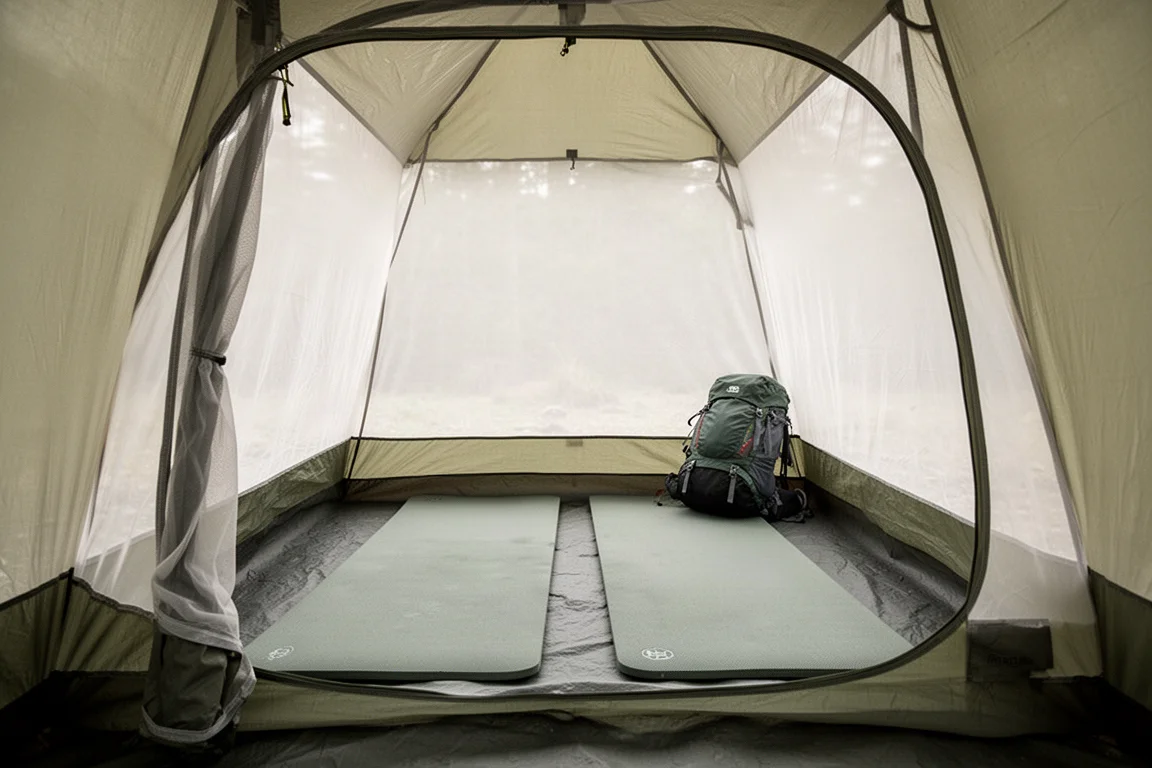
The practical consequence is that this is not a compact shelter. It rewards campsites with space and punishes anyone hoping to tuck it into a tight, brushy pitch.
Build Quality and Pitching Details
The bathtub floor is made from 70D nylon, paired with nylon mesh for the body and SBS zippers throughout. Those zippers run smoothly, and the seams are taped. The company lists a 3,000 mm hydrostatic head rating for the floor.
What stands out most is the pitching hardware. Each corner carries two adjustment points, one at the bottom and one a few inches above it, so the structure can be tensioned until it is as taut as you want rather than left slack the way many inner tents are. Externally there are three connection points, each fitted with shock cord. There are three doors in total, one at the front and one on each side, and every door uses two zippers and can be tied up and stored out of the way. There are no interior pockets.
What Comes in the Kit
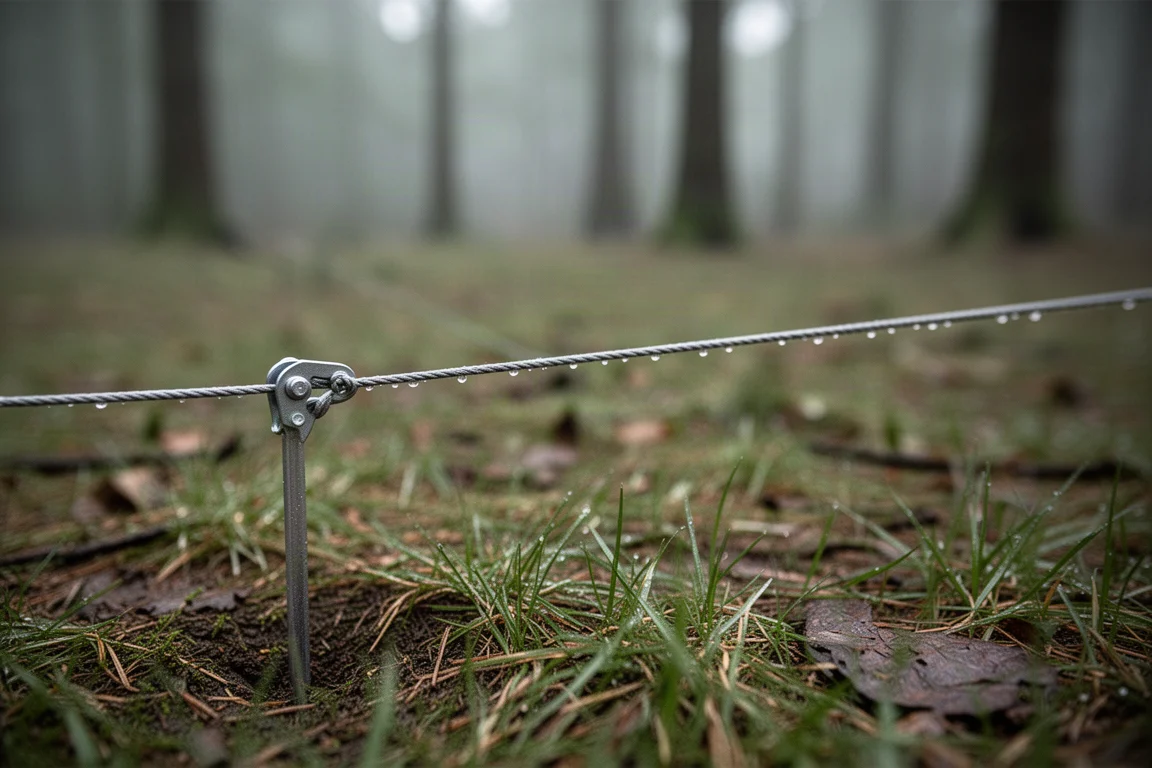
The kit includes a storage bag with a drawstring closure at the top and a grab handle at the bottom, six tent stakes, four guy lines measuring 6.5 feet each, and two spare pieces of shock cord as replacements. Guy lines are long and each includes its own adjuster. No poles or sticks are included, so the pitch depends on trekking poles, natural sticks or trees.
Things to Consider Before Buying
The main consideration is size, and it is worth taking seriously before ordering. Because the shelter is over 6 feet long and roughly 5 feet tall at each side, covering it properly requires a large tarp. A tarp at least 10 feet wide is the starting point, and going wider is the safer choice.
The side doors also interact with the pitch. When poles or sticks are used at the sides, those doors are partially blocked. Longer poles can be angled to reduce the obstruction, or the shelter can be tied to nearby trees, or rigged along a line strung between two trees, which restores full access to all three doors.
A few smaller points are worth noting. The storage bag carries no label or marking to identify the contents, which becomes confusing once several pieces of gear share similar bags. The shelter is available in brown only. And there is no interior storage, so small items need to live on the floor or in a stuff sack. A one-person version of the same design also exists for anyone who wants a smaller footprint.
Pitching Options and Tarp Pairing
The shelter is genuinely versatile. It can be pitched entirely on its own for a minimal, high-airflow setup. It can be set underneath a tarp in an A-frame configuration or a lean-to, which is the pairing that makes the most sense in wet climates where annual rainfall is high, since the tarp handles weather and the mesh handles insects. It can also be placed inside a larger tent, and the manufacturer lists compatibility with one of its own shelters as well.
Because the structure tensions from the corners, the pitch stays crisp in each of these configurations, and the three-door layout means entry and exit do not have to follow a single fixed direction. The one requirement that never changes is an anchor point: poles, sticks or trees, none of which are supplied.
Buying Advice
At $60, this shelter is priced fairly. Inner tents can be expensive, and this one is large, uses good-quality materials, and includes long guy lines with adjusters and stakes that hold up fine. It is a sensible purchase for tarp campers who want reliable bug protection without giving up airflow, and for anyone who wants their gear inside the shelter rather than on the ground.
Buy it with the tarp in mind. If your existing tarp is narrow, budget for a wider one at the same time, or step down to the one-person version if your priority is a smaller footprint and lighter pack volume rather than room for two plus gear.
For solo campers who still want space to spread out, the two-person size remains workable, but the shelter will dominate a small pitch. Matching the size to the tarp and the campsite is the decision that matters most here, more than any of the component details.
Conclusion
The OneTigris Two-Person Screen Mesh Inner Tent is a well-built, thoughtfully detailed mesh shelter that does exactly what a bug inner should do: it seals the sleeping area, keeps air moving, and stays taut thanks to dual corner adjusters. Its quality, materials and hardware all read as good value at this price, and the three-door design adds real flexibility.
The caveat is scale. This is a large shelter that needs a large tarp and a site with room to pitch it. Campers who plan for that will find it a strong, versatile layer in a tarp-based setup. Campers who want something compact should look at the one-person version instead.
Product link
View more details for OneTigris Two-Person Screen Mesh Inner Tent
This product is mentioned in the review. Check the specifications, options, and compatibility before buying.
View more details for OneTigris Two-Person Screen Mesh Inner TentFurther reading
Related Reviews
Camping Shelters
Alps Mountaineering Stealth 1 Bivy Review: A Waterproof Claim That Does Not Hold Up
The Alps Mountaineering Stealth 1 Bivy carries a 2,000 mm hydrostatic head rating and a waterproof claim, but sustained rain exposure and build quality concerns make it difficult to recommend.
Camping Shelters
AquaQuest Safari Hybrid 20 ft x 13 ft Tarp Review: Two Years Under a Very Large Roof
A long-term look at the AquaQuest Safari Hybrid 20 x 13 tarp, covering build quality, weather protection, setup realities, and who should buy one.
Camping Shelters
Backcountry Light Mesa 3 Hot Tent and Floor SL Tarp Review
A practical look at the Backcountry Light Mesa 3 four-season hot tent and its optional Floor SL Tarp, covering materials, stove jack design, packed weight, pricing, and the trade-offs to weigh before buying.