Camping Shelters
OneTigris 9.5 ft x 9.5 ft SilNylon Tarp Review: Light and Versatile, With One Serious Catch
A lightweight, highly configurable square tarp that pitches well and handles wind, but leaks at three external guy line points in sustained rain.
Introduction
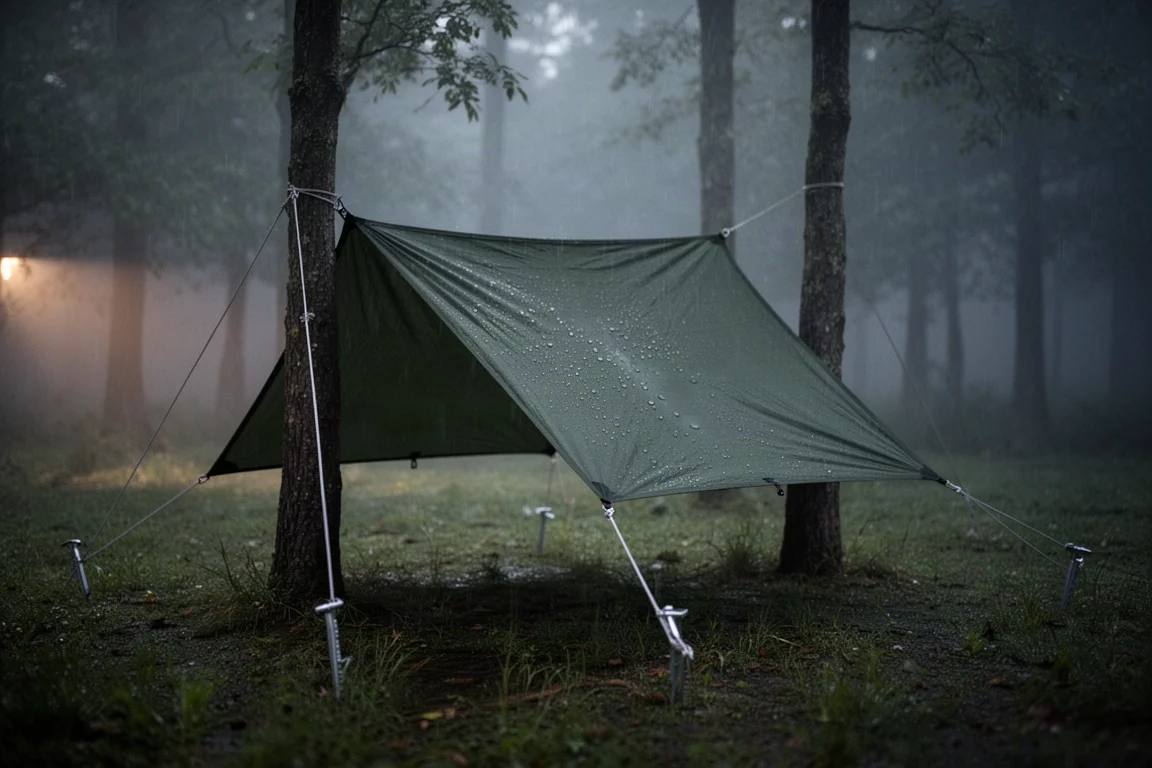
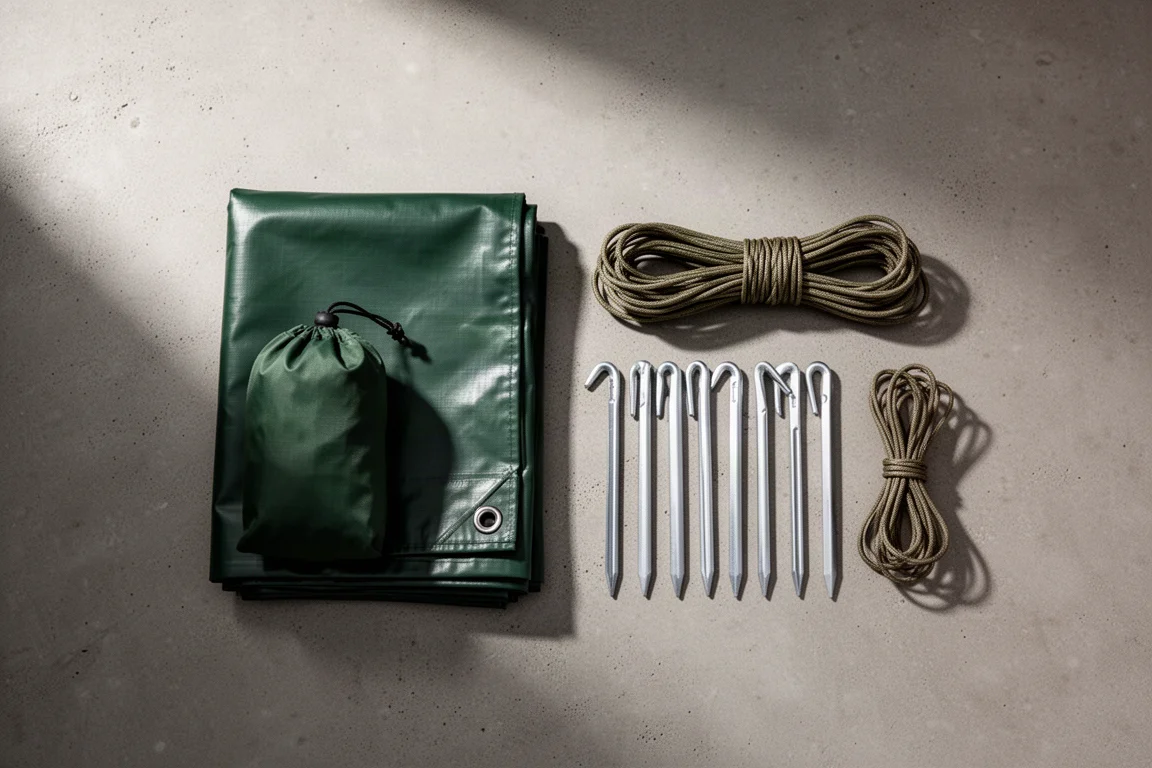
A 9.5 ft by 9.5 ft square tarp cut from 20D silicone-treated nylon looks like a strong proposition on paper. It is light, it packs down small, and a square footprint opens up a wide range of pitching options for one or two people. The OneTigris 9.5 ft x 9.5 ft SilNylon Tarp delivers on much of that promise. The complete package weighs 2.2 pounds, including eight guy lines, eight stakes, and the storage bags, and it packs to roughly 11.8 by 5.5 inches.
The problem sits in the one job a tarp cannot fail at. Water pushed through the canopy at three external guy line attachment points across the top, and it did so in sustained light rain as well as in moderate to heavy rainfall. Water ran down the inner walls and dripped onto the space beneath. Those attachment points are reinforced and seam taped on the underside, yet the seam tape did not stop the leak. Because the same failure appeared at all three points rather than at one, it reads as a manufacturing issue rather than a single faulty unit.
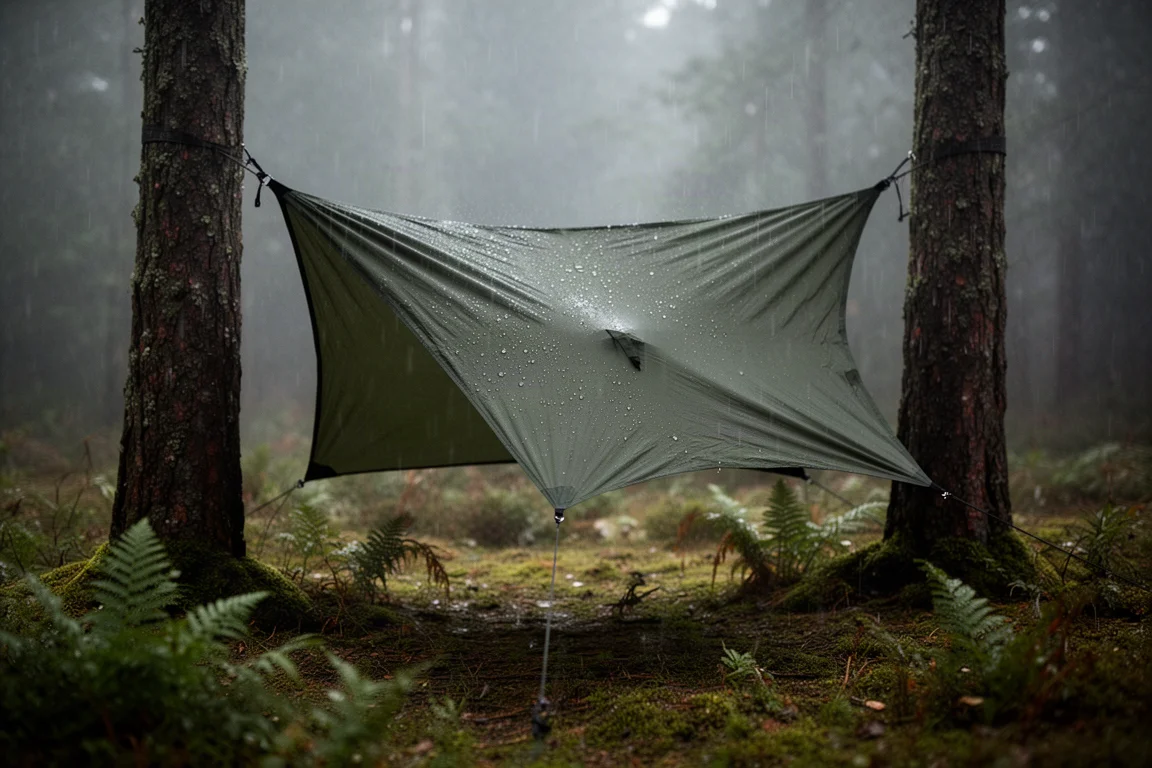
That combination, a genuinely well-designed, lightweight and versatile shelter paired with a waterproofing failure at its most critical attachment points, is what makes this tarp difficult to recommend without clear caveats. The sections below cover where it performs well, where it does not, and what to verify before you commit.
Who this tarp is for
This tarp suits campers who want a light, adaptable shelter and are prepared to verify its waterproofing and replace the supplied cordage. At 9.5 ft by 9.5 ft, the square cut offers plenty of coverage for one to two people and can be pitched in a very large number of configurations, from a simple A-frame to more weather-protective shapes. Riders of long trails, bikepackers and minimalist campers who count grams will appreciate a 2.2 pound package that can be trimmed below two pounds by swapping the included stakes and lines for lighter ones.
It is a poor fit for anyone who needs a shelter they can trust straight out of the bag on an exposed or multi-day trip. A tarp is often the difference between a comfortable night and a dangerous one, and this one has to be proven before it goes anywhere serious.
Main strengths
Size and flexibility come first. The square shape provides generous coverage and enough pitching options to adapt to terrain, wind direction and available trees or poles. The material choice is sound as well: 20D silicone-treated nylon is very light, and the brand claims a 2,000 mm hydrostatic head rating. The fabric itself is not where the water gets in.
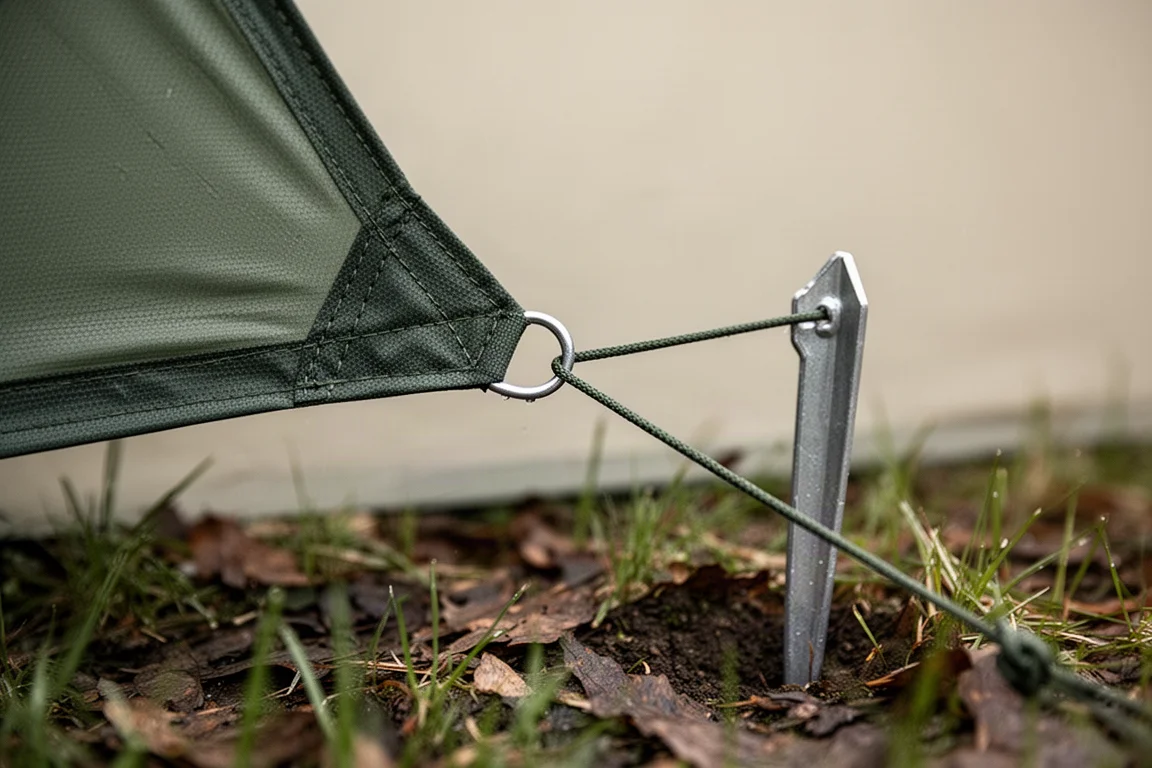
Weight is another clear strength. The full kit lands at 2.2 pounds, and the tie-out count is unusually generous, with 19 attachment points spaced about 2.3 ft apart. Each point is reinforced, a detail that is not guaranteed on inexpensive tarps, and the points are large enough to work with comfortably. The single available colour, a muted green, sits well in natural surroundings.
Wind performance has been solid. In testing up to 25 mph the tarp held its shape and stayed stable, and it looks capable of more. Stretch is well controlled for a silicone-treated nylon, a material family known for stretching under load. Some silnylon shelters deform noticeably once tensioned and wet; this one does not, and the fabric and guy lines hold their tension predictably. The storage bag is also cut generously, which matters more than it should. Folding a wet, wind-blown tarp back into a tight stuff sack in the field is a genuine chore, and here the tarp goes back in without a fight.
Things to consider before buying
Value is the first thing to weigh. The retail price sits around $95 to $100, with listings on Amazon running closer to $60. At full retail this tarp is hard to justify, because comparable or lower-priced tarps from established manufacturers are described as stronger, more waterproof and more durable. At the lower street price the case improves, but the leak remains part of the calculation.
If you already own this tarp, treat it as unproven until you have tested it. Set it up and run water over the canopy, or wait for steady rain, and check the three external guy line points along the top specifically. If those points stay dry, you have a usable shelter. If they do not, you have a decision to make before you rely on it in the field.
Waterproofing problems in rain
This is the decisive issue. Water enters at three external guy line attachment points across the top of the canopy, and it enters heavily. In sustained light rain, and again in moderate to heavy rainfall, water pumped through the fabric at those points, ran down the inner walls and dripped onto the space below. For a tarp, that is not a minor annoyance. It is a failure of the product’s core purpose.
The attachment points are reinforced, and on the underside they carry seam tape. The seam tape made no measurable difference to the leaking. Since the same fault appeared at every one of the three points on a single tarp, the most reasonable conclusion is a manufacturing defect that is likely to affect more than one unit. That is why the practical advice is simple: waterproof-test this tarp thoroughly before any trip where it is your only shelter, and do not assume a new one will behave differently from the one described here.
Included guy lines and hardware
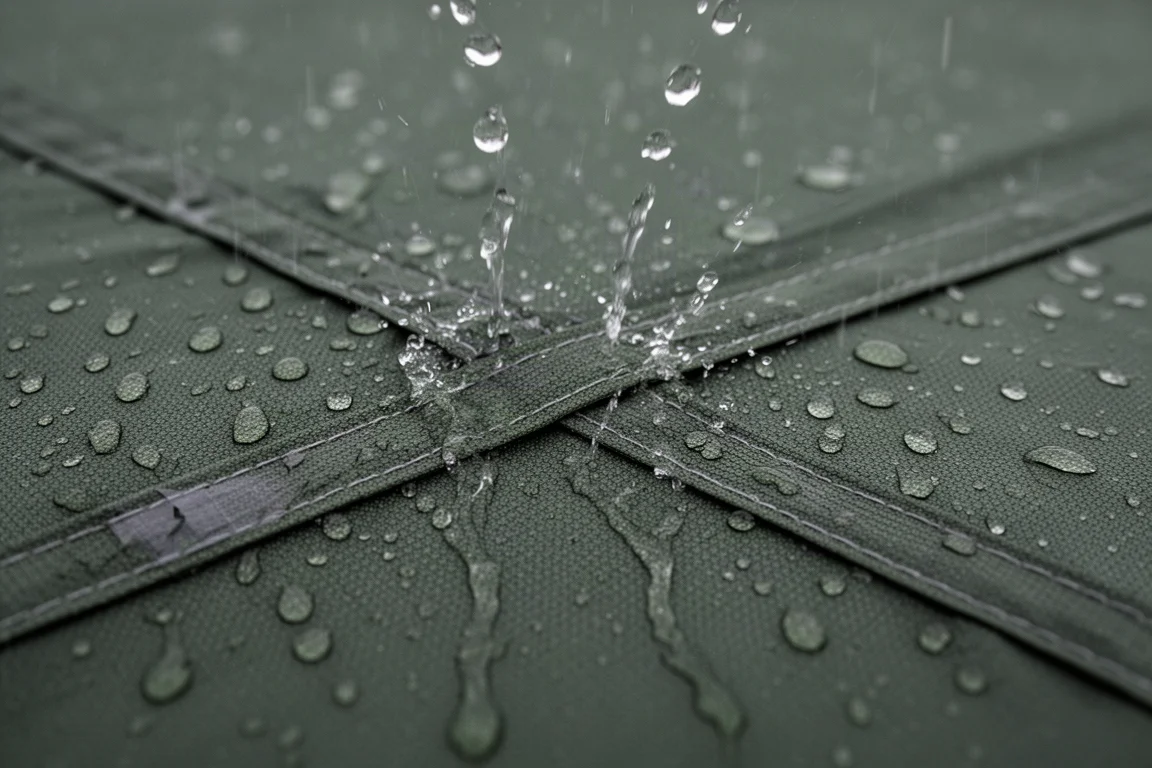
The eight supplied guy lines are the weakest component after the waterproofing. The cordage is heavily fibrous, which causes real problems in the field. It grabs everything it touches, from sticks and bark to leaf litter, and it tangles with itself with very little encouragement. Setting up a tarp in a forest with lines like these turns a two-minute job into a frustrating one.
Replacing the cordage is straightforward and inexpensive. Standard 550 cord or a lightweight cordage of your choice solves the problem entirely, and it is worth doing before the first trip rather than after. The stakes are part of the same kit; lighter options are widely available if you want to bring the total package under two pounds.
Buying advice
Approach this tarp with a clear plan. If you already own one, test it under water before you trust it, and replace the guy lines. If it passes, you have a light, versatile square tarp that handles wind well and pitches in a wide range of shapes. If it fails, return it or retire it to fair-weather use, because a shelter that leaks at three points in steady rain cannot be counted on when conditions turn.
If you are still shopping, compare carefully. The category includes tarps of similar weight with stronger waterproofing and a longer record of durability, and some of them cost the same or less. At around $60 this tarp is a reasonable gamble only if you are willing to test it and possibly seal or repair the leaking points yourself. At the $95 to $100 retail price, the same money buys a more dependable shelter, which makes the full-price purchase difficult to defend.
Conclusion
The OneTigris 9.5 ft x 9.5 ft SilNylon Tarp gets a great deal right. It is light, it packs small, it offers 19 reinforced tie-out points, it stands up to wind up to 25 mph, and it resists the stretch that plagues many silicone-treated nylon shelters. Those are the qualities of a tarp worth carrying.
They are undone by water coming through three external guy line attachment points in ordinary rain, with seam tape that does not help. Until that is resolved, this tarp is a fair-weather shelter at best and a liability at worst. Test it thoroughly if you own one, and weigh the price against stronger alternatives if you do not.
Product link
View more details for OneTigris 9.5 ft x 9.5 ft SilNylon Tarp
This product is mentioned in the review. Check the specifications, options, and compatibility before buying.
View more details for OneTigris 9.5 ft x 9.5 ft SilNylon TarpFurther reading
Related Reviews
Camping Shelters
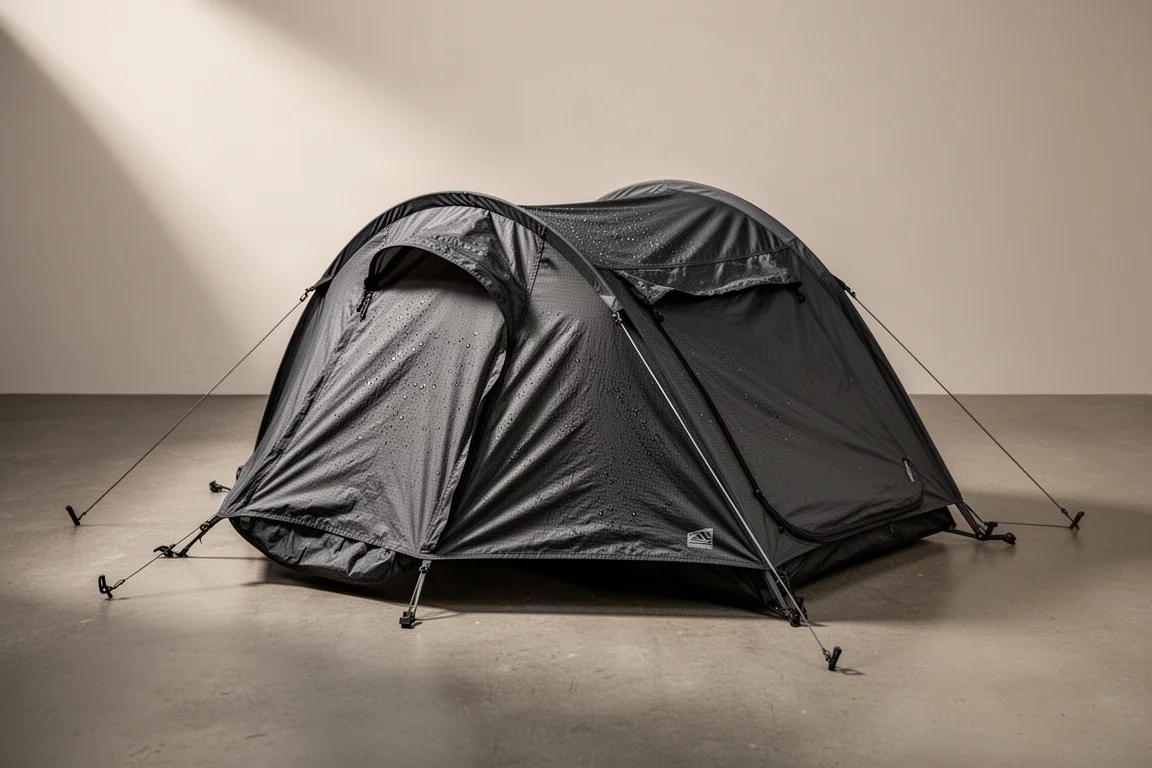
Alps Mountaineering Stealth 1 Bivy Review: A Waterproof Claim That Does Not Hold Up
The Alps Mountaineering Stealth 1 Bivy carries a 2,000 mm hydrostatic head rating and a waterproof claim, but sustained rain exposure and build quality concerns make it difficult to recommend.
Camping Shelters
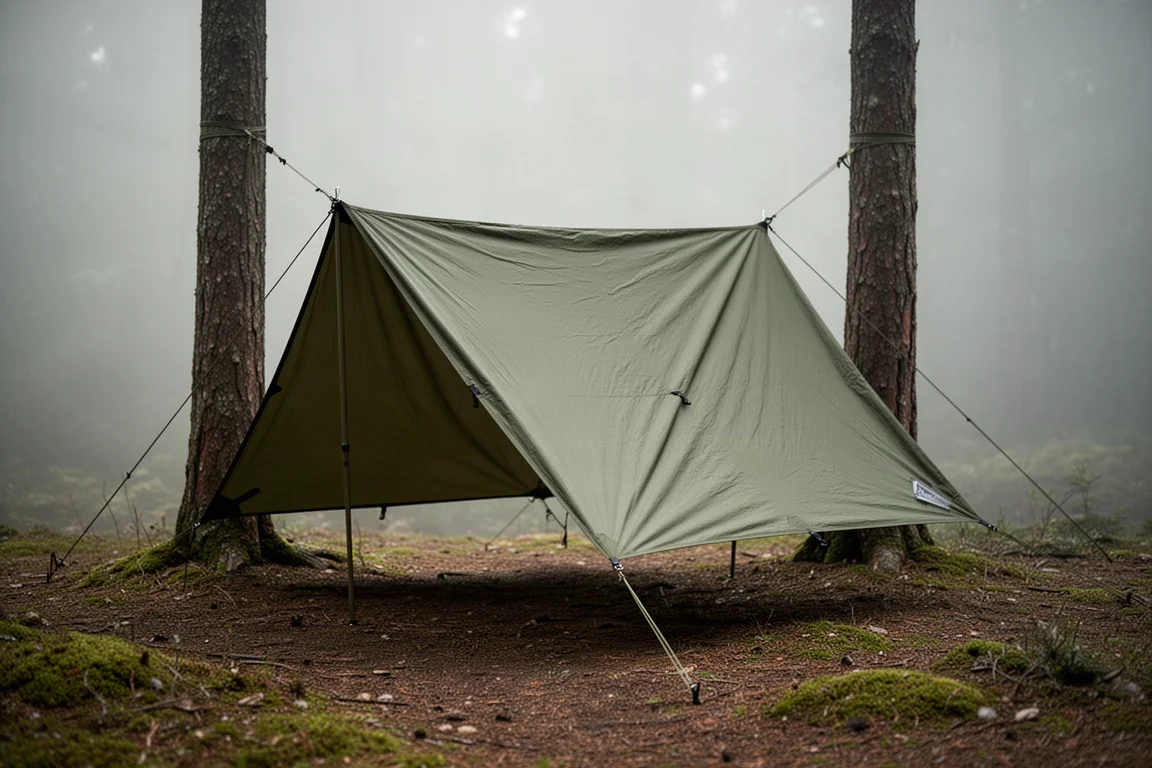
AquaQuest Safari Hybrid 20 ft x 13 ft Tarp Review: Two Years Under a Very Large Roof
A long-term look at the AquaQuest Safari Hybrid 20 x 13 tarp, covering build quality, weather protection, setup realities, and who should buy one.
Camping Shelters
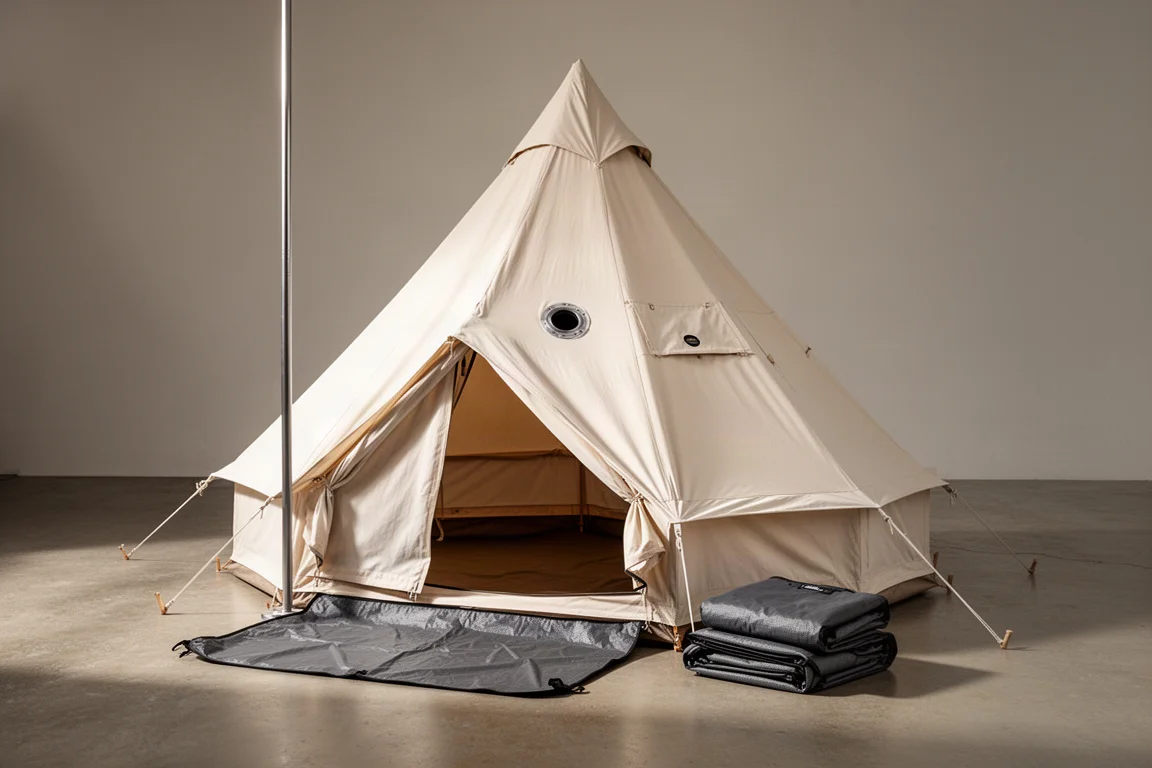
Backcountry Light Mesa 3 Hot Tent and Floor SL Tarp Review
A practical look at the Backcountry Light Mesa 3 four-season hot tent and its optional Floor SL Tarp, covering materials, stove jack design, packed weight, pricing, and the trade-offs to weigh before buying.