Camping Mattresses
OneTigris Dream Star and DOD SoDo Pad: Two Thick Camping Mattresses Compared
A practical look at two thick camping and overlanding mattresses: the compact OneTigris Dream Star and the self-inflating DOD SoDo Pad, plus the trade-offs that decide between them.
Introduction
Thick camping mattresses have quietly become one of the most useful pieces of car camping and overlanding gear. They turn a tent floor or a vehicle cargo area into something you can genuinely sleep on, and the better ones hold air, stay warm, and pack down small enough to leave room for everything else you are carrying.
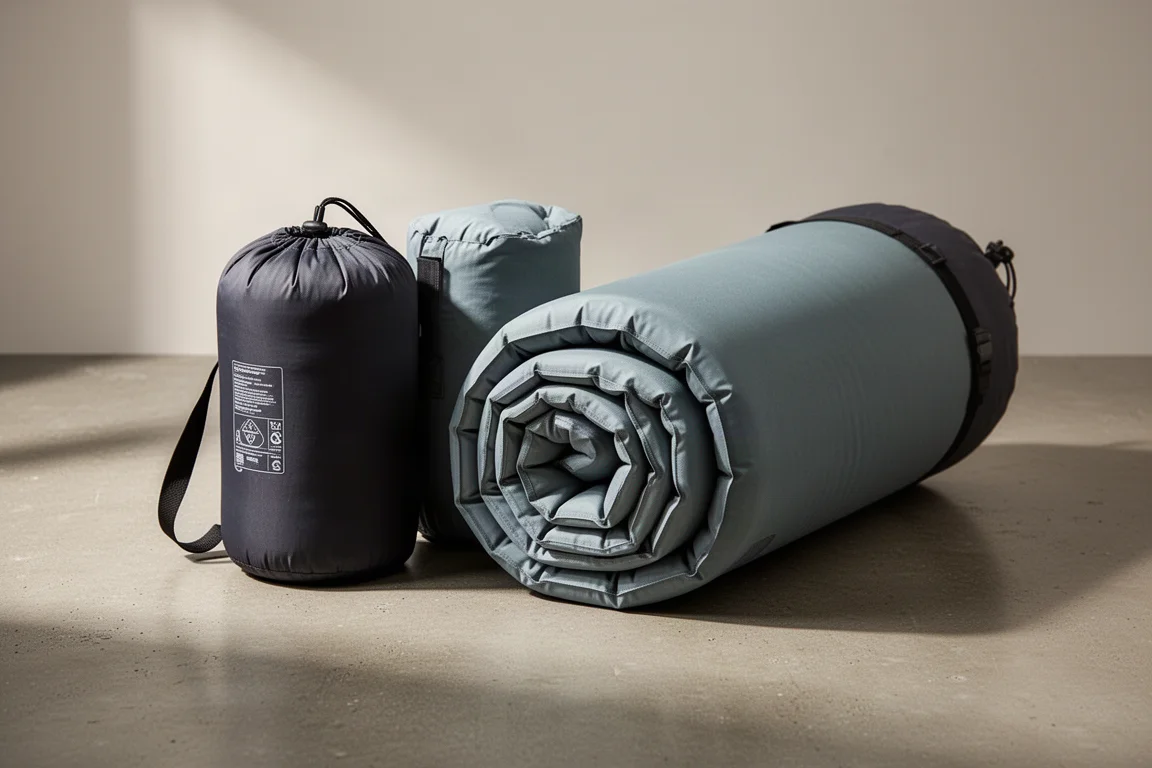
This guide looks at two options in that category. The OneTigris Dream Star Mattress is the compact newcomer, a three-inch pad that stores in roughly half the space of the larger pads it competes with. The DOD SoDo Pad takes the more familiar route, a thick self-inflating mattress that fills itself in about an hour.
Both are worth considering, and the right pick depends less on which one is objectively better and more on how you actually camp.
What to Look For in a Thick Camping Mattress
Start with packed size and weight, because those two numbers decide whether a mattress is easy to live with. A pad that eats a large share of your cargo space is a pad you will resent on longer trips, especially in a smaller vehicle or a tightly packed rooftop setup.
Warmth matters just as much. An R rating gives you a rough sense of how well a mattress insulates you from cold ground, and for three-season camping in cool conditions you want a pad that keeps the chill out without needing extra layers underneath.
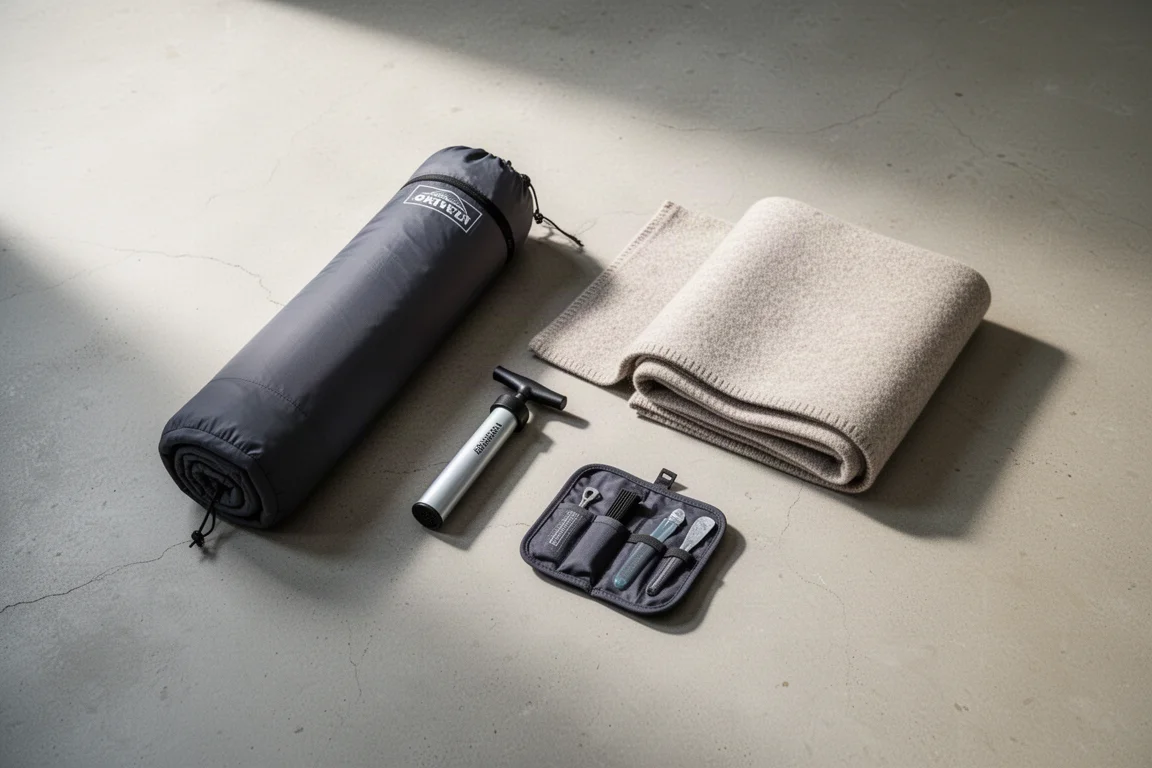
Then look at construction and the small details. A rotating valve that lets you deflate, inflate, and seal without losing air is far more pleasant than a simple plug. A storage bag with its own inflation valve can double as a pump. Grippy silicone dots on the underside keep the mattress from sliding across a slick tent floor. And realistic self-inflation behaviour matters more than a headline number, because a pad that never truly inflates on its own will send you hunting for a pump every night.
OneTigris Dream Star Mattress: Design and Specifications
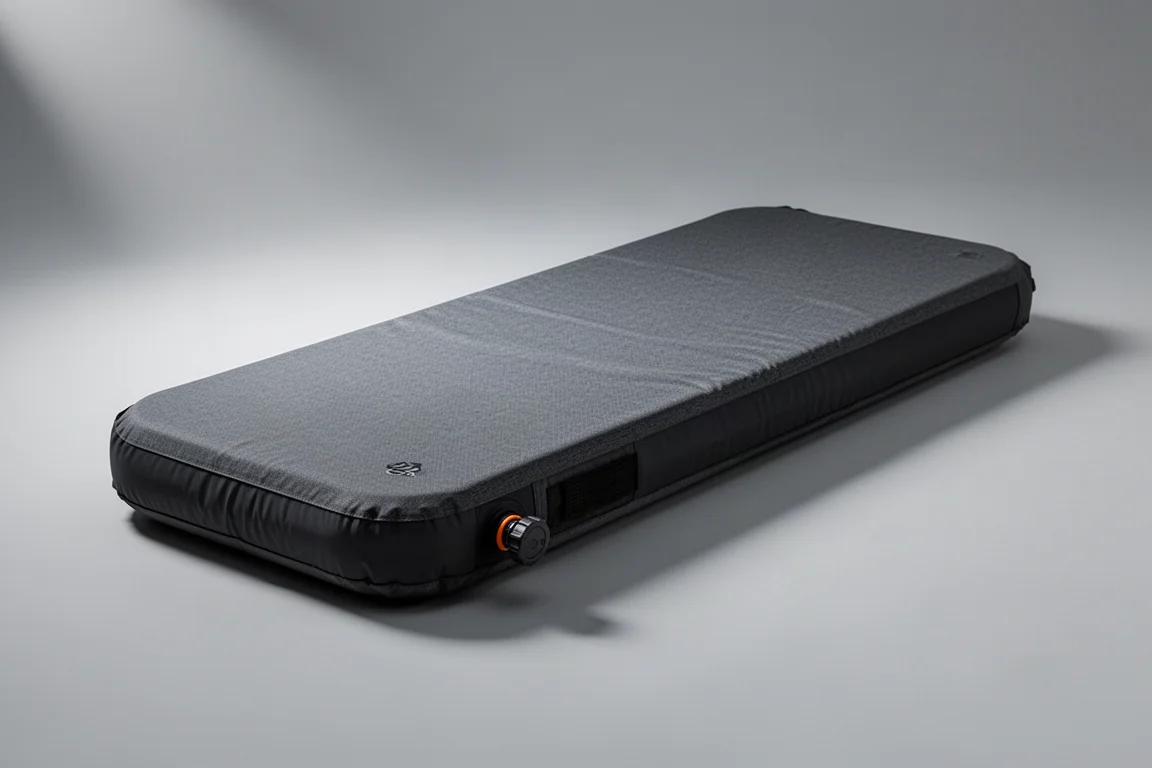
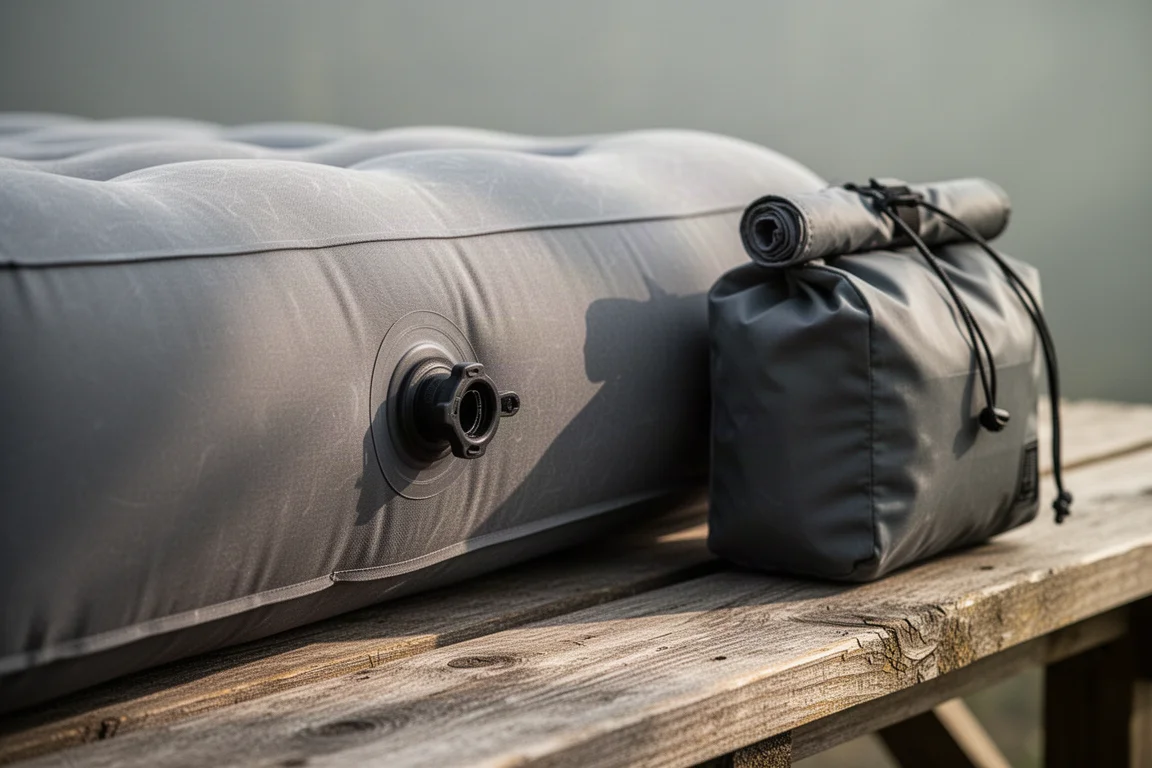
The Dream Star is the single-person version of the OneTigris mattress line, with a two-person model also available. It comes in one colour, a deep grey that reads almost black, which sets it apart from the pale cream finishes common in this category.
Inflated, it measures 78 inches long, 27.5 inches wide, and 3 inches thick. Packed down, it shrinks to roughly 13.7 by 9.4 inches, and it weighs 4.6 pounds. That combination is the headline: a mattress this size that stores in a fraction of the space taken up by thicker, larger pads.
Materials are a 30D polyester top and sides with a 190T bottom that is tougher and more resistant than the top, wrapped around a high-resistance foam core. The R rating is 6.3, which puts it in genuinely cold-weather territory. A rotating valve handles deflation and lets you blow air in without it escaping, and a screw cap seals the port when you are finished. The underside carries silicone dots that hold the mattress in place on slick surfaces such as a tent floor.
The package includes the mattress, the storage bag, a repair kit, and a compression strap. The storage bag itself has a roll-top closure, a grab handle, and an inflation valve on the side, so it can be used to push air into the pad. The single version is priced at $120 without an air pump, and the two-person version is $180.
OneTigris Dream Star Mattress: Real-World Performance
Field testing across three trips with overnight lows of roughly 38, 25, and 19 degrees Fahrenheit showed the Dream Star holding up well. It stayed warm, it held air, and the welds and seams showed no faults. For cool to cold conditions it does the job.
Comfort is close to what you get from the thicker pads in this class. On a flat tent floor, the difference between 3 inches and 4 inches is not something you notice much, and the Dream Star is comfortable whether you sleep on your back, stomach, or side. Where the difference does show up is on uneven ground. In the back of a vehicle with a raised section in the floor, a 3-inch pad transmits that shape in a way a 4-inch pad does not. Width and length matter too, since larger pads simply give you more room to spread out.
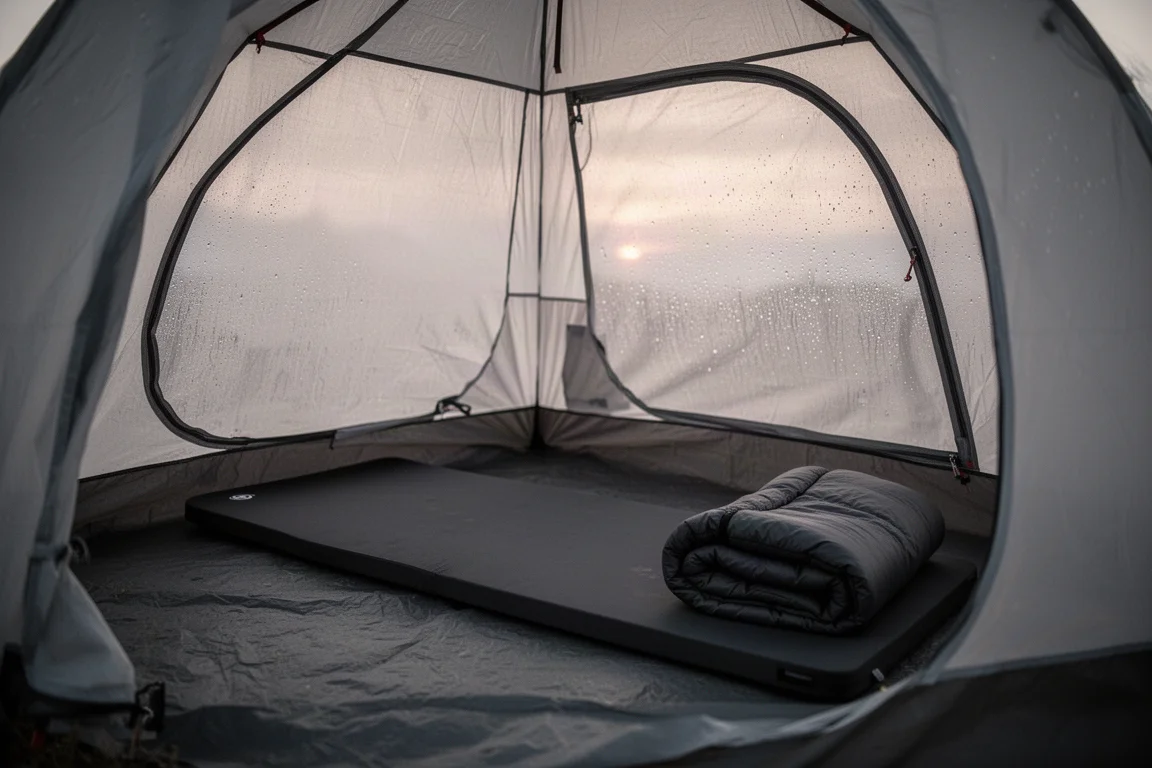
The one place the Dream Star falls short of its own specification is self-inflation. The manufacturer’s claim of reaching 80 percent inflation in 30 seconds does not reflect reality. Coming out of a compressed storage bag, the foam does not want to expand on its own, and after five hours of waiting the pad still needed manual inflation. A realistic expectation is closer to 10 to 12 hours, which in practice means you will be inflating it yourself.
That makes the storage bag method the practical option. The bag attaches to the pad easily, and rolling it up pushes air inside. It works well, but it takes around seven rounds of filling before the mattress is firm, so it is a job rather than an instant. An air pump is the faster route.
DOD SoDo Pad: What It Offers
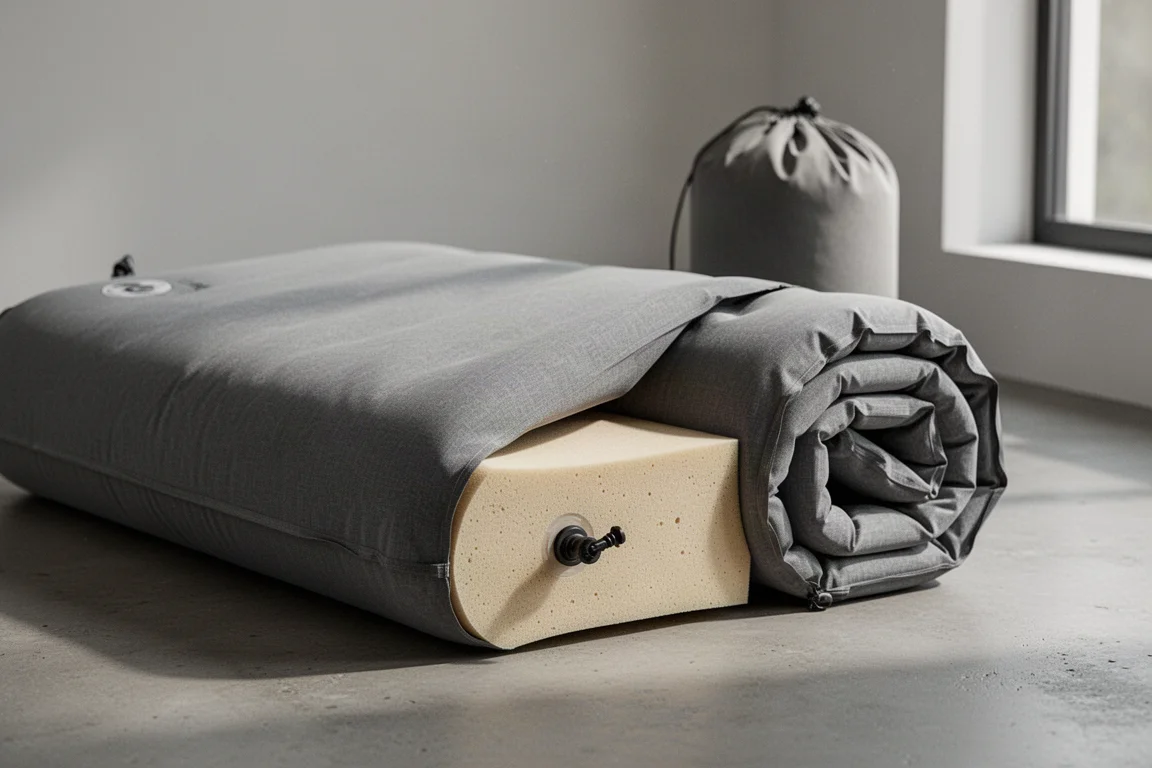
The DOD SoDo Pad belongs to the group of thick car camping and overlanding mattresses that established this category in the first place. Its defining behaviour is self-inflation: open the valve, let it sit, and it fills with air in about an hour. That is a meaningfully different ownership experience from a pad you have to pump or blow up yourself.
Its build follows the same formula as its peers, with a comparable valve design and a storage bag that shares the same layout. Anyone who has used a thick self-inflating pad before will find the SoDo Pad immediately familiar.
DOD SoDo Pad: How It Compares in Daily Use
In daily use, the SoDo Pad’s advantage is setup. Around an hour of self-inflation is far less demanding than the long wait the Dream Star requires, and it means you can crack the valve when you arrive at camp and come back to a mattress that is ready for the night.
The trade-off is bulk. The SoDo Pad is one of the larger-storage pads in this comparison, and the Dream Star packs to roughly half its size. For a vehicle with plenty of room, that is a non-issue. For a tightly packed car or a small rooftop setup, it is the deciding factor.
Where the two mattresses overlap is in the things that are hard to read from a specification sheet. Both hold air reliably, both are built with clean seams and valves, and both are comfortable enough for regular use. The choice comes down to whether you value fast self-inflation or a small packed footprint.
Comfort, Warmth, and Storage Trade-Offs
Thickness gets more attention than it deserves. Going from 3 inches to 4 inches does not transform how a mattress feels on flat ground. What changes your night is whether the pad is wide and long enough for how you sleep, and whether it keeps the cold out. The Dream Star carries an R rating of 6.3 and stayed warm on nights down to 19 degrees Fahrenheit, and the SoDo Pad comes from the same family of thick pads that this category was built on.
Storage is where the real difference lives. A mattress that packs to roughly 13.7 by 9.4 inches and weighs 4.6 pounds is easy to justify in almost any vehicle, and the deep grey finish looks sharp in a way that pale pads generally do not. A larger self-inflating pad asks for more room and repays you with a setup that largely takes care of itself.
Grip and valve design are the details worth checking on any pad. Silicone dots on the underside stop the mattress from sliding across a slick tent floor, and a valve that seals while you add air keeps the job from turning into a wrestling match. Both matter more than an extra inch of foam.
Buying Advice: Matching a Mattress to Your Setup
If storage space is tight, the OneTigris Dream Star Mattress is the easier recommendation. It packs small, weighs little, carries an R rating of 6.3, and sleeps comfortably on flat ground. Plan on bringing a pump or using the storage bag, and set your expectations accordingly on self-inflation.
If you would rather not think about inflation at all, the DOD SoDo Pad is the calmer choice. It fills itself in about an hour and follows the same approach as the other thick pads in this category. Accept the larger packed size, and it is a simple, low-effort mattress.
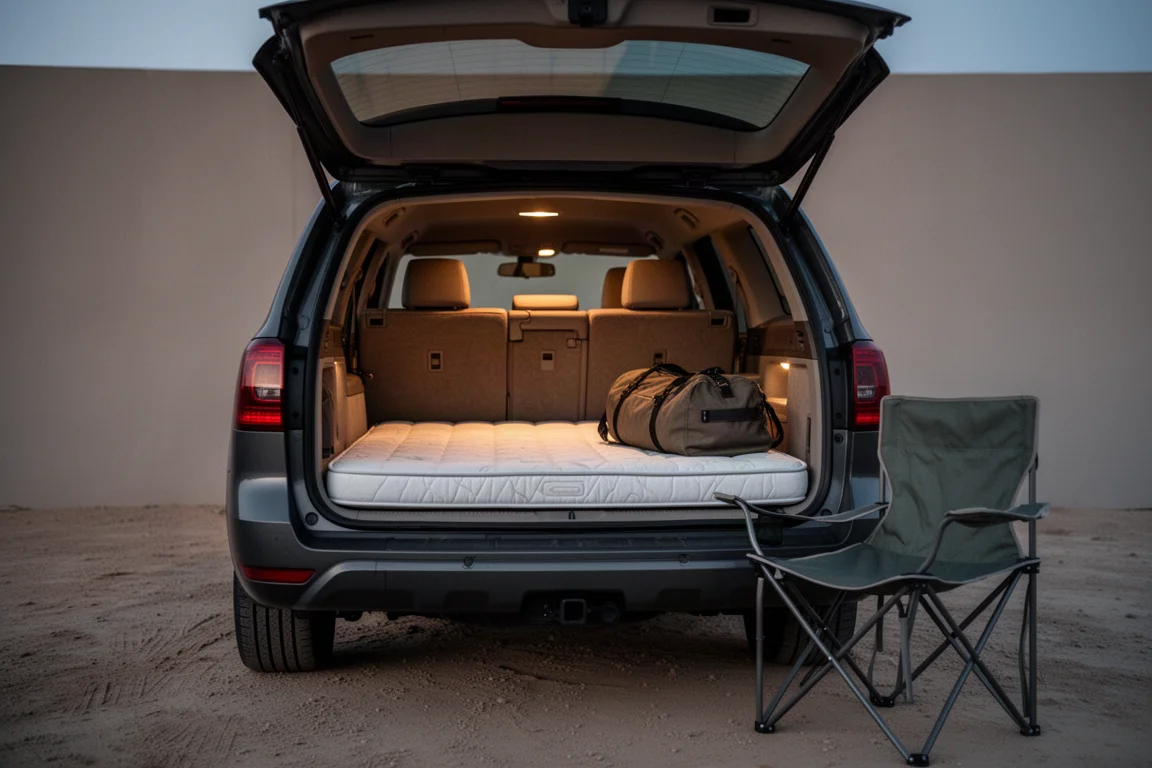
For campers who sleep in a vehicle rather than a tent, thickness deserves extra weight in the decision. A 3-inch pad is fine on flat ground but can telegraph a raised floor section, so a thicker mattress is worth the extra bulk if your sleeping surface is not perfectly level.
Either way, buy for the way you actually camp. The Dream Star suits tight storage and cold nights. The SoDo Pad suits a roomier vehicle and a setup you barely have to touch.
Conclusion
The OneTigris Dream Star Mattress and the DOD SoDo Pad solve the same problem in two different ways. One trades self-inflation speed for a packed size that is roughly half that of the larger pads in its class, with a 6.3 R rating and a 4.6-pound weight. The other keeps the classic self-inflating routine, filling in about an hour, and asks for more room in return.
Pick the Dream Star if space is the constraint and you do not mind inflating your pad yourself. Pick the SoDo Pad if you want a mattress that is ready on its own and you have the cargo room to carry it.
Further reading
Related Reviews

Backpacking Gear
Building a 10 lb Base Weight: An Ultralight Backpacking Gear List
A practical walkthrough of the ultralight pieces behind a 10 lb base weight, from a 765 g pack and a roomy one-person tent to a full camp chair and a dependable water filter.

Road Bikes
10 New Road Bikes Worth Watching: Aero, Titanium, Steel and Endurance Standouts
A practical roundup of 10 new road bikes, from aero flagships chasing single-watt gains to titanium, steel and endurance platforms built for real roads.
Bikepacking Gear
11 Bikepacking Essentials for Long-Distance Cycling
Eleven bikepacking essentials for long-distance cycling, from a steel gravel frame and a two-person tent to helmet lights, packable gloves, and a frame bag that puts weight in the right place.