Camping Blankets
OneTigris Down Camping Blanket Version 2.0 Review: Warm, Light, and Better in the Large Size
A 600 fill power down blanket that weighs about 1.5 pounds, packs down small, and delivers real warmth for the money, with one sizing caveat worth knowing before you buy.
Introduction
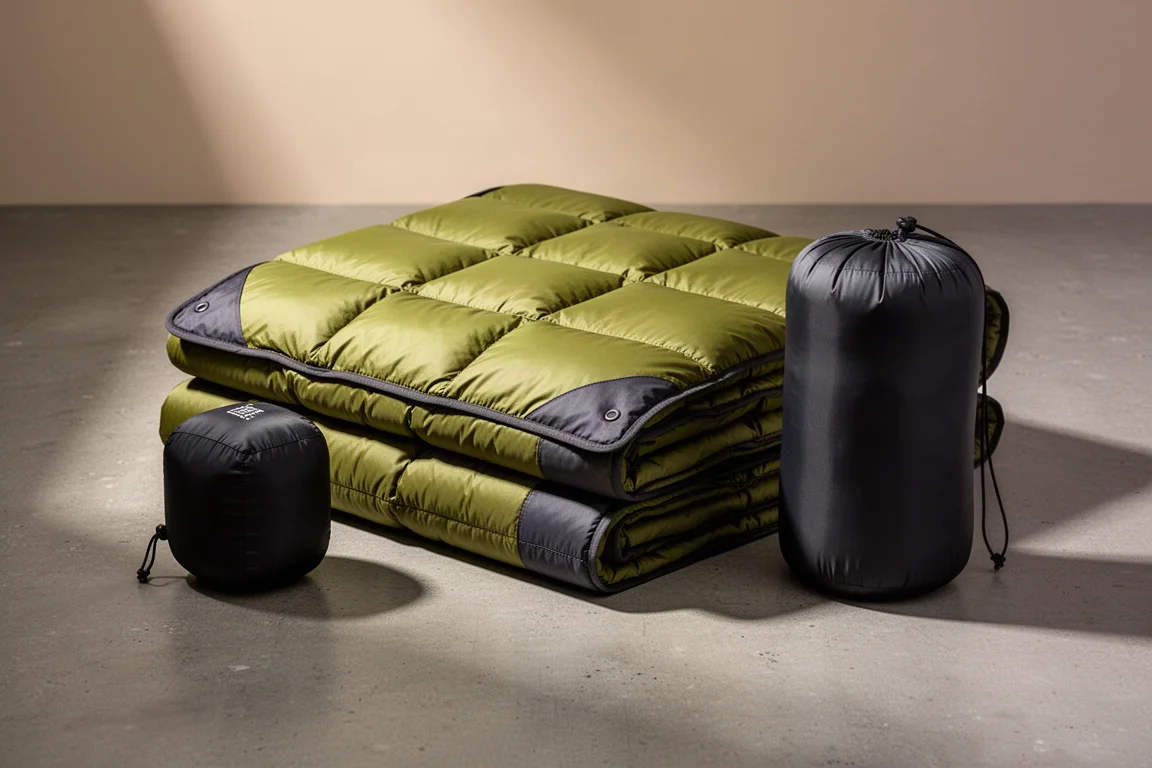
Lightweight down blankets have become one of the most popular categories in camping gear, and the reasons are straightforward: they compress small, weigh very little, and cost far less than a comparable sleeping bag. The OneTigris Down Camping Blanket Version 2.0 follows that formula closely, and it also serves as a reminder that size matters as much as fill power.
The specification list is appealing for the price. Inside is 600 fill power down. The shell is a 20D nylon ripstop with a water-resistant treatment, and the lining is a soft 300T polyester that feels comfortable against skin. Packed down, the blanket fits into a space smaller than 12 by 6.5 inches, and it weighs roughly 1.5 pounds. Retail is $70, though it has been selling for around $60, and it is offered in Ranger Green, Olive Green, and Coyote Brown.

The short version of this review: the construction and materials are excellent for the money, the warmth-to-weight ratio is genuinely surprising, and the medium size is best suited to mild conditions. If you plan to camp in cooler weather, the larger version is the smarter purchase.
Who This Blanket Is For
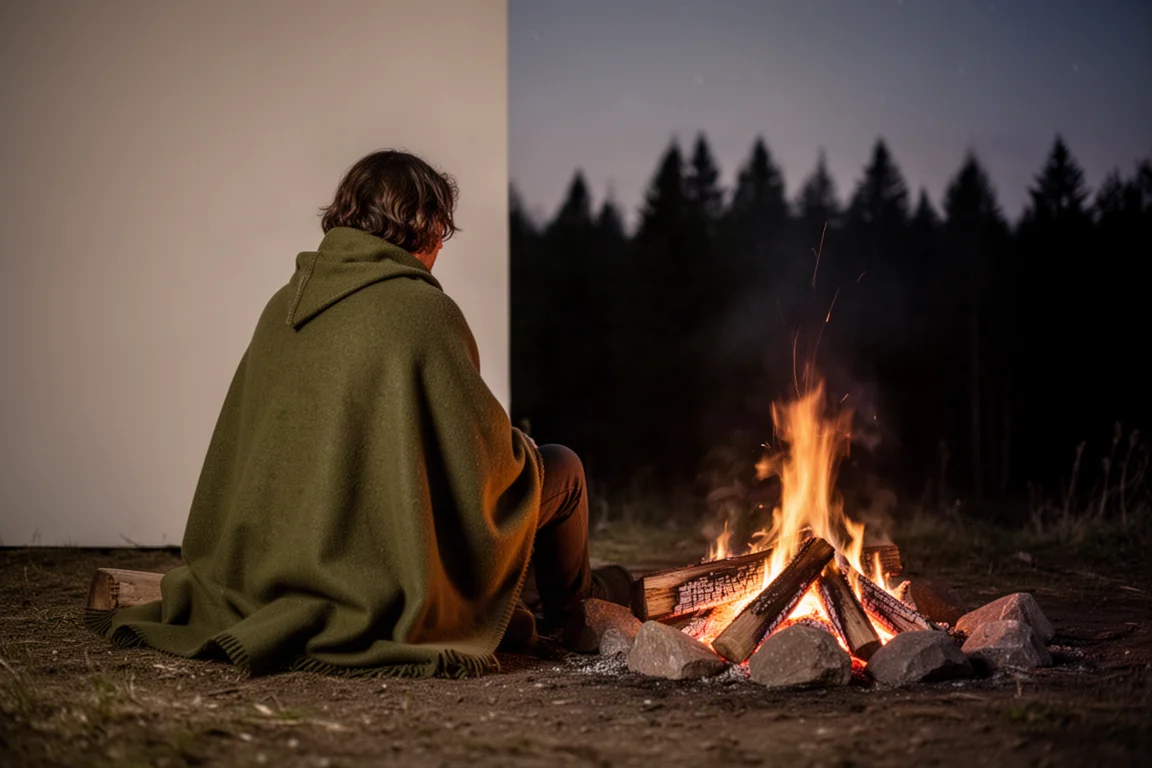
This blanket is designed for use inside a tent or a hammock, and it works in several roles: as a blanket, as a quilt over a sleeping pad, or worn as a poncho or cloak using the snaps. That flexibility makes it a good fit for three-season campers who want a light layer they can add or remove as the night changes.
It is also a strong option as a supplementary layer. Added over an existing sleeping bag in cold conditions, it contributes noticeable extra warmth without much bulk or weight in your pack. Campers who already own a bag but want more range from it will get the most value here.
Main Strengths
The strengths of this blanket are practical rather than flashy, and they all point in the same direction: a lot of usable warmth for very little weight and money.
Warmth and Loft
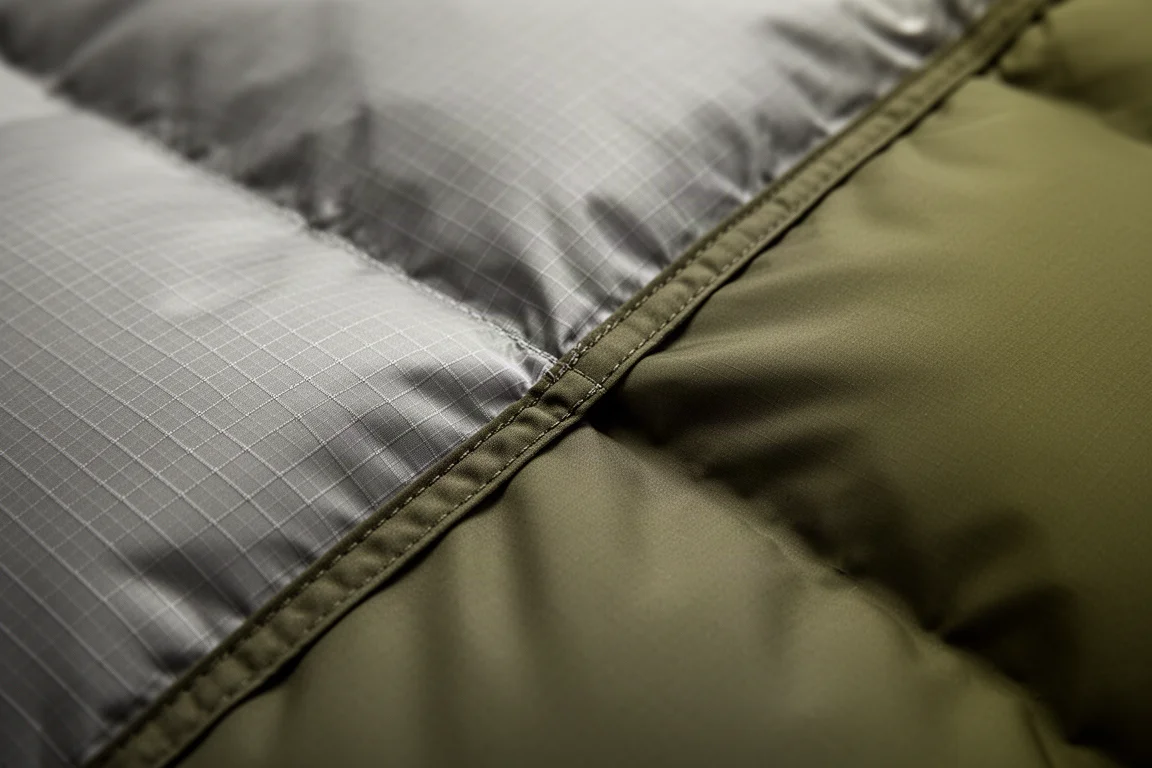
The manufacturer rates the blanket between 46°F and 77°F. In practice that lower figure is conservative. Wearing ordinary clothing, meaning a shirt, pants, and socks, the blanket has kept a warm sleeper comfortable down to about 40°F. A realistic comfort range for most people is roughly 40°F to 50°F, and that range depends heavily on how warm you sleep. What stands out is how thin the blanket feels in hand while still lofting up enough to trap heat.
Weight and Packability
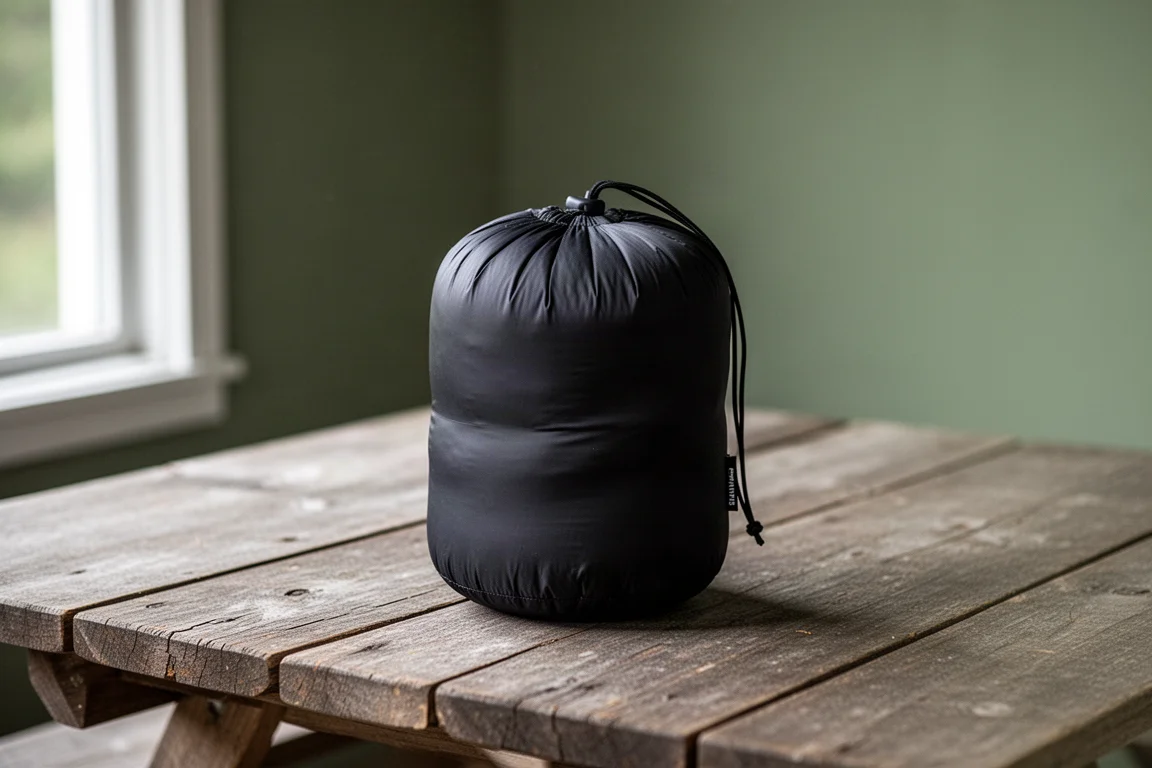
At about 1.5 pounds and packing smaller than 12 by 6.5 inches, this is an easy item to justify carrying. The included storage bag is well judged: it has a buckle on one side and a drawstring, and it is large enough that getting the blanket back inside is not a wrestling match. That matters more than it sounds, because a stuff sack that is too tight is the fastest way to make a light blanket feel like a chore.
Build Quality and Materials
Seams and stitching are clean, with no loose threads or weak points to report. Down leakage is minimal. An occasional feather works its way through the fabric, and it can simply be pulled back in from the other side. The shell sheds a light splash of water thanks to its water-resistant treatment, and the interior lining is soft enough to sleep against directly.
Value
For what you receive at around $60, the value is fair and easy to defend. Size, weight, compressibility, and warmth are the four factors that decide whether a down blanket earns its place in a pack, and this one performs well on all four.
Design Details and Wearable Features
Three snaps sit at the top of the quilt and three more at the bottom, allowing it to be fastened into a poncho or cape shape. The hardware works, but the arrangement feels like an afterthought rather than a considered part of the design.
There are several features that would have made this blanket stand out in a crowded category, and none of them are present. A way to close off the foot box would keep feet warmer. A zipper running the perimeter would let the blanket convert into something closer to a quilt or sleeping bag. Corner loops would allow it to be rigged as an underquilt. A draft tube behind a zipper would complete that idea. None of these additions would have weighed much, particularly given how light the blanket already is.
Things to Consider Before Buying
The most important consideration is size. The medium version measures 6.5 feet long and 4.6 feet wide, and the large version measures 7 feet long and 6.7 feet wide. The medium is the version reviewed here, and it is the main limitation of the product.
At around 40°F the blanket struggles to keep a sleeper warm, and the reason is not the insulation but the dimensions. Wrapping the medium size around your body leaves gaps, and those gaps let cold air in as a draft. In milder conditions this is a non-issue, because there is no need to wrap up tightly. In cool conditions, it becomes the deciding factor. Larger sleepers will feel this sooner than smaller ones, and the large size is the version to choose if you expect nights below 50°F.
Worth knowing as well: a first-generation version of this blanket exists at roughly the same price. Version 2.0 is described as more comfortable with softer materials, and otherwise the two are very similar, so there is little reason to seek out the older model.
Size and Temperature: Matching the Blanket to Your Conditions
The medium size makes sense for warm-weather camping, summer hammock nights, and as an extra layer over a sleeping bag when the forecast is uncertain. It is light enough that bringing it “just in case” costs almost nothing in pack weight.
The large size is the better answer for shoulder-season camping and for anyone who wants a single blanket that can handle a colder night on its own. The trade-off is price: the large version runs $100 against $60 for the medium. If your camping happens mostly in cool conditions, that difference buys a meaningfully more useful piece of gear.
Buying Advice
Buy this blanket if you want a light, packable, well-made down layer at a fair price, and if your camping is mostly mild to moderate. Buy the large size if you sleep cold, camp in shoulder seasons, or simply want enough fabric to wrap up without drafts.
Skip it if you expect a single blanket to handle genuinely cold nights on its own, or if you want features like a foot box closure, perimeter zipper, or underquilt attachment points. Those are not part of this design, and no amount of care in packing will change that. Choose the size first, then decide.
Conclusion
The OneTigris Down Camping Blanket Version 2.0 gets the fundamentals right. It is well built, warm for its weight, compresses into a small package, and comes with a stuff sack that is actually pleasant to use. The snaps for poncho wear are a bonus rather than a headline feature.
The caveat is sizing. The medium version is too small for cool-weather comfort, and the large version solves that for $100. Campers who match the right size to their conditions will find this an easy blanket to recommend, and a sensible addition to almost any sleep system.
Product link
View more details for OneTigris Down Camping Blanket Version 2.0
This product is mentioned in the review. Check the specifications, options, and compatibility before buying.
View more details for OneTigris Down Camping Blanket Version 2.0Further reading
Related Reviews
Camping Blankets
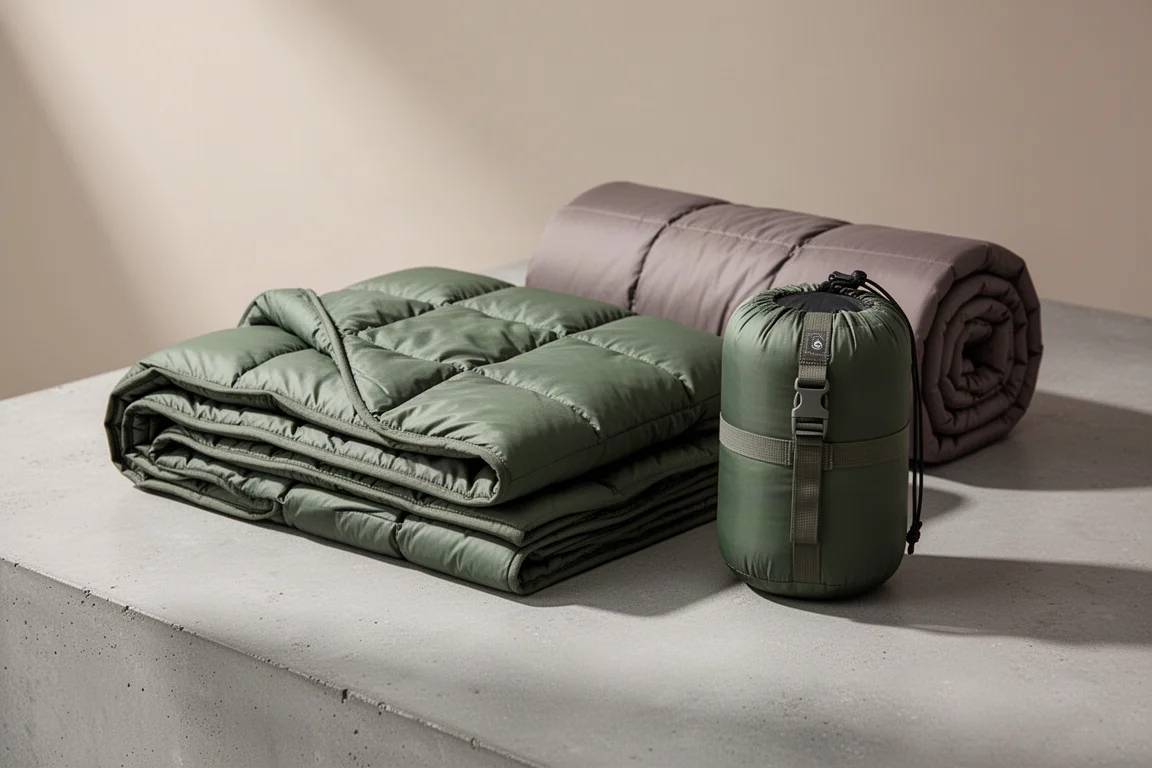
Get Out Gear Down Puffy Blanket Review: Ultralight Comfort for Warm Weather
A 650 fill power down blanket that packs to 1.1 pounds with its stuff sack. Here is where it works well, where it falls short, and who should buy it.
Camping Blankets
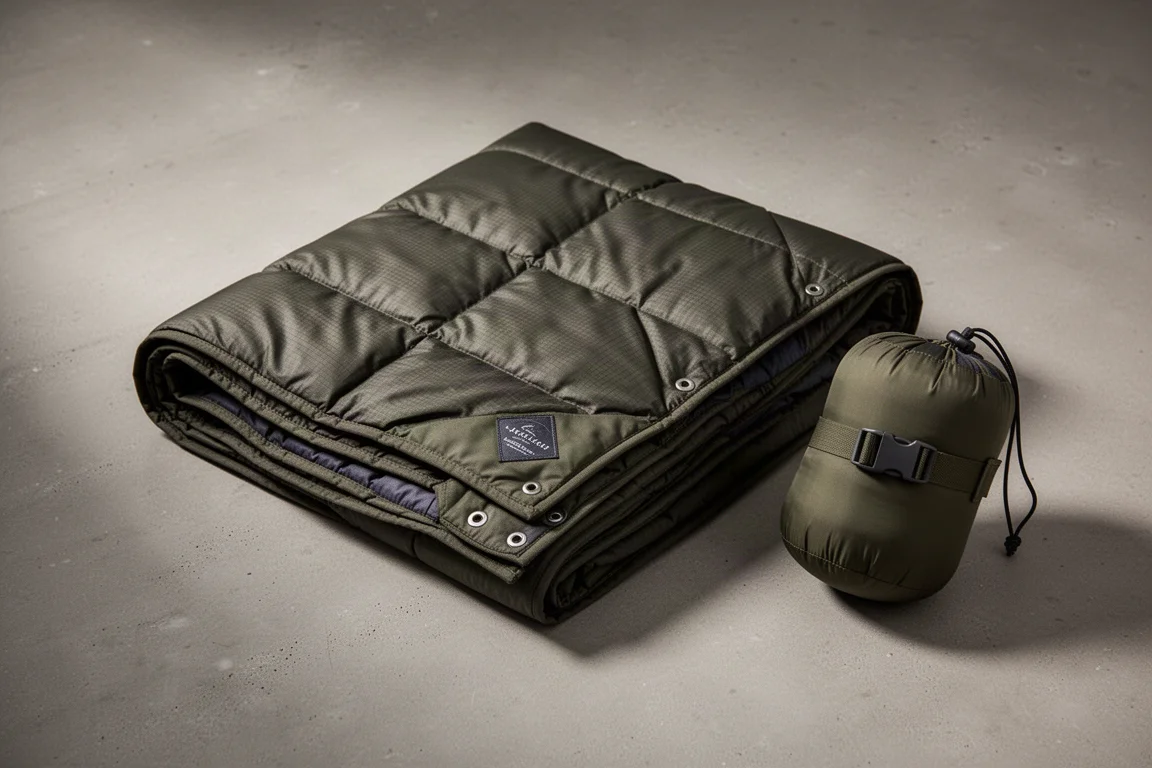
OneTigris Down Camping Blanket Version 2.0 Review: Light, Warm, and Compact
A practical look at the OneTigris Down Camping Blanket Version 2.0, including real-world warmth, packed size, sizing trade-offs, and who should buy which version.
Camping Blankets
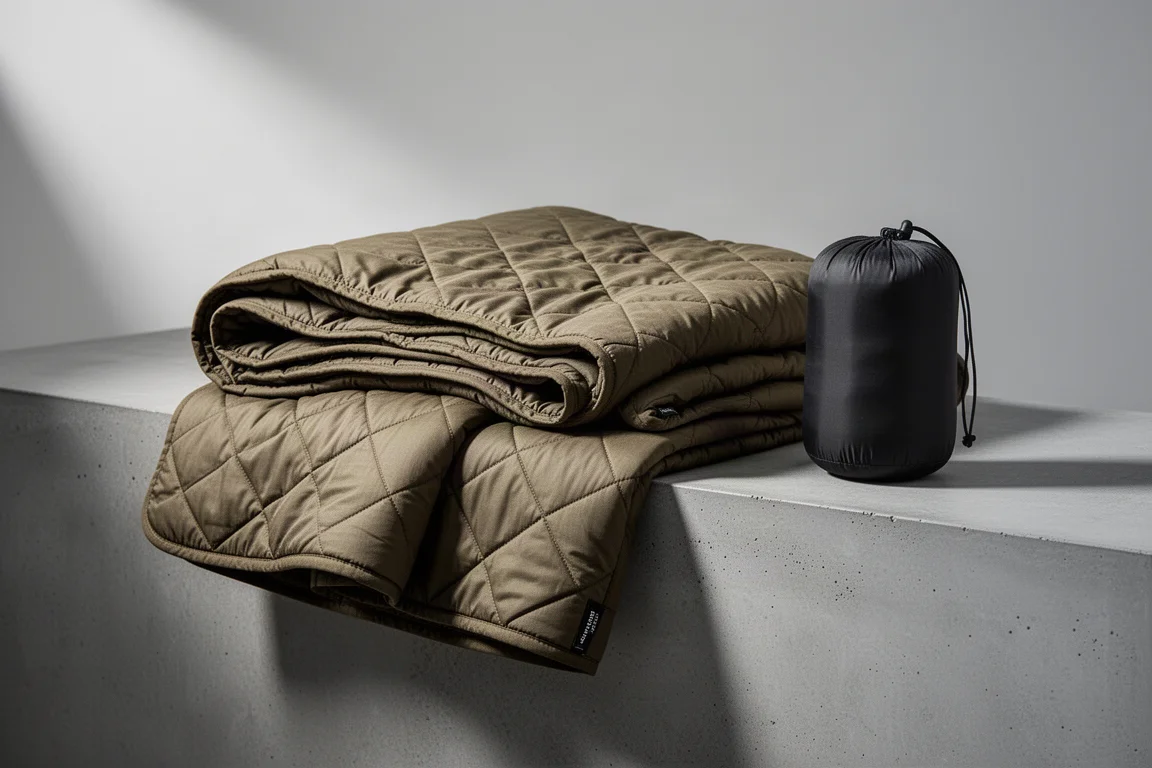
Snugpak Jungle Blanket Review: An 8-Year Long-Term Verdict
A long-term look at the Snugpak Jungle Blanket, covering real-world warmth limits, packability, materials, and which size makes sense.