Camping Blankets
Get Out Gear Down Puffy Blanket Review: An Ultralight Summer Blanket With Clear Limits
An ultralight 650 fill down camping blanket built for mild nights: what it does well, where it falls short, and how to decide whether it fits your sleep system.
Introduction
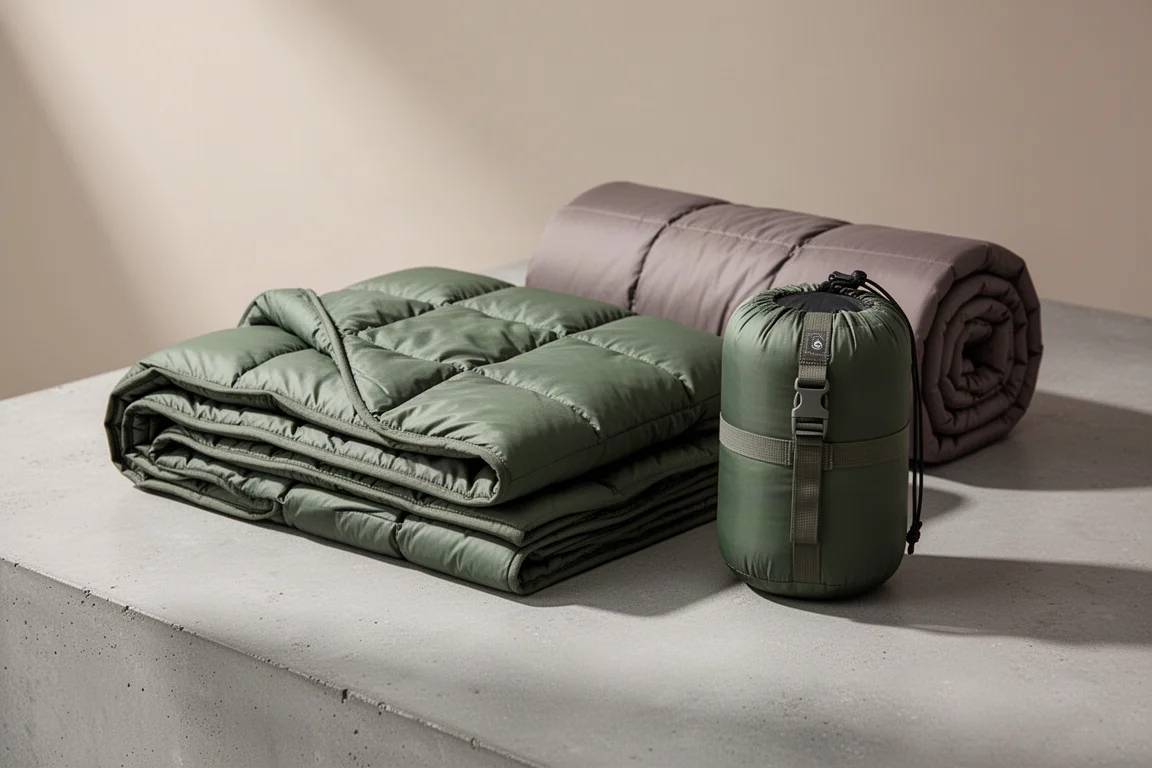
The Get Out Gear Down Puffy Blanket is a packable down quilt built for warm-weather trips, and it earns its place in a pack by weighing almost nothing rather than by being a do-everything sleep system. The specifications are simple: a 20 denier ripstop shell, 650 fill power down in an 80/20 duck down and feather blend, and a packed weight of 1.1 pounds including the roll-top stuff sack. Laid out, it measures 77 by 50 inches once the down has settled.
That combination puts it in a specific category. This is a summer blanket, not a three-season bag, and the fairest way to judge it is against the conditions it is actually meant for: mild nights, warm sleepers, and trips where every ounce counts. It has been used in the back of a truck on long cross-country drives, in tents, and inside a bivvy, and the pattern holds across all of them.
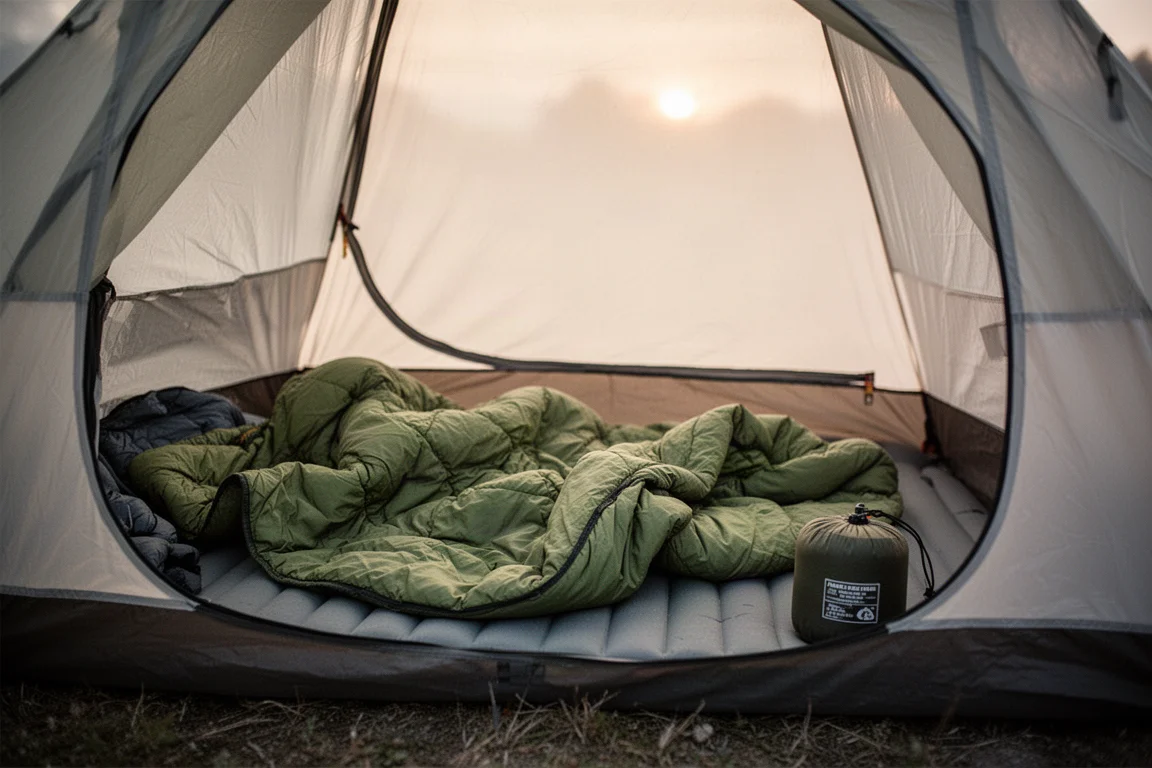
The short version: it performs well when the weather is mild, and it becomes genuinely versatile when paired with another layer. Here is what to know before buying.
Who This Blanket Is For
This blanket makes the most sense for warm-weather campers, backpackers counting grams, and overland travelers who want a light cover for truck-bed sleeping. It also suits anyone building a modular sleep system: combined with a sleeping bag liner, it has kept a warm sleeper comfortable into the 40s, which turns a one-pound item into a meaningful temperature extension.
It is a poor fit for cold sleepers and for anyone who wants a single blanket to handle shoulder-season nights on its own. One tester who runs cold reported feeling cold at 60 degrees Fahrenheit and below with the same 650 fill version, which is a useful reminder that warmth ratings are personal. If you sleep cold, plan on layering rather than relying on the blanket alone.
Main Strengths
Ultralight and Highly Compressible
At 1.1 pounds including the stuff sack, this is about as light as a camping blanket gets, and it packs down small enough to disappear into a backpack. The nylon shell feels comfortable against skin, with no scratchy points or rough seams, and the build quality is solid: stitching is clean, with essentially one short loose thread, and down loss has been minimal. A few feathers showed up in the storage bag at first, and after several months of use the shedding stopped.
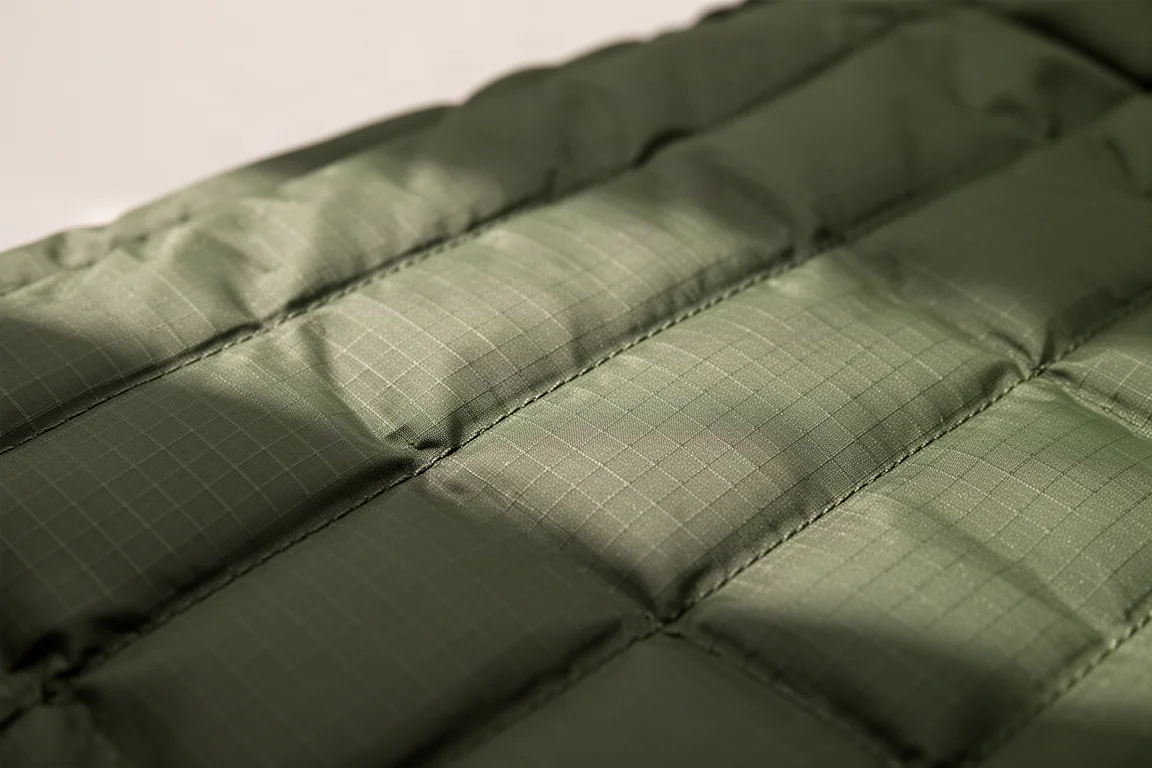
Color options are broad, with black, blue, gray, green, and orange versions available, and the included roll-top stuff sack is generously sized, so repacking is not a wrestling match at the end of a trip.
Layering Versatility and Value
On its own, the blanket is a warm-weather item. Used as a supplement, it is more capable than its weight suggests. Paired with a sleeping bag liner, it has kept a warm sleeper comfortable into the 40s, and the same approach works with a sleeping bag to push that bag’s range a little further.
Compared with similar products on the market, the price is broadly in line: some comparable blankets cost about five dollars less and some about ten dollars more.
Things to Consider Before Buying
The Real Size Is Small
The most important thing to check is the size. Get Out Gear lists two different figures, 80 by 54 inches and 77 by 50 inches, and the listings do not make clear which is which. The clearest explanation available is that 80 by 54 inches is the size straight out of the stuff sack and 77 by 50 inches is the lofted size once the down settles. Either way, this is not a large blanket. It barely wraps around an average adult, and a bigger user will need to use it on top rather than wrapped around the body. Because it is narrow and short, it is easy for a leg to slip out during the night.
It Is Very Thin
Marketing photos show puffy, fully lofted baffles, and the blanket never looks like that in person. It is a genuinely thin layer, and that is the trade-off for the low weight. Anyone expecting a plush quilt will be surprised by how flat it lies.
The Snap Layout Limits Versatility
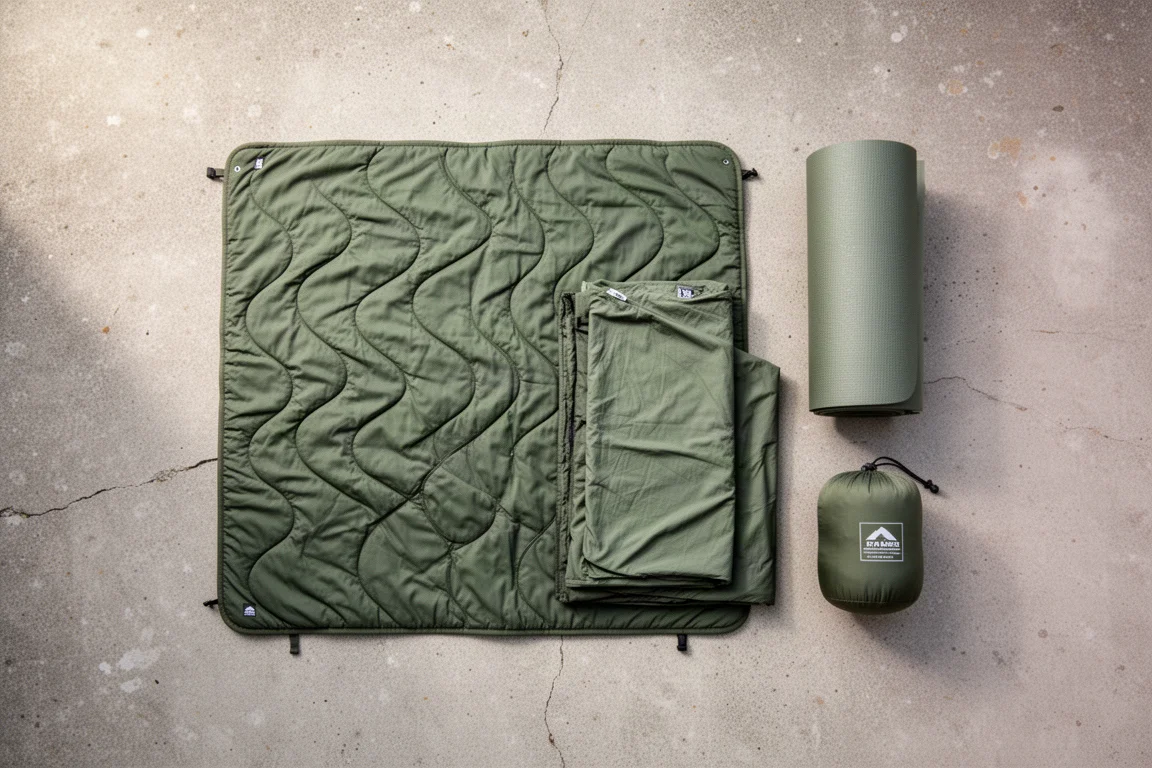
There are three snaps on each side, which let you wear the blanket as a poncho. They do not run the full length of the blanket, so you cannot close it up like a sleeping bag, and there is no way to cinch it at the foot end or around the neck. Adding full-length snaps plus a foot box drawcord and a neck drawcord would make it considerably more useful in cool conditions.
The Water-Repellent Claim Does Not Hold Up
The company states that the shell has a durable water repellent treatment. In testing, water poured onto the fabric soaked in rather than beading up, so it should be treated as a fair-weather item that needs protection from rain.
Naming and Listings Are Confusing
Two versions exist: the Down Puffy Blanket with 650 fill down, and the synthetic Double Puffy Blanket. The names suggest thickness or size rather than insulation type, and the two listings look nearly identical apart from the price. The synthetic version is slightly less expensive and heavier. Read the details carefully before ordering.
Price Feels High in the Hand
At around $70, the price is fair next to comparable products, but without that context the blanket feels like a roughly $35 item. There is nothing premium about the materials, and it is a small, very thin blanket.
Store It Uncompressed
As with any down product, long-term compression wears out the fill and reduces loft. Compress it for the trip out, then unpack it and store it loose at home.
Buying Advice
The natural comparison is a USGI poncho liner. Both are roughly good to about 50 degrees Fahrenheit, the poncho liner costs around $30 to $40, the blanket is lighter, and the poncho liner is larger. If size matters most, the poncho liner is the better pick; if weight matters most, the blanket wins.
Within the Get Out Gear range, decide on insulation first. The down version is lighter, while the synthetic version is slightly cheaper and heavier, which matters if you expect damp conditions or prefer not to baby a down item. Either way, treat this as one part of a sleep system rather than a standalone solution.
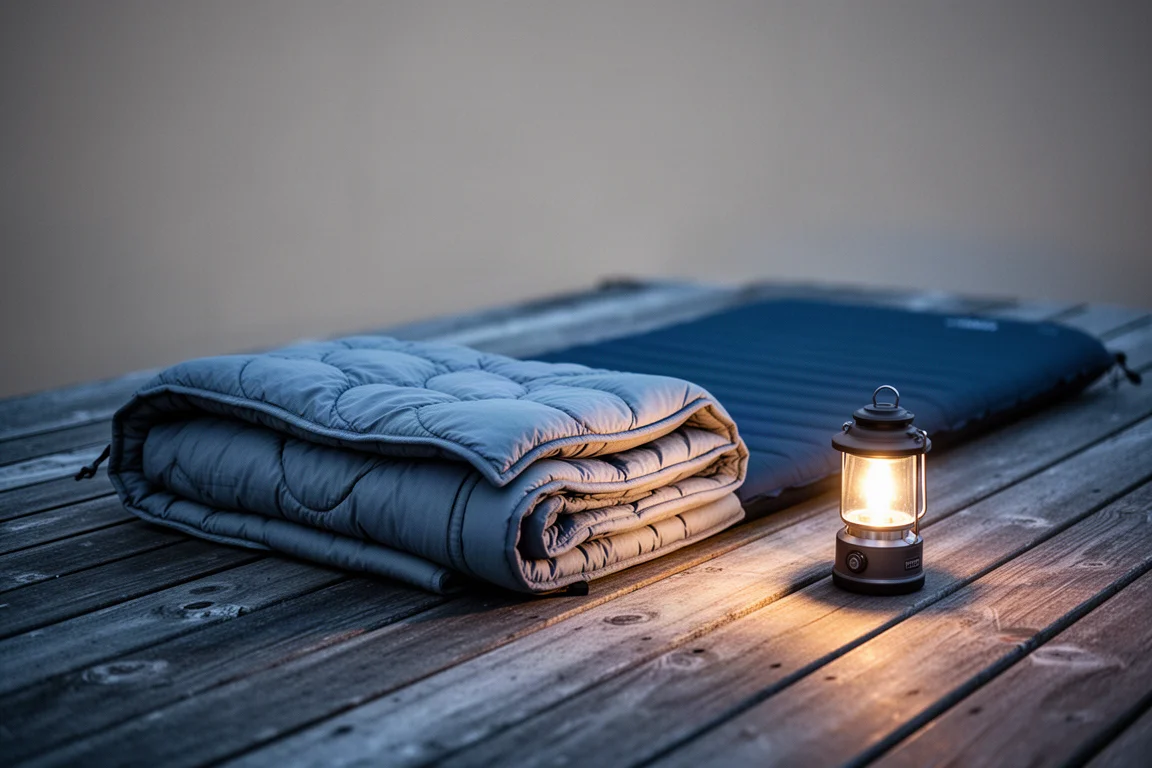
If you already own a sleeping bag liner, this is one of the least expensive ways to extend its range without adding meaningful weight to your pack, which is where the blanket makes the strongest case for itself.
Conclusion
The Get Out Gear Down Puffy Blanket earns a recommendation for what it is: an ultralight summer blanket that layers well and costs about the same as its competitors. It is comfortable, well stitched, compressible, and available in enough colors to suit most tastes. Its limits are just as clear. It is small, very thin, and less versatile than its snap layout suggests, and the water-repellent and temperature claims should be treated with caution.
Buy it if you want a light cover for mild nights and a modular layer for the rest of the year. Skip it if you need a blanket that wraps fully, sleeps warm on its own, or feels premium for the money.
Product link
View more details for Get Out Gear Down Puffy Blanket
This product is mentioned in the review. Check the specifications, options, and compatibility before buying.
View more details for Get Out Gear Down Puffy BlanketFurther reading
Related Reviews
Camping Blankets
OneTigris Down Camping Blanket Version 2.0 Review: Light, Warm, and Compact
A practical look at the OneTigris Down Camping Blanket Version 2.0, including real-world warmth, packed size, sizing trade-offs, and who should buy which version.
Camping Blankets
OneTigris Down Camping Blanket Version 2.0 Review: A Warm-Weather Blanket With Few Frills
A detailed look at the OneTigris Down Camping Blanket Version 2.0, covering its 600 fill power down build, measured dimensions, packed size, and the features it deliberately leaves out.
Camping Blankets
Snugpak Jungle Blanket Review: An 8-Year Long-Term Verdict
A long-term look at the Snugpak Jungle Blanket, covering real-world warmth limits, packability, materials, and which size makes sense.