Camping Shelters
One Tigris Two-Person Bug Tent Review: A Warm-Weather Shelter That Breathes
A detailed look at the One Tigris Two-Person Bug Tent, a mesh camping shelter built for hot, humid nights under a tarp, with its strengths, trade-offs, and best use cases.
Introduction
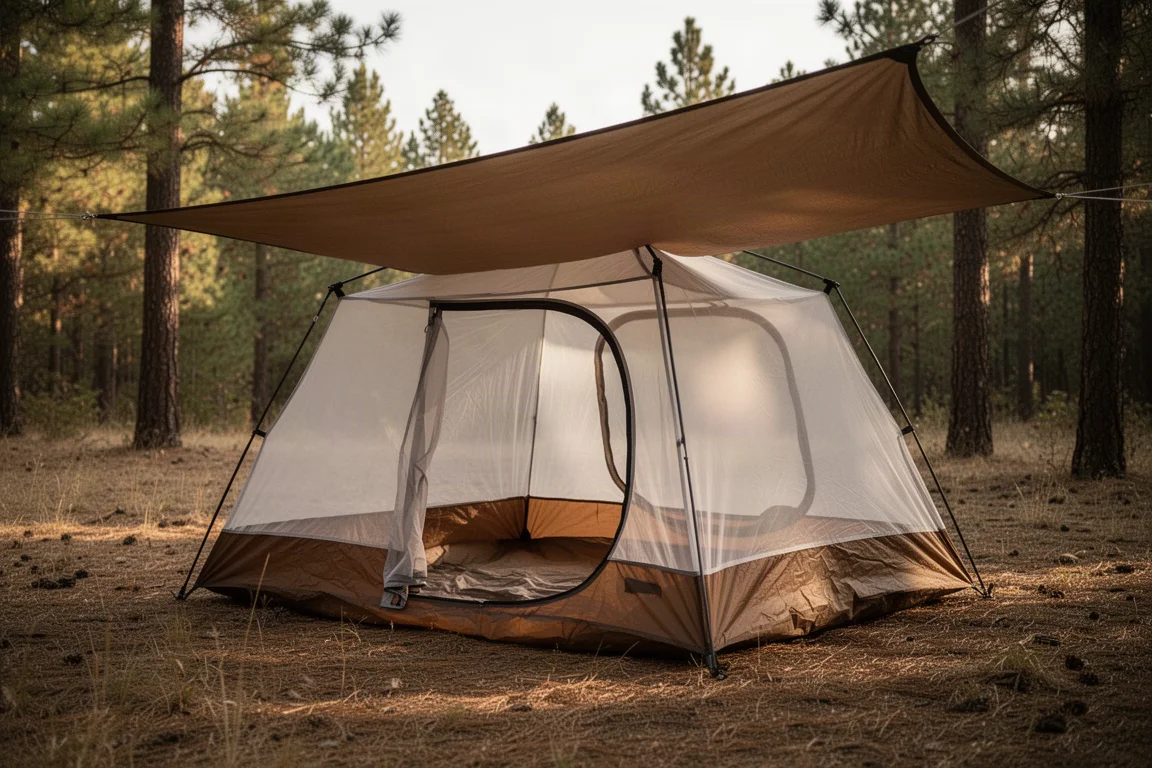
Warm-weather camping asks a different question than three-season camping does. Once nights turn humid and still, the shelter that keeps rain out can also hold heat and condensation in. A mesh inner tent solves that problem, and the One Tigris Two-Person Bug Tent is one of the more convincing examples of the category. It is a mesh shelter with a nylon bathtub floor that can be pitched on its own with poles, suspended underneath a tarp, or hung from tree limbs above a campsite.
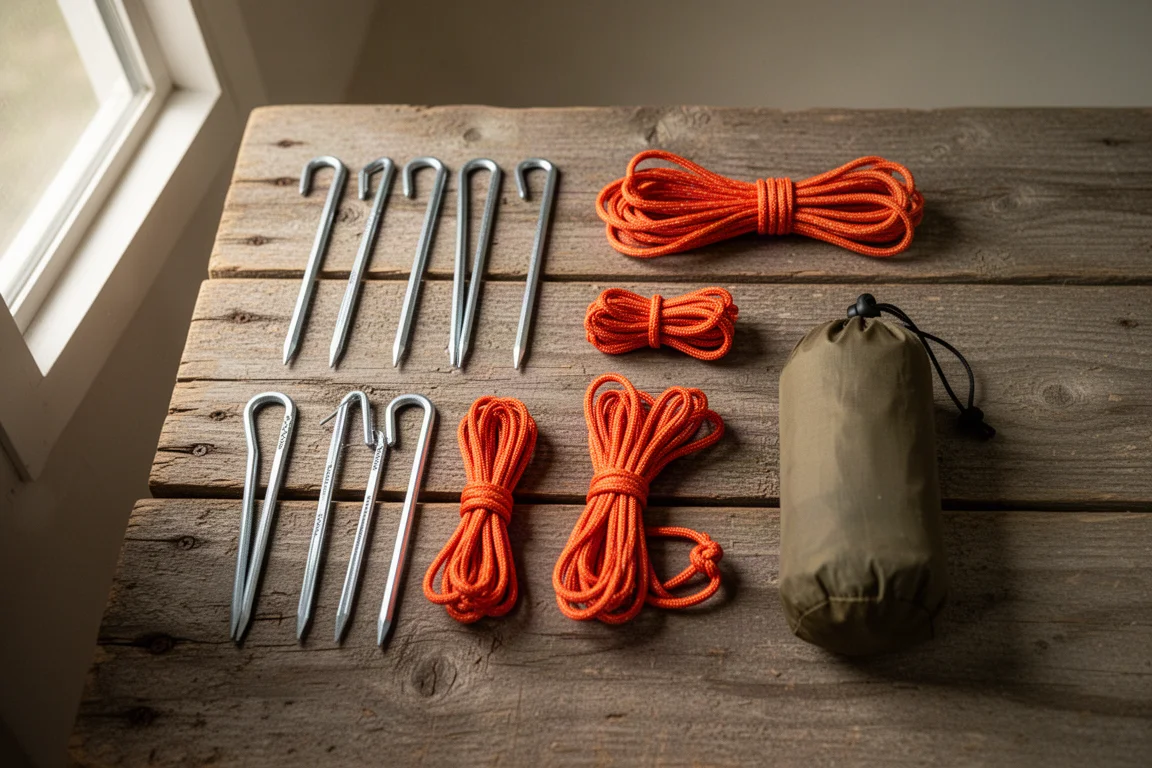
At $65, the package includes the tent, six tent stakes, four guy lines, and two storage bags. Poles are not included, and that is worth knowing before ordering.
Who This Bug Tent Is For
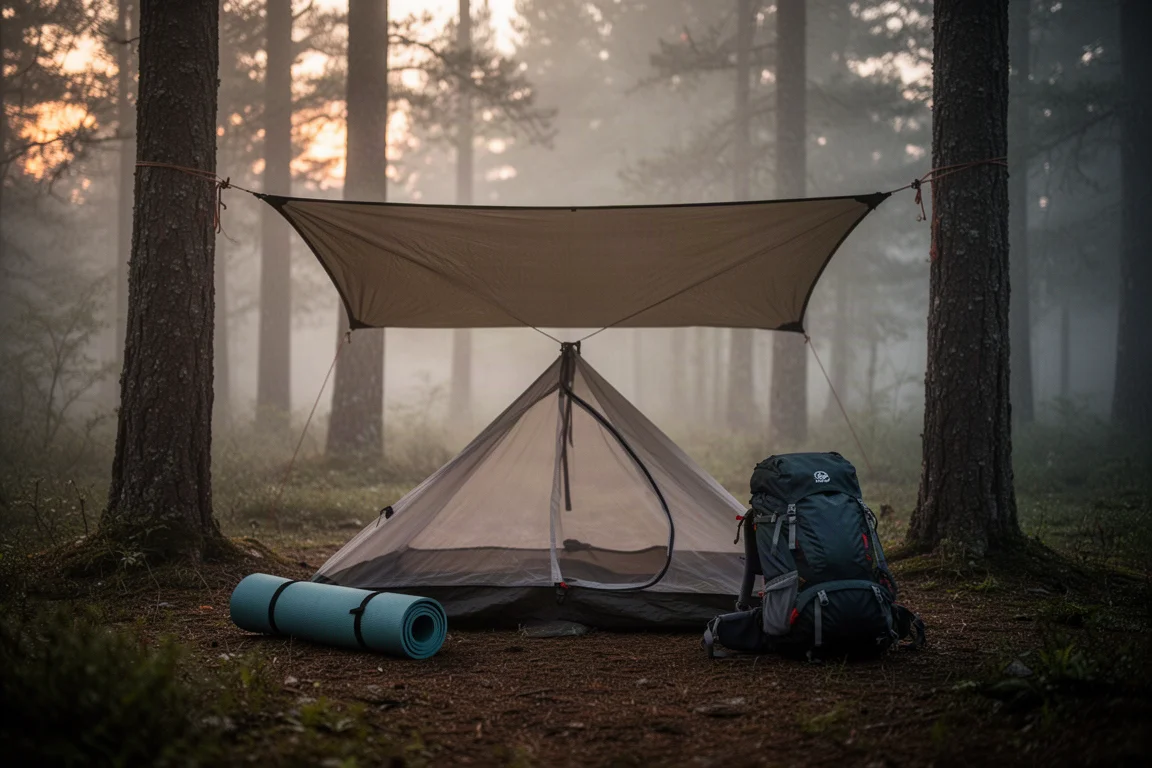
This shelter makes the most sense for backpackers and overland travelers who camp in warm, humid conditions and want airflow rather than insulation. It is also a natural fit for anyone who already travels with a tarp and wants a bug-free sleeping space beneath it.
In practice, it is a mesh inner rather than a stand-alone tent. The walls are mesh, the floor is nylon, and the whole structure depends on either poles or an overhead anchor point. Three doors provide access: one large main door on one side and two side doors.
Buyers who want a fully enclosed double-wall tent for cold, wet, or exposed conditions should look elsewhere. This design is built around ventilation, and it accepts a certain amount of exposure in exchange for that airflow.
Build Quality and Materials
Construction is where this shelter earns confidence. The floor is a 70-denier nylon with a 3,000 mm waterproof rating, the mesh is nylon, and the zippers are smooth and consistent. Seams and seam tape are clean, and the overall assembly suggests a product that will hold up across multiple seasons of use.
The bathtub floor rises roughly 5 inches around the perimeter. That detail matters more than it sounds. When rain runs off an overhead tarp and hits the ground, a raised floor stops splashback from reaching the sleeping area. Some bug tents skip this entirely, and they get wet inside unless they are covered by an unusually large tarp.
Ventilation and Warm-Weather Comfort
Mesh runs all the way around this shelter, so even a slight breeze moves through the interior. That is exactly what a hot, humid night calls for, and it puts this design ahead of conventional tents for summer comfort. Because airflow is so unrestricted, condensation is a non-issue.
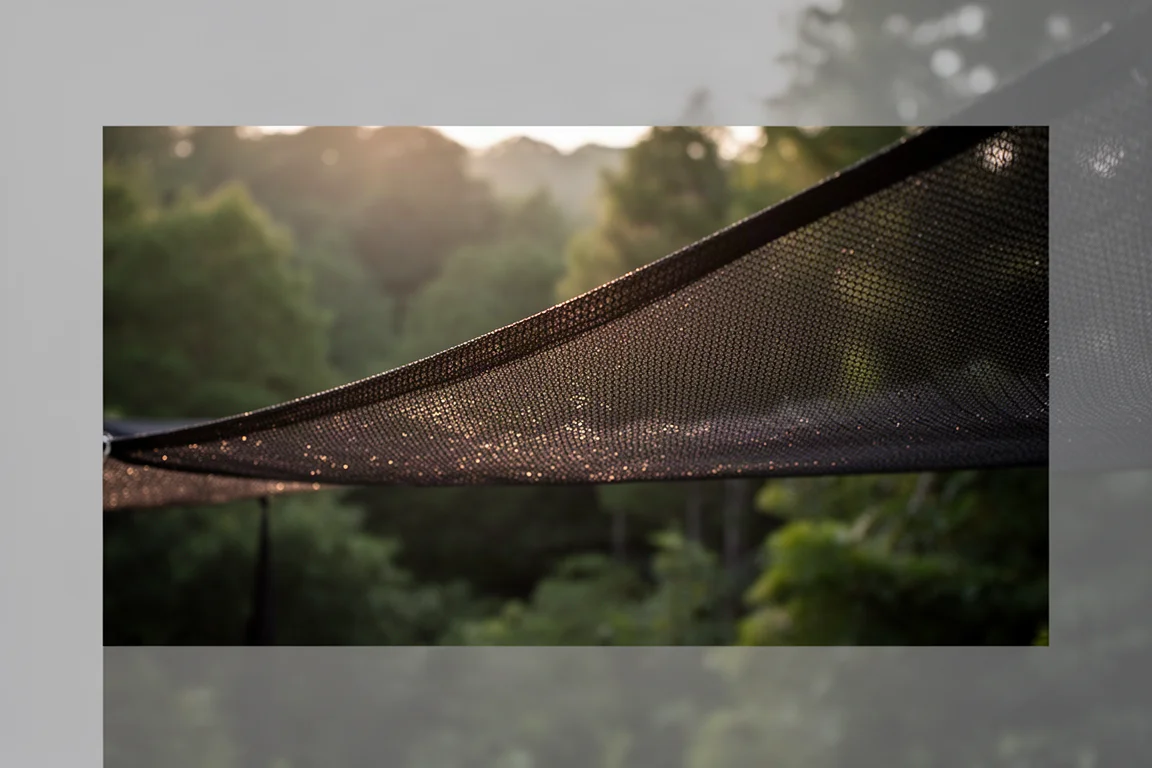
The practical result is a shelter that stays comfortable when a sealed tent would feel stifling. For warm-weather trips, ventilation is the headline feature, and it is the main reason to choose this design over a standard tent.
Interior Space and Door Layout
The interior is larger than the two-person label suggests. Set up, it measures roughly 6.5 ft long, 4.2 ft wide, and 4.9 ft tall. Two sleeping pads fit with room for gear, and a solo camper gets space for a sleeping bag, pillow, backpack, and even a dog. Two people can sit up and change clothes without feeling cramped.
Access comes through three doors: a large main entrance on one side and two side doors. When the shelter is pitched with poles, those poles sit near the side doors and make them awkward to use, which is why the main door matters. Suspend the shelter under a tarp or from a tree limb and the side doors become far easier to use.
Setup and the Learning Curve
Pitching with poles is straightforward: stake out the corners, erect the poles, and stake them out. Suspending the shelter under a tarp or hanging it from an overhead branch takes more practice, because the shelter has to be tensioned correctly to sit dry and stable.
A 10 x 13 ft tarp gives a good balance of protection and usable space underneath. Learning how water runs off a tarp, where splashback lands, and how wind drives rain sideways takes field time, and that experience is what makes this system work reliably.
Things to Consider Before Buying
The storage bag is the most consistent annoyance. It is slightly too small for the tent, and packing up becomes a wrestling match at the end of a trip. An extra inch in length and width would solve it entirely.
Poles are not included, so budget for them or plan to suspend the shelter instead. There is also an unavoidable limitation to tarp camping. Because the shelter is not sealed, an air gap always remains, and wind-driven rain can find its way in. In a sudden severe storm, it may fill with water before there is time to take it down. That is not a flaw in the design so much as the nature of using a mesh inner under a tarp.
Buying Advice
At $65, with durable materials, a 3,000 mm floor, and enough interior space for two people plus gear, the value is clear. The weight and packed size are reasonable for backpacking and overlanding, and lighter options exist only at significantly higher prices.
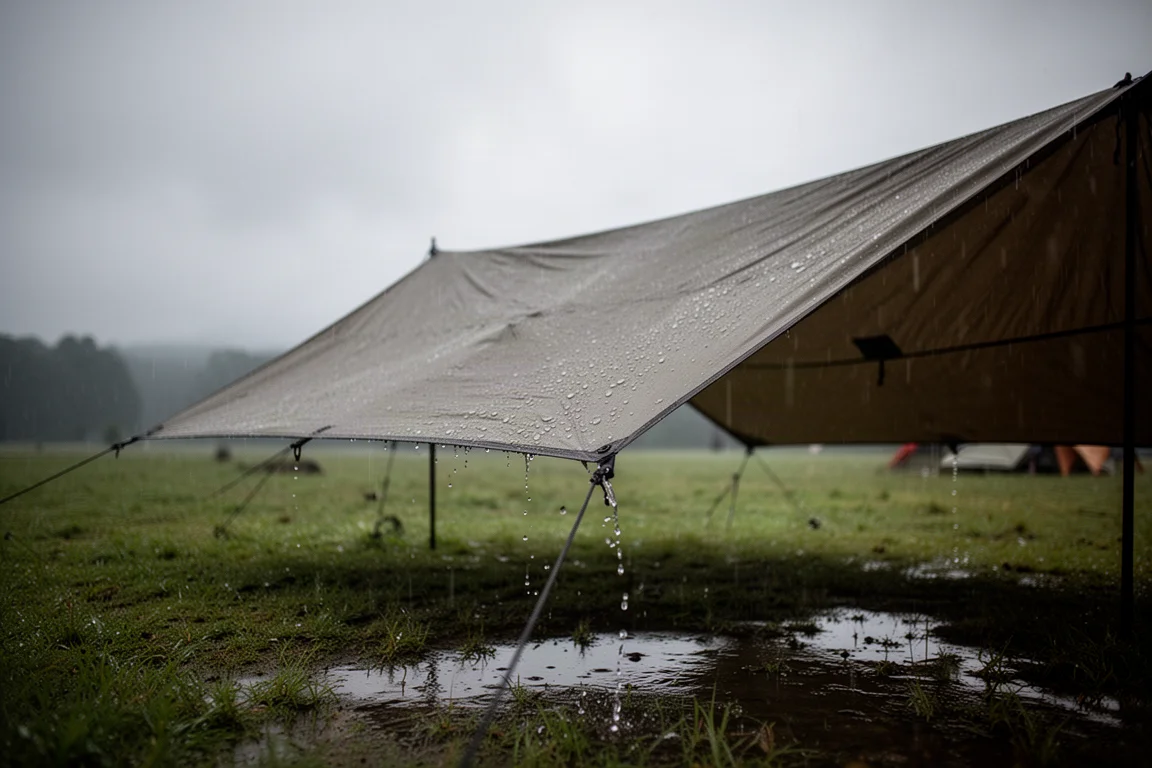
Anyone considering this shelter should practice pitching it under a tarp at home first, use a large tarp rather than a small one, and accept that a small number of extreme storms will overwhelm any tarp-based setup. With that preparation, it stays dry in the large majority of conditions.
Conclusion
The One Tigris Two-Person Bug Tent is a well-made, generously sized mesh shelter that handles hot and humid camping better than a conventional tent. The tight storage bag and the tarp learning curve are real but minor trade-offs. For warm-weather backpacking and overland travel, it is an easy recommendation.
Product link
View more details for One Tigris Two-Person Bug Tent
This product is mentioned in the review. Check the specifications, options, and compatibility before buying.
View more details for One Tigris Two-Person Bug TentFurther reading
Related Reviews
Camping Shelters
Alps Mountaineering Stealth 1 Bivy Review: A Waterproof Claim That Does Not Hold Up
The Alps Mountaineering Stealth 1 Bivy carries a 2,000 mm hydrostatic head rating and a waterproof claim, but sustained rain exposure and build quality concerns make it difficult to recommend.
Camping Shelters
AquaQuest Safari Hybrid 20 ft x 13 ft Tarp Review: Two Years Under a Very Large Roof
A long-term look at the AquaQuest Safari Hybrid 20 x 13 tarp, covering build quality, weather protection, setup realities, and who should buy one.
Camping Shelters
Backcountry Light Mesa 3 Hot Tent and Floor SL Tarp Review
A practical look at the Backcountry Light Mesa 3 four-season hot tent and its optional Floor SL Tarp, covering materials, stove jack design, packed weight, pricing, and the trade-offs to weigh before buying.