Camping Tents
OneTigris Cocoa Nest Review: A Packable Four-Season Hot Tent With One Big Catch
The OneTigris Cocoa Nest packs small, pitches easily and builds beautifully, but the included inner tent is the detail that decides whether it works for you.
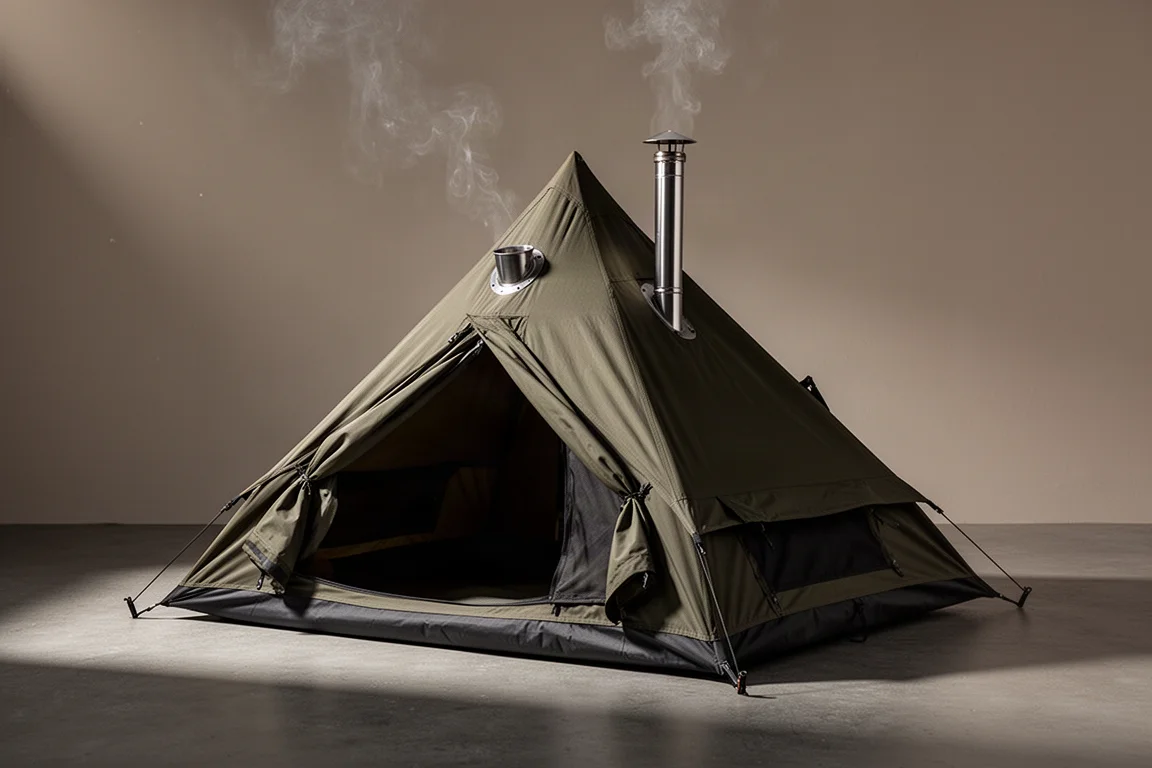
Introduction
Hot tents have become a go-to answer for camping through the colder months, and the OneTigris Cocoa Nest is one of the more portable options in that category. It is a four-season, single-person hot tent built around a stove jack, and the packed dimensions are genuinely impressive: roughly 21.7 inches long and 7.9 inches wide. That is small enough to slide into a typical backpack without a fight.
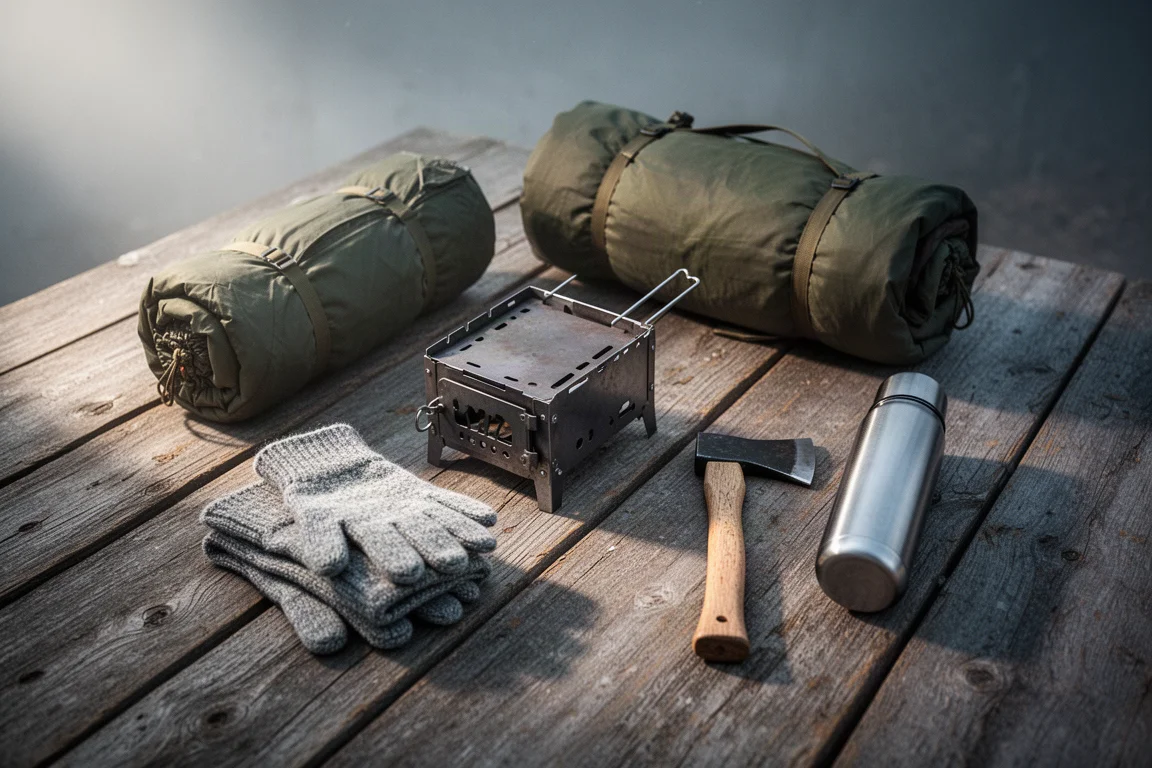
At $230 it arrives with the stove jack included, along with poles, guy lines, stakes and a removable inner tent. The build quality is excellent, and the shelter itself is surprisingly roomy once you understand how it is meant to be used. The catch is the inner tent, and it is a significant one for anyone taller than about 5 feet 5 inches.
What Comes in the Box
Everything ships in a storage bag that doubles as the stuff sack. Inside you get the tent body, three poles, six guy lines and 12 tent stakes. The bag closes with a roll-top and carries two compression cords, which do their job well.
Two separate fabric compression straps are also included, and they are the one piece of kit worth leaving at home. They add weight and clutter without adding much security to the bundle.
One practical tip applies to the poles rather than the tent itself: assemble them vertically instead of laying the sections out flat. With longer pole segments, standing them upright makes the whole process noticeably faster.
Setup and Packability
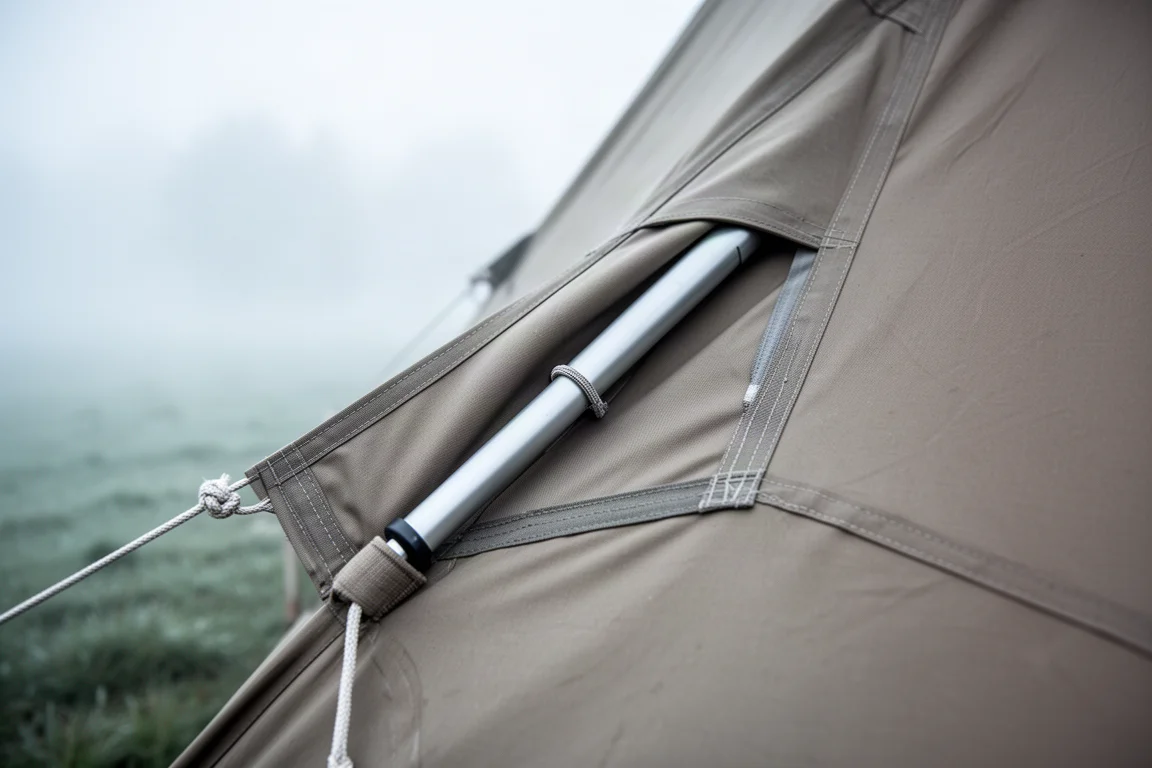
Pitching the Cocoa Nest is straightforward. The pole sleeves are sewn shut at one end, so the poles stop there, and the open end has cups where each pole is seated. On a difficulty scale where 10 is the hardest tent you can imagine, this sits around a 3. One person can raise it quickly without help.
The sleeves matter for more than convenience. Because this is a four-season shelter, the sleeves keep ice from forming directly on the poles and stop the sections from freezing together in sub-zero conditions.
The stove jack port sits behind a flap that rolls back and ties off, and the jack itself is included rather than sold separately. The main door uses quadruple zippers, which lets you open it in several configurations or leave a small or large vent gap for airflow. A pocket in the corner holds the door out of the way once it is rolled open.
Weight lands at 7.5 pounds. For a four-season hot tent with this much interior volume, that is a reasonable figure, and the packed size means it can be carried on foot rather than only hauled in a vehicle.
Materials, Zippers and Weather Protection
The rainfly is 40D silnylon and the inner floor is 75D polyester, both rated to a 3000 mm hydrostatic head. That is a solid waterproofing figure for a tent in this class, and the fabric feels substantial rather than thin.
The zippers are YKK and run smoothly throughout, including on the main door and the inner tent. Seam tape is applied cleanly and the stitching is consistent across the panels, the sleeves and the jack opening. There is one vent in addition to the stove jack port.
Sleeping Space and the Inner Tent
This is where the Cocoa Nest gets complicated. The inner tent is removable, has two zippers and two mesh pockets, and is shaped like a partial octagon. That shape is the problem. Because the walls taper inward, the usable floor is much smaller than the outline suggests.
Measured inside, the inner runs about 6 feet along the wall next to the door, drops to roughly 5 feet a short distance back, and measures about 65 inches, or 5 feet 5 inches, at its deepest usable point. Maximum interior height in the inner is 50 inches and the widest point is about 36 inches, with both walls slanting inward.
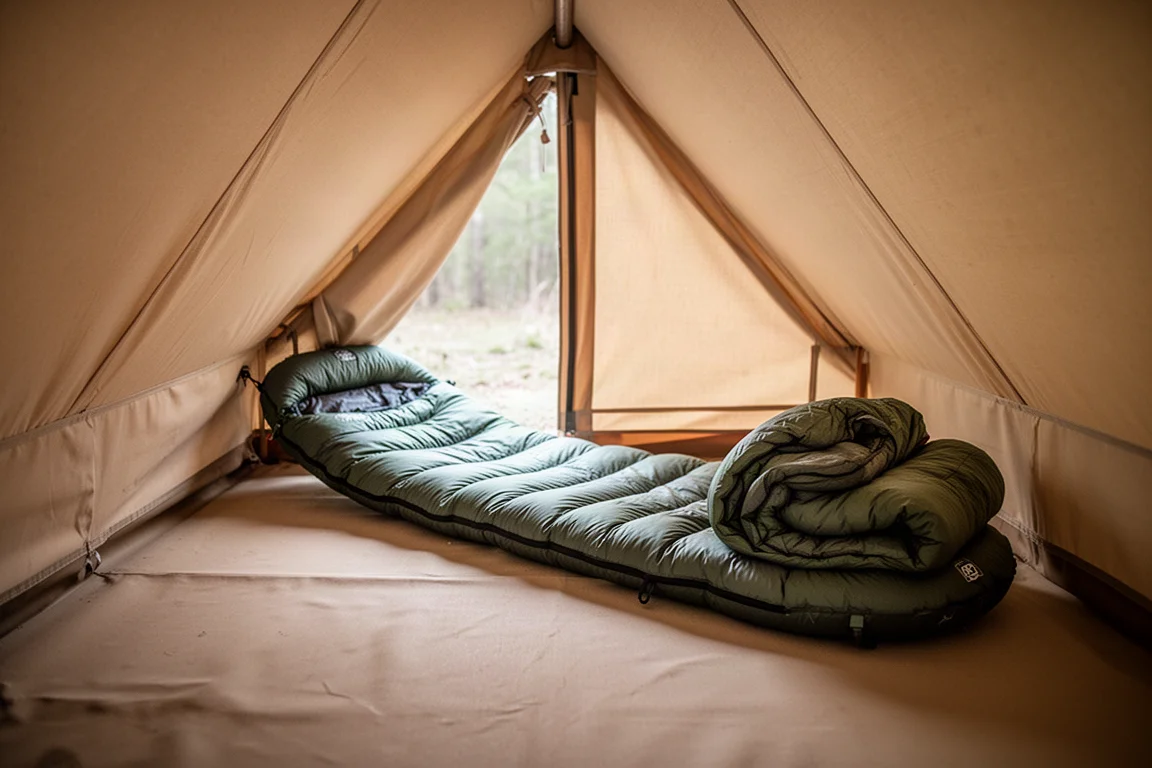
A sleeping pad only fits at an angle, and even then it does not sit flat, because one side rides up against the slanted wall. Rectangle-shaped pads will not work, and neither will extra-long or extra-wide pads. A standard mummy-style pad is the only realistic option, and it fits with almost no margin. A sleeping bag extends past your feet, so it ends up touching the wall, which invites condensation and a damp bag by morning.
Remove the inner and the tent transforms. The livable area measures about 93 inches at its widest and roughly 52 inches wide, with a maximum height of about 54 inches. That is enough room for a full-size cot, a stove, firewood, a chair and a small table. There is so much space that the interior echoes.
OneTigris has responded to questions about the inner’s sizing, saying that pre-production testers at 6 feet, 5 feet 10 inches and 5 feet 7 inches tried the shelter, and that the tester at 6 feet found it cramped. That account does not match the measured interior, which suggests the material may have been stretched out on the ground during testing.
Things to Consider Before Buying
The inner tent is the deciding factor. If you need bug protection, this shelter is difficult to recommend, because the inner is too small for most adults to sleep in comfortably and no amount of adjustment fixes the tapered floor. The alternative is to remove the inner entirely, which restores the space but leaves you without insect screening.
Height is the other hard limit. Anyone over about 5 feet 5 inches will struggle to lie flat inside the inner. Even shorter campers will find that only a mummy pad fits, and that it barely does.
There is also the question of how you intend to use the tent. Removing the inner means committing to cold-weather trips or accepting bugs, and the fabric compression straps are best left behind.
Buying Advice
Approach the Cocoa Nest as a floorless hot tent that happens to ship with an inner. Used that way, it is a well-made, packable and genuinely spacious four-season shelter, with an included stove jack, smooth YKK zippers, a 3000 mm waterproof rating and a reasonable 7.5-pound carry weight for $230. For winter camping where insects are not a concern, that combination is hard to argue with.
If bug protection is a requirement, plan on something else, or expect to experiment with a third-party inner. The included one is not a workable solution for most people.

Our own view is that the shelter would make more sense sold without the inner at a lower price, since most buyers will end up leaving it at home anyway. As it stands, the tent is excellent and the inner is the only thing holding the package back.
Conclusion
The OneTigris Cocoa Nest gets the fundamentals right: a compact pack size, a simple pitch, careful construction and a large, usable interior once the inner comes out. Its limitation is just as clear, and it is one you can plan around. Buyers who want a backpackable hot tent for cold, bug-free conditions will find a lot to like here. Buyers who need an enclosed sleeping space for a taller adult should look elsewhere.
Product link
View more details for OneTigris Cocoa Nest
This product is mentioned in the review. Check the specifications, options, and compatibility before buying.
View more details for OneTigris Cocoa NestFurther reading
Related Reviews
Camping Tents
3F UL Gear Taiji Two-Person Tent Review: Field Waterproofing Results and Buying Advice
The Taiji pairs an attached fly with a removable inner, but sustained rain exposed untaped vent seams that need sealing before this shelter can be trusted.
Camping Tents
3FUL Gear Lanshan 2 Pro 4-Season Review: A Sub-$200 Single-Wall Trekking Pole Tent
An early look at the 3FUL Gear Lanshan 2 Pro 4-Season, covering its straightforward pitch, generous interior space, and the condensation and seam-sealing questions that come with any single-wall shelter.
Camping Tents
Alps Mountaineering Lynx 1-Person Tent Review: Big Value in a Small Budget Tent
A close look at the Alps Mountaineering Lynx 1-Person Tent, covering real interior dimensions, materials, setup time, ventilation limits, and who should buy it.